


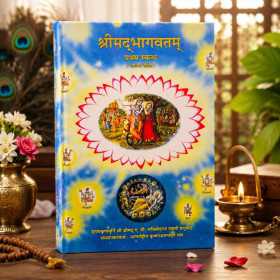
Srimad Bhagavatam English First Canto
Srimad Bhagavatam English First Canto
· Brand: BBT (Bhaktivedanta Book Trust)
· Publisher: Bhaktivedanta Book Trust International
· Book Name: Srimad Bhagavatam First Canto
· Author: His Divine Grace A.C. Bhaktivedanta Swami Prabhupada
· Language: English
· Binding Type: Hardcover
· Genre: Spiritual & Religious Literature
· Print Quality: Premium Quality Pages with Durable Binding

(edit with the Customer Reassurance module)

(edit with the Customer Reassurance module)

(edit with the Customer Reassurance module)
Srimad Bhagavatam English First Canto – A Deep Introduction to Divine Wisdom and Krishna Consciousness
The table of contents from the Srimad Bhagavatam English First Canto immediately reveals the extraordinary depth and spiritual richness of this sacred text. Even before the main chapters begin, the book carefully prepares the reader through philosophical discussions, spiritual biographies, devotional teachings, and timeless lessons about the purpose of life.
Unlike ordinary books that jump directly into stories, the Srimad Bhagavatam English First Canto first builds a strong spiritual foundation. This structure is important because the Bhagavatam is not simply meant for entertainment or intellectual study. It is designed to transform consciousness and guide the reader toward self-realization and devotion to the Supreme Lord Krishna.
The introduction begins with one of the most essential spiritual questions: the conception of God and the Absolute Truth. Human civilization has always struggled with this topic. Different philosophies present different understandings of God—some see Him as impersonal energy, others as a creator, while some reject spiritual reality entirely. The Srimad Bhagavatam approaches the subject with remarkable clarity. It explains that the Absolute Truth is ultimately realized as the Supreme Personality of Godhead, who possesses eternal qualities, beauty, intelligence, and compassion.
This philosophical opening creates the framework for everything that follows in the scripture. Rather than promoting blind belief, the Bhagavatam encourages thoughtful spiritual understanding rooted in wisdom and realization.
Another important topic listed in the contents is the source of material energy. This section explains the relationship between the spiritual world and the material universe. Modern life often traps people in endless cycles of stress, competition, attachment, and dissatisfaction. The Bhagavatam teaches that material existence is temporary and constantly changing, while the soul itself is eternal.
This understanding becomes deeply meaningful because it changes how a person views success, failure, pleasure, and suffering. Instead of identifying completely with temporary external situations, the reader begins understanding the deeper spiritual identity beyond the body and mind.
The contents page also highlights the role of the preacher of Srimad Bhagavatam and the science of Krishna consciousness. These sections emphasize that spiritual wisdom is not theoretical speculation alone. Real spiritual knowledge must be practiced, shared, and lived.
One of the most inspiring portions of the introduction focuses on the life and mission of Sri Caitanya Mahaprabhu. The Bhagavatam presents Him not merely as a historical personality but as a divine spiritual teacher who spread the process of chanting the holy names of Krishna.
The table of contents traces many stages of His life:
- His birth
- His childhood
- His student life
- His spiritual mission
- His renunciation
- His teachings and travels
These topics help readers understand how devotion can shape an entire human life with extraordinary purpose and compassion.
One especially powerful theme visible in the contents is the reclaiming of sinners. This reflects a central message of the Srimad Bhagavatam English First Canto: spiritual transformation is possible for everyone. Regardless of past mistakes, social background, or personal weakness, sincere devotion to Krishna can purify the heart.
That message continues to resonate strongly even today because many people silently struggle with guilt, confusion, anxiety, or emotional emptiness. The Bhagavatam does not reject imperfect people. Instead, it offers hope and spiritual direction.
The section discussing Sri Caitanya Mahaprabhu’s sannyasa, or renounced order of life, demonstrates the depth of His sacrifice. Renunciation in Vedic tradition is not an escape from responsibility. It represents complete dedication to spiritual service and compassion for humanity.
The contents also include His meetings with great scholars and spiritual personalities such as Bhattacarya and Ramananda Raya. These discussions are highly significant because they explore profound philosophical truths about devotion, divine love, and the ultimate goal of life.
One particularly meaningful topic listed is the importance of submissive hearing. This idea may appear simple at first, but it carries deep spiritual significance. The Bhagavatam teaches that spiritual wisdom cannot be fully understood through pride or intellectual arrogance alone. Genuine hearing requires humility, sincerity, and openness of heart.
In modern society, people often listen only to argue, criticize, or prove themselves correct. The Bhagavatam encourages a completely different approach — hearing with the intention to understand and transform oneself internally.
Another fascinating topic from the contents page is the power of the Sankirtana movement. "Sankirtana" refers to the congregational chanting of the holy names of God, especially the Hare Krishna maha-mantra.
The Bhagavatam and Gaudiya Vaishnava tradition explain that chanting has the power to purify consciousness and awaken dormant spiritual love within the heart. This teaching became the foundation of the global Krishna consciousness movement later spread worldwide by A. C. Bhaktivedanta Swami Prabhupada.
The contents also mention discussions with Mayavadi sannyasis, highlighting important philosophical debates within Vedic spirituality. The Bhagavatam strongly emphasizes personal devotion to Krishna rather than impersonal interpretations of the Absolute Truth. These discussions help readers understand the theological uniqueness of Bhakti Yoga.
Another beautiful section involves Lord Caitanya’s visit to Mathura and Vrindavana, the sacred places associated with Lord Krishna’s pastimes. In Vaishnava tradition, these holy places are not considered ordinary geographical locations. They are viewed as spiritually eternal realms filled with divine presence and devotional energy.
The contents further mention the conversion of Pathans to the Vaishnava cult, which demonstrates the universal nature of devotion. The Bhagavatam repeatedly teaches that spiritual realization is not limited by nationality, race, language, or social identity. Devotion transcends external labels.
The topic of obstacles on the path of devotion is also highly relevant for modern readers. Spiritual life is rarely easy. The mind constantly creates distractions, doubts, fears, attachments, and temptations. The Bhagavatam honestly addresses these struggles rather than pretending spiritual growth happens instantly.
Readers are reminded that devotion develops gradually through sincere practice, patience, humility, and association with spiritually minded people.
One especially touching topic listed is the eight modes of prayer by a pure devotee. Prayer in the Bhagavatam is not a mechanical ritual. It is emotional communication with the Supreme Lord filled with surrender, gratitude, longing, humility, and love.
The introduction finally transitions into Chapter One: “Questions by the Sages.” This opening chapter establishes the mood of inquiry that shapes the entire Srimad Bhagavatam. Great sages gather together and ask deep questions about the welfare of humanity, the purpose of life, the nature of religion, and the ultimate spiritual path.
This beginning is extremely important because it shows that spiritual growth begins with sincere questioning. The Bhagavatam encourages thoughtful reflection rather than blind acceptance.
Overall, the table of contents alone reveals why the Srimad Bhagavatam English First Canto is considered one of the greatest spiritual scriptures ever written. It combines philosophy, devotion, psychology, ethics, history, theology, and divine love into one unified spiritual masterpiece.
For readers seeking genuine wisdom rather than temporary inspiration, the Srimad Bhagavatam English First Canto serves as a profound introduction to Krishna consciousness and the timeless teachings of Bhakti Yoga. It does not simply provide information. It invites transformation from within.





feedback Report comment