₹130.00
Home

There is a particular moment in any kirtan — sometimes it comes in the first few minutes, sometimes it builds slowly over half an hour — when the music stops being background sound and starts being something you feel in your chest. Most people, if you asked them later, would point to the mridangam. But seasoned devotees know the real turning point almost always begins with the kartal.
The kartal is a hand cymbal with ancient roots in Vaishnava devotional practice. Two pairs of small brass or bell-metal discs, held one in each hand and clapped together in rhythmic patterns — that is the kartal in its simplest description. But anyone who has stood in the kirtan hall of the ISKCON Mayapur temple during Mangala Arati, surrounded by hundreds of devotees singing the Maha Mantra while kartals ring out from every direction, knows that "small brass discs" is a description about as complete as calling the Ganges "a river."
At mayapur.store, the official online store of ISKCON Mayapur, we carry kartals that are sourced with the same seriousness that this sacred instrument deserves. These are not decorative pieces or cheap imports. They are working instruments, used in active kirtan, built to last and to resonate. This page is your complete guide — to what kartal is, why it matters spiritually, how to choose the right one, how to play it correctly, and why buying from the ISKCON Mayapur official store is a choice you will not regret.
The word kartal comes from the Sanskrit root kara (hand) and tala (rhythm or clapping). It is literally a hand-rhythm instrument. The kartal has existed in the Indian subcontinent for well over a thousand years and appears in classical texts on music, dance, and devotional practice.
In the Gaudiya Vaishnava tradition — the lineage that flows from Sri Chaitanya Mahaprabhu, the fifteenth-century saint considered by ISKCON devotees as the combined avatar of Radha and Krishna — the kartal holds a place of particular importance. Sri Chaitanya Mahaprabhu himself participated in sankirtan (congregational chanting) through the streets of Nabadwip, the very town adjacent to what is now ISKCON Mayapur. The instruments used in those ecstatic processions five hundred years ago included the mridangam and the kartal. This is not trivia. It is the living heritage behind every pair of kartals sold at mayapur.store.
The standard kartal comes in two main designs. The first is the flat or disc type — two brass plates, sometimes with a slightly cupped centre, that are clapped face to face. The second is the elongated or cylindrical type, sometimes called manjira or khartal in different regional traditions, which involves a different grip and produces a brighter, more sustained tone. The kartals at mayapur.store follow the traditional Vaishnava design preferred in ISKCON kirtan practice.
Materials matter enormously in kartal-making. The tone, resonance, sustain, and volume all depend on the alloy. Bell metal (an alloy of copper and tin) produces the clearest, most resonant tone and is considered the gold standard. Brass kartals (copper and zinc) are more common and more affordable while still delivering excellent sound. What you want to avoid is anything plated or coated — thin finishes dull the resonance quickly and crack under regular use.
In most Western musical traditions, an instrument is a means of artistic expression. In Vaishnava kirtan, an instrument is a means of worship. The distinction is important, and it changes everything about how you relate to the kartal.
Srila Prabhupada, the founder-acharya of ISKCON, spoke repeatedly about the power of sankirtan — the congregational chanting of the Holy Names — as the most effective spiritual practice for this age, the Kali Yuga. He himself held kartals during kirtan and encouraged all his disciples to learn to play them. In photographs from the early days of the Hare Krishna movement, you can see Srila Prabhupada in New York's Tompkins Square Park, kartals in hand, leading what became one of the most recognizable kirtan scenes in Western history.
The sound of the kartal, according to Vaishnava understanding, is not merely pleasant percussion. The vibration produced by two pieces of bell metal or brass striking each other carries a purifying quality. This is not mysticism for its own sake — it reflects the understanding that all sound, particularly sound produced in devotional service, has a transcendental dimension. The Narada Muni, the eternal devotee-sage of Vaishnava scripture, is depicted moving through the three worlds with a veena (a stringed instrument) and the constant chanting of the Lord's names. The kartal is the lay devotee's counterpart to that image.
When kartals from ISKCON Mayapur reach devotees across India and the world, they carry something beyond their physical composition. Mayapur is the birthplace of Sri Chaitanya Mahaprabhu. The temple that stands there is one of the most significant pilgrimage sites in Gaudiya Vaishnavism. Instruments sourced from or associated with this dhama (holy abode) are considered especially auspicious by many devotees — not as superstition, but as a natural extension of the understanding that sacred geography has spiritual potency.
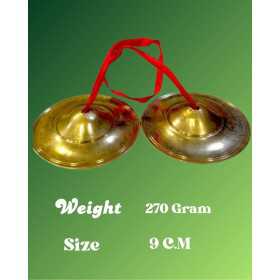
One of the most common questions from first-time buyers is: which kartal should I get? At mayapur.store, kartals are available in multiple weight options — 147 grams, 220 grams, 265 grams, 270 grams, and 280 grams. Understanding what these differences mean in practice will help you choose correctly.
Lighter kartals (in the 147–220 gram range) are generally recommended for children, beginners, or devotees who play for extended periods and need to conserve hand energy. They are easier to control and produce a brighter, slightly thinner tone. For japa programs or smaller home kirtan gatherings, these work very well.
Medium weight kartals (around 265–270 grams) are the workhorse of kirtan. This is what most experienced kirtan musicians reach for. The weight provides enough mass to produce a full, resonant tone without fatiguing the wrists over a long kirtan. This is also the range where the "ring" of the kartal — that sustained metallic sustain after each strike — tends to be most satisfying.
Heavier kartals (280 grams and above) produce deeper, more commanding sound. They are preferred for temple kirtan in large spaces where volume and projection matter. Veteran devotees who have been playing for years often prefer heavier kartals because the additional mass gives their playing a more authoritative quality. That said, they require stronger wrists and more practice to play accurately.
Larger-diameter kartals project more sound and have a more complex tone with more overtones. Smaller-diameter kartals are punchier and more precise. For most kirtan applications, a medium diameter — the standard size carried at mayapur.store — is ideal. Thickness affects the pitch: thicker kartals tend toward a lower pitch, thinner toward a brighter, higher ring.
Natural brass or bell-metal finish, without any painted coating or decorative lacquer, gives the purest tone. Over time, well-played kartals develop a patina that many musicians find adds warmth to the sound. The kartals at mayapur.store are finished in the traditional manner, built for sound quality rather than visual decoration.
One of the great advantages of the kartal over most other percussion instruments is the learning curve. A complete beginner can pick up kartals and contribute meaningfully to kirtan within an afternoon of practice. Mastery, of course, takes much longer — experienced kartal players can produce intricate rhythmic patterns that hold a kirtan together the way a metronome holds an orchestra.
Hold one kartal in each hand. In the right hand, place the cymbals so that one rests against your palm and the other is held between your thumb and fingers, with the cymbals facing each other. The same in the left hand. The clapping motion should come primarily from the wrists, not the arms — this allows for speed and reduces fatigue.
The correct technique involves bringing the cymbals together in a controlled, flat strike. Beginners sometimes angle one cymbal against the other in a glancing blow, which produces a thin, scratchy sound. A flat, face-to-face contact between the two cymbal surfaces produces the full, ringing tone you hear in temple kirtan.
The most common rhythm in ISKCON kirtan is based on the standard mridangam pattern used in the Panchatattva prayers and the Maha Mantra kirtan. Kartals typically follow a pattern that alternates between strong beats (where both cymbals come together firmly) and soft beats (lighter touches that fill in between). The simplest pattern for a new player is a steady quarter-note beat — one clap for every beat of the kirtan. As comfort grows, you can add the "and" beats between the main beats to create a more flowing sound.
Pay attention to the lead vocalist or the mridangam player. In Vaishnava kirtan, there is a natural leader whose rhythm everyone follows. Your job as a kartal player is to support that rhythm, not to compete with it. The beauty of kirtan comes from multiple musicians listening to each other and locking in together.
Kartals require minimal maintenance. After each use, wipe them down with a dry cloth to remove fingerprints and moisture. Store them in a cloth bag or pouch — the traditional bag in which kartals are kept is called a kartal bag, and it protects the instrument and keeps the pair together. Avoid dropping kartals on hard surfaces, as this can create small dents or chips that affect the tone.
Over time, brass kartals may develop a greenish patina (verdigris) in areas exposed to moisture. This can be removed with a gentle brass polish, though many devotees choose to leave the natural aging process undisturbed.
To understand why kartal matters, it helps to trace a single day at the ISKCON Mayapur temple — one of the largest Vaishnava temples in the world and the global headquarters of ISKCON.
Mangala Arati begins at 4:30 in the morning. Even at that hour, the kirtan hall fills with devotees and pilgrims, and the kartals begin almost immediately. The soft, high-pitched ring of kartals in the early morning, combined with the deeper tones of the mridangam and the voices of devotees singing the Brahma Samhita prayers, creates an atmosphere that is genuinely unlike anything else in the world. To be present for Mangala Arati at Mayapur is on the spiritual bucket list of virtually every ISKCON devotee globally.
The kartals continue through Tulasi Puja, Guru Puja, Srimad Bhagavatam class, and every kirtan program throughout the day. By the evening Gaura Arati — which draws huge crowds during festival seasons — the kirtan reaches an intensity that regular visitors describe as deeply transcendental. Through all of this, kartals are present, keeping time, providing the rhythmic foundation that holds the singing together.
When you buy kartals from mayapur.store, you are purchasing the same instrument that devotees use in these programs. The connection is not metaphorical. The store is operated by ISKCON Mayapur, and the instruments it carries are the same ones in active use in the temple.
Kartals are among the most thoughtful gifts you can give a devotee, and they work across a wide range of occasions and recipients.
For new devotees or those just beginning their Krishna consciousness journey, a pair of kartals is both practical and meaningful. It gives them an immediate way to participate in kirtan and builds confidence in their practice. For experienced devotees, a quality pair of kartals from Mayapur is something they will use for years and remember as a significant gift. For children being raised in a devotional household, learning to play kartal early is one of the most beautiful ways to build a lifetime relationship with kirtan.
Kartals from ISKCON Mayapur also carry weight as gifts because of their origin. Many devotees are deeply moved by receiving anything from Mayapur dhama — the birthplace of Sri Chaitanya Mahaprabhu. A pair of kartals from the official ISKCON Mayapur store is not just an instrument; it is a piece of the holy abode brought into the recipient's home.
Common occasions for gifting kartals include Janmashtami, Gaura Purnima, Radhastami, the birthday of a devotee, initiation ceremonies (where a devotee officially takes vows), and temple anniversaries.
There is no shortage of kartals available online. A quick search will turn up hundreds of listings from various sellers at various price points. So why choose mayapur.store?
The first reason is authenticity. The kartals at mayapur.store are sourced with the standards of a temple store in mind. They are not mass-produced novelty items. They are instruments selected for use in actual kirtan by actual devotees. The quality control that comes with operating as the official store of one of the world's major Vaishnava temples means something.
The second reason is that your purchase directly supports ISKCON Mayapur's activities. The store is operated as a seva — a devotional service — by the temple community. Revenue from the store goes toward the maintenance of the temple, the feeding programs, educational initiatives, and the development of the Mayapur project, which includes the magnificent Temple of the Vedic Planetarium currently under construction. When you buy a pair of kartals from mayapur.store, a portion of that purchase contributes to all of this.
The third reason is convenience with trust. mayapur.store ships across India with secure packaging. The purchasing process is straightforward, payment options are reliable, and customer support is available through the store's contact channels. You are buying from a known, established institution — not an unknown third-party listing.
No discussion of kartal is complete without acknowledging its relationship with the mridangam. These two instruments are the heart of ISKCON kirtan percussion. They work together, they balance each other, and learning to understand that relationship deepens both your enjoyment of kirtan and your ability to play.
The mridangam is a two-headed drum played horizontally across the lap or standing. It provides the primary rhythmic structure — the bass and mid tones that drive the kirtan forward. The kartal provides the high-frequency, ringing accent that sits on top of the mridangam's rhythm. Together, they create the full percussion picture. In most ISKCON kirtan recordings, if you close your eyes and listen carefully, you can hear exactly how the kartal and mridangam interlock, each filling space that the other leaves open.
Beginners often find kartal easier to start with than mridangam because it requires less technical knowledge of tala (rhythmic cycle) systems. You can pick up kartals and keep basic time relatively quickly. But do not be fooled into thinking kartal is a lesser instrument. Skilled kartal players bring a dimension to kirtan that no other instrument can replicate.
With reasonable care, a good pair of brass kartals will last many years — sometimes decades. The main risks are physical damage from dropping and corrosion from moisture exposure. Neither is hard to prevent. Many long-time devotees still play kartals they received as gifts fifteen or twenty years ago.
Smaller, lighter kartals in the 147–220 gram range are suitable for children from around age six or seven. Younger children sometimes use miniature kartals that are even lighter, though the options at mayapur.store are primarily sized for older children and adults. For very young children, supervision while playing is recommended to prevent the kind of enthusiastic playing that leads to accidental collision with faces.
Kartal and manjira are related but distinct instruments. Manjira refers specifically to small, high-pitched cymbals with a very short sustain and bright tone, often used in classical or folk music contexts. Kartal, as used in ISKCON kirtan, typically refers to the flat brass plate design with a fuller, longer-sustaining ring. The terms are sometimes used interchangeably in casual conversation, but technically they describe different designs.
New brass kartals sometimes have a slightly harsher edge to their sound that softens with use. Many players find that after a few kirtan sessions, the tone of a new pair of kartals settles into something richer and more complex. This is normal and desirable. Play them, and let them develop their voice.
In the Siksastakam — the eight verses composed by Sri Chaitanya Mahaprabhu, considered the summary of his entire philosophy — the first verse describes the chanting of the Holy Names as cleansing the mirror of the mind, extinguishing the forest fire of material existence, spreading the fragrance of transcendental bliss, and filling the heart with ocean-like joy. Every devotee who has sat in deep kirtan with kartals ringing and voices rising has experienced at least a taste of what those words point toward.
The kartal is not a complicated instrument. It does not require years of music school or special talent. What it requires is willingness — willingness to pick it up, to keep time, to participate, to add your voice and your rhythm to the collective offering of kirtan. That willingness is itself a form of bhakti, of devotion.
Whether you are setting up a home altar and want to begin a daily kirtan practice, whether you are a temple devotee looking for a quality replacement pair, whether you are a parent who wants to bring your child into the tradition of Vaishnava music, or whether you are a gift-giver looking for something genuinely meaningful — the kartals at mayapur.store are the right choice.
Buy from the source. Buy from the dhama. Play with full heart.
Hare Krishna.
There is 1 product.