
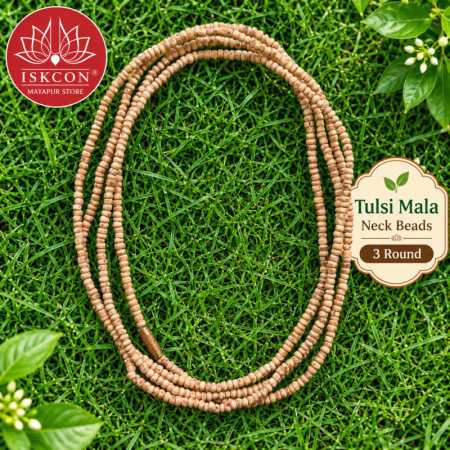

Kanthi Mala 3 Round Small Disc-Shaped Beads
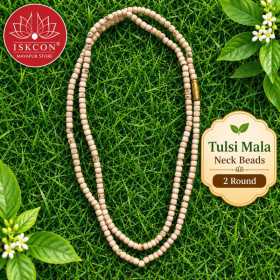
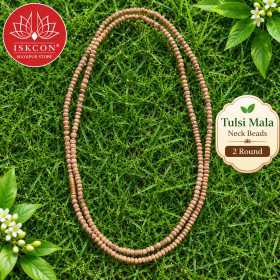
Kanthi Mala 3 Round Small Disc-Shaped Beads brings a shape rarely seen in most tulsi malas: flat-faced, coin-like discs instead of the usual round or barrel cut. Three loops of these small beads pack closely together, giving the strand a tighter, more textured look and a faint shimmer as the flat faces catch light differently while the mala moves. It offers more visual detail than a plain round-bead mala without the size and boldness of a barrel-cut style, a distinctive pick for someone who already owns a more common shape and wants something less typical. As with any real tulsi wood, natural grain and small variations between beads are expected. Priced among the higher options in the range, reflecting the extra shaping each disc bead requires.

(edit with the Customer Reassurance module)

(edit with the Customer Reassurance module)

(edit with the Customer Reassurance module)
Kanthi Mala 3 Round Small Disc-Shaped Beads
Most tulsi beads are cut to be longer than they are wide. This one goes the other way. A disc-shaped bead is flattened — wider across its face than it is deep front to back — so instead of a row of little cylinders, the strand reads as a line of thin, coin-like discs stacked edge to edge.
Why the shape changes the feel. Because each disc is thin along the direction the thread runs, three loops of them pack more beads into the same length than round or oval beads would. That density is what gives this mala its particular texture — closer, tighter spacing than our other three-loop styles, even though the individual beads are small.
The price reflects the shape, not the size. At ₹300, this sits among the higher-priced malas here, which can seem odd for small beads. The reason is the cut itself: shaping a disc means flattening two faces evenly on a bead that's naturally closer to round, which takes a more deliberate hand than a simple round or oval cut. You're paying for the extra shaping step, not for larger beads.
What it looks like worn. From a short distance, the discs blend into a fine, almost woven-looking band — finer in appearance than barrel-cut beads, but with more visual rhythm than a strand of plain round beads, because the flat faces catch light differently as the mala moves.
A fit detail specific to disc beads. Flattened beads sit closer together on the thread than round ones of a similar diameter, so a disc mala of a given bead count will usually measure shorter than a round-bead mala with the same number of beads. If you're comparing lengths across our listings, go by the stated length in centimetres or inches rather than assuming bead count alone tells you how the mala will sit.
Where thread wear shows up. Because each disc has two flat faces pressed close to its neighbours, there's less give in the strand than with rounded beads, and the cord between beads takes slightly more pressure at each contact point. It's not a durability problem, just a reason to check the strand for tautness now and then rather than waiting for visible fraying.
Who tends to like this style. Buyers who've already worn a round or oval mala and want something with more visual detail, without the size and boldness of a barrel-cut mala, are the ones who usually pick this up. It's also a style some devotees choose specifically because it's less common — most tulsi malas sold locally are round or barrel, so a disc-bead strand stands out as a deliberate choice rather than a default one.
FAQ
Are disc beads harder to source than round beads? They take more shaping work per bead, which is part of why fewer sellers carry them and why the price sits where it does.
Will the flat faces wear smooth over time, changing the look? Some softening at the edges is normal with years of handling, similar to how any tulsi wood mellows, but the disc shape itself holds up well since there's no sharp point to wear down first.
Does three loops of disc beads feel heavier than three loops of small round beads? Not meaningfully — the beads are thin along the strand's length, so despite the denser packing, the overall weight stays close to other small-bead malas.


feedback Report comment