
Why did Krishna run to embrace a poor brahmin in rags? Read the Sudama story from the Bhagavatam and learn how a...
Latest posts
-
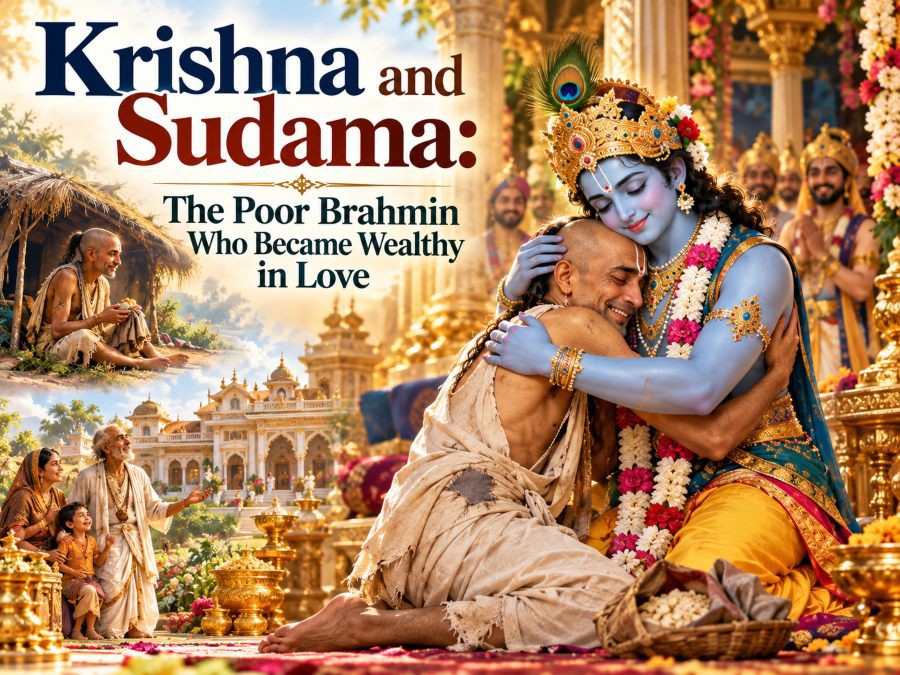 Krishna and Sudama: The Poor Brahmin Who Became Wealthy in LoveRead more
 -
 Vamana Avatar: How Three Steps Humbled Bali MaharajaRead more
Why did a powerful king give away three worlds to a boy asking for three steps? Learn the Vamana avatar story from...
-
 The Bhagavatam on Marriage: Duty, Love and Spiritual PartnershipRead more
What does the Bhagavatam say about marriage? Through the stories of Kardama and Devahuti, Rukmini's secret letter and...
-
 What Is Prema? The Bhagavatam's Highest Stage of Love for GodRead more
Prema is love for God with no "because" attached. Learn how the Bhagavatam describes it, the nine steps from faith to...
-
 Is Shiva Parvati Kalyana Mentioned in Srimad Bhagavatam? What the Scripture Really SaysRead more
Looking for Shiva and Parvati's wedding in the Srimad Bhagavatam? Find out what the scripture actually describes,...
-
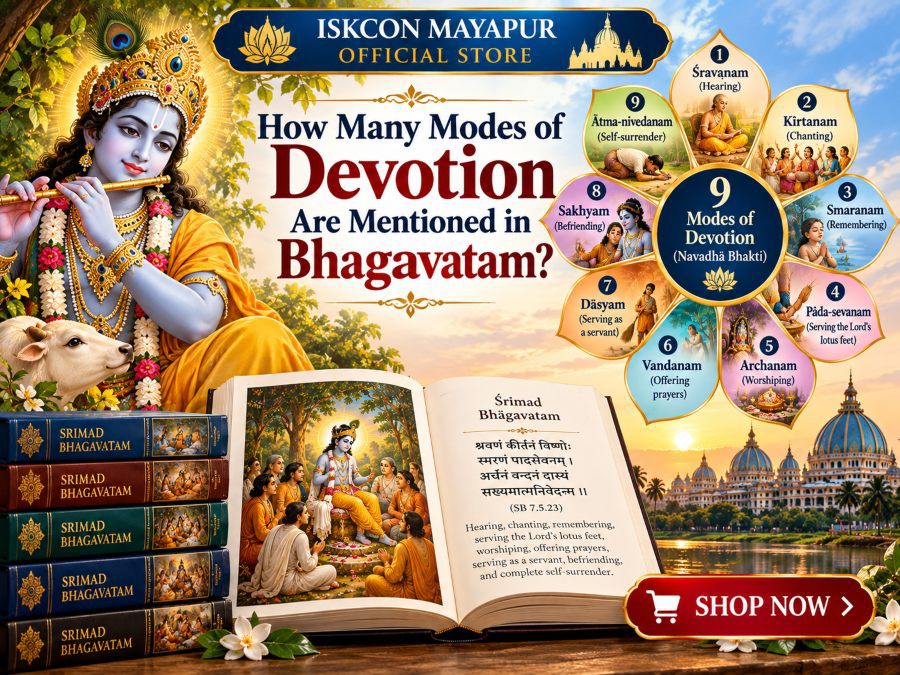 How Many Modes of Devotion Are Mentioned in Bhagavatam?Read more
A young boy named Prahlada listed nine ways to serve God, and the Bhagavatam keeps them as its answer. Learn what the...
-
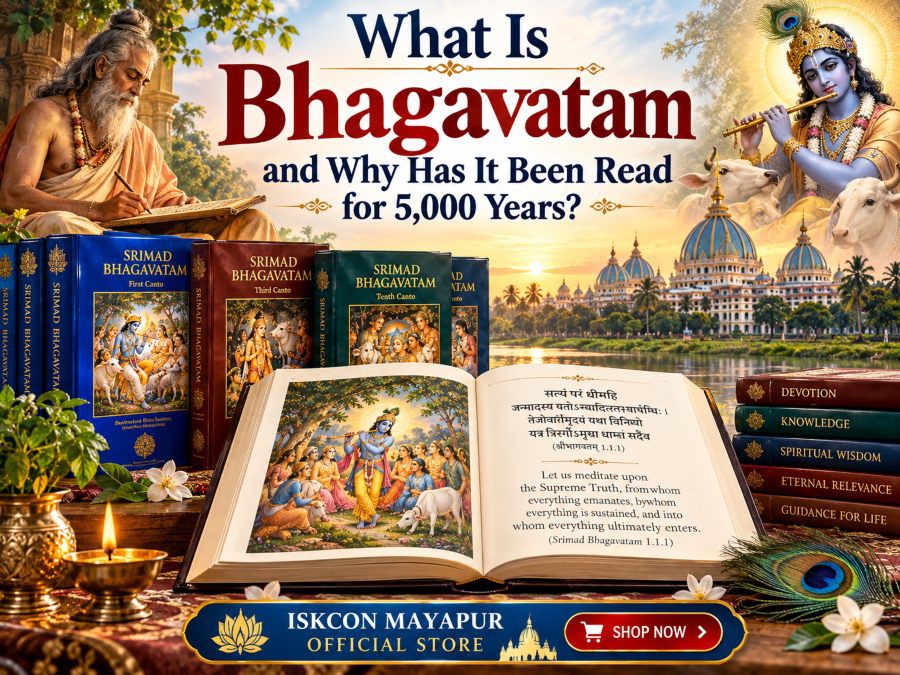 What Is Bhagavatam and Why Has It Been Read for 5,000 Years?Read more
A dying king asked one question, and the answer became the Bhagavatam. Learn what this Sanskrit scripture contains,...
-
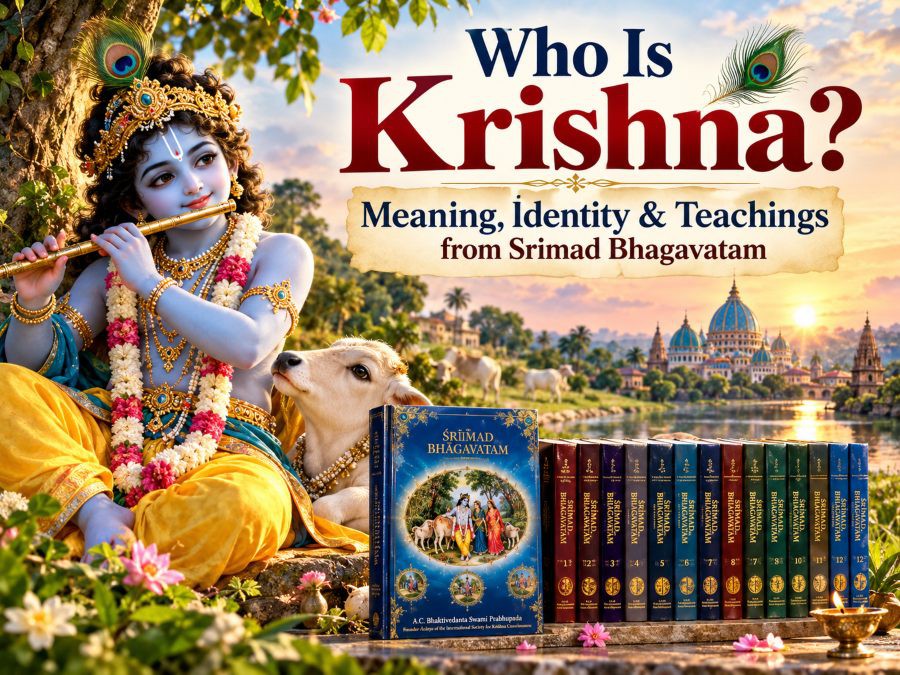 Who Is Lord Krishna? His Meaning, Teachings and Pastimes ExplainedRead more
Discover who Krishna is according to Srimad Bhagavatam, including His divine identity, childhood pastimes, teachings,...
-
 Incense in Islam: Bakhoor, Agarbatti and What Tradition SaysRead more
Is burning fragrance part of Muslim tradition? Explore incense in Islam, from the Prophetic practice of fumigating...
-
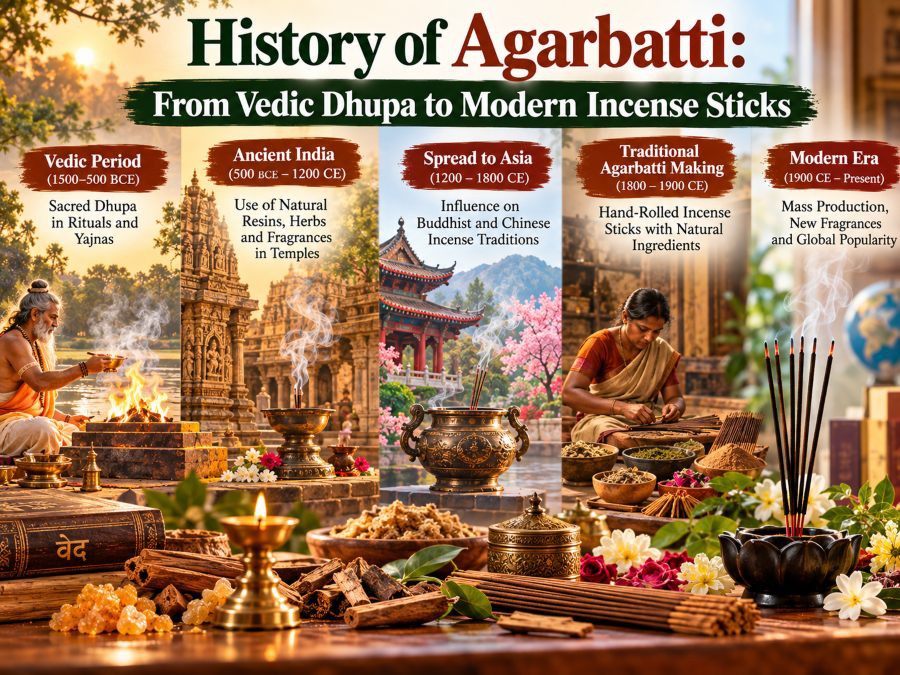 History of Agarbatti: From Vedic Dhupa to Modern Incense SticksRead more
Where did agarbatti really come from? Follow the history of agarbatti from Vedic fire rituals and temple dhupa to...
Blog categories
- Default category (0)
- MUSICAL INSTRUMENT (1)
- BOOK (5)
- DEVOTIONAL GIFT (0)
- Blog (30) click
- CHANDAN (12)
- Bhagavatam Wisdom Series (68)
- Krishna Consciousness (14)
- Mridangam Musical Instrument (6)
- Bhagavad Gita for Beginners (13)
- Bhagavad Gita As It Is (37) click
- Bhagavad Gita As It Is Telugu (0)
- Bhagavad Gita As It Is Marathi (0)
- Bhagavad Gita As It Is In Hindi (0)
- Bhagavad Gita As It Is In English (0)
- Bhagavad Gita As It Is In Bengali (8)
- Bhagavad Gita As It Is In Kannada (0)
- Bhagavad Gita As It Is In Gujarati (0)
- Bhagavad Gita As It Is In Panjabi (0)
- Bhagavad Gita As It Is In Tamil (0)
- Bhagavad Gita As It Is Odia (0)
- BHAGAVAD GITA As It Is GERMAN (0)
- Bhagavad Gita As It Is In French (0)
- Bhagavad Gita As It Is In Nepali (0)
- Bhagavad Gita As It Is In Assamese (0)
- Incense or Agarbatti (38)
- Lord Chaitanya Mahaprabhu (3)
- Vedic Temple Mayapur (14)
- kalki (15)
- Mahabharata – Dharma & Destiny (27)
- Vaishnava Scriptures (4)
- healthy product (4)
- chaitanya mahaprabhu (5)
- Tulsi Mala Guide (17)
Search in blog
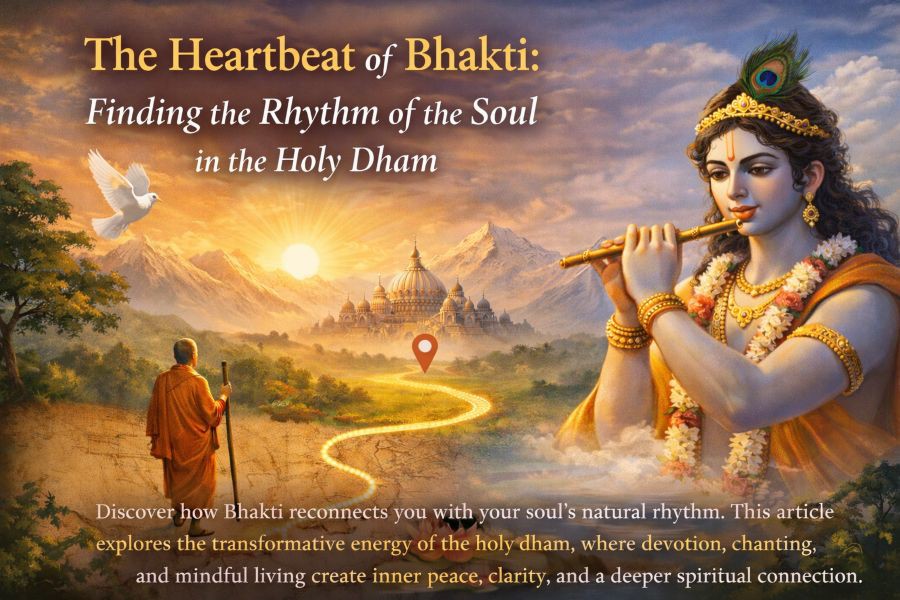
The Heartbeat of Bhakti: Finding the Rhythm of the Soul in the Holy Dham
The Heartbeat of Bhakti: Finding the Rhythm of the Soul in the Holy Dham
In a world driven by noise, speed, and constant distraction, many people quietly feel out of sync with themselves. There is a subtle longing—a search for something deeper, something more meaningful than routine success and temporary pleasures. This longing is not accidental. It is the soul’s call to reconnect with its natural rhythm. For those who wish to explore this deeper dimension of life, the sacred land of Mayapur offers a profound doorway into devotion, awareness, and inner harmony.
Bhakti, or devotion, is often described as the heart of spiritual life. But beyond definitions, it is an experience—a living rhythm that aligns the mind, heart, and soul. When this rhythm is discovered, life begins to flow with clarity, purpose, and peace.
Bhakti: More Than a Practice
Bhakti is commonly translated as devotion, but its essence goes far beyond ritual or belief. It is a state of connection—a relationship between the individual and the divine.
In Bhakti, the focus shifts from self-centered thinking to a broader awareness. It is not about renouncing life but about transforming it. Every action, when performed with the right intention, becomes an expression of devotion.
This transformation is subtle yet powerful. It does not require dramatic changes, but it gradually reshapes how one experiences life.
The Soul’s Natural Rhythm
Just as the body has a heartbeat, the soul has its own rhythm. This rhythm is often overshadowed by external influences—stress, expectations, and constant stimulation.
When disconnected from this inner rhythm, individuals may feel restless, anxious, or unfulfilled. No amount of external success can fully compensate for this disconnection.
Bhakti acts as a bridge. It helps individuals rediscover their natural state—a state of peace, awareness, and connection.
The Significance of the Holy Dham
A holy dham is not just a physical location; it is a space where spiritual consciousness is deeply rooted and continuously nurtured. Places like Mayapur are considered sacred because they carry a living tradition of devotion.
In such environments, the rhythm of Bhakti is not something one has to create—it is already present. The atmosphere itself supports introspection and connection.
Visitors often describe a sense of calm that arises naturally, without effort. This is the influence of a space where devotion is practiced consistently.
The Role of Chanting in Bhakti
One of the most accessible practices in Bhakti is chanting. It involves the repetition of divine names, creating a rhythm that aligns the mind with the heart.
Chanting is not merely sound—it is vibration. This vibration has a calming effect on the mind and helps reduce internal noise.
As chanting becomes regular, it creates a sense of stability. Thoughts become clearer, emotions more balanced, and awareness more focused.
This simple practice becomes a powerful tool for reconnecting with the soul’s rhythm.
Living in Harmony: Daily Life in Devotion
Bhakti is not limited to specific moments of prayer or meditation. It extends into everyday life.
- Eating becomes an act of gratitude
- Work becomes a form of service
- Relationships become opportunities for growth
This integration creates harmony. Instead of dividing life into spiritual and material, Bhakti unifies them.
This unity is what allows individuals to remain balanced, even in challenging situations.
The Power of Community in the Holy Dham
Another essential aspect of Bhakti is community. Being surrounded by individuals who share similar values reinforces spiritual practices.
In places like Mayapur, community life is centered around cooperation, respect, and shared purpose. This creates an environment where growth is supported.
Community does not eliminate challenges, but it provides a framework for navigating them with awareness.
It reminds individuals that they are not alone on their journey.
Detachment: Freedom Within Engagement
A key principle in Bhakti is detachment—not as withdrawal, but as freedom within involvement.
Detachment allows individuals to engage fully in life without becoming overwhelmed by outcomes. It creates emotional stability.
When actions are performed with devotion rather than expectation, stress reduces. There is a sense of flow rather than resistance.
This balance is essential for maintaining the rhythm of the soul.
The Experience of Stillness
As Bhakti deepens, a natural stillness begins to emerge. This stillness is not emptiness—it is presence.
In this state, the mind becomes quieter. Thoughts lose their intensity, and awareness becomes clearer.
This stillness is often described as peace, but it is more than that. It is a sense of being aligned with oneself.
It is the moment when the soul’s rhythm becomes audible again.
Challenges on the Path of Bhakti
Like any journey, the path of Bhakti is not without challenges. Distractions, doubts, and habits can create obstacles.
However, these challenges are not signs of failure. They are part of the process.
Each challenge provides an opportunity to deepen understanding and strengthen commitment.
With patience and consistency, obstacles become stepping stones.
The Transformation Within
The most significant change in Bhakti is internal. It is not always visible to others, but it is deeply felt.
- Reactions become responses
- Anxiety transforms into awareness
- Confusion gives way to clarity
This transformation is gradual. It does not happen overnight, but it is lasting.
It is the result of aligning with the natural rhythm of the soul.
Bringing the Holy Dham Into Daily Life
While visiting a holy dham can be transformative, the essence of Bhakti is not limited to location.
The practices and principles learned can be integrated into everyday life.
- Creating moments of silence
- Practicing gratitude
- Engaging in mindful actions
These small steps help maintain the connection, regardless of environment.
The goal is not to escape the world, but to experience it differently.
Why Bhakti Matters Today
In today’s fast-paced world, the need for balance and clarity is greater than ever.
Bhakti offers a path that is both simple and profound. It does not require complex systems or extreme discipline.
It provides tools that can be applied in any context—personal, professional, or social.
This universality makes Bhakti relevant across cultures and lifestyles.
The Rhythm of the Soul: A Lifelong Journey
Finding the rhythm of the soul is not a one-time event. It is an ongoing journey.
There will be moments of clarity and moments of confusion. What matters is continuity.
Each step, no matter how small, contributes to the overall journey.
Over time, the rhythm becomes more natural, more stable, and more integrated into daily life.
Conclusion: Listening to the Inner Call
The heartbeat of Bhakti is always present, waiting to be heard. It is not something that needs to be created, but something that needs to be recognized.
In the sacred environment of places like Mayapur, this recognition becomes easier. The noise of the world fades, and the inner voice becomes clearer.
But ultimately, the journey is internal. It is about listening—to the subtle rhythm that guides us toward peace, purpose, and connection.
When that rhythm is found, life no longer feels fragmented. It flows.
And in that flow, the soul finally feels at home.
Posted in: Vedic Temple Mayapur
Related posts
-
 How to Book Room in ISKCON Mayapur? Learn the complete process to book a room at ISKCON Mayapur, including online booking, guest house options, prices,...Read more
 -
 How to Reach ISKCON Mayapur from KolkataDiscover the best ways to reach ISKCON Mayapur from Kolkata, including train, bus, taxi, ferry routes, travel time,...Read more
 -
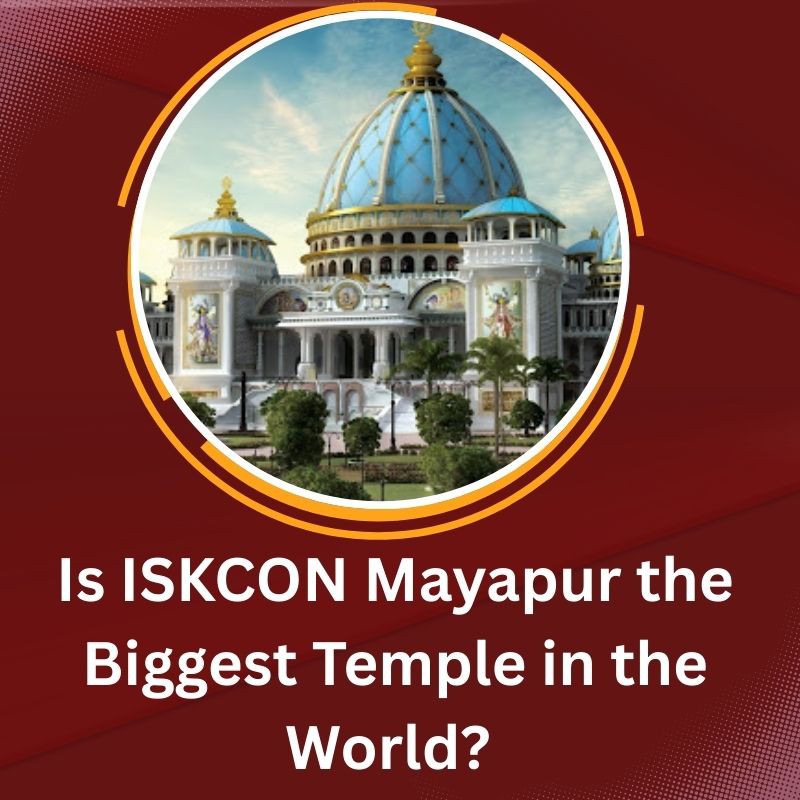 Is ISKCON Mayapur the Biggest Temple in the World? Explore why ISKCON Mayapur is considered the biggest temple in the world, with TOVP’s massive dome, grand halls,...Read more
 -
 Are Muslims Allowed in ISKCON Mayapur? Learn if Muslims are allowed in ISKCON Mayapur, including temple guidelines, visitor tips, festival etiquette,...Read more
 -
 ISKCON Mayapur Accommodation GuideExplore the complete ISKCON Mayapur accommodation guide, including guesthouses, premium stays, budget options,...Read more
Leave a comment