
Why did Krishna run to embrace a poor brahmin in rags? Read the Sudama story from the Bhagavatam and learn how a...
Latest posts
-
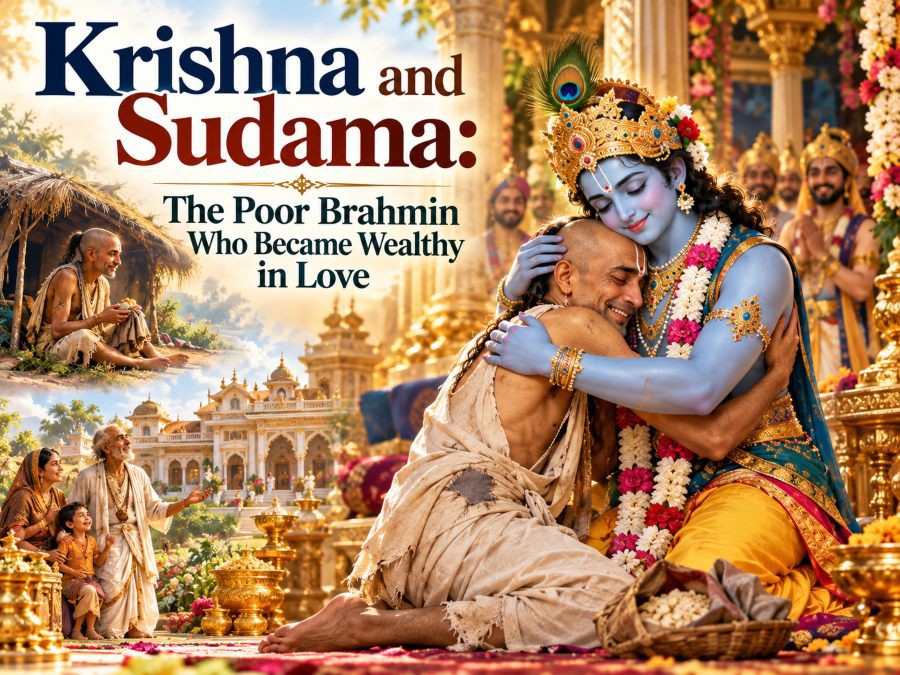 Krishna and Sudama: The Poor Brahmin Who Became Wealthy in LoveRead more
 -
 Vamana Avatar: How Three Steps Humbled Bali MaharajaRead more
Why did a powerful king give away three worlds to a boy asking for three steps? Learn the Vamana avatar story from...
-
 The Bhagavatam on Marriage: Duty, Love and Spiritual PartnershipRead more
What does the Bhagavatam say about marriage? Through the stories of Kardama and Devahuti, Rukmini's secret letter and...
-
 What Is Prema? The Bhagavatam's Highest Stage of Love for GodRead more
Prema is love for God with no "because" attached. Learn how the Bhagavatam describes it, the nine steps from faith to...
-
 Is Shiva Parvati Kalyana Mentioned in Srimad Bhagavatam? What the Scripture Really SaysRead more
Looking for Shiva and Parvati's wedding in the Srimad Bhagavatam? Find out what the scripture actually describes,...
-
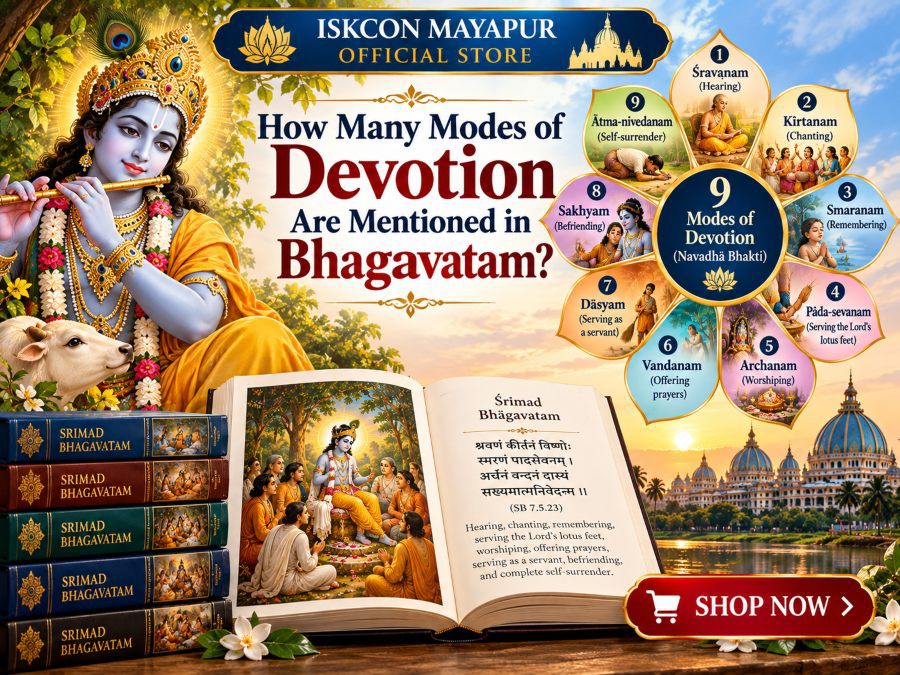 How Many Modes of Devotion Are Mentioned in Bhagavatam?Read more
A young boy named Prahlada listed nine ways to serve God, and the Bhagavatam keeps them as its answer. Learn what the...
-
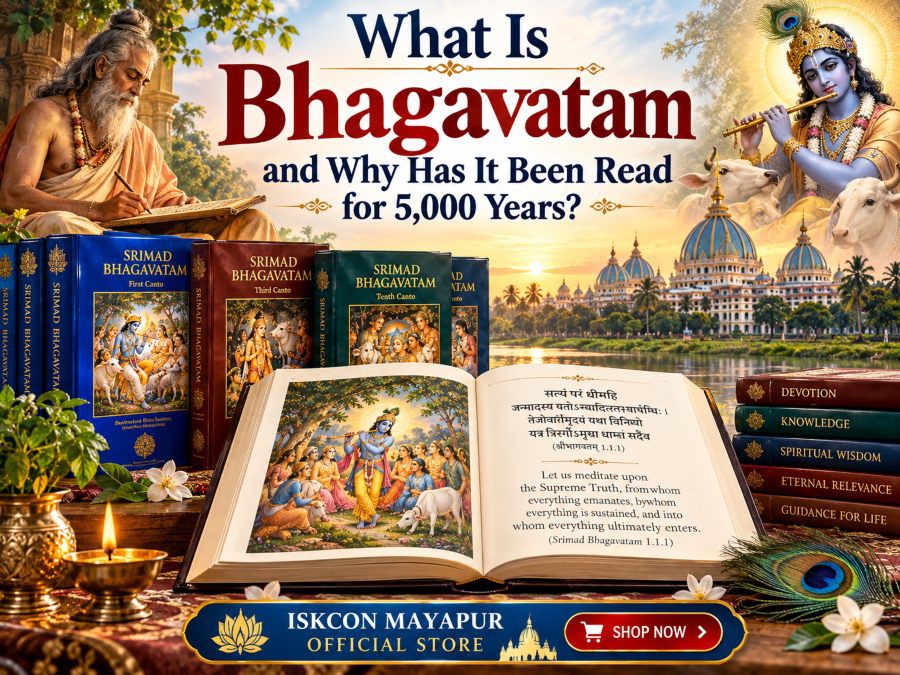 What Is Bhagavatam and Why Has It Been Read for 5,000 Years?Read more
A dying king asked one question, and the answer became the Bhagavatam. Learn what this Sanskrit scripture contains,...
-
 Who Is Lord Krishna? His Meaning, Teachings and Pastimes ExplainedRead more
Discover who Krishna is according to Srimad Bhagavatam, including His divine identity, childhood pastimes, teachings,...
-
 Incense in Islam: Bakhoor, Agarbatti and What Tradition SaysRead more
Is burning fragrance part of Muslim tradition? Explore incense in Islam, from the Prophetic practice of fumigating...
-
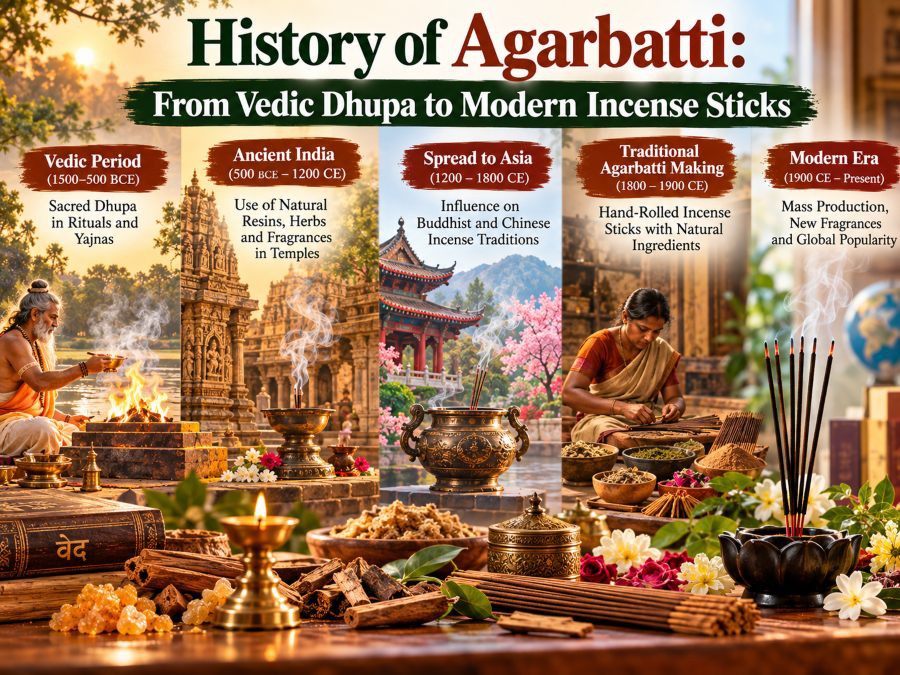 History of Agarbatti: From Vedic Dhupa to Modern Incense SticksRead more
Where did agarbatti really come from? Follow the history of agarbatti from Vedic fire rituals and temple dhupa to...
Blog categories
- Default category (0)
- MUSICAL INSTRUMENT (1)
- BOOK (5)
- DEVOTIONAL GIFT (0)
- Blog (30) click
- CHANDAN (12)
- Bhagavatam Wisdom Series (68)
- Krishna Consciousness (14)
- Mridangam Musical Instrument (6)
- Bhagavad Gita for Beginners (13)
- Bhagavad Gita As It Is (37) click
- Bhagavad Gita As It Is Telugu (0)
- Bhagavad Gita As It Is Marathi (0)
- Bhagavad Gita As It Is In Hindi (0)
- Bhagavad Gita As It Is In English (0)
- Bhagavad Gita As It Is In Bengali (8)
- Bhagavad Gita As It Is In Kannada (0)
- Bhagavad Gita As It Is In Gujarati (0)
- Bhagavad Gita As It Is In Panjabi (0)
- Bhagavad Gita As It Is In Tamil (0)
- Bhagavad Gita As It Is Odia (0)
- BHAGAVAD GITA As It Is GERMAN (0)
- Bhagavad Gita As It Is In French (0)
- Bhagavad Gita As It Is In Nepali (0)
- Bhagavad Gita As It Is In Assamese (0)
- Incense or Agarbatti (38)
- Lord Chaitanya Mahaprabhu (3)
- Vedic Temple Mayapur (14)
- kalki (15)
- Mahabharata – Dharma & Destiny (27)
- Vaishnava Scriptures (4)
- healthy product (4)
- chaitanya mahaprabhu (5)
- Tulsi Mala Guide (17)
Search in blog

What the Gita Says About Ambition Without Attachment
What the Gita Says About Ambition Without Attachment
Can you want something with everything you have, chase it relentlessly, and still walk away untouched if it slips through your fingers? Most people would say that's impossible — that real ambition requires real attachment, that you can't push hard for a goal without your happiness getting tangled up in whether you get it. The Bhagavad Gita disagrees, and it makes its case through one of the most misunderstood teachings in the entire text. If you've ever wanted to know whether it's possible to be genuinely driven without being genuinely anxious, a proper reading of the ISKCON Bhagavad Gita lays out Krishna's answer in far more depth than any quote floating around online.
This isn't a call to lower your ambitions. It's an argument for redirecting where you place your emotional stake in them.
The Sentence That Confuses Everyone at First
"You have a right to perform your prescribed duties, but you are not entitled to the fruits of your actions."
People hear this and assume Krishna is telling Arjuna to stop caring about winning the war. He isn't. Arjuna still needs to fight with full skill and commitment — Krishna never once tells him to hold back or half-try. What Krishna is separating are two things people usually fuse together without noticing: the effort you put in, and the emotional grip you keep on the result.
Ambition, in this framing, isn't the problem. Attachment to a specific outcome is. You can want the promotion badly enough to prepare relentlessly for it, and still not fall apart if someone else gets it. Those two things aren't contradictions. They're actually a more advanced version of drive than the anxious, white-knuckled kind most people are used to.
Why Attachment Quietly Sabotages the Very Thing You're Chasing
Here's something counterintuitive worth sitting with: attachment to outcomes doesn't just cause suffering when things go wrong. It often makes the outcome itself harder to reach.
Think about the last time you were desperate for something — a job offer, someone's approval, a deal closing. Desperation has a smell. It shows up as over-explaining, as hesitation dressed up as caution, as decisions made from fear rather than clarity. A mind gripped by attachment isn't thinking clearly. It's negotiating with panic. Krishna's argument is that detached ambition — full effort, loose grip — actually performs better precisely because the mind stays clear enough to act with skill instead of fear.
Arjuna's paralysis on the battlefield is the perfect illustration. He wasn't frozen because he lacked ability. He was frozen because he'd become so attached to every possible outcome — his family's fate, his own guilt, the war's consequences — that he couldn't act at all. Attachment didn't protect him. It nearly disabled him completely.
The Difference Between Wanting Something and Needing It to Happen
There's a subtle but important line here, and once you see it, you can't unsee it in your own life.
Wanting something means you're moving toward a goal with energy and focus. Needing it to happen means your sense of peace, worth, or identity is now hostage to a result you don't fully control. The Gita isn't asking you to stop wanting things. It's warning you about the second version — the one where your inner state depends entirely on circumstances outside your authority.
A few signs the "needing" version has taken over:
- You feel a spike of dread just imagining the outcome not going your way.
- You've started making decisions from fear of losing the result rather than from genuine strategy.
- Your mood swings dramatically based on small updates related to the goal.
- You've quietly built an entire identity around achieving this one specific thing.
None of these signs mean you're ambitious. They mean you've handed your peace of mind over to something you were never fully in charge of.
Krishna's Real Argument: Effort Is Yours, Results Never Were
It's worth being blunt about why this teaching holds up logically, not just spiritually. Any outcome you're chasing depends on dozens of factors outside your control — timing, other people's decisions, market conditions, sheer chance. You contribute one variable: your effort, honesty, and skill. Everything else belongs to a much larger equation you were never solving alone.
So attaching your emotional stability to a result you only partially influence is, mathematically speaking, an unstable strategy. It's like building a house on land you don't own. Krishna's alternative isn't apathy — it's putting your emotional foundation somewhere sturdier: the quality of your own action, which actually is fully yours.
This is why the Gita's version of ambition looks less like a rollercoaster and more like a steady current. Big goals, sustained effort, real intensity — just without the constant emotional whiplash of hoping and dreading in equal measure.
What This Looks Like in Practice, Not Just in Theory
It's easy to nod along with this philosophically and then completely forget it the moment a real deadline or opportunity shows up. A few practical shifts help translate the idea into something usable:
Set process goals, not just outcome goals. Instead of "I need this client to say yes," try "I will prepare the best possible pitch and deliver it with full clarity." One of these is entirely within your control. The other never was.
Notice the difference between preparation and rumination. Preparing thoroughly is useful. Replaying imagined outcomes on a loop, days before anything has even happened, is just attachment wearing a productive disguise.
Celebrate effort quality, independent of results. If you gave something everything you honestly had, that's worth acknowledging regardless of how it turned out. This isn't about lowering standards — it's about measuring the right thing.
Let go publicly, not just privately. Say it out loud to yourself after the work is done: "I did what was mine to do. What happens next isn't." It sounds small. It genuinely changes how the waiting period feels.
Why This Isn't Passive — It's Actually Harder Than Blind Ambition
There's a lazy misreading worth correcting directly. Detached ambition isn't the easier path. Blind, attached ambition is almost automatic — everyone knows how to want something desperately and panic about losing it. That's the default human setting.
Detachment requires far more discipline. It means showing up with full intensity while consciously refusing to let your identity ride on the result — a balance most people never actually practice, because it's genuinely uncomfortable at first. It can feel like you're supposed to care less. You're not. You're being asked to care about a different part of the process — the part that was always yours to control.
You can build a serious, ambitious life this way. Careers, businesses, relationships built on this principle tend to hold up better under pressure, precisely because they're not one bad outcome away from collapsing someone's entire sense of self.
The Kind of Drive That Actually Lasts
There's a reason burnout hits so many ambitious, hardworking people. It's rarely the work itself that exhausts them — it's the relentless emotional grip on outcomes, the constant internal negotiation with fear and hope, repeated daily for years. That kind of ambition burns hot and fast, then collapses.
The Gita's model, tested at Mayapur Store and among countless readers who've actually applied it rather than just admired it as philosophy, describes something more sustainable. Full effort. Genuine intensity. Zero hostage-taking of your own peace of mind. That combination doesn't just feel better along the way — it tends to outlast the anxious version by decades, because it was never dependent on a string of favorable outcomes to keep going in the first place.
Arjuna eventually picked up his bow with everything he had, still ambitious for victory, still committed to the fight — just no longer holding his entire sense of self hostage to how it would end. That's not diminished ambition. If anything, it's ambition finally strong enough to stand without needing a guaranteed outcome to hold it up.
Posted in: Bhagavad Gita As It Is
Related posts
-
 Why the Bhagavad Gita Feels Like a Personal Conversation with KrishnaThe Bhagavad Gita feels like a personal conversation with Krishna because its timeless wisdom directly addresses our...Read more
 -
 Shrimad Bhagwat Geeta: The Forgotten Life Manual for Modern StressShrimad Bhagwat Geeta is more than a sacred scripture—it’s a forgotten life manual that offers timeless solutions for...Read more
 -
 Who Wrote the Bhagavad Gita? Discover the true authorship of the Bhagavad Gita—exploring Ved Vyasa’s role as the compiler, Lord Krishna’s divine...Read more
 -
 How Many Shlokas in Bhagavad Gita? Complete Chapter-Wise Breakdown & MeaningDiscover how many shlokas are in the Bhagavad Gita, with a complete chapter-wise breakdown, variations in verse...Read more
 -
 How to Read Bhagavad Gita: A Complete Step-by-Step Guide for BeginnersDiscover how to read the Bhagavad Gita step by step—learn the right mindset, chapter order, and tips to understand...Read more
Leave a comment