
Why did Krishna run to embrace a poor brahmin in rags? Read the Sudama story from the Bhagavatam and learn how a...
Latest posts
-
 Krishna and Sudama: The Poor Brahmin Who Became Wealthy in LoveRead more
 -
 Vamana Avatar: How Three Steps Humbled Bali MaharajaRead more
Why did a powerful king give away three worlds to a boy asking for three steps? Learn the Vamana avatar story from...
-
 The Bhagavatam on Marriage: Duty, Love and Spiritual PartnershipRead more
What does the Bhagavatam say about marriage? Through the stories of Kardama and Devahuti, Rukmini's secret letter and...
-
 What Is Prema? The Bhagavatam's Highest Stage of Love for GodRead more
Prema is love for God with no "because" attached. Learn how the Bhagavatam describes it, the nine steps from faith to...
-
 Is Shiva Parvati Kalyana Mentioned in Srimad Bhagavatam? What the Scripture Really SaysRead more
Looking for Shiva and Parvati's wedding in the Srimad Bhagavatam? Find out what the scripture actually describes,...
-
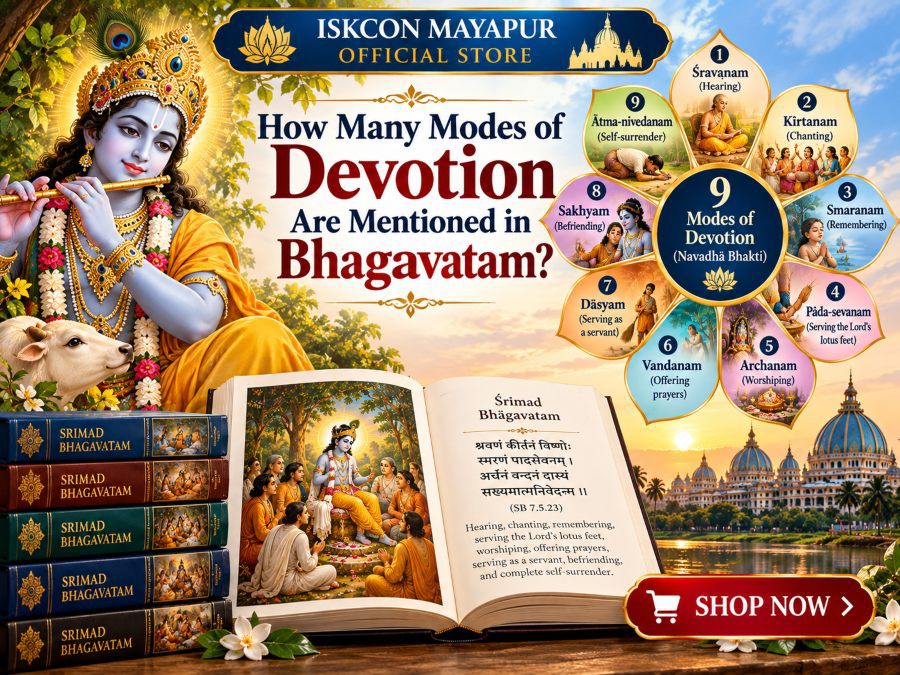 How Many Modes of Devotion Are Mentioned in Bhagavatam?Read more
A young boy named Prahlada listed nine ways to serve God, and the Bhagavatam keeps them as its answer. Learn what the...
-
 What Is Bhagavatam and Why Has It Been Read for 5,000 Years?Read more
A dying king asked one question, and the answer became the Bhagavatam. Learn what this Sanskrit scripture contains,...
-
 Who Is Lord Krishna? His Meaning, Teachings and Pastimes ExplainedRead more
Discover who Krishna is according to Srimad Bhagavatam, including His divine identity, childhood pastimes, teachings,...
-
 Incense in Islam: Bakhoor, Agarbatti and What Tradition SaysRead more
Is burning fragrance part of Muslim tradition? Explore incense in Islam, from the Prophetic practice of fumigating...
-
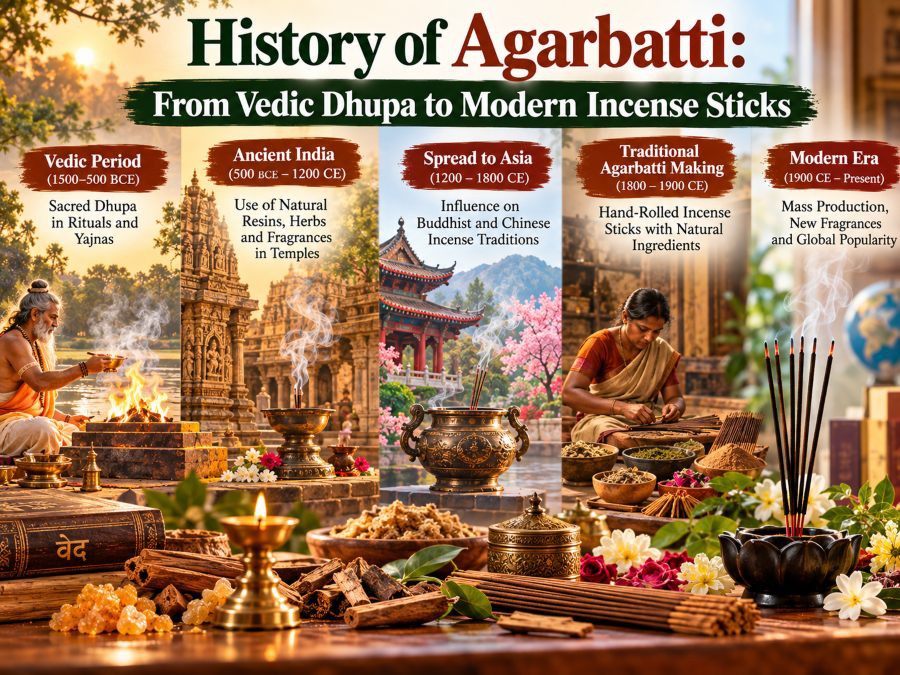 History of Agarbatti: From Vedic Dhupa to Modern Incense SticksRead more
Where did agarbatti really come from? Follow the history of agarbatti from Vedic fire rituals and temple dhupa to...
Blog categories
- Default category (0)
- MUSICAL INSTRUMENT (1)
- BOOK (5)
- DEVOTIONAL GIFT (0)
- Blog (30) click
- CHANDAN (12)
- Bhagavatam Wisdom Series (68)
- Krishna Consciousness (14)
- Mridangam Musical Instrument (6)
- Bhagavad Gita for Beginners (13)
- Bhagavad Gita As It Is (37) click
- Bhagavad Gita As It Is Telugu (0)
- Bhagavad Gita As It Is Marathi (0)
- Bhagavad Gita As It Is In Hindi (0)
- Bhagavad Gita As It Is In English (0)
- Bhagavad Gita As It Is In Bengali (8)
- Bhagavad Gita As It Is In Kannada (0)
- Bhagavad Gita As It Is In Gujarati (0)
- Bhagavad Gita As It Is In Panjabi (0)
- Bhagavad Gita As It Is In Tamil (0)
- Bhagavad Gita As It Is Odia (0)
- BHAGAVAD GITA As It Is GERMAN (0)
- Bhagavad Gita As It Is In French (0)
- Bhagavad Gita As It Is In Nepali (0)
- Bhagavad Gita As It Is In Assamese (0)
- Incense or Agarbatti (38)
- Lord Chaitanya Mahaprabhu (3)
- Vedic Temple Mayapur (14)
- kalki (15)
- Mahabharata – Dharma & Destiny (27)
- Vaishnava Scriptures (4)
- healthy product (4)
- chaitanya mahaprabhu (5)
- Tulsi Mala Guide (17)
Search in blog
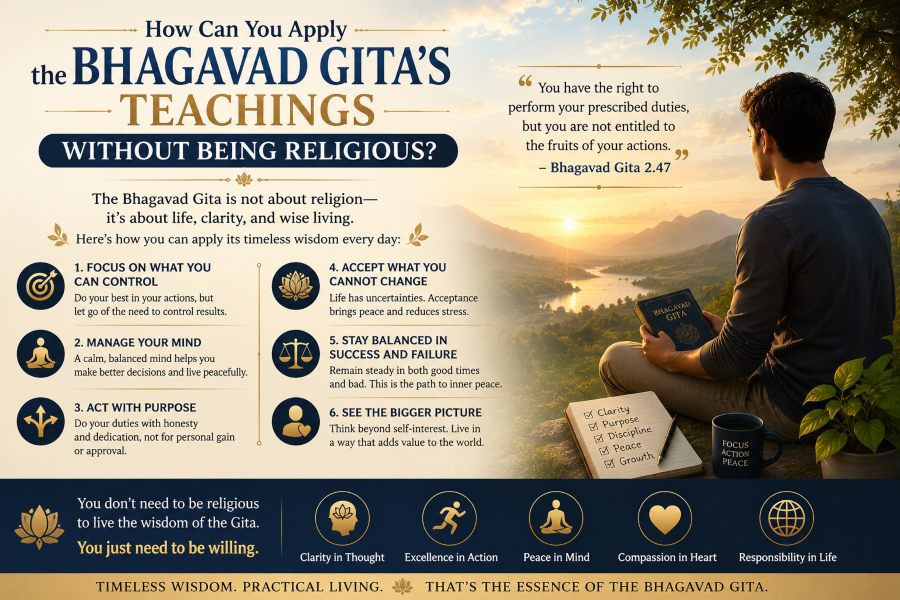
How Can You Apply the Bhagavad Gita's Teachings Without Being Religious?
How Can You Apply the Bhagavad Gita's Teachings Without Being Religious?
Here's a question that trips up a lot of curious readers before they even open the book: do you have to believe in Krishna as God to get anything useful out of a conversation he had with a warrior five thousand years ago? Millions of people who've never set foot in a temple, never chanted a mantra, and don't identify with any particular faith have still found the Bhagavad Gita to be one of the most practically useful texts they've ever read. If you're wondering whether this ancient dialogue has anything real to offer someone approaching it purely as philosophy rather than scripture, a careful read of Bhagavad Gita As It Is from ISKCON actually makes that case clearly, verse by verse, without requiring belief as a prerequisite.
This isn't about stripping the text of its spiritual roots or pretending they don't exist. It's about recognizing that a lot of what Krishna says to Arjuna works as sound psychological and philosophical advice, independent of whatever your personal relationship with religion happens to be.
The Book Was Always Doing Two Jobs at Once
Something worth understanding upfront: the Gita was never written as a purely devotional text with no practical dimension. It's structured as a dialogue meant to solve an immediate crisis — Arjuna's paralysis before battle — using logic, psychology, and philosophy alongside spiritual instruction. Krishna doesn't just say "trust me because I'm divine." He builds actual arguments. He explains why attachment causes suffering. He breaks down the nature of the mind, the causes of anxiety, the difference between effort and outcome.
That argument-based structure is exactly why it translates so well outside a religious frame. You don't need to accept Krishna's divinity to follow the logic of "you control your effort, not your results." You don't need to believe in reincarnation to appreciate the point that identity shouldn't be built entirely around temporary circumstances. The philosophical scaffolding stands on its own, even if you set the theology to the side.
Reading It as Psychology Instead of Scripture
One of the simplest shifts that makes the Gita immediately accessible is treating Arjuna's crisis as a case study rather than a religious event. Strip away the battlefield setting for a second, and what you actually have is this: a highly capable person, facing a decision that terrifies him, completely overwhelmed by conflicting thoughts, doubting his own judgment, paralyzed by fear of consequences he can't predict.
Sound familiar? That's basically every difficult decision anyone has ever faced — a career change, a hard conversation, a risk that could go badly. Read through that lens, Krishna's response reads less like divine command and more like an extremely competent mentor walking someone through a mental block.
Some of the ideas hold up as pure psychology, no belief required:
- Separating effort from outcome reduces anxiety because it removes your identity from things you don't fully control.
- Observing thoughts rather than obeying them is a core idea in modern cognitive therapy, expressed differently but recognizably in Krishna's teaching on the restless mind.
- Understanding that change is constant helps loosen the grip of grief and fear tied to impermanence — a concept therapists and philosophers alike keep circling back to.
None of this requires faith. It requires a willingness to read carefully and think.
Treating Krishna's Words as Philosophy, Not Just Theology
Philosophers have engaged with the Gita for centuries independent of religious devotion — as a text about duty, ethics, free will, and the nature of the self. You can approach the questions it raises the same way you'd approach any serious philosophical work.
Take the discussion of duty, or dharma. Set aside the specific religious framing, and the underlying question is genuinely universal: what do you owe to your role in the world, separate from what you personally feel like doing in the moment? That's not a uniquely Hindu question. It's a question every parent, employee, citizen, and friend eventually has to wrestle with, regardless of what they believe about the universe.
Or take the discussion of the eternal self versus the changing body. You don't need to accept a literal doctrine of the soul's immortality to find something useful in the underlying idea: you are not identical to your circumstances. Your job, your relationship status, your recent failure or success — none of these are the whole of who you are. That's a genuinely useful psychological anchor whether or not you frame it in spiritual terms.
How People Actually Use It Without Converting to Anything
It helps to look at how non-religious readers actually engage with the text in practice, because it's more common than people assume.
Therapists and coaches sometimes reference Gita concepts — particularly the effort-versus-outcome teaching — when working with clients dealing with performance anxiety or perfectionism, entirely outside any religious framing.
Business leaders and athletes frequently cite the Gita's teachings on focus, detachment from results, and staying composed under pressure, treating it more like a performance manual than a religious text.
Writers and philosophers, including several who identify as secular, have written extensively about the Gita's psychological insight into fear, decision-making, and identity — engaging with it the same way they'd engage with Stoic philosophy or existentialist thought.
None of these approaches require temple visits or ritual practice. They require reading the text as a serious philosophical work and pulling out what applies.
A Simple Framework for Reading It Your Own Way
If you're approaching the Gita for the first time without a religious lens, a few practical habits make the experience far more useful:
Read the commentary alongside the verses, not instead of them. A good annotated edition explains the historical and philosophical context, which helps you separate the timeless argument from the culturally specific details.
Focus on the "why," not just the instruction. Krishna rarely just tells Arjuna what to do — he explains the reasoning behind it. Following that reasoning is where the real value sits, independent of belief.
Let go of needing to agree with everything. You can find the teaching on detachment genuinely useful while remaining unconvinced about certain metaphysical claims elsewhere in the text. That's not a contradiction. It's just normal, honest engagement with a complex work.
Apply one idea at a time. Trying to absorb the entire philosophy at once is overwhelming. Most people who find lasting value in the Gita started by applying a single teaching — usually the one about effort versus outcome — before gradually exploring the rest.
Why the Text Holds Up Even Outside Its Original Context
There's a reason philosophy departments, psychology researchers, and secular readers keep returning to this particular text out of thousands of ancient scriptures available. It isn't primarily built on commandments to obey. It's built on a sustained argument about the nature of the mind, action, identity, and suffering — the kind of argument that can be evaluated on its own logical merit, the same way you'd evaluate any serious piece of philosophical reasoning.
That's genuinely rare among religious texts, and it's exactly why the Gita travels so well across cultural and belief boundaries. A serious edition, like the one available through the ISKCON Mayapur Official Store, presents both the spiritual tradition it comes from and enough context to let a thoughtful reader engage with the philosophy on their own terms, without pressure to adopt beliefs they haven't arrived at honestly.
The Real Takeaway: You Don't Need Permission to Learn From It
Wisdom doesn't require a religious membership card to be useful. The Gita's core arguments about effort, attachment, identity, and the restless mind stand on their own logic, tested across centuries by readers who came to very different conclusions about the metaphysics involved. Some read it and become devoted practitioners. Others read it, extract genuinely useful ideas about handling fear and pressure, and move on unchanged in their broader beliefs.
Both approaches are legitimate. Arjuna himself needed Krishna's arguments to actually make sense to him before he was willing to act on them — belief alone wasn't enough, even in the story itself. If a battlefield-tested argument about effort, identity, and detachment worked well enough to move a paralyzed warrior into action, it's worth taking seriously on its own terms too, whatever your relationship with religion happens to be.
Posted in: Bhagavad Gita As It Is
Related posts
-
 Why the Bhagavad Gita Feels Like a Personal Conversation with KrishnaThe Bhagavad Gita feels like a personal conversation with Krishna because its timeless wisdom directly addresses our...Read more
 -
 Shrimad Bhagwat Geeta: The Forgotten Life Manual for Modern StressShrimad Bhagwat Geeta is more than a sacred scripture—it’s a forgotten life manual that offers timeless solutions for...Read more
 -
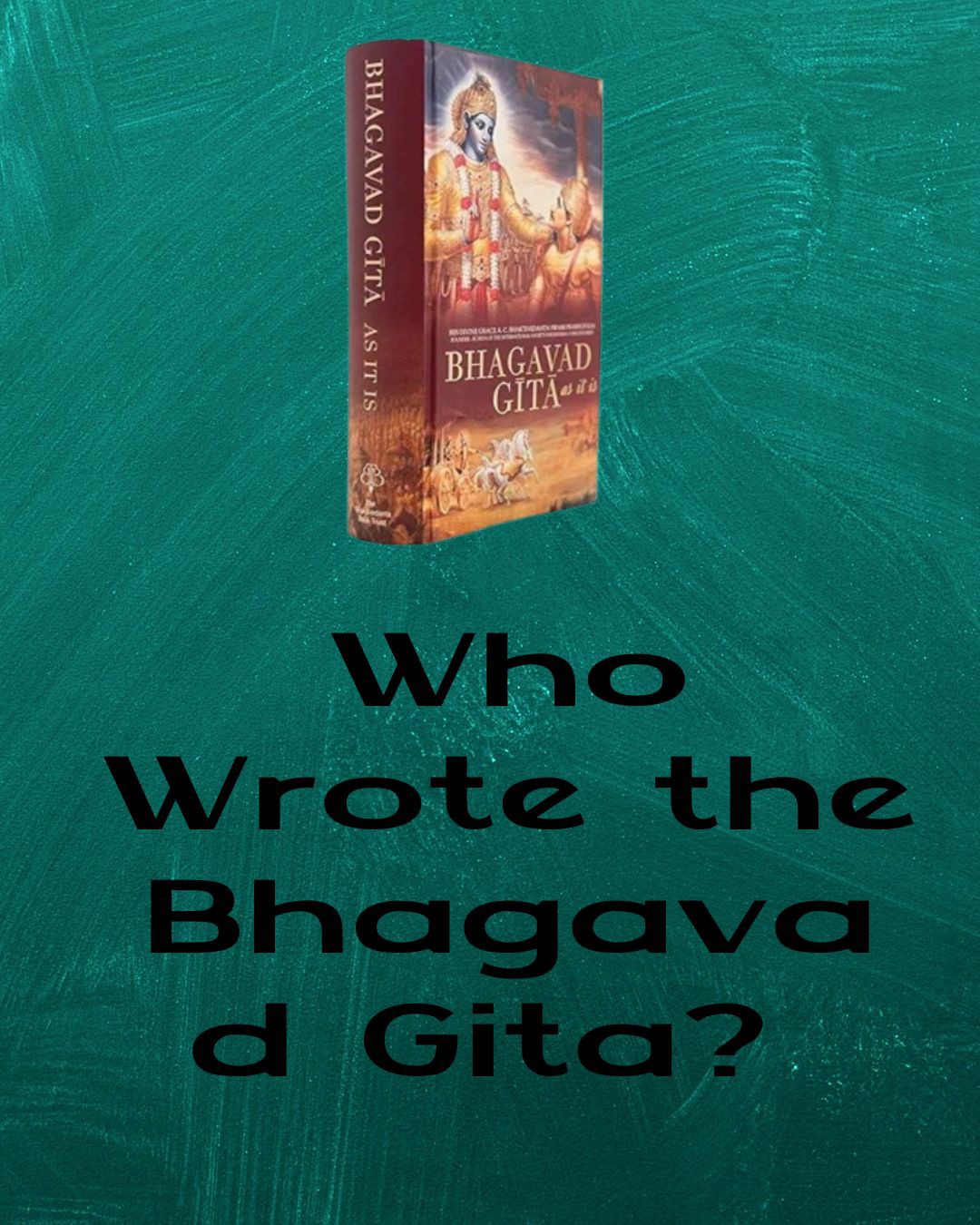 Who Wrote the Bhagavad Gita? Discover the true authorship of the Bhagavad Gita—exploring Ved Vyasa’s role as the compiler, Lord Krishna’s divine...Read more
 -
 How Many Shlokas in Bhagavad Gita? Complete Chapter-Wise Breakdown & MeaningDiscover how many shlokas are in the Bhagavad Gita, with a complete chapter-wise breakdown, variations in verse...Read more
 -
 How to Read Bhagavad Gita: A Complete Step-by-Step Guide for BeginnersDiscover how to read the Bhagavad Gita step by step—learn the right mindset, chapter order, and tips to understand...Read more
Leave a comment