
Why did Krishna run to embrace a poor brahmin in rags? Read the Sudama story from the Bhagavatam and learn how a...
Latest posts
-
 Krishna and Sudama: The Poor Brahmin Who Became Wealthy in LoveRead more
 -
 Vamana Avatar: How Three Steps Humbled Bali MaharajaRead more
Why did a powerful king give away three worlds to a boy asking for three steps? Learn the Vamana avatar story from...
-
 The Bhagavatam on Marriage: Duty, Love and Spiritual PartnershipRead more
What does the Bhagavatam say about marriage? Through the stories of Kardama and Devahuti, Rukmini's secret letter and...
-
 What Is Prema? The Bhagavatam's Highest Stage of Love for GodRead more
Prema is love for God with no "because" attached. Learn how the Bhagavatam describes it, the nine steps from faith to...
-
 Is Shiva Parvati Kalyana Mentioned in Srimad Bhagavatam? What the Scripture Really SaysRead more
Looking for Shiva and Parvati's wedding in the Srimad Bhagavatam? Find out what the scripture actually describes,...
-
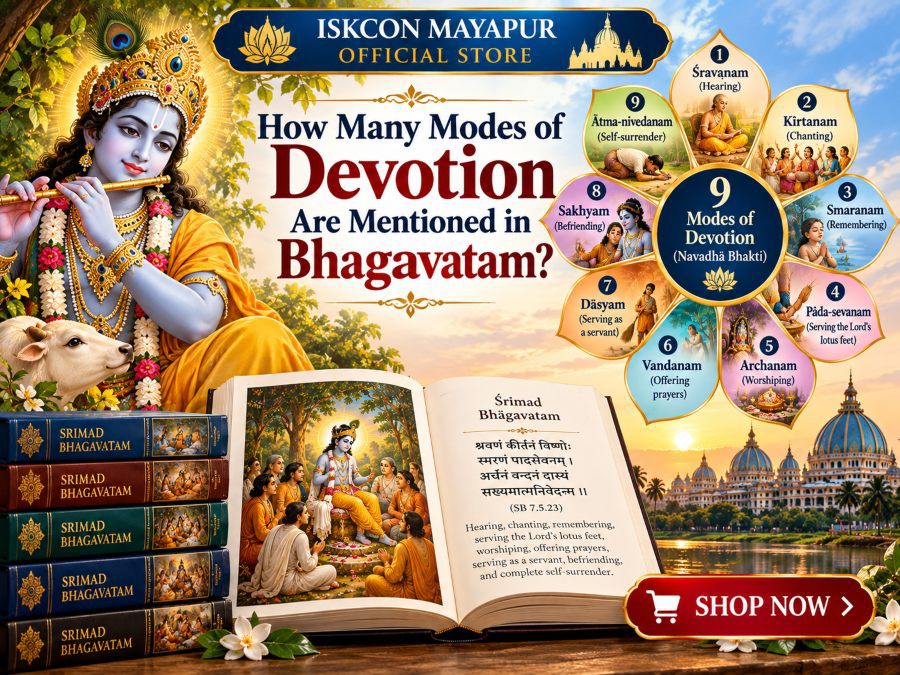 How Many Modes of Devotion Are Mentioned in Bhagavatam?Read more
A young boy named Prahlada listed nine ways to serve God, and the Bhagavatam keeps them as its answer. Learn what the...
-
 What Is Bhagavatam and Why Has It Been Read for 5,000 Years?Read more
A dying king asked one question, and the answer became the Bhagavatam. Learn what this Sanskrit scripture contains,...
-
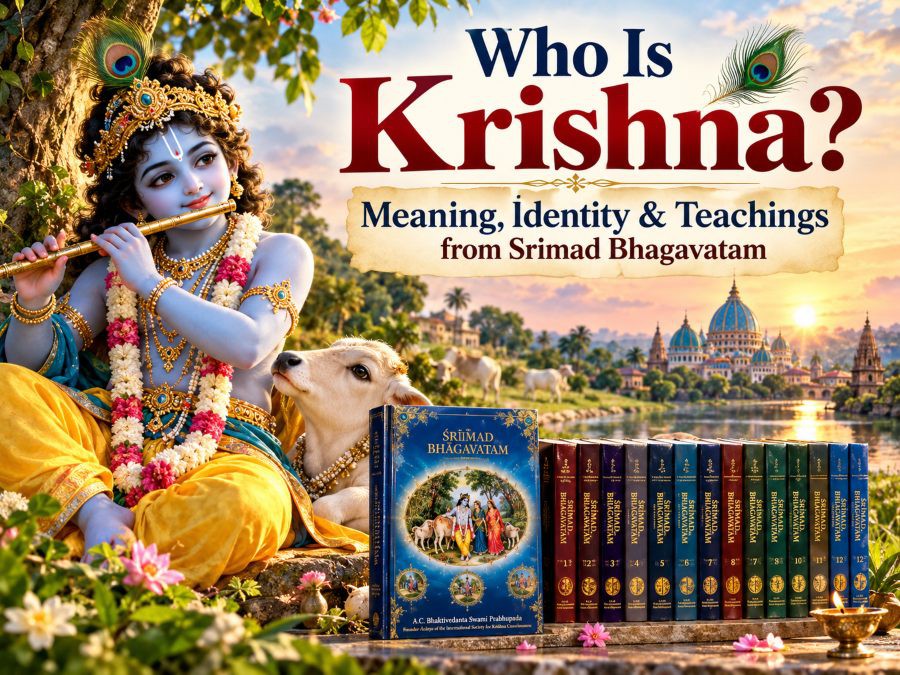 Who Is Lord Krishna? His Meaning, Teachings and Pastimes ExplainedRead more
Discover who Krishna is according to Srimad Bhagavatam, including His divine identity, childhood pastimes, teachings,...
-
 Incense in Islam: Bakhoor, Agarbatti and What Tradition SaysRead more
Is burning fragrance part of Muslim tradition? Explore incense in Islam, from the Prophetic practice of fumigating...
-
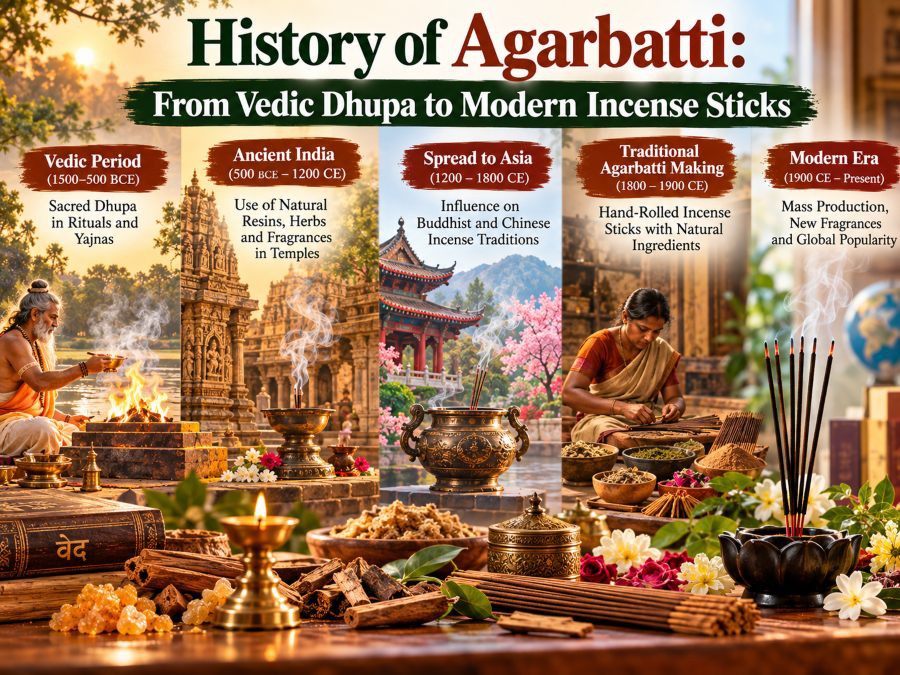 History of Agarbatti: From Vedic Dhupa to Modern Incense SticksRead more
Where did agarbatti really come from? Follow the history of agarbatti from Vedic fire rituals and temple dhupa to...
Blog categories
- Default category (0)
- MUSICAL INSTRUMENT (1)
- BOOK (5)
- DEVOTIONAL GIFT (0)
- Blog (30) click
- CHANDAN (12)
- Bhagavatam Wisdom Series (68)
- Krishna Consciousness (14)
- Mridangam Musical Instrument (6)
- Bhagavad Gita for Beginners (13)
- Bhagavad Gita As It Is (37) click
- Bhagavad Gita As It Is Telugu (0)
- Bhagavad Gita As It Is Marathi (0)
- Bhagavad Gita As It Is In Hindi (0)
- Bhagavad Gita As It Is In English (0)
- Bhagavad Gita As It Is In Bengali (8)
- Bhagavad Gita As It Is In Kannada (0)
- Bhagavad Gita As It Is In Gujarati (0)
- Bhagavad Gita As It Is In Panjabi (0)
- Bhagavad Gita As It Is In Tamil (0)
- Bhagavad Gita As It Is Odia (0)
- BHAGAVAD GITA As It Is GERMAN (0)
- Bhagavad Gita As It Is In French (0)
- Bhagavad Gita As It Is In Nepali (0)
- Bhagavad Gita As It Is In Assamese (0)
- Incense or Agarbatti (38)
- Lord Chaitanya Mahaprabhu (3)
- Vedic Temple Mayapur (14)
- kalki (15)
- Mahabharata – Dharma & Destiny (27)
- Vaishnava Scriptures (4)
- healthy product (4)
- chaitanya mahaprabhu (5)
- Tulsi Mala Guide (17)
Search in blog

Sudarshana Chakra: The Weapon That Protects Dharma
Sudarshana Chakra: The Weapon That Protects Dharma
What kind of weapon can represent both terrifying power and divine intelligence at the same time? In the stories of Krishna, the answer is the Sudarshana Chakra, the radiant discus carried by the Supreme Lord. Readers who want to explore the scriptural stories behind this extraordinary weapon can find a Bhagavata Purana set online, but the deeper meaning of Sudarshana becomes especially clear when we study the Srimad Bhagavatam and its descriptions of Krishna's activities.
The Sudarshana Chakra is often pictured as a spinning disc with a brilliant edge, moving at unimaginable speed. But calling it merely a weapon misses the point. In the Srimad Bhagavatam, Sudarshana is associated with the Lord's divine power, protection of devotees, destruction of destructive forces, and restoration of dharma.
The word Sudarshana itself carries a beautiful meaning. It can be understood as “auspicious vision,” “beautiful vision,” or “right vision.” That meaning gives us a completely different way to look at the Chakra.
It does not simply destroy.
It cuts through illusion.
It removes obstacles.
It protects those who take shelter of the Supreme Lord.
And it represents the power of divine order over chaos.
What Exactly Is the Sudarshana Chakra?
The Sudarshana Chakra is the divine discus associated primarily with Vishnu and Krishna.
In Vaishnava literature, it is not treated as an ordinary manufactured weapon. Sudarshana is connected with the Lord's own spiritual potency and is sometimes personified as a divine associate of the Supreme Lord.
This is important.
If we imagine Krishna holding a conventional sword or spear, we might understand the weapon as an object separate from Him.
The Sudarshana Chakra is different.
Its presence reflects Krishna's divine authority.
When Krishna uses Sudarshana, the action is not simply a battle between two physical forces. The narrative presents a deeper confrontation between divine order and forces that oppose it.
The Chakra appears when protection is required.
It can destroy powerful enemies.
It can rescue devotees.
It can neutralize supernatural threats.
And it can remind the reader that material strength does not ultimately determine the outcome of events described in the Bhagavatam.
Why Is It Called “Sudarshana”?
The name itself deserves attention.
Su can convey the sense of “good,” “excellent,” or “auspicious,” while darshana relates to seeing, vision, or perception.
So Sudarshana can be understood in connection with auspicious or correct vision.
That makes the Chakra more than an object of warfare.
There is a philosophical idea hidden inside the name.
A person can have eyes and still fail to see reality clearly.
We may look at wealth and see security.
We may look at the body and think, “This is who I am.”
We may look at temporary success and assume it will last forever.
We may look at power and mistake it for control.
The Bhagavatam repeatedly challenges these assumptions.
Spiritual knowledge changes the way we see.
In that sense, Sudarshana represents a force that cuts through distorted vision.
The Chakra doesn't merely defeat an enemy outside.
Its symbolism can also be applied to the enemy within: ignorance, pride, false identification, selfish desire, and spiritual forgetfulness.
Sudarshana and the Protection of Dharma
Dharma is one of the central ideas running through Vedic literature.
The word can refer to duty, righteousness, the natural function of a being, religious principles, and the order that sustains proper life.
When dharma weakens, disorder grows.
People become increasingly motivated by selfish desires.
Power is used for exploitation.
The strong take advantage of the weak.
Spiritual values become secondary.
The stories of Krishna repeatedly show what happens when powerful individuals place themselves above dharma.
This is where Sudarshana becomes significant.
Krishna's weapons are not presented as tools of personal anger.
He does not use the Chakra because His ego has been insulted.
He acts to protect devotees, defeat destructive forces, and restore spiritual order.
That distinction is important.
Human beings often use power to protect themselves.
The Supreme Lord uses divine power to protect dharma and those who seek refuge in Him.
Sudarshana Is Not a Symbol of Ordinary Violence
Modern readers sometimes struggle with the descriptions of divine warfare found in ancient scriptures.
That reaction is understandable.
There are battles.
There are demons.
There are weapons with supernatural abilities.
There are dramatic deaths.
But the purpose of these stories is not simply to glorify violence.
The Srimad Bhagavatam uses these events to explore deeper questions about power, morality, karma, devotion, and divine protection.
Consider the difference between an ordinary ruler and Krishna.
An ordinary ruler may punish an enemy because of personal rivalry.
Krishna's actions are presented differently.
His role is connected with the protection of dharma.
The stories repeatedly distinguish between self-centered power and divine authority.
That is why Sudarshana is better understood as an instrument of divine order than as a symbol of aggression.
The Story of Ambarisha: When Sudarshana Protects a Devotee
One of the most famous Bhagavatam stories involving Sudarshana Chakra is the story of King Ambarisha and Durvasa Muni.
It appears in the Ninth Canto of the Srimad Bhagavatam.
Ambarisha was a powerful king, but his greatest quality was his devotion to the Supreme Lord.
He engaged his mind in remembering Krishna.
He used his words to glorify the Lord.
He used his hands in devotional service.
He used his ears to hear about Krishna.
His eyes were engaged in seeing the Lord's form and places associated with devotion.
His entire life was oriented toward bhakti.
Then came Durvasa Muni.
Durvasa was an extraordinarily powerful sage, known for his intense temperament.
A disagreement arose involving the observance of a devotional vow.
Durvasa became angry with Ambarisha.
From his matted hair, he generated a terrifying being intended to kill the king.
Ambarisha did not retaliate.
He did not attack Durvasa.
He simply remained devoted to the Lord.
Then Sudarshana Chakra appeared.
The Chakra destroyed the threatening being and turned toward Durvasa.
Suddenly the powerful sage found himself running for his life.
He fled across the earth.
He sought shelter from great celestial beings.
He approached Lord Brahma.
He approached Lord Shiva.
But they could not protect him from Sudarshana.
Eventually, Durvasa went to Lord Vishnu.
And here comes one of the most striking teachings of the story.
Lord Vishnu explained that He was deeply attached to His devotees.
The Lord directed Durvasa to seek forgiveness from Ambarisha.
The sage returned.
Ambarisha prayed for Sudarshana to become peaceful.
The danger ended.
What This Story Really Teaches
If we read the story only as an adventure, we miss its heart.
The real lesson is not:
“Krishna has a powerful weapon.”
The deeper message is:
The Supreme Lord protects sincere devotion.
Ambarisha possessed political power, but he did not rely upon political power.
He possessed wealth, but he did not make wealth the center of his life.
When confronted by a powerful sage, he did not respond with revenge.
His strength came from devotion.
Durvasa, on the other hand, possessed tremendous spiritual abilities.
Yet anger caused him to misuse them.
That contrast is powerful.
A person can have knowledge without humility.
A person can have power without wisdom.
A person can have spiritual abilities while still being controlled by anger.
Ambarisha's devotion protected him.
Durvasa's pride placed him in danger.
Sudarshana becomes the force that reveals the difference.
Sudarshana and the Lesson of Humility
There is another subtle point in the Ambarisha story.
Durvasa was not an insignificant person.
He was a powerful sage.
Yet his power could not save him once he offended a sincere devotee.
This doesn't mean every devotee becomes immune to all consequences of life.
Rather, the story emphasizes the importance of respecting genuine devotion.
Spiritual advancement is not measured simply by how much knowledge someone possesses or how impressive their abilities appear.
Character matters.
Humility matters.
Control of anger matters.
Respect for others matters.
And devotion matters.
Sudarshana becomes almost like a spiritual measuring instrument.
It reveals what happens when power is separated from humility.
The Chakra and Krishna's Battles
The Srimad Bhagavatam describes Krishna's many confrontations with powerful adversaries.
Some enemies represent political oppression.
Others possess extraordinary supernatural abilities.
Some repeatedly challenge Krishna.
Others appear as threats to His devotees or to the peaceful order of society.
The Sudarshana Chakra appears in several such contexts.
Its presence reinforces a recurring Bhagavatam principle:
No amount of material power places someone beyond divine authority.
A demon may possess extraordinary strength.
A king may control armies.
A ruler may command enormous resources.
A mystic may possess supernatural abilities.
But none of these qualities automatically produce spiritual realization.
Material power has limits.
Divine power does not.
Sudarshana and the Defeat of Illusion
There is a useful way to understand the Chakra beyond the literal stories.
Think about the things that cloud human judgment.
Fear.
Anger.
Greed.
Pride.
Attachment.
Envy.
False identification.
These forces can spin inside the mind just as relentlessly as a wheel.
One thought leads to another.
A person becomes angry.
Anger produces harsh words.
Harsh words damage a relationship.
The damaged relationship creates resentment.
Resentment creates more anger.
The cycle continues.
Spiritual knowledge can interrupt that cycle.
This is where the meaning of Sudarshana—right vision—becomes especially interesting.
The spiritual path asks us to see clearly.
Who am I?
What actually belongs to me?
What is temporary?
What is eternal?
What is my duty?
What is the purpose of consciousness?
What is my relationship with Krishna?
The answers begin cutting through confusion.
In that sense, Sudarshana can be viewed as a powerful image for spiritual clarity.
Why the Bhagavatam Gives Weapons Personality and Meaning
Readers familiar with the Srimad Bhagavatam may notice that divine objects are sometimes described almost as living beings.
This is not accidental storytelling.
The Vedic worldview does not always divide reality into the modern categories of “living” and “non-living” in exactly the same way we do.
The Lord's paraphernalia can be understood as connected with His spiritual energy.
His conch shell.
His lotus.
His mace.
His bow.
His discus.
Each has a symbolic and theological role.
Sudarshana represents divine vision and protection.
The conch is associated with calling and spiritual awakening.
The lotus represents purity and transcendence.
The mace represents strength and authority.
The imagery creates a complete picture of the Supreme Lord.
Krishna is not powerless spirituality.
He represents supreme consciousness accompanied by supreme power.
Sudarshana and the Idea of Divine Protection
The concept of protection appears repeatedly throughout Vaishnava scripture.
But protection does not always mean that a devotee will never experience difficulty.
The lives of devotees prove otherwise.
Devotees face danger.
They experience loss.
They encounter opposition.
They sometimes suffer intensely.
So what does divine protection mean?
The Bhagavatam offers a deeper answer.
Protection can mean preserving the devotee's spiritual consciousness even in difficult circumstances.
A person may lose material possessions and remain devoted.
A person may face criticism and remain peaceful.
A person may encounter danger and refuse to abandon spiritual principles.
The body may face difficulty.
The mind may experience turbulence.
Yet devotion can remain intact.
That is a different kind of protection.
Sudarshana therefore represents not only protection from physical danger but the triumph of divine purpose over forces that attempt to destroy devotion.
What Sudarshana Teaches About Power
Modern society often celebrates power.
Political power.
Financial power.
Physical power.
Technological power.
Social influence.
But the Bhagavatam asks a more uncomfortable question:
What is power being used for?
Power without character can become destructive.
Knowledge without humility can produce arrogance.
Wealth without compassion can create exploitation.
Authority without dharma can become oppression.
Sudarshana offers a different model.
Divine power exists in harmony with dharma.
It protects rather than exploits.
It removes destructive forces rather than creating chaos for personal gain.
It serves a higher purpose.
That makes the Sudarshana Chakra relevant even to readers who are not studying ancient warfare.
The question is not whether we possess power.
The question is:
What do we do with whatever power we have?
The Deeper Meaning of “Protection”
Protection can happen at several levels.
Physical protection
In the stories, Sudarshana can destroy immediate threats.
Moral protection
The presence of divine authority reinforces dharma.
Spiritual protection
Devotion is protected from forces that seek to disrupt it.
Intellectual protection
The idea of right vision reminds us not to accept illusion as reality.
Emotional protection
Devotional consciousness can help a person remain steady when circumstances change.
These levels make the symbol much richer than a simple divine weapon.
Why Reading the Bhagavatam Gives the Chakra More Meaning
An image of Sudarshana Chakra can be impressive.
A description of a spinning divine disc can be fascinating.
But the Srimad Bhagavatam gives the symbol context.
When you read the story of Ambarisha, Sudarshana becomes connected with devotion.
When you study Krishna's battles, it becomes connected with divine authority.
When you consider the meaning of the word itself, it becomes connected with vision.
When you reflect on the larger philosophy, it becomes connected with the destruction of ignorance.
This is why reading the complete narrative is so valuable.
A single image can inspire curiosity.
The scripture gives that curiosity depth.
For readers building a devotional library, Krishna consciousness books can provide additional context for understanding Krishna's names, forms, activities, devotees, and teachings. Studying related texts alongside the Bhagavatam can help connect individual stories to the wider philosophy of bhakti.
Sudarshana Is Not Only About Destroying Enemies
There is a tendency to focus on the dramatic side of the Chakra.
Its speed.
Its brilliance.
Its ability to destroy demons.
Those descriptions are certainly part of the tradition.
But the more interesting question is:
What is being destroyed?
In the literal stories, destructive beings may be defeated.
At a philosophical level, something else is being removed.
Ignorance.
Pride.
False power.
Disorder.
Threats to devotion.
The Bhagavatam repeatedly teaches that the deepest battle is not merely between one person and another.
It is between spiritual knowledge and ignorance.
That battle takes place inside every human being.
The Chakra and the Human Mind
The mind can become a battlefield.
One moment we feel peaceful.
The next moment, a memory triggers anger.
A desire appears.
Then fear.
Then comparison.
Then jealousy.
Then another desire.
The cycle can become exhausting.
Bhagavad gita describes the importance of controlling the mind, senses, and consciousness. The Srimad Bhagavatam expands the same spiritual vision through stories and devotional teachings.
Seen symbolically, Sudarshana represents the power of spiritual clarity to interrupt destructive mental patterns.
When consciousness turns toward Krishna, the mind receives a new center.
Instead of asking:
“How can I get more?”
we begin asking:
“How can I serve?”
Instead of:
“How can I defeat everyone?”
we ask:
“How can I live according to dharma?”
Instead of:
“How can I control everything?”
we recognize:
“I am not the ultimate controller.”
That shift can change the direction of a person's life.
Sudarshana and the Devotee's Fearlessness
Fearlessness does not mean that devotees never feel fear.
It means they do not allow fear to become their master.
This is an important distinction.
A devotee may recognize danger and still place trust in Krishna.
Ambarisha's example demonstrates this beautifully.
He does not respond to danger with uncontrolled aggression.
He remains steady.
His consciousness is not transformed by the threat.
That is a form of spiritual strength.
The Bhagavatam repeatedly celebrates this quality in devotees.
They are not necessarily physically stronger than everyone around them.
Their strength comes from where their consciousness is placed.
Why Krishna Carries Sudarshana
Krishna is often depicted with four principal symbols or weapons in His Vishnu form: the conch, discus, mace, and lotus.
The Sudarshana Chakra stands out because of its association with decisive action.
The Lord's compassion is not weakness.
His gentleness toward devotees exists alongside His ability to destroy destructive forces.
This combination is important.
A purely sentimental idea of God cannot fully explain the Bhagavatam.
The Supreme Lord is compassionate.
But He is also just.
He protects.
He corrects.
He destroys evil.
He restores dharma.
He accepts the love of devotees.
He remains beyond material limitations.
The Sudarshana Chakra visually communicates that combination of compassion and authority.
What Sudarshana Means for Modern Readers
You don't have to live in ancient Mathura or Dvaraka to appreciate the teaching.
The modern world has its own forms of confusion.
We are surrounded by information but often lack wisdom.
We can communicate instantly yet struggle to listen.
We can accumulate possessions while feeling internally empty.
We can become highly successful and still remain anxious about losing what we have.
We can defend our opinions so strongly that we stop examining them.
This is where right vision becomes meaningful.
Sudarshana reminds us to ask whether we are actually seeing clearly.
Are we identifying with temporary circumstances?
Are we allowing anger to control our decisions?
Are we using influence responsibly?
Are we protecting our spiritual values?
Are we becoming more humble as we learn?
Are we remembering Krishna?
These questions turn an ancient symbol into a living spiritual practice.
A Practical “Sudarshana” Practice
You can even turn the idea into a simple daily reflection.
When you feel anger, pause.
When you feel envy, pause.
When you feel excessive pride, pause.
When fear takes over, pause.
Then ask:
“What am I failing to see clearly right now?”
Perhaps you are seeing another person's mistake but not your own.
Perhaps you are seeing temporary loss as permanent disaster.
Perhaps you are seeing material success as the final goal.
Perhaps you are seeing yourself only as the body.
Perhaps you have forgotten Krishna.
That pause creates space for better vision.
The metaphor is simple, but the practice can be powerful.
Sudarshana and the Purpose of Human Life
The Srimad Bhagavatam repeatedly points beyond temporary material goals.
Human life offers an opportunity for spiritual inquiry.
We can ask questions that animals do not consciously pursue:
Who am I?
Why am I here?
Why does suffering exist?
What continues beyond death?
What is God?
What is devotion?
How can consciousness become purified?
These questions are at the center of Bhagavatam study.
Sudarshana fits naturally into this vision.
If the Chakra represents right vision, then spiritual life begins with learning to see reality properly.
The body changes.
The mind changes.
Social identity changes.
Possessions change.
Relationships change.
Yet consciousness has a deeper dimension.
The Bhagavatam asks us to discover that deeper identity.
The Beauty Behind the Fierce Image
There is something fascinating about Sudarshana Chakra.
At first glance, it appears frightening.
A spinning weapon capable of destroying powerful enemies is hardly a gentle image.
But within Vaishnava thought, the same Chakra is also associated with protection.
That changes the emotional meaning.
For someone acting destructively, Sudarshana represents judgment.
For a sincere devotee, it represents shelter.
The same divine power can therefore be understood differently depending on one's relationship with the Lord.
This is similar to fire.
Fire can burn.
Fire can also provide warmth.
The difference lies in the relationship between the person and the fire.
Sudarshana is terrifying to those who oppose dharma and reassuring to those who seek the Lord's protection.
Why the Story of Ambarisha Deserves Special Attention
Among all the stories connected with Sudarshana, Ambarisha's story deserves repeated reading.
Why?
Because it demonstrates something that modern readers sometimes overlook.
The greatest spiritual strength may look like restraint.
Ambarisha had no need to prove himself.
He didn't respond to Durvasa's anger with greater anger.
He didn't attempt to demonstrate his political authority.
He remained devoted.
And when the danger passed, he did not celebrate Durvasa's humiliation.
He prayed for the sage.
That final detail is important.
A person can survive an attack and still become bitter.
Ambarisha didn't.
His devotion preserved his character.
That is the kind of protection the Bhagavatam values.
Sudarshana and the Meaning of Dharma Today
Dharma is not simply about rules.
At a deeper level, dharma concerns living according to one's spiritual nature and responsibilities.
For a human being, this means developing qualities such as truthfulness, compassion, self-control, humility, responsibility, and devotion.
The modern world often asks:
“What can I get?”
Dharma asks:
“What should I do?”
That difference is enormous.
Sudarshana represents the power that removes obstacles when the path of dharma is threatened.
For the individual, that may mean learning to overcome selfishness.
For a community, it may mean protecting ethical values.
For spiritual life, it means remembering that material success is not the highest goal.
A Symbol Worth Looking At Again
The next time you see an image of Krishna holding the Sudarshana Chakra, don't look at it only as an ancient weapon.
Look at the wheel.
Look at its movement.
Look at its association with vision.
Think about what needs to be cut away from your own consciousness.
Maybe it is anger.
Maybe it is pride.
Maybe it is fear.
Maybe it is attachment to an identity that cannot last.
Maybe it is simply forgetfulness of Krishna.
The symbol becomes personal at that point.
And that is one of the strengths of the Srimad Bhagavatam: its stories are ancient, but the questions they raise remain remarkably close to ordinary human experience.
Sudarshana Chakra: Protection Through Divine Vision
The Sudarshana Chakra is one of the most powerful symbols associated with Krishna and Vishnu.
It represents divine authority.
It protects devotees.
It destroys destructive forces.
It supports the restoration of dharma.
And through its name, it points toward the idea of seeing clearly.
The story of Ambarisha shows that sincere devotion can receive divine protection even when confronted by extraordinary danger. Krishna's battles show that material power cannot ultimately stand against the Supreme Lord. The philosophical meaning of Sudarshana invites us to examine our own vision and question the illusions that shape our decisions.
This is why the Chakra remains more than a spectacular element of sacred art.
It is a reminder.
See clearly.
See beyond temporary appearances.
See beyond pride.
See beyond fear.
See beyond the assumption that material power is ultimate.
And above all, learn to see your life in relationship with Krishna.
That is the deeper gift of studying the srimad bhagavatam. The stories introduce us to divine personalities and extraordinary events, but they also hold up a mirror to our own consciousness.
Sudarshana, the divine discus, ultimately points toward a simple spiritual truth:
When vision becomes clear, the path of dharma becomes easier to recognize.
And when that vision is directed toward Krishna, even an ancient story about a divine weapon can become a guide for modern spiritual life.
Posted in: Bhagavatam Wisdom Series
Related posts
-
 Why to read srimad bhagavatamReading the Srimad Bhagavatam fosters deep spiritual growth by narrating the life and teachings of Lord Krishna,...Read more
 -
 When was srimad bhagavatam written?The Srimad Bhagavatam is believed to have been written around 9th-10th century CE, though its oral traditions date...Read more
 -
 How many chapters are there in srimad bhagavatam?The Srimad Bhagavatam consists of 12 cantos (books) containing 335 chapters in total. Each canto covers various...Read more
 -
 How many skandhas are there in srimad bhagavatamThe Srimad Bhagavatam is divided into 12 skandhas (cantos or books). Each skandha explores different themes,...Read more
 -
 How many slokas in srimad bhagavatamThe Srimad Bhagavatam contains approximately 18,000 shlokas (verses). These verses are spread across its 12 skandhas...Read more
Leave a comment