
Why did Krishna run to embrace a poor brahmin in rags? Read the Sudama story from the Bhagavatam and learn how a...
Latest posts
-
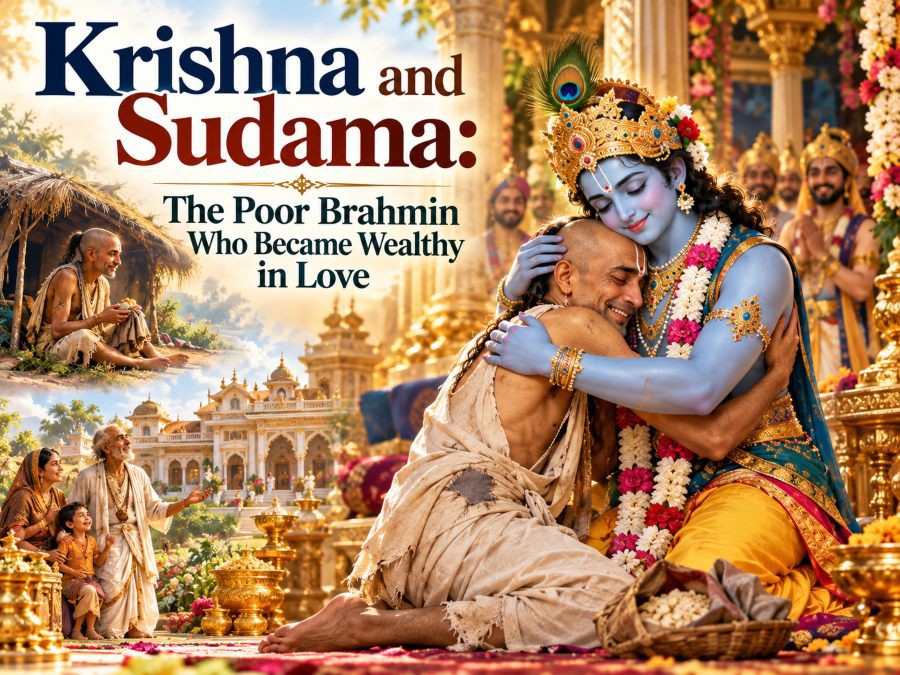 Krishna and Sudama: The Poor Brahmin Who Became Wealthy in LoveRead more
 -
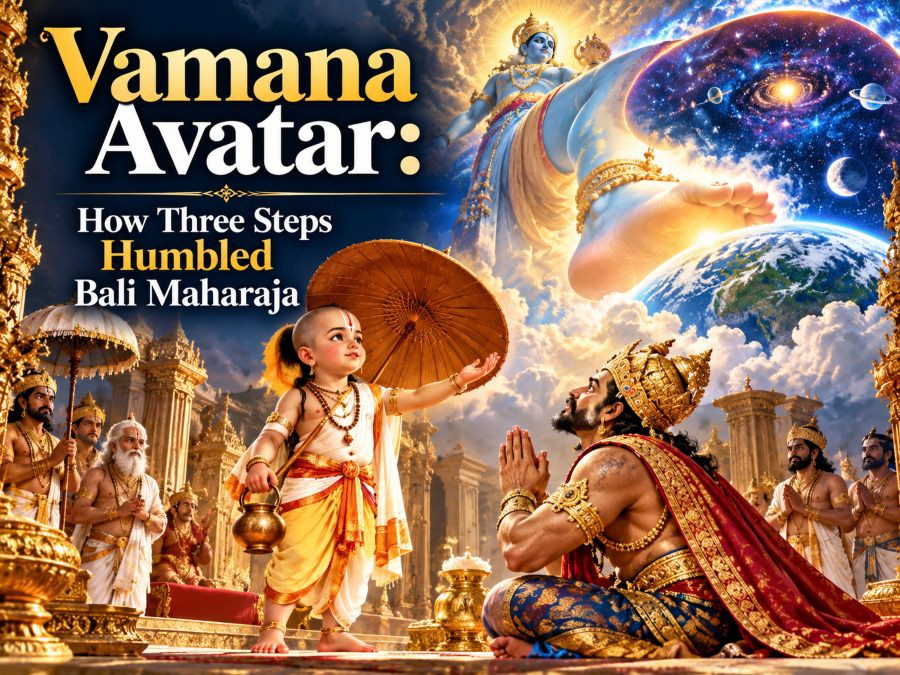 Vamana Avatar: How Three Steps Humbled Bali MaharajaRead more
Why did a powerful king give away three worlds to a boy asking for three steps? Learn the Vamana avatar story from...
-
 The Bhagavatam on Marriage: Duty, Love and Spiritual PartnershipRead more
What does the Bhagavatam say about marriage? Through the stories of Kardama and Devahuti, Rukmini's secret letter and...
-
 What Is Prema? The Bhagavatam's Highest Stage of Love for GodRead more
Prema is love for God with no "because" attached. Learn how the Bhagavatam describes it, the nine steps from faith to...
-
 Is Shiva Parvati Kalyana Mentioned in Srimad Bhagavatam? What the Scripture Really SaysRead more
Looking for Shiva and Parvati's wedding in the Srimad Bhagavatam? Find out what the scripture actually describes,...
-
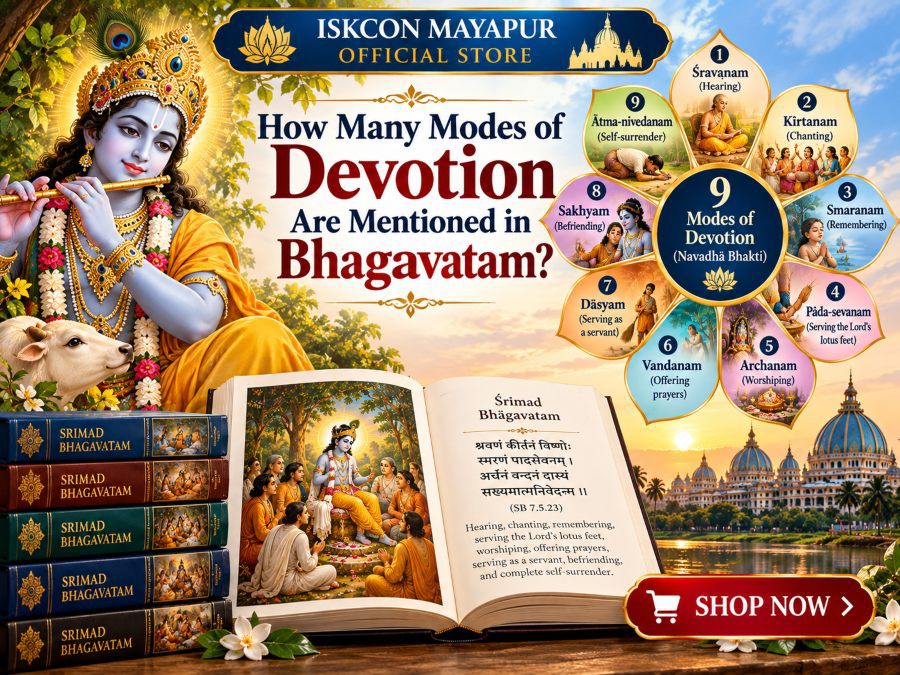 How Many Modes of Devotion Are Mentioned in Bhagavatam?Read more
A young boy named Prahlada listed nine ways to serve God, and the Bhagavatam keeps them as its answer. Learn what the...
-
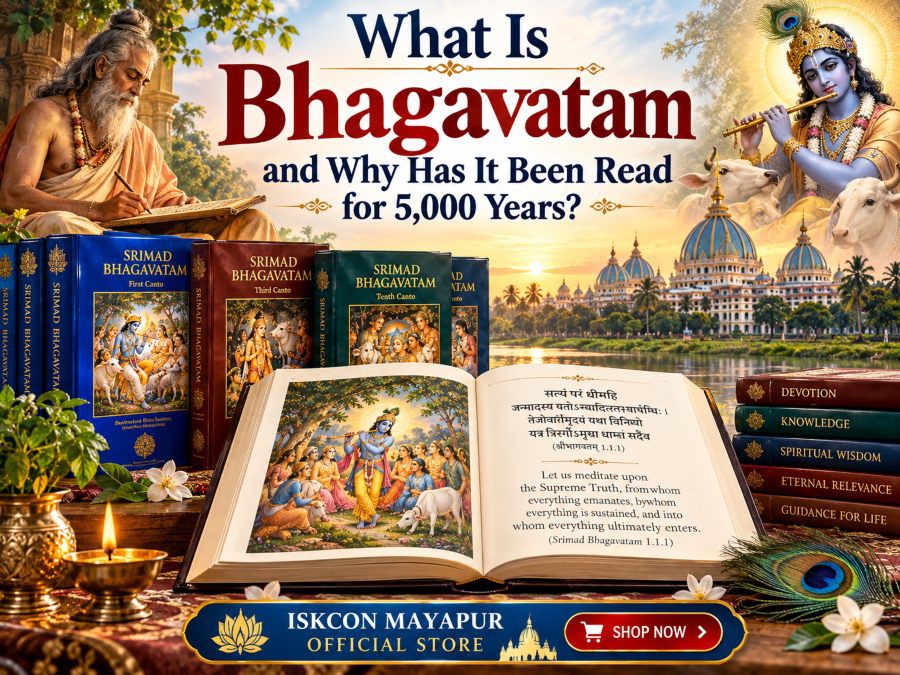 What Is Bhagavatam and Why Has It Been Read for 5,000 Years?Read more
A dying king asked one question, and the answer became the Bhagavatam. Learn what this Sanskrit scripture contains,...
-
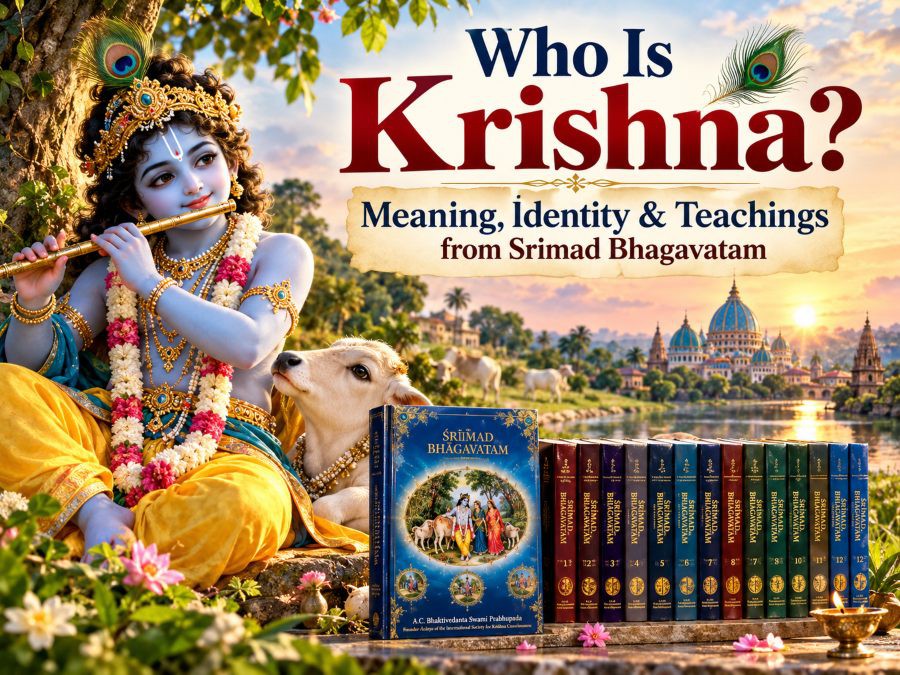 Who Is Lord Krishna? His Meaning, Teachings and Pastimes ExplainedRead more
Discover who Krishna is according to Srimad Bhagavatam, including His divine identity, childhood pastimes, teachings,...
-
 Incense in Islam: Bakhoor, Agarbatti and What Tradition SaysRead more
Is burning fragrance part of Muslim tradition? Explore incense in Islam, from the Prophetic practice of fumigating...
-
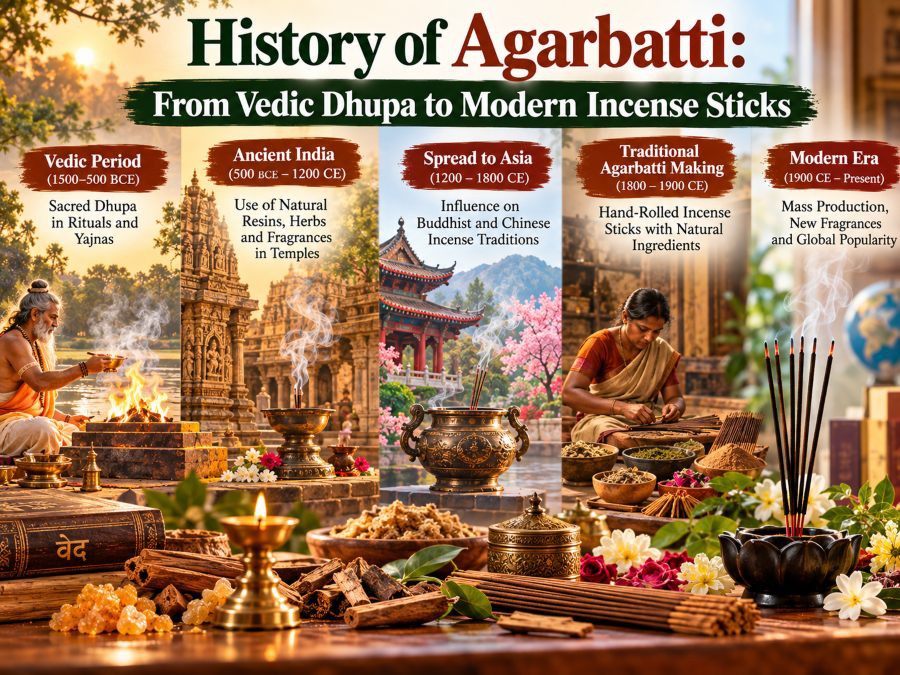 History of Agarbatti: From Vedic Dhupa to Modern Incense SticksRead more
Where did agarbatti really come from? Follow the history of agarbatti from Vedic fire rituals and temple dhupa to...
Blog categories
- Default category (0)
- MUSICAL INSTRUMENT (1)
- BOOK (5)
- DEVOTIONAL GIFT (0)
- Blog (30) click
- CHANDAN (12)
- Bhagavatam Wisdom Series (68)
- Krishna Consciousness (14)
- Mridangam Musical Instrument (6)
- Bhagavad Gita for Beginners (13)
- Bhagavad Gita As It Is (37) click
- Bhagavad Gita As It Is Telugu (0)
- Bhagavad Gita As It Is Marathi (0)
- Bhagavad Gita As It Is In Hindi (0)
- Bhagavad Gita As It Is In English (0)
- Bhagavad Gita As It Is In Bengali (8)
- Bhagavad Gita As It Is In Kannada (0)
- Bhagavad Gita As It Is In Gujarati (0)
- Bhagavad Gita As It Is In Panjabi (0)
- Bhagavad Gita As It Is In Tamil (0)
- Bhagavad Gita As It Is Odia (0)
- BHAGAVAD GITA As It Is GERMAN (0)
- Bhagavad Gita As It Is In French (0)
- Bhagavad Gita As It Is In Nepali (0)
- Bhagavad Gita As It Is In Assamese (0)
- Incense or Agarbatti (38)
- Lord Chaitanya Mahaprabhu (3)
- Vedic Temple Mayapur (14)
- kalki (15)
- Mahabharata – Dharma & Destiny (27)
- Vaishnava Scriptures (4)
- healthy product (4)
- chaitanya mahaprabhu (5)
- Tulsi Mala Guide (17)
Search in blog
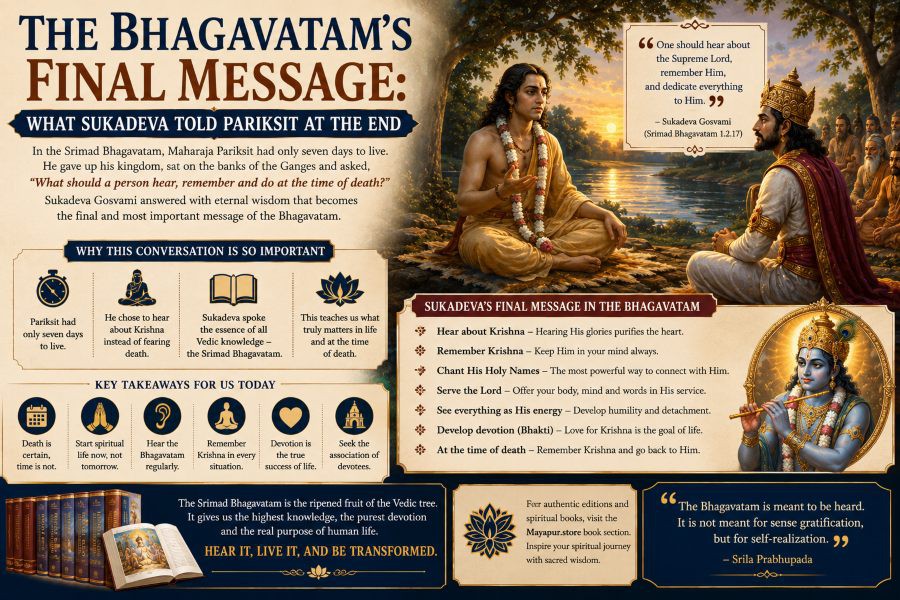
The Bhagavatam’s Final Message: What Sukadeva Told Pariksit at the End
The Bhagavatam’s Final Message: What Sukadeva Told Pariksit at the End
What would you say to a dying person if you knew they had only a few days left? Would you talk about money, family, unfinished plans, or the fear of death? The srimad bhagavatam answers this question through one of the most remarkable conversations in Vedic history: the dialogue between Maharaja Pariksit and Sukadeva Gosvami. Readers who want to study the complete scripture can explore the Mayapur.store book section, but the ending of the Bhagavatam deserves special attention because it gathers many of its central teachings into a final spiritual direction.
Pariksit Maharaja had been cursed to die within seven days.
Instead of spending those days trying desperately to escape death, he sat on the bank of the Ganges and asked a profound question:
What should a person do when death is approaching?
Sukadeva Gosvami answered by speaking about Krishna, devotion, hearing, remembrance, the nature of the soul, and the purpose of human life.
His answer remains relevant because everyone, whether we think about it or not, is moving toward the same destination.
The difference is how we spend the time before we arrive.
A King Who Had Seven Days Left
Pariksit Maharaja was not an ordinary man.
He was a powerful king, a descendant of the Pandavas, and the grandson of Arjuna. He had wealth, influence, responsibilities, and a kingdom to protect.
Yet none of these things could change the fundamental reality of death.
After receiving the curse that he would die from the bite of a serpent, Pariksit made a remarkable decision.
He stepped away from royal responsibilities.
He gave up ordinary political concerns.
He went to the bank of the Ganges.
And he asked the sages gathered there what a human being should hear, remember, and do at the time of death.
This decision sets the tone for the final portion of the Srimad Bhagavatam.
Pariksit had very little time.
But instead of treating those seven days as hopeless, he treated them as the most valuable days of his life.
Sukadeva Gosvami Arrives
Then Sukadeva Gosvami appeared.
He was young, spiritually realized, detached from ordinary material concerns, and deeply absorbed in transcendental knowledge.
Pariksit recognized that he had found the right teacher.
The king did not ask Sukadeva for a way to extend his physical life.
He asked a much more important question:
What is the duty of a person who is about to die?
That question is easy to postpone when death seems far away.
Pariksit could not postpone it.
His situation forced him to confront something most people prefer to avoid.
And Sukadeva's response became the foundation of the Bhagavatam's final message.
The First Lesson: Death Changes the Question
When people think about death, they often ask:
“How can I avoid it?”
“How can I live longer?”
“What will happen to my possessions?”
“What will happen to my family?”
“Did I accomplish enough?”
Pariksit asked something different.
He asked what he should hear, remember, and do before death.
That shift is profound.
The Bhagavatam does not deny the reality of death.
Instead, it asks us to examine what death reveals.
If the body is temporary, then building our entire identity around the body creates insecurity.
If possessions cannot follow us, then possessions cannot be the ultimate purpose of life.
If social status disappears with the body, then status cannot be the final measure of success.
Death exposes the limits of material achievement.
Sukadeva's teaching redirects the reader toward something that does not depend on temporary circumstances.
Why Hearing About Krishna Comes First
One of the strongest themes in Sukadeva Gosvami's teaching is hearing.
This may sound simple.
Why would hearing be such a powerful spiritual practice?
Because consciousness is shaped by what we repeatedly hear.
Think about ordinary life.
If someone spends hours listening to anger, fear, gossip, and negativity, the mind begins to absorb those impressions.
If someone constantly hears advertisements, the mind learns to want more things.
If someone hears praise all day, the ego may become dependent on approval.
Sukadeva offers another kind of sound:
hearing about Krishna.
The stories, qualities, names, teachings, and activities of the Supreme Lord are presented as spiritually transformative.
The Bhagavatam itself becomes a form of sacred hearing.
Pariksit listens.
Sukadeva speaks.
And the reader becomes the third participant in that ancient conversation.
The Bhagavatam Is Not Just a Book About the Past
It is tempting to think of the Bhagavatam as an ancient collection of stories.
Kings.
Sages.
Wars.
Divine appearances.
Pilgrimages.
Genealogies.
Cosmic descriptions.
But Sukadeva's dialogue reveals something deeper.
The stories are designed to change how the listener understands reality.
A story about a king may teach detachment.
A story about a devotee may teach surrender.
A story about Krishna may awaken attraction toward the Supreme Lord.
A story about a materialistic ruler may reveal the temporary nature of power.
The narrative form makes philosophy easier to remember.
Instead of receiving abstract principles alone, the reader sees those principles lived through characters.
The Power of Remembering Krishna
Sukadeva repeatedly brings the conversation back toward Krishna.
Why?
Because the mind naturally needs an object of remembrance.
At death, the mind does not suddenly become completely different from the consciousness developed throughout life.
What we repeatedly think about becomes familiar.
What becomes familiar becomes easier to remember.
This is one reason devotional practice emphasizes regular remembrance.
If Krishna is remembered only once at the final moment, the mind may struggle to remain fixed.
But if remembrance has become part of daily life, it becomes natural.
This gives Pariksit's seven-day situation an important lesson.
Preparation for death is really preparation for life.
The way we live today shapes the consciousness we carry forward.
Why Pariksit Did Not Waste His Final Days
Imagine knowing the exact day of your death.
Would you spend those days arguing online?
Shopping for things you don't need?
Worrying about your reputation?
Trying to impress people?
Pariksit had every reason to be distracted by fear.
Instead, he listened.
He asked questions.
He focused on spiritual knowledge.
He heard the Srimad Bhagavatam from Sukadeva.
That is why his final days became spiritually significant.
The lesson isn't that everyone should abandon their responsibilities immediately.
Pariksit's situation was extraordinary.
The lesson is about priority.
If death can arrive at any time, spiritual life cannot always be something we plan to begin “later.”
The Story of Ajamila and the Power of the Holy Name
Earlier in the Bhagavatam, Sukadeva tells the story of Ajamila.
Ajamila had fallen deeply into sinful and materialistic habits. Yet near the end of his life, he called out the name “Narayana,” originally calling for his son.
The story leads into a discussion of the power of the Lord's name and the process of spiritual purification.
The account is important in the larger conversation about death.
It shows that the divine name is not treated as ordinary sound.
The Bhagavatam repeatedly glorifies hearing and chanting the names of the Supreme Lord.
For Pariksit, this teaching reinforces the importance of making Krishna consciousness the center of one's life.
The Final Days Are Not Really About the Final Days
There is an interesting paradox here.
Pariksit had seven days.
Most of us may have decades.
Yet spiritually, we are in a similar position.
We simply don't know the deadline.
That makes his story even more relevant.
If someone told you that you had exactly seven days left, your priorities would probably change instantly.
You might stop worrying about trivial arguments.
You might call people you love.
You might seek forgiveness.
You might want to understand God.
You might stop postponing spiritual questions.
The Bhagavatam essentially asks:
Why wait for a death sentence to live with that clarity?
That may be one of its most practical lessons.
The Middle of the Story: Where Study Becomes a Daily Practice
A person who wants to understand Sukadeva's final teachings shouldn't read only the last few pages.
The earlier cantos gradually build the philosophical foundation.
You encounter the nature of devotion.
You meet great devotees.
You hear about creation and the living entity.
You encounter stories of kings and sages.
You hear Krishna's names and activities.
You see the consequences of attachment.
You see the power of surrender.
For someone building a personal devotional library and looking to buy Srimad Bhagavatam Full Set online, having the complete collection can make this journey much easier because the final teachings gain meaning when read alongside the stories and philosophy that lead toward them.
The Bhagavatam is meant to be heard as a connected spiritual conversation.
Sukadeva's Message About the Nature of the Self
The Bhagavatam does not identify the self merely with the physical body.
The body changes continuously.
A child becomes an adult.
An adult becomes elderly.
The body is constantly changing, yet the sense of “I” persists.
The Bhagavatam uses this distinction to point toward the spiritual identity of the living being.
This matters when discussing death.
If the self is spiritual and the body is temporary, then death is not simply the annihilation of consciousness.
It is a transition.
That understanding changes how a person thinks about mortality.
Fear may still arise.
But philosophical understanding provides another framework for dealing with it.
What Does Sukadeva Want Pariksit to Remember?
At the center of the entire conversation is Krishna.
Sukadeva speaks about the Supreme Lord's qualities, activities, devotees, and spiritual position.
Why so much emphasis?
Because knowledge alone is not the final destination.
A person can collect philosophical information and still remain attached to temporary things.
The Bhagavatam seeks something deeper.
It wants the listener to develop loving attraction toward Krishna.
That attraction changes remembrance from an intellectual exercise into a relationship.
Pariksit isn't simply studying theology.
He is hearing about the person he wants to remember.
The Importance of Devotional Association
Pariksit's transformation also demonstrates the importance of association.
He is surrounded by sages.
Then Sukadeva arrives.
He listens to spiritually realized guidance.
This creates a powerful environment for his final days.
Most people underestimate the influence of association.
Our habits are affected by the people around us.
Our priorities are influenced by what our community celebrates.
Our language reflects what we hear.
Our desires are shaped by repeated exposure.
Spiritual association can redirect that influence.
This is why hearing the Bhagavatam in the company of sincere devotees has such a strong place in Vaishnava tradition.
Why Sukadeva's Detachment Matters
Sukadeva was not interested in material rewards.
That matters because the credibility of spiritual instruction is connected to the life of the teacher.
A person who teaches renunciation while desperately chasing wealth creates confusion.
Sukadeva's life reflected his teachings.
He was detached from material possessions and absorbed in spiritual realization.
He therefore approached Pariksit not as someone selling an idea, but as someone established in the reality he was describing.
For the listener, that makes the teaching more compelling.
What Happens When Krishna Becomes the Center?
The Bhagavatam's answer is not that all problems disappear.
Life still contains difficulty.
The body still ages.
People still experience loss.
Material circumstances still change.
What changes is the center of consciousness.
If the self is centered on possessions, every loss feels like the loss of identity.
If the self is centered on reputation, criticism feels devastating.
If the self is centered on the body, aging can become terrifying.
But if consciousness becomes centered on Krishna, temporary changes are understood within a larger spiritual purpose.
This is the kind of transformation Sukadeva wants Pariksit to achieve.
Pariksit Shows That It Is Never Too Late to Reorient Your Life
There is something deeply encouraging about Pariksit's story.
He did not spend his entire life sitting beside the Ganges listening to spiritual philosophy.
He had been a king.
He had duties.
He had made mistakes.
He had responsibilities.
Then circumstances forced him to reassess everything.
Instead of becoming paralyzed by regret, he used the time remaining to turn toward Krishna.
That is an important lesson for modern readers.
Maybe you didn't begin spiritual study at twenty.
Maybe you didn't develop devotional habits when you were young.
Maybe years passed while you were focused on work, family, money, or other responsibilities.
Pariksit's story says something simple:
Begin now.
The value of spiritual life does not depend upon having a perfect past.
The Final Sound: Hearing Krishna's Glories
The ending of the Bhagavatam keeps returning to the power of hearing and remembering the Supreme Lord.
This is not accidental repetition.
The scripture itself demonstrates the practice it recommends.
Sukadeva speaks.
Pariksit hears.
The assembled sages listen.
And generations of readers continue hearing the same conversation.
The chain continues.
That is perhaps one of the most beautiful features of the Bhagavatam.
A conversation spoken long ago can still become someone's spiritual starting point today.
What Can We Learn From Pariksit's Seven Days?
Pariksit's situation gives us several practical lessons.
1. Don't postpone spiritual life
There may never be a perfect time.
2. Choose what you repeatedly hear
Sound influences consciousness.
3. Study beyond isolated quotations
Context gives teachings their full meaning.
4. Remember Krishna regularly
Don't wait for a crisis to begin.
5. Ask deeper questions
Pariksit wasn't afraid to ask what really mattered.
6. Seek good association
The people around us influence our consciousness.
7. Remember that material success is temporary
A kingdom could not save Pariksit from death.
8. Use time wisely
The value of a life is not measured only by its length.
Why the Ending of the Bhagavatam Is So Powerful
The final teachings to Pariksit bring the reader back to the central purpose of the entire scripture.
Human life is an opportunity for spiritual realization.
The body is temporary.
Material achievements cannot provide permanent security.
Death cannot be avoided simply through wealth or political power.
But consciousness can be cultivated.
The mind can be trained.
The holy name can be heard and chanted.
The stories of Krishna can be remembered.
Devotees can be served.
And the heart can gradually become attached to the Supreme Lord.
Sukadeva doesn't offer Pariksit a way to escape death.
He gives him something more lasting:
a way to meet death with spiritual awareness.
What Sukadeva Told Pariksit Still Matters
The conversation between Sukadeva Gosvami and Maharaja Pariksit is one of the great spiritual dialogues preserved in the srimad bhagavatam.
A king learns that he has only seven days to live.
He could have panicked.
Instead, he asks questions.
A realized sage arrives.
He could have spoken about countless subjects.
Instead, he guides Pariksit toward Krishna.
And Pariksit listens.
That simple pattern contains the final message of the Bhagavatam:
Hear about Krishna. Remember Krishna. Develop devotion to Krishna. Use human life for spiritual realization.
The lesson isn't reserved for someone who knows when death will come.
None of us knows our exact deadline.
That uncertainty is not a reason for fear alone. It can also become a reason to live more consciously.
We can begin today.
We can open the Bhagavatam.
We can hear.
We can ask questions.
We can reflect.
We can chant.
We can associate with devotees.
And little by little, we can shift our attention from what disappears to the One whom the Bhagavatam teaches us to remember.
Pariksit's seven days eventually came to an end.
But the conversation did not.
Sukadeva's words continued through the generations.
They reached teachers, devotees, families, readers, and seekers.
And now they reach us.
Perhaps that is the most striking lesson of all: a life may be temporary, but the spiritual direction we choose within that life can have consequences far beyond the moment we are living now.
Posted in: Bhagavatam Wisdom Series
Related posts
-
 Why to read srimad bhagavatamReading the Srimad Bhagavatam fosters deep spiritual growth by narrating the life and teachings of Lord Krishna,...Read more
 -
 When was srimad bhagavatam written?The Srimad Bhagavatam is believed to have been written around 9th-10th century CE, though its oral traditions date...Read more
 -
 How many chapters are there in srimad bhagavatam?The Srimad Bhagavatam consists of 12 cantos (books) containing 335 chapters in total. Each canto covers various...Read more
 -
 How many skandhas are there in srimad bhagavatamThe Srimad Bhagavatam is divided into 12 skandhas (cantos or books). Each skandha explores different themes,...Read more
 -
 How many slokas in srimad bhagavatamThe Srimad Bhagavatam contains approximately 18,000 shlokas (verses). These verses are spread across its 12 skandhas...Read more
Leave a comment