
Why did Krishna run to embrace a poor brahmin in rags? Read the Sudama story from the Bhagavatam and learn how a...
Latest posts
-
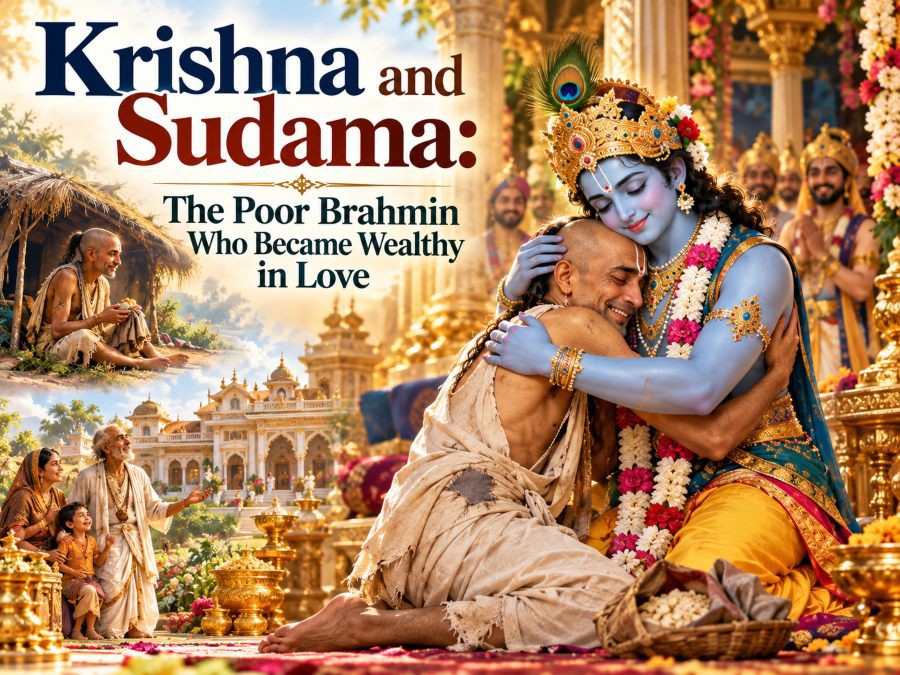 Krishna and Sudama: The Poor Brahmin Who Became Wealthy in LoveRead more
 -
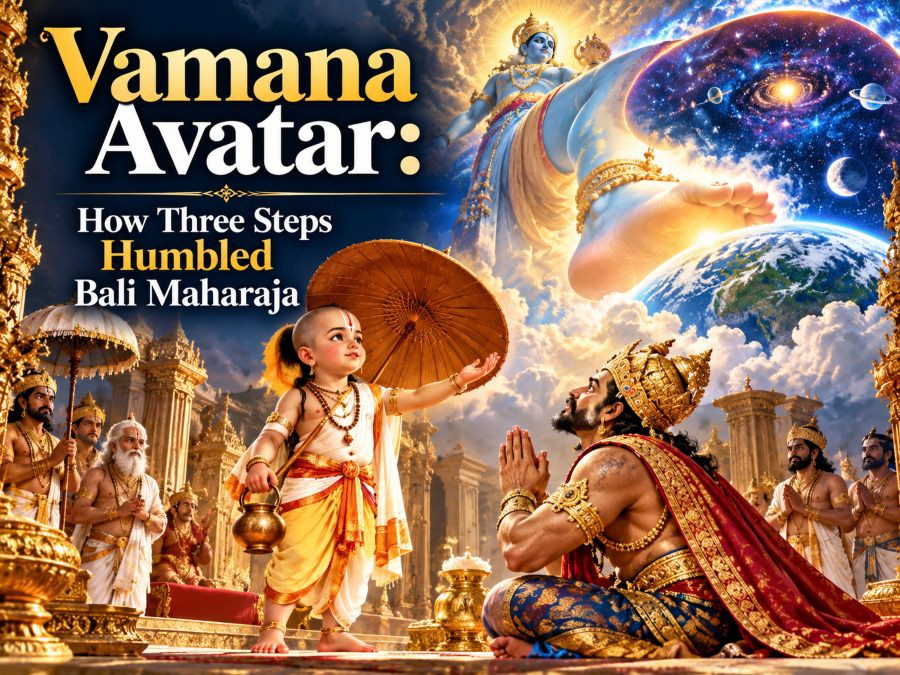 Vamana Avatar: How Three Steps Humbled Bali MaharajaRead more
Why did a powerful king give away three worlds to a boy asking for three steps? Learn the Vamana avatar story from...
-
 The Bhagavatam on Marriage: Duty, Love and Spiritual PartnershipRead more
What does the Bhagavatam say about marriage? Through the stories of Kardama and Devahuti, Rukmini's secret letter and...
-
 What Is Prema? The Bhagavatam's Highest Stage of Love for GodRead more
Prema is love for God with no "because" attached. Learn how the Bhagavatam describes it, the nine steps from faith to...
-
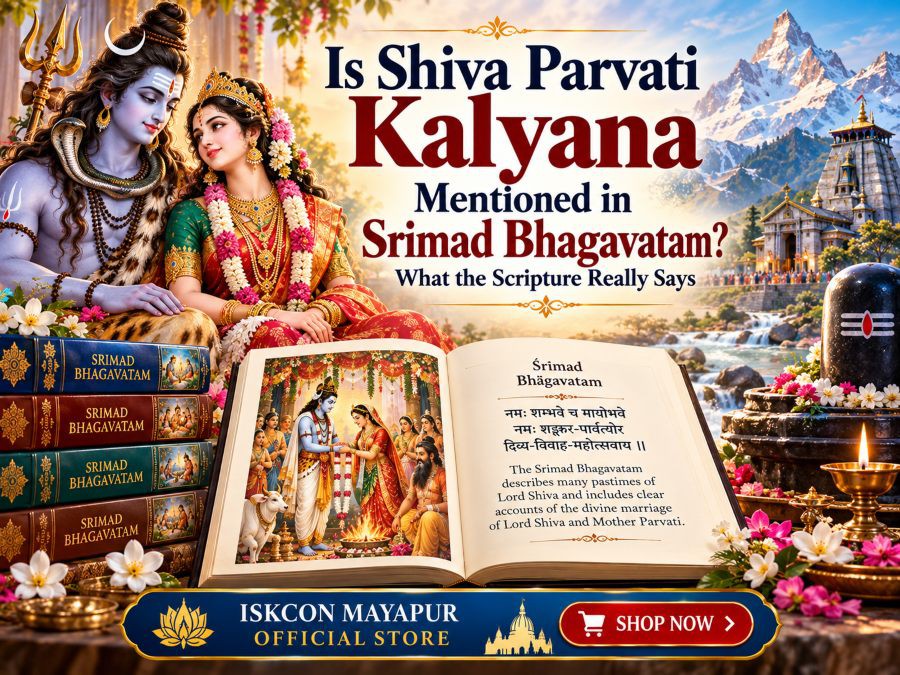 Is Shiva Parvati Kalyana Mentioned in Srimad Bhagavatam? What the Scripture Really SaysRead more
Looking for Shiva and Parvati's wedding in the Srimad Bhagavatam? Find out what the scripture actually describes,...
-
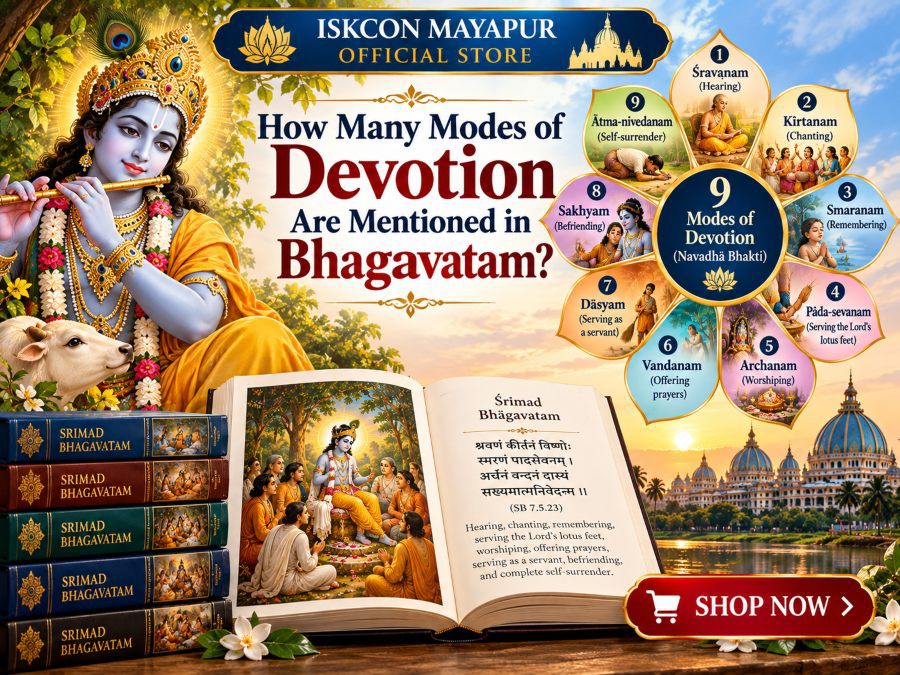 How Many Modes of Devotion Are Mentioned in Bhagavatam?Read more
A young boy named Prahlada listed nine ways to serve God, and the Bhagavatam keeps them as its answer. Learn what the...
-
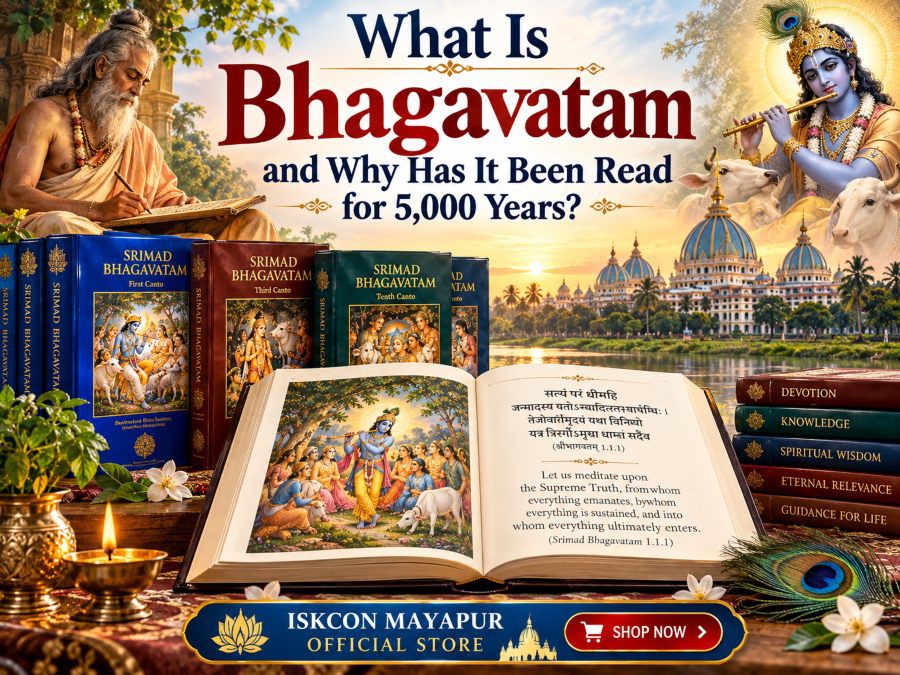 What Is Bhagavatam and Why Has It Been Read for 5,000 Years?Read more
A dying king asked one question, and the answer became the Bhagavatam. Learn what this Sanskrit scripture contains,...
-
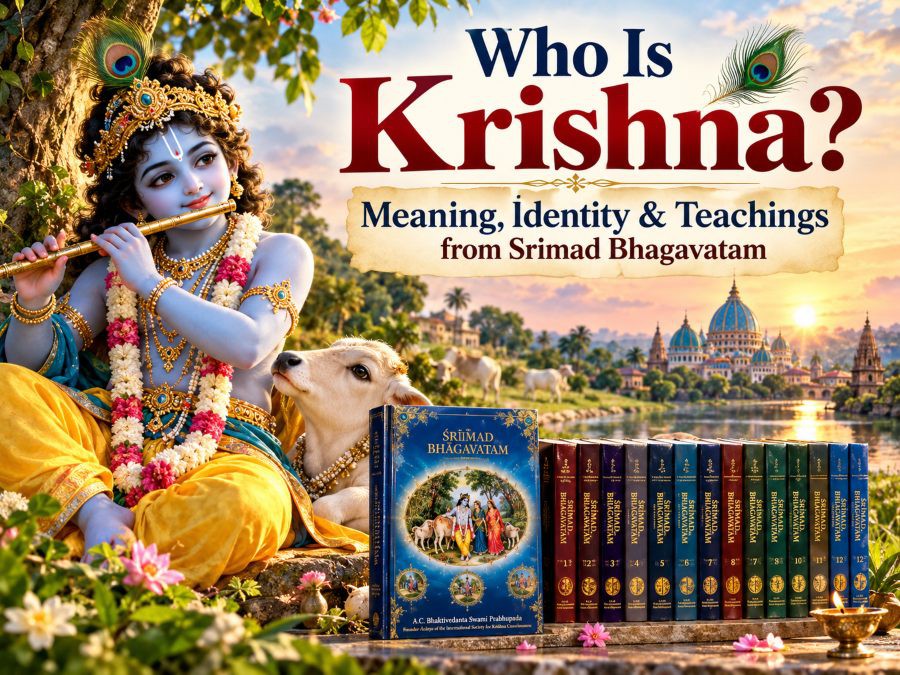 Who Is Lord Krishna? His Meaning, Teachings and Pastimes ExplainedRead more
Discover who Krishna is according to Srimad Bhagavatam, including His divine identity, childhood pastimes, teachings,...
-
 Incense in Islam: Bakhoor, Agarbatti and What Tradition SaysRead more
Is burning fragrance part of Muslim tradition? Explore incense in Islam, from the Prophetic practice of fumigating...
-
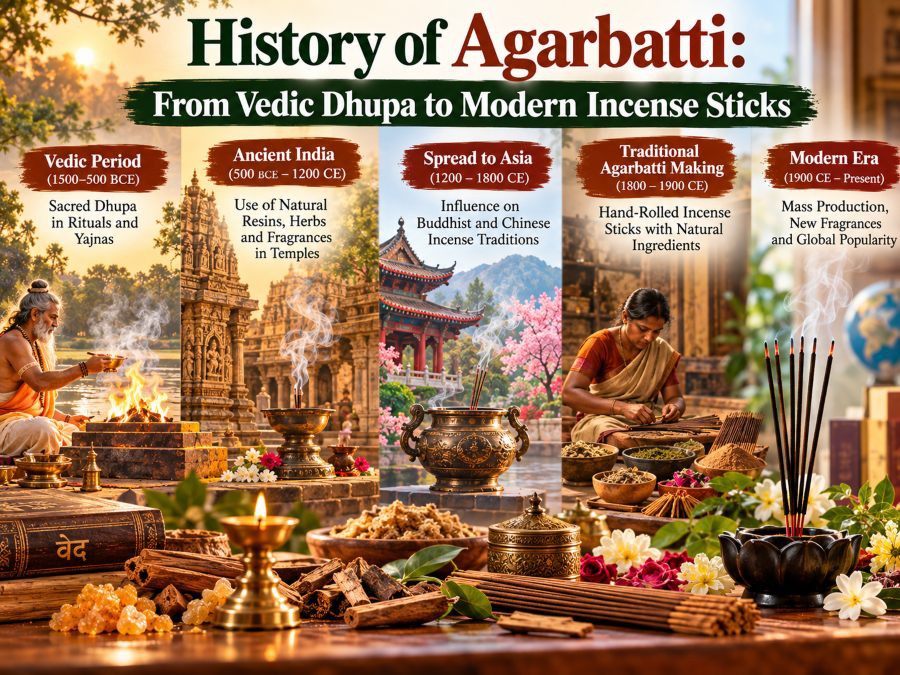 History of Agarbatti: From Vedic Dhupa to Modern Incense SticksRead more
Where did agarbatti really come from? Follow the history of agarbatti from Vedic fire rituals and temple dhupa to...
Blog categories
- Default category (0)
- MUSICAL INSTRUMENT (1)
- BOOK (5)
- DEVOTIONAL GIFT (0)
- Blog (30) click
- CHANDAN (12)
- Bhagavatam Wisdom Series (68)
- Krishna Consciousness (14)
- Mridangam Musical Instrument (6)
- Bhagavad Gita for Beginners (13)
- Bhagavad Gita As It Is (37) click
- Bhagavad Gita As It Is Telugu (0)
- Bhagavad Gita As It Is Marathi (0)
- Bhagavad Gita As It Is In Hindi (0)
- Bhagavad Gita As It Is In English (0)
- Bhagavad Gita As It Is In Bengali (8)
- Bhagavad Gita As It Is In Kannada (0)
- Bhagavad Gita As It Is In Gujarati (0)
- Bhagavad Gita As It Is In Panjabi (0)
- Bhagavad Gita As It Is In Tamil (0)
- Bhagavad Gita As It Is Odia (0)
- BHAGAVAD GITA As It Is GERMAN (0)
- Bhagavad Gita As It Is In French (0)
- Bhagavad Gita As It Is In Nepali (0)
- Bhagavad Gita As It Is In Assamese (0)
- Incense or Agarbatti (38)
- Lord Chaitanya Mahaprabhu (3)
- Vedic Temple Mayapur (14)
- kalki (15)
- Mahabharata – Dharma & Destiny (27)
- Vaishnava Scriptures (4)
- healthy product (4)
- chaitanya mahaprabhu (5)
- Tulsi Mala Guide (17)
Search in blog
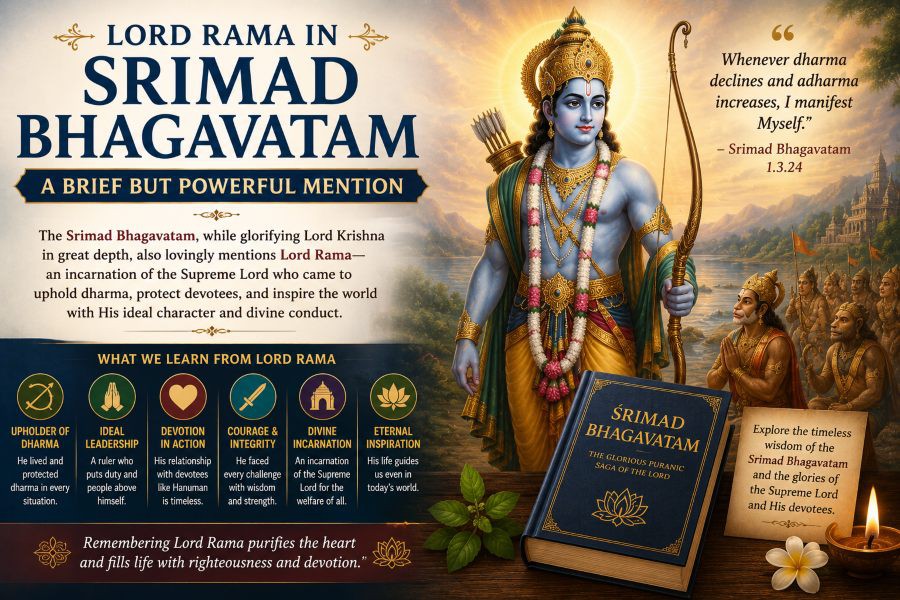
Lord Rama in Srimad Bhagavatam: A Brief but Powerful Mention
Lord Rama in Srimad Bhagavatam: A Brief but Powerful Mention
What if a few verses could reveal an entire world of character, courage, and divine purpose? That is what makes the mention of Lord Rama in the Srimad Bhagavatam so fascinating. Although the Bhagavatam is especially celebrated for its detailed descriptions of Lord Krishna and His devotees, Lord Rama also appears in its pages as one of the Supreme Lord's divine incarnations. Readers who want to explore these teachings in their complete context can study the ISKCON Srimad Bhagavatam Full Set, where the stories and philosophical teachings of the Bhagavatam unfold across its twelve cantos.
At first glance, Lord Rama's appearance in the Bhagavatam may seem brief compared with the extensive narratives surrounding Krishna.
But brevity does not mean insignificance.
The Bhagavatam mentions Lord Rama while presenting a larger vision of the Supreme Lord's incarnations and their purposes. His appearance connects the Bhagavatam's teachings with the wider Vaishnava understanding that the Divine can appear in different forms and circumstances while remaining the same Supreme Reality.
For readers familiar with the Ramayana, this may feel like meeting an old friend in a different book.
The story is not retold from beginning to end.
Instead, the Bhagavatam gives us glimpses that remind us of who Rama is, why His appearance matters, and what His character teaches about divine action.
Why Does the Bhagavatam Mention Lord Rama?
The Srimad Bhagavatam presents a vast history of creation, spiritual realization, kings, sages, devotees, and incarnations of the Supreme Lord.
Its purpose is not simply to collect religious stories.
The text repeatedly directs the reader toward the relationship between the Supreme Lord and His devotees.
When Lord Rama is mentioned, therefore, the reference fits into this larger purpose.
Rama is presented as an incarnation of the Supreme Lord who appeared to establish righteousness and demonstrate exemplary conduct.
His life is associated with:
· Truthfulness
· Duty
· Courage
· Loyalty
· Compassion
· Protection of devotees
· Respect for dharma
· The defeat of powerful evil
These qualities make Rama especially meaningful for anyone trying to understand what divine kingship and righteous leadership look like.
Lord Rama as an Incarnation of the Supreme Lord
One of the important teachings found throughout Vaishnava literature is that the Supreme Lord can appear in different incarnations according to the needs of the world and the desires of His devotees.
The Bhagavatam describes many such divine appearances.
Lord Rama is among them.
He is not presented merely as a heroic king who happened to live an extraordinary life. His appearance has a divine purpose.
This is an important distinction.
A historical hero may become admired because of extraordinary achievements.
Lord Rama is revered because His life reveals dharma in action while also demonstrating the Supreme Lord's relationship with His devotees.
That is why even a relatively short reference to Rama in the Bhagavatam carries considerable theological meaning.
The Story Behind the Name Rama
The name “Rama” itself carries deep significance in devotional traditions.
Lord Rama is remembered as the ideal king, the devoted son, the faithful husband, and a protector of righteousness.
His story is filled with difficult choices.
He accepts exile.
He separates from His kingdom.
He faces the loss of Sita.
He builds alliances with the Vanaras.
He confronts Ravana.
And throughout these challenges, His character remains central to the story.
The power of Rama's example comes partly from the fact that His greatness is not demonstrated only when circumstances are favorable.
It is revealed when everything becomes difficult.
That is a lesson the Bhagavatam's broader teachings repeatedly emphasize: true character becomes visible through one's response to responsibility and adversity.
Rama and the Deeper Meaning of Dharma
Dharma can be translated in several ways depending on context, but ideas such as duty, righteousness, moral responsibility, and one's proper conduct are closely associated with it.
Lord Rama's life provides a dramatic example of this principle.
When He is asked to leave the kingdom and live in the forest, He does not treat His personal comfort as the highest priority.
He accepts the situation and honors His father's word.
From a modern perspective, this can be difficult to understand.
Why voluntarily accept hardship?
The answer lies in Rama's commitment to principle.
His choices show that dharma is not always the easiest option.
Sometimes the right path costs us something.
That insight remains relevant far beyond religious storytelling.
A person may know the right thing to do and still find it painful.
A leader may have to make an unpopular decision.
A parent may have to sacrifice personal comfort.
A professional may have to choose honesty over an immediate advantage.
Rama's example reminds us that values become meaningful when they influence decisions under pressure.
Rama, Ravana, and the Problem of Power Without Restraint
The contrast between Rama and Ravana is one of the most recognizable themes in the Ramayana tradition.
Ravana is extraordinarily powerful.
He is learned.
He possesses immense abilities.
Yet his uncontrolled desire and arrogance ultimately lead to his downfall.
This contrast provides an important spiritual lesson.
Knowledge without character can become dangerous.
Power without self-control can destroy the person who possesses it.
Achievement does not automatically produce wisdom.
Rama represents a very different model of strength.
His power is guided by responsibility.
That is one reason His character continues to inspire people across generations.
What the Srimad Bhagavatam Adds to Rama's Story
Readers may wonder why they should look for Lord Rama in the Srimad Bhagavatam when the Ramayana tradition already provides an extensive account of His life.
The answer is perspective.
Different Vedic texts can present the same divine personality from different angles.
The Bhagavatam is deeply focused on bhakti, or loving devotion to the Supreme Lord.
Its narratives are designed not merely to entertain but to awaken spiritual interest and encourage remembrance of the Divine.
That makes its references to Rama part of a larger devotional framework.
Instead of asking only, “What happened in Rama's life?” the Bhagavatam encourages another question:
“What can Rama's life teach us about the Supreme Lord and our relationship with Him?”
That shift is significant.
A Devotional Scripture Collection With a Wider Vision
For someone building a devotional scripture collection, the mention of Lord Rama in the Bhagavatam demonstrates why reading across Vedic literature can be so rewarding.
The texts are not isolated stories competing with one another.
They often illuminate different aspects of spiritual reality.
The Bhagavatam gives special attention to Krishna and pure devotional service, while also describing numerous incarnations and devotees.
The Ramayana tradition focuses extensively on Rama's life, His relationships, His kingdom, His exile, and His battle with Ravana.
Reading these traditions together can provide a richer understanding of both personalities.
One text may give you the detailed story.
Another may give you the theological context.
Together, they help the reader see the bigger picture.
Lord Rama's Connection With Devotees
The relationship between the Supreme Lord and His devotees is one of the strongest themes in Vaishnava philosophy.
Lord Rama's story contains memorable examples of this relationship.
Hanuman's devotion is perhaps the most famous.
Hanuman does not approach Rama simply because Rama is powerful. His service is motivated by love.
He takes enormous risks.
He crosses the ocean.
He searches for Sita.
He carries Rama's message.
He fights for Rama's cause.
And he considers service to Rama to be the highest purpose of his life.
This makes Hanuman's relationship with Rama an extraordinary example of devotional service without selfish calculation.
The devotee does not ask, “What will I gain?”
The devotee asks:
“How can I serve?”
That attitude lies at the heart of bhakti.
Why Lord Rama Still Matters Today
It is easy to think of Rama's story as something belonging to an ancient age.
But the questions surrounding His life are remarkably familiar.
What should we do when duty conflicts with comfort?
How should leaders behave when they possess power?
How should we respond when we are treated unfairly?
Can strength exist without arrogance?
Can success remain connected to morality?
How do we remain committed to our principles when circumstances become painful?
These are not ancient questions.
They are human questions.
That is why Rama's character continues to resonate.
Rama as an Example of Responsible Leadership
Lord Rama's identity as a king is especially important.
Leadership in the modern world often focuses on performance, influence, growth, and measurable results.
Rama represents another dimension of leadership: responsibility toward those one serves.
A good leader cannot think only about personal gain.
Leadership creates obligations.
People depend on decisions.
Trust has to be earned.
Promises matter.
Character matters when nobody is watching.
The story of Rama therefore provides an interesting standard for leadership: authority should be connected with responsibility, not merely privilege.
The Brief Mention That Opens a Larger Door
The references to Lord Rama in the Srimad Bhagavatam may not occupy as many pages as the extensive Krishna narratives, but their importance should not be measured by page count.
A short reference can point toward an enormous spiritual tradition.
Rama represents divine righteousness.
His story demonstrates the seriousness of dharma.
His relationship with devotees reveals the beauty of loving service.
His confrontation with Ravana shows the danger of power separated from self-control.
And His presence in the Bhagavatam reminds readers that the Supreme Lord's manifestations are connected within a larger spiritual vision.
What We Can Learn From Lord Rama
The teachings associated with Rama can be brought into ordinary life through a few simple questions:
Am I keeping my promises when doing so becomes difficult?
Do I use my abilities responsibly?
Can I stand by what is right without becoming arrogant?
Do I value service as much as achievement?
How do I treat people who depend on me?
These questions turn an ancient sacred narrative into something personally meaningful.
Spiritual wisdom becomes useful when it changes how we think, speak, decide, and act.
Final Thoughts
Lord Rama's appearance in the Srimad Bhagavatam may be brief, but it opens the door to a much larger understanding of divine incarnation, dharma, devotion, and righteous conduct.
The Bhagavatam does not need to retell every detail of Rama's life to establish His spiritual importance. It places Him within the broader history of the Supreme Lord's incarnations and directs the reader toward devotion.
For a modern reader, Rama's example remains powerful because His story is not built around convenience. It is built around principle.
He chooses duty when duty is difficult.
He uses strength without abandoning responsibility.
He inspires devotion through His character.
And He shows that genuine greatness is not simply about possessing power. It is about how that power is used.
That is why even a brief mention of Lord Rama in the Srimad Bhagavatam can leave a lasting impression.
Sometimes a few words in a sacred text are enough to remind us that an entire spiritual world is waiting to be explored.
Posted in: Bhagavatam Wisdom Series
Related posts
-
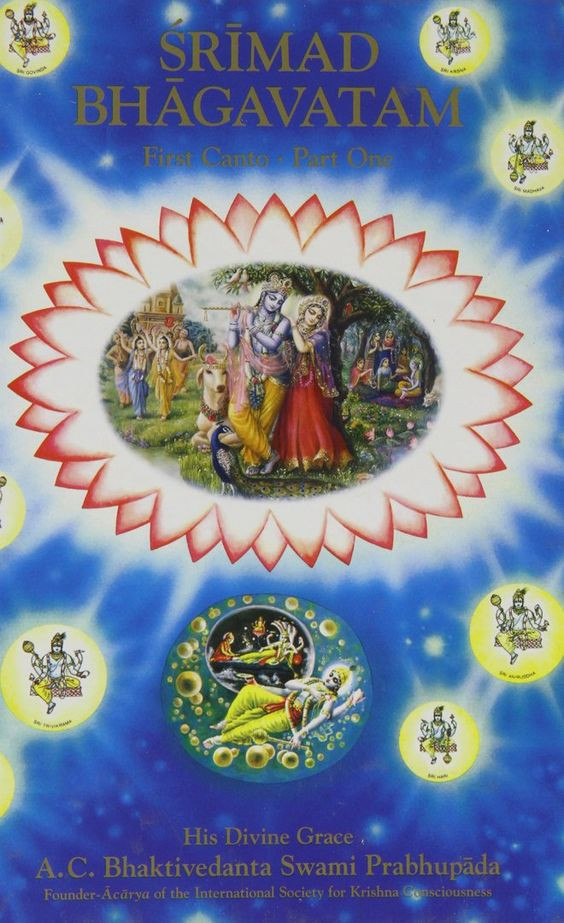 Why to read srimad bhagavatamReading the Srimad Bhagavatam fosters deep spiritual growth by narrating the life and teachings of Lord Krishna,...Read more
 -
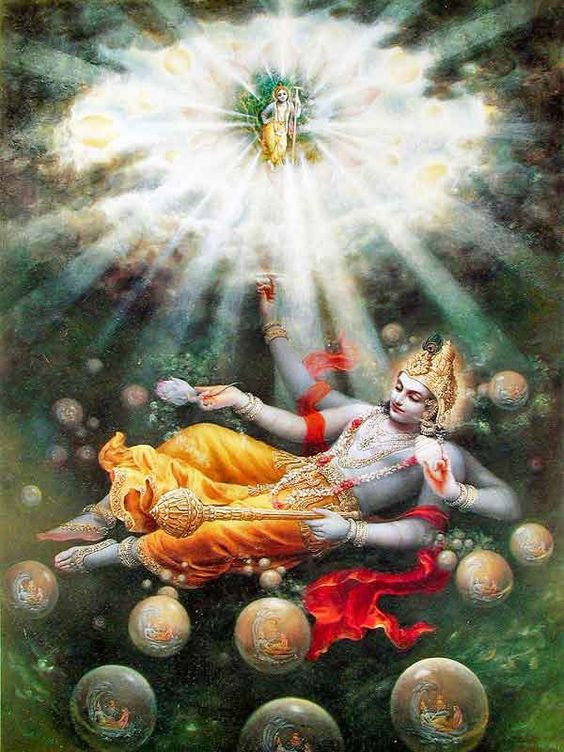 When was srimad bhagavatam written?The Srimad Bhagavatam is believed to have been written around 9th-10th century CE, though its oral traditions date...Read more
 -
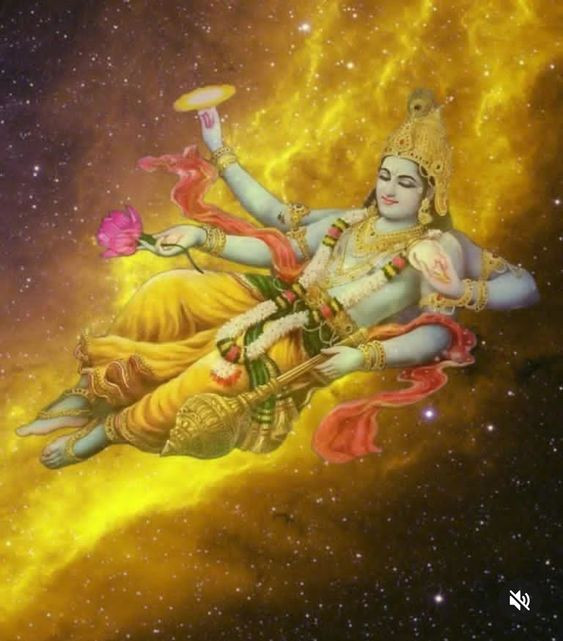 How many chapters are there in srimad bhagavatam?The Srimad Bhagavatam consists of 12 cantos (books) containing 335 chapters in total. Each canto covers various...Read more
 -
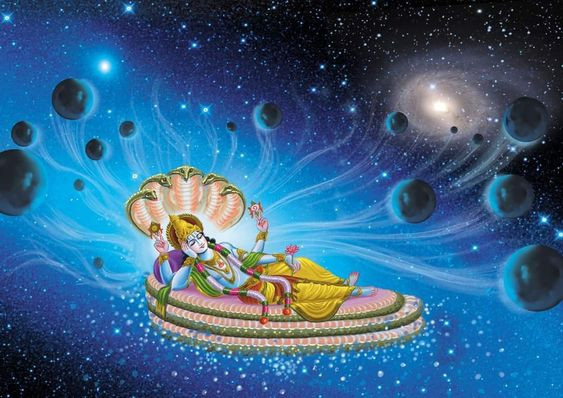 How many skandhas are there in srimad bhagavatamThe Srimad Bhagavatam is divided into 12 skandhas (cantos or books). Each skandha explores different themes,...Read more
 -
 How many slokas in srimad bhagavatamThe Srimad Bhagavatam contains approximately 18,000 shlokas (verses). These verses are spread across its 12 skandhas...Read more
Leave a comment