
Why did Krishna run to embrace a poor brahmin in rags? Read the Sudama story from the Bhagavatam and learn how a...
Latest posts
-
 Krishna and Sudama: The Poor Brahmin Who Became Wealthy in LoveRead more
 -
 Vamana Avatar: How Three Steps Humbled Bali MaharajaRead more
Why did a powerful king give away three worlds to a boy asking for three steps? Learn the Vamana avatar story from...
-
 The Bhagavatam on Marriage: Duty, Love and Spiritual PartnershipRead more
What does the Bhagavatam say about marriage? Through the stories of Kardama and Devahuti, Rukmini's secret letter and...
-
 What Is Prema? The Bhagavatam's Highest Stage of Love for GodRead more
Prema is love for God with no "because" attached. Learn how the Bhagavatam describes it, the nine steps from faith to...
-
 Is Shiva Parvati Kalyana Mentioned in Srimad Bhagavatam? What the Scripture Really SaysRead more
Looking for Shiva and Parvati's wedding in the Srimad Bhagavatam? Find out what the scripture actually describes,...
-
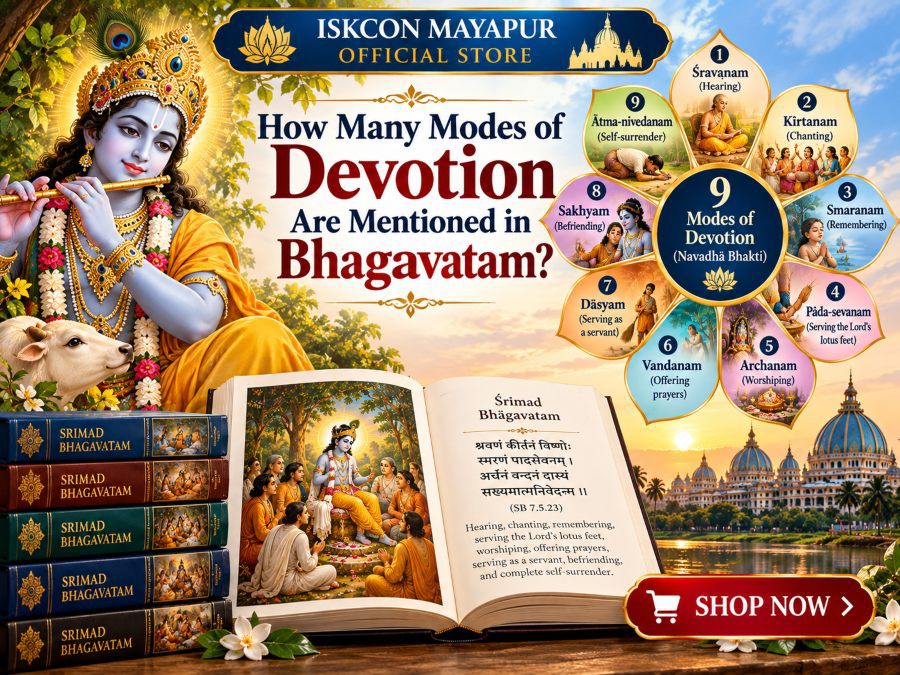 How Many Modes of Devotion Are Mentioned in Bhagavatam?Read more
A young boy named Prahlada listed nine ways to serve God, and the Bhagavatam keeps them as its answer. Learn what the...
-
 What Is Bhagavatam and Why Has It Been Read for 5,000 Years?Read more
A dying king asked one question, and the answer became the Bhagavatam. Learn what this Sanskrit scripture contains,...
-
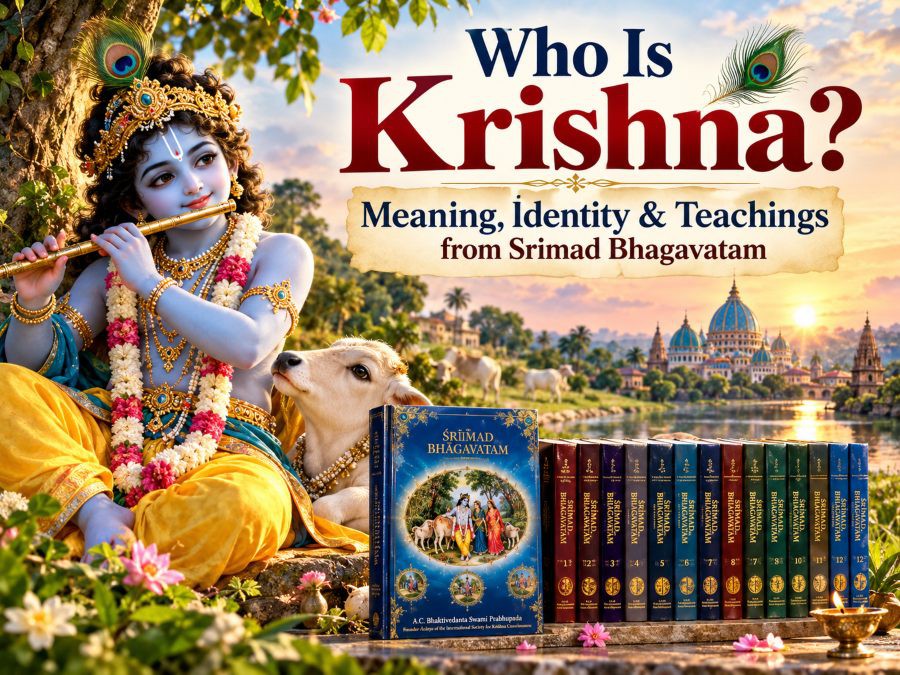 Who Is Lord Krishna? His Meaning, Teachings and Pastimes ExplainedRead more
Discover who Krishna is according to Srimad Bhagavatam, including His divine identity, childhood pastimes, teachings,...
-
 Incense in Islam: Bakhoor, Agarbatti and What Tradition SaysRead more
Is burning fragrance part of Muslim tradition? Explore incense in Islam, from the Prophetic practice of fumigating...
-
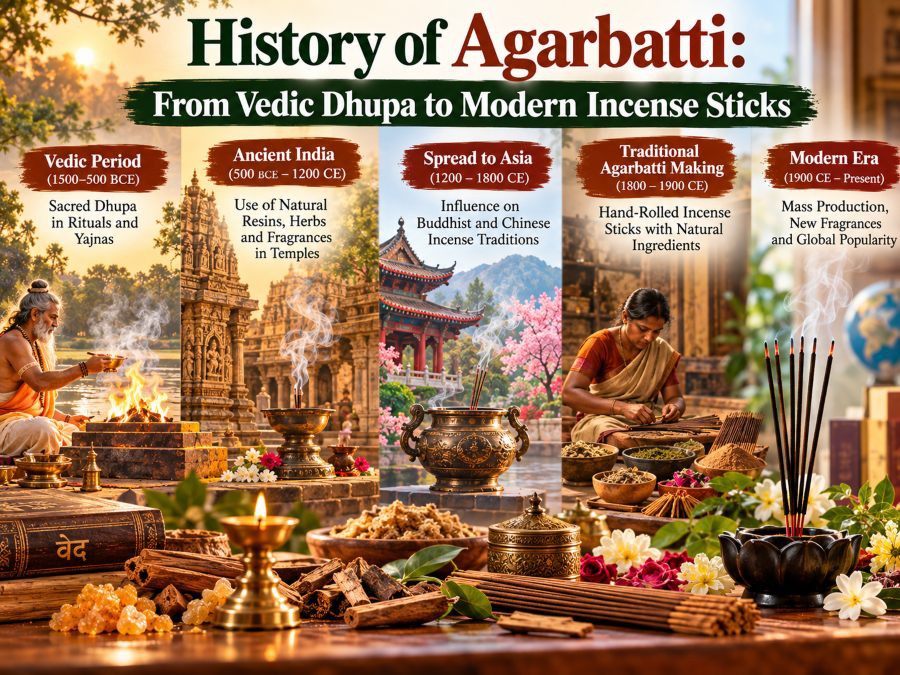 History of Agarbatti: From Vedic Dhupa to Modern Incense SticksRead more
Where did agarbatti really come from? Follow the history of agarbatti from Vedic fire rituals and temple dhupa to...
Blog categories
- Default category (0)
- MUSICAL INSTRUMENT (1)
- BOOK (5)
- DEVOTIONAL GIFT (0)
- Blog (30) click
- CHANDAN (12)
- Bhagavatam Wisdom Series (68)
- Krishna Consciousness (14)
- Mridangam Musical Instrument (6)
- Bhagavad Gita for Beginners (13)
- Bhagavad Gita As It Is (37) click
- Bhagavad Gita As It Is Telugu (0)
- Bhagavad Gita As It Is Marathi (0)
- Bhagavad Gita As It Is In Hindi (0)
- Bhagavad Gita As It Is In English (0)
- Bhagavad Gita As It Is In Bengali (8)
- Bhagavad Gita As It Is In Kannada (0)
- Bhagavad Gita As It Is In Gujarati (0)
- Bhagavad Gita As It Is In Panjabi (0)
- Bhagavad Gita As It Is In Tamil (0)
- Bhagavad Gita As It Is Odia (0)
- BHAGAVAD GITA As It Is GERMAN (0)
- Bhagavad Gita As It Is In French (0)
- Bhagavad Gita As It Is In Nepali (0)
- Bhagavad Gita As It Is In Assamese (0)
- Incense or Agarbatti (38)
- Lord Chaitanya Mahaprabhu (3)
- Vedic Temple Mayapur (14)
- kalki (15)
- Mahabharata – Dharma & Destiny (27)
- Vaishnava Scriptures (4)
- healthy product (4)
- chaitanya mahaprabhu (5)
- Tulsi Mala Guide (17)
Search in blog
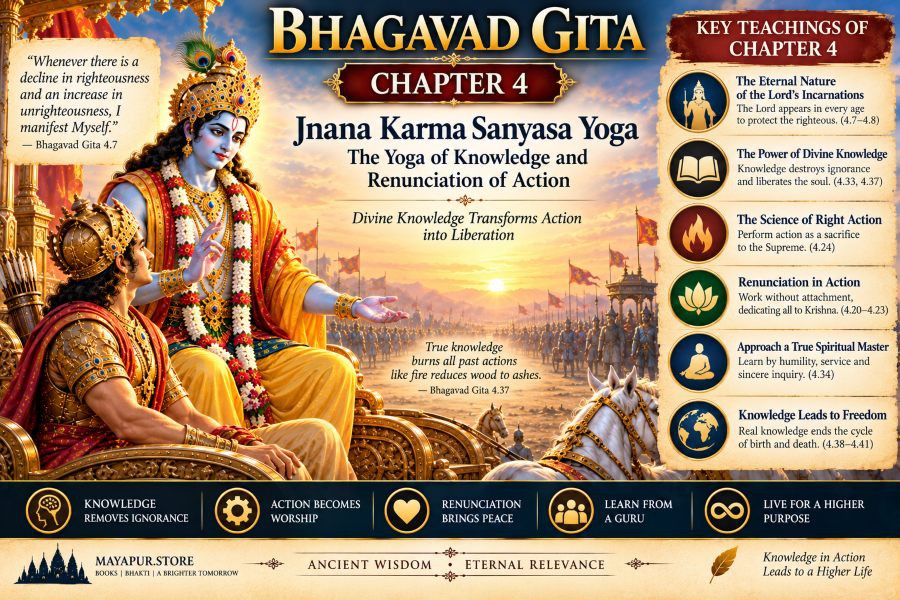
Bhagavad Gita Chapter 4: Jnana Karma Sanyasa Yoga – The Yoga of Knowledge and Renunciation of Action
What If Someone Told You This Wasn't the First Time You'd Heard This?
Imagine sitting across from a teacher who suddenly says, "I already taught you this, thousands of years ago — you just don't remember." That's exactly what Krishna tells Arjuna at the opening of Chapter 4, and Arjuna's confusion is immediate and completely understandable. Krishna was born only a few decades before this conversation. How could he possibly have taught anyone anything "ages ago"? This single exchange sets up one of the most fascinating chapters in the entire Bhagavad Gita, one that quietly shifts the whole nature of the conversation from philosophy to something closer to revelation. If you're following along in a text picked up from Mayapur Store online, this is the chapter where Krishna stops being just a wise charioteer and starts speaking as something considerably more than that.
Jnana Karma Sanyasa Yoga translates roughly to "the yoga of knowledge and the renunciation of action," and true to that mouthful of a title, this chapter juggles two big ideas at once: who Krishna actually is, and how a person can act in the world without those actions creating karmic bondage. Both threads turn out to be deeply connected.
Krishna Drops a Bombshell About Who He Really Is
Arjuna's confusion gives Krishna the opening to explain something he hadn't stated so directly before: he isn't just a skilled charioteer and advisor. He describes himself as having lived through countless births, all of which he remembers, unlike Arjuna, who doesn't recall his own.
Then comes the line that gets quoted more than almost any other in the Gita — Krishna explains that whenever there's a decline in righteousness and a rise in unrighteousness, he manifests himself, birth after birth, to restore balance. He's not describing a one-time miracle. He's describing a pattern, a recurring intervention whenever the moral fabric of the world frays past a certain point.
This is a huge structural claim for the text to make, and it's easy to read past it without registering the weight of what's being said. Krishna isn't offering Arjuna another philosophical position to weigh against others. He's saying: everything I've told you and everything I'm about to tell you doesn't come from someone speculating about truth — it comes from someone claiming direct, repeated, personal experience of managing that truth across time.
Whether a reader takes this claim literally, symbolically, or somewhere in between, it changes how the rest of the Gita reads. The teachings that follow aren't presented as one sage's opinion among many. They're framed as recurring guidance from a source that considers itself responsible for course-correcting the world whenever it drifts too far off balance.
Action That Doesn't Leave a Trace
With that framing established, Krishna pivots back to something more immediately useful for Arjuna: how to act in the world without those actions binding you to further cycles of cause and effect.
This is where the chapter gets genuinely clever. Krishna says that a wise person sees "inaction in action, and action in inaction" — a phrase that sounds like a riddle until you sit with it for a moment. What he means, roughly, is this:
- Someone can be physically active while remaining internally detached, free from ego-driven motive — and this counts, spiritually, as a kind of inaction, because it doesn't generate the usual karmic residue.
- Someone can appear completely still, sitting in meditation, while their mind is churning with desire, ambition, or resentment — and this counts as action, because internally, something is very much still happening.
The measure Krishna cares about isn't the visible behavior. It's the internal orientation behind it. A surgeon operating with full focus and no ego attachment to praise is, in this framework, doing something closer to "inaction" than someone quietly stewing in jealousy while appearing to do nothing at all.
Why Fire Is the Perfect Metaphor Krishna Reaches For
Krishna spends a good portion of this chapter describing different kinds of sacrifice — a concept that shows up constantly throughout Vedic thought — and one metaphor he returns to again and again is fire.
Traditionally, sacrifice meant literal ritual offerings poured into a fire. But Krishna widens the definition considerably. He describes:
- Sacrificing the senses into the fire of restraint, meaning discipline over sensory indulgence
- Sacrificing sense objects into the fire of the senses, describing controlled engagement rather than either indulgence or total suppression
- Sacrificing action itself into the fire of knowledge, where understanding transforms even ordinary work into something purifying
That last one is the big pivot point of the chapter. Krishna states plainly that the sacrifice of knowledge is superior to any material sacrifice, because material sacrifices, however sincere, eventually culminate in knowledge anyway — so why not go straight to the source? Every action, when performed with true understanding, becomes a kind of offering, whether or not it involves a physical ritual fire at all.
This reframes something that might otherwise sound abstract into something surprisingly practical. You don't need a temple or a ceremony to make your actions count spiritually. According to this chapter, the "fire" that actually purifies action is understanding — knowing why you're doing something, free from ego, rather than merely going through the motions.
Doubt Is the Real Enemy Here, Not Ignorance
Toward the end of the chapter, Krishna makes a statement that's easy to underestimate on a first read: knowledge burns away the effects of past action the way fire reduces wood to ashes. That's a strong claim, but the more interesting part comes right after, when he warns Arjuna about something that isn't ignorance at all — it's doubt.
A person without knowledge, and worse, a person full of doubt, Krishna says, is destroyed. Not through some external punishment, but through their own indecision. Doubt paralyzes action, distorts perception, and prevents someone from fully committing to either path — knowledge or engaged action — leaving them stuck in a kind of spiritual limbo.
This is worth sitting with, because it maps onto something very ordinary and very human. Ignorance, at least, has a clear fix: learn. But doubt is slipperier. A person riddled with doubt might have plenty of information available to them and still be unable to act on any of it, endlessly second-guessing every decision, every belief, every commitment. Krishna is essentially warning Arjuna: don't let this conversation turn into another source of paralysis. Understanding without conviction is just another form of the same freeze he started this whole dialogue in.
A Few Threads Worth Pulling Apart
There are three or four ideas packed into this chapter that are easy to skim past but reward closer attention:
- Krishna claims equal availability to all who approach him sincerely, regardless of their path or background — a notably inclusive statement for an ancient text, and one that reframes spiritual progress as accessible rather than gatekept by ritual correctness alone.
- The four social divisions Krishna mentions are described as created according to guna (quality) and karma (work), not by birth alone — a distinction that later commentators have debated extensively, since the surface reading and the deeper reading pull in somewhat different directions.
- The idea that even the same action can bind one person and liberate another, depending entirely on the internal motive behind it, quietly undercuts any purely external, checklist-style approach to morality.
None of these ideas get fully resolved within this single chapter — the Gita tends to plant seeds early and let them germinate across later chapters — but their presence here shows how densely packed Chapter 4 really is, despite its relatively short length.
Why This Chapter Changes the Entire Conversation
Up to this point, Krishna had been speaking largely as a wise, trusted advisor — someone Arjuna respected but still saw fundamentally as an equal, a friend, a charioteer. Chapter 4 quietly repositions that relationship. Krishna isn't just offering good advice anymore; he's claiming a kind of authority that comes from having actively shaped and reshaped the moral order of the world across countless ages.
This shift matters for how the rest of the Bhagavad Gita unfolds. Arjuna's questions from here forward carry a different weight, because he's no longer just consulting a wise friend — he's in dialogue with someone who claims direct, recurring involvement in exactly the kind of crisis Arjuna is currently facing. The philosophical content becomes personal in a new way: this isn't abstract theory being handed down, it's guidance from a source that says it has done this before, many times, and will do it again.
What "Renunciation" Actually Means Here (And What It Doesn't)
The word "sanyasa" in this chapter's title often gets mistranslated in people's heads as "giving everything up" — quitting your job, walking away from responsibilities, retreating to a cave somewhere. That's not remotely what Krishna is describing.
The renunciation he's pointing to is internal, not external. It's the renunciation of ego-driven attachment to outcomes, not the renunciation of the activities themselves. A person can keep their job, their family, their daily responsibilities completely intact, and still practice this kind of renunciation, provided the motive behind the work shifts from "what do I get out of this" to something closer to "this needs doing, and I'll do it well." Krishna even goes so far as to say that someone who works this way, without craving results, is never actually bound by the work at all — the karmic weight simply doesn't stick.
This is a useful correction for anyone who assumes spirituality requires withdrawal from ordinary life. Chapter 4 argues almost the opposite: the world doesn't need fewer people doing things. It needs more people doing the things they're already doing with a cleaner internal motive.
The Teacher-Student Relationship Krishna Insists On
Near the middle of the chapter, Krishna makes a point that's easy to breeze past but actually carries real weight for how knowledge is supposed to be transmitted in this tradition. He tells Arjuna that this kind of understanding isn't something you piece together alone through pure intellect. It's meant to be received — through humble inquiry, through service, and through genuine questions asked of someone who has already seen the truth directly.
That's a notable claim in a text this focused on self-reliant action. Krishna isn't contradicting his earlier emphasis on personal responsibility; he's adding a necessary counterweight. Acting with clarity is your job. But arriving at that clarity in the first place, according to this chapter, usually isn't a solo project. It happens in relationship — with a teacher, a text, a tradition, something outside your own untested assumptions that can actually correct you when you're wrong.
This is worth noticing because it quietly shapes the entire structure of the Gita itself. Arjuna isn't figuring any of this out independently. He's asking, listening, pushing back, and asking again. Chapter 4 essentially validates that whole process as the correct one, rather than treating it as a sign of weakness or dependency.
Where This Leaves Arjuna — and Where It Leaves You
By the time this chapter closes, Krishna delivers something close to a direct command: cut through this doubt with the sword of knowledge, stand up, and engage. It's a deliberately forceful image after several chapters of dense philosophical groundwork, and it's meant to be. All the reasoning in the world doesn't help if it never translates into standing back up.
By the end of Jnana Karma Sanyasa Yoga, Arjuna hasn't picked up his bow yet. He's absorbed a lot — the eternity of the soul from Chapter 2, the necessity of committed action from Chapter 3, and now a much bigger claim about who's actually speaking to him and why action performed with knowledge doesn't bind the way ordinary action does.
The real question hovering underneath all of it is simple to state and hard to live out: are you acting from clarity, or are you acting — or avoiding acting — from doubt dressed up as caution? Krishna has made it clear which one he thinks is actually dangerous, and it isn't the one most people assume.
Posted in: Bhagavad Gita As It Is
Related posts
-
 Why the Bhagavad Gita Feels Like a Personal Conversation with KrishnaThe Bhagavad Gita feels like a personal conversation with Krishna because its timeless wisdom directly addresses our...Read more
 -
 Shrimad Bhagwat Geeta: The Forgotten Life Manual for Modern StressShrimad Bhagwat Geeta is more than a sacred scripture—it’s a forgotten life manual that offers timeless solutions for...Read more
 -
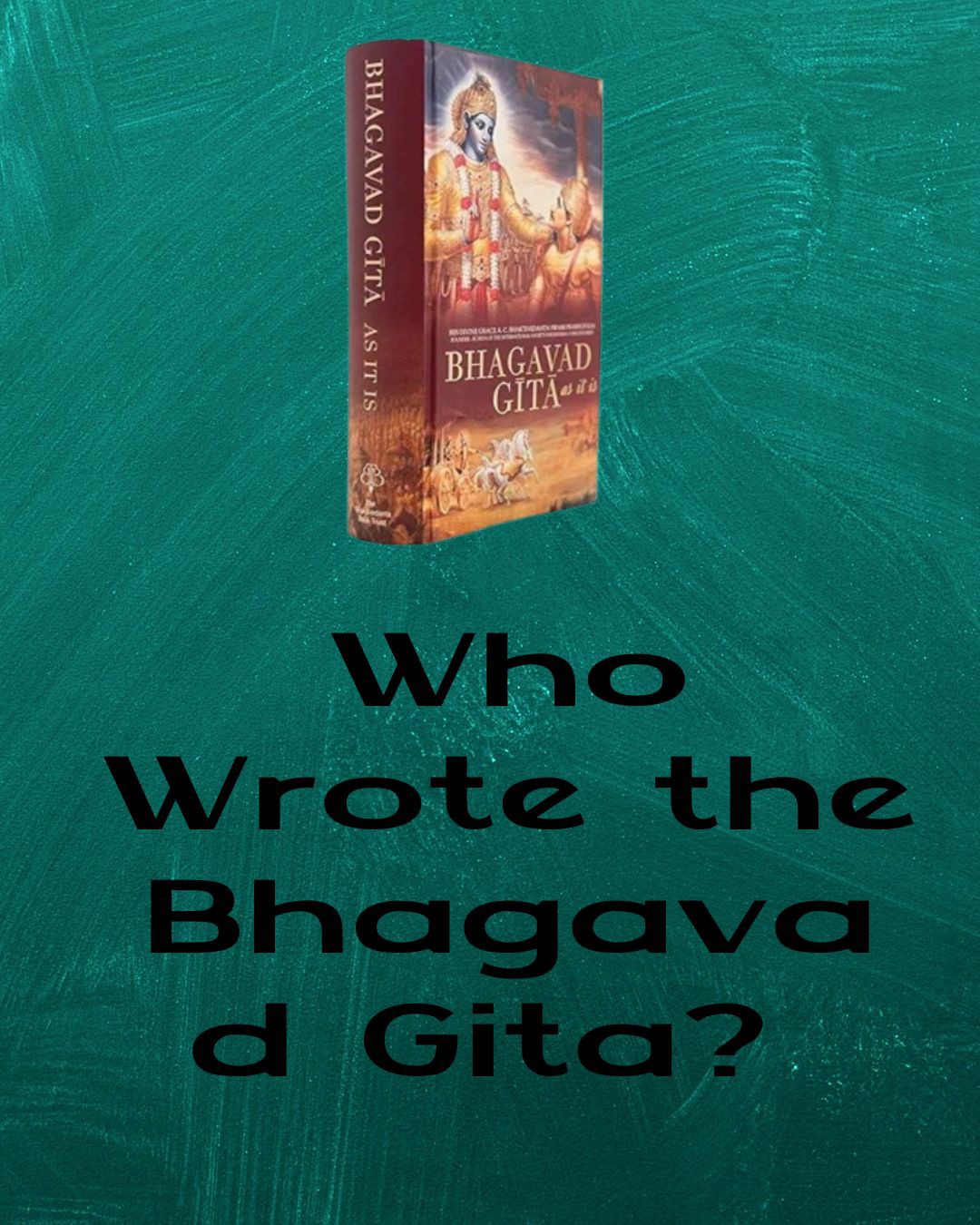 Who Wrote the Bhagavad Gita? Discover the true authorship of the Bhagavad Gita—exploring Ved Vyasa’s role as the compiler, Lord Krishna’s divine...Read more
 -
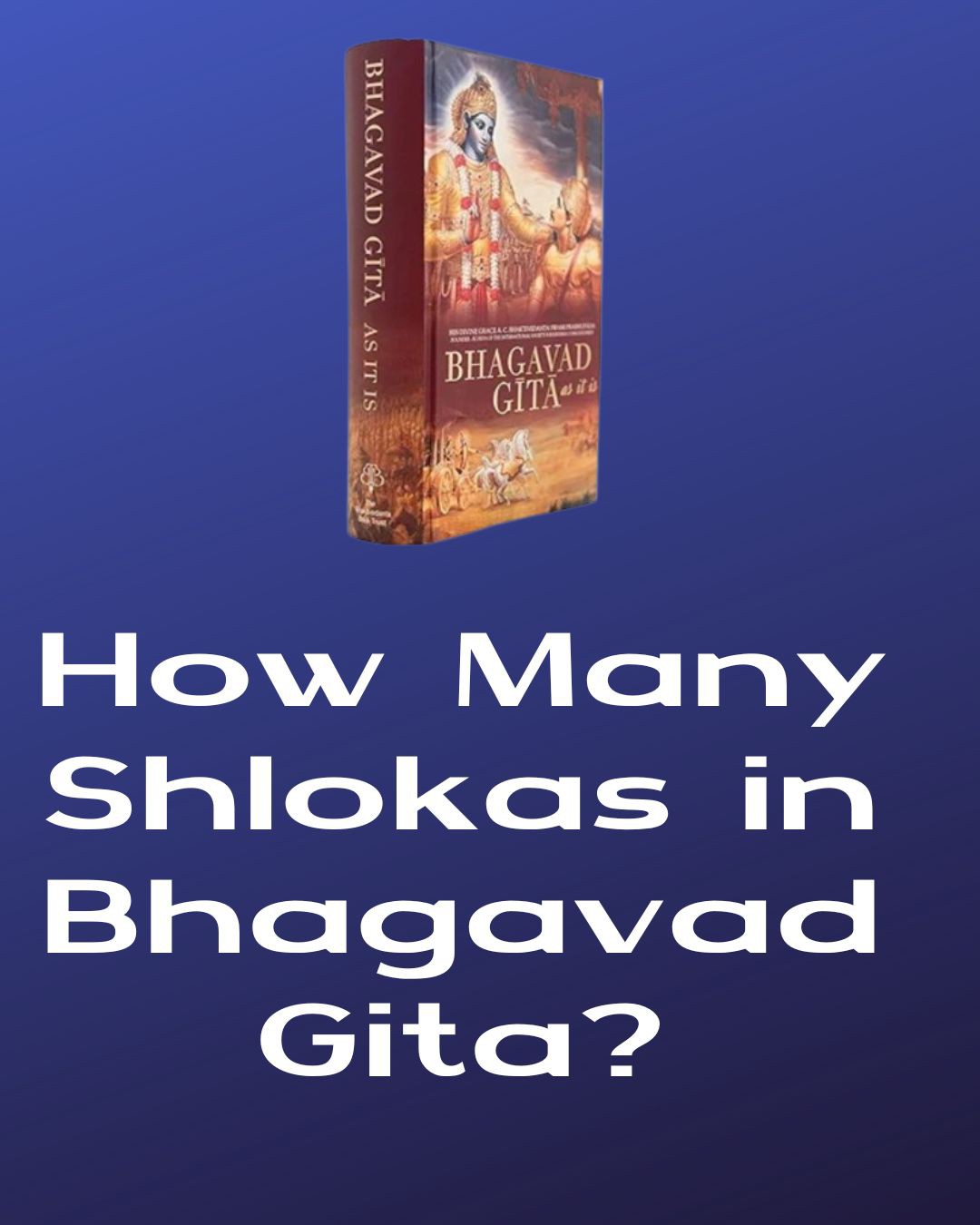 How Many Shlokas in Bhagavad Gita? Complete Chapter-Wise Breakdown & MeaningDiscover how many shlokas are in the Bhagavad Gita, with a complete chapter-wise breakdown, variations in verse...Read more
 -
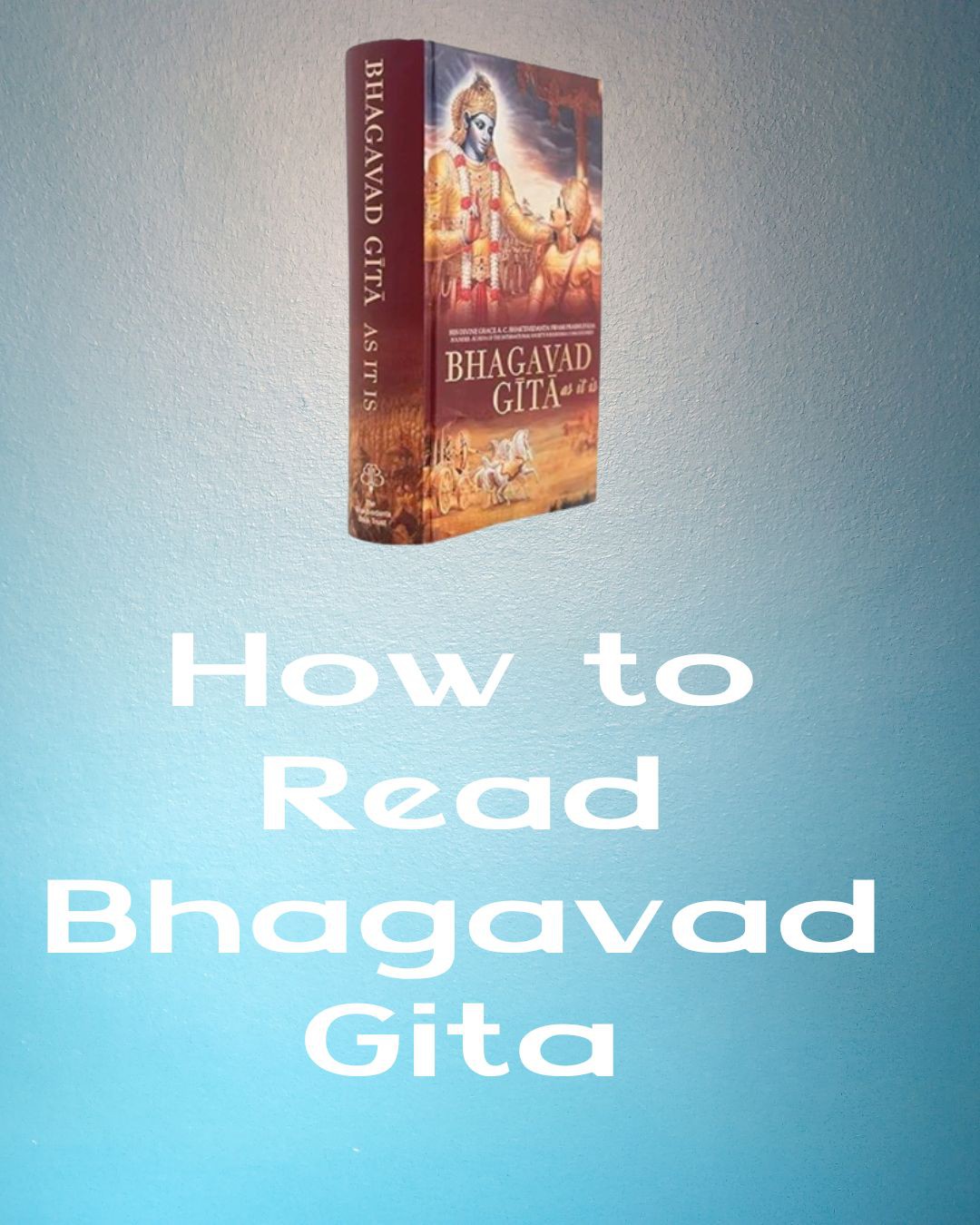 How to Read Bhagavad Gita: A Complete Step-by-Step Guide for BeginnersDiscover how to read the Bhagavad Gita step by step—learn the right mindset, chapter order, and tips to understand...Read more
Leave a comment