
Why did Krishna run to embrace a poor brahmin in rags? Read the Sudama story from the Bhagavatam and learn how a...
Latest posts
-
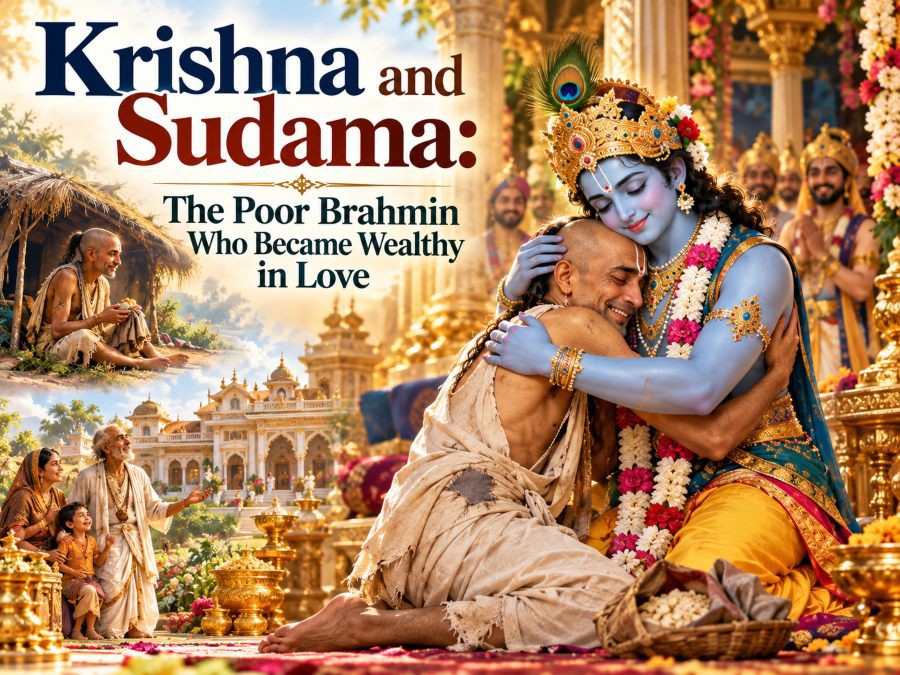 Krishna and Sudama: The Poor Brahmin Who Became Wealthy in LoveRead more
 -
 Vamana Avatar: How Three Steps Humbled Bali MaharajaRead more
Why did a powerful king give away three worlds to a boy asking for three steps? Learn the Vamana avatar story from...
-
 The Bhagavatam on Marriage: Duty, Love and Spiritual PartnershipRead more
What does the Bhagavatam say about marriage? Through the stories of Kardama and Devahuti, Rukmini's secret letter and...
-
 What Is Prema? The Bhagavatam's Highest Stage of Love for GodRead more
Prema is love for God with no "because" attached. Learn how the Bhagavatam describes it, the nine steps from faith to...
-
 Is Shiva Parvati Kalyana Mentioned in Srimad Bhagavatam? What the Scripture Really SaysRead more
Looking for Shiva and Parvati's wedding in the Srimad Bhagavatam? Find out what the scripture actually describes,...
-
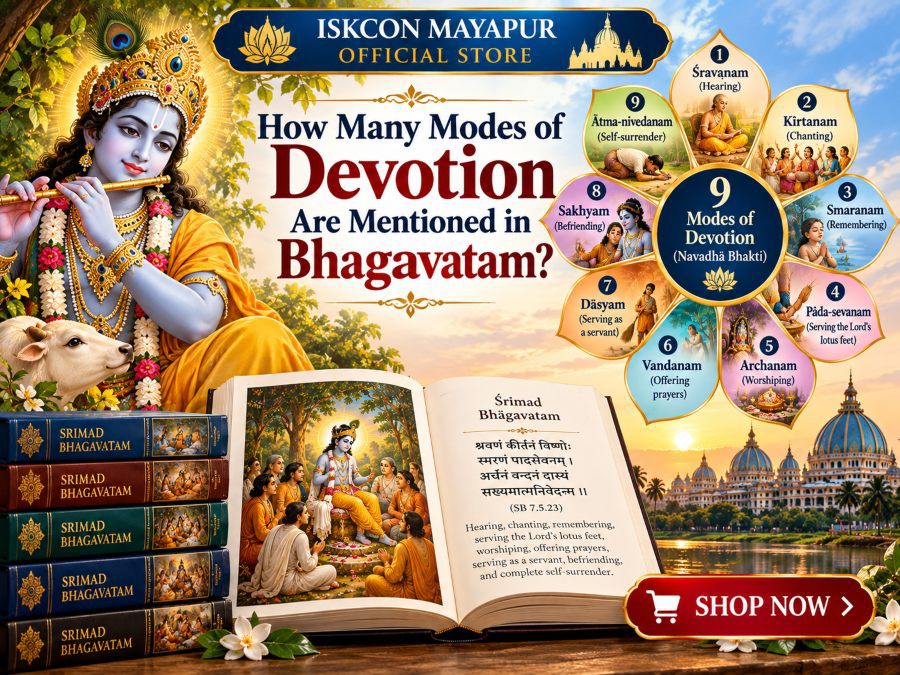 How Many Modes of Devotion Are Mentioned in Bhagavatam?Read more
A young boy named Prahlada listed nine ways to serve God, and the Bhagavatam keeps them as its answer. Learn what the...
-
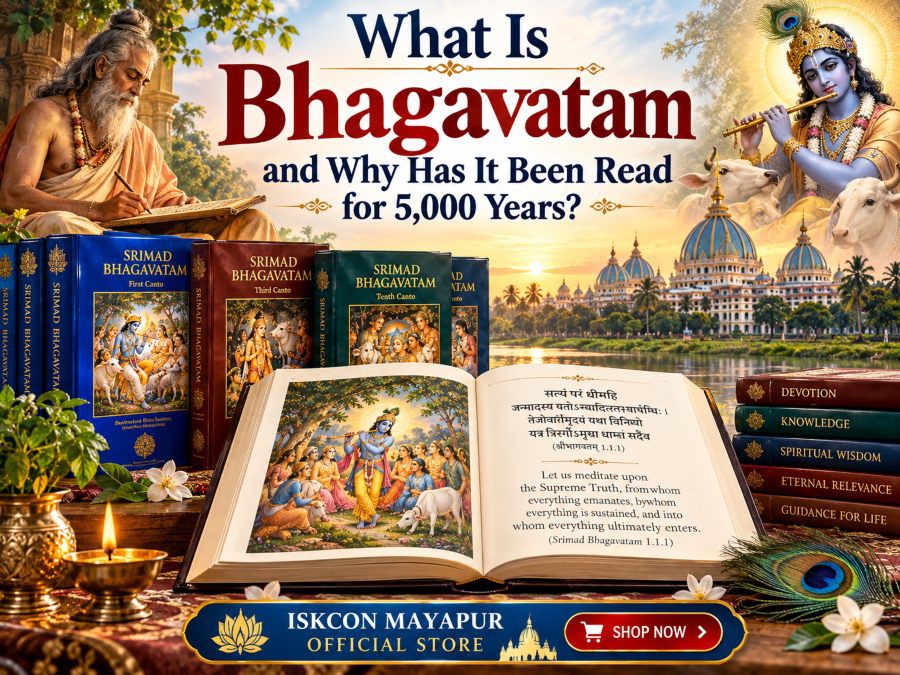 What Is Bhagavatam and Why Has It Been Read for 5,000 Years?Read more
A dying king asked one question, and the answer became the Bhagavatam. Learn what this Sanskrit scripture contains,...
-
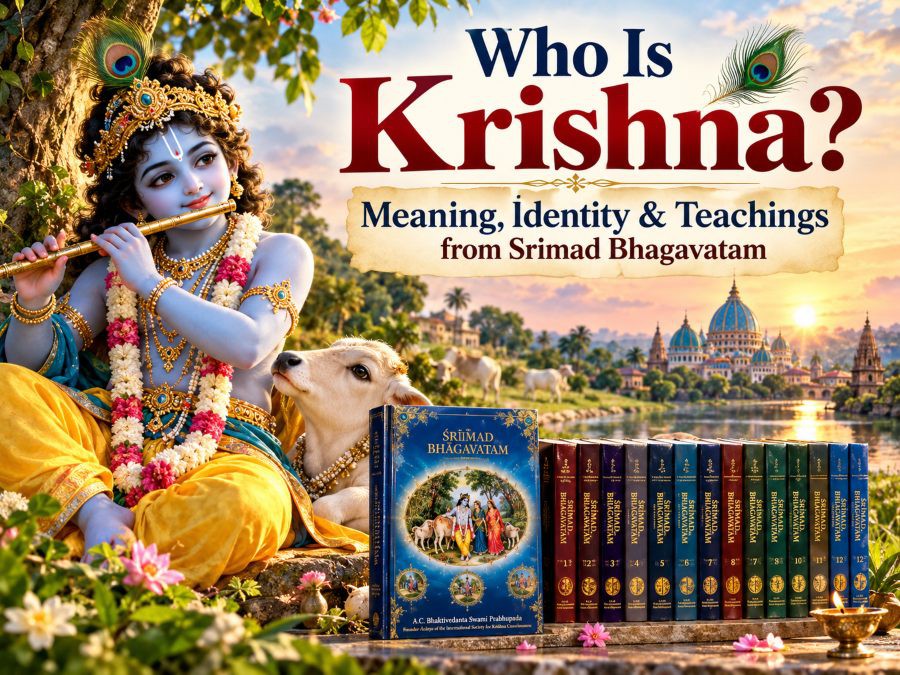 Who Is Lord Krishna? His Meaning, Teachings and Pastimes ExplainedRead more
Discover who Krishna is according to Srimad Bhagavatam, including His divine identity, childhood pastimes, teachings,...
-
 Incense in Islam: Bakhoor, Agarbatti and What Tradition SaysRead more
Is burning fragrance part of Muslim tradition? Explore incense in Islam, from the Prophetic practice of fumigating...
-
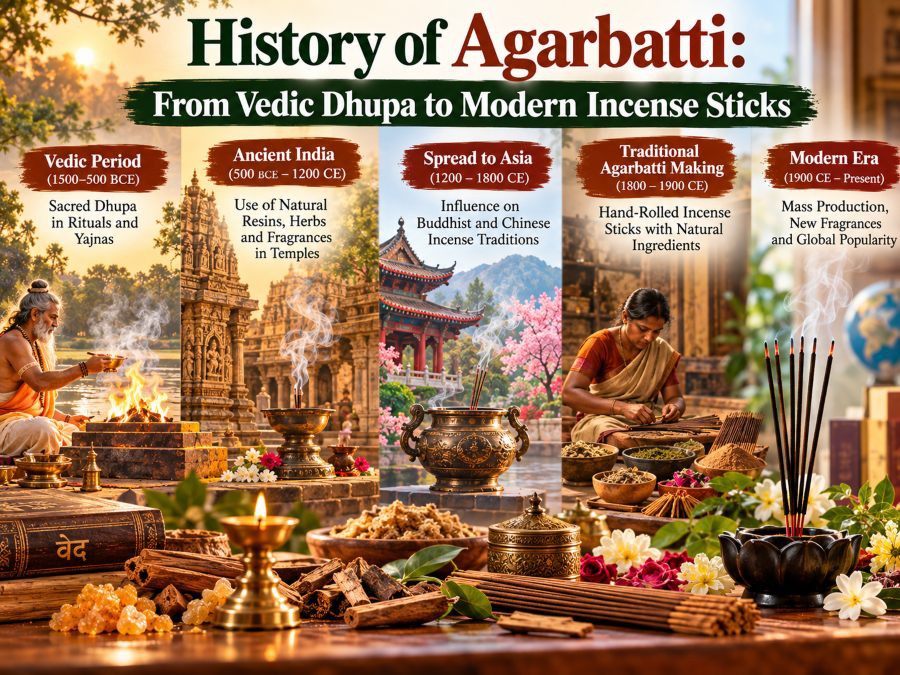 History of Agarbatti: From Vedic Dhupa to Modern Incense SticksRead more
Where did agarbatti really come from? Follow the history of agarbatti from Vedic fire rituals and temple dhupa to...
Blog categories
- Default category (0)
- MUSICAL INSTRUMENT (1)
- BOOK (5)
- DEVOTIONAL GIFT (0)
- Blog (30) click
- CHANDAN (12)
- Bhagavatam Wisdom Series (68)
- Krishna Consciousness (14)
- Mridangam Musical Instrument (6)
- Bhagavad Gita for Beginners (13)
- Bhagavad Gita As It Is (37) click
- Bhagavad Gita As It Is Telugu (0)
- Bhagavad Gita As It Is Marathi (0)
- Bhagavad Gita As It Is In Hindi (0)
- Bhagavad Gita As It Is In English (0)
- Bhagavad Gita As It Is In Bengali (8)
- Bhagavad Gita As It Is In Kannada (0)
- Bhagavad Gita As It Is In Gujarati (0)
- Bhagavad Gita As It Is In Panjabi (0)
- Bhagavad Gita As It Is In Tamil (0)
- Bhagavad Gita As It Is Odia (0)
- BHAGAVAD GITA As It Is GERMAN (0)
- Bhagavad Gita As It Is In French (0)
- Bhagavad Gita As It Is In Nepali (0)
- Bhagavad Gita As It Is In Assamese (0)
- Incense or Agarbatti (38)
- Lord Chaitanya Mahaprabhu (3)
- Vedic Temple Mayapur (14)
- kalki (15)
- Mahabharata – Dharma & Destiny (27)
- Vaishnava Scriptures (4)
- healthy product (4)
- chaitanya mahaprabhu (5)
- Tulsi Mala Guide (17)
Search in blog
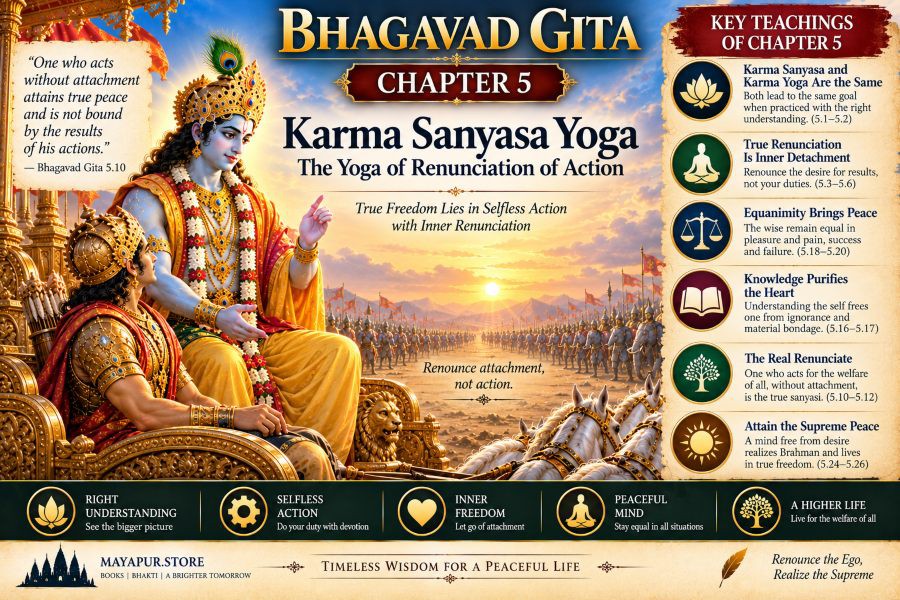
Bhagavad Gita Chapter 5: Karma Sanyasa Yoga – The Yoga of Renunciation of Action
Two Paths, One Question: Arjuna Finally Says "Just Pick One For Me"
By this point in the conversation, Arjuna has heard Krishna praise the wisdom of detached knowledge in one breath and the necessity of committed action in the next. So he does something refreshingly honest — he stops trying to reconcile the two himself and just asks Krishna directly: which one is actually better, giving up action entirely, or performing action without attachment? He wants a straight answer, not more nuance. It's the kind of question anyone exploring the Bhagavad Gita eventually reaches, usually somewhere around this exact point in the text — browsing through a copy from Mayapur Store's collection, or any other edition, the tension between renunciation and engagement starts to feel less like philosophy and more like a genuinely practical dilemma.
Chapter 5, Karma Sanyasa Yoga, is Krishna's answer to that dilemma. And true to form, he doesn't just pick a side — he reframes the entire question in a way that dissolves the apparent contradiction Arjuna thought he was facing.
Krishna's Answer: Both Paths Lead to the Same Place, But One Gets There Faster
Krishna opens by saying that both renunciation of action and selfless performance of action lead to the ultimate good — but immediately adds that between the two, working in the world without attachment is superior to withdrawing from it entirely.
Why? Because true renunciation, Krishna explains, isn't actually about what you stop doing. It's about the internal state you cultivate while still doing things. Someone who literally sits and does nothing, but is internally consumed by craving, resentment, or restlessness, hasn't renounced anything meaningful. Meanwhile, someone fully engaged in demanding, visible work — but free from selfish motive — has already achieved the internal quality that renunciation was supposed to produce in the first place.
This is a subtle but important distinction, and it's worth spelling out clearly:
- Renunciation without action tends to be incomplete, because the mind, left with nothing to occupy it, often just turns inward and starts craving in more private, less visible ways.
- Action performed with detachment achieves the same internal freedom, while also contributing something useful to the world in the process.
- The two paths aren't actually opposites. They're two routes converging on the identical destination — freedom from selfish attachment — but one route happens to be more efficient and less prone to self-deception.
Krishna even goes so far as to say that a person who properly understands this — that renunciation and disciplined action arrive at the same place — actually "sees" correctly, while someone who thinks the two paths contradict each other hasn't understood either one.
Why "Doing Nothing" Is Often the Bigger Trap
There's a sharp insight buried in this chapter that's easy to miss on a casual read: Krishna is essentially warning against a very specific kind of self-deception — using withdrawal from the world as a substitute for actual internal discipline.
Think about how this plays out practically. Someone quits their demanding job, retreats from social obligations, stops engaging with difficult people or situations, and calls it spiritual progress. But if the underlying craving, ego, and attachment haven't actually been addressed, all that's happened is a change of scenery. The mind that was restless in the office is now restless in the quiet room. Nothing internal has shifted — only the external conditions have.
This is why Krishna insists that a person who works without attachment, remaining unaffected the way a lotus leaf stays untouched by the water around it, is genuinely further along than someone who has simply removed themselves from situations that would test their attachment in the first place. Real progress gets tested in engagement, not in avoidance.
The Wise Person Sees Everyone the Same Way
Midway through the chapter, Krishna describes something that sounds almost impossibly idealistic at first: a person of true knowledge, he says, looks upon a learned scholar, a cow, an elephant, a dog, and even someone considered an outcast in society, all with the same equanimity.
This isn't a claim that all these beings are identical in every practical sense. It's a claim about perception — that a truly realized person sees past the surface-level differences in form, status, and circumstance, and recognizes the same essential consciousness animating all of them. The differences that seem to matter so much — wealth, birth, position, reputation — start to look more like costume changes than fundamental distinctions once you're seeing clearly.
A few implications worth sitting with here:
- This kind of equanimity isn't indifference. It's not that a wise person stops noticing differences; it's that those differences stop determining how much respect or dignity someone receives.
- It directly undercuts any hierarchy based purely on external markers — birth, wealth, profession — replacing it with a much flatter, harder-to-fake standard.
- It's genuinely difficult to achieve, which is exactly why Krishna frames it as a marker of advanced understanding rather than a baseline expectation.
Real Happiness Doesn't Come From Outside
Krishna spends a portion of this chapter making a case that most people quietly suspect is true but rarely fully act on: pleasures that come from contact with the external world — sensory enjoyment, in Krishna's specific phrasing — are ultimately sources of suffering, not lasting happiness, because they have a beginning and an end.
This isn't a puritanical rejection of enjoyment for its own sake. It's a more precise observation about where lasting contentment actually originates. Anything dependent on external conditions lining up favorably is, by definition, unstable — the conditions will eventually change, and the happiness tied to them changes right along with it.
Krishna contrasts this with an internal happiness, one accessed through steady self-discipline rather than through chasing favorable circumstances. A person who has cultivated this, he says, is able to remain at peace regardless of what's happening externally — not because they've stopped feeling anything, but because their sense of well-being no longer depends entirely on the external world staying cooperative.
Krishna Describes What a Truly Free Person Looks Like
Toward the later part of the chapter, Krishna paints a fairly specific picture of someone who has actually achieved this internal freedom. A few of the qualities he highlights:
- They're unaffected by the usual pulls of desire and anger, not because they suppress these emotions through force, but because they've genuinely worked through the attachments that generate them in the first place.
- They see the same divine presence in all beings, which naturally produces goodwill rather than the constant comparison and competition that fuels most ordinary social friction.
- They act for the welfare of others, described as taking joy specifically in the well-being of all beings, rather than measuring their satisfaction purely against personal gain.
What's notable here is how far this description has moved from where the conversation started. Arjuna began this dialogue paralyzed by grief over people he loved. Krishna's answer, by this point, has expanded outward into a vision of someone whose care extends to all beings, not just the specific people standing in front of them on a battlefield. The personal crisis has become the doorway into something considerably larger.
A Practical Test You Can Actually Run on Yourself
Here's a way to check where you currently stand on this spectrum, without needing to retreat to a mountain or quit your job to find out. Think of the last time something didn't go your way — a plan fell through, feedback was harsher than expected, credit went to someone else for work you did. Notice how much of your reaction was about the event itself, and how much was about the story you immediately built around it: what it meant about you, what it would cost you, who would think less of you now.
Krishna's argument in this chapter suggests that most of the sting in situations like that doesn't come from the event — it comes from the attachment wrapped around it. The renunciation he's describing isn't about avoiding situations that might disappoint you. It's about noticing how quickly the mind manufactures suffering out of ordinary, unavoidable setbacks, and gradually loosening that automatic reaction rather than being at its mercy every time circumstances shift.
This is also why Krishna keeps circling back to the image of the lotus leaf sitting on water, unwetted despite being constantly surrounded by it. The leaf doesn't avoid the water — it simply has a surface that doesn't let the water cling to it. That's the model he's proposing: not distance from the world, but a different relationship with whatever the world brings.
Why Meditation Gets a Brief Mention Here Too
Near the end of the chapter, Krishna briefly touches on meditative withdrawal — closing off external sounds, fixing the gaze inward, regulating the breath — as a tool for steadying the mind. It's worth noting this isn't presented as a contradiction to everything said earlier about action being superior to withdrawal.
The distinction Krishna seems to be drawing is between temporary, disciplined withdrawal used as a tool to strengthen internal steadiness, versus permanent withdrawal used as an escape from responsibility. A short daily practice of stillness, aimed at training the mind to hold steady, isn't the same thing as abandoning your duties altogether and calling it wisdom. One sharpens the tool you'll use back out in the world; the other just avoids the world entirely.
That's a useful nuance, because it stops this chapter from reading as an argument against contemplative practice altogether. Krishna isn't dismissing stillness — he's dismissing stillness used as a substitute for the harder work of staying steady while fully engaged.
So Which Path Should You Actually Take?
If you're looking for the practical takeaway buried inside all this philosophy, it comes down to something like this: don't wait for ideal conditions — a quiet life, fewer responsibilities, an escape from your obligations — before you start working on detachment. Start where you are, in the middle of whatever you're already doing, and practice releasing the ego's grip on outcomes right there.
This is a considerably more demanding path than simply withdrawing from difficulty, which is probably why Krishna considers it superior. It's one thing to achieve calm when nothing is asking anything of you. It's another thing entirely to remain steady while fully engaged, responsible, and active in a world that keeps testing your attachment at every turn.
The Real Shift Happening in This Chapter
What Chapter 5 quietly accomplishes is dissolving a distinction Arjuna — and most readers — assume is real: the idea that spiritual progress and worldly engagement are somehow at odds with each other. Krishna's answer suggests something more integrated. The goal was never to escape the world. It was to change your relationship to it, so thoroughly that engagement and detachment stop feeling like a contradiction at all.
That reframing matters for everything that follows in the Bhagavad Gita. Arjuna still has to fight this war. He still has to act, decisively and fully, in a situation he'd rather avoid. But Chapter 5 makes clear that doing so doesn't require abandoning the deeper wisdom he's been building toward — it requires bringing that wisdom directly into the action itself, rather than treating the two as separate tracks that can never actually meet.
If there's one line worth carrying forward from this chapter, it's this: the world doesn't need you to disappear from it in order for you to grow. It needs you to stay fully present in it, doing the work in front of you, while quietly loosening the grip that turns ordinary effort into unnecessary suffering. That's a much harder discipline than walking away — and, according to Krishna, a far more valuable one.
Posted in: Bhagavad Gita As It Is
Related posts
-
 Why the Bhagavad Gita Feels Like a Personal Conversation with KrishnaThe Bhagavad Gita feels like a personal conversation with Krishna because its timeless wisdom directly addresses our...Read more
 -
 Shrimad Bhagwat Geeta: The Forgotten Life Manual for Modern StressShrimad Bhagwat Geeta is more than a sacred scripture—it’s a forgotten life manual that offers timeless solutions for...Read more
 -
 Who Wrote the Bhagavad Gita? Discover the true authorship of the Bhagavad Gita—exploring Ved Vyasa’s role as the compiler, Lord Krishna’s divine...Read more
 -
 How Many Shlokas in Bhagavad Gita? Complete Chapter-Wise Breakdown & MeaningDiscover how many shlokas are in the Bhagavad Gita, with a complete chapter-wise breakdown, variations in verse...Read more
 -
 How to Read Bhagavad Gita: A Complete Step-by-Step Guide for BeginnersDiscover how to read the Bhagavad Gita step by step—learn the right mindset, chapter order, and tips to understand...Read more
Leave a comment