
Why did Krishna run to embrace a poor brahmin in rags? Read the Sudama story from the Bhagavatam and learn how a...
Latest posts
-
 Krishna and Sudama: The Poor Brahmin Who Became Wealthy in LoveRead more
 -
 Vamana Avatar: How Three Steps Humbled Bali MaharajaRead more
Why did a powerful king give away three worlds to a boy asking for three steps? Learn the Vamana avatar story from...
-
 The Bhagavatam on Marriage: Duty, Love and Spiritual PartnershipRead more
What does the Bhagavatam say about marriage? Through the stories of Kardama and Devahuti, Rukmini's secret letter and...
-
 What Is Prema? The Bhagavatam's Highest Stage of Love for GodRead more
Prema is love for God with no "because" attached. Learn how the Bhagavatam describes it, the nine steps from faith to...
-
 Is Shiva Parvati Kalyana Mentioned in Srimad Bhagavatam? What the Scripture Really SaysRead more
Looking for Shiva and Parvati's wedding in the Srimad Bhagavatam? Find out what the scripture actually describes,...
-
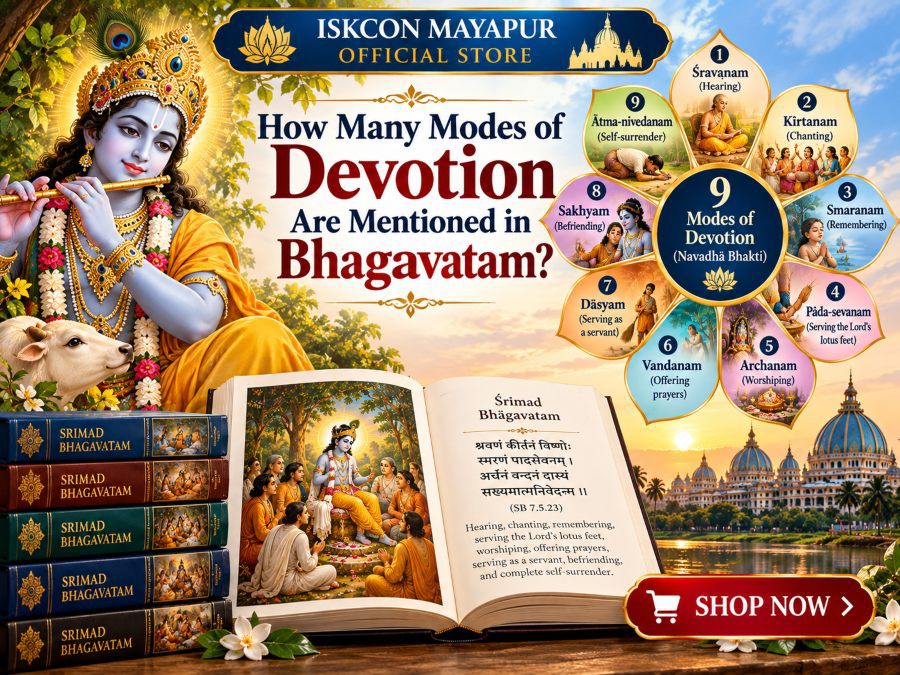 How Many Modes of Devotion Are Mentioned in Bhagavatam?Read more
A young boy named Prahlada listed nine ways to serve God, and the Bhagavatam keeps them as its answer. Learn what the...
-
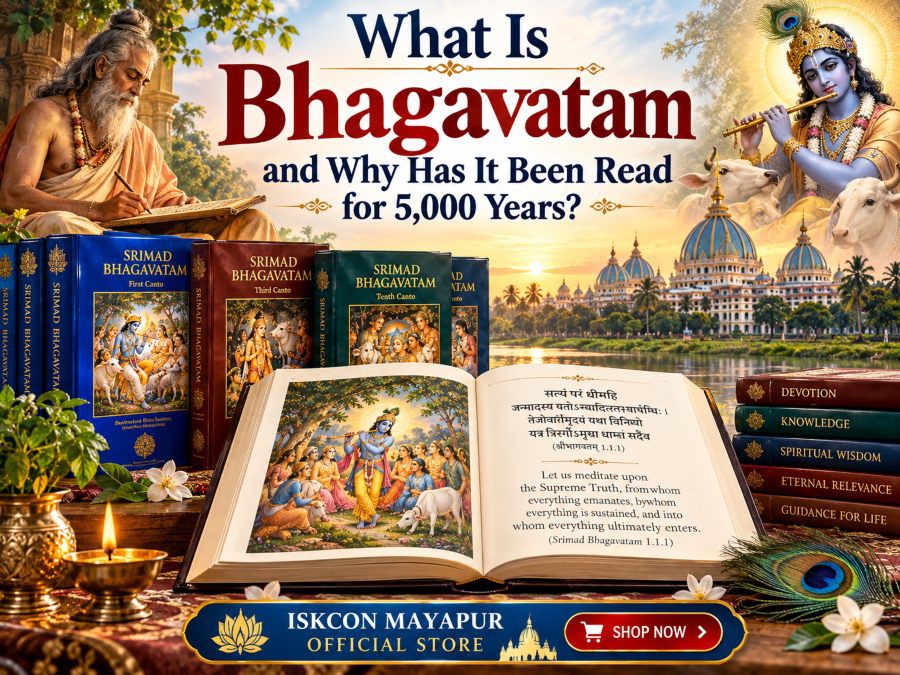 What Is Bhagavatam and Why Has It Been Read for 5,000 Years?Read more
A dying king asked one question, and the answer became the Bhagavatam. Learn what this Sanskrit scripture contains,...
-
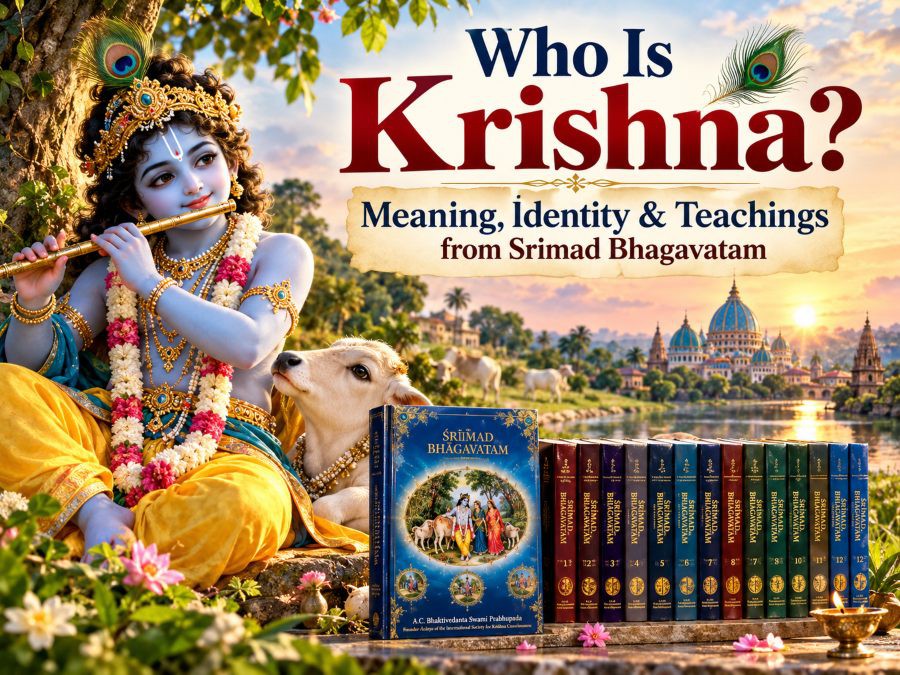 Who Is Lord Krishna? His Meaning, Teachings and Pastimes ExplainedRead more
Discover who Krishna is according to Srimad Bhagavatam, including His divine identity, childhood pastimes, teachings,...
-
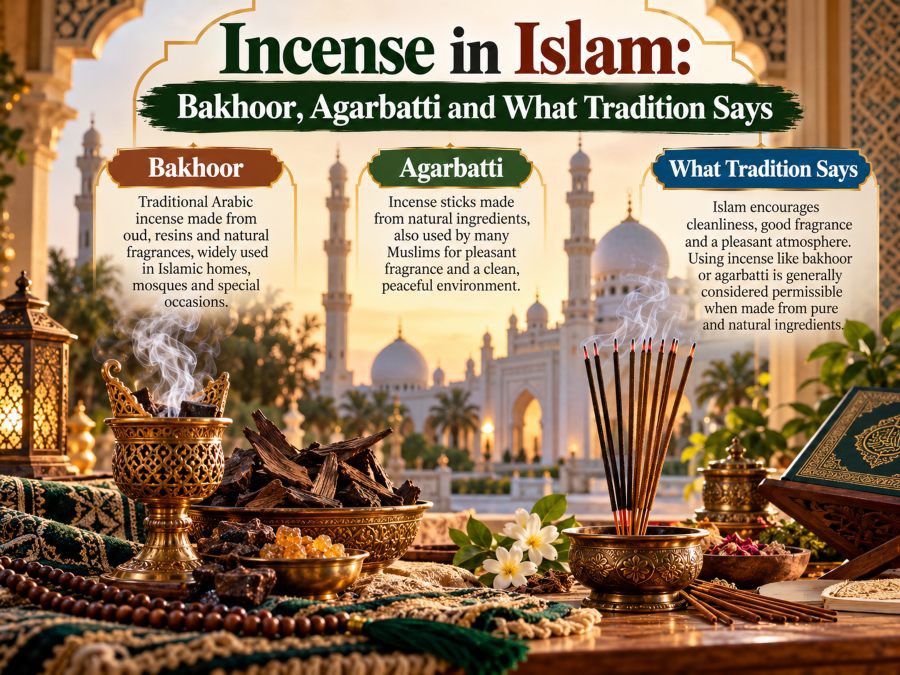 Incense in Islam: Bakhoor, Agarbatti and What Tradition SaysRead more
Is burning fragrance part of Muslim tradition? Explore incense in Islam, from the Prophetic practice of fumigating...
-
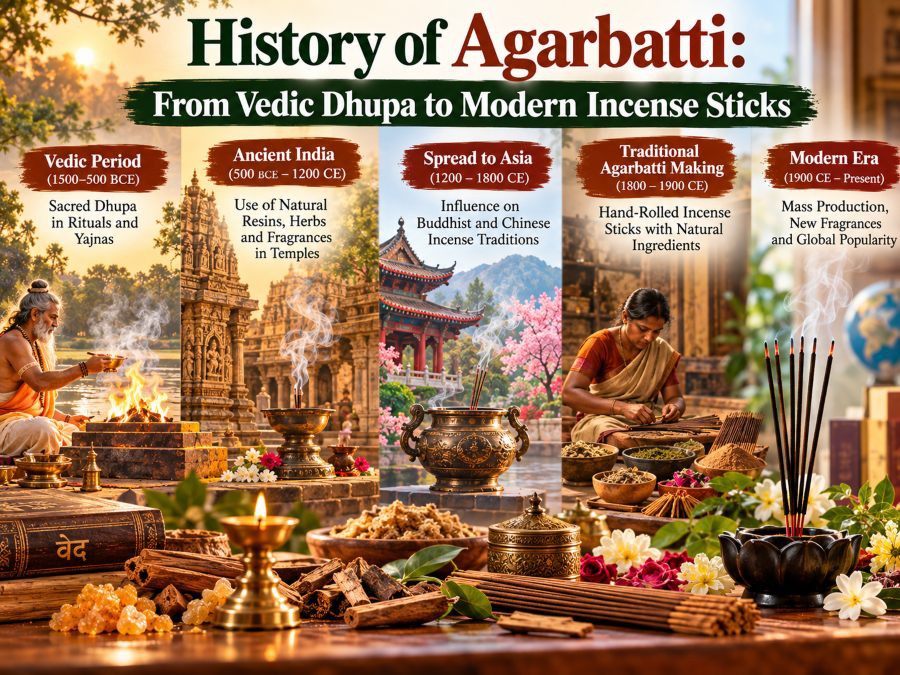 History of Agarbatti: From Vedic Dhupa to Modern Incense SticksRead more
Where did agarbatti really come from? Follow the history of agarbatti from Vedic fire rituals and temple dhupa to...
Blog categories
- Default category (0)
- MUSICAL INSTRUMENT (1)
- BOOK (5)
- DEVOTIONAL GIFT (0)
- Blog (30) click
- CHANDAN (12)
- Bhagavatam Wisdom Series (68)
- Krishna Consciousness (14)
- Mridangam Musical Instrument (6)
- Bhagavad Gita for Beginners (13)
- Bhagavad Gita As It Is (37) click
- Bhagavad Gita As It Is Telugu (0)
- Bhagavad Gita As It Is Marathi (0)
- Bhagavad Gita As It Is In Hindi (0)
- Bhagavad Gita As It Is In English (0)
- Bhagavad Gita As It Is In Bengali (8)
- Bhagavad Gita As It Is In Kannada (0)
- Bhagavad Gita As It Is In Gujarati (0)
- Bhagavad Gita As It Is In Panjabi (0)
- Bhagavad Gita As It Is In Tamil (0)
- Bhagavad Gita As It Is Odia (0)
- BHAGAVAD GITA As It Is GERMAN (0)
- Bhagavad Gita As It Is In French (0)
- Bhagavad Gita As It Is In Nepali (0)
- Bhagavad Gita As It Is In Assamese (0)
- Incense or Agarbatti (38)
- Lord Chaitanya Mahaprabhu (3)
- Vedic Temple Mayapur (14)
- kalki (15)
- Mahabharata – Dharma & Destiny (27)
- Vaishnava Scriptures (4)
- healthy product (4)
- chaitanya mahaprabhu (5)
- Tulsi Mala Guide (17)
Search in blog
How Old Is Kalki Purana?
The Kalki Purana is one of the most intriguing sacred texts within the broad family of Hindu Puranas. It centers around the final avatar of Lord Vishnu—Lord Kalki, who is destined to appear at the end of Kali Yuga to restore dharma and re-establish righteousness. But a common and fascinating question arises: How old is the Kalki Purana?
Is it ancient like the Vedas?
Was it composed in classical Sanskrit?
Who wrote it, and in which era?
.png)
What Is the Kalki Purana? A Quick Overview
Before determining the age of the text, it is essential to understand what the Kalki Purana actually is.
The Puranas are a class of sacred Sanskrit texts written over many centuries, containing stories, cosmology, genealogies, and philosophical teachings.
The Kalki Purana is a Minor or Upapurana, meaning it is not included among the 18 major Puranas but is still considered spiritually valuable.
Major themes of Kalki Purana include:
- Birth of Lord Kalki in Shambhala Village
- Description of Kali Yuga’s decline
- Prophecies about social, moral, and political corruption
- Kalki’s training under Parashurama
- The great war against the forces of Kali
- The restoration of Satya Yuga
Understanding these themes helps us grasp that the Purana deals primarily with future prophecy, which influences how scholars date it.
Why Is the Age of Kalki Purana Hard to Determine?
Many ancient Hindu scriptures evolved over time, with additions and redactions happening across centuries.
There are several reasons why dating the Kalki Purana is challenging:
a) No single author
While some texts clearly identify a composer, the Kalki Purana—like many Puranas—is attributed to the great sage Vedavyasa, compiler of the Vedas and Puranas. But tradition says Vyasa arranged older oral material, meaning the content may be far older.
b) Multiple manuscripts
Different manuscripts from different centuries exist, which means the text has been transmitted with variations.
c) Part of an evolving Purana tradition
The Puranas were not written in one moment—they grew organically. The Kalki Purana likely developed gradually and was influenced by changing social conditions.
d) Prophecy-based content
Because it deals with the future avatar of Vishnu, many scholars debate whether it was written early or later.
Because of these reasons, the age of Kalki Purana is not fixed to a specific year but is understood through historical, linguistic, and cultural analysis.
Read Also: when kalki born
Traditional View: Kalki Purana Is Thousands of Years Old
Traditional Hindu belief maintains that all Puranas—major and minor—were composed by Srila Vyasadeva at the beginning of Kali Yuga, roughly 5,100 years ago.
According to this belief:
- Vyasa compiled the Vedas and divided them
- He composed Mahabharata
- He narrated the Puranas including stories of past, present, and future
- Therefore, Kalki Purana is also over 5,000 years old
In devotional and Vaishnava traditions, the Purana is considered timeless and divine.
However, modern scholars present a different timeline based on style, grammar, and manuscript evidence.
Scholarly View: When Was Kalki Purana Written?
Most modern researchers believe the Kalki Purana was written much later than the major Puranas. Here is a scholarly breakdown:
a) Estimated composition period
Researchers place the creation of the Kalki Purana somewhere between:
10th century CE to 15th century CE
This means the text could be around 600 to 1,000 years old.
b) Linguistic clues
The Sanskrit used in the Kalki Purana is more modern than in ancient scriptures like the Vedas or Upanishads, indicating later composition.
c) Cultural references
Some descriptions of social disorder, political upheaval, and moral decay appear to match medieval Indian history, suggesting it was composed during or after that time.
d) Manuscript evidence
The oldest surviving manuscripts date back to the medieval period, with no confirmed ancient versions.
But Important Note:
Even though scholars date the text to medieval times, the concept of Lord Kalki existed long before.
References to Kalki appear in:
- Vishnu Purana
- Mahabharata
- Bhagavata Purana
- Agni Purana
- Brahmanda Purana
These texts are much older.
Therefore, although the Kalki Purana text may be medieval, the story of Kalki is thousands of years old.
READ ALSO:- what is kalki purana
How Old Is the Kalki Purana? A Balanced Conclusion
To answer the question clearly:
✔ Traditional belief:
Kalki Purana is over 5,000 years old, composed by Vedavyasa at the beginning of Kali Yuga.
✔ Scholarly belief:
Kalki Purana was composed 600–1,000 years ago, during medieval India.
✔ What we can conclude:
The text of Kalki Purana is likely medieval,
but the concept of Kalki Avatar is ancient, rooted in classical Puranas of early Hindu literature.
This balanced approach respects both faith and academic research.
The Cultural Importance of Kalki Purana
Regardless of its age, the Kalki Purana plays an important role in Hindu culture and spirituality.
a) Moral lessons for modern era
Its prophecies about social decay in Kali Yuga often resonate with current times, making its teachings feel relevant.
b) Hope for restoration
Kalki Avatar symbolizes:
- End of corruption
- Removal of adharma
- Victory of truth
- Return of a golden age
This message brings hope to millions of devotees.
c) Influence on literature and art
The Kalki story inspired countless works:
- Regional poetry
- Folk songs
- Classical dance performances
- Modern novels and dramas
Thus, the Purana has shaped both spiritual and cultural imagination.
Connection with Other Puranas
Even though the Kalki Purana is a minor text, it draws heavily from major Puranas.
a) Vishnu Purana
The earliest detailed prophecy of Kalki is in the Vishnu Purana, making it one of the original sources for Kalki stories.
b) Bhagavata Purana (Srimad Bhagavatam)
Canto 12 describes the fall of Kali Yuga and the future appearance of Kalki.
c) Agni Purana
Contains descriptions of Kalki’s war and the return of Satya Yuga.
These references confirm that Kalki’s story is much older than the Kalki Purana itself.
Kalki Purana and the Timeline of Kali Yuga
Understanding the age of Kalki Purana requires understanding the timelines of Hindu cosmology.
According to scriptures:
- Kali Yuga began in 3102 BCE
- Elders say we are now in the early stages of Kali Yuga
- Kalki will appear at the end of Kali Yuga, toward its final decline
Kalki Purana describes prophetic conditions that match growing modern challenges — materialism, violence, corruption, and moral confusion.
This is why readers often feel the Purana speaks directly to our age.
If you want to explore or read the scripture, you can find Kalki Puran in English easily today.
Many publishers, especially those focused on ISKCON literature and Vaishnava texts, have made English translations available for global readers.
English editions help modern readers understand:
- The prophecy of Lord Kalki
- The moral lessons of Kali Yuga
- The divine plan behind the destruction of evil
- The transition from Kali Yuga to Satya Yuga
The availability of Kalki Puran in English has made this ancient wisdom accessible to devotees worldwide, especially in countries where Sanskrit or Hindi is not widely known.
Social Conditions Described in Kalki Purana
To understand why the Kalki Purana feels timeless, we must explore what it says about Kali Yuga.
a) Moral decline
- Respect for elders decreases
- Spiritual practices become weak
- Hypocrisy becomes common
b) Corruption
- Leaders misuse power
- Money becomes a measure of worth
- Truth becomes rare
c) Environmental degradation
The text speaks of nature reacting to human greed — a prophetic warning relevant even today.
d) Spiritual decline
People forget dharma and run behind temporary pleasures.
These conditions make the Kalki Purana feel incredibly modern, which is a reason why many believe its message is ageless, even if the text itself came later.
How the Kalki Purana Was Preserved Over Time
Ancient manuscripts were stored in:
- Temple libraries
- Mathas and monasteries
- Royal archives
- Palm-leaf manuscript collections
Regional scholars copied, translated, and preserved the Purana.
Over time, minor variations developed, but the core narrative remained intact.
Today, digitization projects by Indian universities and archives ensure the Kalki Purana remains preserved for future generations.
The Relevance of Kalki Purana in Today’s World
The age of Kalki Purana is important academically, but its relevance today is even more important.
a) Explains the modern chaos
Its descriptions of Kali Yuga mirror the current state of global society.
b) Gives hope through divine intervention
It assures believers that dharma will be restored.
c) Encourages personal transformation
Instead of waiting for Kalki, devotees are inspired to bring purity and discipline into their own lives.
d) Connects spirituality with future prophecy
It unites past scripture with future destiny.
This universal relevance makes the Kalki Purana timeless.
Final Conclusion: How Old Is the Kalki Purana?
To summarize the entire discussion:
✔ Traditional View:
Kalki Purana is over 5,000 years old, composed by Vyasadeva at the beginning of Kali Yuga.
✔ Scholarly View:
The text likely originates from the 10th to 15th century CE, making it 600–1,000 years old.
✔ Balanced Reality:
While the Kalki Purana text appears medieval,
the story of Kalki Avatar is ancient and appears in earlier scriptures thousands of years old.
Regardless of its exact age, the Kalki Purana continues to inspire people across the world, offering guidance, hope, and a spiritual vision for the future.
Posted in: Kalki
Related posts
-
 When Kalki Will Be Born: The Final Avatar of Lord VishnuLord Kalki, Vishnu’s final avatar, is prophesied to appear at the end of Kali Yuga to destroy evil and restore...Read more
 -
 What Is the Kalki Purana? The Kalki Purana describes the prophecy of Lord Kalki, His appearance, mission, battles, and role in ending Kali...Read more
 -
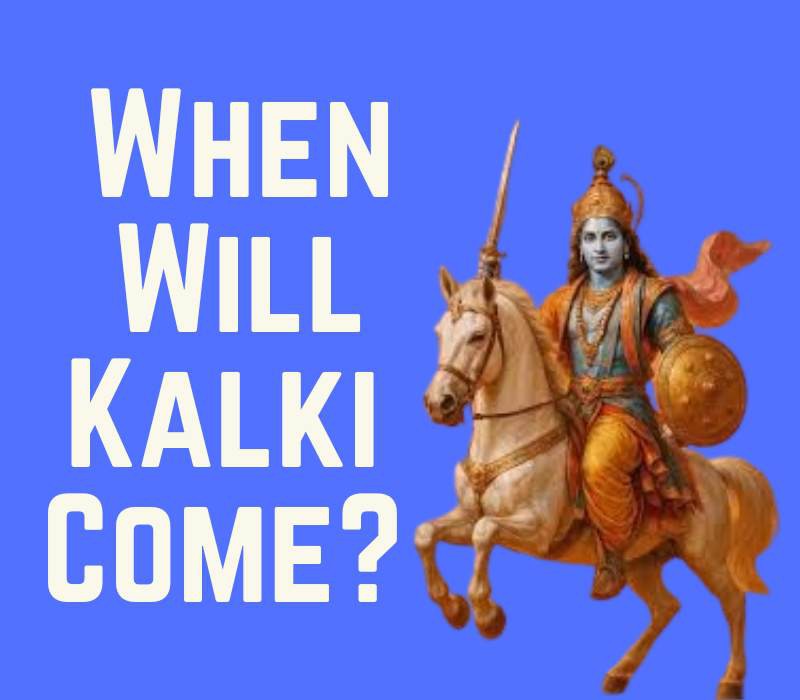 When Will Kalki Come? This article explains when Kalki Avatar will appear, what the scriptures say about His arrival, signs of Kali Yuga,...Read more
 -
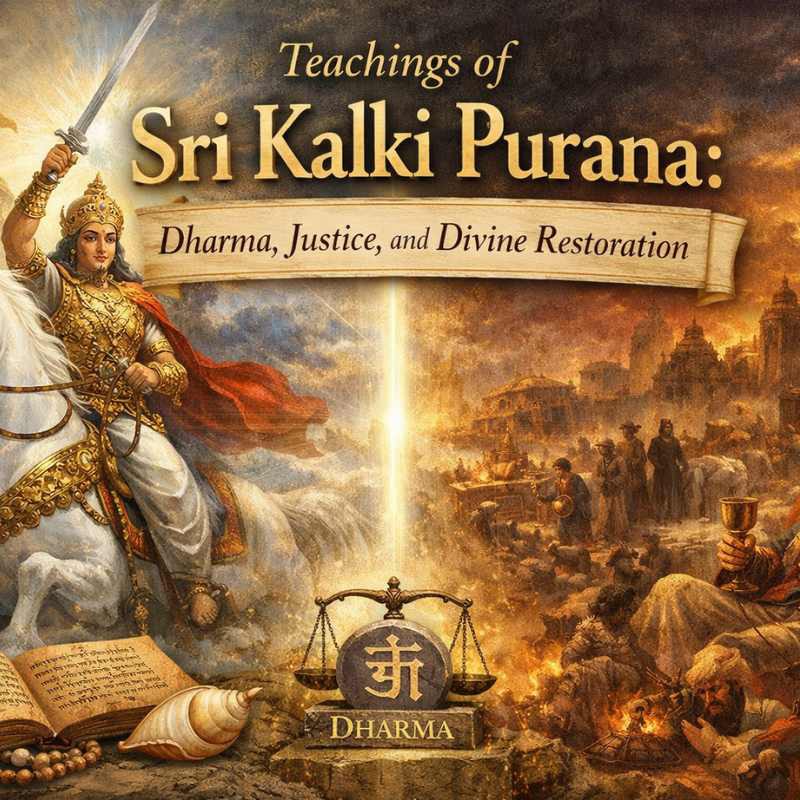 Teachings of Sri Kalki Purana: Dharma, Justice, and Divine RestorationAn in-depth article explaining the teachings of the Sri Kalki Purana, highlighting dharma, divine justice, and the...Read more
 -
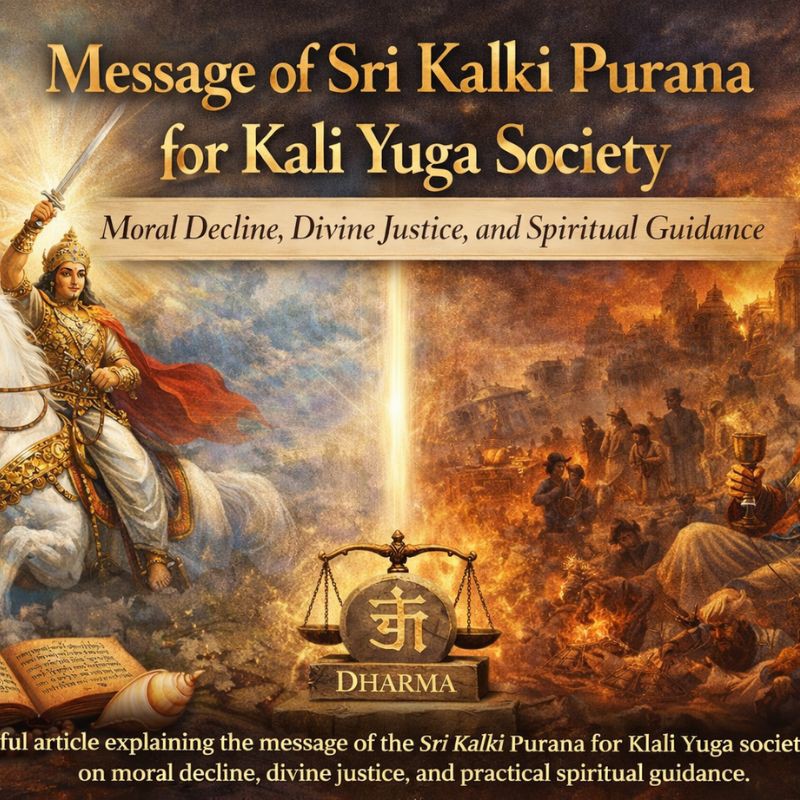 Message of Sri Kalki Purana for Kali Yuga Society: Moral Lessons and Spiritual HopeAn insightful article explaining the message of the Sri Kalki Purana for Kali Yuga society, focusing on moral...Read more
Leave a comment