
Why did Krishna run to embrace a poor brahmin in rags? Read the Sudama story from the Bhagavatam and learn how a...
Latest posts
-
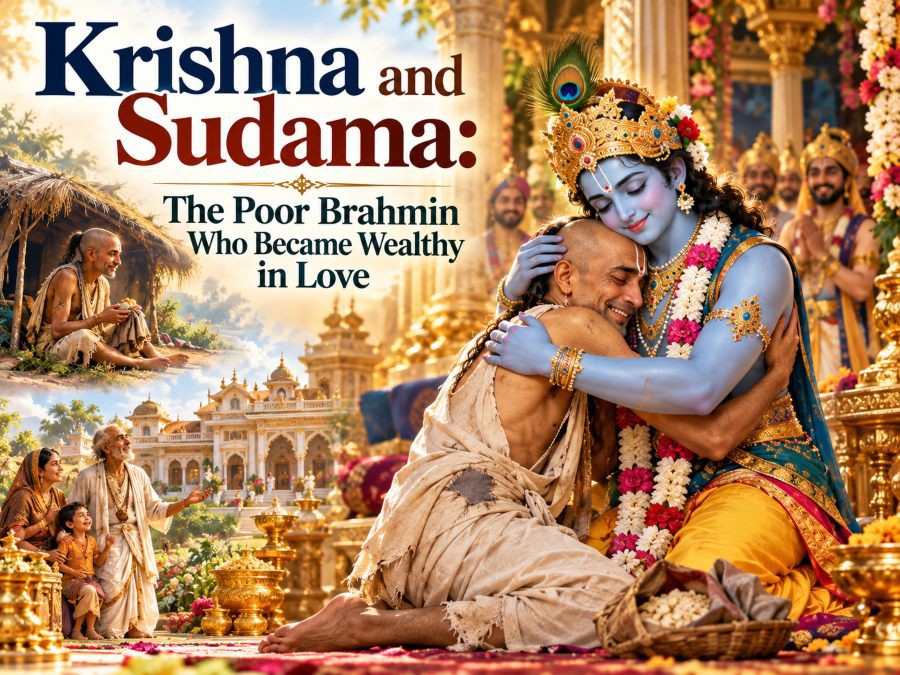 Krishna and Sudama: The Poor Brahmin Who Became Wealthy in LoveRead more
 -
 Vamana Avatar: How Three Steps Humbled Bali MaharajaRead more
Why did a powerful king give away three worlds to a boy asking for three steps? Learn the Vamana avatar story from...
-
 The Bhagavatam on Marriage: Duty, Love and Spiritual PartnershipRead more
What does the Bhagavatam say about marriage? Through the stories of Kardama and Devahuti, Rukmini's secret letter and...
-
 What Is Prema? The Bhagavatam's Highest Stage of Love for GodRead more
Prema is love for God with no "because" attached. Learn how the Bhagavatam describes it, the nine steps from faith to...
-
 Is Shiva Parvati Kalyana Mentioned in Srimad Bhagavatam? What the Scripture Really SaysRead more
Looking for Shiva and Parvati's wedding in the Srimad Bhagavatam? Find out what the scripture actually describes,...
-
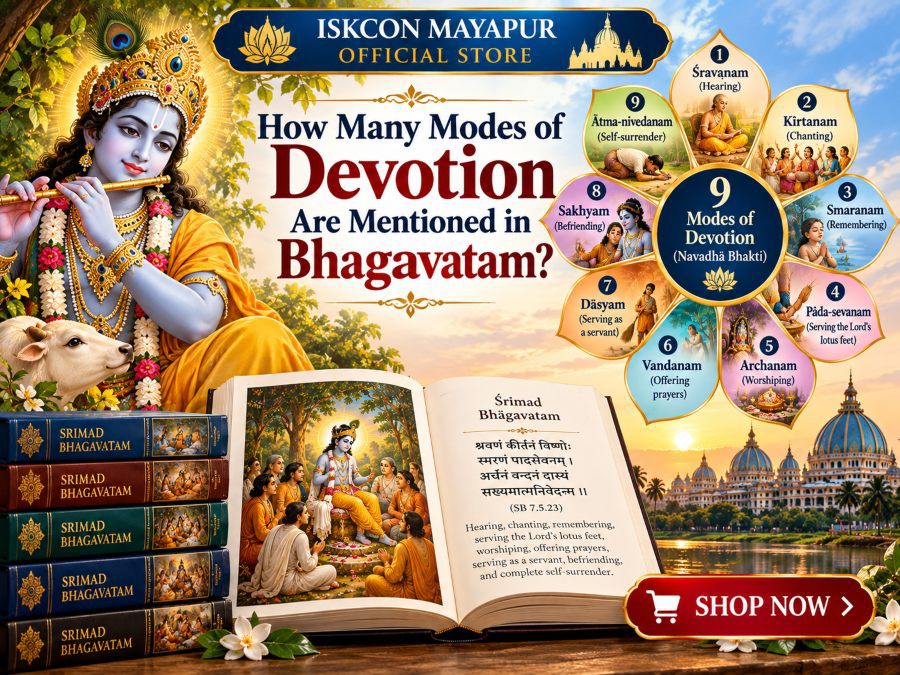 How Many Modes of Devotion Are Mentioned in Bhagavatam?Read more
A young boy named Prahlada listed nine ways to serve God, and the Bhagavatam keeps them as its answer. Learn what the...
-
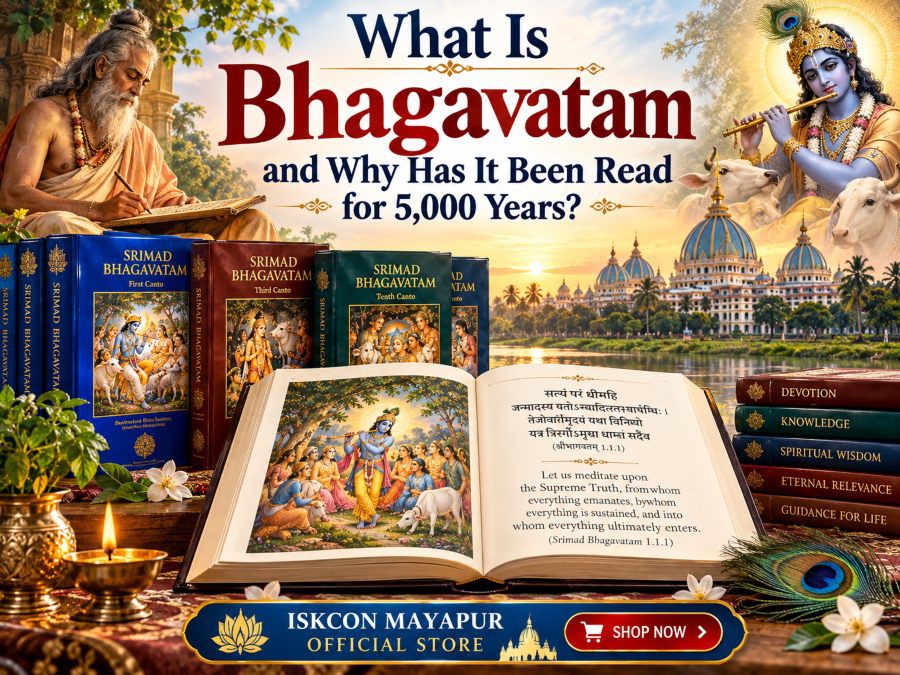 What Is Bhagavatam and Why Has It Been Read for 5,000 Years?Read more
A dying king asked one question, and the answer became the Bhagavatam. Learn what this Sanskrit scripture contains,...
-
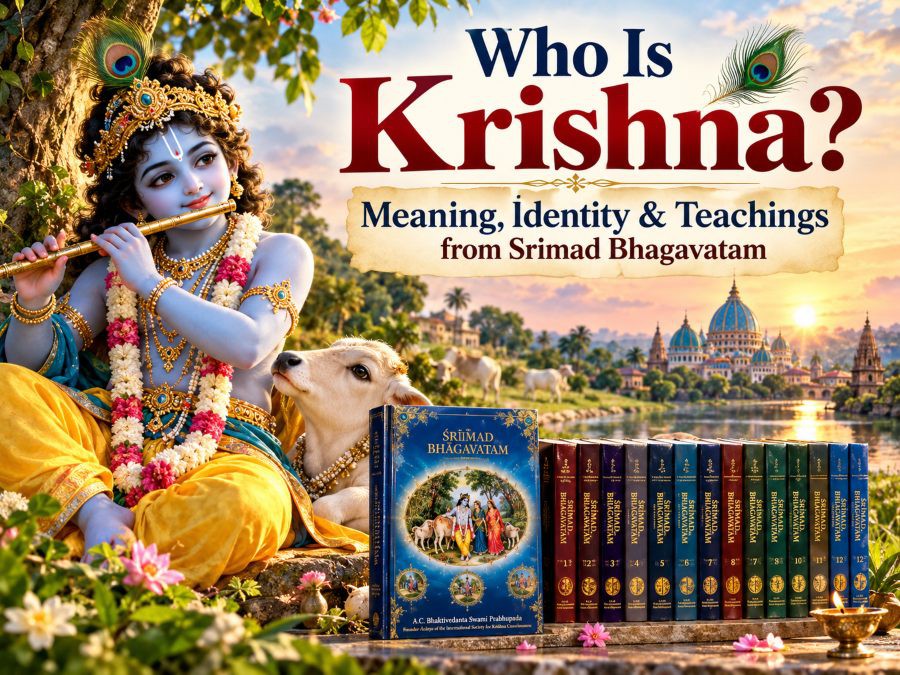 Who Is Lord Krishna? His Meaning, Teachings and Pastimes ExplainedRead more
Discover who Krishna is according to Srimad Bhagavatam, including His divine identity, childhood pastimes, teachings,...
-
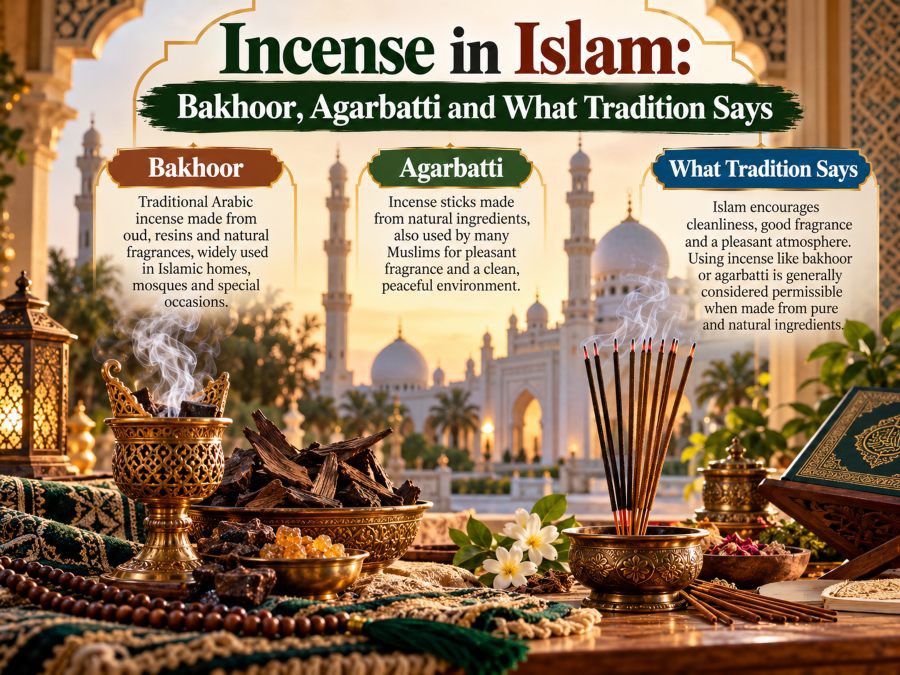 Incense in Islam: Bakhoor, Agarbatti and What Tradition SaysRead more
Is burning fragrance part of Muslim tradition? Explore incense in Islam, from the Prophetic practice of fumigating...
-
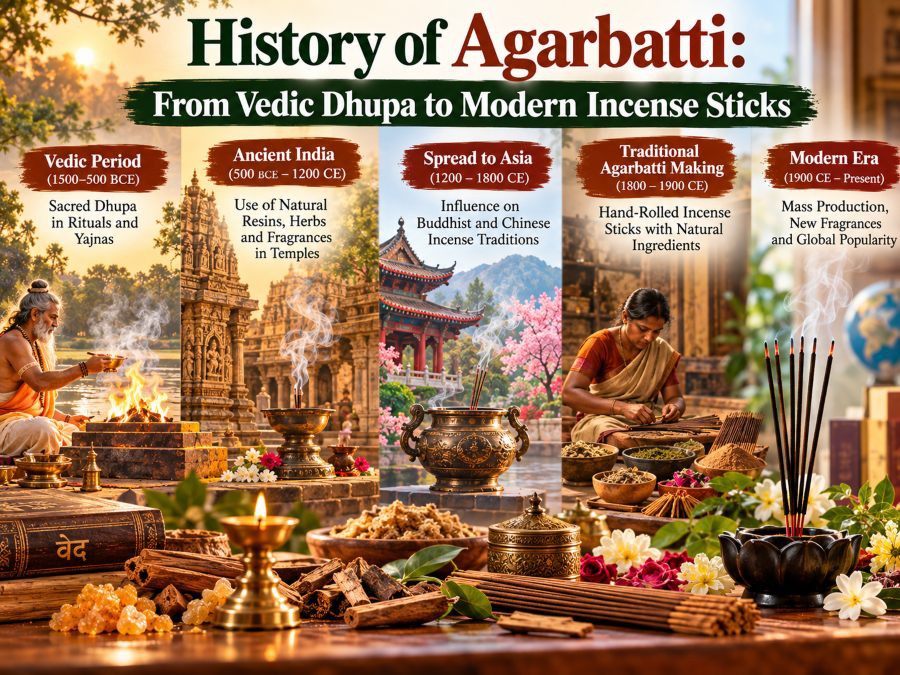 History of Agarbatti: From Vedic Dhupa to Modern Incense SticksRead more
Where did agarbatti really come from? Follow the history of agarbatti from Vedic fire rituals and temple dhupa to...
Blog categories
- Default category (0)
- MUSICAL INSTRUMENT (1)
- BOOK (5)
- DEVOTIONAL GIFT (0)
- Blog (30) click
- CHANDAN (12)
- Bhagavatam Wisdom Series (68)
- Krishna Consciousness (14)
- Mridangam Musical Instrument (6)
- Bhagavad Gita for Beginners (13)
- Bhagavad Gita As It Is (37) click
- Bhagavad Gita As It Is Telugu (0)
- Bhagavad Gita As It Is Marathi (0)
- Bhagavad Gita As It Is In Hindi (0)
- Bhagavad Gita As It Is In English (0)
- Bhagavad Gita As It Is In Bengali (8)
- Bhagavad Gita As It Is In Kannada (0)
- Bhagavad Gita As It Is In Gujarati (0)
- Bhagavad Gita As It Is In Panjabi (0)
- Bhagavad Gita As It Is In Tamil (0)
- Bhagavad Gita As It Is Odia (0)
- BHAGAVAD GITA As It Is GERMAN (0)
- Bhagavad Gita As It Is In French (0)
- Bhagavad Gita As It Is In Nepali (0)
- Bhagavad Gita As It Is In Assamese (0)
- Incense or Agarbatti (38)
- Lord Chaitanya Mahaprabhu (3)
- Vedic Temple Mayapur (14)
- kalki (15)
- Mahabharata – Dharma & Destiny (27)
- Vaishnava Scriptures (4)
- healthy product (4)
- chaitanya mahaprabhu (5)
- Tulsi Mala Guide (17)
Search in blog
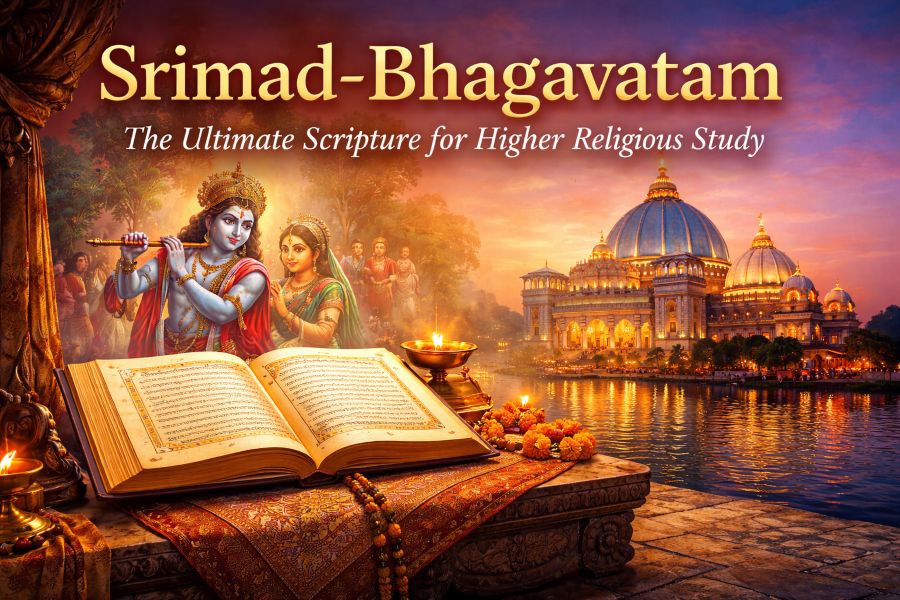
The Post-Graduate Study of Religion: Why Srimad-Bhagavatam Is the Ultimate Scripture
The Post-Graduate Study of Religion: Why Srimad-Bhagavatam is the Ultimate Scripture
The academic study of religion often begins with comparative analysis, philosophical reflection, and historical exploration of sacred traditions. Universities across the world offer undergraduate and postgraduate programs that examine the beliefs, rituals, and sacred texts of various civilizations. However, as scholars progress deeper into this field, they begin to search for a spiritual text that not only explains religious philosophy but also offers a complete understanding of divine reality and the purpose of life.
Within the vast treasury of Vedic literature, the Srimad Bhagavatam stands out as one of the most profound spiritual works ever composed. Revered for centuries by saints, scholars, and philosophers, this sacred text goes far beyond ordinary religious scriptures. It presents a comprehensive exploration of metaphysics, theology, cosmology, ethics, and devotion.

For students engaged in advanced religious studies, the Bhagavatam functions almost like a postgraduate course in spirituality. It addresses questions that go beyond ritual practice and intellectual speculation, guiding readers toward a direct understanding of the Supreme Personality of Godhead and the nature of pure devotion.
Understanding the Srimad-Bhagavatam in the Context of Vedic Literature
The Vedic tradition contains an immense body of sacred knowledge including the Vedas, Upanishads, Puranas, and philosophical texts such as the Vedanta Sutra. Each of these works explores different aspects of spiritual truth and cosmic order.
The Srimad-Bhagavatam, also known as the Bhagavata Purana, is considered the natural commentary on Vedanta philosophy. It was compiled by the sage Vyasadeva, who organized the Vedic scriptures for the benefit of humanity.
According to traditional accounts, after compiling many scriptures, Vyasadeva still felt spiritually dissatisfied. His spiritual master Narada Muni instructed him to compose a text that fully glorified the Supreme Lord and explained the path of pure devotion. This instruction led to the creation of the Srimad-Bhagavatam.
Unlike many philosophical texts that rely on abstract reasoning, the Bhagavatam combines deep spiritual philosophy with narratives, dialogues, and historical accounts. Through these stories, it conveys profound truths about the relationship between the individual soul and the Supreme Being.
A Unique Structure Designed for Advanced Spiritual Understanding
The Srimad-Bhagavatam is divided into twelve cantos and contains eighteen thousand verses. Each canto gradually expands the reader’s understanding of the nature of God, the universe, and the soul.
The early cantos introduce foundational philosophical concepts such as the nature of creation, the role of divine energies, and the relationship between matter and consciousness. These sections function much like the foundational courses in a graduate program, preparing the student for deeper insights.
As the text progresses, it presents increasingly sophisticated discussions of spiritual topics. Dialogues between sages, kings, and divine personalities explore themes such as renunciation, ethical leadership, cosmic cycles, and the ultimate goal of life.
The tenth canto, which describes the divine pastimes of Lord Krishna, represents the culmination of spiritual knowledge. It reveals the intimate and loving relationship between the Supreme Lord and His devotees, a concept that lies at the heart of the Bhagavatam’s teachings.
This structured progression is one of the reasons scholars often describe the Bhagavatam as the “graduate study” of Vedic wisdom.
Integrating Philosophy, Devotion, and Spiritual Experience
Many religious texts focus primarily on moral instruction or ritual practice. While these elements are present in the Bhagavatam, its primary emphasis lies in cultivating pure devotion, known as bhakti.
Bhakti is described not merely as emotional worship but as the highest form of spiritual realization. Through devotion, the individual soul reconnects with the Supreme Lord and experiences profound spiritual fulfillment.
The Bhagavatam explains that knowledge without devotion remains incomplete. Intellectual understanding may provide philosophical clarity, but true spiritual transformation occurs only when the heart becomes engaged in loving service to the Divine.
This synthesis of philosophy and devotion makes the text uniquely powerful. It appeals simultaneously to the intellect, the emotions, and the spiritual aspirations of the reader.
The Bhagavatam’s Vision of the Universe
One of the remarkable features of the Srimad-Bhagavatam is its detailed description of the cosmos. The text presents a complex cosmology that explores the structure of the universe, the nature of time, and the cycles of creation and dissolution.
While modern science approaches cosmology through empirical observation and mathematical models, the Bhagavatam offers a metaphysical perspective. It explains that the universe is not merely a collection of physical elements but a manifestation of divine energy.
The text describes multiple planetary systems inhabited by different forms of life, each governed by specific laws and spiritual conditions. These descriptions invite readers to expand their understanding of existence beyond the limits of ordinary perception.
For scholars of religion, these cosmological narratives provide valuable insights into how ancient civilizations conceptualized the universe and humanity’s place within it.
The Role of Dialogue in Spiritual Learning
Another distinctive feature of the Bhagavatam is its reliance on dialogue as a method of teaching. Much of the text unfolds through conversations between enlightened teachers and sincere seekers.
For example, the dialogue between King Parikshit and the sage Sukadeva Goswami forms the central narrative framework of the scripture. Facing his imminent death, the king asks profound questions about the purpose of life and the ultimate destination of the soul.
Sukadeva responds by narrating the teachings and stories contained within the Bhagavatam, guiding the king toward spiritual realization.
This conversational format mirrors the traditional guru-disciple relationship in Vedic culture, where knowledge is transmitted through personal interaction and thoughtful inquiry.
For modern students of religion, these dialogues illustrate the importance of questioning, reflection, and mentorship in the pursuit of spiritual knowledge.
Ethical and Moral Lessons from Sacred Narratives
The Bhagavatam is rich with stories that illustrate the consequences of human choices and the power of spiritual dedication. Kings, sages, demons, and devotees appear throughout the text, each representing different aspects of human character.
Stories such as the devotion of Prahlada Maharaja, the renunciation of King Bharata, and the prayers of Queen Kunti provide timeless lessons about faith, humility, and perseverance.
These narratives serve not only as religious inspiration but also as ethical case studies. They explore themes such as leadership responsibility, the dangers of pride, and the transformative power of surrender to the Divine.
For scholars and practitioners alike, these stories demonstrate how spiritual wisdom can be applied to real-life situations.
The Global Influence of the Bhagavatam
Over the centuries, the Srimad-Bhagavatam has inspired countless spiritual movements, philosophical schools, and devotional traditions. Its teachings have been studied and celebrated by saints such as Madhvacharya, Ramanujacharya, and Chaitanya Mahaprabhu.
In the modern era, the text has gained international recognition through translations, commentaries, and educational programs that bring its teachings to audiences around the world.
Universities and research institutions increasingly include the Bhagavatam in their curriculum on religious studies, recognizing its philosophical depth and cultural significance.
This global influence highlights the timeless relevance of its message: that the ultimate purpose of life is to awaken love for the Supreme Lord.
Why the Bhagavatam is Considered the Ultimate Scripture
Several qualities distinguish the Bhagavatam from other religious texts. First, it presents a complete theological framework that explains the nature of God, the soul, and the universe.
Second, it integrates multiple paths of spiritual practice—knowledge, meditation, and devotion—while emphasizing bhakti as the highest realization.
Third, its narratives and philosophical discussions are accessible to readers of different backgrounds, allowing both scholars and practitioners to benefit from its teachings.
Finally, the Bhagavatam emphasizes the universal principle of divine love. It teaches that every living being has an eternal relationship with the Supreme and that realizing this relationship brings true happiness.
For these reasons, many spiritual teachers describe the Bhagavatam as the “ripened fruit” of Vedic wisdom.
Conclusion: A Lifetime Study of Spiritual Wisdom
The post-graduate study of religion seeks to answer humanity’s most profound questions: Who are we? Why does the universe exist? What is the ultimate purpose of life?
The Srimad-Bhagavatam addresses these questions with remarkable depth and clarity. By combining philosophy, narrative, devotion, and cosmic vision, it offers a comprehensive guide to spiritual realization.
For scholars, it provides a rich source of philosophical insight and historical tradition. For spiritual seekers, it serves as a roadmap toward divine love and self-realization.
Ultimately, the Bhagavatam reminds us that true knowledge is not merely intellectual. It is transformative. When studied with sincerity and devotion, its teachings illuminate the path toward a life of wisdom, compassion, and spiritual fulfillment.
Posted in: Bhagavatam Wisdom Series
Related posts
-
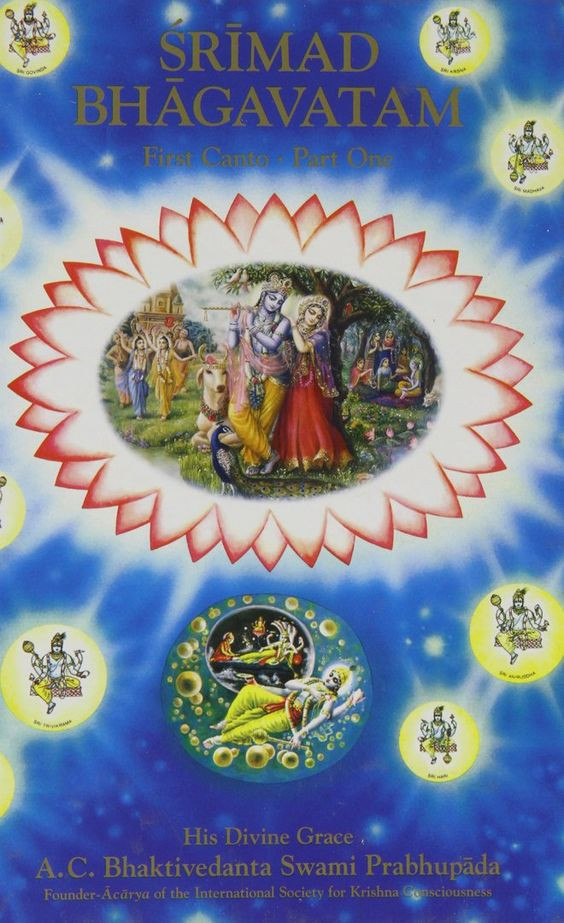 Why to read srimad bhagavatamReading the Srimad Bhagavatam fosters deep spiritual growth by narrating the life and teachings of Lord Krishna,...Read more
 -
 When was srimad bhagavatam written?The Srimad Bhagavatam is believed to have been written around 9th-10th century CE, though its oral traditions date...Read more
 -
 How many chapters are there in srimad bhagavatam?The Srimad Bhagavatam consists of 12 cantos (books) containing 335 chapters in total. Each canto covers various...Read more
 -
 How many skandhas are there in srimad bhagavatamThe Srimad Bhagavatam is divided into 12 skandhas (cantos or books). Each skandha explores different themes,...Read more
 -
 How many slokas in srimad bhagavatamThe Srimad Bhagavatam contains approximately 18,000 shlokas (verses). These verses are spread across its 12 skandhas...Read more
Leave a comment