
Why did Krishna run to embrace a poor brahmin in rags? Read the Sudama story from the Bhagavatam and learn how a...
Latest posts
-
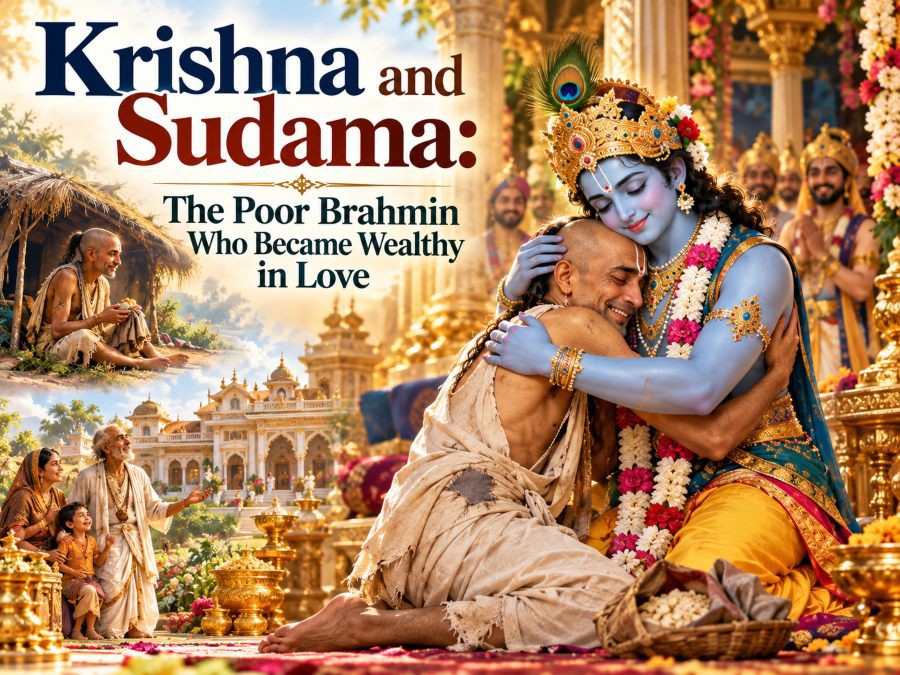 Krishna and Sudama: The Poor Brahmin Who Became Wealthy in LoveRead more
 -
 Vamana Avatar: How Three Steps Humbled Bali MaharajaRead more
Why did a powerful king give away three worlds to a boy asking for three steps? Learn the Vamana avatar story from...
-
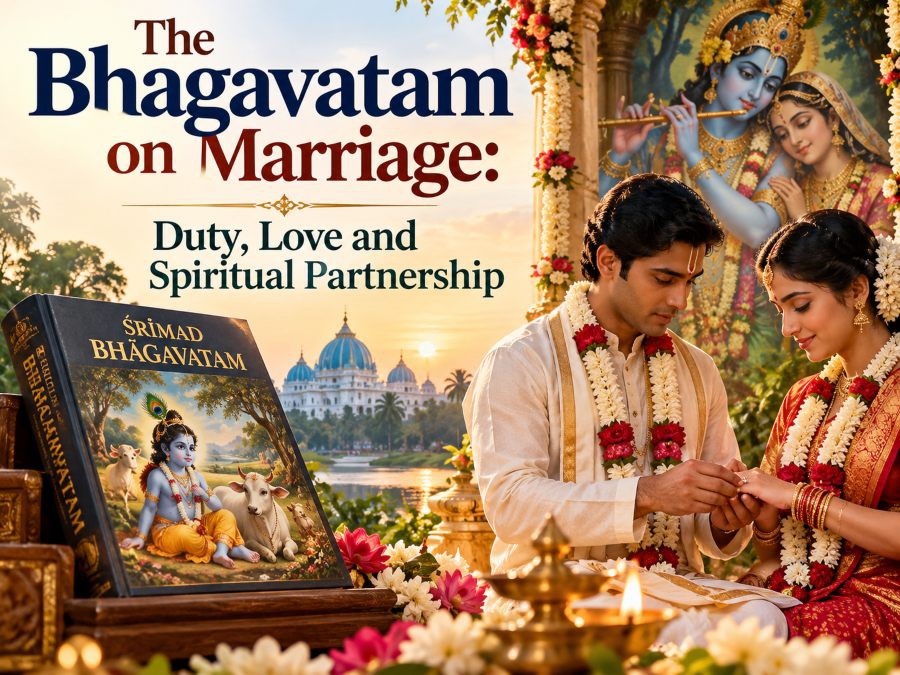 The Bhagavatam on Marriage: Duty, Love and Spiritual PartnershipRead more
What does the Bhagavatam say about marriage? Through the stories of Kardama and Devahuti, Rukmini's secret letter and...
-
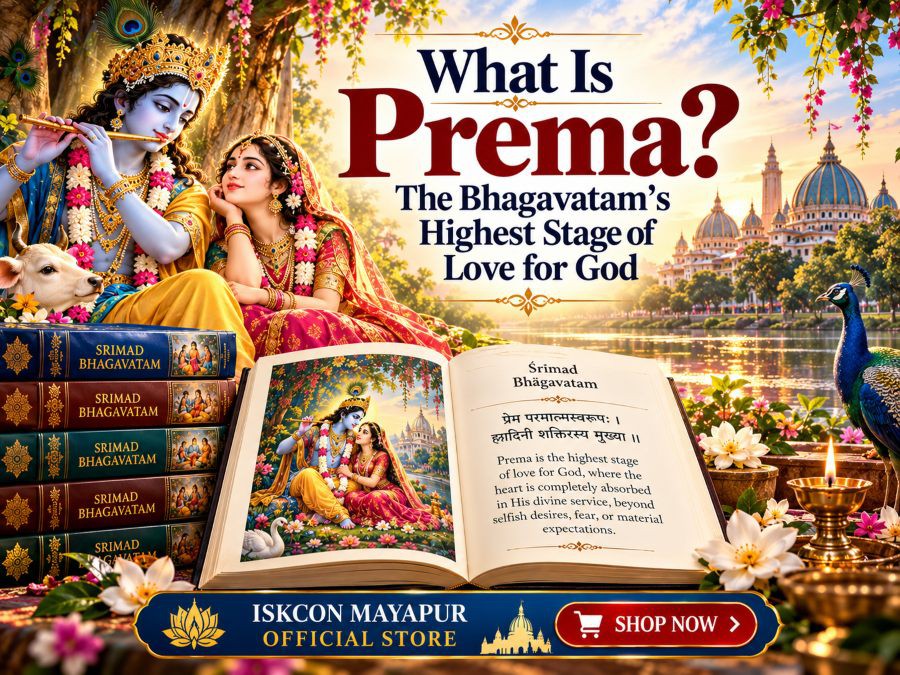 What Is Prema? The Bhagavatam's Highest Stage of Love for GodRead more
Prema is love for God with no "because" attached. Learn how the Bhagavatam describes it, the nine steps from faith to...
-
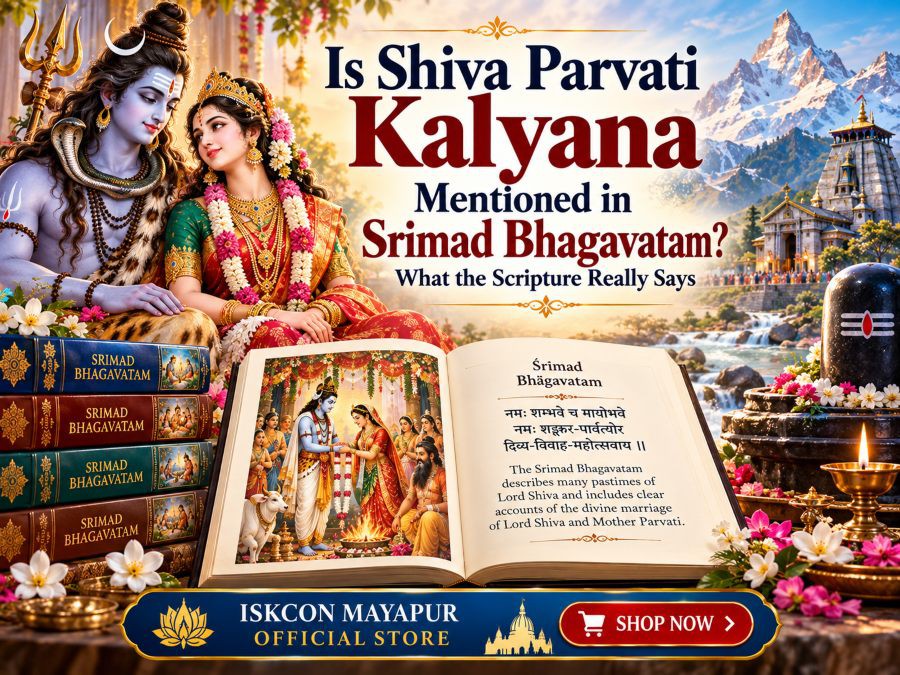 Is Shiva Parvati Kalyana Mentioned in Srimad Bhagavatam? What the Scripture Really SaysRead more
Looking for Shiva and Parvati's wedding in the Srimad Bhagavatam? Find out what the scripture actually describes,...
-
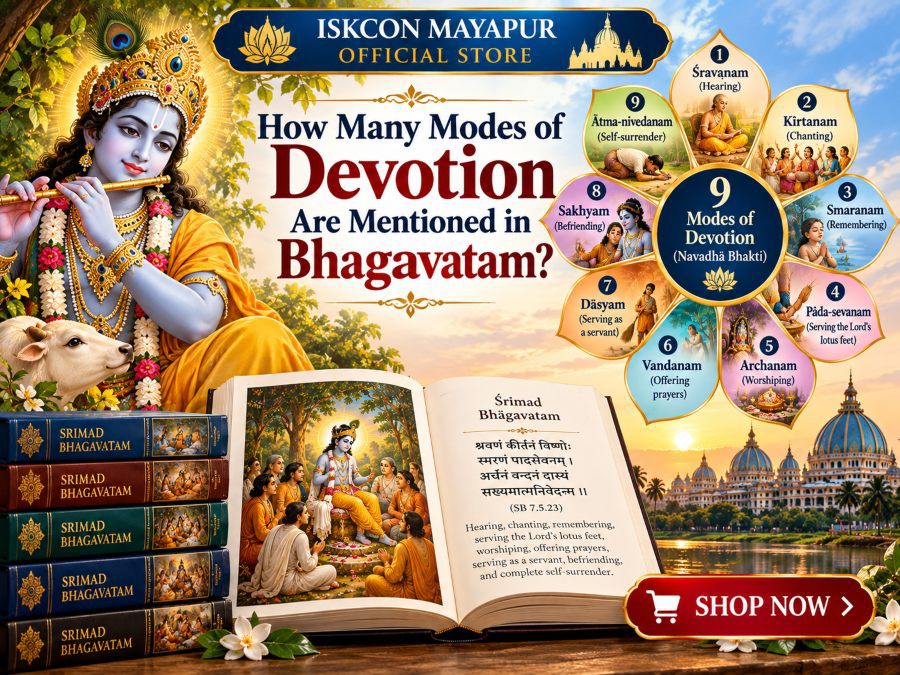 How Many Modes of Devotion Are Mentioned in Bhagavatam?Read more
A young boy named Prahlada listed nine ways to serve God, and the Bhagavatam keeps them as its answer. Learn what the...
-
 What Is Bhagavatam and Why Has It Been Read for 5,000 Years?Read more
A dying king asked one question, and the answer became the Bhagavatam. Learn what this Sanskrit scripture contains,...
-
 Who Is Lord Krishna? His Meaning, Teachings and Pastimes ExplainedRead more
Discover who Krishna is according to Srimad Bhagavatam, including His divine identity, childhood pastimes, teachings,...
-
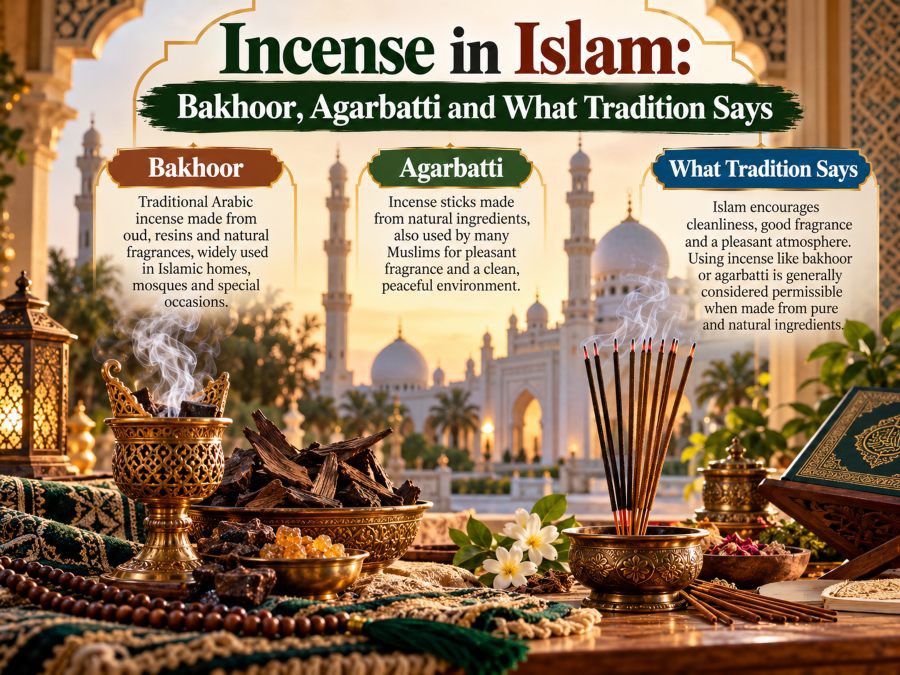 Incense in Islam: Bakhoor, Agarbatti and What Tradition SaysRead more
Is burning fragrance part of Muslim tradition? Explore incense in Islam, from the Prophetic practice of fumigating...
-
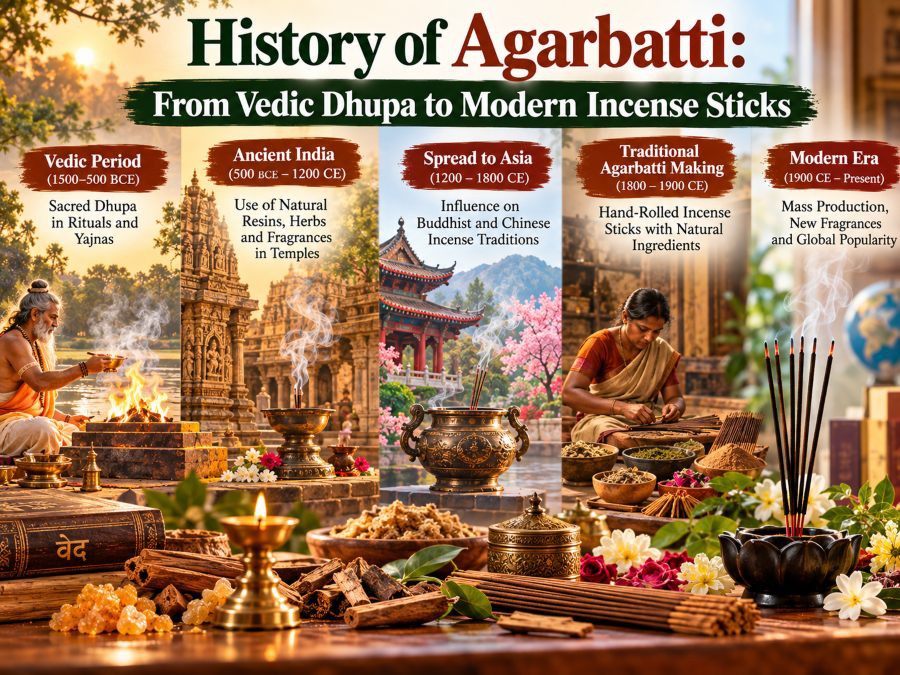 History of Agarbatti: From Vedic Dhupa to Modern Incense SticksRead more
Where did agarbatti really come from? Follow the history of agarbatti from Vedic fire rituals and temple dhupa to...
Blog categories
- Default category (0)
- MUSICAL INSTRUMENT (1)
- BOOK (5)
- DEVOTIONAL GIFT (0)
- Blog (30) click
- CHANDAN (12)
- Bhagavatam Wisdom Series (68)
- Krishna Consciousness (14)
- Mridangam Musical Instrument (6)
- Bhagavad Gita for Beginners (13)
- Bhagavad Gita As It Is (37) click
- Bhagavad Gita As It Is Telugu (0)
- Bhagavad Gita As It Is Marathi (0)
- Bhagavad Gita As It Is In Hindi (0)
- Bhagavad Gita As It Is In English (0)
- Bhagavad Gita As It Is In Bengali (8)
- Bhagavad Gita As It Is In Kannada (0)
- Bhagavad Gita As It Is In Gujarati (0)
- Bhagavad Gita As It Is In Panjabi (0)
- Bhagavad Gita As It Is In Tamil (0)
- Bhagavad Gita As It Is Odia (0)
- BHAGAVAD GITA As It Is GERMAN (0)
- Bhagavad Gita As It Is In French (0)
- Bhagavad Gita As It Is In Nepali (0)
- Bhagavad Gita As It Is In Assamese (0)
- Incense or Agarbatti (38)
- Lord Chaitanya Mahaprabhu (3)
- Vedic Temple Mayapur (14)
- kalki (15)
- Mahabharata – Dharma & Destiny (27)
- Vaishnava Scriptures (4)
- healthy product (4)
- chaitanya mahaprabhu (5)
- Tulsi Mala Guide (17)
Search in blog
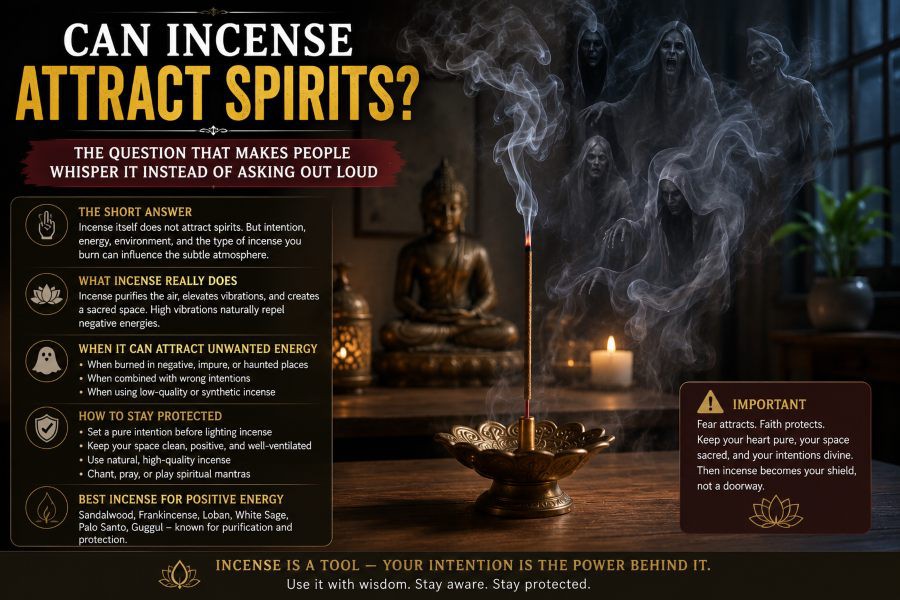
Can Incense Attract Spirits?
The Question That Makes People Whisper It Instead of Asking Out Loud
Someone lights incense during a late-night conversation about ghost stories, and inevitably, someone asks it — half joking, half genuinely curious: "wait, doesn't incense attract spirits?" The room goes quiet for a second. Nobody's fully sure of the answer, but everyone's heard the claim somewhere, from a relative, a horror movie, or a half-remembered forum post at 2 AM.
This question sits in a strange, uncomfortable space between genuine spiritual tradition and pop-culture fear-mongering, and untangling the two is honestly more interesting than most people expect. Incense sticks have been part of religious and spiritual practice across nearly every major tradition for thousands of years — you can explore the full range of traditional options at mayapur.store — and understanding why incense carries such heavy symbolic weight around spirits requires actually separating fact, tradition, folklore, and fear from each other instead of lumping them into one vague, spooky idea.
So let's actually work through this properly: where does this belief come from, what do different traditions genuinely say about it, and is there any legitimate reason to be cautious — or is this mostly folklore wearing a scary costume?
Where This Belief Actually Comes From
The idea that incense "attracts spirits" isn't randomly invented. It has roots in genuine cross-cultural spiritual traditions, but it's also been heavily distorted by horror media into something far more ominous than most original traditions ever intended.
In many Vedic and devotional traditions, incense is used specifically to invite divine presence — not wandering or malevolent spirits, but a welcoming, purifying energy associated with deities and blessed atmosphere. The entire framework here is about inviting something sacred and beneficial into a space, not opening some kind of doorway to the unknown.
In various East Asian traditions, incense plays a role in ancestor worship, where lighting incense is a deliberate, respectful way of acknowledging and honoring deceased family members during specific rituals or anniversaries. This is intentional, structured, and happens within a clear cultural and familial context — nothing like the random, accidental "attraction" horror movies imply.
In Western occult and folk traditions, certain herbs and resins have historically been associated with spirit communication practices, often within very specific ritual contexts involving intention, protection circles, and deliberate practice — again, a controlled and intentional act rather than something that happens by accident just from lighting a stick.
Notice the pattern here: in every legitimate tradition, incense-related spirit contact is intentional, structured, and specific — not something that happens passively just because a stick is burning in your living room.
So Where Did the Scary Version Come From?
Horror movies and viral internet folklore have a habit of taking a nuanced cultural practice and flattening it into something simpler and scarier, because "ancient tradition involves careful intention and cultural context" doesn't make for a great jump-scare. Somewhere along the way, "incense can be used in intentional spiritual practices involving ancestors or deities" got simplified into "burning incense might summon something," which is a very different — and honestly much less accurate — claim.
This kind of distortion happens constantly with spiritual practices once they get filtered through pop culture. Think about how many genuinely calm, structured meditation or ritual practices get portrayed in movies as ominous or dangerous purely for dramatic effect.
What Devotional Traditions Actually Say
Since this question often comes up specifically in the context of home puja and devotional practice, it's worth being direct about this: in Vedic and Vaishnava tradition, incense is understood as an offering that purifies and elevates the atmosphere of a space, not something that opens it up to unwanted presence.
The entire philosophy behind burning incense during puja centers on:
- Creating an atmosphere suitable for divine presence, not random spiritual activity
- Purification — clearing heaviness or stagnation from a space, the opposite of inviting something negative in
- Devotional offering — treating fragrance as a gift of respect toward the divine, similar to offering flowers or food
If anything, traditional use of incense is framed as protective and elevating, not something that leaves a space vulnerable. The fear-based interpretation genuinely inverts what most spiritual traditions actually teach about the practice.
Does This Mean There's Nothing to Be Mindful Of?
This is where nuance matters, because dismissing the concern entirely isn't quite accurate either. Traditional practices do generally emphasize a few principles worth understanding, even if they don't support the "accidental spirit attraction" narrative.
Intention matters in most traditions. The idea that ritual actions carry weight based on the intention behind them is common across many spiritual frameworks. Lighting incense with a clear, positive, devotional intention is treated very differently from lighting it carelessly or with a specifically dark or manipulative intention.
Certain rituals are more deliberate than casual burning. Ancestor worship ceremonies, for instance, involve specific timing, specific prayers, and specific occasions — they're not comparable to burning a stick for pleasant ambiance on a random Tuesday evening.
Cultural context shapes meaning. The same act — burning incense — carries completely different symbolic weight depending on whether it's part of a structured ritual, a casual daily habit, or an intentional occult practice designed around spirit communication.
None of this suggests casual incense burning for daily puja, meditation, or ambiance carries any of the risk implied by horror-movie folklore. It just means intention and context matter more than the incense itself.
A Grounded, Practical Perspective
Here's a useful way to think about it: incense doesn't have independent agency. It's fragrant smoke from burning natural materials — sandalwood, resins, herbs. It doesn't "call out" to anything on its own any more than lighting a candle does. What gives certain incense-related practices spiritual significance is the human intention, ritual structure, and cultural tradition surrounding the act — not some inherent supernatural property in the smoke itself.
This is actually consistent with how most devotional traditions frame incense use. It's a tool for creating atmosphere and expressing intention, not a mechanism with independent supernatural pull.
What About Specific Fragrances People Worry About?
You'll sometimes see specific claims online — that certain fragrances are "riskier" than others for this reason. Sandalwood, sage, dragon's blood resin, and similar scents occasionally get singled out in viral posts as somehow more spiritually active than others.
Realistically, this traces back to the fact that these specific materials have long histories in ritual and ceremonial use across multiple traditions — which is exactly why they carry symbolic weight, not because they possess some unique property that increases risk. The association comes from cultural and ritual history, not from anything inherent in the chemical composition of the fragrance itself.
If you're browsing fragrance options for your own devotional practice, it's genuinely worth exploring what's available and matching the fragrance to your specific ritual purpose rather than avoiding certain scents out of borrowed internet anxiety — you can check available options to see traditional varieties suited for daily puja, meditation, or specific devotional occasions.
How Different Households Approach This Question
It's worth acknowledging that beliefs genuinely vary, even within the same broad tradition, and there's no single universally "correct" stance beyond what your own family or spiritual community practices.
Some households burn incense freely and casually, treating it purely as fragrance and ambiance without attaching any concern to the practice beyond enjoying the scent.
Some households follow structured devotional timing, burning incense specifically during designated puja hours with intention and prayer, treating the act as sacred rather than casual.
Some households are more cautious, particularly around specific occasions like after a death in the family or during periods considered spiritually sensitive, choosing to follow more careful ritual guidelines during those specific windows.
None of these approaches are wrong. They reflect different levels of spiritual formality and different cultural or familial traditions, not conflicting facts about incense itself.
If You're Genuinely Anxious About This
For some people, this question isn't casual curiosity — it comes from a place of real anxiety, sometimes tied to a specific unsettling experience or a general fear around spiritual topics. If that's you, here's a grounded way to approach it:
- Light incense with clear, positive intention rather than out of obligation or distraction — the psychological framing matters for your own comfort, even if it's not "required" in any strict sense
- Choose fragrances associated with purification and calm — sandalwood, frankincense — rather than scents you've read unsettling claims about online
- Follow whatever practice your own family or tradition uses, since familiarity itself tends to reduce anxiety around ritual actions
- Recognize that the fear-based version of this claim traces back to media distortion, not the actual spiritual traditions the practice originates from
Anxiety around spiritual practices is genuinely common, and there's no shame in wanting reassurance. But the reassurance here is grounded in actual tradition, not just dismissal — incense has consistently been framed as purifying and protective across the traditions that use it most seriously.
Frequently Asked Questions
Is it safe to burn incense every day without worrying about this? Yes. Daily devotional or ambiance incense burning falls squarely within traditional purification practice, not the intentional spirit-communication rituals that fear-based claims are loosely borrowing from.
Does burning incense at night carry more risk than during the day? No credible tradition ties time of day to this specific concern in the way folklore sometimes suggests. Nighttime anxiety around this topic usually has more to do with general darkness-related unease than anything specific to incense itself.
Are there any incense fragrances traditionally avoided during specific occasions? Some households follow specific customs around certain periods, such as avoiding elaborate rituals during particular mourning windows, but this varies significantly by family, region, and tradition rather than being a fixed universal rule.
Can incense used during ancestor worship be used casually afterward? Generally yes, since the significance comes from the ritual context and intention, not some lasting property transferred to the incense itself. The same fragrance used respectfully for daily puja carries no residual concern from prior ceremonial use.
Why do horror movies specifically use incense as an ominous symbol? Visual and sensory cues like smoke, flickering light, and unfamiliar scent associations are common shorthand in horror filmmaking for signaling something is "different" or unsettling, regardless of whether the underlying tradition actually supports that framing.
Is there a difference between incense used in a temple versus at home for this concern? Not fundamentally. Temple incense use represents the same purification and devotional principles as home use, just within a larger communal and ceremonial setting rather than an individual household context.
A Quick Look Across Cultures
It helps to see this side by side, because the pattern becomes obvious once you compare traditions directly rather than treating each one in isolation.
- Vedic/Vaishnava tradition: incense purifies and invites divine presence during puja; associated with welcome, not risk
- East Asian ancestor worship: incense honors deceased family members during specific, structured occasions
- Catholic and Orthodox liturgy: incense (frankincense-based) is used to consecrate sacred space during Mass and specific ceremonies
- Western folk and occult practice: certain herbs and resins appear in intentional, ritual-specific spirit work, always within a deliberate framework
Across every single one of these, the common thread is intention and structure, not accidental risk from casual burning. That consistency across otherwise unrelated cultures is exactly why the fear-based, watered-down horror-movie version doesn't hold up well once you actually look at where these practices come from.
The Honest Bottom Line
Incense doesn't "attract spirits" in the random, accidental way horror stories and viral posts suggest. What's true is that specific, intentional rituals in various traditions — ancestor worship, deity invocation, deliberate occult practice — do use incense as part of structured spiritual communication. But casual, daily, devotional incense burning falls into a completely different category, one traditionally associated with purification, welcome, and positive atmosphere rather than risk.
The fear comes from flattening a nuanced, culturally rich practice into a simplified scary trope. Once you separate genuine tradition from horror-movie folklore, the practice looks a lot less like something to fear and a lot more like what it's actually always been — a deliberate, respectful way of shaping the atmosphere of a space and marking moments of spiritual significance with intention.
Posted in: Incense or Agarbatti
Related posts
-
 How to Light Incense SticksDiscover the right way to light incense sticks (agarbatti) for worship, meditation, and peace. Learn step-by-step...Read more
 -
 Where to Buy Incense SticksDiscover where to buy the best natural incense sticks for your daily puja, meditation, and relaxation. Explore pure,...Read more
 -
 Is Incense Sticks Bad for Pregnancy? Wondering if incense sticks are safe during pregnancy? Discover the truth about incense smoke, its effects on...Read more
 -
 Do Incense Sticks Trigger Fire Alarms? Wondering if incense sticks can trigger fire alarms? Learn how smoke affects detectors, safe burning tips, and...Read more
 -
 How Many Incense Sticks to Burn for Good LuckDiscover how many incense sticks to burn for good luck and prosperity. Learn the ideal numbers, rituals, and natural...Read more
Leave a comment