
Why did Krishna run to embrace a poor brahmin in rags? Read the Sudama story from the Bhagavatam and learn how a...
Latest posts
-
 Krishna and Sudama: The Poor Brahmin Who Became Wealthy in LoveRead more
 -
 Vamana Avatar: How Three Steps Humbled Bali MaharajaRead more
Why did a powerful king give away three worlds to a boy asking for three steps? Learn the Vamana avatar story from...
-
 The Bhagavatam on Marriage: Duty, Love and Spiritual PartnershipRead more
What does the Bhagavatam say about marriage? Through the stories of Kardama and Devahuti, Rukmini's secret letter and...
-
 What Is Prema? The Bhagavatam's Highest Stage of Love for GodRead more
Prema is love for God with no "because" attached. Learn how the Bhagavatam describes it, the nine steps from faith to...
-
 Is Shiva Parvati Kalyana Mentioned in Srimad Bhagavatam? What the Scripture Really SaysRead more
Looking for Shiva and Parvati's wedding in the Srimad Bhagavatam? Find out what the scripture actually describes,...
-
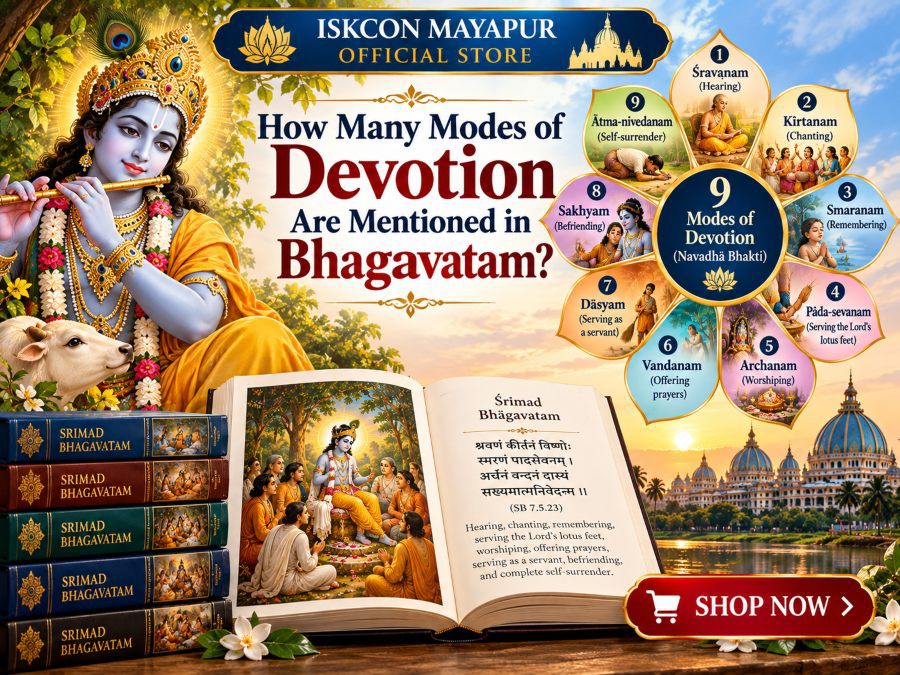 How Many Modes of Devotion Are Mentioned in Bhagavatam?Read more
A young boy named Prahlada listed nine ways to serve God, and the Bhagavatam keeps them as its answer. Learn what the...
-
 What Is Bhagavatam and Why Has It Been Read for 5,000 Years?Read more
A dying king asked one question, and the answer became the Bhagavatam. Learn what this Sanskrit scripture contains,...
-
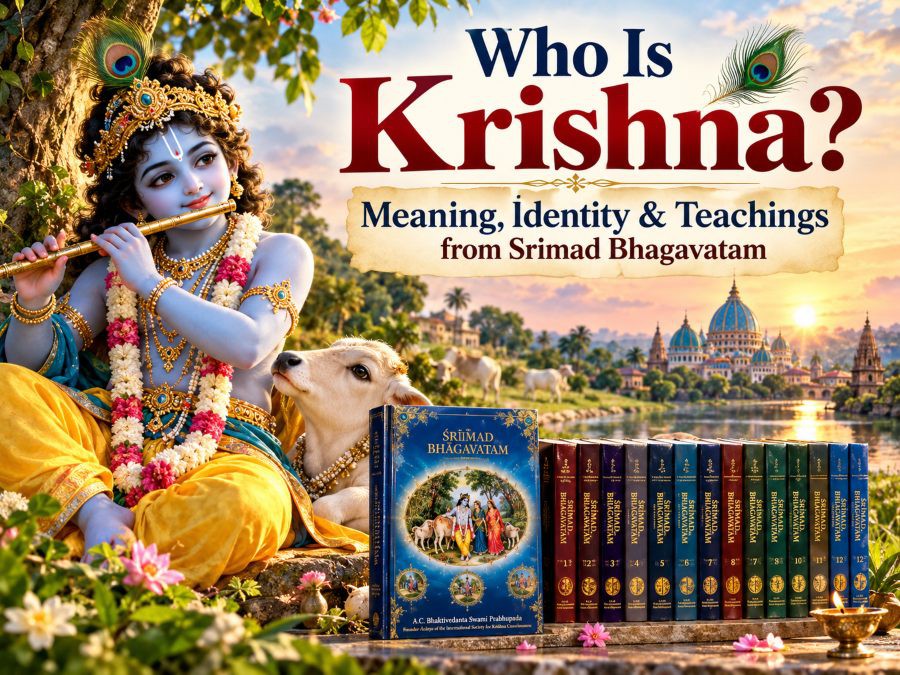 Who Is Lord Krishna? His Meaning, Teachings and Pastimes ExplainedRead more
Discover who Krishna is according to Srimad Bhagavatam, including His divine identity, childhood pastimes, teachings,...
-
 Incense in Islam: Bakhoor, Agarbatti and What Tradition SaysRead more
Is burning fragrance part of Muslim tradition? Explore incense in Islam, from the Prophetic practice of fumigating...
-
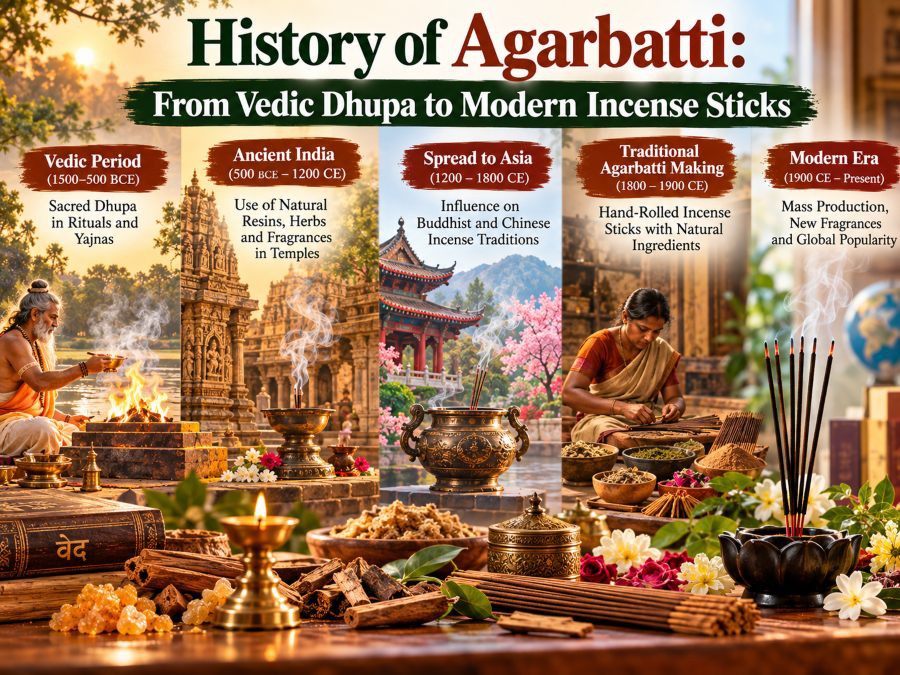 History of Agarbatti: From Vedic Dhupa to Modern Incense SticksRead more
Where did agarbatti really come from? Follow the history of agarbatti from Vedic fire rituals and temple dhupa to...
Blog categories
- Default category (0)
- MUSICAL INSTRUMENT (1)
- BOOK (5)
- DEVOTIONAL GIFT (0)
- Blog (30) click
- CHANDAN (12)
- Bhagavatam Wisdom Series (68)
- Krishna Consciousness (14)
- Mridangam Musical Instrument (6)
- Bhagavad Gita for Beginners (13)
- Bhagavad Gita As It Is (37) click
- Bhagavad Gita As It Is Telugu (0)
- Bhagavad Gita As It Is Marathi (0)
- Bhagavad Gita As It Is In Hindi (0)
- Bhagavad Gita As It Is In English (0)
- Bhagavad Gita As It Is In Bengali (8)
- Bhagavad Gita As It Is In Kannada (0)
- Bhagavad Gita As It Is In Gujarati (0)
- Bhagavad Gita As It Is In Panjabi (0)
- Bhagavad Gita As It Is In Tamil (0)
- Bhagavad Gita As It Is Odia (0)
- BHAGAVAD GITA As It Is GERMAN (0)
- Bhagavad Gita As It Is In French (0)
- Bhagavad Gita As It Is In Nepali (0)
- Bhagavad Gita As It Is In Assamese (0)
- Incense or Agarbatti (38)
- Lord Chaitanya Mahaprabhu (3)
- Vedic Temple Mayapur (14)
- kalki (15)
- Mahabharata – Dharma & Destiny (27)
- Vaishnava Scriptures (4)
- healthy product (4)
- chaitanya mahaprabhu (5)
- Tulsi Mala Guide (17)
Search in blog
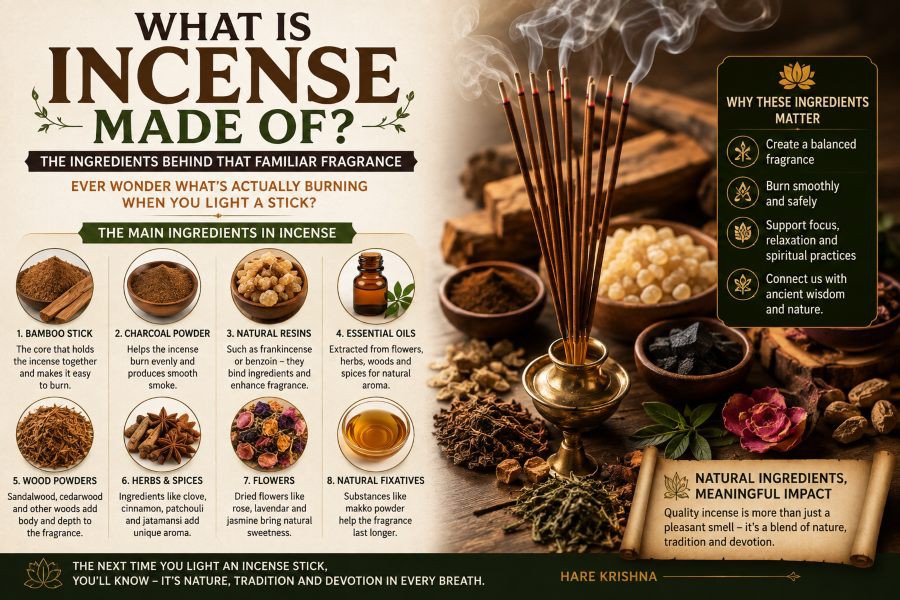
What Is Incense Made Of? The Ingredients Behind That Familiar Fragrance
Ever Wonder What's Actually Burning When You Light a Stick?
Most people light incense without thinking twice about what's inside it. The smoke curls up, the room fills with fragrance, and that's usually where the curiosity stops. But if you've ever paused mid-lighting and wondered what you're actually burning — wood dust, chemicals, flowers, something else entirely — you're asking a genuinely good question, and the answer is more interesting than most people expect.
Incense isn't one uniform product. It's a category, and within that category sits an enormous range of ingredients, methods, and quality levels — from centuries-old handmade recipes to mass-produced sticks stretched with synthetic fillers. Understanding what actually goes into traditional dhoop and agarbatti changes how you shop for it, how you use it, and honestly, how much you enjoy it once you know the difference between the good stuff and the shortcuts.
The Core Building Blocks — What's Actually Inside a Stick
Strip away the branding and the fragrance names, and most incense sticks share a handful of core components. Here's what's typically involved.
The Base Material
This is the physical structure the fragrance clings to — usually a bamboo core for hand-rolled sticks, though some traditions skip the bamboo entirely and use pressed material without a core (common in Japanese-style incense, for instance). The base gives the stick its shape and burn time, but it's not where the fragrance itself comes from.
Binding Agents
Something has to hold the fragrant powder onto the bamboo core, and that's where binding agents come in. Traditional recipes often use natural gums — like makko powder, derived from the bark of certain trees — that burn cleanly and don't introduce harsh chemical smells of their own. Cheaper commercial products sometimes substitute synthetic binders, which can affect both the burn quality and the smoke's smell.
Fragrance Sources — Where the Actual Scent Comes From
This is the part people are usually most curious about, and it's also where the biggest quality gap between products shows up.
Natural fragrance sources typically include:
- Resins — like frankincense, myrrh, and benzoin, prized for centuries for their deep, complex aromas
- Woods — sandalwood and agarwood being the most well-known, each carrying a distinct, layered scent that synthetic versions struggle to replicate
- Herbs and florals — rose, jasmine, lavender, and various dried botanicals, often ground into fine powders
- Essential oils — extracted from plants and used to reinforce or round out a fragrance profile
Synthetic alternatives, common in lower-cost products, include:
- Fragrance oils manufactured in a lab to mimic natural scents at a fraction of the cost
- Chemical fixatives designed to make the fragrance last longer on the shelf
- Artificial colorants, sometimes added purely for visual appeal rather than function
Neither category is inherently "bad" in isolation — synthetic fragrance technology has genuinely improved over the decades. But there's a meaningful difference in complexity, depth, and how the smoke actually smells once it's burning, especially over longer sessions.
Handmade vs Machine-Made — Does the Process Change the Ingredients?
Here's where things get genuinely interesting, because the manufacturing process itself often dictates what ingredients end up being used.
Handmade incense tends to rely more heavily on natural resins, woods, and herbs, partly because artisanal production methods are already slower and more deliberate — adding synthetic shortcuts somewhat defeats the purpose of the craftsmanship involved. Hand-rolling also allows for thicker, more concentrated fragrance layers, since the process doesn't need to accommodate high-speed machinery.
Machine-made incense, produced at scale, often leans more on synthetic fragrance oils simply because they're more consistent, cheaper, and easier to standardize across massive production runs. This isn't automatically a mark of lower quality — plenty of machine-made incense is perfectly good — but the ingredient profile does tend to skew more synthetic as production scale increases.
If you've ever noticed that some incense sticks smell noticeably richer or more "layered" than others, even within the same general scent category, this manufacturing difference is very often the reason why.
Why Ingredient Quality Actually Matters When Burning
It's tempting to think all incense burns roughly the same way, but ingredient quality shows up in several practical ways.
Smoke density and harshness Poor-quality binders and heavy synthetic loading tend to produce thicker, harsher smoke that can irritate sensitive noses or trigger headaches during extended use. Natural, well-balanced ingredients typically burn cleaner.
Fragrance longevity through the burn Cheap fragrance oils often front-load their scent — smelling strong for the first minute or two before fading noticeably. Higher-quality natural ingredients tend to release fragrance more evenly across the entire burn time.
Residue and ash consistency Natural resins and woods generally produce a finer, more consistent ash. Heavily synthetic or poorly bound sticks sometimes leave clumpy, uneven residue — a small detail, but one that seasoned incense users notice quickly.
Reading a Label the Smart Way
Most incense packaging doesn't make ingredient transparency easy, but there are still useful signals worth looking for.
- Look for named natural ingredients — sandalwood, frankincense, rose, specific resin names — rather than vague terms like "floral fragrance" or "premium blend," which usually indicate synthetic formulation.
- Check for charcoal-based vs. natural-binder formulations, since charcoal-heavy sticks tend to burn faster and produce a different, sometimes harsher smoke profile.
- Be cautious of unusually low prices for "pure" or "natural" claims — genuine natural resins and sandalwood are relatively expensive raw materials, and pricing that seems too good given those claims often signals heavy synthetic substitution.
- Country and brand reputation matter more than marketing copy. Established incense-producing regions with long manufacturing histories tend to maintain more consistent quality standards than newer, unbranded sellers.
Why This Matters Beyond Just Fragrance
For a lot of people, incense isn't purely about scent — it plays a role in incense for spiritual practice, meditation routines, or simply creating a specific atmosphere at home. In these contexts, ingredient quality arguably matters even more than in purely decorative use, since these sticks often burn for longer stretches during prayer, meditation, or ritual settings.
Traditional devotional incense recipes, refined over generations, were built specifically around ingredients believed to support focus, calm, and a particular sensory atmosphere conducive to reflection — sandalwood's grounding quality, for instance, or the way certain resins were traditionally associated with purification. Whether or not you approach incense from a spiritual angle, understanding this history explains why so many traditional recipes lean heavily on the same core natural ingredients across cultures and centuries, rather than constantly reinventing themselves around trending synthetic fragrances.
It's also worth noting that different spiritual and devotional traditions have historically favored different ingredient combinations, not arbitrarily but based on what was locally available and what specific qualities certain scents were believed to carry. Sandalwood dominates in many South Asian devotional contexts, valued for its calming, grounding character. Frankincense and myrrh carry similarly deep roots across Middle Eastern and Mediterranean traditions. These weren't random choices — they reflected generations of accumulated experience about which natural materials actually supported the kind of sustained, focused atmosphere that prayer and meditation sessions call for.
A Quick Myth or Fact Check
A few common questions worth clearing up directly:
Is all incense smoke harmful? Not inherently, though heavy daily use in poorly ventilated spaces isn't ideal regardless of ingredient quality — this applies to candles and most forms of indoor combustion generally, not just incense specifically.
Does "natural" always mean safer? Mostly, but not universally. Some natural resins can still produce fairly dense smoke, so ventilation matters regardless of whether the ingredients are natural or synthetic.
Is bamboo-core incense automatically lower quality than coreless incense? No — this is more a matter of tradition and regional style than a quality indicator. Both formats can be made well or poorly depending on the actual fragrance ingredients used.
The Bottom Line on What You're Actually Burning
Once you understand the basic anatomy of an incense stick — the base material, the binder, and the fragrance source — the whole category stops feeling like a mystery. You start noticing which sticks burn evenly, which ones smell layered rather than flat, and which brands are cutting corners with heavy synthetic loading dressed up in appealing packaging.
Next time you light one, take a moment before the smoke fully fills the room. Notice the initial scent, how it shifts a few minutes in, and how consistent it stays until the stick burns down completely. That small habit of paying attention tells you more about ingredient quality than any label ever could.
Over time, that kind of attentiveness turns into genuine expertise, even without any formal training. Regular incense users often develop a fairly reliable instinct for spotting synthetic-heavy sticks within the first few seconds of lighting one — the smoke sits differently, the scent feels flatter, and the whole experience lacks the layered complexity that comes from genuine natural ingredients working together. That instinct doesn't come from reading ingredient lists. It comes from simply burning enough incense, paying attention, and letting your own senses become the real judge of quality.
Posted in: Incense or Agarbatti
Related posts
-
 How to Light Incense SticksDiscover the right way to light incense sticks (agarbatti) for worship, meditation, and peace. Learn step-by-step...Read more
 -
 Where to Buy Incense SticksDiscover where to buy the best natural incense sticks for your daily puja, meditation, and relaxation. Explore pure,...Read more
 -
 Is Incense Sticks Bad for Pregnancy? Wondering if incense sticks are safe during pregnancy? Discover the truth about incense smoke, its effects on...Read more
 -
 Do Incense Sticks Trigger Fire Alarms? Wondering if incense sticks can trigger fire alarms? Learn how smoke affects detectors, safe burning tips, and...Read more
 -
 How Many Incense Sticks to Burn for Good LuckDiscover how many incense sticks to burn for good luck and prosperity. Learn the ideal numbers, rituals, and natural...Read more
Leave a comment