
Why did Krishna run to embrace a poor brahmin in rags? Read the Sudama story from the Bhagavatam and learn how a...
Latest posts
-
 Krishna and Sudama: The Poor Brahmin Who Became Wealthy in LoveRead more
 -
 Vamana Avatar: How Three Steps Humbled Bali MaharajaRead more
Why did a powerful king give away three worlds to a boy asking for three steps? Learn the Vamana avatar story from...
-
 The Bhagavatam on Marriage: Duty, Love and Spiritual PartnershipRead more
What does the Bhagavatam say about marriage? Through the stories of Kardama and Devahuti, Rukmini's secret letter and...
-
 What Is Prema? The Bhagavatam's Highest Stage of Love for GodRead more
Prema is love for God with no "because" attached. Learn how the Bhagavatam describes it, the nine steps from faith to...
-
 Is Shiva Parvati Kalyana Mentioned in Srimad Bhagavatam? What the Scripture Really SaysRead more
Looking for Shiva and Parvati's wedding in the Srimad Bhagavatam? Find out what the scripture actually describes,...
-
 How Many Modes of Devotion Are Mentioned in Bhagavatam?Read more
A young boy named Prahlada listed nine ways to serve God, and the Bhagavatam keeps them as its answer. Learn what the...
-
 What Is Bhagavatam and Why Has It Been Read for 5,000 Years?Read more
A dying king asked one question, and the answer became the Bhagavatam. Learn what this Sanskrit scripture contains,...
-
 Who Is Lord Krishna? His Meaning, Teachings and Pastimes ExplainedRead more
Discover who Krishna is according to Srimad Bhagavatam, including His divine identity, childhood pastimes, teachings,...
-
 Incense in Islam: Bakhoor, Agarbatti and What Tradition SaysRead more
Is burning fragrance part of Muslim tradition? Explore incense in Islam, from the Prophetic practice of fumigating...
-
 History of Agarbatti: From Vedic Dhupa to Modern Incense SticksRead more
Where did agarbatti really come from? Follow the history of agarbatti from Vedic fire rituals and temple dhupa to...
Blog categories
- Default category (0)
- MUSICAL INSTRUMENT (1)
- BOOK (5)
- DEVOTIONAL GIFT (0)
- Blog (30) click
- CHANDAN (12)
- Bhagavatam Wisdom Series (68)
- Krishna Consciousness (14)
- Mridangam Musical Instrument (6)
- Bhagavad Gita for Beginners (13)
- Bhagavad Gita As It Is (37) click
- Bhagavad Gita As It Is Telugu (0)
- Bhagavad Gita As It Is Marathi (0)
- Bhagavad Gita As It Is In Hindi (0)
- Bhagavad Gita As It Is In English (0)
- Bhagavad Gita As It Is In Bengali (8)
- Bhagavad Gita As It Is In Kannada (0)
- Bhagavad Gita As It Is In Gujarati (0)
- Bhagavad Gita As It Is In Panjabi (0)
- Bhagavad Gita As It Is In Tamil (0)
- Bhagavad Gita As It Is Odia (0)
- BHAGAVAD GITA As It Is GERMAN (0)
- Bhagavad Gita As It Is In French (0)
- Bhagavad Gita As It Is In Nepali (0)
- Bhagavad Gita As It Is In Assamese (0)
- Incense or Agarbatti (38)
- Lord Chaitanya Mahaprabhu (3)
- Vedic Temple Mayapur (14)
- kalki (15)
- Mahabharata – Dharma & Destiny (27)
- Vaishnava Scriptures (4)
- healthy product (4)
- chaitanya mahaprabhu (5)
- Tulsi Mala Guide (17)
Search in blog
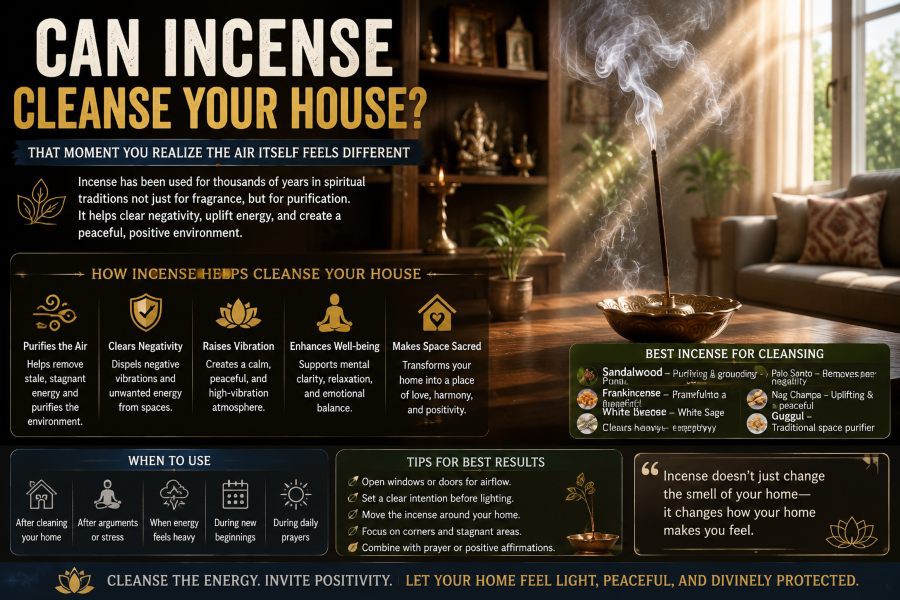
Can Incense Cleanse Your House?
That Moment You Realize the Air Itself Feels Different
Walk into a home right after a long, difficult week — unwashed dishes piling up, arguments still echoing faintly in the walls, that stale, closed-in feeling that settles into a space when life gets messy. Now imagine walking into that same room five minutes after someone's lit incense, opened a window, and let the smoke drift through every corner. It's not just a different smell. It genuinely feels like a different room.
This isn't wishful thinking or vague spiritual hand-waving. Incense sticks have been used as a house-cleansing tool across an enormous range of cultures and centuries, precisely because people consistently noticed this shift — not just in smell, but in the actual felt atmosphere of a space. If you're curious about incorporating this into your own home, you can Shop incense at Mayapur Store for varieties specifically suited to purification and cleansing practices rather than just casual fragrance.
So let's actually get into the real substance of this question: can incense genuinely cleanse a house, what does "cleansing" even mean in this context, and how do you do it in a way that's actually effective rather than just symbolic?
What Does "Cleansing" Actually Mean Here?
This word gets thrown around loosely, so let's define it properly before going further, because there are actually two distinct layers to what incense does when used for house cleansing.
The physical layer involves genuine changes to the air — smoke carrying aromatic compounds that can mask, and in some cases reduce, certain unpleasant odors, along with the psychological effect of fresh scent replacing stale air. This part is measurable and observable.
The energetic or spiritual layer — which varies significantly depending on your cultural or religious framework — involves the idea that spaces hold onto some form of residual heaviness from stress, conflict, or stagnant energy, and that deliberate ritual practice can shift or clear that residue.
You don't need to fully subscribe to the spiritual framework to appreciate the physical one, and you don't need to dismiss the spiritual framework just because the physical explanation exists. Both operate simultaneously, and most traditional practices never really separated the two the way modern skeptical analysis tends to.
The Cross-Cultural Pattern That's Hard to Ignore
What's genuinely striking about house cleansing with incense is how independently different cultures arrived at remarkably similar practices, often with zero historical contact with each other.
- Vedic tradition uses dhoop and agarbatti specifically during griha pravesh (housewarming) ceremonies and regular puja to purify domestic space
- Native American traditions use sage and other sacred plants in smudging ceremonies to clear negative energy from homes
- Chinese tradition burns incense during specific rituals tied to Feng Shui principles, believed to balance the energy flow of a space
- Tibetan Buddhist practice uses juniper and other herbs in smoke offerings (Sang) specifically for purification of dwellings
When multiple, geographically isolated civilizations independently develop nearly identical practices around the same core idea — using fragrant smoke to reset the feeling of a home — that consistency itself is worth paying attention to, regardless of how you personally interpret the underlying mechanism.
The Practical Physical Benefits (No Spiritual Framework Required)
Even stripping away every spiritual interpretation entirely, there's a legitimate physical case for what incense does to a home environment.
Odor neutralization. Cooking smells, pet odors, mustiness from humidity — incense doesn't chemically eliminate these the way an air purifier might, but it does meaningfully mask and layer over them, especially with denser, resin-based fragrances like frankincense.
Psychological reset through scent association. Smell is directly wired into the brain's limbic system, the region tied to emotion and memory. A distinct, pleasant fragrance genuinely can shift mood and perception of a space almost immediately, which is part of why real estate agents sometimes recommend subtle fragrance before showings.
Ritual behavior itself creates a mental "reset" marker. The act of walking through a home with incense, being deliberate and present, creates a clear psychological before-and-after moment — similar to how physically cleaning a cluttered room changes how you feel about the space, independent of any supernatural claim.
How to Actually Cleanse a House With Incense (Step-by-Step)
If you're going to do this intentionally rather than just lighting a stick randomly, there's a more structured approach worth following — one drawn from common threads across multiple traditional practices.
Step 1: Choose the Right Incense for the Purpose
Not every fragrance suits deep cleansing work. Sandalwood, frankincense, and camphor tend to be the most consistently used across traditions for this specific purpose, as opposed to sweeter, lighter florals better suited for casual ambiance. For a more intensive cleanse, many households reach for premium agarbatti sticks made from natural resins and woods rather than synthetic blends, since the depth of the fragrance itself seems to matter for how thorough the practice feels.
Step 2: Start From the Entrance
Many traditions specifically begin the cleansing walk-through at the front door — the entry point of the home — working inward from there. The logic is straightforward: the entrance is treated as the threshold between outside energy and the home's interior, making it a natural starting point.
Step 3: Move Through Every Room, Including Rarely Used Ones
This is where people often cut corners. Storage rooms, guest bedrooms, closets — these get skipped because they're "not really lived in," but many traditions specifically emphasize that unused, stagnant spaces are exactly where heaviness tends to accumulate most.
Step 4: Pay Extra Attention to Corners and Doorways
Corners, thresholds, and windowsills are traditionally treated as places where stagnant energy tends to settle, since they're physical transition points that don't get the same natural air movement as open floor space. Spend a few extra seconds at each doorway and corner rather than just walking straight through the center of each room.
Step 5: Open Windows as You Go
Cleansing isn't just about introducing fragrant smoke — it's equally about giving stagnant air somewhere to actually leave. As you move through each room, crack a window if possible, so the "old" air has a clear exit path rather than just circulating back into the same enclosed space.
Step 6: Close the Ritual With Intention
Many traditions end the practice at a specific point — often back at the entrance, or at a household shrine or puja space — with a brief moment of gratitude, prayer, or simply conscious acknowledgment that the practice is complete. This gives the ritual a clear beginning and end, which matters more for the psychological effectiveness than people often realize.
How Often Should You Do a Full House Cleanse?
This depends heavily on your personal or family tradition, but a few common patterns show up repeatedly across different practices.
- Weekly or bi-weekly, often tied to a specific day considered auspicious in a given tradition
- After significant events — illness, arguments, a difficult period, moving into a new home
- Seasonally, particularly around festivals or transitional points in the calendar year
- Daily, in a lighter form, where full-room cleansing happens occasionally but a shorter version — incense at the puja space or main living area — happens as part of a regular routine
There's no single correct frequency. What matters more is consistency with whatever rhythm you choose, rather than doing an intensive cleanse once and expecting permanent results.
What This Practice Doesn't Replace
It's worth being honest about limitations here, because treating incense as a substitute for other necessary actions undermines its actual value.
- It doesn't replace physical cleaning. A cluttered, dusty home won't feel meaningfully different just from incense smoke passing through it — the physical environment still needs actual maintenance
- It doesn't resolve underlying conflict. If tension in a household stems from unresolved issues between people, incense creates atmosphere, not conflict resolution — that still requires actual conversation and effort
- It's not a medical intervention. If air quality concerns stem from mold, poor ventilation, or actual pollutants, incense won't address the root cause and shouldn't be treated as a substitute for proper remediation
Incense works best as a complement to genuine effort — physical, emotional, or relational — not a replacement for it.
Common Mistakes That Undermine the Practice
Rushing through it. A hurried, distracted walk-through with incense doesn't carry the same effect as a slow, intentional one, even setting aside spiritual interpretation entirely — the psychological "reset" benefit depends on presence and attention.
Using low-quality, synthetic incense. As covered elsewhere, heavily synthetic fragrance oils tend to produce harsher, less pleasant smoke, which undermines rather than supports the calming, intentional atmosphere the practice is meant to create.
Skipping ventilation. Cleansing without ever opening a window traps the same stagnant air you're trying to shift, turning the practice into smoke accumulation rather than genuine air renewal.
Treating it as a one-time fix. As mentioned, the households that report the most consistent benefit from this practice tend to treat it as ongoing maintenance rather than an emergency-only intervention.
Frequently Asked Questions
Can incense actually remove bacteria or germs from the air? No, incense isn't a disinfectant and shouldn't be treated as one. It affects scent and, to a limited degree, particulate presence in the air, but it has no meaningful antibacterial or antiviral effect. For genuine sanitation, standard cleaning practices are still necessary.
Is there a specific incense combination best for a full house cleanse versus daily use? Many households use denser, resin-heavy blends like frankincense or dhoop for occasional deep cleansing, reserving lighter sandalwood or floral sticks for daily ambiance. The heavier smoke and more concentrated fragrance in cleansing blends tend to feel more thorough for less frequent, more intentional sessions.
Should I cleanse a room after guests leave, even if nothing negative happened? Some traditions do this as routine practice, treating any accumulated foot traffic or activity as reason enough for a light refresh, regardless of whether anything specifically negative occurred. It's more about maintaining consistent atmosphere than responding to a problem.
Can I combine incense cleansing with other practices like salt or plants? Yes, many households layer multiple practices together — incense for atmosphere and scent, rock salt for absorption in corners, plants for ongoing air freshness. These aren't mutually exclusive and often complement each other well.
Is it necessary to cleanse a rented apartment before moving in? Many people choose to do this specifically because a rental has an unknown history of previous occupants, treating the practice as a way of resetting the space before making it their own, even if nothing is known to have happened there previously.
Signs Your Home Might Actually Need This
You don't need a dramatic event to justify doing this. A few common, everyday signals suggest a space could benefit from an intentional incense cleanse:
- The room feels heavier or more tiring than usual, without an obvious physical explanation
- A lingering, stale smell persists even after normal cleaning
- Recent tension, illness, or a difficult period has passed through the household
- You've just moved into a new space with an unknown history
- It's simply been a while since you last did a deliberate cleanse, and routine maintenance feels overdue
None of these require a dramatic justification. Most traditional practices treat this as preventive, ongoing care rather than something reserved only for obviously negative circumstances.
The Honest Answer
Can incense cleanse your house? In the physical, measurable sense — yes, genuinely, through odor masking, psychological reset via scent association, and the deliberate mental "before and after" marker the ritual creates. In the spiritual or energetic sense, that answer depends on your own belief framework, though the remarkable consistency of similar practices across unrelated cultures suggests there's something to the pattern beyond pure coincidence.
What's clear either way is that the practice, done with intention, genuine natural ingredients, and proper ventilation, tends to leave people feeling like their home is lighter, calmer, and more settled than before. Whether you attribute that entirely to psychology, entirely to tradition, or somewhere comfortably in between, the outcome — a home that feels genuinely different — is the part that actually matters most to the people doing it.
Posted in: Incense or Agarbatti
Related posts
-
 How to Light Incense SticksDiscover the right way to light incense sticks (agarbatti) for worship, meditation, and peace. Learn step-by-step...Read more
 -
 Where to Buy Incense SticksDiscover where to buy the best natural incense sticks for your daily puja, meditation, and relaxation. Explore pure,...Read more
 -
 Is Incense Sticks Bad for Pregnancy? Wondering if incense sticks are safe during pregnancy? Discover the truth about incense smoke, its effects on...Read more
 -
 Do Incense Sticks Trigger Fire Alarms? Wondering if incense sticks can trigger fire alarms? Learn how smoke affects detectors, safe burning tips, and...Read more
 -
 How Many Incense Sticks to Burn for Good LuckDiscover how many incense sticks to burn for good luck and prosperity. Learn the ideal numbers, rituals, and natural...Read more
Leave a comment