
Why did Krishna run to embrace a poor brahmin in rags? Read the Sudama story from the Bhagavatam and learn how a...
Latest posts
-
 Krishna and Sudama: The Poor Brahmin Who Became Wealthy in LoveRead more
 -
 Vamana Avatar: How Three Steps Humbled Bali MaharajaRead more
Why did a powerful king give away three worlds to a boy asking for three steps? Learn the Vamana avatar story from...
-
 The Bhagavatam on Marriage: Duty, Love and Spiritual PartnershipRead more
What does the Bhagavatam say about marriage? Through the stories of Kardama and Devahuti, Rukmini's secret letter and...
-
 What Is Prema? The Bhagavatam's Highest Stage of Love for GodRead more
Prema is love for God with no "because" attached. Learn how the Bhagavatam describes it, the nine steps from faith to...
-
 Is Shiva Parvati Kalyana Mentioned in Srimad Bhagavatam? What the Scripture Really SaysRead more
Looking for Shiva and Parvati's wedding in the Srimad Bhagavatam? Find out what the scripture actually describes,...
-
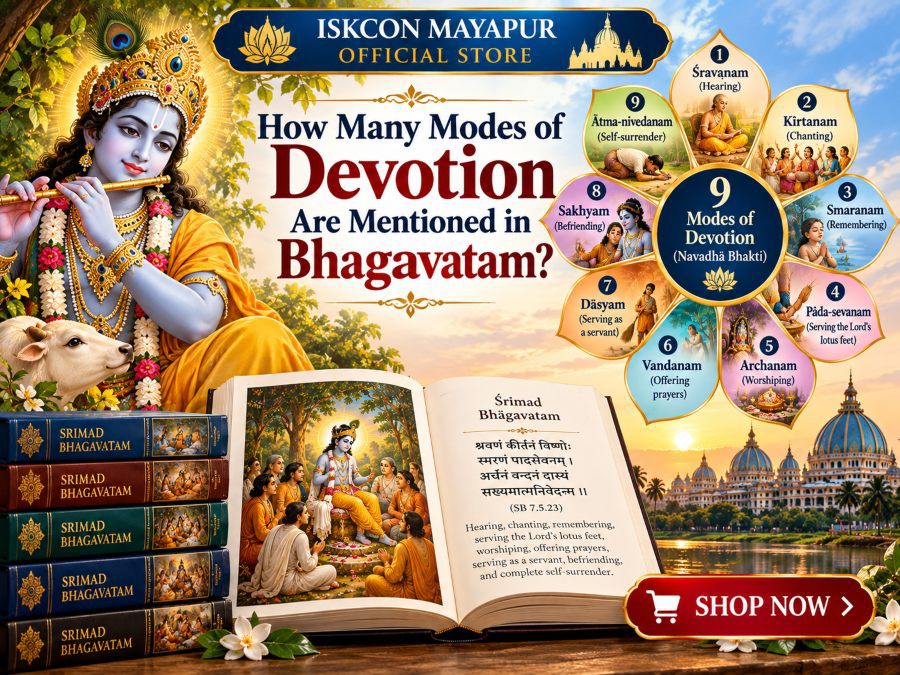 How Many Modes of Devotion Are Mentioned in Bhagavatam?Read more
A young boy named Prahlada listed nine ways to serve God, and the Bhagavatam keeps them as its answer. Learn what the...
-
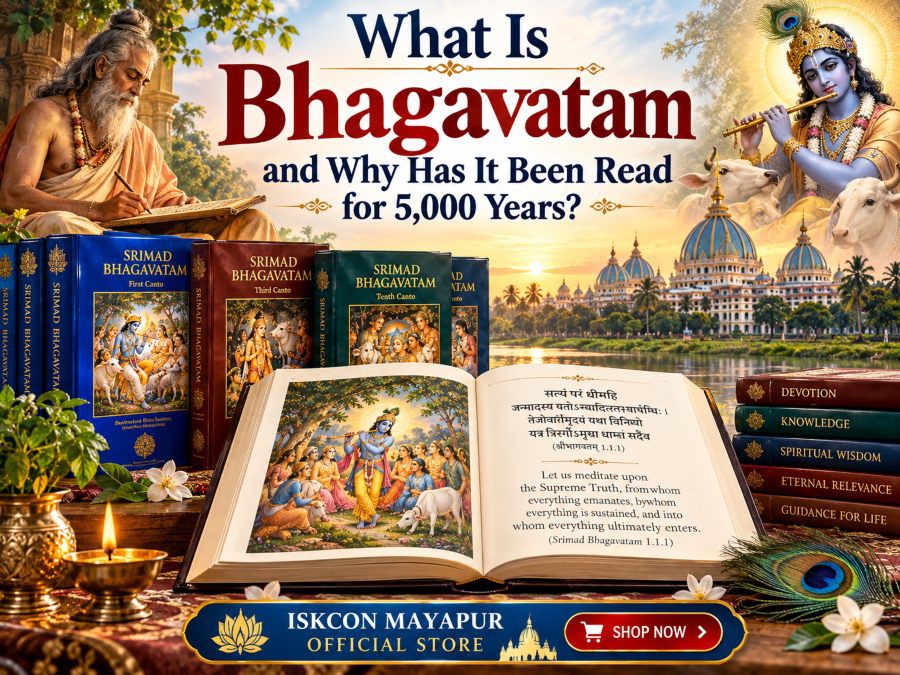 What Is Bhagavatam and Why Has It Been Read for 5,000 Years?Read more
A dying king asked one question, and the answer became the Bhagavatam. Learn what this Sanskrit scripture contains,...
-
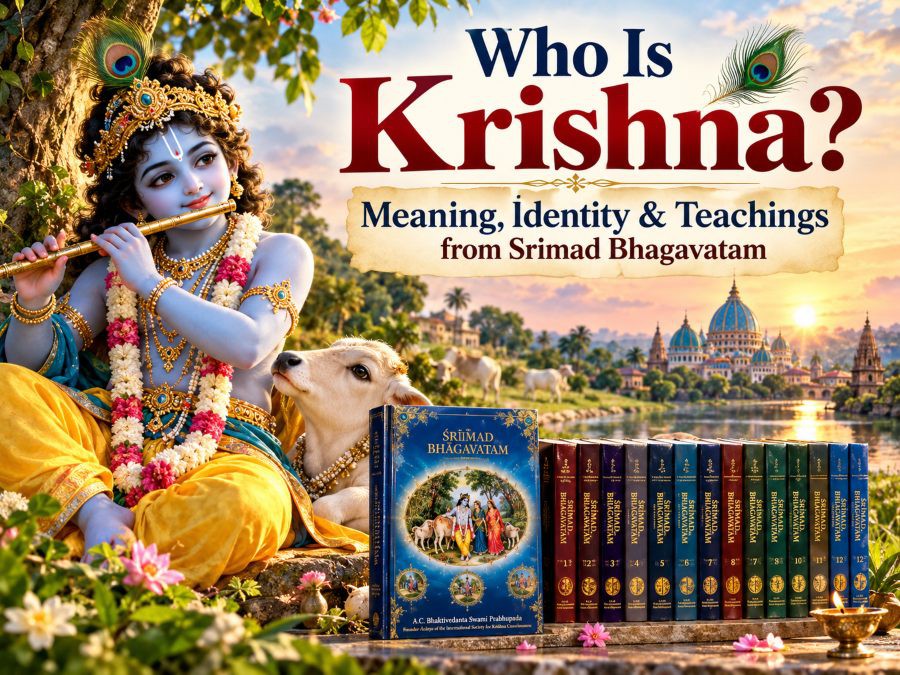 Who Is Lord Krishna? His Meaning, Teachings and Pastimes ExplainedRead more
Discover who Krishna is according to Srimad Bhagavatam, including His divine identity, childhood pastimes, teachings,...
-
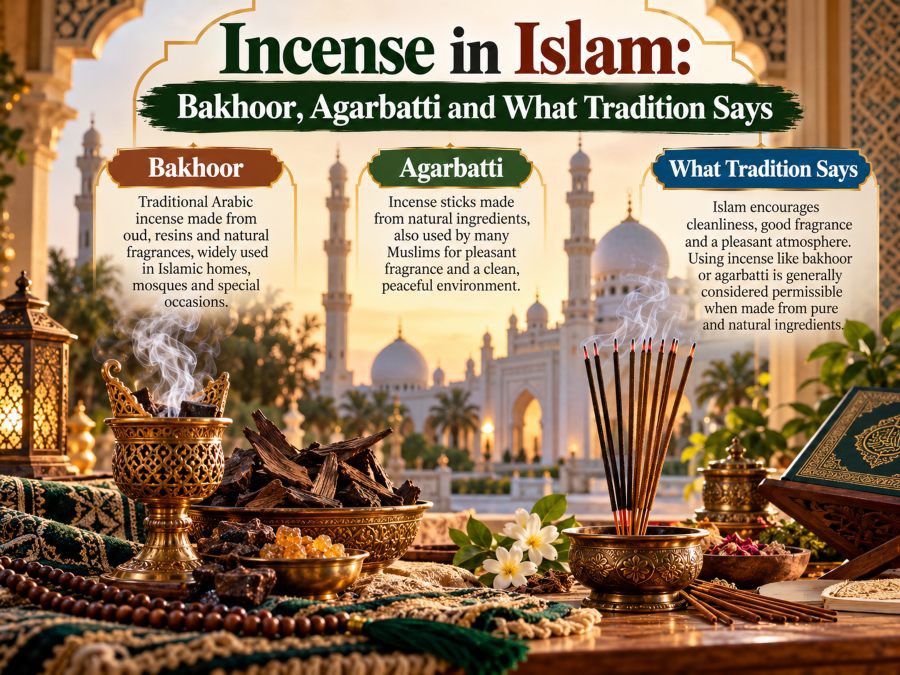 Incense in Islam: Bakhoor, Agarbatti and What Tradition SaysRead more
Is burning fragrance part of Muslim tradition? Explore incense in Islam, from the Prophetic practice of fumigating...
-
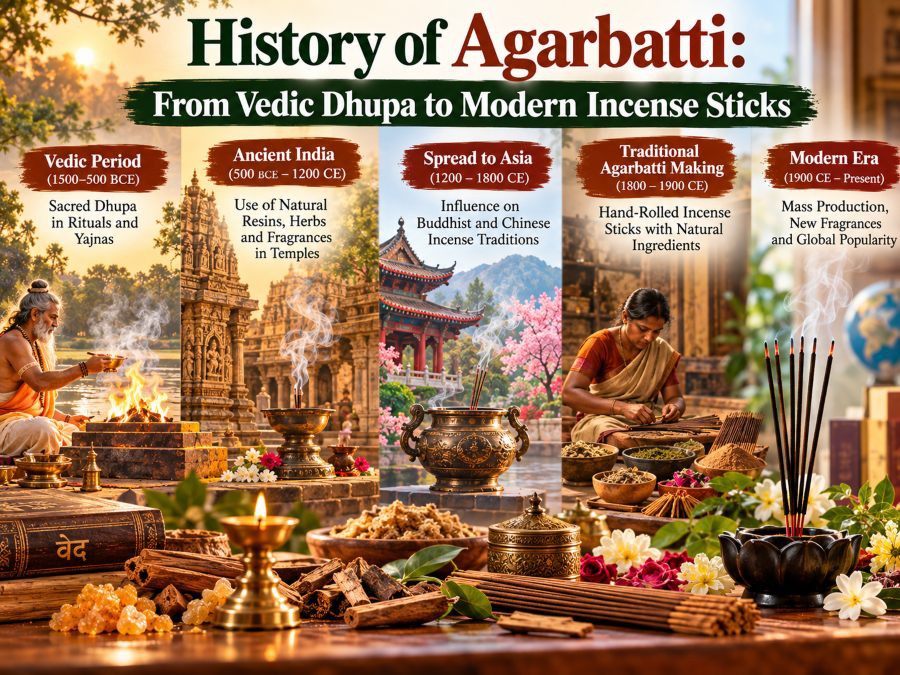 History of Agarbatti: From Vedic Dhupa to Modern Incense SticksRead more
Where did agarbatti really come from? Follow the history of agarbatti from Vedic fire rituals and temple dhupa to...
Blog categories
- Default category (0)
- MUSICAL INSTRUMENT (1)
- BOOK (5)
- DEVOTIONAL GIFT (0)
- Blog (30) click
- CHANDAN (12)
- Bhagavatam Wisdom Series (68)
- Krishna Consciousness (14)
- Mridangam Musical Instrument (6)
- Bhagavad Gita for Beginners (13)
- Bhagavad Gita As It Is (37) click
- Bhagavad Gita As It Is Telugu (0)
- Bhagavad Gita As It Is Marathi (0)
- Bhagavad Gita As It Is In Hindi (0)
- Bhagavad Gita As It Is In English (0)
- Bhagavad Gita As It Is In Bengali (8)
- Bhagavad Gita As It Is In Kannada (0)
- Bhagavad Gita As It Is In Gujarati (0)
- Bhagavad Gita As It Is In Panjabi (0)
- Bhagavad Gita As It Is In Tamil (0)
- Bhagavad Gita As It Is Odia (0)
- BHAGAVAD GITA As It Is GERMAN (0)
- Bhagavad Gita As It Is In French (0)
- Bhagavad Gita As It Is In Nepali (0)
- Bhagavad Gita As It Is In Assamese (0)
- Incense or Agarbatti (38)
- Lord Chaitanya Mahaprabhu (3)
- Vedic Temple Mayapur (14)
- kalki (15)
- Mahabharata – Dharma & Destiny (27)
- Vaishnava Scriptures (4)
- healthy product (4)
- chaitanya mahaprabhu (5)
- Tulsi Mala Guide (17)
Search in blog
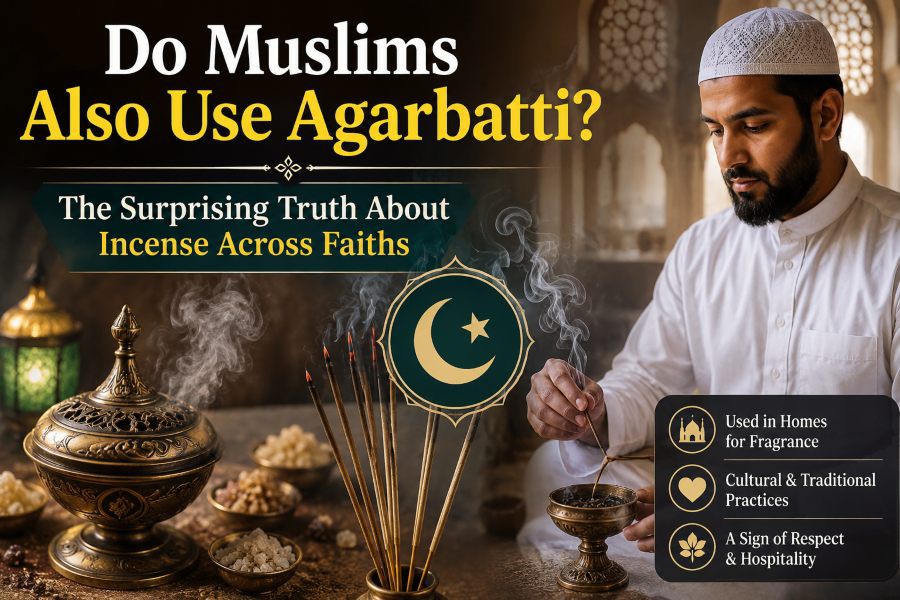
Do Muslims Also Use Agarbatti? The Truth About Incense Across Faiths
Do Muslims Also Use Agarbatti? The Surprising Truth About Incense Across Faiths
Walk into a Muslim household in Lucknow, Hyderabad, or Karachi on a Friday evening, and there's a good chance you'll catch a thread of fragrant smoke curling up from a corner of the room. Ask the person lighting it whether this is a "Hindu thing," and you'll probably get a puzzled look back. Incense, it turns out, doesn't belong to one religion. It belongs to human beings who like their homes to smell like something other than yesterday's cooking. Mayapur Store Aagarbatti has customers from every community imaginable — Hindu, Muslim, Christian, Sikh, and plenty who follow no organized faith at all — because good fragrance is a need that crosses every boundary humans like to draw.
So yes, Muslims do use agarbatti. But the "why" behind it is more layered than a simple yes or no, and that's worth unpacking properly.
The Short Answer, Then the Long Story
If you're in a hurry: many Muslims around the world burn incense regularly, though the specific form varies by region. In South Asia, that often means agarbatti sticks. In the Gulf and broader Middle East, it more commonly means bakhoor — chips of wood soaked in fragrant oils and burned on charcoal. Different delivery method, same underlying instinct: fill a space with pleasant scent.
What agarbatti is generally not used for in Islamic practice is worship in the way a Hindu devotee might light it before a deity. There's no equivalent of aarti with incense in Islamic prayer. But outside of formal prayer, incense shows up constantly — in homes, at weddings, during Eid preparations, and in everyday routines tied to cleanliness and hospitality.
Where This Habit Actually Comes From
Here's something a lot of people don't realize: the association between Islam and pleasant fragrance isn't incidental. It has roots that go back centuries.
There's a well-known saying attributed to the Prophet Muhammad expressing a fondness for perfume, women, and prayer as things that brought him comfort. Scholars have debated the exact wording and context for generations, but the broader point has stuck in Islamic culture: fragrance is not frivolous. It's tied to cleanliness, to respect for others, and to the idea that a Muslim should present themselves — and their home — in a dignified way.
This is why attar (alcohol-free perfume oil) became such a big deal in Muslim communities historically, and why burning bakhoor or agarbatti before guests arrive isn't seen as decoration. It's closer to an act of hospitality, almost a small courtesy extended to whoever walks through the door.
Think about it this way: if a friend calls to say they're stopping by in twenty minutes, most people will tidy up, maybe spray some air freshener. In many Muslim households, lighting incense is the traditional version of that same instinct — done for centuries before spray cans existed.
Agarbatti in Everyday Muslim Homes
Let's get specific, because generalities don't help anyone who's actually trying to understand daily practice.
Friday (Jumu'ah) preparation. Many families light incense at home before or after Friday prayers, treating the day with a bit more ceremony than an ordinary weekday.
Weddings and celebrations. South Asian Muslim weddings — nikah ceremonies, walimas, mehendi functions — very often include incense as part of the ambiance. It's less about religious symbolism here and more about creating an atmosphere that feels festive and warm.
Guest hospitality. This one comes up again and again in conversations with Muslim families: incense before guests arrive is almost automatic in many households, the same way some people put out fresh flowers.
Eid mornings. Homes get cleaned, new clothes come out, and incense is often part of that "getting ready" ritual, alongside attar and fresh bedding.
Grief and remembrance. In some communities, incense is burned during gatherings held to remember someone who has passed, similar to how candles or flowers function in other cultures.
None of these are religious obligations in the strict sense. You won't find a verse in the Quran commanding incense use. But culture and religion blend into each other more than people assume, and centuries of shared practice have made agarbatti a familiar presence in Muslim domestic life across South Asia.
Bakhoor vs Agarbatti: What's the Real Difference?
If you've spent time around Middle Eastern households, you may have encountered bakhoor instead of agarbatti sticks, and it's worth understanding why the format differs.
Bakhoor is typically wood chips — often oudh (agarwood) — soaked in a blend of fragrant oils and sometimes musk or amber. It's burned on hot charcoal or an electric burner, releasing thick, heavy smoke that clings to fabric, hair, and furniture for hours. It's a slower, more deliberate ritual: you need a burner, charcoal, tongs, and a few minutes of patience.
Agarbatti, by contrast, is a stick coated in fragrant paste built around a bamboo or charcoal core. Light it, place it in a holder, and walk away. It burns for twenty to forty-five minutes with a lighter, more diffused scent trail.
South Asian Muslim households — shaped by centuries of shared culture with Hindu, Sikh, and Jain neighbors — tend to gravitate toward agarbatti simply because it's what's available, affordable, and familiar. Middle Eastern households lean toward bakhoor because that's the regional tradition. Neither is more "correct" from a religious standpoint. It's geography and habit doing what geography and habit always do.
Aagarbatti for Spiritual Practice: A Shared Human Instinct
This is where things get genuinely interesting, and where a lot of people miss the bigger picture entirely.
Aagarbatti for spiritual practice isn't confined to any single religion's rulebook — it's closer to a shared human discovery that scent changes how a mind settles. Hindus use it before deities. Buddhists use it in meditation halls. Catholics swing censers of frankincense during Mass. Many Muslims burn it during Friday gatherings and moments of remembrance. Strip away the specific theology from each of these traditions, and you find the same underlying observation repeated across cultures separated by oceans and centuries: a particular smell can shift the mood of a room and, by extension, the mind of the person sitting in it.
There's actual science behind why this keeps happening independently across civilizations. Scent bypasses a lot of the brain's usual filtering — the olfactory bulb sits close to the limbic system, the part of the brain tied to emotion and memory. That's why a specific fragrance can instantly transport someone back to childhood, or why lighting the same incense every evening can train the mind to associate that smell with calm, focus, or prayer. Religious traditions figured this out long before neuroscience gave it a name.
So when someone asks whether agarbatti "belongs" to Hinduism or Islam or Buddhism, the honest answer is that it belongs to whoever finds it useful. The stick doesn't know or care which prayer is being said over it.
What Muslim Customers Look For When Buying Agarbatti
If you're running a store or just curious about buying habits, here's what actually matters to Muslim buyers of incense, based on common preferences seen across the market:
- Natural fragrance over synthetic — oudh, musk, rose, and sandalwood tend to outperform artificial fruity scents.
- No overtly religious branding — packaging featuring deity imagery is less likely to appeal, though the scent itself is judged independently of the packaging.
- Long burn time — especially for larger gatherings like weddings, where a room needs consistent fragrance for hours.
- Smoke density — some prefer a lighter trail for daily home use, others want heavier bakhoor-style smoke for special occasions.
- Halal-conscious sourcing — a smaller but growing segment specifically looks for agarbatti made without alcohol-based fragrance carriers.
This is a useful reminder for anyone assuming incense buyers form one homogenous group. They don't. A Hyderabadi Muslim shopping for Eid, a Kolkata Hindu shopping for evening puja, and a Bengaluru techie shopping for a calm workspace might all end up buying the exact same stick of sandalwood agarbatti for three completely different reasons.
Common Myths Worth Clearing Up
Myth: Incense is haram (forbidden) in Islam. Not accurate. There's no blanket prohibition on incense in Islamic teaching. What matters more is intention and context — burning it as an act of worship directed at anything other than God would be a problem, but burning it for fragrance, hospitality, or ambiance carries no such issue.
Myth: Only Hindus burn agarbatti in India. Incense use in the subcontinent predates the religious divisions that later shaped the region. Communities across faiths adopted it simply because it worked, and centuries of neighborly proximity blurred a lot of these lines further.
Myth: Bakhoor and agarbatti are basically the same thing. Different form, different burn method, often different scent profile entirely. Grouping them together misses what makes each one distinct.
A Fragrance That Doesn't Ask What You Believe
Maybe that's the real takeaway here. Incense has survived across millennia and across every major civilization not because one religion mandated it, but because it does something genuinely useful — it marks a moment as different from an ordinary one. It says: pay attention, something matters right now, whether that's a prayer, a wedding, a guest at the door, or simply the end of a long day.
Muslims use agarbatti. Hindus use agarbatti. So do plenty of people who'd struggle to name their own religious affiliation with any confidence. The stick of fragrant paste burning quietly in the corner of a room has never once asked who's watching it burn.
Looking for agarbatti that works for any home, any occasion, any tradition? Explore the range at Mayapur Store for natural, long-lasting fragrance sticks crafted with care.
Posted in: Incense or Agarbatti
Related posts
-
 How to Light Incense SticksDiscover the right way to light incense sticks (agarbatti) for worship, meditation, and peace. Learn step-by-step...Read more
 -
 Where to Buy Incense SticksDiscover where to buy the best natural incense sticks for your daily puja, meditation, and relaxation. Explore pure,...Read more
 -
 Is Incense Sticks Bad for Pregnancy? Wondering if incense sticks are safe during pregnancy? Discover the truth about incense smoke, its effects on...Read more
 -
 Do Incense Sticks Trigger Fire Alarms? Wondering if incense sticks can trigger fire alarms? Learn how smoke affects detectors, safe burning tips, and...Read more
 -
 How Many Incense Sticks to Burn for Good LuckDiscover how many incense sticks to burn for good luck and prosperity. Learn the ideal numbers, rituals, and natural...Read more
Leave a comment