
Why did Krishna run to embrace a poor brahmin in rags? Read the Sudama story from the Bhagavatam and learn how a...
Latest posts
-
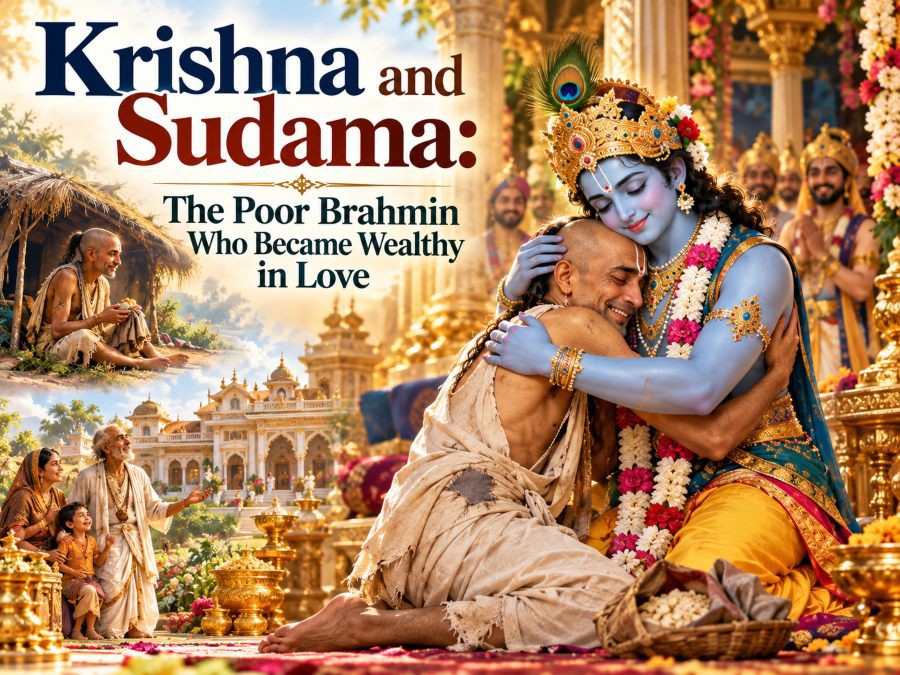 Krishna and Sudama: The Poor Brahmin Who Became Wealthy in LoveRead more
 -
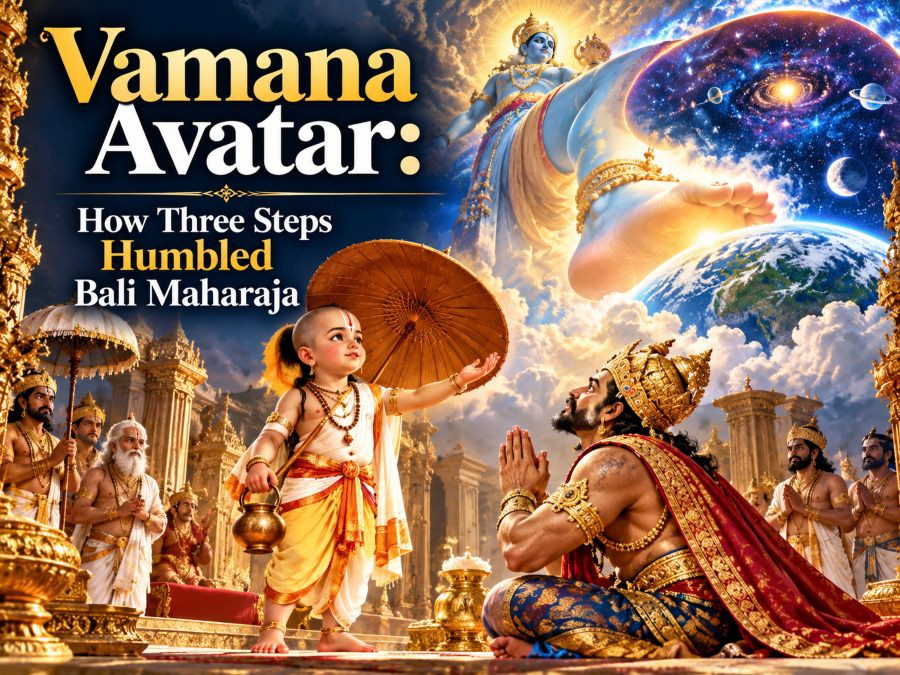 Vamana Avatar: How Three Steps Humbled Bali MaharajaRead more
Why did a powerful king give away three worlds to a boy asking for three steps? Learn the Vamana avatar story from...
-
 The Bhagavatam on Marriage: Duty, Love and Spiritual PartnershipRead more
What does the Bhagavatam say about marriage? Through the stories of Kardama and Devahuti, Rukmini's secret letter and...
-
 What Is Prema? The Bhagavatam's Highest Stage of Love for GodRead more
Prema is love for God with no "because" attached. Learn how the Bhagavatam describes it, the nine steps from faith to...
-
 Is Shiva Parvati Kalyana Mentioned in Srimad Bhagavatam? What the Scripture Really SaysRead more
Looking for Shiva and Parvati's wedding in the Srimad Bhagavatam? Find out what the scripture actually describes,...
-
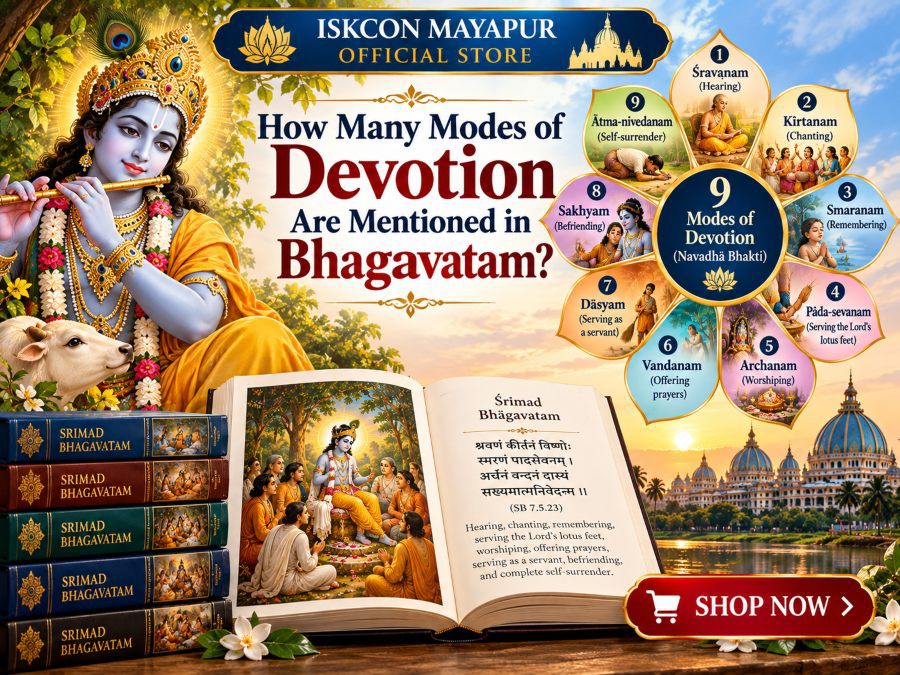 How Many Modes of Devotion Are Mentioned in Bhagavatam?Read more
A young boy named Prahlada listed nine ways to serve God, and the Bhagavatam keeps them as its answer. Learn what the...
-
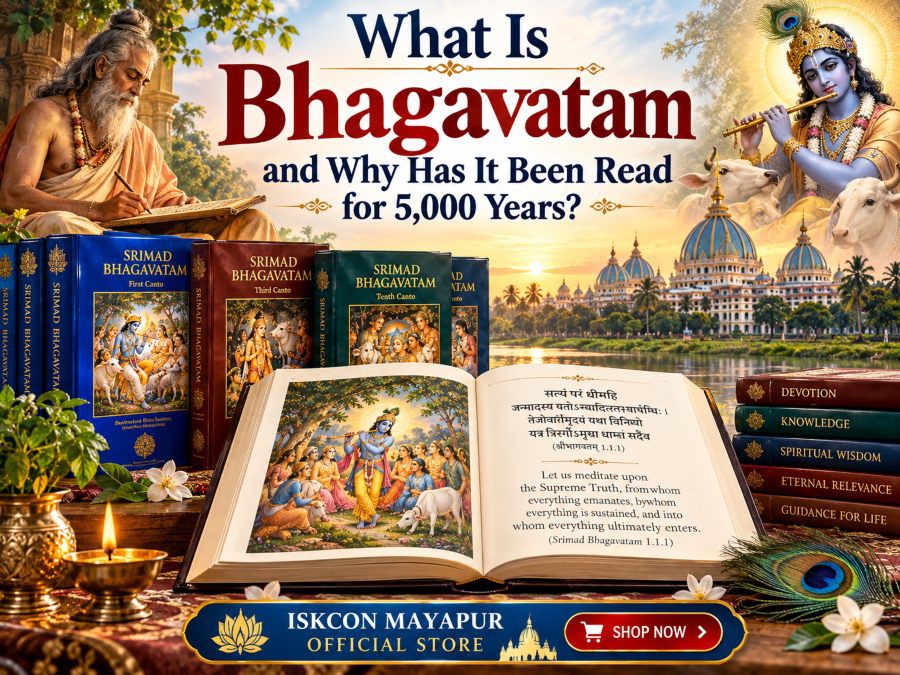 What Is Bhagavatam and Why Has It Been Read for 5,000 Years?Read more
A dying king asked one question, and the answer became the Bhagavatam. Learn what this Sanskrit scripture contains,...
-
 Who Is Lord Krishna? His Meaning, Teachings and Pastimes ExplainedRead more
Discover who Krishna is according to Srimad Bhagavatam, including His divine identity, childhood pastimes, teachings,...
-
 Incense in Islam: Bakhoor, Agarbatti and What Tradition SaysRead more
Is burning fragrance part of Muslim tradition? Explore incense in Islam, from the Prophetic practice of fumigating...
-
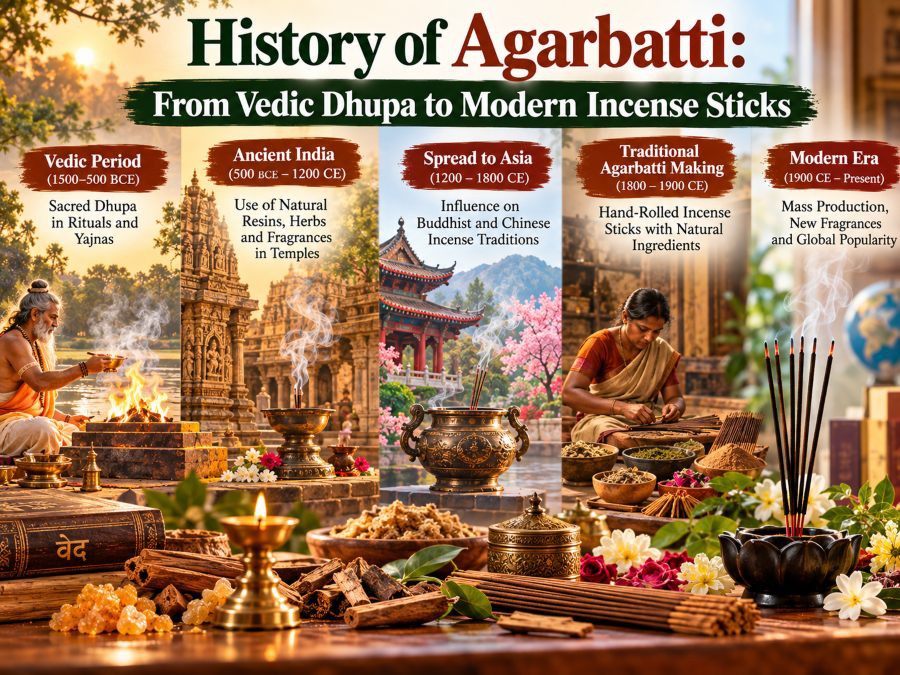 History of Agarbatti: From Vedic Dhupa to Modern Incense SticksRead more
Where did agarbatti really come from? Follow the history of agarbatti from Vedic fire rituals and temple dhupa to...
Blog categories
- Default category (0)
- MUSICAL INSTRUMENT (1)
- BOOK (5)
- DEVOTIONAL GIFT (0)
- Blog (30) click
- CHANDAN (12)
- Bhagavatam Wisdom Series (68)
- Krishna Consciousness (14)
- Mridangam Musical Instrument (6)
- Bhagavad Gita for Beginners (13)
- Bhagavad Gita As It Is (37) click
- Bhagavad Gita As It Is Telugu (0)
- Bhagavad Gita As It Is Marathi (0)
- Bhagavad Gita As It Is In Hindi (0)
- Bhagavad Gita As It Is In English (0)
- Bhagavad Gita As It Is In Bengali (8)
- Bhagavad Gita As It Is In Kannada (0)
- Bhagavad Gita As It Is In Gujarati (0)
- Bhagavad Gita As It Is In Panjabi (0)
- Bhagavad Gita As It Is In Tamil (0)
- Bhagavad Gita As It Is Odia (0)
- BHAGAVAD GITA As It Is GERMAN (0)
- Bhagavad Gita As It Is In French (0)
- Bhagavad Gita As It Is In Nepali (0)
- Bhagavad Gita As It Is In Assamese (0)
- Incense or Agarbatti (38)
- Lord Chaitanya Mahaprabhu (3)
- Vedic Temple Mayapur (14)
- kalki (15)
- Mahabharata – Dharma & Destiny (27)
- Vaishnava Scriptures (4)
- healthy product (4)
- chaitanya mahaprabhu (5)
- Tulsi Mala Guide (17)
Search in blog
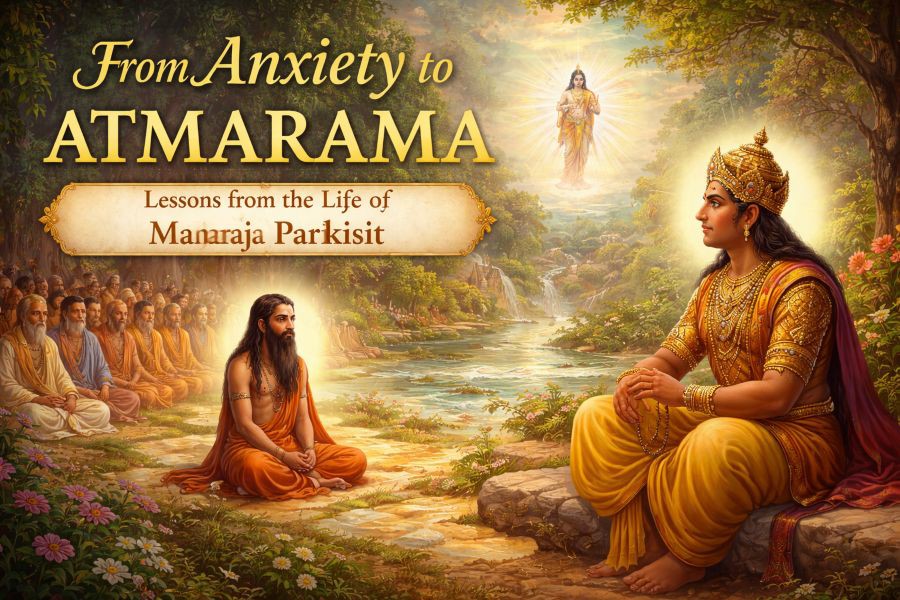
From Anxiety to Atmarama: Lessons from the Life of Maharaja Pariksit
From Anxiety to Atmarama: Lessons from the Life of Maharaja Pariksit
Human life often oscillates between anxiety and aspiration. People constantly search for peace while facing uncertainty about health, relationships, and death itself. Interestingly, these struggles are not unique to modern times. Even in the ancient Vedic era, kings and sages encountered similar existential dilemmas. One of the most powerful examples is the life of Maharaja Pariksit, whose story is beautifully narrated in the Mayapur Store Srimad Bhagavatam and other traditional editions of this sacred scripture.
Maharaja Pariksit’s journey from royal responsibility and sudden anxiety about death to becoming an enlightened Atmarama—one who is spiritually self-satisfied—offers a timeless roadmap for inner transformation. His life demonstrates how fear can become the catalyst for spiritual awakening when guided by genuine wisdom.
The Birth of Maharaja Pariksit: A Child Protected by Krishna
Maharaja Pariksit was born into the illustrious Pandava dynasty. He was the grandson of the great warrior Arjuna and the son of Abhimanyu and Uttara. Even before his birth, his life was touched by divine intervention.
During the devastating Kurukshetra war, the son of Dronacharya, Ashvatthama, released a powerful weapon called the Brahmastra to destroy the last heir of the Pandava dynasty—the unborn child in Uttara’s womb. At that moment, Lord Krishna personally entered the womb and protected the infant.
Because the child saw the divine form of Krishna while still in the womb, he spent his childhood searching for that same beautiful personality everywhere. The name “Pariksit” itself means “one who examines or searches.” Throughout his early life, he looked for the divine figure he had once witnessed.
This extraordinary beginning symbolized a life destined for spiritual significance. Although he became a powerful king, the seed of devotion had already been planted deep within his consciousness.

A Responsible King and Protector of Dharma
When Maharaja Yudhishthira retired from the throne, Pariksit was crowned the emperor of the world. He ruled with righteousness, wisdom, and deep respect for Vedic principles. Under his leadership, society prospered spiritually and materially.
The Vedic scriptures describe him as a king who protected dharma. He ensured that citizens lived moral lives, respected spiritual traditions, and maintained harmony with nature.
One famous incident from his reign involved his confrontation with Kali, the personification of the current age of quarrel and hypocrisy. When Pariksit saw Kali mistreating a cow and a bull—symbolizing Mother Earth and Dharma—he immediately intervened.
Instead of killing Kali, the king allowed him to reside only in places associated with irreligion: gambling, intoxication, illicit relations, animal slaughter, and hoarding of gold.
This decision illustrates Pariksit’s wisdom. He understood that while darkness exists, it must be restricted so that righteousness can flourish.
The Moment of Weakness That Changed Everything
Despite his noble character, Maharaja Pariksit experienced a moment of human weakness that changed the course of his life.
One day, while hunting in the forest, the king became extremely tired and thirsty. In that vulnerable state, he entered the hermitage of a sage named Samika Rishi and asked for water.
The sage, absorbed in deep meditation, did not respond. Interpreting the silence as disrespect, Pariksit acted impulsively. In frustration, he placed a dead snake around the sage’s neck.
Although he immediately regretted his behavior, the act had already set events in motion.
When the sage’s son, Sringi, heard about the insult, he became enraged and cursed the king. The curse declared that within seven days, Maharaja Pariksit would die from the bite of the serpent Takshaka.
Anxiety About Death: The Turning Point
When Pariksit learned about the curse, he did not react like an ordinary king. He did not try to counter the curse or retaliate against the sage’s son.
Instead, he accepted the situation as the result of his own mistake.
However, the knowledge that death would arrive in seven days naturally created anxiety. The certainty of death forces every human being to confront the deepest questions of existence:
What is the purpose of life?
What happens after death?
What should one do when time is limited?
Pariksit realized that the remaining days of his life should not be spent in fear but in spiritual inquiry.
Therefore, he renounced his kingdom, sat on the banks of the sacred Ganges, and invited great sages to guide him in understanding the ultimate truth.
The Arrival of Sukadeva Goswami
As the news spread that the emperor would soon leave his body, sages and spiritual masters from across the world gathered to witness the historic moment.
Among them appeared a young sage whose presence immediately captivated everyone—Sukadeva Goswami.
Although only sixteen years old, Sukadeva was already a self-realized soul. He was completely detached from worldly affairs and absorbed in spiritual consciousness.
When Maharaja Pariksit saw him, he immediately understood that the perfect teacher had arrived.
With deep humility, the king asked a profound question that remains relevant even today:
“What is the duty of a person who is about to die?”
In truth, this question applies to everyone, because no one knows when death will arrive.
The Seven Days That Changed Spiritual History
Sukadeva Goswami responded to the king’s question by narrating the Srimad Bhagavatam.
For seven continuous days and nights, Maharaja Pariksit listened attentively without eating, drinking, or sleeping. His entire consciousness was absorbed in hearing about the Supreme Personality of Godhead.
The Bhagavatam is not merely a philosophical text. It is a living conversation about divine love, cosmic creation, the nature of the soul, and the path of devotion.
Through stories of great devotees, incarnations of the Lord, and spiritual principles, Sukadeva Goswami gradually guided the king from anxiety to realization.
By the end of the seventh day, Pariksit was no longer afraid of death.
He had become an Atmarama—one who experiences deep satisfaction within the soul.
From Fear to Spiritual Freedom
The transformation of Maharaja Pariksit is remarkable. In just seven days, his consciousness shifted completely.
Initially, he faced the natural fear of death. However, through sincere hearing of spiritual knowledge, that fear dissolved.
The Bhagavatam explains that when the mind becomes absorbed in divine topics, worldly anxieties lose their power. The soul begins to recognize its eternal nature.
Pariksit realized that the body may perish, but the soul continues its journey. By dedicating his final moments to hearing about Krishna, he attained spiritual perfection.
Lessons for Modern Life
The story of Maharaja Pariksit offers several powerful lessons that remain deeply relevant today.
1. Every Crisis Can Become a Spiritual Opportunity
Most people view problems as obstacles. Pariksit saw his impending death as an opportunity to seek ultimate truth.
Similarly, moments of crisis can awaken deeper introspection.
2. The Importance of Spiritual Association
The presence of Sukadeva Goswami transformed Pariksit’s final days.
Association with enlightened teachers or spiritual texts can profoundly influence one’s consciousness.
3. Hearing Sacred Wisdom Has Transformative Power
The practice of “sravanam,” or hearing about divine topics, is considered one of the most powerful forms of spiritual practice.
Simply listening with sincerity can purify the mind.
4. Acceptance of Responsibility
Pariksit did not blame others for the curse. He acknowledged his mistake and accepted the consequences.
This humility opened the door for spiritual growth.
5. Remembering the Divine at the Time of Death
The Bhagavad-gita explains that whatever one remembers at the time of death determines the next destination of the soul.
Pariksit ensured that his consciousness remained focused on Krishna.
Becoming an Atmarama in the Modern World
The word “Atmarama” describes someone who finds satisfaction within the soul rather than external circumstances.
Modern society encourages constant consumption—more wealth, more entertainment, more recognition.
Yet despite these pursuits, anxiety continues to increase.
The teachings revealed through Maharaja Pariksit suggest a different path. Inner fulfillment arises when one reconnects with the spiritual essence of life.
Practices such as meditation, reading sacred literature, chanting divine names, and associating with spiritually minded people gradually cultivate inner peace.
Why Maharaja Pariksit’s Story Still Matters Today
Although thousands of years have passed, the story of Maharaja Pariksit remains profoundly relevant.
Every human being eventually confronts the same reality—life is temporary.
Instead of ignoring this truth, the Bhagavatam encourages us to use time wisely.
Pariksit’s life demonstrates that even a moment of sincere spiritual focus can transform destiny.
He began as a powerful king, experienced a moment of weakness, faced the certainty of death, and ultimately attained spiritual realization.
This journey from anxiety to Atmarama represents the universal path of the soul.
Conclusion
The life of Maharaja Pariksit stands as one of the most inspiring narratives in Vedic literature. His transformation from a king burdened by anxiety about death into a spiritually enlightened Atmarama illustrates the extraordinary power of divine knowledge.
Through the teachings of Sukadeva Goswami and the wisdom of the Srimad Bhagavatam, he discovered the eternal nature of the soul and the path of devotion to the Supreme.
For modern readers, his story serves as a powerful reminder that spiritual awakening is always possible—no matter the circumstances.
By sincerely engaging with sacred wisdom, cultivating humility, and remembering the divine, anyone can move beyond fear and discover the deep inner satisfaction that defines an Atmarama.
Hare Krishna.
Posted in: Bhagavatam Wisdom Series
Related posts
-
 Why to read srimad bhagavatamReading the Srimad Bhagavatam fosters deep spiritual growth by narrating the life and teachings of Lord Krishna,...Read more
 -
 When was srimad bhagavatam written?The Srimad Bhagavatam is believed to have been written around 9th-10th century CE, though its oral traditions date...Read more
 -
 How many chapters are there in srimad bhagavatam?The Srimad Bhagavatam consists of 12 cantos (books) containing 335 chapters in total. Each canto covers various...Read more
 -
 How many skandhas are there in srimad bhagavatamThe Srimad Bhagavatam is divided into 12 skandhas (cantos or books). Each skandha explores different themes,...Read more
 -
 How many slokas in srimad bhagavatamThe Srimad Bhagavatam contains approximately 18,000 shlokas (verses). These verses are spread across its 12 skandhas...Read more
Leave a comment