
Explore Srimad Bhagavatam Canto 11, where Lord Krishna shares His final and most profound teachings with Uddhava on...
Latest posts
-
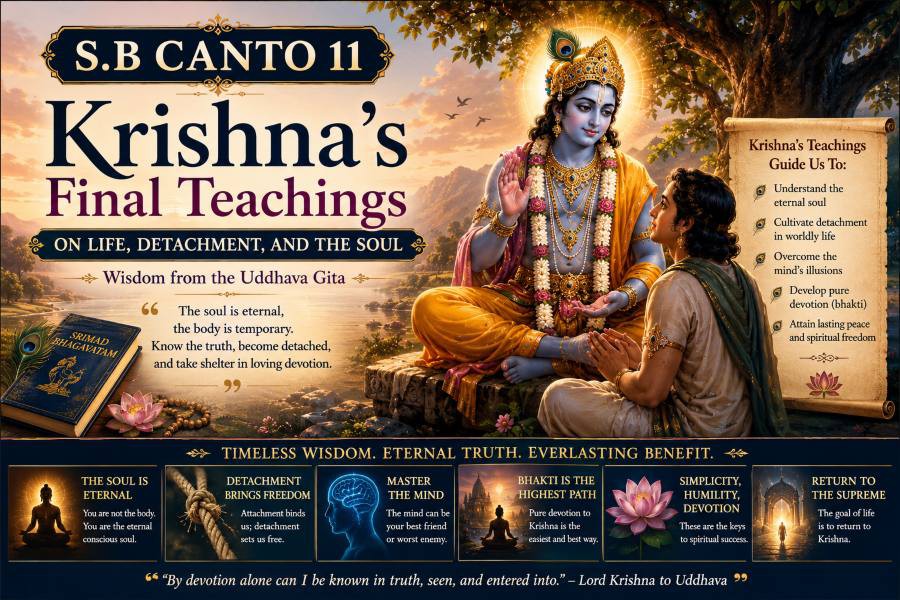 S.B Canto 11 — Krishna’s Final Teachings on Life, Detachment, and the SoulRead more
 -
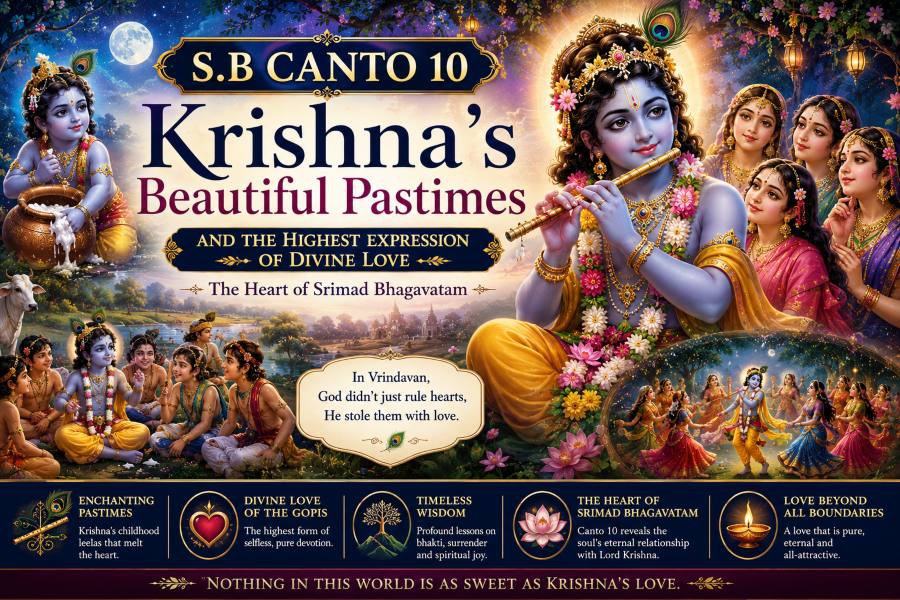 S.B Canto 10 — Krishna’s Beautiful Pastimes and the Highest Expression of Divine LoveRead more
Explore Srimad Bhagavatam Canto 10, the heart of the Bhagavatam, where Lord Krishna's enchanting childhood pastimes,...
-
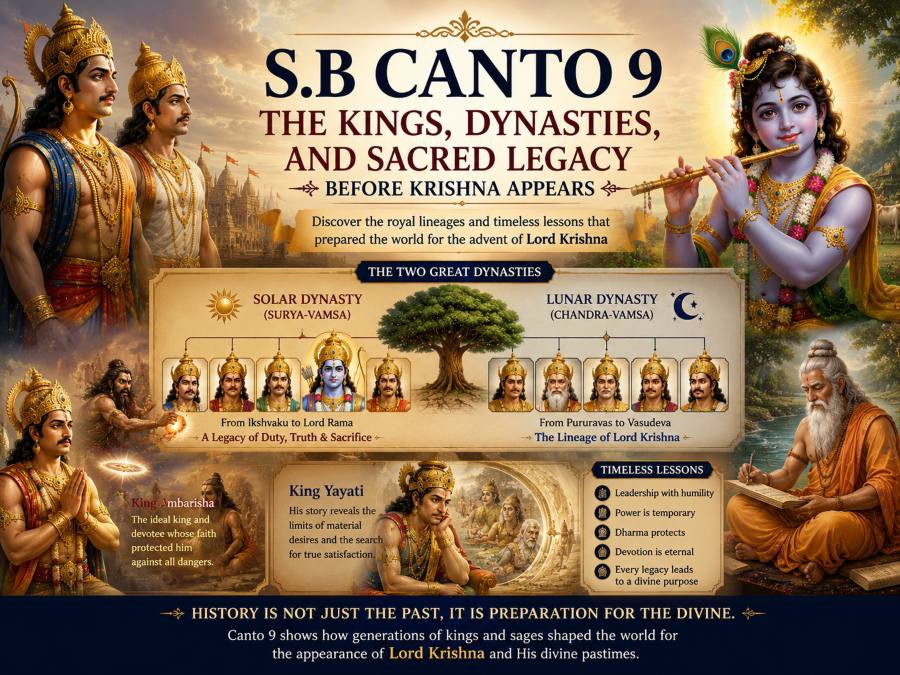 S.B Canto 9: The Kings, Dynasties, and Sacred Legacy Before Krishna AppearsRead more
Explore Srimad Bhagavatam Canto 9 and uncover the remarkable stories of ancient kings, royal dynasties, and sacred...
-
 Srimad Bhagavatam Canto 8: How Faith Triumphs Over FearRead more
Explore Srimad Bhagavatam Canto 8, where the inspiring stories of Gajendra, the churning of the Milk Ocean, and Bali...
-
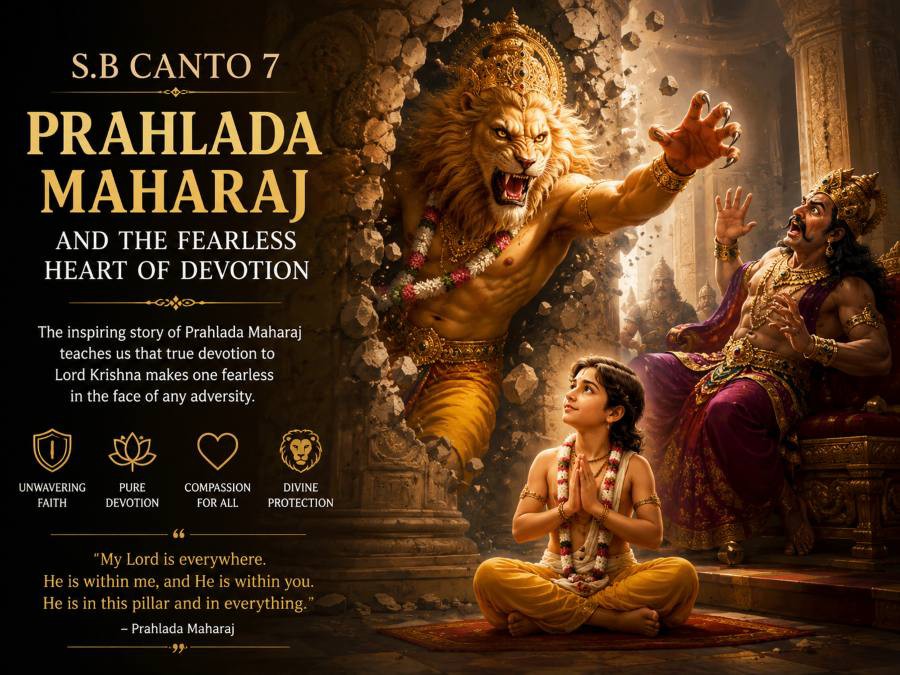 S.B Canto 7: Prahlada Maharaj and the Fearless Heart of DevotionRead more
Explore Srimad Bhagavatam Canto 7 and discover the inspiring story of Prahlada Maharaj, whose unwavering devotion to...
-
 S.B Canto 6: How Mercy Can Change Even the Darkest LifeRead more
Discover the inspiring lessons of Srimad Bhagavatam Canto 6, where the story of Ajamila reveals how divine mercy,...
-
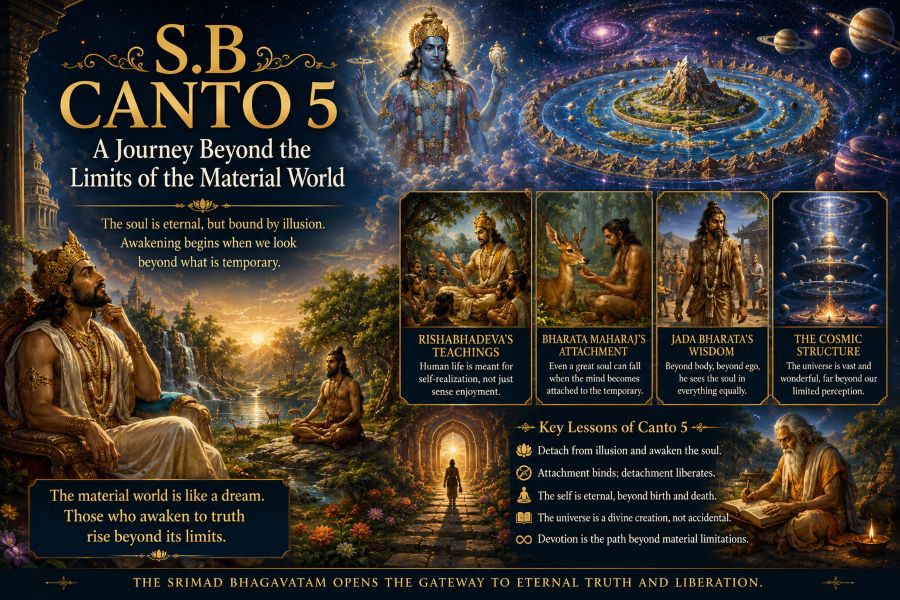 Srimad Bhagavatam Canto 5: A Journey Beyond the Limits of the Material WorldRead more
Discover how Srimad Bhagavatam Canto 5 explores cosmic creation, spiritual awakening, material illusion, and the...
-
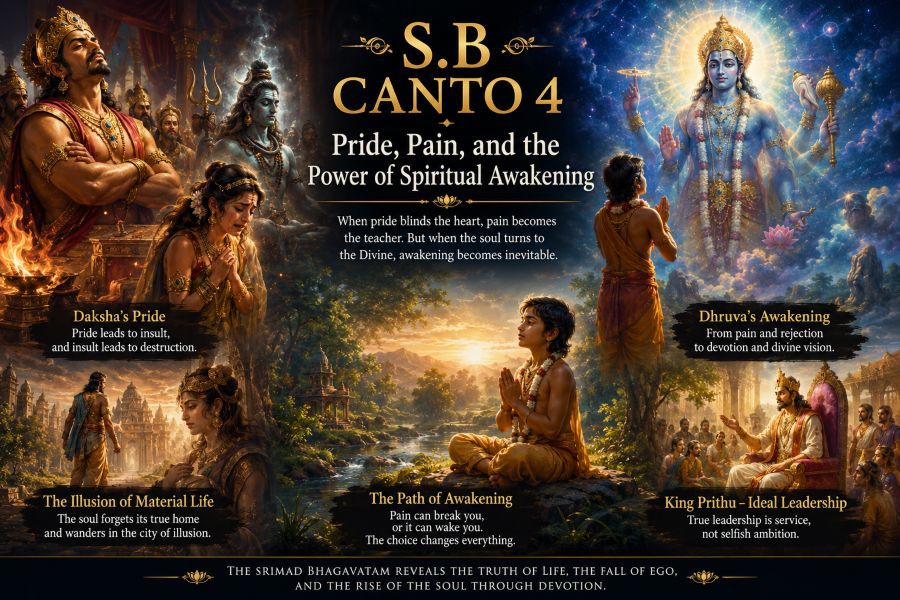 Srimad Bhagavatam Canto 4: The Pain of Pride and the Journey Back to the SoulRead more
Discover how Srimad Bhagavatam Canto 4 explores pride, rejection, devotion, spiritual awakening, and the emotional...
-
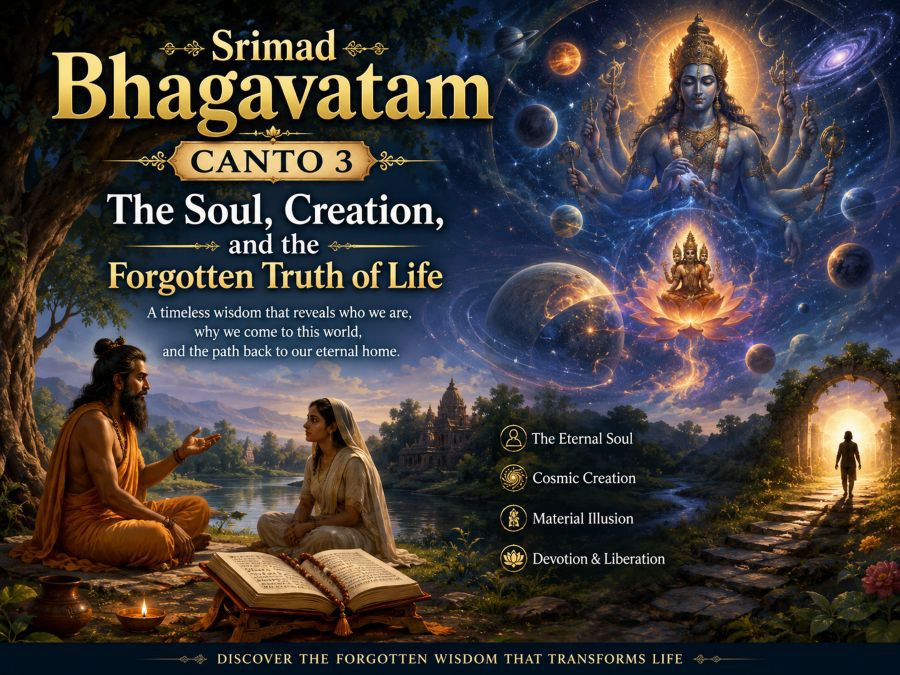 Srimad Bhagavatam Canto 3: The Soul, Creation, and the Forgotten Truth of LifeRead more
Discover how Srimad Bhagavatam Canto 3 explains the soul, creation, consciousness, and the forgotten spiritual truth...
-
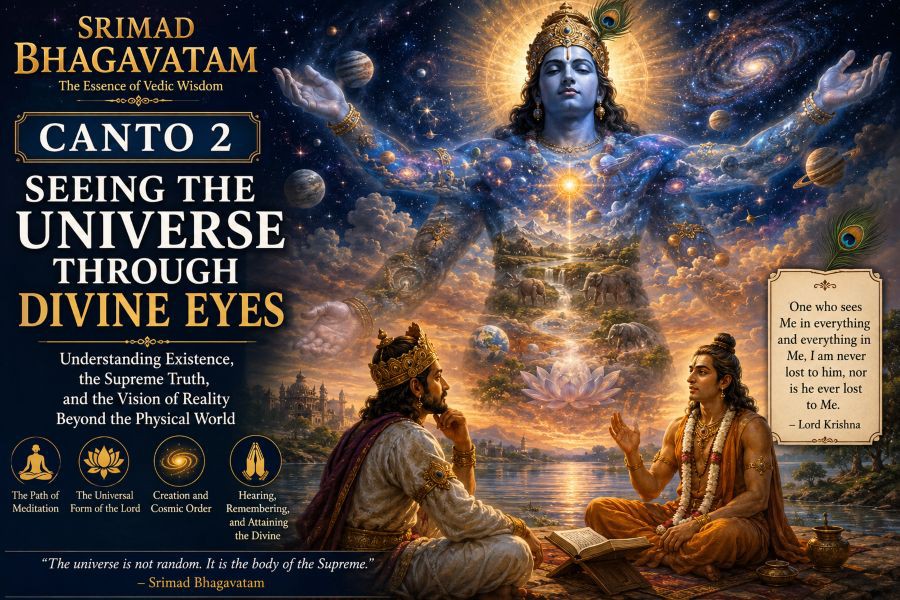 Srimad Bhagavatam Canto 2: Seeing the Universe Through Divine EyesRead more
Discover how Srimad Bhagavatam Canto 2 explains the cosmic form of the Lord, spiritual vision, meditation, creation,...
Blog categories
- Default category (0)
- MUSICAL INSTRUMENT (1)
- BOOK (5)
- DEVOTIONAL GIFT (0)
- Blog (30) click
- CHANDAN (12)
- Bhagavatam Wisdom Series (43)
- Krishna Consciousness (5)
- Mridangam Musical Instrument (6)
- Bhagavad Gita for Beginners (13)
- Bhagavad Gita As It Is (13) click
- Bhagavad Gita As It Is Telugu (0)
- Bhagavad Gita As It Is Marathi (0)
- Bhagavad Gita As It Is In Hindi (0)
- Bhagavad Gita As It Is In English (0)
- Bhagavad Gita As It Is In Bengali (8)
- Bhagavad Gita As It Is In Kannada (0)
- Bhagavad Gita As It Is In Gujarati (0)
- Bhagavad Gita As It Is In Panjabi (0)
- Bhagavad Gita As It Is In Tamil (0)
- Bhagavad Gita As It Is Odia (0)
- BHAGAVAD GITA As It Is GERMAN (0)
- Bhagavad Gita As It Is In French (0)
- Bhagavad Gita As It Is In Nepali (0)
- Bhagavad Gita As It Is In Assamese (0)
- Incense or Agarbatti (6)
- Lord Chaitanya Mahaprabhu (3)
- Vedic Temple Mayapur (16)
- kalki (15)
- Mahabharata – Dharma & Destiny (27)
- Vaishnava Scriptures (4)
- healthy product (4)
- chaitanya mahaprabhu (5)
Search in blog

The Literary Incarnation of Krishna: How Srimad Bhagavatam Brings Divine Presence into Your Home
The Literary Incarnation of Krishna: Welcoming the Lord into Your Home
In the spiritual traditions of India, sacred texts are not merely books; they are living embodiments of divine knowledge. Among all spiritual scriptures, the Srimad Bhagavatam holds a uniquely sacred position. Devotees across centuries have revered it not only as a philosophical masterpiece but also as the literary incarnation of Lord Krishna Himself. Through its verses, Krishna’s divine pastimes, teachings, and eternal presence become accessible to anyone willing to open its pages.
For those who wish to invite spiritual purity, devotion, and transcendental wisdom into their homes, the ISKCON Mayapur Srimad Bhagavatam Collection offers a profound opportunity. These beautifully presented volumes are more than a collection of books—they are gateways to experiencing Krishna’s presence through sacred sound and timeless wisdom.
The Bhagavatam reveals that God is not distant or abstract. Instead, the Supreme Personality of Godhead manifests in many forms to guide humanity. One such manifestation is through divine literature, where the Lord becomes accessible through sacred words that awaken devotion in the heart.
In an age filled with distractions and material concerns, welcoming Krishna through His literary incarnation offers peace, direction, and spiritual fulfillment.
Concept of the “Literary Incarnation”
The Vedic tradition teaches that the Supreme Lord appears in many forms to uplift humanity. Sometimes He appears physically, as in His pastimes in Vrindavan and Dwarka. At other times, He manifests through sacred sound, scriptures, and teachings.

The Srimad Bhagavatam is described by many Vaishnava scholars as Krishna in literary form. This means the scripture carries the same spiritual potency as the Lord Himself.
According to traditional understanding:
· Krishna’s name is non-different from Krishna.
· Krishna’s pastimes are non-different from Krishna.
· Krishna’s teachings are non-different from Krishna.
When these elements are recorded in scripture, the text becomes spiritually alive.
Unlike ordinary literature, the Bhagavatam is considered transcendental sound vibration. It has the ability to purify consciousness, inspire devotion, and transform the reader’s heart.
This is why many devotees treat the Bhagavatam with great reverence—placing it on altars, offering flowers, and reading it daily.
The Origin of Srimad Bhagavatam
The history of the Srimad Bhagavatam is deeply intertwined with the transmission of spiritual knowledge through enlightened sages.
The text was compiled by Vyasadeva, the legendary sage who divided the Vedas and composed many sacred works. Despite his immense literary achievements, Vyasa felt spiritually dissatisfied. His spiritual master, Narada Muni, advised him that true fulfillment would come only by describing the pure glories of the Supreme Lord.
Following this instruction, Vyasa composed the Srimad Bhagavatam.
The Bhagavatam was later spoken by Sukadeva Goswami to King Parikshit, who had only seven days to live. During those final days, the king heard the entire Bhagavatam, attaining spiritual liberation through attentive hearing.
This sacred dialogue forms the foundation of the Bhagavatam’s teachings and highlights the power of hearing about Krishna.
Why Srimad Bhagavatam Is Considered the Essence of Vedic Wisdom
The Vedic scriptures are vast and complex, containing countless philosophical teachings, rituals, and spiritual insights. The Srimad Bhagavatam is often described as the ripened fruit of the Vedic tree.
Just as a fruit contains the essence of the entire tree, the Bhagavatam contains the essence of all Vedic wisdom.
Several factors contribute to its special status:
Pure Devotional Focus
Unlike texts that emphasize ritualistic practices or material prosperity, the Bhagavatam centers entirely on pure devotion to Krishna.
Philosophical Depth
The scripture explores profound questions about:
· The nature of the soul
· The purpose of human life
· The structure of the universe
· The path to liberation
Narratives of Divine Pastimes
The Bhagavatam presents beautiful narratives of Krishna’s pastimes in Vrindavan, Mathura, and Dwarka. These stories reveal divine love in its purest form.
Spiritual Transformation
Readers often report deep inner change through regular study of the Bhagavatam. Its teachings encourage humility, compassion, and devotion.
Welcoming Krishna into Your Home Through Sacred Books
In many spiritual traditions, the home is considered a sacred space where divine consciousness can flourish. Bringing the Srimad Bhagavatam into one’s home symbolizes inviting Krishna Himself into daily life.
This act carries deep spiritual meaning.
Creating a Spiritual Atmosphere
The presence of sacred literature helps establish a peaceful and devotional environment within the home.
When the Bhagavatam is placed respectfully in a prominent location, it reminds family members of higher spiritual goals.
Encouraging Daily Spiritual Practice
Many devotees adopt the habit of reading even a few verses daily. This simple practice can gradually transform one’s perspective on life.
Inspiring Future Generations
Children who grow up in homes where sacred texts are respected often develop a natural curiosity about spirituality and moral values.
A Symbol of Devotion
Keeping the Bhagavatam in the home reflects a commitment to spiritual growth and devotion.
The Transformative Power of Hearing and Reading
One of the central teachings of the Bhagavatam is the importance of hearing about the Supreme Lord.
In Sanskrit, this practice is known as sravanam, or devotional hearing.
The Bhagavatam states that even those who simply hear its teachings can experience spiritual purification.
Purification of Consciousness
Hearing divine pastimes gradually removes negative tendencies such as anger, envy, and greed.
Awakening of Devotion
As the heart becomes purified, natural attraction toward Krishna begins to awaken.
Relief from Anxiety
The teachings of the Bhagavatam help readers understand the temporary nature of material problems, bringing peace of mind.
Connection with Spiritual Heritage
The scripture connects modern readers with an ancient lineage of saints, sages, and devotees.
The Role of ISKCON in Preserving and Sharing the Bhagavatam
The International Society for Krishna Consciousness (ISKCON) has played a significant role in introducing the Srimad Bhagavatam to readers worldwide.
Founded by A.C. Bhaktivedanta Swami Prabhupada, ISKCON has translated, published, and distributed millions of Bhagavatam volumes across the globe.
These editions are known for:
· Authentic translations
· Detailed commentaries
· Accessible explanations
· High-quality printing and presentation
Through temples, libraries, and online platforms, ISKCON has helped countless individuals discover the profound teachings of this sacred text.
Daily Bhagavatam Reading: A Powerful Spiritual Practice
Many devotees follow a tradition of daily Bhagavatam reading known as Bhagavatam class or Bhagavatam study.
This practice involves:
1. Reading a verse
2. Studying its translation
3. Reflecting on its meaning
4. Discussing its application in daily life
Even spending 10–15 minutes with the Bhagavatam each day can bring remarkable spiritual benefits.
Over time, readers develop a deeper understanding of:
· The nature of the soul
· The purpose of devotion
· The path to spiritual realization
Sacred Literature as a Form of Worship
In devotional traditions, reading sacred texts is considered an act of worship.
This is because the Bhagavatam is believed to carry the presence of Krishna in the form of divine sound.
Devotees often perform small acts of respect such as:
· Offering incense or flowers before reading
· Keeping the book clean and elevated
· Reading with concentration and humility
These practices cultivate reverence and deepen spiritual experience.
The Bhagavatam’s Message for the Modern World
Although composed thousands of years ago, the Bhagavatam addresses many challenges of modern life.
Its teachings emphasize values that remain timeless:
Compassion
Recognizing the spiritual nature of every living being encourages kindness and respect.
Simplicity
The Bhagavatam promotes a lifestyle focused on spiritual growth rather than excessive material pursuit.
Devotion
The ultimate goal of life, according to the Bhagavatam, is loving service to the Supreme Lord.
Self-Realization
By understanding the difference between the body and the soul, individuals can transcend fear and suffering.
These teachings offer a powerful antidote to the stress and uncertainty of contemporary society.
A Spiritual Treasure for Every Home
Owning and studying the Srimad Bhagavatam is often described as possessing a spiritual treasure.
Unlike material possessions, the wisdom contained in the Bhagavatam grows more valuable with time.
Each reading reveals deeper layers of meaning, inspiring continued reflection and devotion.
For many devotees, the Bhagavatam becomes a lifelong companion on the journey of spiritual discovery.
Conclusion: Inviting Divine Presence Through Sacred Wisdom
The Srimad Bhagavatam stands as one of humanity’s greatest spiritual treasures. Its verses carry timeless wisdom, divine narratives, and profound philosophical insights that guide seekers toward self-realization and devotion.
More than a historical scripture, it represents the living literary incarnation of Krishna, making the Supreme Lord accessible through sacred sound.
By welcoming this sacred text into the home, individuals create an environment where spiritual awareness can flourish. Daily reading, reflection, and discussion of its teachings gradually transform the heart and illuminate the path of devotion.
In a world filled with constant distractions and temporary pursuits, the Bhagavatam offers a reminder of life’s true purpose—to awaken love for the Supreme.
For those who seek deeper meaning, spiritual clarity, and a lasting connection with Krishna, the Bhagavatam remains an eternal guide.
Opening its pages is more than an act of reading; it is an invitation for the divine presence of Krishna to enter one’s home and heart.
Posted in: Bhagavatam Wisdom Series
Related posts
-
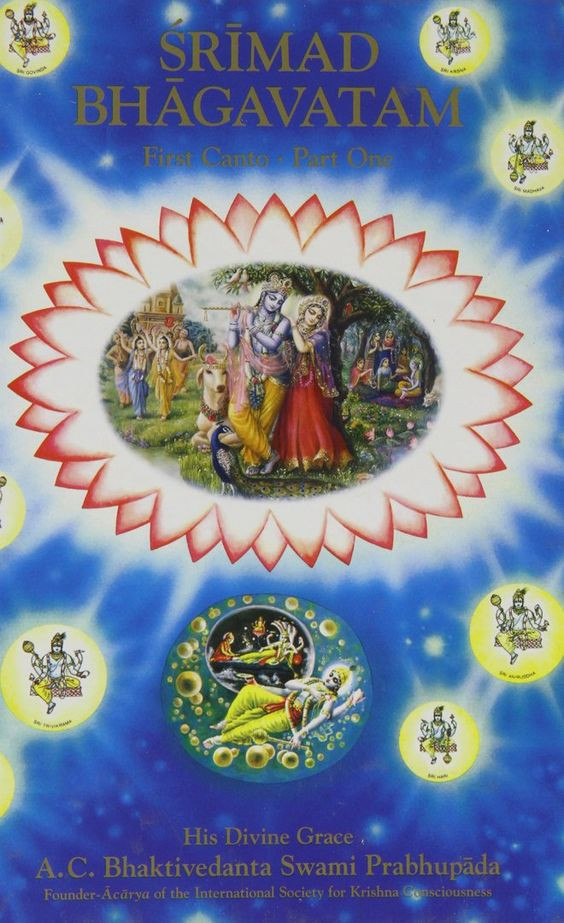 Why to read srimad bhagavatamReading the Srimad Bhagavatam fosters deep spiritual growth by narrating the life and teachings of Lord Krishna,...Read more
 -
 When was srimad bhagavatam written?The Srimad Bhagavatam is believed to have been written around 9th-10th century CE, though its oral traditions date...Read more
 -
 How many chapters are there in srimad bhagavatam?The Srimad Bhagavatam consists of 12 cantos (books) containing 335 chapters in total. Each canto covers various...Read more
 -
 How many skandhas are there in srimad bhagavatamThe Srimad Bhagavatam is divided into 12 skandhas (cantos or books). Each skandha explores different themes,...Read more
 -
 How many slokas in srimad bhagavatamThe Srimad Bhagavatam contains approximately 18,000 shlokas (verses). These verses are spread across its 12 skandhas...Read more
Leave a comment