
Why did Krishna run to embrace a poor brahmin in rags? Read the Sudama story from the Bhagavatam and learn how a...
Latest posts
-
 Krishna and Sudama: The Poor Brahmin Who Became Wealthy in LoveRead more
 -
 Vamana Avatar: How Three Steps Humbled Bali MaharajaRead more
Why did a powerful king give away three worlds to a boy asking for three steps? Learn the Vamana avatar story from...
-
 The Bhagavatam on Marriage: Duty, Love and Spiritual PartnershipRead more
What does the Bhagavatam say about marriage? Through the stories of Kardama and Devahuti, Rukmini's secret letter and...
-
 What Is Prema? The Bhagavatam's Highest Stage of Love for GodRead more
Prema is love for God with no "because" attached. Learn how the Bhagavatam describes it, the nine steps from faith to...
-
 Is Shiva Parvati Kalyana Mentioned in Srimad Bhagavatam? What the Scripture Really SaysRead more
Looking for Shiva and Parvati's wedding in the Srimad Bhagavatam? Find out what the scripture actually describes,...
-
 How Many Modes of Devotion Are Mentioned in Bhagavatam?Read more
A young boy named Prahlada listed nine ways to serve God, and the Bhagavatam keeps them as its answer. Learn what the...
-
 What Is Bhagavatam and Why Has It Been Read for 5,000 Years?Read more
A dying king asked one question, and the answer became the Bhagavatam. Learn what this Sanskrit scripture contains,...
-
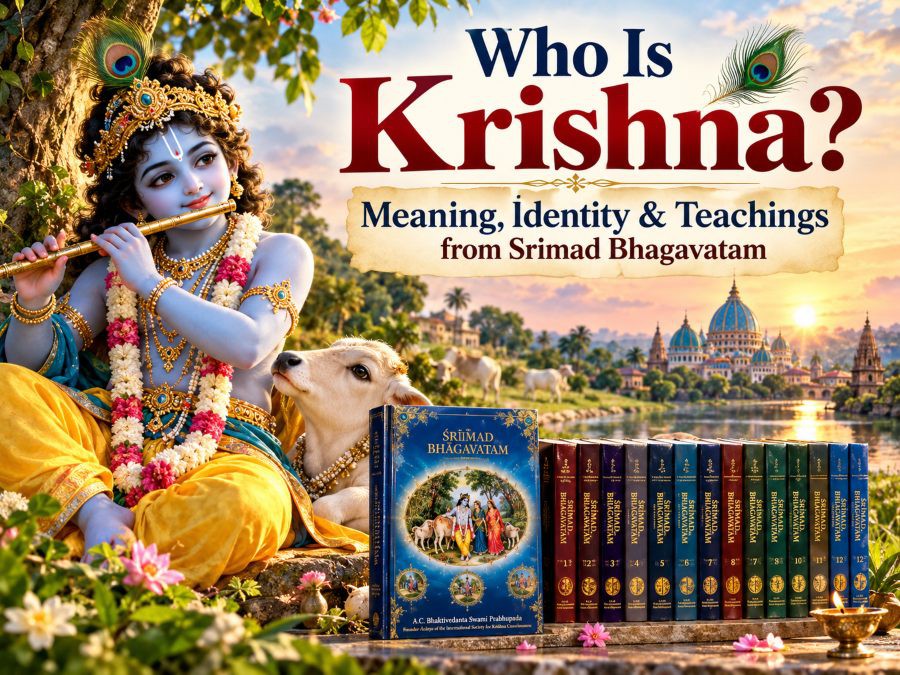 Who Is Lord Krishna? His Meaning, Teachings and Pastimes ExplainedRead more
Discover who Krishna is according to Srimad Bhagavatam, including His divine identity, childhood pastimes, teachings,...
-
 Incense in Islam: Bakhoor, Agarbatti and What Tradition SaysRead more
Is burning fragrance part of Muslim tradition? Explore incense in Islam, from the Prophetic practice of fumigating...
-
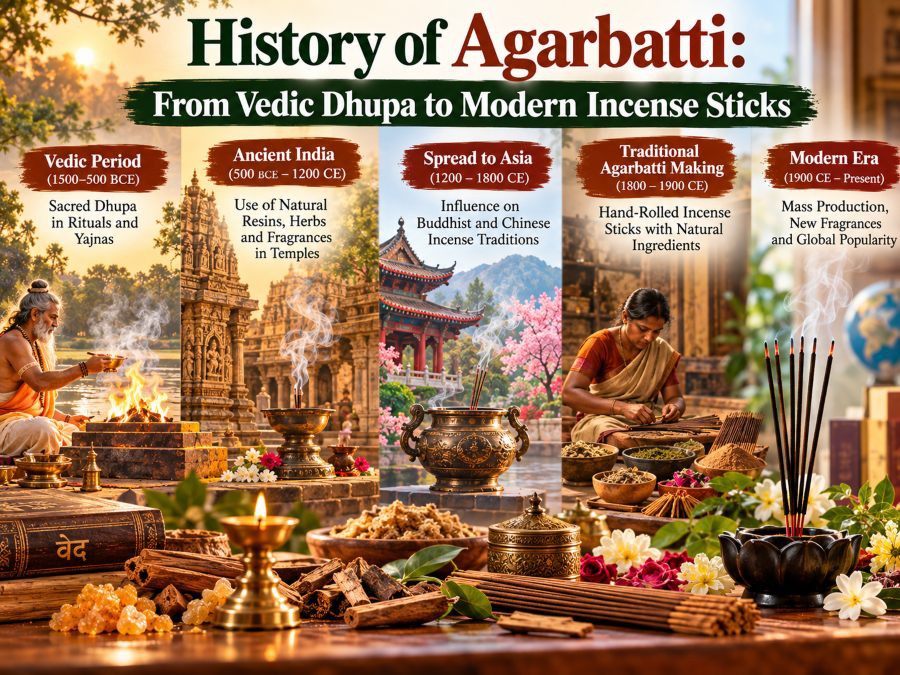 History of Agarbatti: From Vedic Dhupa to Modern Incense SticksRead more
Where did agarbatti really come from? Follow the history of agarbatti from Vedic fire rituals and temple dhupa to...
Blog categories
- Default category (0)
- MUSICAL INSTRUMENT (1)
- BOOK (5)
- DEVOTIONAL GIFT (0)
- Blog (30) click
- CHANDAN (12)
- Bhagavatam Wisdom Series (68)
- Krishna Consciousness (14)
- Mridangam Musical Instrument (6)
- Bhagavad Gita for Beginners (13)
- Bhagavad Gita As It Is (37) click
- Bhagavad Gita As It Is Telugu (0)
- Bhagavad Gita As It Is Marathi (0)
- Bhagavad Gita As It Is In Hindi (0)
- Bhagavad Gita As It Is In English (0)
- Bhagavad Gita As It Is In Bengali (8)
- Bhagavad Gita As It Is In Kannada (0)
- Bhagavad Gita As It Is In Gujarati (0)
- Bhagavad Gita As It Is In Panjabi (0)
- Bhagavad Gita As It Is In Tamil (0)
- Bhagavad Gita As It Is Odia (0)
- BHAGAVAD GITA As It Is GERMAN (0)
- Bhagavad Gita As It Is In French (0)
- Bhagavad Gita As It Is In Nepali (0)
- Bhagavad Gita As It Is In Assamese (0)
- Incense or Agarbatti (38)
- Lord Chaitanya Mahaprabhu (3)
- Vedic Temple Mayapur (14)
- kalki (15)
- Mahabharata – Dharma & Destiny (27)
- Vaishnava Scriptures (4)
- healthy product (4)
- chaitanya mahaprabhu (5)
- Tulsi Mala Guide (17)
Search in blog
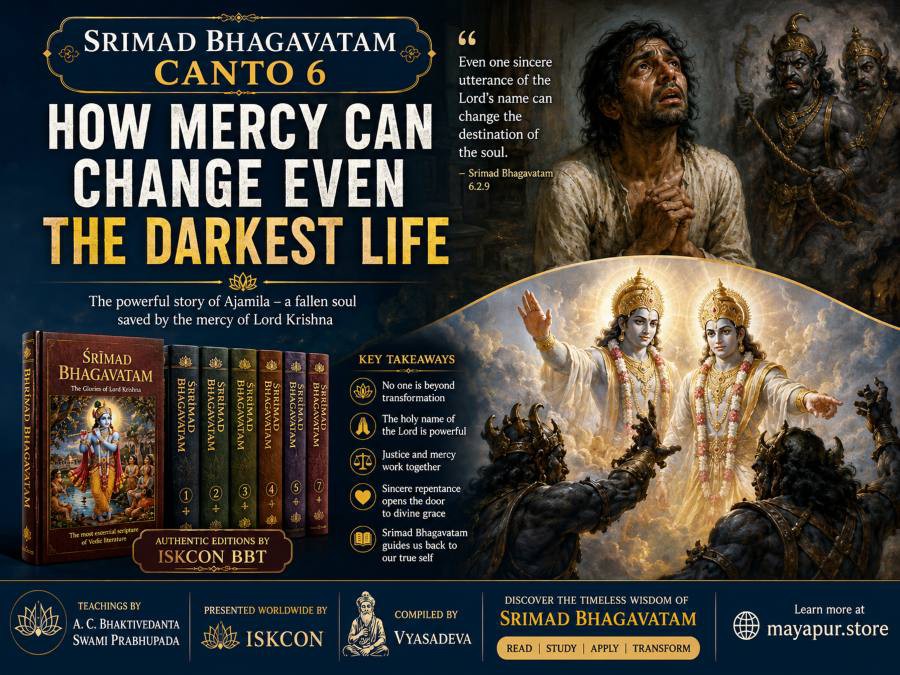
S.B Canto 6: How Mercy Can Change Even the Darkest Life
S.B Canto 6 — How Mercy Can Change Even the Darkest Life
What happens when a person spends an entire lifetime making terrible choices and reaches the final moment with nothing but regret?
Most people would say that such a person must face the consequences of their actions. Justice demands accountability. Yet Srimad Bhagavatam Canto 6 presents a strikingly different perspective. It introduces a truth that is both comforting and challenging: divine mercy can reach even those who seem completely lost.
This canto is one of the most powerful sections of the Srimad Bhagavatam because it explores the relationship between justice and compassion. Through unforgettable narratives, it reveals how the mercy of Lord Krishna can transform a life that appears beyond redemption.
For readers seeking authentic editions of this sacred text, the ISKCON BBT Print Srimad Bhagavatam remains one of the most trusted resources for studying these timeless teachings in depth.
Compiled by Vyasadeva and presented worldwide through the efforts of A. C. Bhaktivedanta Swami Prabhupada and ISKCON, the Srimad Bhagavatam continues to guide millions toward a deeper understanding of devotion, responsibility, and spiritual transformation.
The Heart of Canto 6: Mercy Beyond Human Expectations
Many spiritual traditions discuss forgiveness. Few explain it as profoundly as Canto 6.
At first glance, the stories in this canto appear to focus on punishment and karmic consequences. There are discussions about sinful actions, divine judgment, and the role of celestial authorities. Yet beneath these themes lies a remarkable message: mercy is stronger than despair.
The central question is simple:
Can a person change after making serious mistakes?
Modern society often struggles with this question. People are frequently defined by their worst decisions. A single failure can become a permanent label.
Canto 6 challenges this mindset.
It teaches that while actions have consequences, the soul itself remains capable of transformation. No one is permanently trapped by their past when genuine spiritual awakening occurs.
This message remains deeply relevant because many individuals carry guilt, shame, or regret for years. The teachings of Srimad Bhagavatam offer hope without dismissing responsibility.
Ajamila: The Story That Changes Everything
Among all the narratives in Canto 6, none is more famous than the story of Ajamila.
His life begins with tremendous promise.
Born into a respected family and trained in spiritual principles, Ajamila possessed qualities that should have led him toward a life of virtue. He understood sacred teachings and followed religious practices.
Then everything changed.
One unfortunate encounter awakened powerful desires within him. Gradually, he abandoned his principles and became involved in activities that contradicted everything he had been taught.
The decline was not immediate.
That is one reason the story feels so realistic.
People rarely destroy their character overnight. Small compromises often lead to larger ones. One poor decision creates another. Before long, an entirely different life emerges.
Ajamila's story reflects this pattern perfectly.
Years passed. His spiritual practices disappeared. His priorities shifted. Material attachment became the center of his existence.
From an external perspective, he appeared to be a complete failure.
Yet the Srimad Bhagavatam does not end the story there.
The Final Moment Nobody Expected
As Ajamila approached death, terrifying beings known as the Yamadutas appeared.
Their purpose was straightforward.
They had come to take him for judgment according to the laws of karma.
Everything seemed settled.
His life contained enough evidence to justify punishment.
Then something extraordinary happened.
Out of affection for his young son, whose name was Narayana, Ajamila called out loudly:
"Narayana!"
Although he was calling his child, he unknowingly uttered one of the sacred names of the Supreme Lord.
At that very moment, the Vishnudutas appeared.
These divine messengers intervened and challenged the Yamadutas.
What followed was one of the most profound theological discussions in the entire Srimad Bhagavatam.
Why One Holy Name Changed His Destiny
Many readers misunderstand this episode.
The lesson is not that a person can live irresponsibly and expect automatic salvation.
The deeper teaching concerns the extraordinary power of divine connection.
The holy name is not treated as an ordinary sound.
According to the Bhakti tradition, the name of the Lord carries spiritual potency because it is non-different from the Lord Himself.
When Ajamila uttered the name Narayana, something dormant within him awakened.
The Vishnudutas recognized that this contact with the holy name had begun a process of purification.
More importantly, Ajamila received a second chance.
He was not immediately transported to a spiritual destination.
Instead, he regained consciousness, reflected upon his life, sincerely repented, and dedicated himself to genuine spiritual practice.
This detail is essential.
Mercy did not erase responsibility.
Mercy created an opportunity for transformation.
That distinction changes everything.
What Modern Readers Can Learn from Ajamila
The story remains relevant because it mirrors common human experiences.
People make mistakes.
They become distracted.
They lose sight of their values.
Sometimes they drift far from the ideals they once embraced.
Canto 6 demonstrates that spiritual growth is not reserved for the perfect.
It is available to anyone willing to turn toward truth.
Several lessons emerge:
- No one should be defined solely by past failures.
- Genuine repentance has transformative power.
- Spiritual progress can begin at any stage of life.
- Divine mercy often appears when least expected.
- The holy name possesses immense spiritual significance.
These teachings explain why the story of Ajamila continues to inspire readers centuries after it was first spoken.
Rather than presenting a message of hopeless judgment, the Srimad Bhagavatam reveals a path of redemption grounded in sincerity, humility, and devotion.
Posted in: Bhagavatam Wisdom Series
Related posts
-
 Why to read srimad bhagavatamReading the Srimad Bhagavatam fosters deep spiritual growth by narrating the life and teachings of Lord Krishna,...Read more
 -
 When was srimad bhagavatam written?The Srimad Bhagavatam is believed to have been written around 9th-10th century CE, though its oral traditions date...Read more
 -
 How many chapters are there in srimad bhagavatam?The Srimad Bhagavatam consists of 12 cantos (books) containing 335 chapters in total. Each canto covers various...Read more
 -
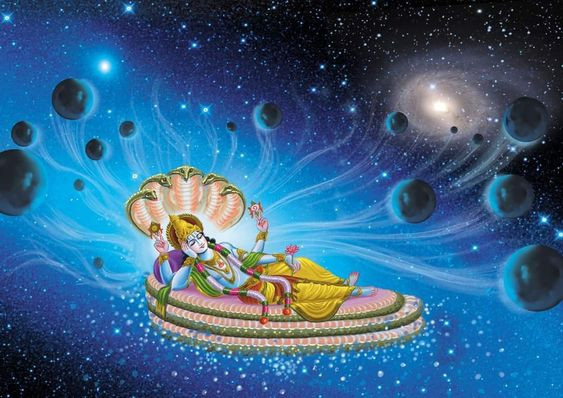 How many skandhas are there in srimad bhagavatamThe Srimad Bhagavatam is divided into 12 skandhas (cantos or books). Each skandha explores different themes,...Read more
 -
 How many slokas in srimad bhagavatamThe Srimad Bhagavatam contains approximately 18,000 shlokas (verses). These verses are spread across its 12 skandhas...Read more
Leave a comment