
Why did Krishna run to embrace a poor brahmin in rags? Read the Sudama story from the Bhagavatam and learn how a...
Latest posts
-
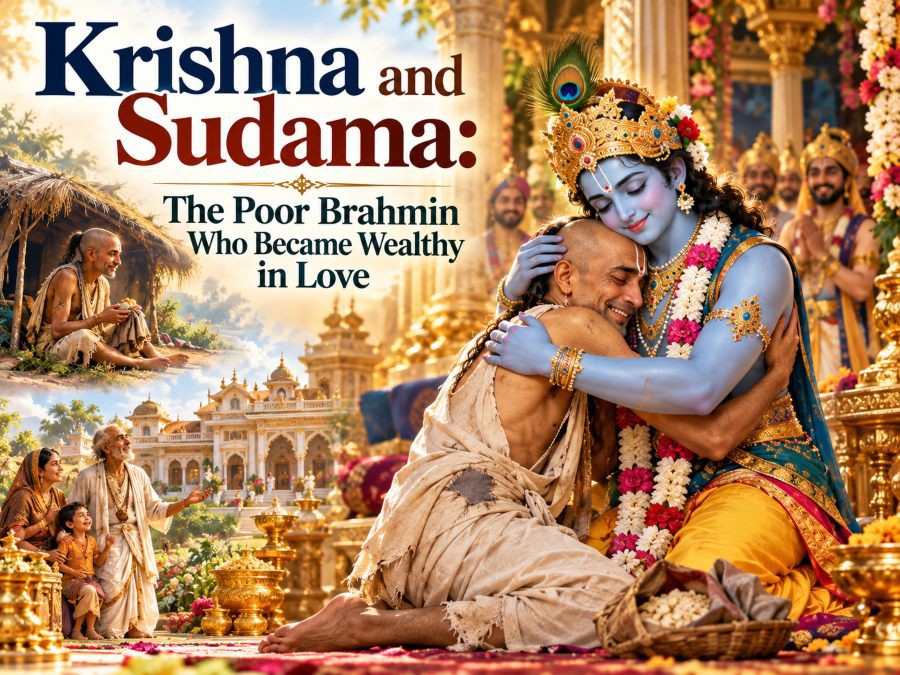 Krishna and Sudama: The Poor Brahmin Who Became Wealthy in LoveRead more
 -
 Vamana Avatar: How Three Steps Humbled Bali MaharajaRead more
Why did a powerful king give away three worlds to a boy asking for three steps? Learn the Vamana avatar story from...
-
 The Bhagavatam on Marriage: Duty, Love and Spiritual PartnershipRead more
What does the Bhagavatam say about marriage? Through the stories of Kardama and Devahuti, Rukmini's secret letter and...
-
 What Is Prema? The Bhagavatam's Highest Stage of Love for GodRead more
Prema is love for God with no "because" attached. Learn how the Bhagavatam describes it, the nine steps from faith to...
-
 Is Shiva Parvati Kalyana Mentioned in Srimad Bhagavatam? What the Scripture Really SaysRead more
Looking for Shiva and Parvati's wedding in the Srimad Bhagavatam? Find out what the scripture actually describes,...
-
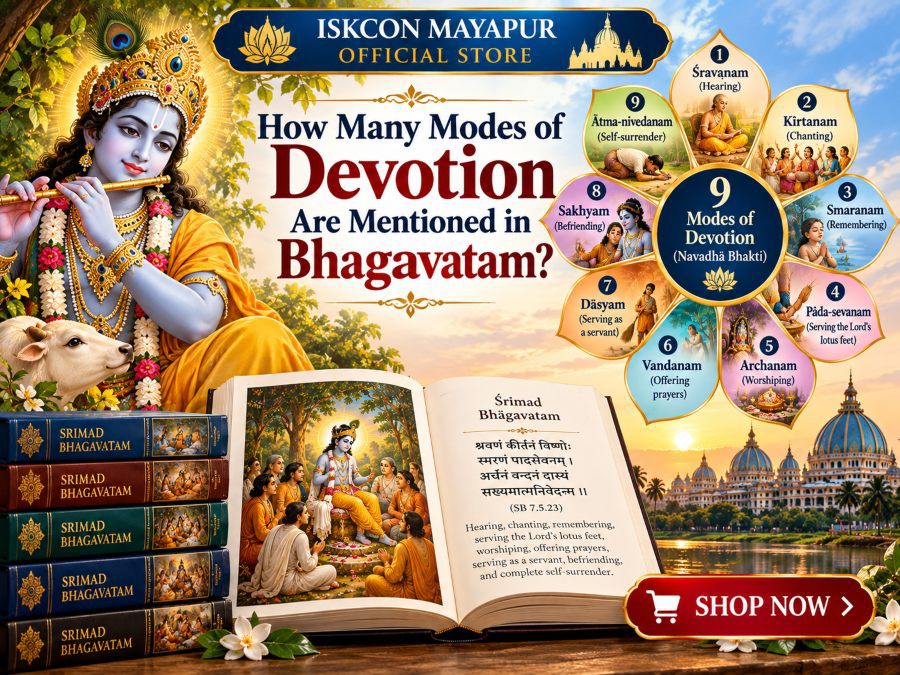 How Many Modes of Devotion Are Mentioned in Bhagavatam?Read more
A young boy named Prahlada listed nine ways to serve God, and the Bhagavatam keeps them as its answer. Learn what the...
-
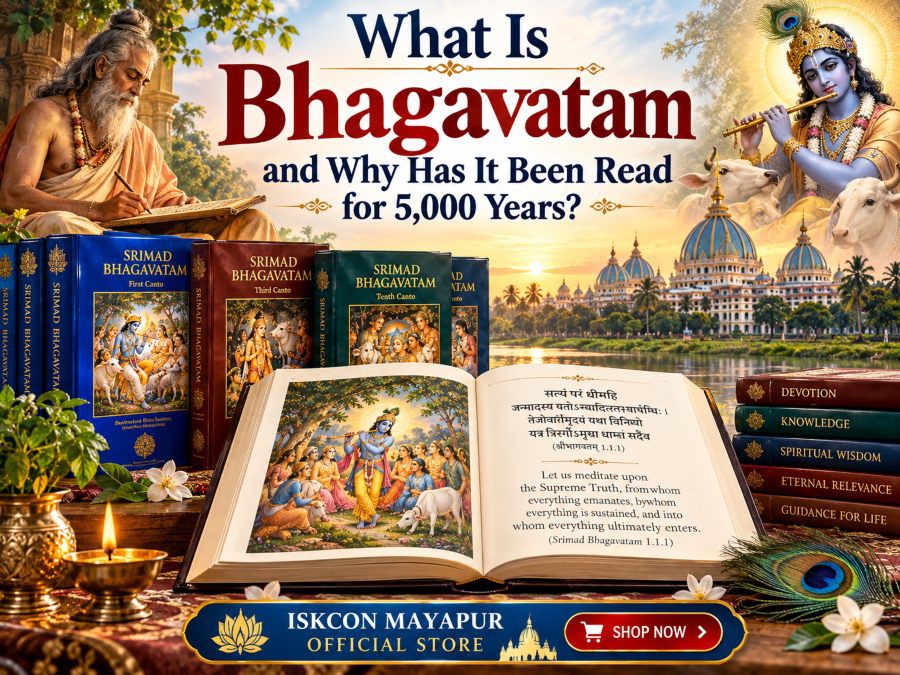 What Is Bhagavatam and Why Has It Been Read for 5,000 Years?Read more
A dying king asked one question, and the answer became the Bhagavatam. Learn what this Sanskrit scripture contains,...
-
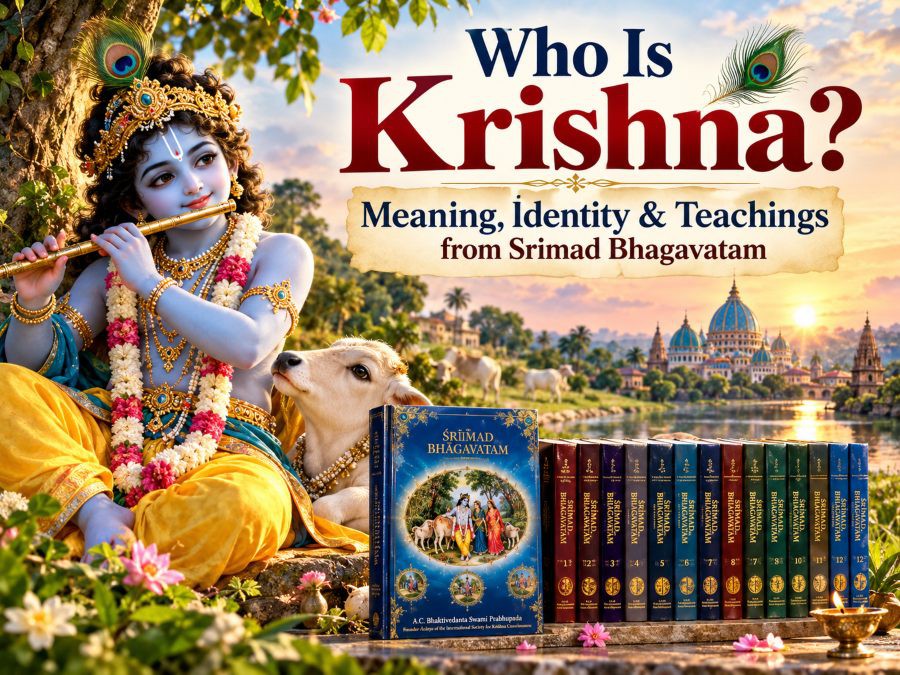 Who Is Lord Krishna? His Meaning, Teachings and Pastimes ExplainedRead more
Discover who Krishna is according to Srimad Bhagavatam, including His divine identity, childhood pastimes, teachings,...
-
 Incense in Islam: Bakhoor, Agarbatti and What Tradition SaysRead more
Is burning fragrance part of Muslim tradition? Explore incense in Islam, from the Prophetic practice of fumigating...
-
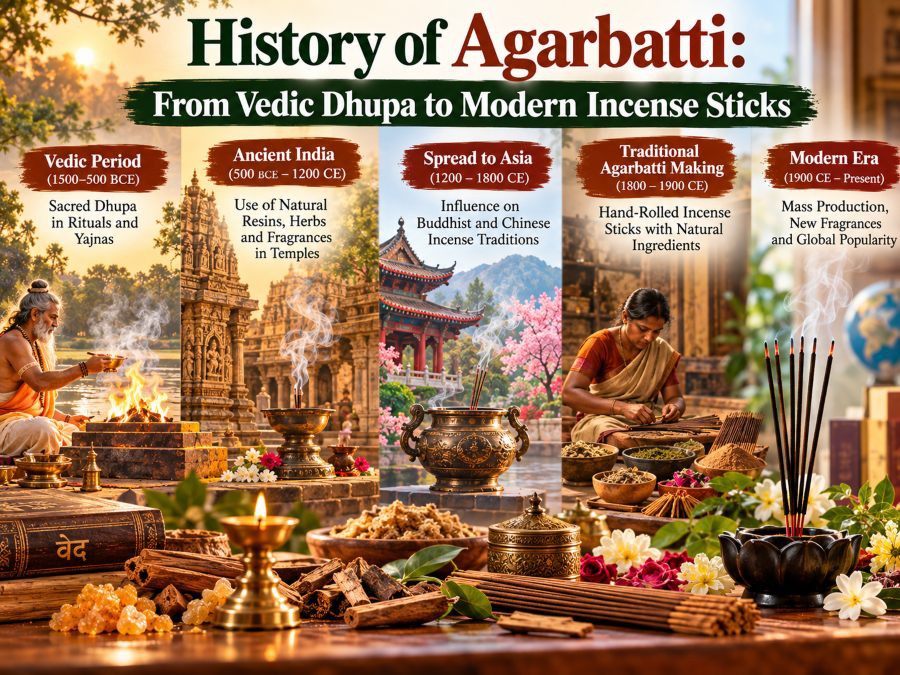 History of Agarbatti: From Vedic Dhupa to Modern Incense SticksRead more
Where did agarbatti really come from? Follow the history of agarbatti from Vedic fire rituals and temple dhupa to...
Blog categories
- Default category (0)
- MUSICAL INSTRUMENT (1)
- BOOK (5)
- DEVOTIONAL GIFT (0)
- Blog (30) click
- CHANDAN (12)
- Bhagavatam Wisdom Series (68)
- Krishna Consciousness (14)
- Mridangam Musical Instrument (6)
- Bhagavad Gita for Beginners (13)
- Bhagavad Gita As It Is (37) click
- Bhagavad Gita As It Is Telugu (0)
- Bhagavad Gita As It Is Marathi (0)
- Bhagavad Gita As It Is In Hindi (0)
- Bhagavad Gita As It Is In English (0)
- Bhagavad Gita As It Is In Bengali (8)
- Bhagavad Gita As It Is In Kannada (0)
- Bhagavad Gita As It Is In Gujarati (0)
- Bhagavad Gita As It Is In Panjabi (0)
- Bhagavad Gita As It Is In Tamil (0)
- Bhagavad Gita As It Is Odia (0)
- BHAGAVAD GITA As It Is GERMAN (0)
- Bhagavad Gita As It Is In French (0)
- Bhagavad Gita As It Is In Nepali (0)
- Bhagavad Gita As It Is In Assamese (0)
- Incense or Agarbatti (38)
- Lord Chaitanya Mahaprabhu (3)
- Vedic Temple Mayapur (14)
- kalki (15)
- Mahabharata – Dharma & Destiny (27)
- Vaishnava Scriptures (4)
- healthy product (4)
- chaitanya mahaprabhu (5)
- Tulsi Mala Guide (17)
Search in blog
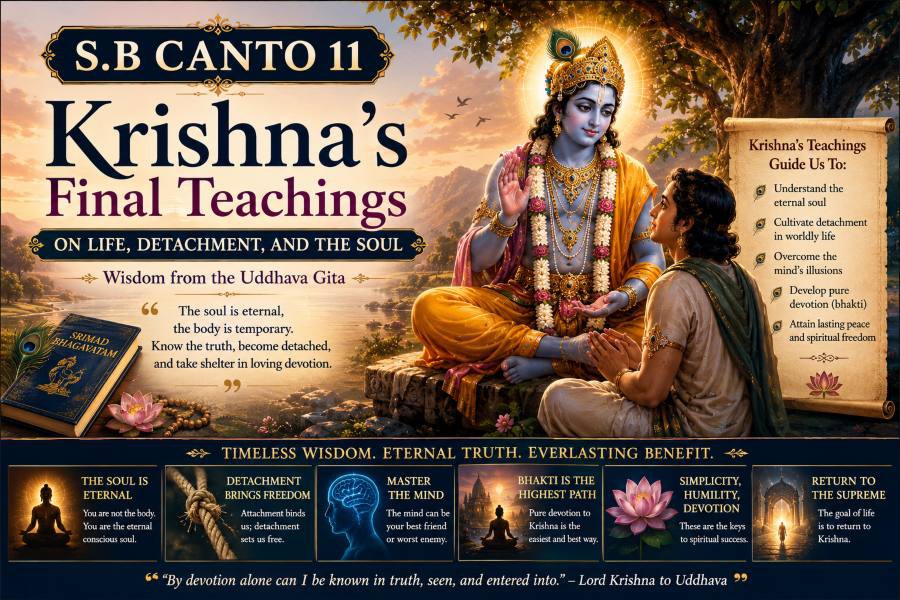
S.B Canto 11 — Krishna’s Final Teachings on Life, Detachment, and the Soul
Krishna’s Final Teachings on Life, Detachment, and the Soul
Imagine knowing that your time in this world is coming to an end.
What would you talk about?
Would you discuss wealth?
Success?
Politics?
Achievements?
Most likely not.
The final words of a wise person often reveal what truly matters.
That is one reason Srimad Bhagavatam Canto 11 holds such a special place within spiritual literature. This canto preserves some of the most profound teachings ever spoken by Lord Krishna before the conclusion of His earthly pastimes.
For readers exploring the timeless wisdom of the Bhagavata Purana, Canto 11 serves as a remarkable guide to understanding the soul, detachment, devotion, and the purpose of human life.
Earlier cantos describe Krishna's enchanting pastimes, His loving relationships with devotees, and His extraordinary activities throughout Vrindavan, Mathura, and Dvaraka.
Canto 11 shifts the focus.
The mood becomes reflective.
The lessons become direct.
The teachings become deeply personal.
Compiled by Vyasadeva, explained through the commentaries of A. C. Bhaktivedanta Swami Prabhupada, and shared worldwide through ISKCON, these teachings continue guiding seekers who want more than temporary happiness.
They want truth.
Why Canto 11 Feels Different
The Tenth Canto celebrates Krishna's beautiful pastimes.
The Eleventh Canto explains how to understand them.
This distinction is important.
Many people appreciate spiritual stories.
Fewer people understand the philosophy behind them.
Canto 11 bridges that gap.
Krishna begins explaining reality itself.
He addresses questions that humanity has struggled with for thousands of years:
· Who am I?
· Why do people suffer?
· What creates lasting happiness?
· What happens after death?
· How can the mind become peaceful?
· What is genuine freedom?
These are not ancient questions.
They are human questions.
Every generation asks them.
Every thoughtful person eventually confronts them.
The End of an Era
One of the central themes of Canto 11 is transition.
The Yadu dynasty approaches its conclusion.
Krishna's earthly mission nears completion.
Major changes are coming.
At first glance, this may seem like a historical detail.
It is actually a lesson about life itself.
Everything changes.
Relationships change.
Circumstances change.
Bodies change.
Societies change.
Even powerful civilizations eventually transform.
The Srimad Bhagavatam repeatedly reminds readers of this reality.
Not to create sadness.
To create wisdom.
When people recognize the temporary nature of material existence, they become more capable of seeking what is permanent.
Uddhava Steps Forward
Among all the personalities in Canto 11, Uddhava occupies a special place.
He was not merely a follower.
He was one of Krishna's closest associates.
A trusted friend.
A devoted servant.
A sincere seeker.
As Krishna prepared to conclude His visible pastimes, Uddhava approached Him with questions.
These questions became the foundation of what is often called the Uddhava Gita.
Many scholars describe the Uddhava Gita as a companion to the Bhagavad Gita.
Both contain profound teachings.
Yet the atmosphere feels different.
The Bhagavad Gita occurs on a battlefield.
The Uddhava Gita occurs during a deeply reflective period.
One addresses immediate action.
The other explores deeper spiritual realization.
Why Attachment Creates So Much Suffering
One of the recurring themes throughout Canto 11 is attachment.
This topic is often misunderstood.
Detachment does not mean becoming cold.
It does not mean rejecting relationships.
It does not mean abandoning responsibility.
The Bhagavatam presents detachment differently.
Detachment means seeing things clearly.
Consider a simple example.
People often believe possessions belong to them permanently.
Yet everything eventually changes hands.
People become attached to status.
Status changes.
People become attached to youth.
Youth fades.
People become attached to external circumstances.
Circumstances shift.
The problem is not having relationships or responsibilities.
The problem is expecting temporary things to provide permanent satisfaction.
Krishna encourages Uddhava to understand this distinction.
Wisdom begins when people stop demanding permanence from temporary realities.
The Soul: The Real Identity
Modern culture spends enormous energy defining identity.
People identify with careers.
Nationalities.
Social positions.
Personal histories.
The teachings of Canto 11 move deeper.
Krishna explains that the soul is the true self.
The body changes.
The soul remains.
Thoughts change.
The soul remains.
Circumstances change.
The soul remains.
This understanding transforms how people experience life.
Instead of viewing existence through the lens of temporary labels, they begin seeing themselves as eternal spiritual beings.
The Srimad Bhagavatam repeatedly returns to this truth because it changes everything.
Fear decreases.
Perspective expands.
Priorities become clearer.
Learning From the World Around Us
One of the most fascinating sections of Canto 11 involves the Avadhuta Brahmana and his twenty-four gurus.
These teachers were not traditional scholars.
Many were elements of nature.
The earth.
The wind.
The ocean.
The sun.
The moon.
Animals.
Birds.
Ordinary observations became sources of extraordinary wisdom.
This section teaches an important lesson.
Spiritual education is available everywhere.
A thoughtful person can learn from nearly any situation.
The earth teaches tolerance.
The ocean teaches steadiness.
The sky teaches freedom from limitation.
The sun teaches selfless service.
The Avadhuta demonstrates that wisdom belongs not merely to books but to observation, reflection, and realization.
The Mind: Friend or Enemy
Another major topic in Canto 11 is the mind.
Few forces influence human experience more powerfully.
The same mind can create peace.
The same mind can create anxiety.
The same mind can support spiritual growth.
The same mind can create endless distraction.
Krishna explains that self-mastery begins with understanding the mind rather than blindly obeying it.
This teaching feels remarkably modern.
Many people spend their lives reacting to thoughts without examining them.
The Bhagavatam encourages awareness.
Observation.
Discrimination.
Wisdom.
A disciplined mind becomes a powerful ally.
An uncontrolled mind becomes a source of suffering.
Why Detachment Leads to Freedom
The word detachment sometimes sounds restrictive.
The Bhagavatam presents it as liberation.
Consider carrying a heavy burden for years.
Eventually, putting it down feels freeing.
Attachment often functions similarly.
People carry unnecessary fears.
Unnecessary expectations.
Unnecessary anxieties.
Detachment removes those burdens.
It creates space for clarity.
It creates space for devotion.
It creates space for genuine happiness.
Krishna does not teach detachment as an end in itself.
He teaches it as preparation for something higher.
Love.
Pure devotion.
Spiritual realization.
The heart becomes lighter when unnecessary attachments lose their grip.
The Uddhava Gita: Wisdom for Every Generation
The heart of Canto 11 lies within Krishna's teachings to Uddhava.
These instructions are not merely philosophical discussions.
They are practical guidance for living wisely.
Krishna explains that human life becomes meaningful when it is directed toward self-realization.
Without spiritual understanding, people often spend years pursuing goals that fail to provide lasting fulfillment.
The Uddhava Gita repeatedly encourages readers to ask deeper questions:
· What truly matters?
· What survives death?
· What creates genuine peace?
· What is the purpose of consciousness?
These questions elevate life beyond routine existence.
They invite transformation.
Why Bhakti Stands Above Everything Else
One of the most powerful messages in Srimad Bhagavatam Canto 11 is the supremacy of bhakti.
Knowledge has value.
Discipline has value.
Meditation has value.
Ethical living has value.
Yet Krishna repeatedly emphasizes devotion.
Why?
Because devotion engages the entire person.
Knowledge may influence the intellect.
Discipline may influence behavior.
Devotion transforms the heart.
The Bhagavatam teaches that spiritual life reaches completion when knowledge, action, and emotion become harmonized through love for the Supreme Lord.
This understanding explains why bhakti remains the central theme throughout the entire Srimad Bhagavatam.
The destination is not merely information.
The destination is relationship.
Kali-Yuga and the Simplicity of Spiritual Practice
Krishna's teachings become especially relevant when discussing Kali-yuga.
The age of Kali is characterized by confusion, distraction, conflict, and spiritual forgetfulness.
These symptoms sound surprisingly familiar.
People possess more information than ever before.
Yet many feel disconnected.
Overwhelmed.
Restless.
The Bhagavatam offers a practical solution.
Rather than depending upon extremely difficult spiritual practices, it emphasizes remembrance of the Lord through devotion.
This makes spiritual life accessible.
A sincere person does not need extraordinary qualifications.
What matters most is sincerity.
Humility.
Consistency.
Faith.
The path remains open to everyone.
The Danger of External Success Without Inner Growth
Throughout Canto 11, Krishna repeatedly redirects attention toward inner development.
This lesson feels particularly relevant in modern society.
Many people spend years building careers, reputations, and achievements.
These accomplishments may be valuable.
Yet they cannot replace inner growth.
External success answers practical needs.
Spiritual wisdom answers existential questions.
Without inner development, even successful individuals may feel incomplete.
The Bhagavatam does not reject achievement.
It simply places achievement within a larger framework.
The soul requires nourishment just as the body does.
Ignoring that reality eventually creates imbalance.
Simplicity Is More Powerful Than It Appears
One surprising theme within Krishna's final teachings is simplicity.
Many people assume spiritual advancement requires complexity.
The Bhagavatam often points in the opposite direction.
A simple life centered on truth, devotion, and self-awareness frequently creates greater peace than a complicated life driven by endless desires.
Simplicity does not mean inactivity.
It means clarity.
Knowing what matters.
Knowing what does not.
Focusing energy where it produces genuine value.
This wisdom remains remarkably practical.
Modern life often rewards constant activity.
Krishna encourages meaningful activity.
The difference is significant.
Humility: The Foundation of Real Wisdom
Another recurring lesson in Canto 11 concerns humility.
The most spiritually advanced individuals are often the least interested in proving their superiority.
Why?
Because wisdom reveals how much remains unknown.
Pride narrows vision.
Humility expands it.
The Bhagavatam repeatedly demonstrates that humility is not weakness.
It is strength guided by understanding.
A humble person remains teachable.
Adaptable.
Open to growth.
This quality allows spiritual development to continue throughout life.
Why Krishna's Final Teachings Matter Today
It would be easy to assume that teachings spoken thousands of years ago belong only to history.
The opposite is true.
The challenges described in Canto 11 remain familiar.
People still struggle with anxiety.
Attachment.
Distraction.
Fear.
Uncertainty.
The human condition has not changed as dramatically as technology has.
The wisdom remains relevant because the questions remain relevant.
Who am I?
What creates happiness?
What survives death?
How should life be lived?
The answers offered in Srimad Bhagavatam continue speaking directly to these concerns.
The Soul's Journey Beyond Temporary Existence
Perhaps the most comforting teaching in Canto 11 concerns the soul itself.
The Bhagavatam repeatedly reminds readers that they are not temporary accidents.
They are eternal spiritual beings.
This understanding changes how challenges are viewed.
Loss becomes easier to understand.
Change becomes less frightening.
Death itself appears differently.
The body may come and go.
The soul continues.
This perspective does not eliminate grief or difficulty.
It provides context.
The larger journey extends beyond a single lifetime.
The soul's relationship with the Supreme Lord remains eternal.
Why Canto 11 Is One of the Most Important Sections of Srimad Bhagavatam
The Tenth Canto reveals Krishna's beautiful pastimes.
The Eleventh Canto reveals how to understand them.
Without philosophy, stories may remain entertainment.
Without devotion, philosophy may remain intellectual.
Canto 11 unites both.
It explains the purpose behind spiritual life.
It explains the nature of reality.
It explains the path toward liberation.
Most importantly, it explains the path toward loving devotion.
This combination makes it one of the most profound sections of the entire Srimad Bhagavatam.
The Final Message: Remember What Truly Matters
As Krishna's earthly pastimes approach their conclusion, the central message becomes increasingly clear.
Life is temporary.
The soul is eternal.
Material achievements have limits.
Spiritual realization has no limit.
Attachment creates bondage.
Devotion creates freedom.
These truths appear repeatedly because they address the deepest needs of human existence.
The Bhagavatam does not merely provide information.
It provides direction.
It guides readers toward a life centered on wisdom, devotion, and self-realization.
Through the teachings preserved by Vyasadeva, shared by A. C. Bhaktivedanta Swami Prabhupada, and distributed worldwide through ISKCON, the wisdom of Canto 11 continues inspiring spiritual seekers across generations.
Its message remains timeless.
Know the soul.
Understand the temporary nature of material existence.
Cultivate devotion.
Remember Krishna.
And discover the peace that comes from living in harmony with eternal truth.
That is the enduring gift of Srimad Bhagavatam Canto 11—a profound guide to life, detachment, the soul, and the path back to the Supreme Lord.
Posted in: Bhagavatam Wisdom Series
Related posts
-
 Why to read srimad bhagavatamReading the Srimad Bhagavatam fosters deep spiritual growth by narrating the life and teachings of Lord Krishna,...Read more
 -
 When was srimad bhagavatam written?The Srimad Bhagavatam is believed to have been written around 9th-10th century CE, though its oral traditions date...Read more
 -
 How many chapters are there in srimad bhagavatam?The Srimad Bhagavatam consists of 12 cantos (books) containing 335 chapters in total. Each canto covers various...Read more
 -
 How many skandhas are there in srimad bhagavatamThe Srimad Bhagavatam is divided into 12 skandhas (cantos or books). Each skandha explores different themes,...Read more
 -
 How many slokas in srimad bhagavatamThe Srimad Bhagavatam contains approximately 18,000 shlokas (verses). These verses are spread across its 12 skandhas...Read more
Leave a comment