
Why did Krishna run to embrace a poor brahmin in rags? Read the Sudama story from the Bhagavatam and learn how a...
Latest posts
-
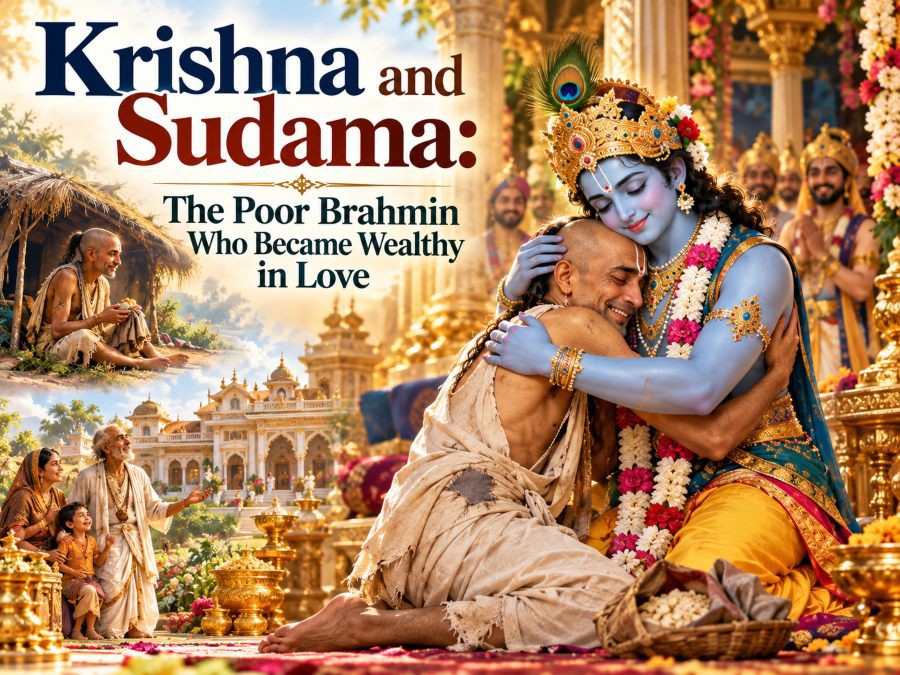 Krishna and Sudama: The Poor Brahmin Who Became Wealthy in LoveRead more
 -
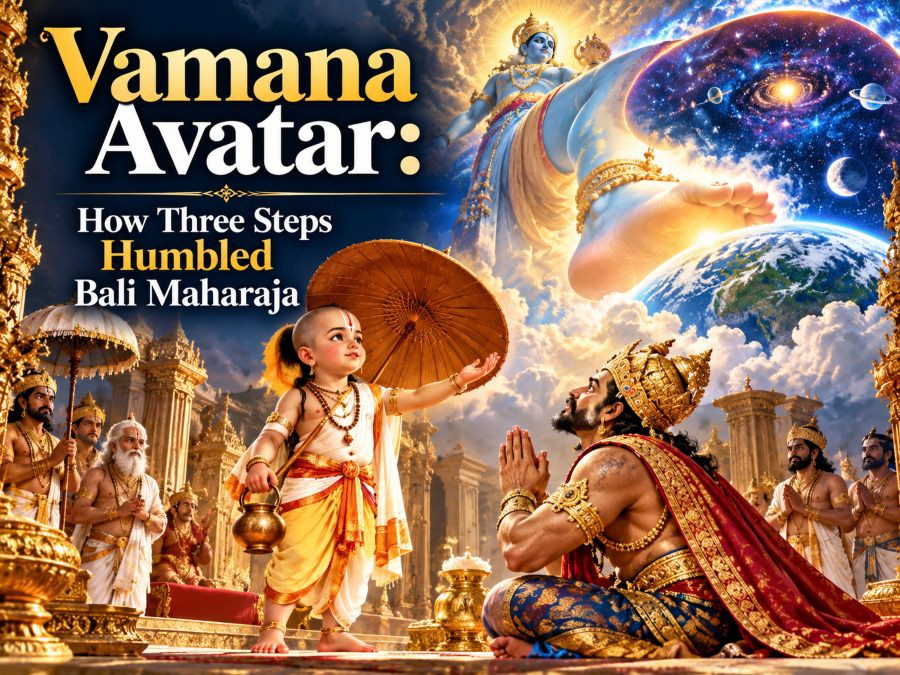 Vamana Avatar: How Three Steps Humbled Bali MaharajaRead more
Why did a powerful king give away three worlds to a boy asking for three steps? Learn the Vamana avatar story from...
-
 The Bhagavatam on Marriage: Duty, Love and Spiritual PartnershipRead more
What does the Bhagavatam say about marriage? Through the stories of Kardama and Devahuti, Rukmini's secret letter and...
-
 What Is Prema? The Bhagavatam's Highest Stage of Love for GodRead more
Prema is love for God with no "because" attached. Learn how the Bhagavatam describes it, the nine steps from faith to...
-
 Is Shiva Parvati Kalyana Mentioned in Srimad Bhagavatam? What the Scripture Really SaysRead more
Looking for Shiva and Parvati's wedding in the Srimad Bhagavatam? Find out what the scripture actually describes,...
-
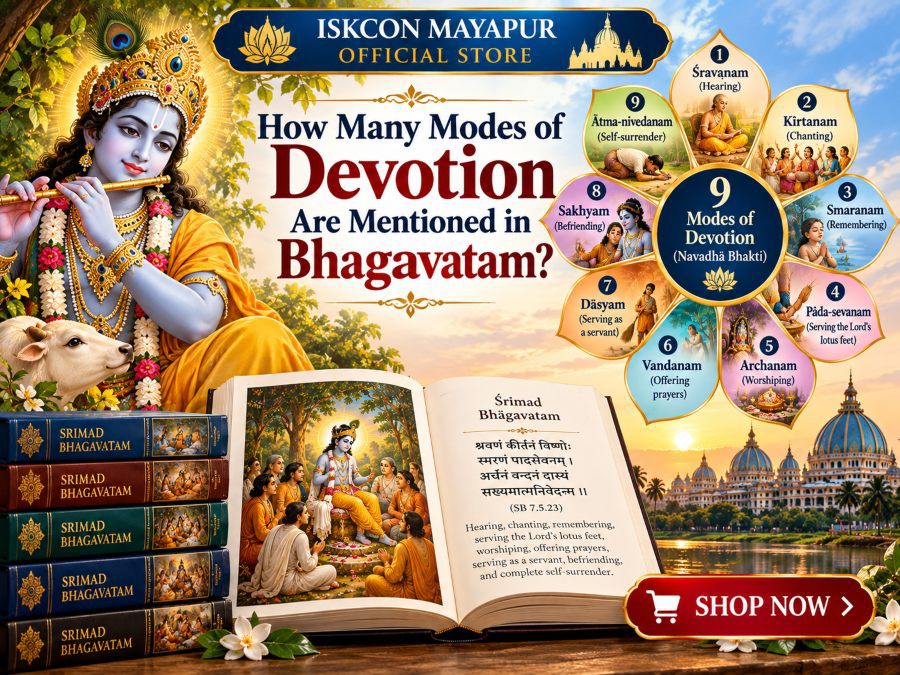 How Many Modes of Devotion Are Mentioned in Bhagavatam?Read more
A young boy named Prahlada listed nine ways to serve God, and the Bhagavatam keeps them as its answer. Learn what the...
-
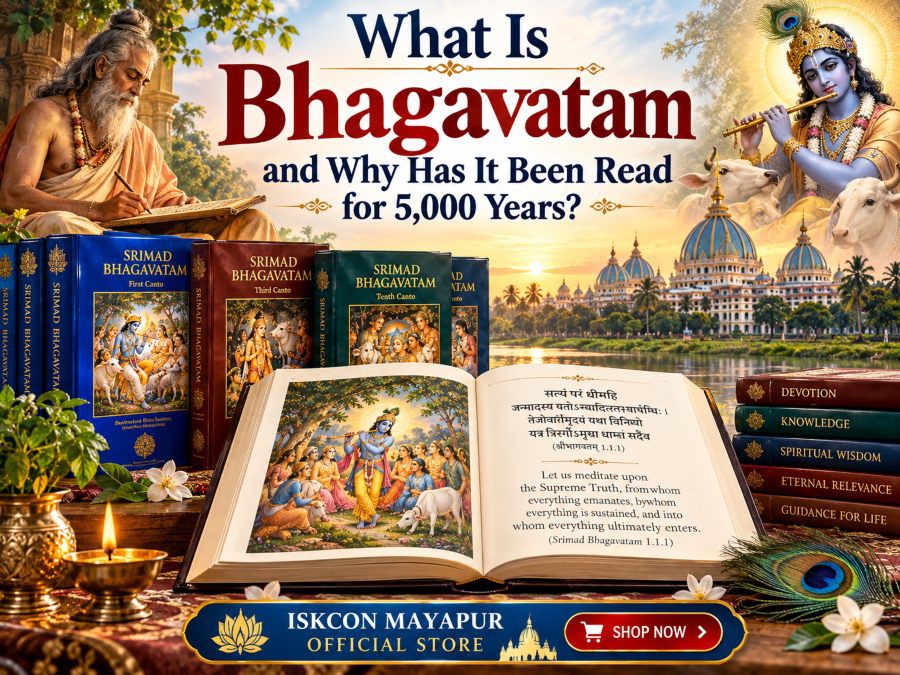 What Is Bhagavatam and Why Has It Been Read for 5,000 Years?Read more
A dying king asked one question, and the answer became the Bhagavatam. Learn what this Sanskrit scripture contains,...
-
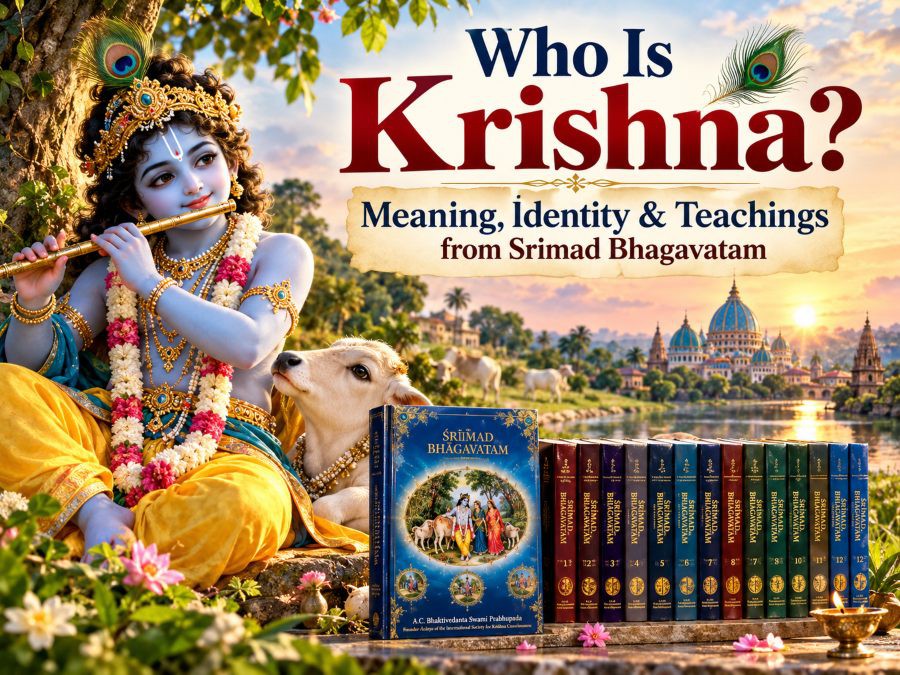 Who Is Lord Krishna? His Meaning, Teachings and Pastimes ExplainedRead more
Discover who Krishna is according to Srimad Bhagavatam, including His divine identity, childhood pastimes, teachings,...
-
 Incense in Islam: Bakhoor, Agarbatti and What Tradition SaysRead more
Is burning fragrance part of Muslim tradition? Explore incense in Islam, from the Prophetic practice of fumigating...
-
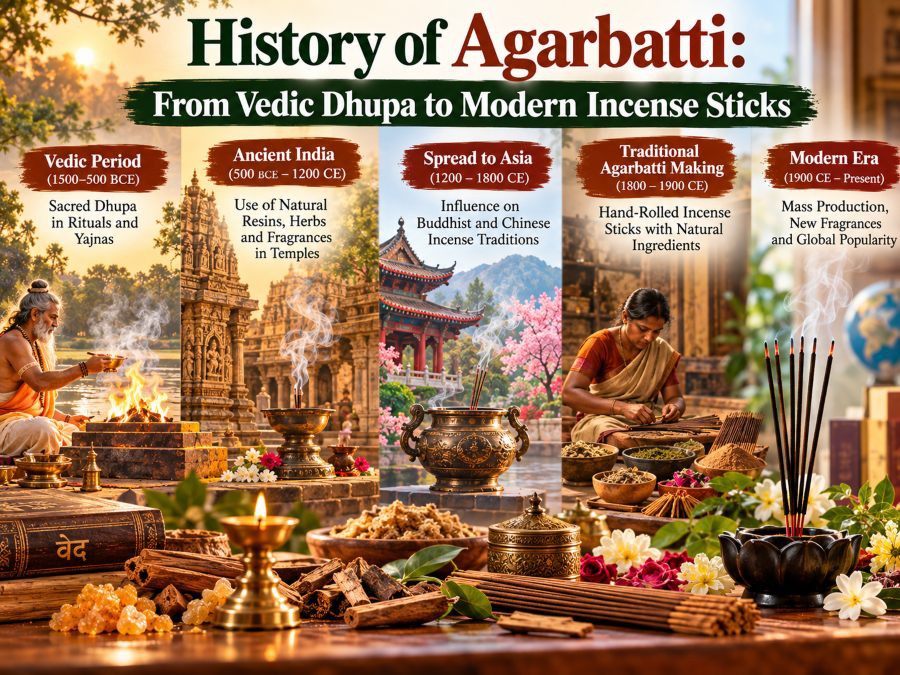 History of Agarbatti: From Vedic Dhupa to Modern Incense SticksRead more
Where did agarbatti really come from? Follow the history of agarbatti from Vedic fire rituals and temple dhupa to...
Blog categories
- Default category (0)
- MUSICAL INSTRUMENT (1)
- BOOK (5)
- DEVOTIONAL GIFT (0)
- Blog (30) click
- CHANDAN (12)
- Bhagavatam Wisdom Series (68)
- Krishna Consciousness (14)
- Mridangam Musical Instrument (6)
- Bhagavad Gita for Beginners (13)
- Bhagavad Gita As It Is (37) click
- Bhagavad Gita As It Is Telugu (0)
- Bhagavad Gita As It Is Marathi (0)
- Bhagavad Gita As It Is In Hindi (0)
- Bhagavad Gita As It Is In English (0)
- Bhagavad Gita As It Is In Bengali (8)
- Bhagavad Gita As It Is In Kannada (0)
- Bhagavad Gita As It Is In Gujarati (0)
- Bhagavad Gita As It Is In Panjabi (0)
- Bhagavad Gita As It Is In Tamil (0)
- Bhagavad Gita As It Is Odia (0)
- BHAGAVAD GITA As It Is GERMAN (0)
- Bhagavad Gita As It Is In French (0)
- Bhagavad Gita As It Is In Nepali (0)
- Bhagavad Gita As It Is In Assamese (0)
- Incense or Agarbatti (38)
- Lord Chaitanya Mahaprabhu (3)
- Vedic Temple Mayapur (14)
- kalki (15)
- Mahabharata – Dharma & Destiny (27)
- Vaishnava Scriptures (4)
- healthy product (4)
- chaitanya mahaprabhu (5)
- Tulsi Mala Guide (17)
Search in blog
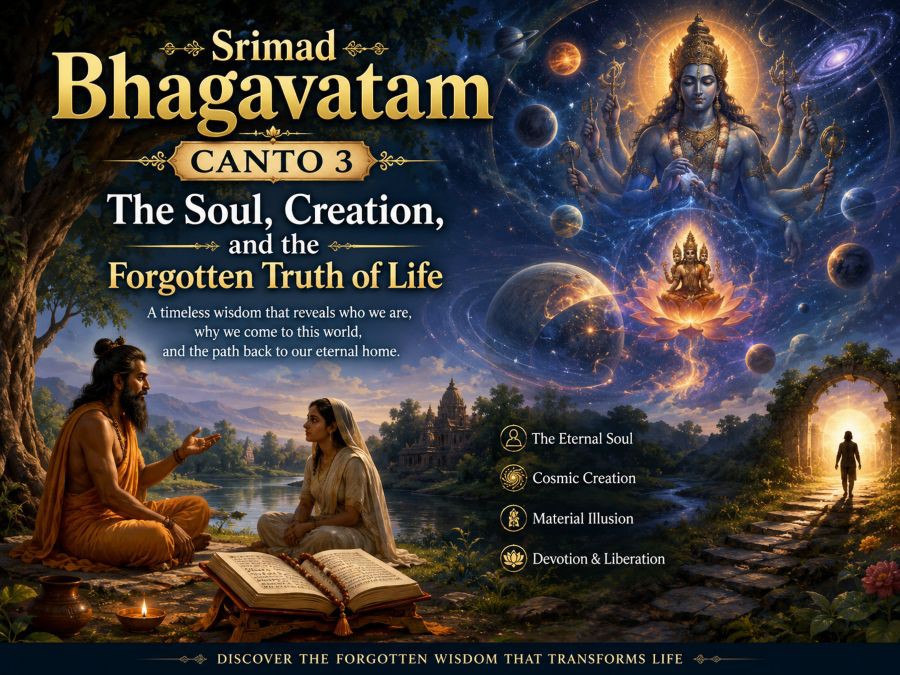
Srimad Bhagavatam Canto 3: The Soul, Creation, and the Forgotten Truth of Life
S.B Canto 3 — The Soul, Creation, and the Forgotten Truth of Life
A person can explain galaxies, understand artificial intelligence, discuss quantum physics, and still quietly wonder one terrifying thing at 2 AM:
“Who am I really?”
That question sits underneath almost every human struggle.
People chase success hoping it will answer the emptiness. They build identities around careers, relationships, achievements, politics, appearance, and social approval. Yet something fragile remains beneath all of it, constantly searching for permanence in a temporary world.
The third canto of the Srimad Bhagavatam enters directly into that search.
Readers opening authentic editions of the Srimad Bhagavatam quickly notice that Canto 3 feels both cosmic and deeply personal at the same time. It discusses creation, universal structure, divine incarnations, the soul’s journey, consciousness, material illusion, and spiritual awakening — yet none of it feels emotionally distant.
This canto is not merely asking how the universe was created.
It is asking why human beings forgot who they truly are inside it.
And that changes everything.
Why Humanity Keeps Forgetting the Most Important Truth
People remember passwords, deadlines, schedules, and social obligations every day. Yet the Srimad Bhagavatam suggests humanity collectively forgets the single most important truth:
The soul is eternal.
That forgetting becomes the foundation of nearly all confusion.
Once a person identifies only with:
- the body
- social identity
- material success
- external appearance
- temporary emotion
fear naturally follows.
Fear of aging.
Fear of failure.
Fear of rejection.
Fear of death.
Fear of losing control.
Canto 3 repeatedly explains that spiritual forgetfulness traps consciousness inside endless anxiety because the soul searches for permanence while identifying with temporary experiences.
This is why modern achievement alone often fails to create lasting peace.
The deeper problem remains untouched.
.jpg)
Vidura’s Journey Feels Surprisingly Human
One of the emotional anchors of Canto 3 is Vidura.
After witnessing corruption, political chaos, greed, ego conflicts, and moral collapse within the Kuru dynasty, Vidura leaves home searching for deeper truth.
That moment feels incredibly modern.
Many thoughtful people today experience similar exhaustion:
- exhaustion with superficiality
- exhaustion with endless conflict
- exhaustion with ego-driven culture
- exhaustion with emotionally empty ambition
Vidura’s journey represents a turning point where external systems stop satisfying the heart completely.
And notice something important:
he does not become cynical.
He becomes spiritually inquisitive.
That difference matters enormously.
Maitreya Speaks About Creation Without Reducing Life Into Mechanics
When Vidura meets Maitreya Muni, their conversation moves into one of the most profound discussions in the Srimad Bhagavatam.
Creation is described in extraordinary detail:
- cosmic manifestation
- material elements
- time
- consciousness
- universal structure
- divine intelligence
But the Bhagavatam never presents creation as emotionally empty machinery.
This canto insists that existence carries meaning because it originates from conscious divine reality.
That perspective changes how life itself feels.
Modern culture often explains how things function while struggling to explain why existence feels meaningful at all. The Srimad Bhagavatam approaches both simultaneously.
The universe is not presented as accidental chaos.
It is purposeful creation emerging from higher intelligence.
The Soul Is Not a Temporary Biological Accident
Canto 3 repeatedly returns to one foundational truth:
You are not the body.
At first glance, this may sound simple. It is not.
If people deeply understood this one principle, enormous amounts of psychological suffering would begin shifting.
Think about how much emotional instability comes from bodily identification:
- obsession with appearance
- fear of aging
- social comparison
- material insecurity
- status anxiety
- attachment to temporary identity
The Bhagavatam explains that the soul exists beyond physical change.
The body transforms continuously:
- childhood
- youth
- adulthood
- old age
Yet the sense of “I” remains present throughout.
Canto 3 asks readers to examine consciousness itself instead of blindly accepting material identity as ultimate reality.
That inquiry feels intellectually and emotionally powerful.
Why Human Beings Feel Internally Incomplete
One of the most psychologically accurate insights in the Srimad Bhagavatam is that human beings often attempt solving spiritual emptiness through material accumulation.
More pleasure.
More validation.
More entertainment.
More stimulation.
But the hunger keeps returning.
Canto 3 explains why.
The soul naturally seeks:
- eternity
- knowledge
- love
- spiritual connection
Temporary experiences can stimulate the senses temporarily, but they cannot permanently satisfy eternal consciousness.
This is why people sometimes achieve external success while still feeling emotionally hollow.
The Bhagavatam is not condemning material life itself. It is exposing the limits of material fulfillment without spiritual grounding.
Lord Kapila Changes the Entire Conversation
One of the most important sections of Canto 3 is the appearance of Lord Kapila and His teachings to Devahuti.
These teachings become one of the deepest philosophical discussions in the Srimad Bhagavatam.
Kapila explains:
- the nature of the soul
- material attachment
- consciousness
- illusion
- devotional service
- liberation
But what makes these teachings extraordinary is how psychologically realistic they feel.
Kapila understands the human condition intimately.
He explains how attachment forms.
How desires trap consciousness.
How the mind creates bondage.
How ego distorts perception.
This is not dry philosophy. It is spiritual psychology.
Material Attachment Is Described Like a Mental Fog
Canto 3 often describes material illusion not as evil, but as forgetfulness.
That distinction matters.
People become so absorbed in temporary pursuits that they forget:
- their spiritual identity
- their relationship with the Divine
- the temporary nature of material experience
This creates a kind of spiritual sleep.
The Bhagavatam repeatedly compares ordinary materialistic consciousness to dreaming. A person becomes emotionally consumed by temporary conditions while forgetting eternal reality completely.
Modern life makes this even more intense because endless distraction constantly pulls consciousness outward.
Phones vibrate.
Notifications appear.
Entertainment never ends.
Silence itself becomes uncomfortable for many people.
The Bhagavatam invites readers back into deeper awareness.
Why Time Is Treated Almost Like a Divine Force
Canto 3 discusses time with unusual seriousness.
Modern people often treat time casually until loss arrives:
- aging
- illness
- regret
- death
Then suddenly time feels terrifyingly real.
The Srimad Bhagavatam presents time as one of the great spiritual teachers because it exposes the temporary nature of material existence relentlessly.
Everything changes:
- bodies
- relationships
- societies
- wealth
- power
- civilizations
This realization can initially feel unsettling.
But the Bhagavatam uses it to redirect consciousness toward eternal truth rather than temporary illusion.
Without awareness of time, humans easily become spiritually asleep.
The Story of Jaya and Vijaya Reveals Something Deep About Free Will
Another fascinating section in Canto 3 involves Jaya and Vijaya — the gatekeepers of Vaikuntha who fall into material existence after offending great sages.
At first, this story appears cosmic and mythological. But psychologically, it reveals something deeply human:
even spiritually elevated beings possess freedom.
The Bhagavatam consistently treats consciousness as active rather than robotic.
People choose:
- ego or humility
- selfishness or devotion
- illusion or clarity
- material obsession or spiritual awakening
This emphasis on free will gives the Bhagavatam emotional seriousness. Human life matters because choices shape consciousness continuously.
Why Modern Readers Connect With Devahuti
Devahuti’s conversations with Lord Kapila feel remarkably relatable.
She experiences exhaustion with material illusion and sincerely seeks liberation from confusion and suffering.
Many readers quietly feel similar frustration:
- endless mental noise
- emotional instability
- attachment cycles
- dissatisfaction despite comfort
Kapila’s response is compassionate yet direct.
He does not offer shallow motivation or temporary positivity. He explains how consciousness becomes trapped and how it can become purified again.
That honesty gives the teachings unusual emotional weight.
The Bhagavatam Treats Consciousness as Sacred
Modern systems often reduce consciousness into chemistry alone. Canto 3 refuses to do this.
The Srimad Bhagavatam treats consciousness as sacred because it originates spiritually.
This perspective changes:
- morality
- identity
- purpose
- relationships
- suffering
- death itself
If consciousness is eternal, then life carries significance beyond temporary material survival.
That realization transforms the entire emotional structure of existence.
Why the Universe Feels Empty Without Spiritual Vision
One subtle theme throughout Canto 3 is that material existence becomes emotionally dry when disconnected from divine understanding.
Without spiritual vision:
- beauty becomes temporary
- love becomes fragile
- meaning becomes uncertain
- death becomes terrifying
- identity becomes unstable
The Bhagavatam offers another possibility:
seeing existence through the lens of eternal consciousness.
This does not remove suffering instantly. But it changes how suffering itself is understood.
Pain stops feeling meaningless.
Kapila’s Teachings on Devotion Feel Strikingly Practical
One reason Lord Kapila’s teachings remain powerful today is because they are emotionally realistic.
He understands:
- the restless mind
- emotional attachment
- sensory distraction
- ego-driven behavior
And His solution is not self-hatred or extreme denial.
Instead, He teaches purification through devotion and conscious spiritual practice.
Hear transcendental topics.
Associate with spiritually minded people.
Remember the Divine.
Reduce unnecessary attachment.
Live with awareness.
Simple principles.
Enormous depth.
The Forgotten Truth of Life
The title of this canto — “The Soul, Creation, and the Forgotten Truth of Life” — points toward the central emotional message of Canto 3.
Humanity forgot its spiritual identity.
Everything else grows from that forgetting:
- fear
- greed
- envy
- emptiness
- endless dissatisfaction
The Srimad Bhagavatam does not present humans as sinful failures beyond hope. It presents them as spiritually forgetful beings capable of awakening again.
That distinction creates enormous compassion within the text.
The soul is not destroyed.
It is covered.
And spiritual life becomes the process of remembering again.
Why Canto 3 Still Feels Relevant Thousands of Years Later
Canto 3 remains emotionally powerful because modern people still struggle with the same existential questions:
- Who am I?
- Why does suffering exist?
- Why do temporary pleasures fail to satisfy permanently?
- What happens after death?
- Why does the mind feel restless?
- Is life ultimately meaningful?
Technology evolved.
Human longing remained the same.
The Srimad Bhagavatam continues attracting readers because it speaks directly to these deeper questions without reducing existence into shallow materialism.
It respects the human hunger for transcendence.
The Soul’s Search Never Truly Ends
By the end of Canto 3, readers begin understanding something profound:
The search for meaning is not weakness.
It is the natural movement of the soul.
Human beings instinctively seek:
- permanence
- truth
- love
- connection
- transcendence
because consciousness itself originates beyond temporary material existence.
That is the forgotten truth the Srimad Bhagavatam keeps trying to awaken gently inside the reader.
Not through fear.
Not through blind pressure.
Through realization.
And perhaps that is why Canto 3 still feels alive after thousands of years.
Because beneath all the cosmic discussions, philosophical teachings, and spiritual psychology, it quietly reminds humanity of something it has been trying desperately not to forget:
You are more than this temporary world — and your soul has been searching for home all along.
Posted in: Bhagavatam Wisdom Series
Related posts
-
 Why to read srimad bhagavatamReading the Srimad Bhagavatam fosters deep spiritual growth by narrating the life and teachings of Lord Krishna,...Read more
 -
 When was srimad bhagavatam written?The Srimad Bhagavatam is believed to have been written around 9th-10th century CE, though its oral traditions date...Read more
 -
 How many chapters are there in srimad bhagavatam?The Srimad Bhagavatam consists of 12 cantos (books) containing 335 chapters in total. Each canto covers various...Read more
 -
 How many skandhas are there in srimad bhagavatamThe Srimad Bhagavatam is divided into 12 skandhas (cantos or books). Each skandha explores different themes,...Read more
 -
 How many slokas in srimad bhagavatamThe Srimad Bhagavatam contains approximately 18,000 shlokas (verses). These verses are spread across its 12 skandhas...Read more
Leave a comment