
Why did Krishna run to embrace a poor brahmin in rags? Read the Sudama story from the Bhagavatam and learn how a...
Latest posts
-
 Krishna and Sudama: The Poor Brahmin Who Became Wealthy in LoveRead more
 -
 Vamana Avatar: How Three Steps Humbled Bali MaharajaRead more
Why did a powerful king give away three worlds to a boy asking for three steps? Learn the Vamana avatar story from...
-
 The Bhagavatam on Marriage: Duty, Love and Spiritual PartnershipRead more
What does the Bhagavatam say about marriage? Through the stories of Kardama and Devahuti, Rukmini's secret letter and...
-
 What Is Prema? The Bhagavatam's Highest Stage of Love for GodRead more
Prema is love for God with no "because" attached. Learn how the Bhagavatam describes it, the nine steps from faith to...
-
 Is Shiva Parvati Kalyana Mentioned in Srimad Bhagavatam? What the Scripture Really SaysRead more
Looking for Shiva and Parvati's wedding in the Srimad Bhagavatam? Find out what the scripture actually describes,...
-
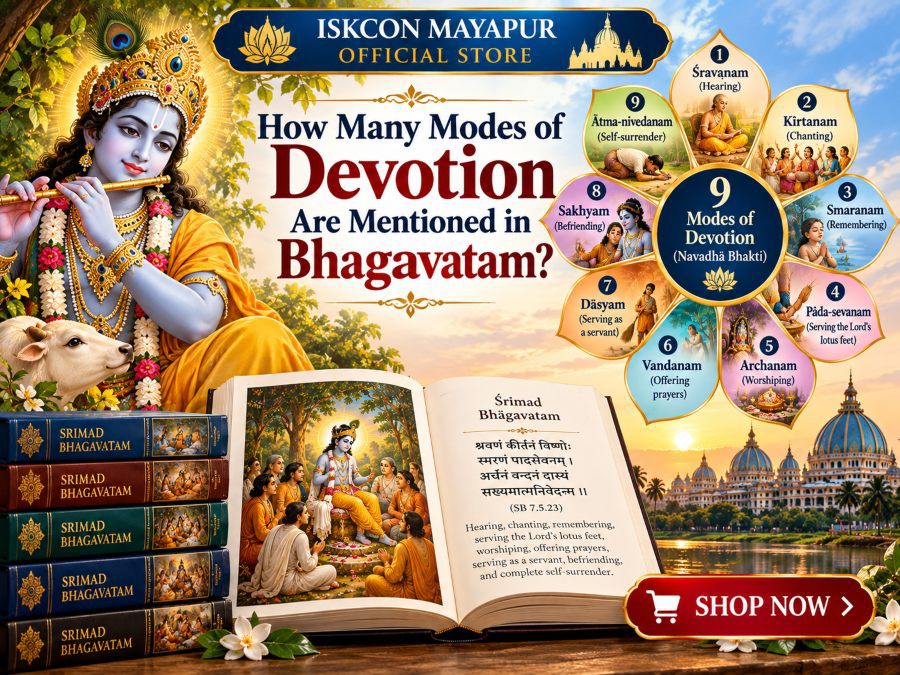 How Many Modes of Devotion Are Mentioned in Bhagavatam?Read more
A young boy named Prahlada listed nine ways to serve God, and the Bhagavatam keeps them as its answer. Learn what the...
-
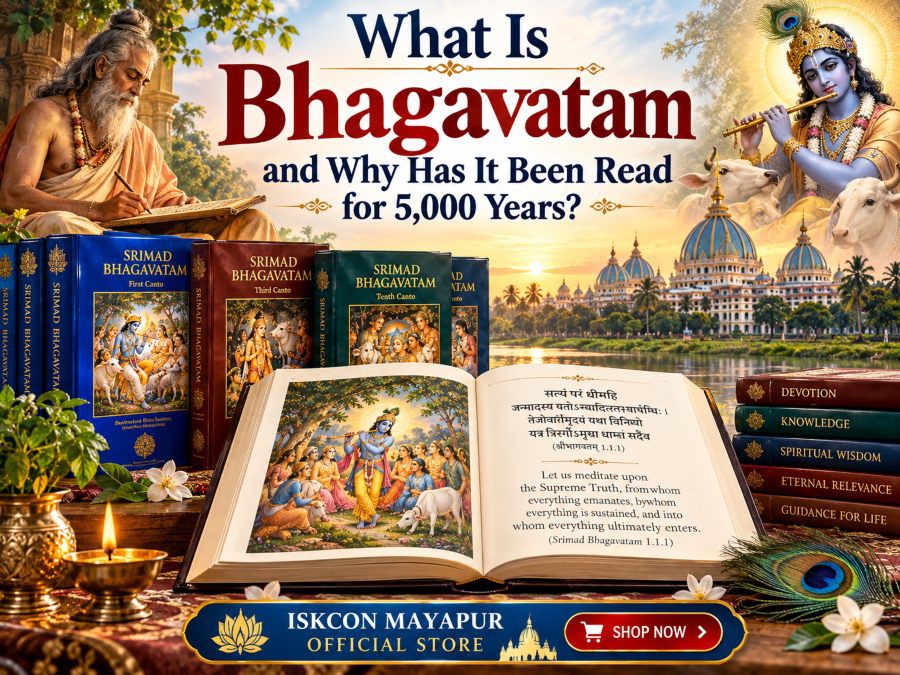 What Is Bhagavatam and Why Has It Been Read for 5,000 Years?Read more
A dying king asked one question, and the answer became the Bhagavatam. Learn what this Sanskrit scripture contains,...
-
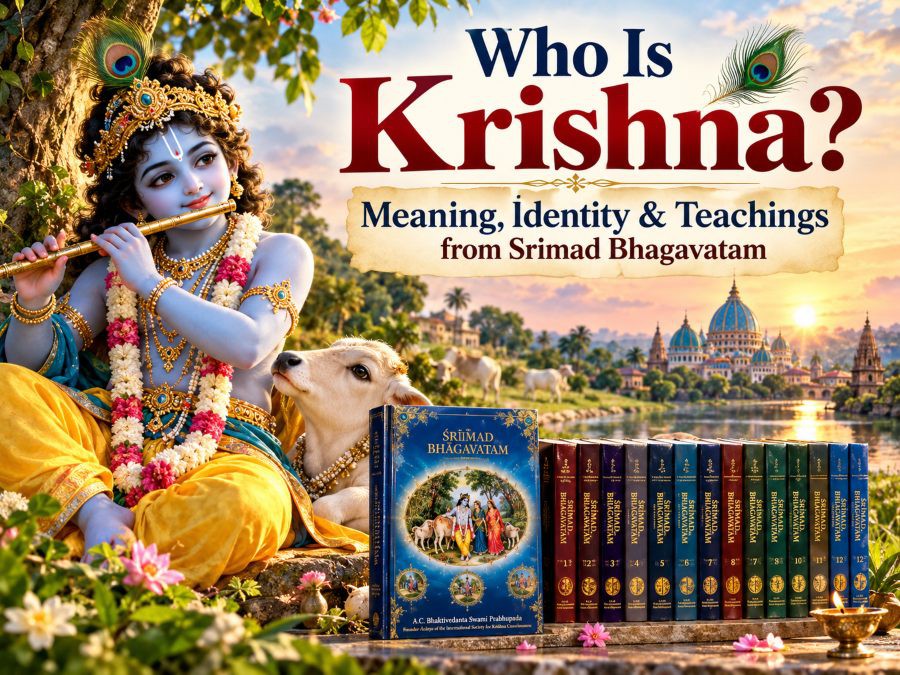 Who Is Lord Krishna? His Meaning, Teachings and Pastimes ExplainedRead more
Discover who Krishna is according to Srimad Bhagavatam, including His divine identity, childhood pastimes, teachings,...
-
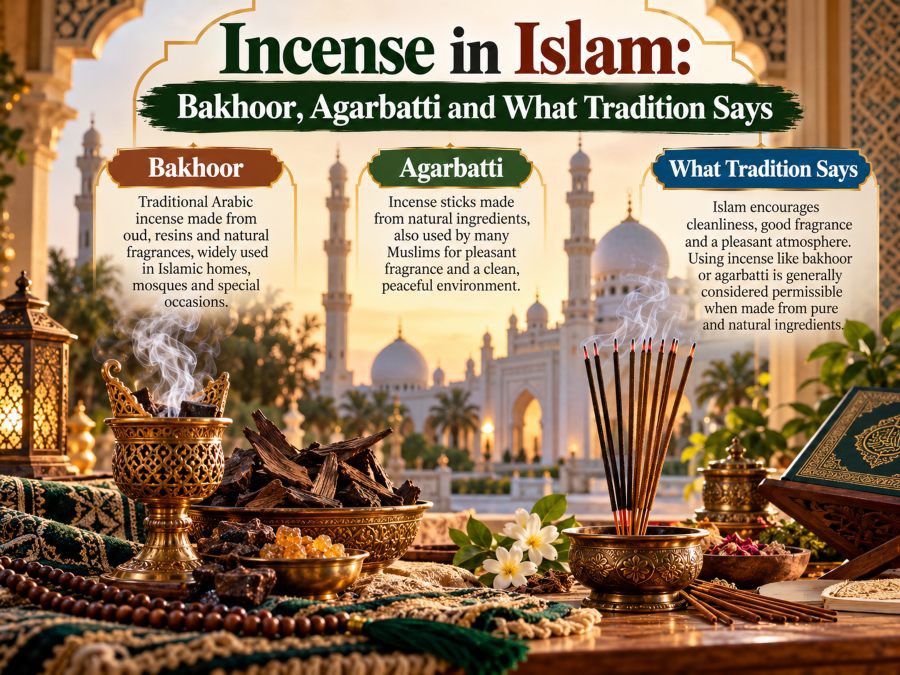 Incense in Islam: Bakhoor, Agarbatti and What Tradition SaysRead more
Is burning fragrance part of Muslim tradition? Explore incense in Islam, from the Prophetic practice of fumigating...
-
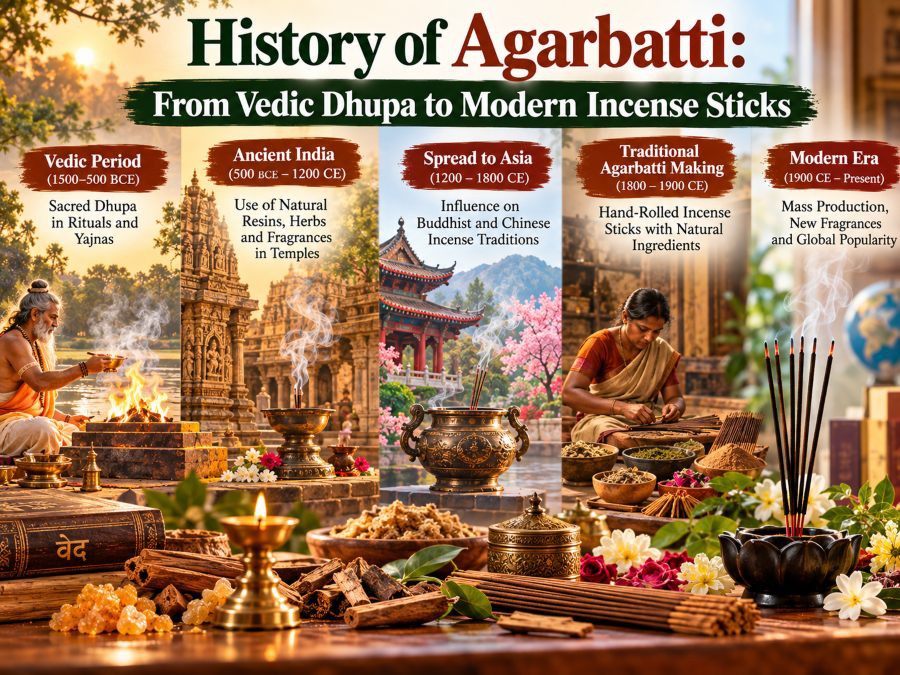 History of Agarbatti: From Vedic Dhupa to Modern Incense SticksRead more
Where did agarbatti really come from? Follow the history of agarbatti from Vedic fire rituals and temple dhupa to...
Blog categories
- Default category (0)
- MUSICAL INSTRUMENT (1)
- BOOK (5)
- DEVOTIONAL GIFT (0)
- Blog (30) click
- CHANDAN (12)
- Bhagavatam Wisdom Series (68)
- Krishna Consciousness (14)
- Mridangam Musical Instrument (6)
- Bhagavad Gita for Beginners (13)
- Bhagavad Gita As It Is (37) click
- Bhagavad Gita As It Is Telugu (0)
- Bhagavad Gita As It Is Marathi (0)
- Bhagavad Gita As It Is In Hindi (0)
- Bhagavad Gita As It Is In English (0)
- Bhagavad Gita As It Is In Bengali (8)
- Bhagavad Gita As It Is In Kannada (0)
- Bhagavad Gita As It Is In Gujarati (0)
- Bhagavad Gita As It Is In Panjabi (0)
- Bhagavad Gita As It Is In Tamil (0)
- Bhagavad Gita As It Is Odia (0)
- BHAGAVAD GITA As It Is GERMAN (0)
- Bhagavad Gita As It Is In French (0)
- Bhagavad Gita As It Is In Nepali (0)
- Bhagavad Gita As It Is In Assamese (0)
- Incense or Agarbatti (38)
- Lord Chaitanya Mahaprabhu (3)
- Vedic Temple Mayapur (14)
- kalki (15)
- Mahabharata – Dharma & Destiny (27)
- Vaishnava Scriptures (4)
- healthy product (4)
- chaitanya mahaprabhu (5)
- Tulsi Mala Guide (17)
Search in blog
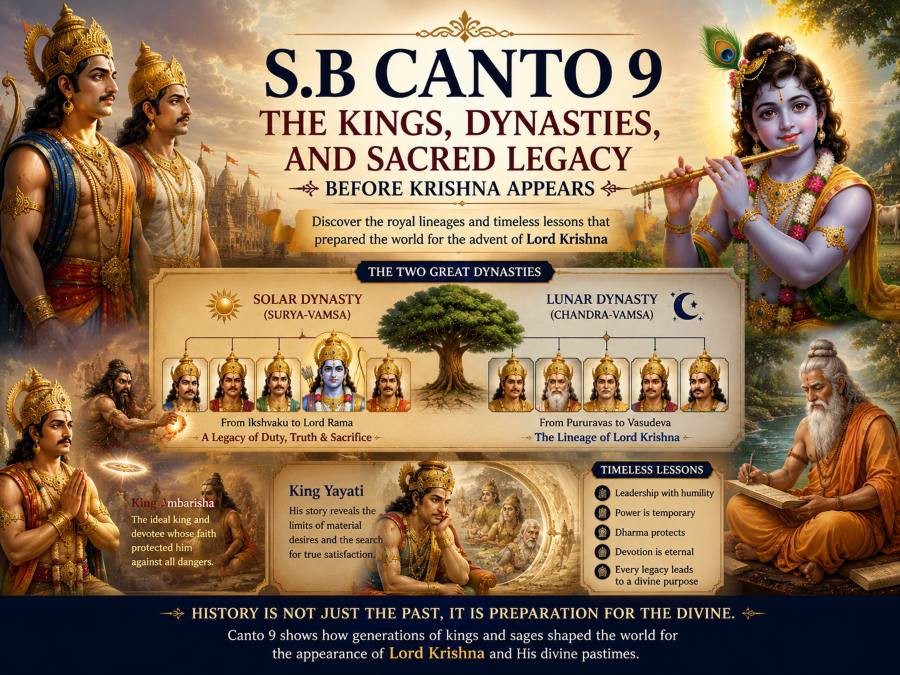
S.B Canto 9: The Kings, Dynasties, and Sacred Legacy Before Krishna Appears
S.B Canto 9 — The Kings, Dynasties, and Sacred Legacy Before Krishna Appears
Imagine opening a history book and discovering that every king, every kingdom, every victory, and every failure was actually preparing the stage for the appearance of the Supreme Lord.
That is exactly what makes Srimad Bhagavatam Canto 9 so fascinating.
Many readers initially approach this canto expecting a collection of royal genealogies. At first glance, it appears to be a record of ancient dynasties, legendary rulers, and family lineages stretching across generations. Yet a closer reading reveals something much deeper. These stories form a spiritual bridge leading directly toward the appearance of Lord Krishna in the Tenth Canto.
For readers seeking authentic editions of this timeless scripture, the ISKCON Srimad Bhagavatam remains one of the most trusted resources for understanding the profound lessons hidden within these royal histories.
Compiled by Vyasadeva and preserved through an unbroken spiritual tradition, Srimad Bhagavatam Canto 9 demonstrates that history is never merely about events. It is about purpose. Every dynasty, every ruler, and every turning point contributes to a larger divine plan.
Why Canto 9 Matters More Than Most Readers Expect
Many people are naturally drawn toward dramatic stories.
Miracles attract attention.
Divine incarnations attract attention.
Cosmic battles attract attention.
Genealogies rarely do.
Yet Canto 9 quietly performs one of the most important functions in the entire Srimad Bhagavatam.
It answers a question many readers never think to ask:
How did the world become prepared for Krishna's appearance?
The answer lies in generations of kings, sages, and dynasties whose choices shaped the moral and spiritual condition of society.
Without understanding these foundations, the appearance of Krishna can seem disconnected from history.
Canto 9 shows the opposite.
The appearance of the Lord unfolds within a carefully prepared historical framework.
More Than Family Trees
When modern readers encounter long lists of names, they sometimes assume they are reading simple ancestry records.
The Srimad Bhagavatam approaches genealogy differently.
Each lineage carries lessons.
Each dynasty reveals patterns.
Each ruler demonstrates the consequences of specific choices.
Some kings achieved greatness through humility and devotion.
Others fell because of pride, attachment, or poor judgment.
Together, these stories create a living study of leadership, responsibility, and human nature.
The canto repeatedly reminds readers that power alone does not guarantee success.
Character determines destiny.
This principle remains as relevant today as it was thousands of years ago.
The Two Great Streams of Royal Heritage
Much of Canto 9 focuses on two famous dynasties:
· The Solar Dynasty (Surya-vamsa)
· The Lunar Dynasty (Candra-vamsa)
These royal lineages produced many of the most influential figures in Vedic history.
The Solar Dynasty eventually gave rise to Lord Rama.
The Lunar Dynasty ultimately became the lineage through which Lord Krishna appeared.
This connection transforms what might seem like historical information into something spiritually significant.
Readers begin to see how divine history unfolds across generations.
Events separated by centuries become interconnected parts of a larger narrative.
Leadership Through the Eyes of the Bhagavatam
One of the most valuable aspects of Canto 9 is its exploration of leadership.
Modern discussions often focus on authority, influence, and achievement.
The Srimad Bhagavatam evaluates leaders differently.
It asks:
· Did they uphold dharma?
· Did they protect others?
· Did they remain humble?
· Did they remember the Supreme Lord?
Some kings possessed extraordinary power but lacked spiritual wisdom.
Others ruled with compassion, integrity, and devotion.
The contrast between these rulers creates a powerful lesson.
External success without inner discipline eventually creates problems.
Spiritual principles provide stability even during periods of great power.
King Ambarisha: A Masterclass in Devotion
Among the most celebrated personalities connected with these royal histories is King Ambarisha.
His story remains one of the finest examples of devotional leadership.
Ambarisha possessed immense wealth and influence.
Yet he never allowed power to become the center of his life.
Instead, he dedicated everything to the service of the Supreme Lord.
His example challenges a common misconception.
Many people assume spiritual life requires abandoning responsibility.
Ambarisha demonstrated something different.
He remained fully engaged in leadership while maintaining deep devotion.
This balance made him extraordinary.
His life shows that spiritual growth and worldly responsibility do not need to conflict.
When guided properly, they can strengthen one another.
When Anger Meets Humility
The famous encounter between King Ambarisha and Durvasa Muni contains one of the most profound lessons in Canto 9.
Durvasa possessed immense mystical power.
Ambarisha possessed devotion.
A misunderstanding led Durvasa to become angry.
The situation quickly escalated.
From a material perspective, Ambarisha appeared vulnerable.
Yet the outcome revealed a deeper reality.
Spiritual strength often exceeds external power.
Ambarisha remained calm.
He remained respectful.
He remained devoted.
Ultimately, his humility protected him more effectively than aggression ever could.
This lesson feels especially relevant today.
Many conflicts intensify because individuals prioritize winning rather than understanding.
Ambarisha's example points toward a higher path.
The Story of Yayati and the Limits of Desire
Another unforgettable figure in Canto 9 is King Yayati.
His story addresses a universal human challenge.
Desire.
Yayati received an unusual opportunity.
He was allowed to exchange old age for youth.
Most people imagine such an opportunity would solve every problem.
Yayati discovered otherwise.
Even after extended enjoyment, satisfaction remained elusive.
His realization became one of the most important philosophical lessons in the Srimad Bhagavatam.
Material desires often promise fulfillment.
Yet unchecked desire tends to create more desire.
The pursuit never truly ends.
Yayati eventually recognized that lasting satisfaction cannot be found solely through external enjoyment.
This insight remains remarkably relevant in modern society.
People frequently assume happiness lies just beyond the next achievement, purchase, or experience.
Yayati's story encourages readers to look deeper.
Why These Stories Lead Toward Krishna
A casual reader might wonder why so much attention is devoted to kings and dynasties before Krishna appears.
The answer becomes clearer as the canto progresses.
Each story develops themes that become central in later sections of the Bhagavatam.
Devotion.
Responsibility.
Humility.
Leadership.
Surrender.
Faith.
The rulers of Canto 9 serve as examples, warnings, and preparations.
Their lives create the historical and spiritual context necessary for understanding Krishna's appearance.
The canto gradually builds anticipation.
Readers begin to sense that history itself is moving toward something extraordinary.
And it is.
The appearance of Lord Krishna is approaching.
Everything in Canto 9 points toward that moment.
The Lunar Dynasty: The Road That Leads to Krishna
As Canto 9 progresses, the focus gradually shifts toward the Lunar Dynasty, one of the most celebrated royal lineages in Vedic history.
This is not accidental.
The Srimad Bhagavatam is carefully building anticipation.
Generation after generation, the narrative moves closer to the appearance of Lord Krishna.
Many rulers come and go.
Kingdoms rise.
Kingdoms decline.
New leaders emerge.
Yet beneath these changes, a deeper pattern is unfolding.
The Lord's arrival is approaching.
This perspective changes how readers view history.
Instead of random events, history becomes purposeful.
Instead of disconnected rulers, there is continuity.
Instead of chaos, there is direction.
The Srimad Bhagavatam teaches that divine purpose often works through historical events that people may not immediately understand.
Why Dynasties Never Last Forever
One of the recurring themes in Canto 9 is impermanence.
Even the greatest dynasties eventually change.
The strongest rulers eventually depart.
The most powerful kingdoms eventually face decline.
This truth appears repeatedly throughout the canto.
At first glance, these stories may seem tragic.
They are actually educational.
The Bhagavatam reminds readers that material achievements, while valuable, are temporary.
Power fades.
Wealth changes hands.
Influence shifts.
Time affects everyone.
This realization is not intended to create pessimism.
It creates perspective.
When people understand the temporary nature of worldly success, they become more capable of focusing on what truly endures.
Character endures.
Wisdom endures.
Devotion endures.
Spiritual growth endures.
These become the lasting legacy of great individuals.
The Difference Between Fame and Legacy
Modern culture often celebrates visibility.
People want recognition.
Followers.
Attention.
Influence.
Canto 9 presents a different standard.
Many kings became famous.
Only some created a meaningful legacy.
The difference is important.
Fame depends on public attention.
Legacy depends on lasting impact.
A ruler may command enormous influence during his lifetime and quickly be forgotten.
Another may quietly uphold dharma and inspire generations.
The Srimad Bhagavatam consistently values legacy above fame.
This principle remains relevant for anyone seeking a meaningful life.
The question is not merely:
"How many people know my name?"
The deeper question is:
"What positive impact remains because I lived?"
Lord Rama's Influence on Future Generations
Although the primary focus eventually moves toward Krishna, Canto 9 also honors the legacy of Lord Rama and the Solar Dynasty.
The influence of Rama extends far beyond His own lifetime.
His example establishes standards for:
· Leadership
· Integrity
· Duty
· Compassion
· Sacrifice
These principles continue shaping future generations.
This illustrates another important lesson.
Great leaders influence people long after they leave the world.
Their actions become reference points.
Their character becomes a model.
Their example becomes guidance.
The Srimad Bhagavatam repeatedly highlights individuals whose lives continue teaching lessons centuries later.
Lord Rama stands among the greatest examples of this phenomenon.
Why Vyasadeva Included So Many Kings
Some readers wonder why Vyasadeva devoted so much space to royal histories.
The answer becomes clearer when examining the purpose of the Bhagavatam.
The text is not merely describing events.
It is revealing patterns.
Human nature remains remarkably consistent across generations.
People continue facing:
· Ambition
· Attachment
· Pride
· Fear
· Duty
· Responsibility
· Faith
The kings of Canto 9 provide case studies.
Some handled these challenges wisely.
Others did not.
Readers gain insight by observing both outcomes.
This approach makes the Bhagavatam practical rather than theoretical.
It teaches through real lives rather than abstract concepts.
The Hidden Preparation for the Tenth Canto
Canto 9 performs an important role that many first-time readers overlook.
It prepares the heart.
The appearance of Krishna in the Tenth Canto is not presented as an isolated event.
The Bhagavatam gradually creates anticipation.
Readers learn about generations of rulers.
They witness the rise and fall of dynasties.
They observe lessons in leadership, devotion, sacrifice, and duty.
These stories cultivate appreciation.
By the time Krishna appears, readers understand that His arrival is the culmination of a much larger narrative.
History itself has been moving toward that moment.
This literary structure demonstrates extraordinary wisdom.
The appearance of the Supreme Lord feels significant because the groundwork has been carefully established.
What Modern Readers Can Learn From Canto 9
Despite its focus on ancient kings and dynasties, Canto 9 contains remarkably practical lessons.
Leadership Requires Character
Position alone is not enough.
The most respected rulers combined authority with integrity.
Success Without Wisdom Creates Problems
Many powerful individuals suffered because they lacked self-control.
External achievements cannot replace inner development.
Legacy Matters More Than Recognition
People are remembered for how they influenced others.
Character creates a longer-lasting impact than popularity.
Time Changes Everything
The rise and fall of dynasties remind readers to maintain perspective.
Temporary success should not become the sole focus of life.
Spiritual Values Provide Stability
The rulers most admired in the Bhagavatam remained connected to higher principles.
Their spiritual foundation helped them navigate challenges effectively.
The Sacred Legacy Before Krishna Appears
The title of Canto 9 can be understood in a simple yet profound way.
It is the story of preparation.
Preparation through generations.
Preparation through leadership.
Preparation through devotion.
Preparation through history itself.
Every dynasty contributes something.
Every ruler leaves a lesson.
Every story adds another piece to the larger picture.
As the canto approaches its conclusion, anticipation grows.
The stage has been prepared.
The world has been prepared.
The readers have been prepared.
The appearance of Lord Krishna is near.
Why Canto 9 Deserves More Attention
Among the twelve cantos of the Srimad Bhagavatam, Canto 9 is sometimes overshadowed by the dramatic narratives that surround it.
Yet careful readers often discover that it contains extraordinary depth.
It teaches history without becoming dry.
It teaches philosophy without becoming abstract.
It teaches leadership without becoming political.
It teaches spirituality without becoming disconnected from everyday life.
Most importantly, it reveals that divine purpose operates across generations.
The kings and dynasties described in this canto are not random historical figures.
They are participants in a sacred unfolding plan.
Their successes teach.
Their failures teach.
Their legacies teach.
And together they guide readers toward one of the most celebrated moments in spiritual literature—the appearance of Lord Krishna.
Through the timeless wisdom preserved by Vyasadeva, shared worldwide by A. C. Bhaktivedanta Swami Prabhupada, and distributed through ISKCON, the lessons of Canto 9 continue to inspire readers seeking leadership, purpose, wisdom, and devotion.
That is why the stories of kings and dynasties remain relevant.
They are not merely records of the past.
They are lessons for the present and preparation for understanding the divine glory that follows in the Tenth Canto of the Srimad Bhagavatam.
Posted in: Bhagavatam Wisdom Series
Related posts
-
 Why to read srimad bhagavatamReading the Srimad Bhagavatam fosters deep spiritual growth by narrating the life and teachings of Lord Krishna,...Read more
 -
 When was srimad bhagavatam written?The Srimad Bhagavatam is believed to have been written around 9th-10th century CE, though its oral traditions date...Read more
 -
 How many chapters are there in srimad bhagavatam?The Srimad Bhagavatam consists of 12 cantos (books) containing 335 chapters in total. Each canto covers various...Read more
 -
 How many skandhas are there in srimad bhagavatamThe Srimad Bhagavatam is divided into 12 skandhas (cantos or books). Each skandha explores different themes,...Read more
 -
 How many slokas in srimad bhagavatamThe Srimad Bhagavatam contains approximately 18,000 shlokas (verses). These verses are spread across its 12 skandhas...Read more
Leave a comment