
Why did Krishna run to embrace a poor brahmin in rags? Read the Sudama story from the Bhagavatam and learn how a...
Latest posts
-
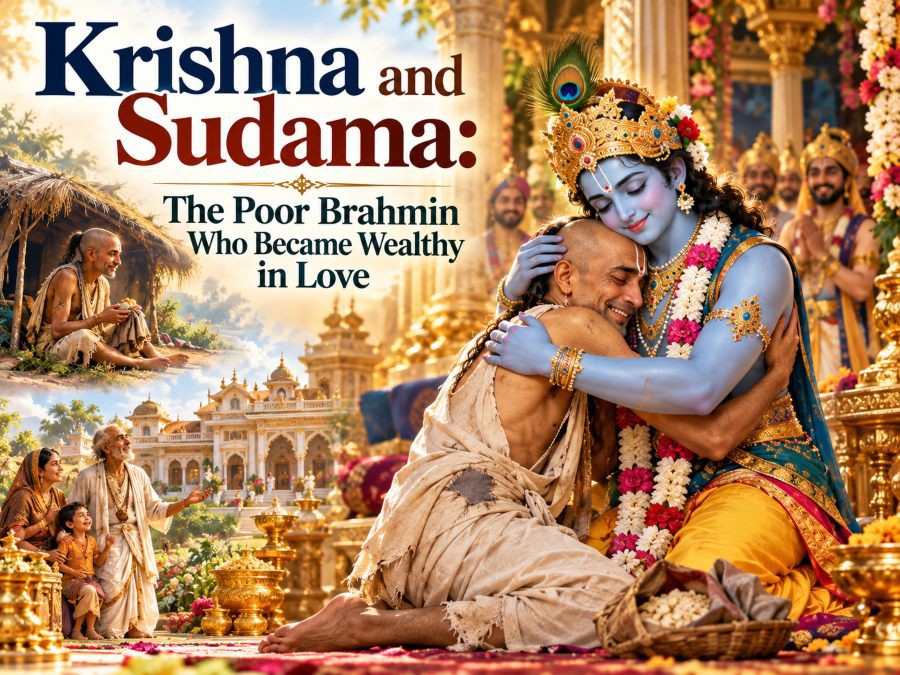 Krishna and Sudama: The Poor Brahmin Who Became Wealthy in LoveRead more
 -
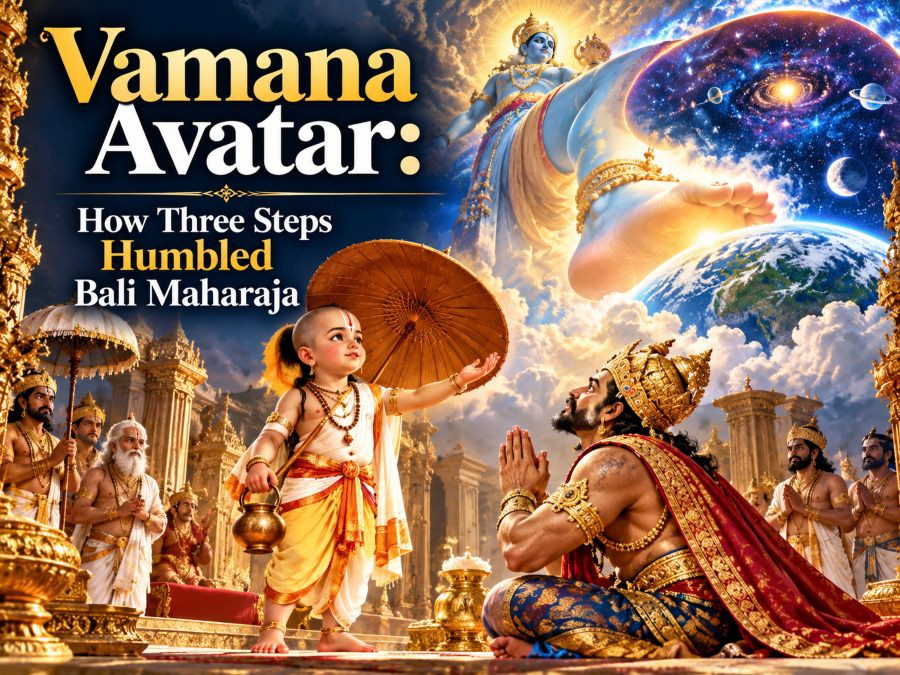 Vamana Avatar: How Three Steps Humbled Bali MaharajaRead more
Why did a powerful king give away three worlds to a boy asking for three steps? Learn the Vamana avatar story from...
-
 The Bhagavatam on Marriage: Duty, Love and Spiritual PartnershipRead more
What does the Bhagavatam say about marriage? Through the stories of Kardama and Devahuti, Rukmini's secret letter and...
-
 What Is Prema? The Bhagavatam's Highest Stage of Love for GodRead more
Prema is love for God with no "because" attached. Learn how the Bhagavatam describes it, the nine steps from faith to...
-
 Is Shiva Parvati Kalyana Mentioned in Srimad Bhagavatam? What the Scripture Really SaysRead more
Looking for Shiva and Parvati's wedding in the Srimad Bhagavatam? Find out what the scripture actually describes,...
-
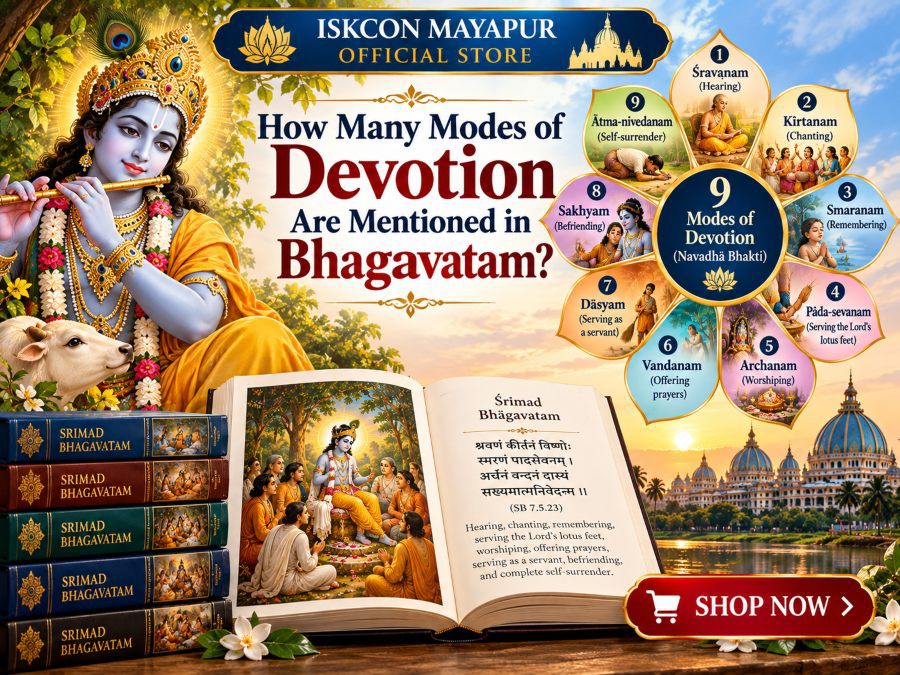 How Many Modes of Devotion Are Mentioned in Bhagavatam?Read more
A young boy named Prahlada listed nine ways to serve God, and the Bhagavatam keeps them as its answer. Learn what the...
-
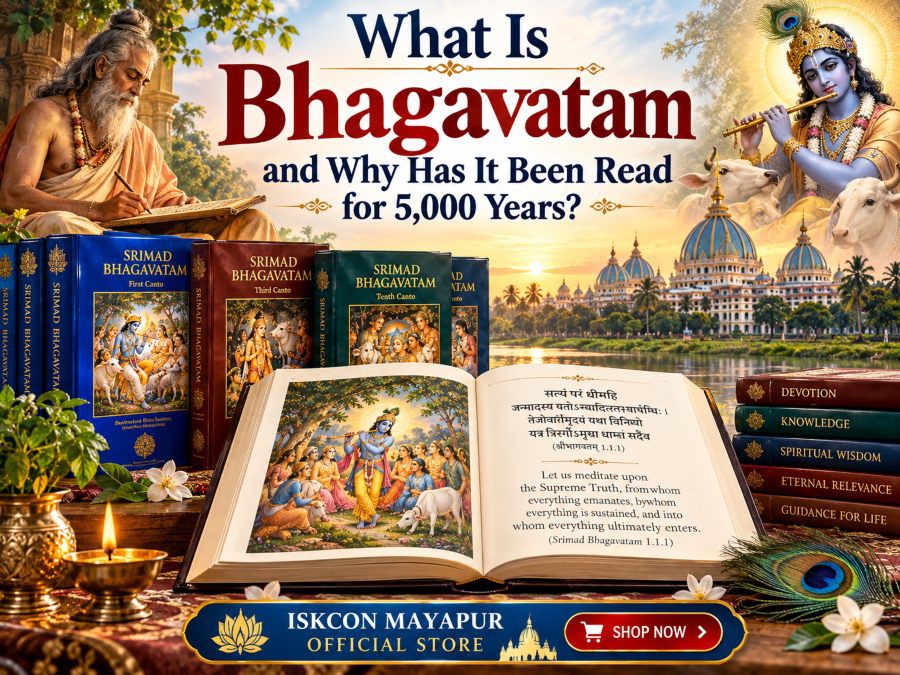 What Is Bhagavatam and Why Has It Been Read for 5,000 Years?Read more
A dying king asked one question, and the answer became the Bhagavatam. Learn what this Sanskrit scripture contains,...
-
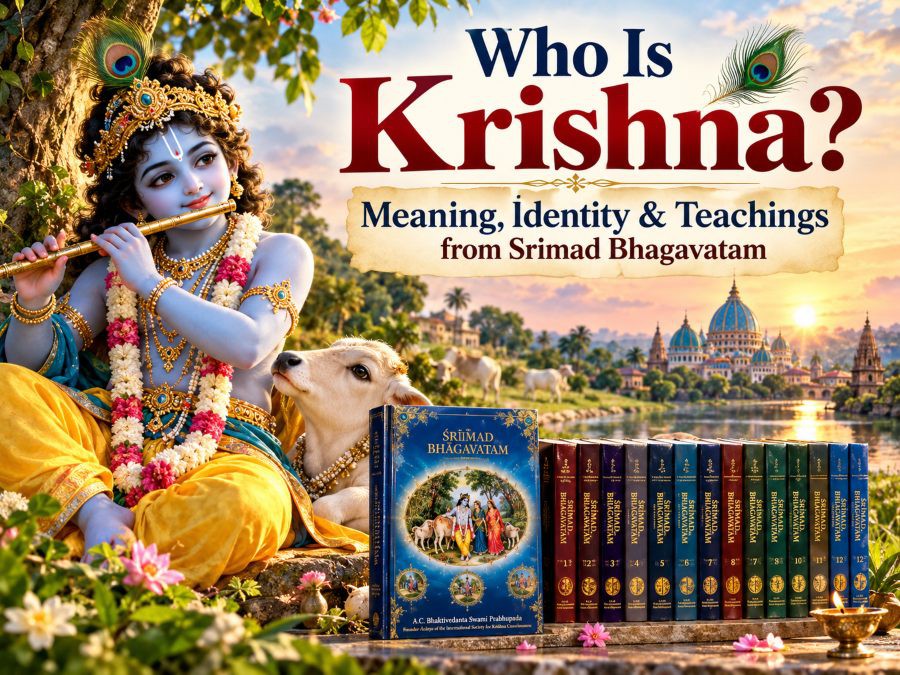 Who Is Lord Krishna? His Meaning, Teachings and Pastimes ExplainedRead more
Discover who Krishna is according to Srimad Bhagavatam, including His divine identity, childhood pastimes, teachings,...
-
 Incense in Islam: Bakhoor, Agarbatti and What Tradition SaysRead more
Is burning fragrance part of Muslim tradition? Explore incense in Islam, from the Prophetic practice of fumigating...
-
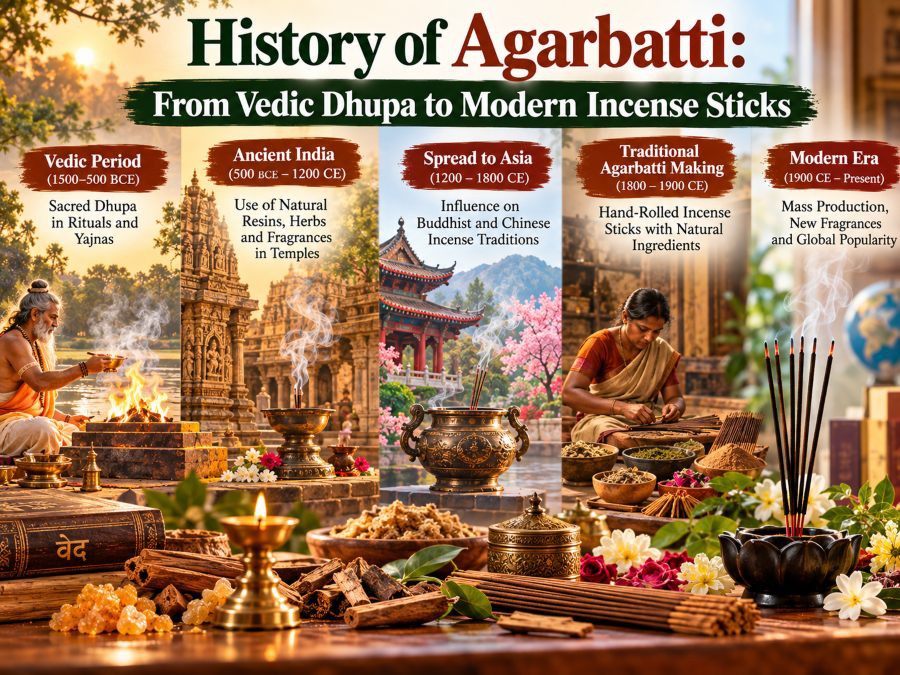 History of Agarbatti: From Vedic Dhupa to Modern Incense SticksRead more
Where did agarbatti really come from? Follow the history of agarbatti from Vedic fire rituals and temple dhupa to...
Blog categories
- Default category (0)
- MUSICAL INSTRUMENT (1)
- BOOK (5)
- DEVOTIONAL GIFT (0)
- Blog (30) click
- CHANDAN (12)
- Bhagavatam Wisdom Series (68)
- Krishna Consciousness (14)
- Mridangam Musical Instrument (6)
- Bhagavad Gita for Beginners (13)
- Bhagavad Gita As It Is (37) click
- Bhagavad Gita As It Is Telugu (0)
- Bhagavad Gita As It Is Marathi (0)
- Bhagavad Gita As It Is In Hindi (0)
- Bhagavad Gita As It Is In English (0)
- Bhagavad Gita As It Is In Bengali (8)
- Bhagavad Gita As It Is In Kannada (0)
- Bhagavad Gita As It Is In Gujarati (0)
- Bhagavad Gita As It Is In Panjabi (0)
- Bhagavad Gita As It Is In Tamil (0)
- Bhagavad Gita As It Is Odia (0)
- BHAGAVAD GITA As It Is GERMAN (0)
- Bhagavad Gita As It Is In French (0)
- Bhagavad Gita As It Is In Nepali (0)
- Bhagavad Gita As It Is In Assamese (0)
- Incense or Agarbatti (38)
- Lord Chaitanya Mahaprabhu (3)
- Vedic Temple Mayapur (14)
- kalki (15)
- Mahabharata – Dharma & Destiny (27)
- Vaishnava Scriptures (4)
- healthy product (4)
- chaitanya mahaprabhu (5)
- Tulsi Mala Guide (17)
Search in blog
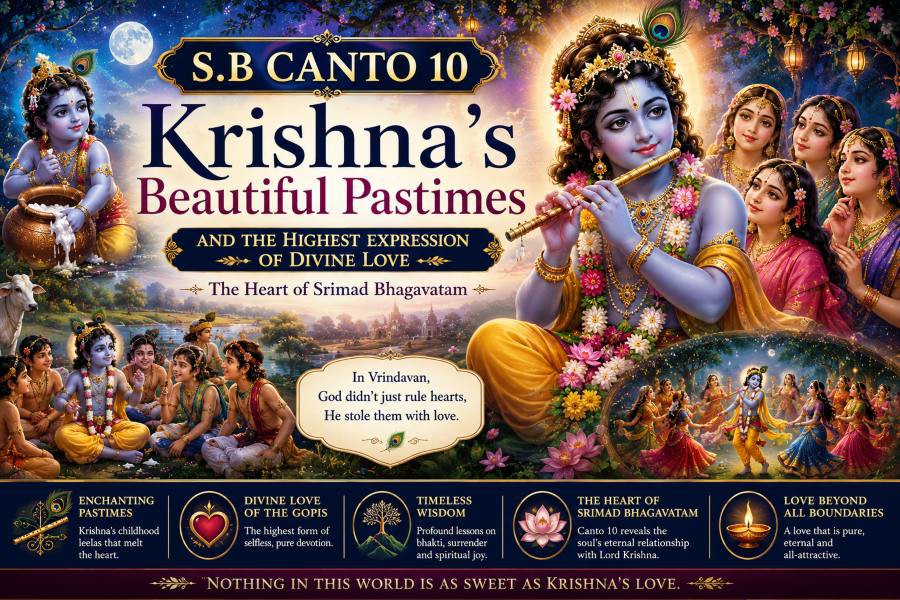
S.B Canto 10 — Krishna’s Beautiful Pastimes and the Highest Expression of Divine Love
Imagine a world where the Supreme Truth is not approached through fear, obligation, or distant reverence, but through friendship, affection, laughter, and pure love.
That world exists within Srimad Bhagavatam Canto 10.
Among all twelve cantos of the Srimad Bhagavatam, none is more celebrated, more widely read, or more deeply cherished than the Tenth Canto. It contains the divine appearance of Lord Krishna, His childhood pastimes in Vrindavan, His loving exchanges with devotees, His protection of the innocent, and His revelation of the highest spiritual truths through relationships founded entirely on love.
For countless readers around the world, the Srimad Bhagavatam serves as a gateway into understanding these extraordinary pastimes and the profound spiritual philosophy hidden within them.
Compiled by Vyasadeva, explained through the teachings of A. C. Bhaktivedanta Swami Prabhupada, and shared globally through ISKCON, Canto 10 occupies a unique place in spiritual literature. It does not merely describe God. It reveals how the Supreme Lord interacts with those who love Him.
Why Canto 10 Feels Different From Everything Before It
The earlier cantos prepare readers carefully.
They discuss philosophy.
They explore cosmology.
They examine kings, sages, dynasties, and spiritual principles.
Then something remarkable happens.
Krishna appears.
The tone changes.
The atmosphere changes.
The reader moves from preparation into direct encounter.
This shift is intentional.
The Srimad Bhagavatam gradually elevates consciousness until readers become ready to appreciate Krishna not only as the Supreme Lord but as the most attractive person.
This is one reason the name "Krishna" carries such significance.
It means "the all-attractive one."
Every quality reaches perfection in Him.
Beauty.
Wisdom.
Strength.
Compassion.
Humor.
Affection.
Everything.
The Night That Changed History
The appearance of Krishna is one of the most beautiful moments in spiritual literature.
The world had become burdened by injustice and oppression.
Powerful rulers abused their authority.
Fear spread throughout society.
The Earth herself appealed for help.
The response came in the form of divine descent.
Krishna appeared within the prison of Mathura as the son of Vasudeva and Devaki.
Yet even this extraordinary event unfolded with profound symbolism.
The Supreme Lord did not appear surrounded by political power.
He appeared to protect devotion.
He appeared to uplift the innocent.
He appeared to establish spiritual principles.
Most importantly, He appeared to exchange love with His devotees.
Why Krishna's Childhood Captivates the Heart
Many religious traditions focus primarily on divine power.
Canto 10 certainly includes power.
Krishna defeats demons.
He protects devotees.
He performs astonishing miracles.
Yet these are not the center of attraction.
The real beauty lies elsewhere.
It lies in His childhood.
Readers encounter a God who plays.
A God who laughs.
A God who steals butter.
A God who runs through forests with friends.
A God who allows His mother to chase Him with a stick.
At first glance, these stories seem simple.
They are anything but simple.
They reveal one of the deepest teachings of the Srimad Bhagavatam:
Love is greater than power.
Krishna possesses unlimited power.
Yet He willingly allows Himself to be controlled by the love of His devotees.
The Mystery of Mother Yashoda's Love
One story captures this truth perfectly.
Mother Yashoda attempted to bind Krishna with rope after He had mischievously stolen butter.
Every rope she used proved too short.
No matter how much she added, the rope remained insufficient.
Eventually Krishna allowed Himself to be bound.
This pastime reveals a profound spiritual lesson.
The infinite cannot be controlled by physical strength.
The infinite can be touched through love.
Yashoda did not see Krishna as God.
She saw Him as her son.
That maternal affection created an intimacy impossible through intellectual understanding alone.
This is one reason devotees treasure this pastime.
It demonstrates that the highest spiritual relationship is personal.
Friendship Without Fear
The cowherd boys of Vrindavan represent another extraordinary aspect of devotion.
They did not approach Krishna with formal reverence.
They played with Him.
Laughed with Him.
Shared meals with Him.
Ran through forests with Him.
From a philosophical perspective, this is astonishing.
The Supreme Lord became their closest friend.
The Srimad Bhagavatam teaches that spiritual life is not limited to duty and discipline.
Those practices are important.
Yet the ultimate goal extends beyond obligation.
The ultimate goal is relationship.
The cowherd boys experienced a friendship so pure that they often forgot Krishna's divinity entirely.
Their affection was spontaneous, natural, and completely free from selfish motivation.
When Demons Enter Vrindavan
The peaceful atmosphere of Vrindavan was occasionally disrupted by danger.
Numerous demons attempted to harm Krishna and His associates.
Putana.
Aghasura.
Bakasura.
Trinavarta.
And many others.
On the surface, these stories describe dramatic confrontations.
Their symbolic meaning reaches further.
Each demon represents obstacles encountered on the spiritual path.
Pride.
Envy.
Hypocrisy.
Material attachment.
False ego.
Krishna's victories remind readers that spiritual growth requires overcoming internal enemies as well as external challenges.
The stories remain engaging because they operate on multiple levels simultaneously.
Children enjoy the adventure.
Philosophers appreciate the symbolism.
Devotees experience deeper spiritual insights.
The Govardhana Episode: A Lesson in Trust
Among the most celebrated pastimes in Canto 10 is the lifting of Govardhana Hill.
The residents of Vrindavan traditionally performed sacrifices for Indra, the king of heaven.
Krishna encouraged them to focus instead on their immediate duties and gratitude toward Govardhana Hill.
Indra became angry.
A devastating storm followed.
The situation appeared hopeless.
Then Krishna lifted Govardhana Hill with the little finger of His left hand.
For seven days, the residents remained protected beneath it.
The story illustrates several important themes:
· Divine protection exceeds material calculation.
· Pride creates suffering.
· Genuine devotion attracts grace.
· Trust grows stronger during difficulty.
The residents of Vrindavan did not merely witness a miracle.
They experienced a deeper relationship with Krishna.
That relationship became the true source of security.
The Beauty Hidden Behind Every Pastime
One reason Canto 10 continues inspiring readers worldwide is that every story contains layers of meaning.
The narratives entertain.
The philosophy enlightens.
The emotions transform.
Readers gradually discover that Krishna's pastimes are not simply historical events.
They reveal eternal spiritual realities.
Love.
Trust.
Friendship.
Service.
Compassion.
Joy.
These qualities become visible in their purest form through Krishna's interactions with His devotees.
That is why the Tenth Canto occupies such a cherished place within the Srimad Bhagavatam.
It reveals not only who God is.
It reveals how deeply God loves.
The Rasa Dance: Understanding the Highest Expression of Divine Love
Few sections of the Srimad Bhagavatam have attracted as much attention, admiration, and misunderstanding as the Rasa Dance.
Readers approaching this pastime through ordinary material thinking often struggle to understand its significance.
The Bhagavatam repeatedly emphasizes that the relationship between Krishna and the gopis exists on a completely spiritual platform.
This is not a story about worldly romance.
It is a revelation of pure devotion.
The gopis desired nothing for themselves.
They did not seek wealth.
They did not seek power.
They did not seek liberation.
They wanted only Krishna's happiness.
That distinction changes everything.
Material love generally asks:
"What can I receive?"
Spiritual love asks:
"What can I give?"
The gopis represent the highest example of this selfless devotion.
Their love contains no calculation.
No selfish motive.
No personal agenda.
Only complete dedication.
Because of this purity, the Srimad Bhagavatam presents them as the highest standard of devotion.
Why Separation Deepens Love
One of the most profound themes in Canto 10 is separation.
Many people assume love reaches perfection through constant association.
The Bhagavatam introduces another dimension.
Sometimes separation intensifies appreciation.
When Krishna temporarily disappeared from the gopis during the Rasa Dance, their remembrance of Him became even deeper.
Their minds became completely absorbed in His qualities, His words, and His presence.
This teaches an important spiritual principle.
Love grows through remembrance.
The more one remembers Krishna, the stronger devotion becomes.
The gopis demonstrated the highest level of this consciousness.
Even apparent separation strengthened their connection.
This concept appears repeatedly throughout devotional literature because it reflects a deep spiritual reality.
When Krishna Leaves Vrindavan
One of the most emotional transitions in the Srimad Bhagavatam occurs when Krishna leaves Vrindavan for Mathura.
For the residents of Vrindavan, this separation felt unbearable.
The cowherd boys missed their friend.
Mother Yashoda missed her son.
Nanda Maharaja missed his beloved child.
The gopis experienced intense longing.
Yet even here, the Bhagavatam reveals a remarkable lesson.
Physical distance cannot destroy genuine spiritual connection.
The residents of Vrindavan remained completely absorbed in Krishna.
Their devotion did not weaken.
It deepened.
Modern readers often associate relationships with physical proximity.
The Bhagavatam points toward something higher.
Real love exists within consciousness.
When remembrance remains alive, the relationship remains alive.
Krishna in Mathura and Dvaraka
After leaving Vrindavan, Krishna entered a new phase of His earthly pastimes.
He confronted oppressive rulers.
Protected the innocent.
Established justice.
Guided kings and leaders.
Eventually He became the central figure of Dvaraka.
Here readers encounter another dimension of Krishna's personality.
The playful child of Vrindavan now appears as a statesman, protector, strategist, and king.
This reveals the completeness of His character.
He is simultaneously:
· The beloved child of Yashoda
· The friend of the cowherd boys
· The beloved of the gopis
· The protector of devotees
· The guide of kings
· The Supreme Lord
Each relationship reveals a different aspect of divine perfection.
Material Love and Spiritual Love: A Vital Difference
One reason Canto 10 continues attracting readers is its exploration of love.
Yet the Bhagavatam carefully distinguishes spiritual love from material attachment.
Material attachment often depends upon personal benefit.
People remain connected as long as expectations are fulfilled.
When expectations fail, disappointment frequently follows.
Spiritual love operates differently.
It seeks the happiness of the beloved.
It gives rather than demands.
It serves rather than controls.
The relationships within Vrindavan illustrate this principle beautifully.
The residents loved Krishna for who He was, not for what He provided.
This is why their devotion occupies such a special place within the Srimad Bhagavatam.
Their love reflects the soul's natural relationship with the Supreme Lord.
The Spiritual Psychology of Bhakti
Canto 10 is not merely a collection of stories.
It is a study of consciousness.
Each devotee demonstrates a unique relationship with Krishna.
Mother Yashoda expresses parental affection.
The cowherd boys express friendship.
The gopis express loving devotion.
Nanda Maharaja expresses protective care.
Different emotions.
One center.
Krishna.
This variety reveals an important truth.
Spirituality is not about becoming emotionally empty.
It is about directing emotions toward their highest purpose.
The Bhagavatam does not reject love.
It perfects love.
It does not reject relationships.
It spiritualizes relationships.
This understanding helps explain why bhakti remains such a powerful path.
It engages the entire heart.
Why Canto 10 Is Called the Heart of Srimad Bhagavatam
Many spiritual teachers describe Canto 10 as the heart of the entire Bhagavatam.
There are several reasons.
First, it reveals Krishna directly.
Second, it displays the highest examples of devotion.
Third, it demonstrates the ultimate goal of spiritual life.
Earlier cantos prepare the reader.
They provide philosophy.
They establish understanding.
They develop perspective.
Canto 10 reveals the destination.
The destination is loving relationship with Krishna.
Not merely knowledge.
Not merely discipline.
Not merely duty.
Love.
Pure, selfless, unconditional love.
That is the central message.
What Modern Readers Can Learn From Canto 10
Despite describing events that occurred thousands of years ago, Canto 10 remains remarkably relevant.
Love Is Stronger Than Fear
The residents of Vrindavan acted from affection rather than fear.
This transformed their relationship with Krishna.
Relationships Matter More Than Possessions
Many characters possessed little material wealth.
Yet they experienced immense spiritual happiness.
Humility Creates Spiritual Growth
The most beloved devotees consistently displayed humility.
Joy Has Spiritual Value
The Bhagavatam presents spiritual life as joyful, vibrant, and deeply personal.
The Heart Seeks Connection
Every human being searches for meaningful relationships.
Canto 10 explains that the deepest fulfillment comes through reconnecting with the Supreme Lord.
The Highest Expression of Divine Love
The title of this article contains an important phrase:
"The Highest Expression of Divine Love."
That phrase captures the essence of Canto 10.
Every story points toward love.
The mother's love of Yashoda.
The friendship of the cowherd boys.
The devotion of the gopis.
The loyalty of devotees.
The compassion of Krishna.
Together these relationships reveal a vision of spirituality unlike any other.
The Supreme Truth is not distant.
Not impersonal.
Not inaccessible.
The Supreme Truth is Krishna.
And Krishna invites loving relationships.
This understanding transforms spiritual life from obligation into affection.
From duty into devotion.
From philosophy into living experience.
Why Millions Continue Reading Canto 10
Centuries have passed.
Empires have risen and fallen.
Languages have changed.
Cultures have evolved.
Yet readers continue returning to Srimad Bhagavatam Canto 10.
Why?
Because it speaks directly to the deepest longing of the human heart.
People seek love.
Meaning.
Belonging.
Purpose.
The pastimes of Krishna address these desires at their spiritual root.
Through the wisdom preserved by Vyasadeva, shared by A. C. Bhaktivedanta Swami Prabhupada, and distributed worldwide through ISKCON, countless readers have discovered that Canto 10 is far more than sacred history.
It is an invitation.
An invitation to remember Krishna.
To understand devotion.
To cultivate love free from selfishness.
To experience a relationship with the Supreme Lord that continues beyond time itself.
That is why Canto 10 stands at the center of the Srimad Bhagavatam.
And that is why its message continues to inspire generation after generation.
Posted in: Bhagavatam Wisdom Series
Related posts
-
 Why to read srimad bhagavatamReading the Srimad Bhagavatam fosters deep spiritual growth by narrating the life and teachings of Lord Krishna,...Read more
 -
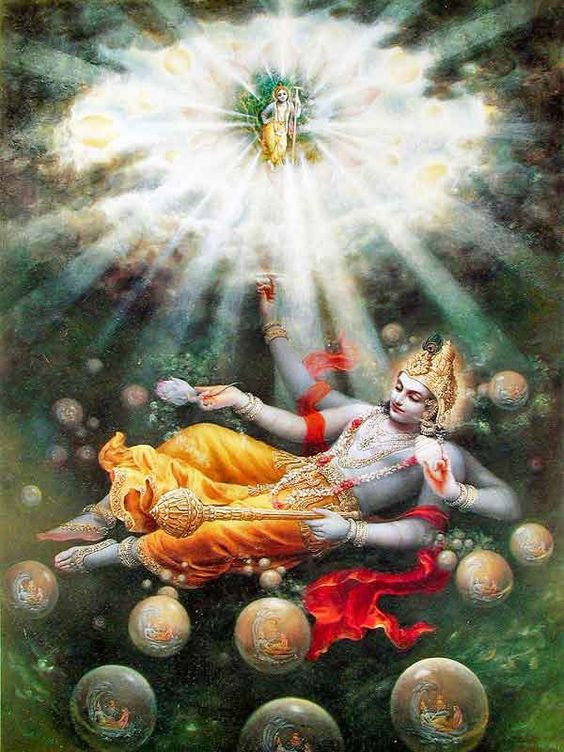 When was srimad bhagavatam written?The Srimad Bhagavatam is believed to have been written around 9th-10th century CE, though its oral traditions date...Read more
 -
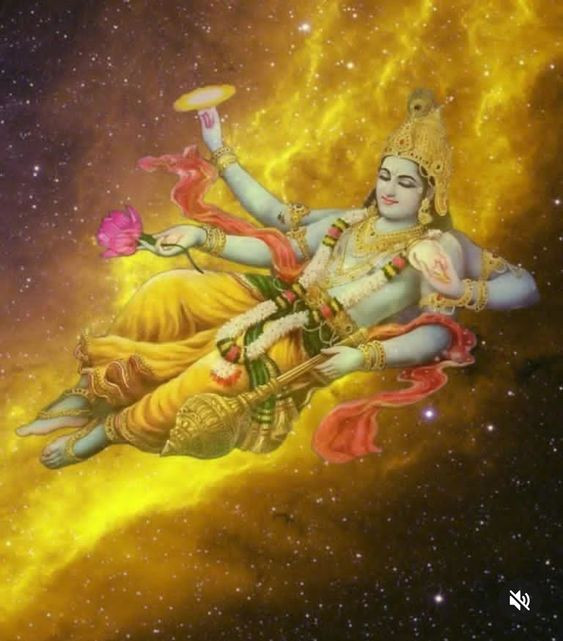 How many chapters are there in srimad bhagavatam?The Srimad Bhagavatam consists of 12 cantos (books) containing 335 chapters in total. Each canto covers various...Read more
 -
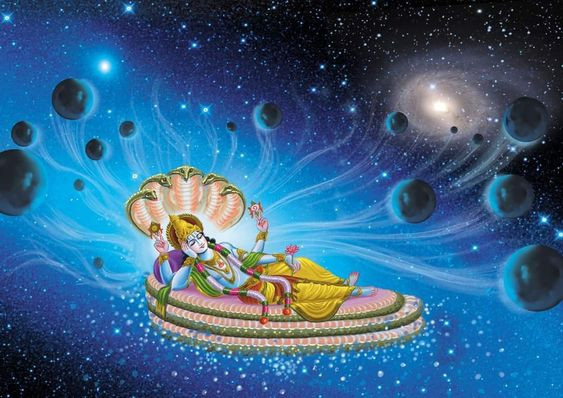 How many skandhas are there in srimad bhagavatamThe Srimad Bhagavatam is divided into 12 skandhas (cantos or books). Each skandha explores different themes,...Read more
 -
 How many slokas in srimad bhagavatamThe Srimad Bhagavatam contains approximately 18,000 shlokas (verses). These verses are spread across its 12 skandhas...Read more
Leave a comment
Comments
Ask about Islam and muslims
By: Roshan On 08/04/2026Please inform us that did you ask Muslims to change their Religion to join your Krishna life style?