
Why did Krishna run to embrace a poor brahmin in rags? Read the Sudama story from the Bhagavatam and learn how a...
Latest posts
-
 Krishna and Sudama: The Poor Brahmin Who Became Wealthy in LoveRead more
 -
 Vamana Avatar: How Three Steps Humbled Bali MaharajaRead more
Why did a powerful king give away three worlds to a boy asking for three steps? Learn the Vamana avatar story from...
-
 The Bhagavatam on Marriage: Duty, Love and Spiritual PartnershipRead more
What does the Bhagavatam say about marriage? Through the stories of Kardama and Devahuti, Rukmini's secret letter and...
-
 What Is Prema? The Bhagavatam's Highest Stage of Love for GodRead more
Prema is love for God with no "because" attached. Learn how the Bhagavatam describes it, the nine steps from faith to...
-
 Is Shiva Parvati Kalyana Mentioned in Srimad Bhagavatam? What the Scripture Really SaysRead more
Looking for Shiva and Parvati's wedding in the Srimad Bhagavatam? Find out what the scripture actually describes,...
-
 How Many Modes of Devotion Are Mentioned in Bhagavatam?Read more
A young boy named Prahlada listed nine ways to serve God, and the Bhagavatam keeps them as its answer. Learn what the...
-
 What Is Bhagavatam and Why Has It Been Read for 5,000 Years?Read more
A dying king asked one question, and the answer became the Bhagavatam. Learn what this Sanskrit scripture contains,...
-
 Who Is Lord Krishna? His Meaning, Teachings and Pastimes ExplainedRead more
Discover who Krishna is according to Srimad Bhagavatam, including His divine identity, childhood pastimes, teachings,...
-
 Incense in Islam: Bakhoor, Agarbatti and What Tradition SaysRead more
Is burning fragrance part of Muslim tradition? Explore incense in Islam, from the Prophetic practice of fumigating...
-
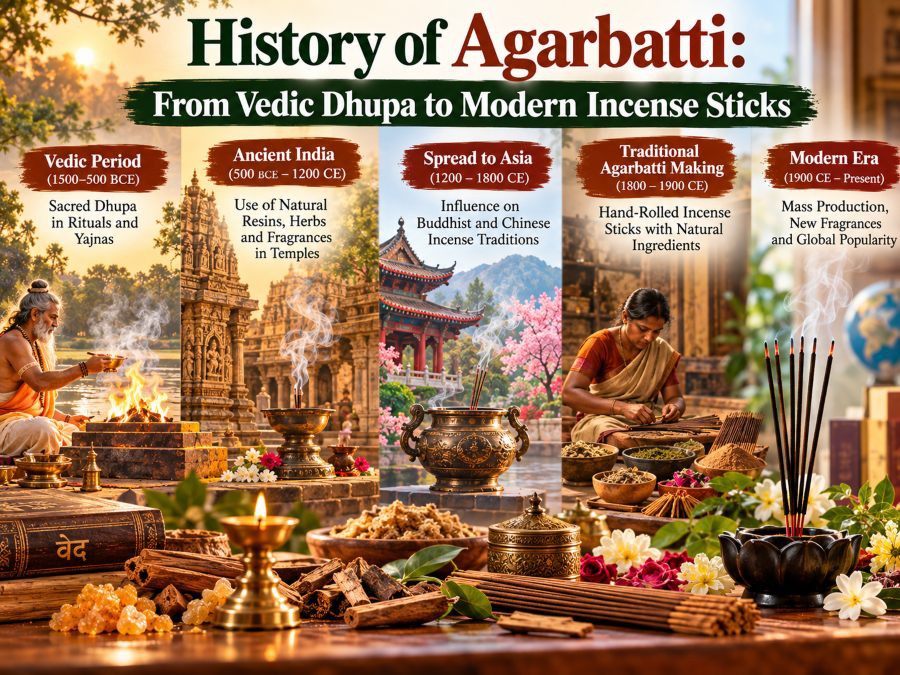 History of Agarbatti: From Vedic Dhupa to Modern Incense SticksRead more
Where did agarbatti really come from? Follow the history of agarbatti from Vedic fire rituals and temple dhupa to...
Blog categories
- Default category (0)
- MUSICAL INSTRUMENT (1)
- BOOK (5)
- DEVOTIONAL GIFT (0)
- Blog (30) click
- CHANDAN (12)
- Bhagavatam Wisdom Series (68)
- Krishna Consciousness (14)
- Mridangam Musical Instrument (6)
- Bhagavad Gita for Beginners (13)
- Bhagavad Gita As It Is (37) click
- Bhagavad Gita As It Is Telugu (0)
- Bhagavad Gita As It Is Marathi (0)
- Bhagavad Gita As It Is In Hindi (0)
- Bhagavad Gita As It Is In English (0)
- Bhagavad Gita As It Is In Bengali (8)
- Bhagavad Gita As It Is In Kannada (0)
- Bhagavad Gita As It Is In Gujarati (0)
- Bhagavad Gita As It Is In Panjabi (0)
- Bhagavad Gita As It Is In Tamil (0)
- Bhagavad Gita As It Is Odia (0)
- BHAGAVAD GITA As It Is GERMAN (0)
- Bhagavad Gita As It Is In French (0)
- Bhagavad Gita As It Is In Nepali (0)
- Bhagavad Gita As It Is In Assamese (0)
- Incense or Agarbatti (38)
- Lord Chaitanya Mahaprabhu (3)
- Vedic Temple Mayapur (14)
- kalki (15)
- Mahabharata – Dharma & Destiny (27)
- Vaishnava Scriptures (4)
- healthy product (4)
- chaitanya mahaprabhu (5)
- Tulsi Mala Guide (17)
Search in blog

Why an Authentic Assamese Gita Belongs in Every Home
Why Every Assamese Household Needs an Authentic Copy of the Gita
For families seeking an Authentic Assamese translation of Gita, the Bhagavad Gita is far more than a sacred book placed respectfully on a shelf. It is a timeless guide for life, duty, inner strength, spiritual clarity, and daily reflection. In Assamese households, where tradition, devotion, and family culture often remain closely connected, having an authentic copy of the Gita in a language people can read comfortably makes a deep and lasting difference. It brings scriptural wisdom from a distant idea into the heart of the home, where it can be read, discussed, remembered, and lived.
An authentic Assamese edition matters because understanding transforms relationship. Many people respect the Bhagavad Gita, but not everyone can fully connect with Sanskrit or formal translations that feel distant in tone. When the teachings are available in clear Assamese, the text becomes more personal and usable. Elders can read it for daily spiritual nourishment, younger family members can understand its relevance, and the household as a whole can develop a stronger connection to dharma, devotion, and moral reflection.
In an age of mental pressure, family distraction, and fast-moving digital habits, the presence of the Gita at home carries renewed importance. It offers stillness in a noisy world, wisdom in moments of confusion, and a spiritual anchor across generations. That is why every Assamese household can benefit from owning an authentic copy.
The Gita Is Not Just a Religious Book
One of the biggest misconceptions about the Bhagavad Gita is that it is only for ritual use, temple reading, or advanced spiritual study. In reality, the Gita is one of the most practical and universal spiritual texts ever given. It addresses anxiety, confusion, responsibility, grief, action, faith, self-discipline, devotion, and the purpose of human life. These are not issues limited to saints or scholars. They are part of everyday family life.
This is exactly why the Gita belongs in the home. A household is where people face real dilemmas, emotional stress, work pressure, family duty, and moral choices. The Gita speaks directly to such experiences. It teaches how to act without losing inner balance, how to remain spiritually grounded while fulfilling worldly responsibilities, and how to see life through a deeper lens than temporary success or failure.
For Assamese families, this practical value becomes even stronger when the text is available in familiar language. A scripture is most transformative when it can be understood, not merely admired. An authentic Assamese edition allows the Gita to become part of normal family reading rather than a distant sacred object that few actually engage with.
That shift is powerful. The book stops being decorative and becomes active. It starts shaping thought, speech, values, and atmosphere in the home.
Why Authenticity Matters in a Gita Translation
Not every edition of a spiritual text carries the same value. When a family chooses a Gita for home use, authenticity matters deeply. A diluted, loosely interpreted, or overly simplified version may reduce the philosophical and devotional depth of the original teaching. An authentic copy preserves the real meaning, tone, and spiritual integrity of the scripture.
This is especially important with the Bhagavad Gita because it is not a casual motivational book. It is a sacred dialogue with precise spiritual teachings. Concepts like dharma, yoga, atma, karma, bhakti, and surrender cannot be translated carelessly without weakening their significance. A trustworthy Assamese edition should communicate these truths clearly while remaining faithful to the original message.
Authenticity also builds trust across generations. When elders place a copy of the Gita in the home, they are not only keeping a book. They are preserving a lineage of wisdom. A strong translation allows children and younger readers to receive teachings in a form that is readable but still rooted in genuine spiritual authority.
This is why families should not choose only based on price, cover design, or convenience. The quality of translation, the spiritual faithfulness of the edition, and the clarity of presentation all matter. An authentic copy becomes a long-term companion, not just a one-time purchase.
The Importance of Reading the Gita in One’s Own Language
Language changes everything in spiritual reading. A person may respect a scripture in its original form but still feel distant from it if the language is difficult. When the Gita is read in Assamese, its teachings come closer to the reader’s own thought patterns, emotions, and daily experience. The words land more naturally. Reflection becomes easier. Memory becomes stronger.
This matters in family settings because not everyone in the household has the same level of education, Sanskrit familiarity, or reading confidence in formal English or Hindi. An Assamese edition opens the door much wider. It allows grandparents, parents, and younger members of the family to approach the text in a language that feels intimate and culturally connected.
There is also a special emotional power in reading spiritual truth in one’s mother tongue. It does not feel imported or distant. It feels like wisdom entering the home directly. That emotional closeness often leads to more regular reading and deeper respect for the text.
For Assamese households, this is not a small benefit. It can turn occasional reverence into daily engagement. A scripture that is understood has a much greater chance of being practiced.
A Gita at Home Strengthens Family Culture
A home is shaped not only by the people who live there, but by the ideas, habits, and values that circulate within it. Keeping an authentic Gita in the house can gradually strengthen family culture in ways that are subtle but powerful. It introduces a source of guidance that is higher than momentary mood, outside pressure, or impulsive reaction.
Families often struggle today with fragmented routines, digital distraction, and reduced time for meaningful shared reflection. A Gita in the household can become a point of reconnection. Even brief reading sessions, shared verses, or occasional discussions around its teachings can create a more thoughtful and spiritually rooted atmosphere.
The Gita also helps establish moral clarity. It teaches discipline without harshness, duty without coldness, and detachment without indifference. These are deeply useful family values. Children raised in an environment where sacred wisdom is present often absorb something important even before they fully understand every teaching. They grow up knowing that life has purpose, actions have meaning, and spiritual reflection matters.
For Assamese families who want to preserve both cultural identity and spiritual depth, the Gita becomes more than a book. It becomes part of the home’s inner culture.
The Gita Offers Guidance in Times of Stress and Uncertainty
Every household goes through periods of difficulty. There may be financial strain, health concerns, relationship tension, career pressure, grief, or mental restlessness. During such moments, people often search for something steady to hold onto. The Gita offers exactly that kind of strength.
Its teachings do not deny pain or complexity. Instead, they help people see these experiences through a wider spiritual vision. The Gita teaches composure in adversity, steadiness in action, faith in divine guidance, and the importance of fulfilling duty without becoming crushed by anxiety over results. These lessons are not abstract. They are directly useful in real life.
Having an authentic Assamese copy at home means this guidance is available when it is needed most. A family member does not have to wait for a lecture or search endlessly online for scattered interpretations. The wisdom is already there, in readable form, close at hand.
This constant availability is one of the quiet strengths of keeping sacred books at home. The right verse, read at the right moment, can sometimes change the entire tone of a difficult day. Over time, the Gita becomes a source of resilience.
Why the Gita Matters for Children and Younger Readers
Many parents assume the Gita is only for adults or elders, but that is a missed opportunity. Young people benefit greatly from exposure to the Gita, especially when it is presented in a language they can understand and in a home where it is treated with affection rather than pressure. The earlier children encounter spiritual wisdom, the more naturally it becomes part of their inner framework.
The Gita can help younger readers develop values that are urgently needed today: self-control, respect, responsibility, inner stability, and a deeper sense of purpose beyond social comparison. In a world where many children and teenagers are shaped by constant digital stimulation and external validation, even occasional contact with the Gita can plant a different seed.
An Assamese edition is especially useful here because it lowers the barrier to entry. Family members can explain verses more easily, and younger readers can gradually build familiarity without feeling that the text belongs only to another linguistic world. This makes the Gita more approachable and less intimidating.
What matters is not forcing advanced philosophy too early, but creating a home atmosphere where the Gita is seen as relevant, wise, and living. Over time, that familiarity can become one of the greatest gifts a family passes down.
A Sacred Book That Connects Tradition and Daily Life
One reason the Gita remains so powerful across generations is that it bridges the spiritual and the practical. It speaks of the soul, God, devotion, and liberation, but it also speaks to action, duty, discipline, and ethical clarity. This makes it ideal for household life. It is not a text that demands escape from the world. It teaches how to live meaningfully within it.
For Assamese households, this bridge matters a lot. Many families want to remain connected to spiritual tradition without feeling cut off from modern education, work, and contemporary life. The Gita supports exactly that balance. It helps people remain inwardly anchored while outwardly engaged.
An authentic Assamese copy allows that connection to become more natural. The family can honor tradition without making spirituality feel distant or inaccessible. The text enters everyday life through familiar words and practical reflection.
That is one reason the Gita belongs in the home rather than only in formal religious settings. Household life itself is one of the places where its wisdom is most needed.
The Value of Keeping a Physical Copy at Home
In the digital age, many people read quotes, verses, and religious summaries online. While this can be useful, it is not the same as keeping a physical Gita in the house. A real copy carries presence. It invites reading, reverence, and continuity in a way that fleeting screen-based content often does not.
A physical book can be kept in a clean place, opened during morning reflection, read with family, and returned to repeatedly. It creates a visible reminder that spiritual wisdom has a place in the home. It is also easier for elders and traditional readers who may prefer page-based reading over digital browsing.
There is another benefit too: a physical copy encourages slower reading. Instead of jumping between fragments, the reader can spend time with the text more deeply. This leads to better absorption and more thoughtful contemplation.
For households that want to build lasting spiritual habits, a physical Assamese copy of the Gita is far more than a symbolic possession. It becomes part of the rhythm of home life.
Why Every Assamese Household Should Consider It Essential
When all these reasons are taken together, the conclusion becomes clear. An authentic Assamese copy of the Gita is not just helpful. For many homes, it can be essential. It supports spiritual understanding, family culture, moral clarity, emotional resilience, intergenerational connection, and daily reflection in one single text.
Very few books can offer that range of value. The Gita speaks to the elder looking for peace, the parent seeking wisdom, the child learning values, and the seeker searching for direction. When available in authentic Assamese translation, it becomes accessible enough to truly serve the whole household.
This is why owning a good edition matters. The right copy is not a decorative object or a ritual accessory. It is a living source of guidance. It brings wisdom into the language of the home and allows sacred teaching to become part of ordinary life.
Conclusion
Every Assamese household can benefit from keeping an authentic copy of the Bhagavad Gita. It brings timeless spiritual wisdom into daily family life, making teachings on duty, devotion, inner strength, and moral clarity available in a language that feels close and natural. More than a religious text, the Gita is a guide for living with purpose, balance, and spiritual awareness.
An authentic Assamese edition makes this wisdom truly accessible. It helps elders read with comfort, supports younger generations in understanding sacred teachings, and strengthens the cultural and spiritual atmosphere of the home. In a world full of noise, confusion, and distraction, the Gita offers something steady, deep, and enduring.
That is why keeping an authentic copy is not only a matter of tradition. It is a meaningful investment in the spiritual health of the household itself.
Posted in: Blog
Related posts
-
 Who is chaitanya mahaprabhu?Chaitanya Mahaprabhu (1486–1534) was a prominent saint and philosopher in India, widely recognized as an incarnation...Read more
 -
 Chaitanya Mahaprabhu - The Avatar of VishnuChaitanya Mahaprabhu, revered as an incarnation of Lord Krishna, is one of the most significant spiritual figures in...Read more
 -
 Was chaitanya mahaprabhu married?Chaitanya Mahaprabhu was married twice in his early life before he renounced the world to embrace the path of...Read more
 -
 Why did chaitanya mahaprabhu appear?Chaitanya Mahaprabhu, considered by his followers as an incarnation of Lord Krishna, appeared on earth to revive and...Read more
 -
 Who was chaitanya mahaprabhu wife?Chaitanya Mahaprabhu, one of the most revered spiritual leaders and mystics of India, was married twice in his early...Read more
Leave a comment