
Why did Krishna run to embrace a poor brahmin in rags? Read the Sudama story from the Bhagavatam and learn how a...
Latest posts
-
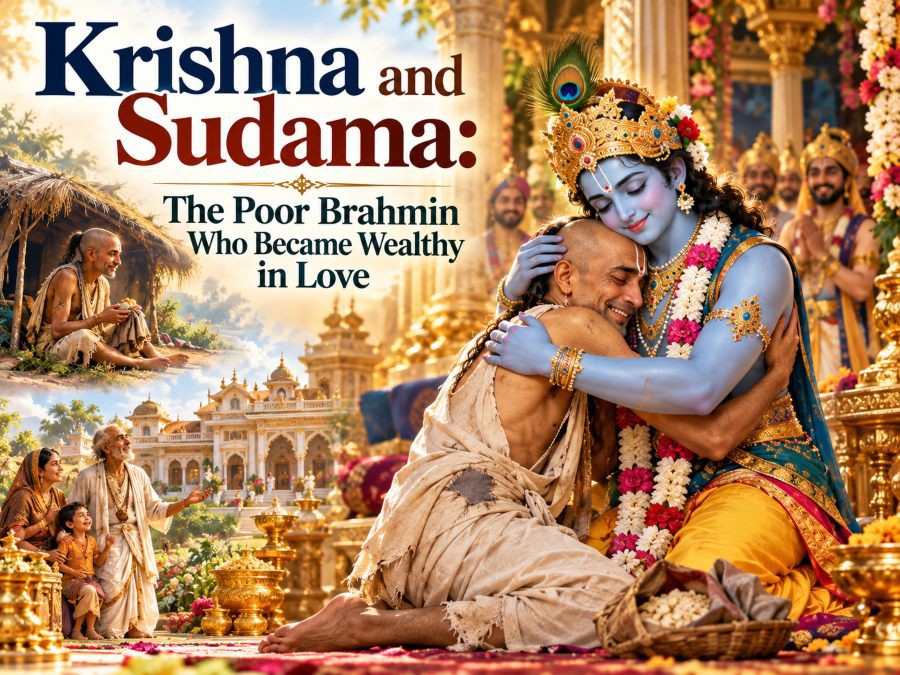 Krishna and Sudama: The Poor Brahmin Who Became Wealthy in LoveRead more
 -
 Vamana Avatar: How Three Steps Humbled Bali MaharajaRead more
Why did a powerful king give away three worlds to a boy asking for three steps? Learn the Vamana avatar story from...
-
 The Bhagavatam on Marriage: Duty, Love and Spiritual PartnershipRead more
What does the Bhagavatam say about marriage? Through the stories of Kardama and Devahuti, Rukmini's secret letter and...
-
 What Is Prema? The Bhagavatam's Highest Stage of Love for GodRead more
Prema is love for God with no "because" attached. Learn how the Bhagavatam describes it, the nine steps from faith to...
-
 Is Shiva Parvati Kalyana Mentioned in Srimad Bhagavatam? What the Scripture Really SaysRead more
Looking for Shiva and Parvati's wedding in the Srimad Bhagavatam? Find out what the scripture actually describes,...
-
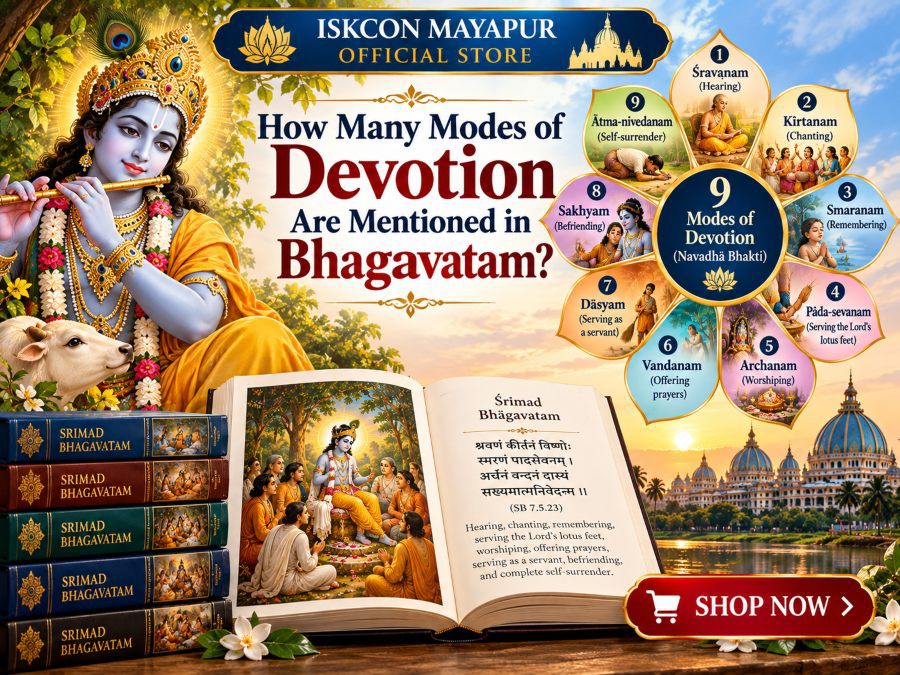 How Many Modes of Devotion Are Mentioned in Bhagavatam?Read more
A young boy named Prahlada listed nine ways to serve God, and the Bhagavatam keeps them as its answer. Learn what the...
-
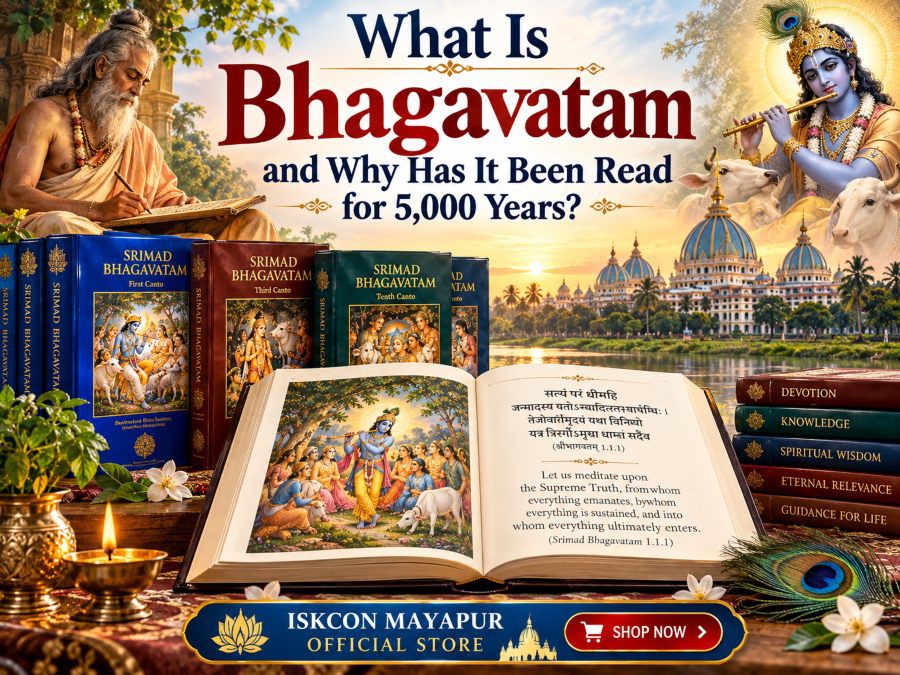 What Is Bhagavatam and Why Has It Been Read for 5,000 Years?Read more
A dying king asked one question, and the answer became the Bhagavatam. Learn what this Sanskrit scripture contains,...
-
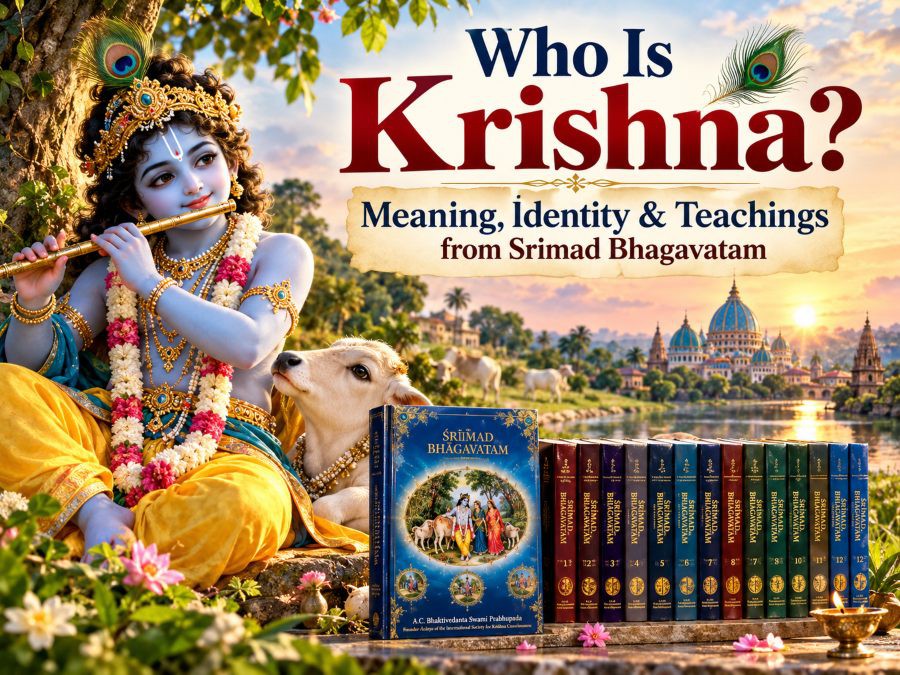 Who Is Lord Krishna? His Meaning, Teachings and Pastimes ExplainedRead more
Discover who Krishna is according to Srimad Bhagavatam, including His divine identity, childhood pastimes, teachings,...
-
 Incense in Islam: Bakhoor, Agarbatti and What Tradition SaysRead more
Is burning fragrance part of Muslim tradition? Explore incense in Islam, from the Prophetic practice of fumigating...
-
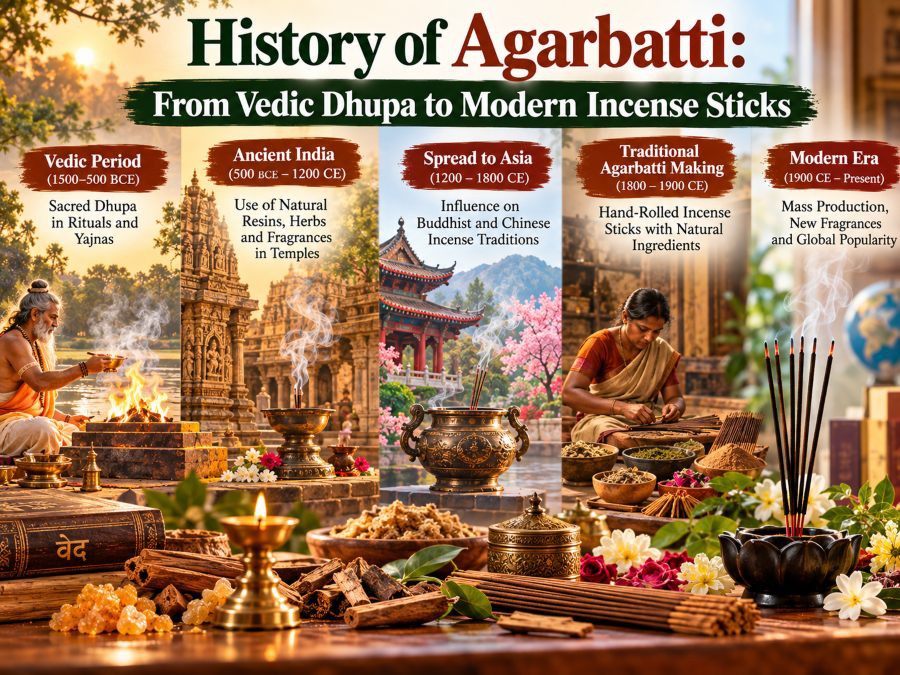 History of Agarbatti: From Vedic Dhupa to Modern Incense SticksRead more
Where did agarbatti really come from? Follow the history of agarbatti from Vedic fire rituals and temple dhupa to...
Blog categories
- Default category (0)
- MUSICAL INSTRUMENT (1)
- BOOK (5)
- DEVOTIONAL GIFT (0)
- Blog (30) click
- CHANDAN (12)
- Bhagavatam Wisdom Series (68)
- Krishna Consciousness (14)
- Mridangam Musical Instrument (6)
- Bhagavad Gita for Beginners (13)
- Bhagavad Gita As It Is (37) click
- Bhagavad Gita As It Is Telugu (0)
- Bhagavad Gita As It Is Marathi (0)
- Bhagavad Gita As It Is In Hindi (0)
- Bhagavad Gita As It Is In English (0)
- Bhagavad Gita As It Is In Bengali (8)
- Bhagavad Gita As It Is In Kannada (0)
- Bhagavad Gita As It Is In Gujarati (0)
- Bhagavad Gita As It Is In Panjabi (0)
- Bhagavad Gita As It Is In Tamil (0)
- Bhagavad Gita As It Is Odia (0)
- BHAGAVAD GITA As It Is GERMAN (0)
- Bhagavad Gita As It Is In French (0)
- Bhagavad Gita As It Is In Nepali (0)
- Bhagavad Gita As It Is In Assamese (0)
- Incense or Agarbatti (38)
- Lord Chaitanya Mahaprabhu (3)
- Vedic Temple Mayapur (14)
- kalki (15)
- Mahabharata – Dharma & Destiny (27)
- Vaishnava Scriptures (4)
- healthy product (4)
- chaitanya mahaprabhu (5)
- Tulsi Mala Guide (17)
Search in blog
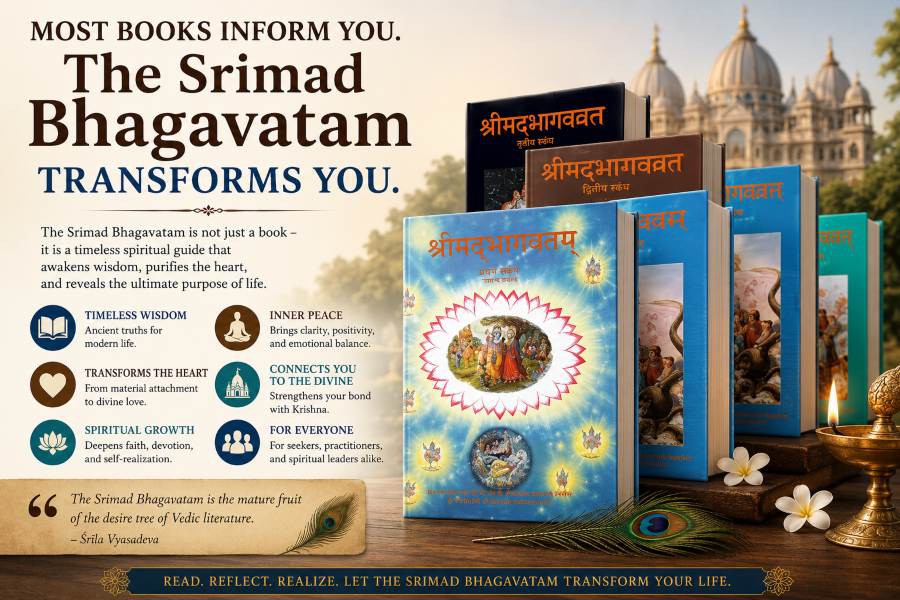
Most Spiritual Books Inspire You. The Srimad Bhagavatam Changes You
Most Books Inform You. The Srimad Bhagavatam Transforms You
Thousands of books can fill your mind. Very few can change your life.
That difference matters more than people realize.
Modern readers consume endless information every day:
- Podcasts
- Quotes
- Motivational videos
- Self-help threads
- Productivity hacks
- Spiritual snippets
People know more than ever before, yet many still feel internally confused, emotionally restless, and spiritually disconnected. Information alone clearly does not guarantee transformation.
That is where the Srimad Bhagavatam stands apart.
Readers opening the ISKCON Srimad Bhagavatam Book often expect philosophy, mythology, or religious instruction. What they encounter instead feels much deeper. The Bhagavatam slowly reorganizes the way people think about life, identity, suffering, desire, death, devotion, and consciousness itself.
This scripture does not merely provide knowledge.
It changes perspective.
And once perspective changes, life itself begins changing.
.jpg)
Information Is Easy. Transformation Is Rare.
A person can memorize thousands of spiritual quotes and still remain controlled by:
- Anger
- Ego
- Anxiety
- Jealousy
- Fear
- Endless desire
That is because intellectual understanding and inner realization are not the same thing.
The Srimad Bhagavatam recognizes this distinction constantly.
The text does not focus only on teaching concepts. It focuses on changing consciousness.
That goal makes the reading experience completely different from ordinary books.
Why Most Modern Content Feels Temporary
Much of modern spiritual content is designed for quick emotional reaction.
Readers feel inspired briefly.
Then the effect disappears.
Why?
Because temporary motivation rarely reaches the deeper layers of consciousness where attachment, ego, fear, and identity operate.
The Bhagavatam works differently.
It does not simply stimulate emotion for a moment. It challenges the foundation of how people understand themselves.
The Bhagavatam Does Not Let Readers Stay Superficial
This is one reason the text affects serious seekers so deeply.
The Bhagavatam repeatedly forces readers to confront uncomfortable realities:
- Material success cannot permanently satisfy the heart
- The body is temporary
- Desire endlessly expands
- Ego distorts perception
- Attachment creates suffering
- Time destroys everything material
- Death is unavoidable
At first, this can feel intense.
Then something surprising happens.
Readers begin experiencing relief.
Why?
Because the text stops pretending temporary things can provide permanent security.
It Speaks Honestly About Human Struggle
Many modern systems avoid emotional complexity.
The Bhagavatam does not.
Its characters experience:
- Fear
- Loss
- Betrayal
- Pride
- Confusion
- Grief
- Spiritual doubt
- Emotional attachment
Even elevated personalities struggle at times.
That honesty creates trust between the reader and the text.
People feel understood rather than judged.
Why Readers Return to the Bhagavatam Repeatedly
Most books weaken after multiple readings.
The Bhagavatam becomes stronger.
A chapter read at age twenty may feel entirely different after:
- Marriage
- Failure
- Parenthood
- Illness
- Personal loss
- Spiritual searching
This happens because the scripture addresses permanent human realities rather than temporary trends.
The Bhagavatam grows alongside the reader.
Every Reading Reveals Something New
This is one of the text’s most unusual qualities.
Readers constantly discover:
- New emotional depth
- Hidden philosophical meaning
- Psychological insight
- Spiritual relevance
- Personal reflection
The scripture feels alive because human consciousness itself keeps evolving.
The Bhagavatam Understands the Human Mind Deeply
Long before modern psychology existed formally, the Bhagavatam analyzed:
- Desire
- Attachment
- Ego
- Mental conditioning
- Emotional illusion
- Fear of loss
- Identity confusion
And it does so through stories rather than dry theory.
That narrative approach changes everything.
Readers do not merely learn ideas intellectually.
They experience them emotionally.
The Characters Feel Psychologically Real
The Bhagavatam contains extraordinary personalities:
- Prahlada Maharaja
- Dhruva Maharaja
- King Parikshit
- Ajamila
- Kunti Devi
- Sukadeva Goswami
These are not flat symbolic figures.
They feel emotionally alive because their struggles reflect genuine human experience.
Readers recognize:
- Their own fears
- Their own attachments
- Their own ambitions
- Their own weaknesses
inside these stories repeatedly.
Why Transformation Hurts the Ego
The Bhagavatam is not interested in flattering readers.
It repeatedly exposes:
- Pride
- Material obsession
- Spiritual arrogance
- False identity
- Desire-driven thinking
That exposure can feel uncomfortable because ego prefers illusion over honesty.
But transformation requires truth.
The text understands this deeply.
It Challenges Modern Definitions of Success
Modern culture usually defines success through:
- Wealth
- Recognition
- Influence
- Beauty
- Achievement
- Social validation
The Bhagavatam asks a far more serious question:
“What happens if a person gains everything externally but remains spiritually empty internally?”
That question changes the emotional direction of the entire text.
The Bhagavatam Treats Human Life Seriously
One major difference between the Bhagavatam and surface-level spirituality is urgency.
The scripture constantly reminds readers:
- Human life is temporary
- Time moves quickly
- Death is certain
- Consciousness shapes destiny
This realism creates focus.
The Bhagavatam refuses to let readers waste life chasing meaningless distractions endlessly.
King Parikshit’s Question Still Feels Powerful Today
The Bhagavatam begins with King Parikshit learning he has only seven days left to live.
His response transforms the entire scripture.
He asks:
“What should a person hear, remember, and do before death?”
That question instantly destroys superficial living.
Suddenly:
- Ego looks fragile
- Status loses importance
- Material obsession feels temporary
- Spiritual inquiry becomes urgent
Readers feel this shift emotionally even thousands of years later.
Why the Bhagavatam Feels Spiritually Alive
Some books provide information mechanically.
The Bhagavatam feels relational.
It speaks directly to:
- The restless mind
- The anxious heart
- The searching soul
Readers often describe strange experiences while studying it:
- Emotional clarity
- Internal reflection
- Reduced attachment
- Spiritual longing
- Mental purification
The text does not merely entertain thought.
It reshapes awareness gradually.
It Combines Philosophy With Emotion Beautifully
Some philosophical systems become emotionally cold.
The Bhagavatam balances:
- Theology
- Devotion
- Narrative
- Poetry
- Philosophy
- Emotional realism
That combination creates extraordinary depth.
Readers may begin studying intellectually and slowly become emotionally transformed along the way.
Why the Bhagavatam Feels Relevant in Modern Life
Because human suffering never disappeared.
Technology changed.
Psychological struggle remained.
People still experience:
- Anxiety
- Loneliness
- Dissatisfaction
- Identity confusion
- Emotional emptiness
- Fear of death
- Attachment
- Existential uncertainty
The Bhagavatam addresses these realities directly.
It Refuses to Reduce Humans to Material Identity
Modern society often defines people through:
- Career
- Appearance
- Wealth
- Productivity
- Public image
The Bhagavatam rejects this entirely.
It teaches that the soul is eternal consciousness temporarily occupying the material body.
That insight changes how readers understand:
- Success
- Failure
- Aging
- Suffering
- Death
Why Devotion Becomes Central in the Bhagavatam
At the heart of the text lies bhakti — loving devotion toward Krishna.
But devotion here is not blind emotionalism.
It becomes:
- Purification of consciousness
- Restoration of spiritual identity
- Loving connection with the Divine
- Freedom from ego-centered living
The Bhagavatam argues something radical:
many human frustrations emerge because people seek lasting fulfillment disconnected from their spiritual source.
Krishna Is Presented as Personal, Not Abstract
One reason the Bhagavatam affects readers emotionally is because Krishna appears not merely as:
- A distant creator
- A philosophical concept
- An impersonal force
But as:
- Friend
- Protector
- Child
- Beloved
- Companion
This relational dimension transforms spirituality from theory into relationship.
The Bhagavatam Exposes the Limits of Endless Desire
One of the scripture’s most repeated observations is painfully accurate:
Desire does not naturally stop.
People assume:
“If I achieve this one thing, I will finally feel satisfied.”
Then the mind immediately creates another desire.
The Bhagavatam identifies this cycle clearly.
Material longing expands endlessly because the soul seeks something deeper than temporary stimulation.
Why Readers Feel Emotionally Cleansed by the Text
Many devotees describe regular Bhagavatam reading as mentally purifying.
Not because every section feels emotionally comforting.
Because the text gradually reorganizes:
- Priorities
- Attachments
- Emotional focus
- Spiritual understanding
- Relationship with desire
This transformation happens slowly but deeply.
The Bhagavatam Does Not Promote Escapism
This is important.
The scripture does not teach readers to hate life or reject responsibility.
Its characters include:
- Kings
- Parents
- Warriors
- Leaders
- Teachers
- Householders
The issue is not activity itself.
The issue is consciousness.
The Bhagavatam teaches people to live in the world without becoming spiritually consumed by it.
Why Humility Appears Repeatedly
Modern culture often rewards self-promotion constantly.
The Bhagavatam emphasizes humility because ego blocks spiritual clarity.
The most spiritually elevated personalities in the text usually display:
- Compassion
- Simplicity
- Gratitude
- Emotional steadiness
- Sincerity
Not superiority.
This feels refreshing in a culture increasingly obsessed with self-image.
Why the Bhagavatam Feels More Like a Mirror Than a Lecture
Many books tell readers what to think.
The Bhagavatam reveals what readers already are internally.
That distinction matters enormously.
While reading, people begin noticing:
- Their attachments
- Their fears
- Their illusions
- Their emotional conditioning
- Their longing for permanence
The text becomes deeply personal.
It Understands Loneliness Better Than Most Modern Systems
Despite endless digital connection, modern loneliness remains intense.
The Bhagavatam explains why.
The soul naturally longs for eternal loving relationship with Krishna. Temporary substitutes cannot fully satisfy that spiritual hunger.
This idea becomes emotionally powerful for readers experiencing:
- Emptiness
- Anxiety
- Emotional exhaustion
- Spiritual confusion
Transformation Happens Through Reflection, Not Speed
Modern culture values speed constantly.
The Bhagavatam values absorption.
Readers are encouraged to:
- Hear carefully
- Reflect deeply
- Question honestly
- Practice sincerely
- Purify consciousness gradually
This process feels slower than modern motivational culture.
It also feels far more real.
Why Serious Readers Never Truly Finish the Bhagavatam
A person may complete the text externally yet continue returning to it for decades.
Because transformation is ongoing.
Different stages of life reveal different meanings:
- Youth reveals ambition
- Loss reveals impermanence
- Aging reveals urgency
- Devotion reveals emotional depth
The Bhagavatam keeps unfolding because human consciousness keeps evolving.
More Than Information
Most books increase knowledge temporarily.
The Srimad Bhagavatam changes perception itself.
Readers begin seeing:
- Desire differently
- Time differently
- Relationships differently
- Suffering differently
- Death differently
- Themselves differently
That is the difference between information and transformation.
Information fills the mind.
Transformation changes the heart.
And that is exactly why the Srimad Bhagavatam continues affecting readers generation after generation long after countless ordinary books disappear from memory forever.
Posted in: Bhagavatam Wisdom Series
Related posts
-
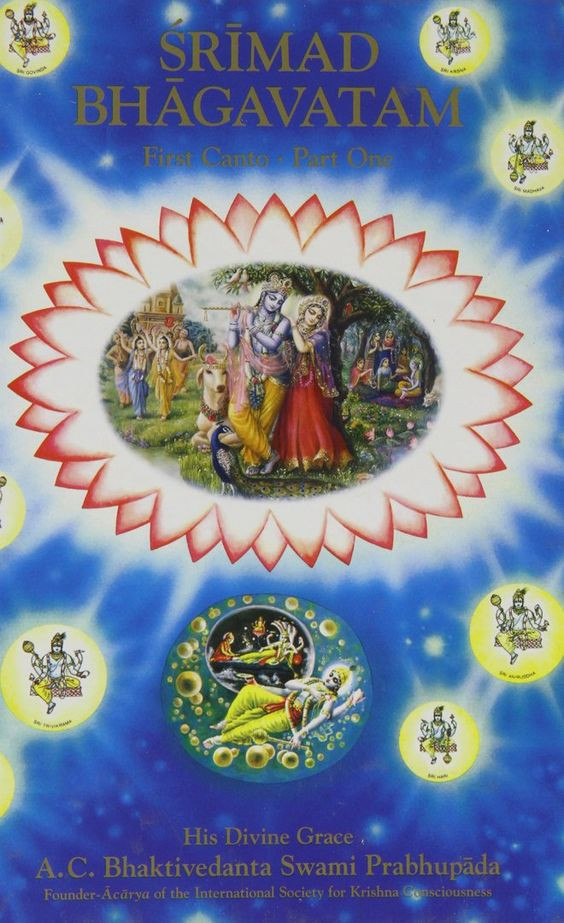 Why to read srimad bhagavatamReading the Srimad Bhagavatam fosters deep spiritual growth by narrating the life and teachings of Lord Krishna,...Read more
 -
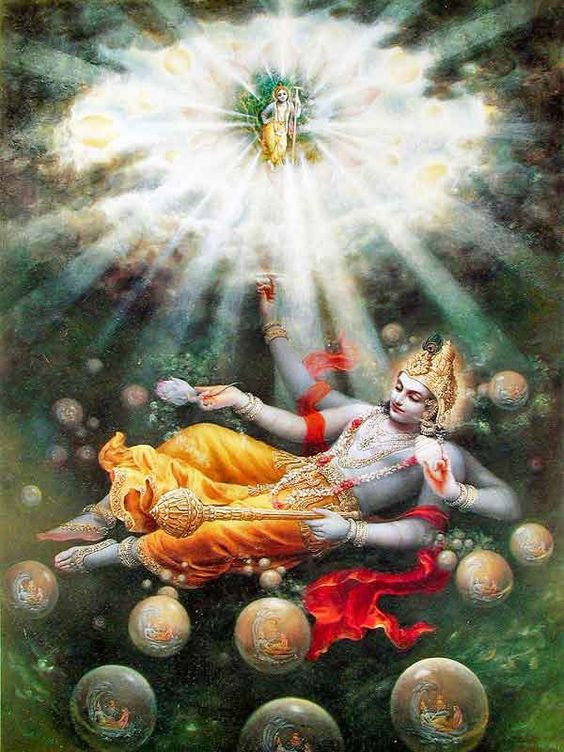 When was srimad bhagavatam written?The Srimad Bhagavatam is believed to have been written around 9th-10th century CE, though its oral traditions date...Read more
 -
 How many chapters are there in srimad bhagavatam?The Srimad Bhagavatam consists of 12 cantos (books) containing 335 chapters in total. Each canto covers various...Read more
 -
 How many skandhas are there in srimad bhagavatamThe Srimad Bhagavatam is divided into 12 skandhas (cantos or books). Each skandha explores different themes,...Read more
 -
 How many slokas in srimad bhagavatamThe Srimad Bhagavatam contains approximately 18,000 shlokas (verses). These verses are spread across its 12 skandhas...Read more
Leave a comment