
Why did Krishna run to embrace a poor brahmin in rags? Read the Sudama story from the Bhagavatam and learn how a...
Latest posts
-
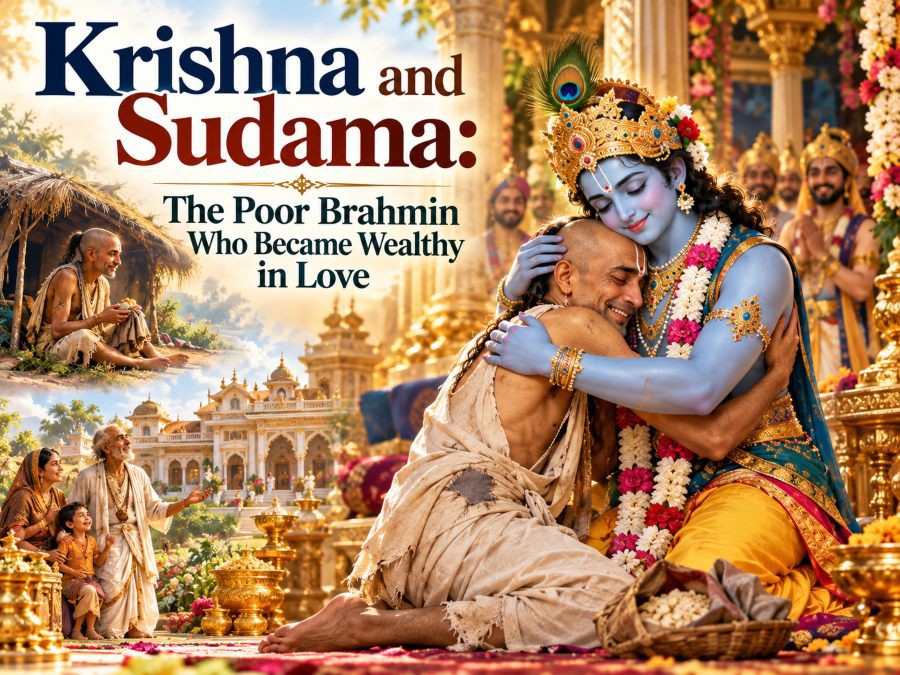 Krishna and Sudama: The Poor Brahmin Who Became Wealthy in LoveRead more
 -
 Vamana Avatar: How Three Steps Humbled Bali MaharajaRead more
Why did a powerful king give away three worlds to a boy asking for three steps? Learn the Vamana avatar story from...
-
 The Bhagavatam on Marriage: Duty, Love and Spiritual PartnershipRead more
What does the Bhagavatam say about marriage? Through the stories of Kardama and Devahuti, Rukmini's secret letter and...
-
 What Is Prema? The Bhagavatam's Highest Stage of Love for GodRead more
Prema is love for God with no "because" attached. Learn how the Bhagavatam describes it, the nine steps from faith to...
-
 Is Shiva Parvati Kalyana Mentioned in Srimad Bhagavatam? What the Scripture Really SaysRead more
Looking for Shiva and Parvati's wedding in the Srimad Bhagavatam? Find out what the scripture actually describes,...
-
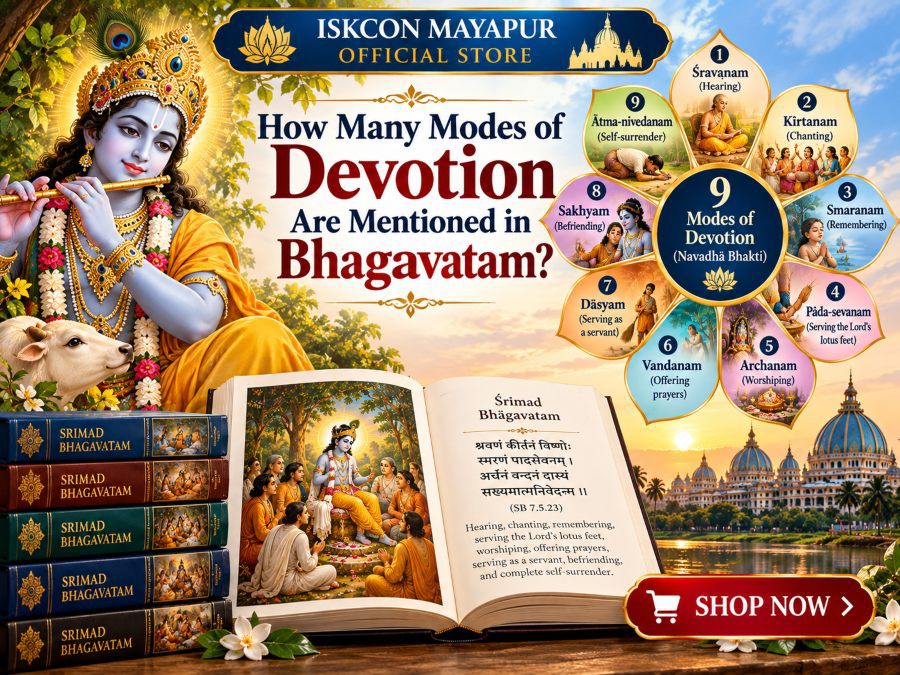 How Many Modes of Devotion Are Mentioned in Bhagavatam?Read more
A young boy named Prahlada listed nine ways to serve God, and the Bhagavatam keeps them as its answer. Learn what the...
-
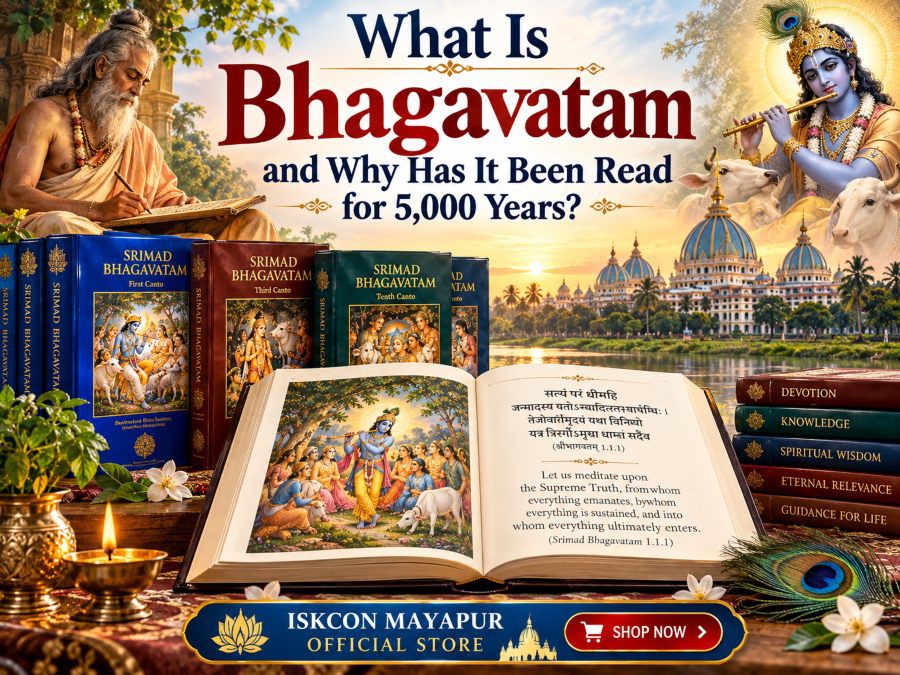 What Is Bhagavatam and Why Has It Been Read for 5,000 Years?Read more
A dying king asked one question, and the answer became the Bhagavatam. Learn what this Sanskrit scripture contains,...
-
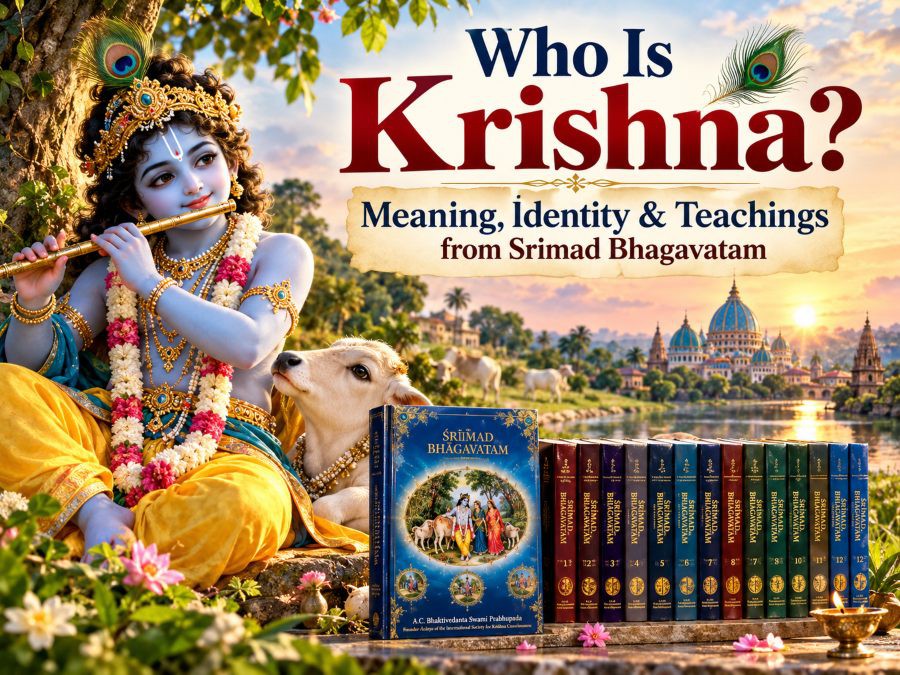 Who Is Lord Krishna? His Meaning, Teachings and Pastimes ExplainedRead more
Discover who Krishna is according to Srimad Bhagavatam, including His divine identity, childhood pastimes, teachings,...
-
 Incense in Islam: Bakhoor, Agarbatti and What Tradition SaysRead more
Is burning fragrance part of Muslim tradition? Explore incense in Islam, from the Prophetic practice of fumigating...
-
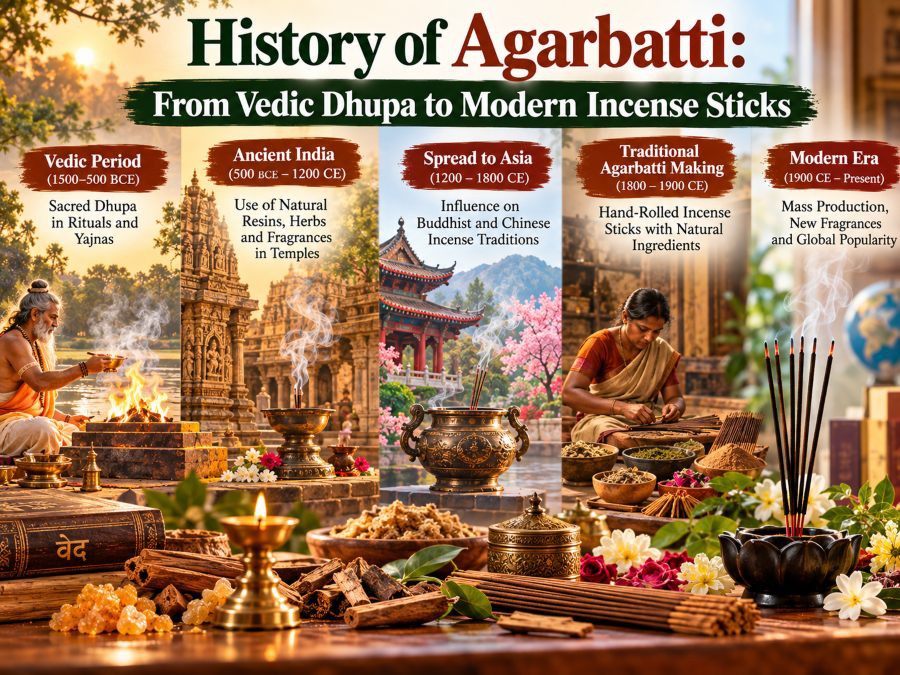 History of Agarbatti: From Vedic Dhupa to Modern Incense SticksRead more
Where did agarbatti really come from? Follow the history of agarbatti from Vedic fire rituals and temple dhupa to...
Blog categories
- Default category (0)
- MUSICAL INSTRUMENT (1)
- BOOK (5)
- DEVOTIONAL GIFT (0)
- Blog (30) click
- CHANDAN (12)
- Bhagavatam Wisdom Series (68)
- Krishna Consciousness (14)
- Mridangam Musical Instrument (6)
- Bhagavad Gita for Beginners (13)
- Bhagavad Gita As It Is (37) click
- Bhagavad Gita As It Is Telugu (0)
- Bhagavad Gita As It Is Marathi (0)
- Bhagavad Gita As It Is In Hindi (0)
- Bhagavad Gita As It Is In English (0)
- Bhagavad Gita As It Is In Bengali (8)
- Bhagavad Gita As It Is In Kannada (0)
- Bhagavad Gita As It Is In Gujarati (0)
- Bhagavad Gita As It Is In Panjabi (0)
- Bhagavad Gita As It Is In Tamil (0)
- Bhagavad Gita As It Is Odia (0)
- BHAGAVAD GITA As It Is GERMAN (0)
- Bhagavad Gita As It Is In French (0)
- Bhagavad Gita As It Is In Nepali (0)
- Bhagavad Gita As It Is In Assamese (0)
- Incense or Agarbatti (38)
- Lord Chaitanya Mahaprabhu (3)
- Vedic Temple Mayapur (14)
- kalki (15)
- Mahabharata – Dharma & Destiny (27)
- Vaishnava Scriptures (4)
- healthy product (4)
- chaitanya mahaprabhu (5)
- Tulsi Mala Guide (17)
Search in blog

After Endless Searching, Many Souls Finally Arrive at the Srimad Bhagavatam
Some people spend years searching before they finally encounter the Srimad Bhagavatam.
They search through:
- Philosophy
- Psychology
- Self-help
- Meditation systems
- Motivational teachings
- Spiritual influencers
- Religious debates
- Endless online content
At first, every new idea feels exciting. New perspectives create temporary inspiration. But eventually many seekers notice something uncomfortable: despite consuming enormous amounts of spiritual material, the deeper hunger inside remains unresolved.
The mind becomes informed.
The soul still feels restless.
And then, often unexpectedly, they encounter the srimad bhagavatam price while searching for something more substantial than temporary motivation.
What happens next is difficult to explain fully.
The Bhagavatam does not merely offer spiritual advice. It feels like arriving somewhere ancient, emotionally honest, intellectually deep, and spiritually alive all at once. Readers often describe the experience strangely:
“It felt like I had been searching for this book without realizing it.”
That reaction is not accidental.
The Srimad Bhagavatam speaks directly to questions most people carry silently for years.
Why So Many Modern Seekers Feel Spiritually Unsatisfied
There is no shortage of spiritual content anymore.
People can access:
- Thousands of lectures
- Infinite podcasts
- Endless motivational clips
- Spiritual memes
- Online gurus
- Philosophical threads
Yet emotional exhaustion continues growing.
Why?
Because information alone cannot satisfy deeper existential longing.
Many modern systems focus heavily on:
- Emotional stimulation
- Temporary positivity
- Mental optimization
- Productivity enhancement
- Surface-level inspiration
The Bhagavatam goes somewhere much deeper.
It asks:
- Who are you beyond the body?
- Why does the mind remain restless?
- Why does desire never fully stop?
- Why does suffering continue despite material progress?
- What survives death?
- What is the soul actually seeking?
These are not casual questions.
They shape the entire direction of human life.
.jpg)
Most People Do Not Begin Their Search Spiritually
This is important.
Many readers do not arrive at the Bhagavatam because life feels easy.
They arrive after:
- Emotional burnout
- Existential confusion
- Loss
- Anxiety
- Relationship pain
- Spiritual disappointment
- Material success that still feels empty
The search often begins when external life stops providing internal fulfillment.
The Strange Emptiness That Success Cannot Solve
One of the Bhagavatam’s deepest insights appears repeatedly throughout the text:
Material achievement has limits.
The scripture constantly shows powerful personalities possessing:
- Wealth
- Influence
- Pleasure
- Beauty
- Knowledge
- Authority
Yet remaining internally dissatisfied.
This observation feels disturbingly modern.
People today often spend years pursuing:
- Career success
- Recognition
- Financial security
- Social validation
- Entertainment
- Luxury
Then eventually comes the unsettling realization:
the mind still feels restless.
Why Endless Desire Exhausts the Mind
The Bhagavatam explains something most people eventually discover through painful experience.
Desire expands continuously.
The mind says:
“If I achieve this one thing, then I will finally feel satisfied.”
Then satisfaction fades.
Another desire appears immediately.
This cycle continues endlessly because temporary experiences cannot permanently fulfill eternal consciousness.
The Bhagavatam identifies this pattern clearly long before modern psychology began discussing addictive behavioral loops.
Why the Bhagavatam Feels Different From Ordinary Spiritual Books
Many spiritual books offer techniques.
The Bhagavatam offers transformation.
That difference matters enormously.
The text does not merely try improving emotional comfort temporarily. It attempts to awaken spiritual identity itself.
Readers often notice several unusual qualities immediately:
- Emotional honesty
- Psychological depth
- Intellectual seriousness
- Spiritual warmth
- Timeless relevance
The Bhagavatam never feels shallow.
It Understands Human Nature Without Pretending Humans Are Simple
This may be one reason readers trust the text so deeply.
The Bhagavatam recognizes that people are internally complicated.
Its characters experience:
- Fear
- Jealousy
- Pride
- Devotion
- Attachment
- Loneliness
- Anger
- Grief
- Confusion
- Spiritual longing
Even elevated personalities struggle sometimes.
The scripture never creates unrealistic spiritual fantasy where perfect people float above human emotion. Instead, it shows how consciousness transforms gradually through spiritual realization.
Why Readers Feel Seen by the Bhagavatam
Some books explain ideas.
The Bhagavatam explains people.
Readers often experience uncomfortable moments while studying it because the text exposes:
- Ego
- Mental illusion
- Attachment
- Fear of loss
- Desire-driven thinking
- False identity
And it does so with extraordinary precision.
People recognize themselves inside the stories repeatedly.
The Characters Feel Emotionally Real
This is one reason the Bhagavatam remains unforgettable.
Its personalities are psychologically alive:
- Prahlada Maharaja
- Dhruva Maharaja
- King Parikshit
- Ajamila
- Kunti Devi
- Hiranyakashipu
These are not flat religious symbols.
They represent deeply human emotional states:
- Ambition
- Faith
- Fear
- Pride
- Repentance
- Courage
- Spiritual awakening
The Bhagavatam Does Not Pretend Material Life Is Stable
Modern culture constantly encourages people to behave as though everything material can become permanent.
The Bhagavatam says the opposite.
It reminds readers repeatedly:
- Bodies age
- Wealth disappears
- Relationships change
- Time moves relentlessly
- Death eventually comes
At first, this realism may feel intense.
Then strangely, it becomes liberating.
Why?
Because much human anxiety comes from trying to force permanence onto temporary conditions.
King Parikshit’s Question Changes Everything
The Bhagavatam begins with King Parikshit learning he has only seven days left to live.
Suddenly:
- Status becomes meaningless
- Politics lose urgency
- Ego looks fragile
- Spiritual inquiry becomes essential
He asks:
“What should a person hear, remember, and do before death?”
That question cuts through superficial living instantly.
Readers feel its power even now because mortality forces clarity.
Why the Bhagavatam Feels Emotionally Healing
Not because it avoids pain.
Because it gives suffering meaning.
Modern life often leaves people feeling emotionally fragmented. The Bhagavatam reconnects individual struggle with spiritual perspective.
The text explains:
- Why attachment creates suffering
- Why fear emerges naturally
- Why desire exhausts the mind
- Why ego creates illusion
- Why spiritual forgetfulness causes restlessness
And importantly, it also explains how consciousness can heal.
Bhakti Changes the Direction of the Heart
At the center of the Bhagavatam lies bhakti — loving devotion toward Krishna.
But devotion here is not shallow emotionalism.
It becomes:
- Spiritual purification
- Restoration of identity
- Emotional transformation
- Freedom from ego-centered living
- Loving relationship with the Divine
The Bhagavatam argues that many human frustrations emerge because people search for lasting fulfillment disconnected from their spiritual source.
Why Intellectual Knowledge Alone Is Not Enough
This theme appears repeatedly throughout the text.
A person may possess:
- Scholarship
- Intelligence
- Debate skills
- Philosophical knowledge
Yet still remain emotionally disturbed and spiritually disconnected.
The Bhagavatam values realization over information accumulation.
The Difference Between Knowing and Becoming
Modern culture often confuses knowledge with transformation.
The Bhagavatam separates them clearly.
A person may understand spiritually correct ideas intellectually while still remaining:
- Controlled by anger
- Consumed by ego
- Attached materially
- Emotionally unstable
- Spiritually restless
Real spiritual growth changes consciousness itself, not merely mental concepts.
Why the Bhagavatam Feels Timeless
Because human nature never changed as much as people assume.
Technology evolved dramatically.
Psychological suffering remained remarkably consistent.
People still struggle with:
- Fear
- Desire
- Loneliness
- Attachment
- Identity confusion
- Existential anxiety
- Emotional dissatisfaction
The Bhagavatam addresses these conditions directly.
It Refuses to Reduce Humans to Material Identity
Modern society often defines people through:
- Career
- Appearance
- Wealth
- Social status
- Productivity
- Public image
The Bhagavatam rejects this entirely.
It teaches that the living being is eternal consciousness temporarily occupying the material body.
That insight changes how readers understand:
- Success
- Failure
- Aging
- Loss
- Death
The Bhagavatam Understands the Restless Mind
One of the scripture’s greatest strengths is its psychological realism.
It recognizes that the mind naturally becomes:
- Distracted
- Desire-driven
- Emotionally reactive
- Spiritually forgetful
- Controlled by conditioning
The text never assumes the mind behaves wisely automatically.
Why Attention Shapes Consciousness
The Bhagavatam repeatedly emphasizes hearing spiritual wisdom because whatever absorbs the mind gradually shapes emotional life.
If consciousness constantly focuses on:
- Fear
- Lust
- Envy
- Material obsession
- Ego-driven comparison
then inner life reflects those influences.
Spiritual hearing gradually redirects consciousness toward higher absorption.
Why So Many Seekers Eventually Feel Drawn Toward Devotion
At first, many people search primarily for:
- Peace
- Clarity
- Emotional stability
- Answers
- Purpose
Then gradually the search becomes more personal.
The Bhagavatam transforms spirituality from abstract philosophy into relationship with Krishna.
This changes everything emotionally.
Krishna Is Presented as Deeply Personal
The Bhagavatam does not describe Krishna merely as:
- Cosmic authority
- Philosophical concept
- Distant creator
But as:
- Friend
- Protector
- Beloved
- Companion
- Source of ultimate shelter
This relational dimension creates profound emotional connection for many readers.
Why the Bhagavatam Feels Like Coming Home
Many devotees describe this feeling carefully because it sounds difficult to explain rationally.
After years of searching externally, the Bhagavatam creates inner recognition.
Not because every question disappears instantly.
Because the search itself begins aligning toward something eternal.
The text provides:
- Spiritual depth
- Emotional honesty
- Philosophical clarity
- Devotional warmth
- Existential meaning
All together.
The Soul Recognizes Substance
Modern culture produces enormous stimulation but relatively little depth.
The Bhagavatam feels different because it addresses the deepest layers of human consciousness directly.
Readers sense this quickly.
The text does not entertain the soul temporarily.
It nourishes it.
Why the Bhagavatam Keeps Transforming Readers Over Time
Most books weaken after repeated reading.
The Bhagavatam becomes stronger.
A verse understood intellectually at twenty may feel emotionally transformative after:
- Marriage
- Failure
- Loss
- Illness
- Spiritual struggle
- Aging
Life experience changes understanding.
That is why serious readers continue returning to the Bhagavatam for decades.
Transformation Happens Slowly Here
The Bhagavatam does not promise instant enlightenment.
It works gradually:
- Purifying consciousness
- Weakening illusion
- Reducing attachment
- Deepening devotion
- Clarifying identity
This process feels slower than modern motivational culture.
It also feels far more real.
More Than the End of Searching
For many readers, discovering the Srimad Bhagavatam does not end every question immediately.
It does something more meaningful.
It redirects the search toward truth instead of endless distraction.
The scripture understands:
- The restless mind
- The wounded heart
- The exhausted seeker
- The ambitious ego
- The spiritually hungry soul
And through all its stories, philosophy, devotion, and wisdom, the Bhagavatam quietly reminds readers of something they may have forgotten during years of searching:
they were never meant to find lasting peace in temporary things.
Posted in: Bhagavatam Wisdom Series
Related posts
-
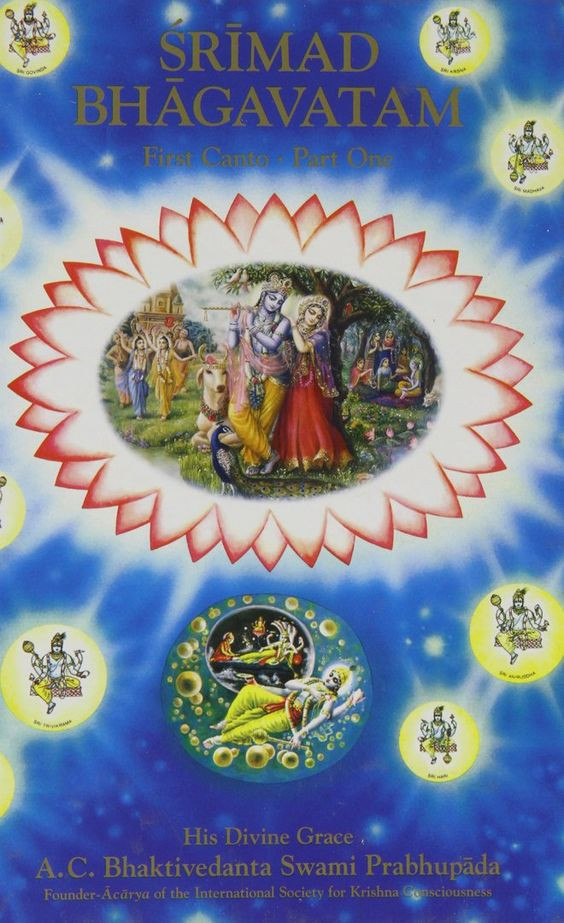 Why to read srimad bhagavatamReading the Srimad Bhagavatam fosters deep spiritual growth by narrating the life and teachings of Lord Krishna,...Read more
 -
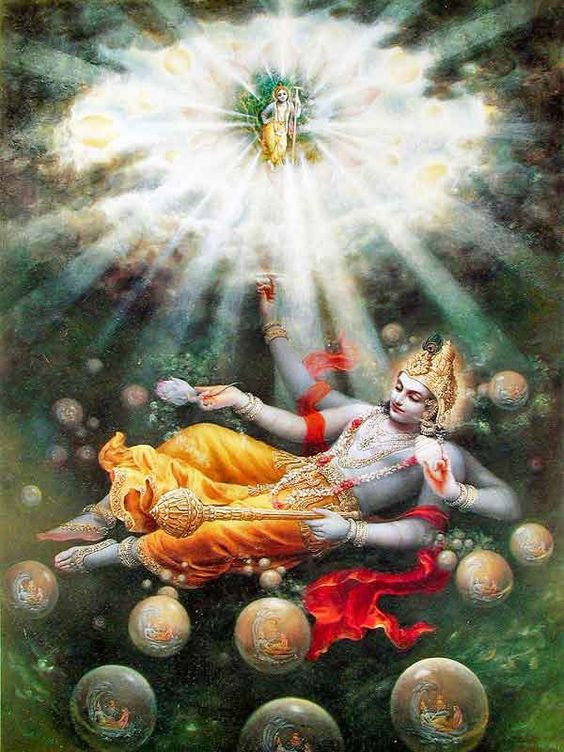 When was srimad bhagavatam written?The Srimad Bhagavatam is believed to have been written around 9th-10th century CE, though its oral traditions date...Read more
 -
 How many chapters are there in srimad bhagavatam?The Srimad Bhagavatam consists of 12 cantos (books) containing 335 chapters in total. Each canto covers various...Read more
 -
 How many skandhas are there in srimad bhagavatamThe Srimad Bhagavatam is divided into 12 skandhas (cantos or books). Each skandha explores different themes,...Read more
 -
 How many slokas in srimad bhagavatamThe Srimad Bhagavatam contains approximately 18,000 shlokas (verses). These verses are spread across its 12 skandhas...Read more
Leave a comment