Why did Krishna run to embrace a poor brahmin in rags? Read the Sudama story from the Bhagavatam and learn how a...
Latest posts
-
 Krishna and Sudama: The Poor Brahmin Who Became Wealthy in LoveRead more
 -
 Vamana Avatar: How Three Steps Humbled Bali MaharajaRead more
Why did a powerful king give away three worlds to a boy asking for three steps? Learn the Vamana avatar story from...
-
 The Bhagavatam on Marriage: Duty, Love and Spiritual PartnershipRead more
What does the Bhagavatam say about marriage? Through the stories of Kardama and Devahuti, Rukmini's secret letter and...
-
 What Is Prema? The Bhagavatam's Highest Stage of Love for GodRead more
Prema is love for God with no "because" attached. Learn how the Bhagavatam describes it, the nine steps from faith to...
-
 Is Shiva Parvati Kalyana Mentioned in Srimad Bhagavatam? What the Scripture Really SaysRead more
Looking for Shiva and Parvati's wedding in the Srimad Bhagavatam? Find out what the scripture actually describes,...
-
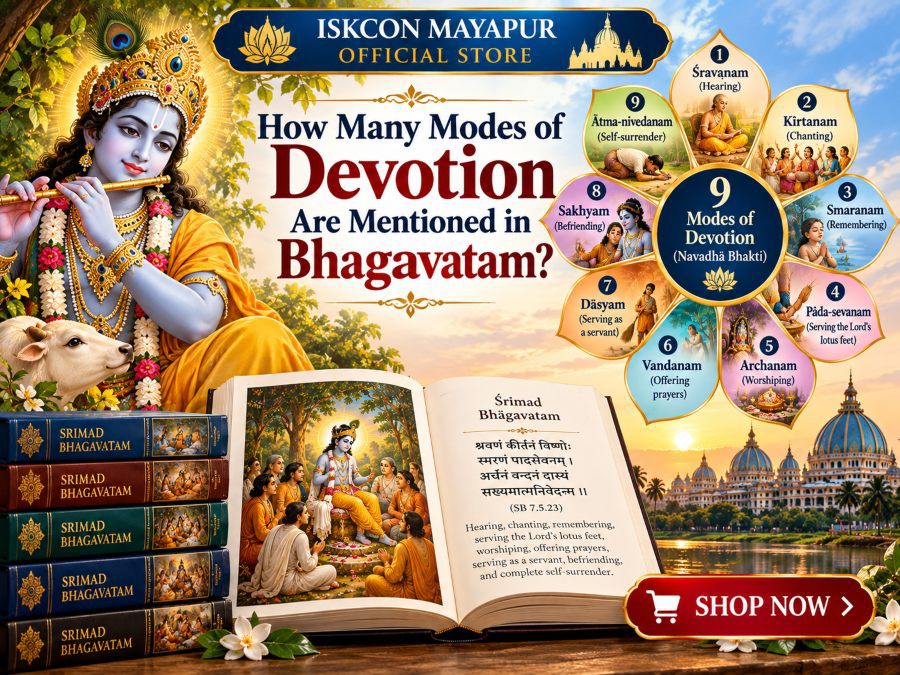 How Many Modes of Devotion Are Mentioned in Bhagavatam?Read more
A young boy named Prahlada listed nine ways to serve God, and the Bhagavatam keeps them as its answer. Learn what the...
-
 What Is Bhagavatam and Why Has It Been Read for 5,000 Years?Read more
A dying king asked one question, and the answer became the Bhagavatam. Learn what this Sanskrit scripture contains,...
-
 Who Is Lord Krishna? His Meaning, Teachings and Pastimes ExplainedRead more
Discover who Krishna is according to Srimad Bhagavatam, including His divine identity, childhood pastimes, teachings,...
-
 Incense in Islam: Bakhoor, Agarbatti and What Tradition SaysRead more
Is burning fragrance part of Muslim tradition? Explore incense in Islam, from the Prophetic practice of fumigating...
-
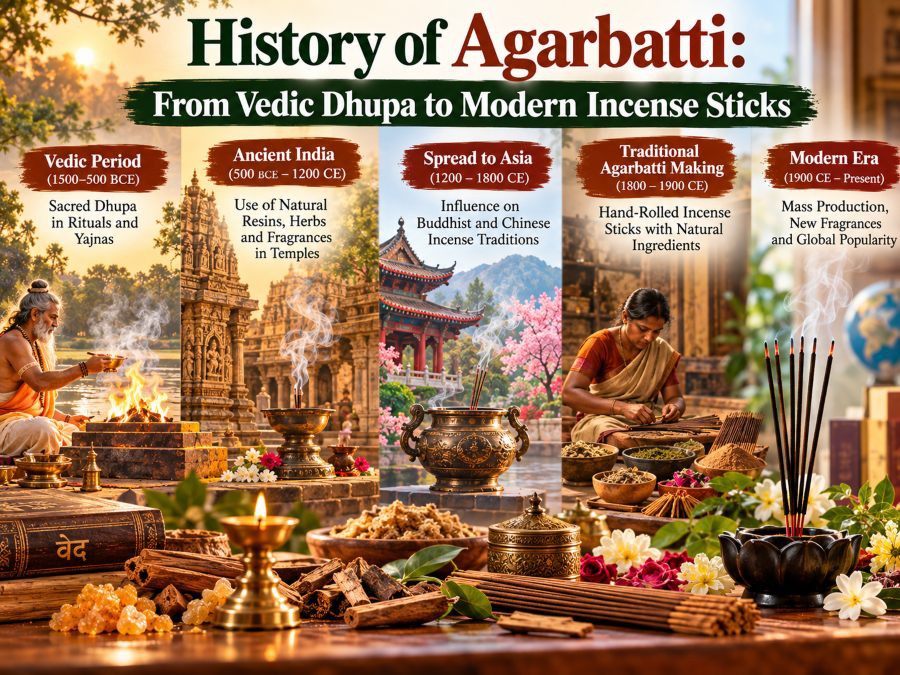 History of Agarbatti: From Vedic Dhupa to Modern Incense SticksRead more
Where did agarbatti really come from? Follow the history of agarbatti from Vedic fire rituals and temple dhupa to...
Blog categories
- Default category (0)
- MUSICAL INSTRUMENT (1)
- BOOK (5)
- DEVOTIONAL GIFT (0)
- Blog (30) click
- CHANDAN (12)
- Bhagavatam Wisdom Series (68)
- Krishna Consciousness (14)
- Mridangam Musical Instrument (6)
- Bhagavad Gita for Beginners (13)
- Bhagavad Gita As It Is (37) click
- Bhagavad Gita As It Is Telugu (0)
- Bhagavad Gita As It Is Marathi (0)
- Bhagavad Gita As It Is In Hindi (0)
- Bhagavad Gita As It Is In English (0)
- Bhagavad Gita As It Is In Bengali (8)
- Bhagavad Gita As It Is In Kannada (0)
- Bhagavad Gita As It Is In Gujarati (0)
- Bhagavad Gita As It Is In Panjabi (0)
- Bhagavad Gita As It Is In Tamil (0)
- Bhagavad Gita As It Is Odia (0)
- BHAGAVAD GITA As It Is GERMAN (0)
- Bhagavad Gita As It Is In French (0)
- Bhagavad Gita As It Is In Nepali (0)
- Bhagavad Gita As It Is In Assamese (0)
- Incense or Agarbatti (38)
- Lord Chaitanya Mahaprabhu (3)
- Vedic Temple Mayapur (14)
- kalki (15)
- Mahabharata – Dharma & Destiny (27)
- Vaishnava Scriptures (4)
- healthy product (4)
- chaitanya mahaprabhu (5)
- Tulsi Mala Guide (17)
Search in blog
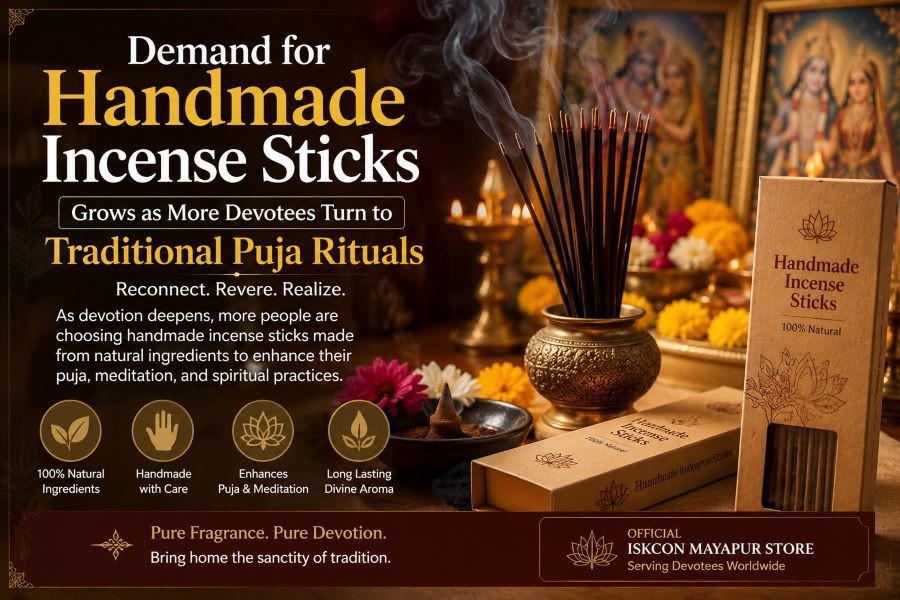
Demand for Handmade Incense Sticks Grows as More Devotees Turn to Traditional Puja Rituals
Demand for Handmade Incense Sticks Grows as More Devotees Turn to Traditional Puja Rituals
Walk into any Indian household during the evening aarti hour, and you'll notice something curious happening across the country at almost the same time. Millions of hands are lighting a thin stick of fragrant smoke, filling rooms with sandalwood, rose, or camphor. Sales data from puja product retailers over the past two years tells an even more interesting story: demand for incense sticks, particularly the handmade variety, has climbed sharply, and it's not slowing down. Devotees are actively rejecting mass-produced, chemically dipped sticks in favor of something older, slower, and more honest — incense rolled by hand, the way it was done for centuries. If you're sourcing yours from a trusted source like ISKCON Mayapur Store, you've probably already noticed the difference the moment you strike a match.
This isn't a passing trend driven by Instagram aesthetics or wellness marketing. It runs deeper. And once you understand why, you'll never look at that thin stick of smoke the same way again.
Why Is Everyone Suddenly Talking About Incense Again?
For a couple of decades, incense sticks became background noise — something picked up at the last minute from a corner shop, mostly synthetic, mostly forgettable. Nobody asked what was in them. Nobody cared where they came from.
That's changed. Three forces are pushing this shift, and they're worth unpacking one at a time.
First, there's a health reckoning happening. People have started reading labels — on food, on cosmetics, and now on the smoke they breathe during prayer. Reports of headaches, throat irritation, and allergic reactions linked to synthetic fragrance oils and charcoal-heavy sticks have made devotees pause and ask a simple question: what exactly am I inhaling while I pray?
Second, there's a spiritual hunger for authenticity. A generation raised on instant everything is, ironically, craving slowness. Handmade incense, rolled by artisans using natural gums, resins, and herbs, feels like it belongs to the same world as the mantra being chanted — unhurried, intentional, sincere.
Third, temples themselves are setting the tone. Institutions like ISKCON have long insisted on quality over convenience in every offering placed before the deities — food, flowers, and yes, fragrance. When devotees see temple standards, they start applying those standards at home too.
The Difference Between "Incense" and Real Incense
Here's something most people never think about: not all incense sticks are actually made the same way, even if they look identical on a shelf.
Machine-made sticks are extruded through a die, dipped in a perfume compound (often synthetic), and dried in bulk. They're cheap, fast, and consistent — but that consistency comes at a cost. The fragrance is usually a single flat note that hits you all at once and fades quickly, because it's sitting on the surface rather than woven into the material.
Handmade sticks are a completely different process. A base of charcoal or a charcoal-free herbal paste is rolled around a bamboo core by hand, then dried slowly, often in the shade rather than direct heat. The natural oils, resins like guggul or benzoin, and botanical powders are mixed into the dough itself, not sprayed on afterward. That's why a good handmade stick releases its fragrance in layers — a top note when lit, a warmer middle note as it burns, and a lingering base note that stays in the room long after the flame is out.
If you've ever wondered why a temple's incense smells "different" from what you buy in a supermarket, this is the reason. It's not marketing. It's chemistry and craftsmanship working together.
A Quick Reality Check on "Natural" Labels
Not every product labeled "natural" or "herbal" earns that title honestly. Here's what to actually look for:
- Bamboo core visible and untreated — not bleached white
- No harsh chemical smell when unlit (a giveaway of synthetic dipping)
- Slight color variation between sticks in the same batch — a sign of hand-rolling, not machine uniformity
- Burns slowly and unevenly at times — machine sticks burn with mechanical precision; handmade ones have small natural quirks
Scent Memory: Why Incense Hits Differently Than Any Other Sense
There's a reason a single whiff of sandalwood can transport you straight back to your grandmother's puja room, decades later, without warning. Smell is the only one of our five senses wired directly into the brain's limbic system — the emotional and memory center — without first passing through the thalamus like every other sense does.
In plain terms: you don't just smell incense, you feel it. Sight and sound get processed and filtered first. Smell goes straight to the part of your brain that stores emotion and memory. That's why the scent of camphor and rose during an aarti doesn't just fill the air — it reaches into something old and personal.
This is precisely why devotees are so particular about consistency. Switching from a familiar handmade blend to a random synthetic one doesn't just change the smell of the room. It quietly disrupts an emotional anchor that's been built over years of repeated ritual.
What's Actually Inside a Well-Made Incense Stick?
Let's get specific, because vague words like "natural fragrance" on packaging don't tell you anything useful.
A quality handmade incense stick typically contains:
- A bamboo core — the structural skeleton the paste is rolled around
- Charcoal or charcoal-free base powder — determines burn speed and smoke density
- Natural gum binders like gum arabic, which hold the paste together without synthetic adhesives
- Aromatic resins — guggul, benzoin, myrrh, or frankincense for depth
- Herbal and floral powders — sandalwood, rose petals, tulsi, camphor, dried flowers
- Essential oils (in higher-end blends) instead of fragrance-grade synthetic oils
Compare that to a cheap synthetic stick, where the list often shrinks to: sawdust base, charcoal, and a single dipping oil — usually a lab-formulated fragrance compound designed purely to smell strong for as little cost as possible.
The difference isn't subtle once you know what you're looking at.
Agarbatti or Dhoop — Which One Actually Suits Your Puja?
This question comes up constantly, and honestly, there's no single right answer — it depends on what you're doing and where.
Agarbatti (stick incense) is the bamboo-core version most people picture. It's:
- Easier to control — you can place it in a stand at a precise angle
- Longer burning, usually 30–45 minutes
- Better suited for daily home puja where you want steady, unattended fragrance
Dhoop (cone or roll form) skips the bamboo core entirely, which some devotees prefer for a purer offering. It's:
- More intense and smoky — better for larger spaces or temple halls
- Traditionally associated with specific rituals like dhoop aarti
- Shorter burning but stronger in immediate impact
If you're doing a quiet, extended morning sadhana, agarbatti gives you gentler, longer-lasting ambiance. If you're preparing for an evening aarti with a group of devotees, dhoop's more powerful presence often works better. Many devotees actually keep both on hand and switch depending on the occasion — there's no rule against it.
The Headache Problem Nobody Talks About Openly
Here's an uncomfortable truth: a lot of people have quietly stopped burning incense at home because it gives them headaches — and then felt guilty about it, as if avoiding a ritual object made them less devoted.
The guilt is misplaced. The problem usually isn't incense itself. It's what's in it.
Cheap synthetic fragrance oils are often built on a base of DEP (diethyl phthalate) or similarly harsh aromatic compounds, chosen because they're inexpensive and throw scent aggressively. Burned in an enclosed room, day after day, these can genuinely trigger headaches, sinus irritation, and throat discomfort — especially for anyone with mild asthma or fragrance sensitivity.
Handmade incense made from actual botanical resins and oils burns cleaner, releases fragrance more gradually, and simply doesn't hit the sinuses with the same chemical sharpness. If incense has been giving you headaches, the fix usually isn't giving it up — it's switching what you're burning.
A few practical adjustments help too:
- Keep the puja room slightly ventilated, even a cracked window
- Burn one stick at a time rather than several simultaneously
- Choose lighter floral or sandalwood blends over heavy musk-based ones for daily use
- Reserve stronger dhoop for special occasions rather than everyday burning
Temple Incense vs. Everyday Incense: Not the Same Category
There's a reason the incense burning inside a temple sanctum smells nothing like what most households burn on a random Tuesday. Temples, especially those following strict Vaishnava tradition, treat fragrance as an actual offering — not ambiance.
In ISKCON temples, incense offered to the deities follows the same principle applied to food and flowers: it has to be pure, freshly made, and free of anything that wouldn't be considered fit to offer. That standard rules out cheap synthetic blends immediately. What ends up on the altar is almost always handmade, using classical ingredients — sandalwood, rose, and resin-based dhoop — chosen for their purity rather than shelf-life or cost.
This distinction matters because it explains the growing devotee demand at home too. Once someone experiences temple-grade incense during a visit to Mayapur or any major ISKCON center, going back to a random supermarket stick feels like a downgrade. People start asking where they can get that exact quality for their home altar — and that question is a big part of what's driving this whole shift.
Seasonal Incense: A Detail Most People Overlook
Few devotees realize that incense selection can — and traditionally did — shift with the seasons, much like food offerings do.
- Summer months call for cooling, lighter fragrances — rose, khus (vetiver), or jasmine — that don't feel overwhelming in the heat
- Monsoon season benefits from resin-heavy blends like guggul or frankincense, which counter the damp, musty smell that builds up in closed rooms
- Winter is when heavier, warmer notes — sandalwood, musk, agarwood — come into their own, filling the room with a comforting density
This isn't superstition; it's practical sensory logic. A heavy winter fragrance in peak summer heat can feel suffocating rather than sacred. Adjusting your incense with the seasons, the same way you'd adjust bhog offerings, keeps the whole ritual feeling fresh rather than routine.
How to Actually Judge Incense Quality Before You Buy
Most people buy incense the way they buy salt — grab whatever's on the shelf, check the price, move on. If you actually want quality, here's a short checklist worth using:
1. Smell it unlit first. A harsh, chemical smell straight out of the packet is a red flag. Good handmade incense has a soft, natural aroma even before it's burned.
2. Check the bamboo stick color. Overly white, bleached sticks usually indicate industrial processing.
3. Look at the paste texture around the core. It should look slightly uneven, almost handworked, not machine-smooth.
4. Ask about the base. Charcoal-free options exist and burn cleaner, though they're usually pricier.
5. Trust reputation over packaging. A beautifully printed box means nothing about what's inside. Sourcing from an established, trusted seller — like the ISKCON Mayapur Store — matters far more than shelf appeal.
Bringing the Ritual Home: How to Use Incense the Right Way
Lighting incense correctly is a small ritual within the larger ritual, and getting the basics right changes the whole experience.
- Light it with intention, not distraction. Don't fire it up while scrolling your phone — the moment of lighting is itself a small act of offering.
- Wave it gently, don't fan it aggressively. Let the smoke rise naturally in circular motions during aarti rather than forcing it.
- Place it correctly. Traditionally, incense is offered before the deity and then circulated clockwise, never pointed directly at anyone's face.
- Let it burn out on its own. Extinguishing it forcefully is generally avoided; let the stick complete its natural cycle.
- Store incense properly. Keep it in a cool, dry, airtight container — humidity dulls fragrance and can cause uneven burning.
None of this is complicated, but small details like these are exactly what separates a mechanical daily habit from an actual devotional practice.
Why This Demand Surge Isn't Going Away
It's tempting to write off any "trend" as temporary. But the shift toward handmade incense sticks looks less like a fad and more like a correction — a return to something that was quietly lost during decades of mass production.
Devotees today have more access to information than ever before. They can compare ingredients, read about manufacturing processes, and — most importantly — they can feel the difference between a stick that was rolled by hand with real botanicals and one that was dipped in a vat of synthetic fragrance oil. Once that difference is experienced, there's rarely a way back to indifference.
Add to that the growing awareness around indoor air quality, the emotional pull of scent memory, and the simple fact that temples themselves have never compromised on this standard — and you get a demand curve that keeps climbing rather than flattening.
Regional Traditions Are Shaping This Revival Too
Something else feeds into this incense revival that rarely gets mentioned: India's regional diversity in fragrance preference. A devotee in Bengal grows up around a different olfactory memory than one in Gujarat or Tamil Nadu, and the renewed interest in handmade incense has actually revived some of these regional distinctions rather than flattening them.
In Bengal and the Mayapur region, incense traditions lean toward sandalwood layered with subtle floral notes — a combination associated closely with Vaishnava temple culture and daily deity worship. The fragrance here tends to be softer, meant to accompany long kirtans and extended periods of chanting without becoming overpowering.
In Gujarat and parts of Maharashtra, resin-forward dhoop with a heavier, smokier character is more common, often tied to Ganesh and Devi worship traditions where a stronger sensory presence is considered auspicious.
In South India, a preference for pure sandalwood and jasmine-dominant blends persists, tied closely to temple traditions where minimal, unmixed fragrances are valued over complex blends.
What's interesting is that as devotees travel more, visit temples outside their home states, and shop online rather than only from the neighborhood shop, they're being exposed to these regional variations directly. A devotee from Delhi visiting Mayapur for the first time might discover a sandalwood-rose blend they'd never encountered before, fall in love with it, and start ordering it back home. This cross-pollination is quietly part of what's driving overall demand upward — people aren't just buying more incense, they're buying a wider variety of authentic regional blends than they used to.
The Sustainability Angle Nobody Expected
There's an environmental thread running through this shift too, even if most devotees aren't consciously thinking about it in those terms.
Mass-produced incense manufacturing, especially at the lower end of the market, has historically relied on synthetic fragrance compounds derived from petrochemical sources, along with bamboo sourced without much attention to sustainable harvesting. Handmade incense operations, particularly smaller ones connected to temple communities, tend to source bamboo and botanical ingredients more carefully — partly out of tradition, partly out of necessity, since natural ingredients simply cost more and get treated with more respect during production.
This isn't to say every handmade producer is automatically eco-conscious. But the general pattern holds: artisans working in small batches, using natural gums and real botanical powders, tend to generate less chemical waste and rely less on non-renewable synthetic inputs than large-scale industrial operations optimized purely for volume.
For devotees who care about the broader footprint of their daily practices — not just what happens inside the puja room, but what happened before the incense ever reached their home — this adds another layer of reasoning behind the shift toward handmade sourcing.
Where This Leaves You
If you've been buying incense on autopilot for years, this is worth reconsidering, even briefly. The next time you're stocking your puja shelf, ask the same questions temples already ask: What's actually in this? Was it made with care? Does it match the reverence of what I'm about to do with it?
Handmade incense sticks aren't just a purchase decision. They're part of how the ritual feels, smells, and lingers in memory long after the aarti bell has stopped ringing. Devotees across the country are rediscovering that — one carefully rolled stick at a time.
Frequently Asked Questions
Is handmade incense more expensive than machine-made incense? Usually, yes — by a modest margin. The hand-rolling process takes more time and uses costlier natural ingredients, which reflects in price. Most devotees find the trade-off worthwhile once they notice the fragrance quality and burn consistency.
How can I tell if incense is charcoal-free? Charcoal-free sticks tend to be slightly thicker, lighter in color at the core, and burn a touch slower with a softer, less smoky aroma. Packaging should state it clearly, but the checklist above helps verify it independently.
Does handmade incense last longer once burning? Generally yes. Because the fragrance is blended into the paste rather than sprayed on the surface, it releases more gradually, giving a longer, more layered scent experience compared to quickly-fading synthetic sticks.
Can incense smoke actually cause headaches? It can, particularly with synthetic fragrance oils burned in poorly ventilated rooms. Switching to naturally scented, resin-based handmade incense and keeping the space slightly ventilated usually resolves the issue.
Posted in: Incense or Agarbatti
Related posts
-
 How to Light Incense SticksDiscover the right way to light incense sticks (agarbatti) for worship, meditation, and peace. Learn step-by-step...Read more
 -
 Where to Buy Incense SticksDiscover where to buy the best natural incense sticks for your daily puja, meditation, and relaxation. Explore pure,...Read more
 -
 Is Incense Sticks Bad for Pregnancy? Wondering if incense sticks are safe during pregnancy? Discover the truth about incense smoke, its effects on...Read more
 -
 Do Incense Sticks Trigger Fire Alarms? Wondering if incense sticks can trigger fire alarms? Learn how smoke affects detectors, safe burning tips, and...Read more
 -
 How Many Incense Sticks to Burn for Good LuckDiscover how many incense sticks to burn for good luck and prosperity. Learn the ideal numbers, rituals, and natural...Read more
Leave a comment