
Why did Krishna run to embrace a poor brahmin in rags? Read the Sudama story from the Bhagavatam and learn how a...
Latest posts
-
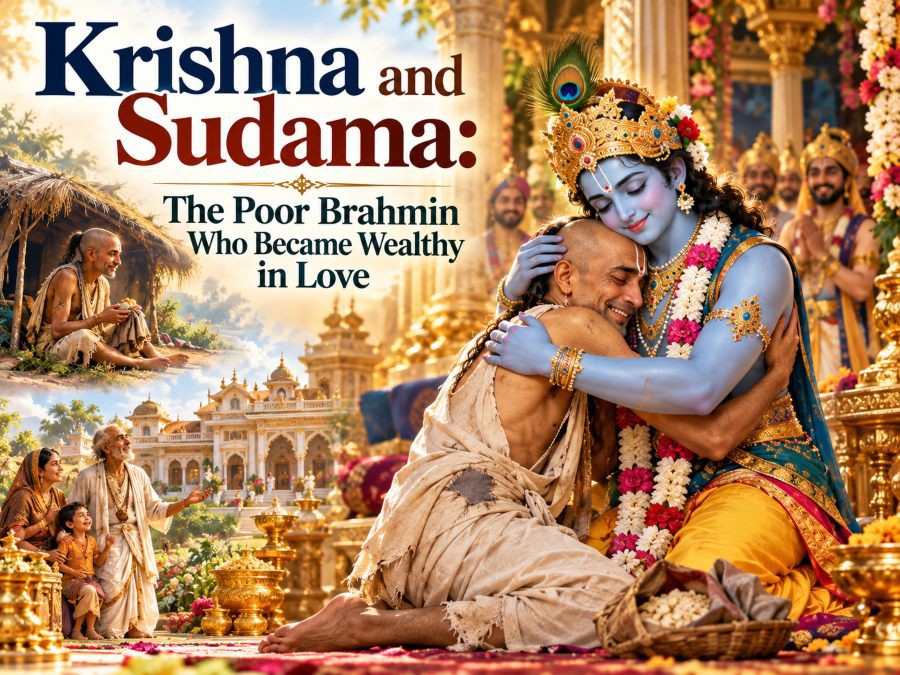 Krishna and Sudama: The Poor Brahmin Who Became Wealthy in LoveRead more
 -
 Vamana Avatar: How Three Steps Humbled Bali MaharajaRead more
Why did a powerful king give away three worlds to a boy asking for three steps? Learn the Vamana avatar story from...
-
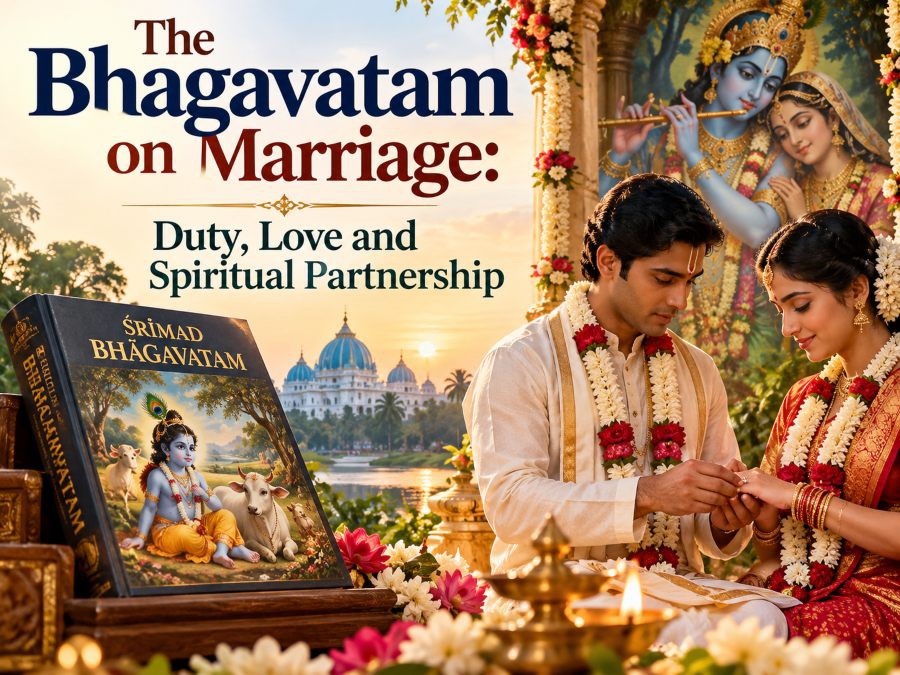 The Bhagavatam on Marriage: Duty, Love and Spiritual PartnershipRead more
What does the Bhagavatam say about marriage? Through the stories of Kardama and Devahuti, Rukmini's secret letter and...
-
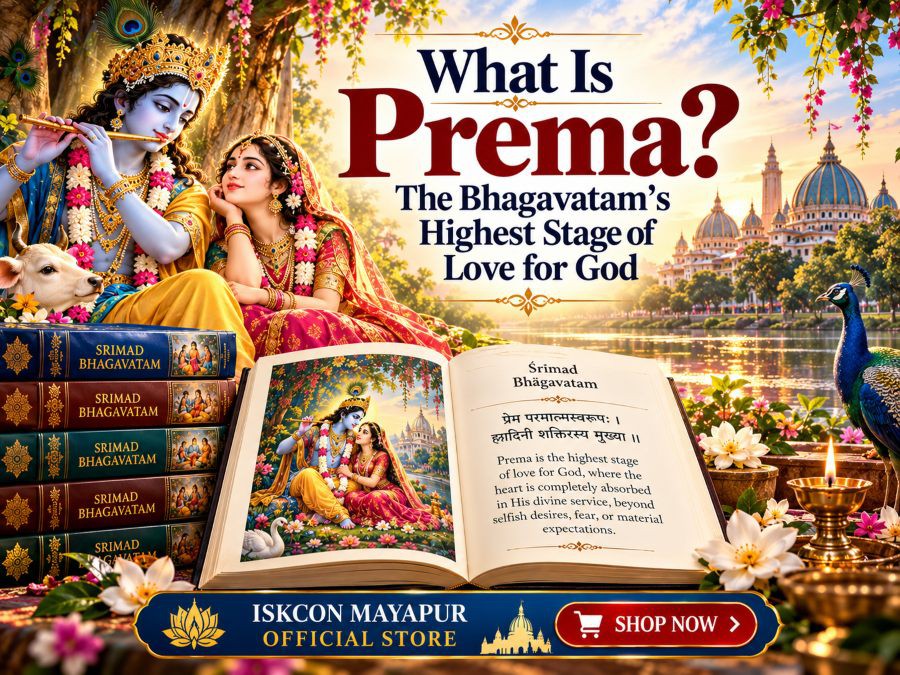 What Is Prema? The Bhagavatam's Highest Stage of Love for GodRead more
Prema is love for God with no "because" attached. Learn how the Bhagavatam describes it, the nine steps from faith to...
-
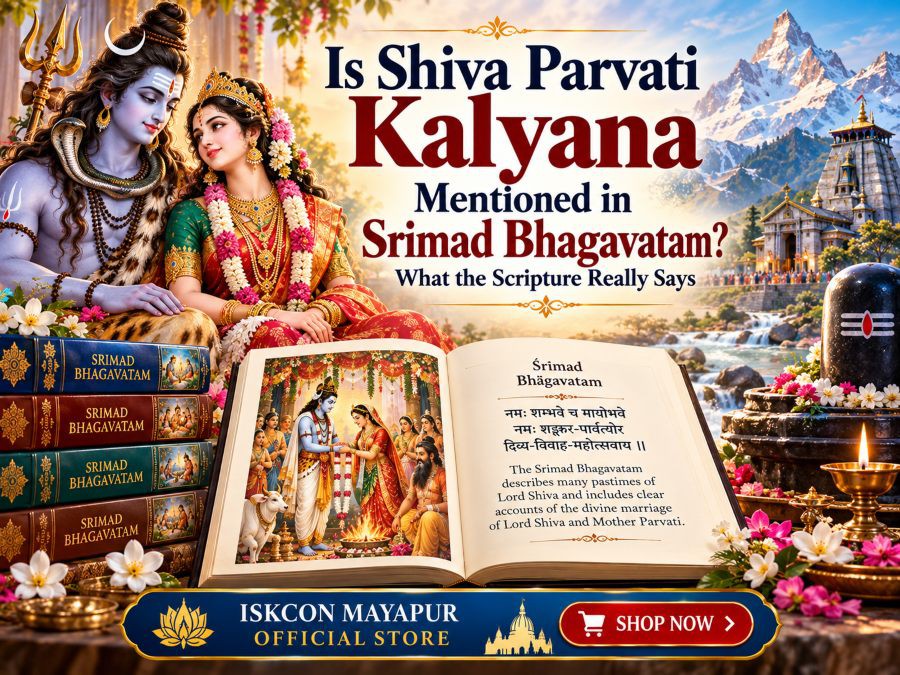 Is Shiva Parvati Kalyana Mentioned in Srimad Bhagavatam? What the Scripture Really SaysRead more
Looking for Shiva and Parvati's wedding in the Srimad Bhagavatam? Find out what the scripture actually describes,...
-
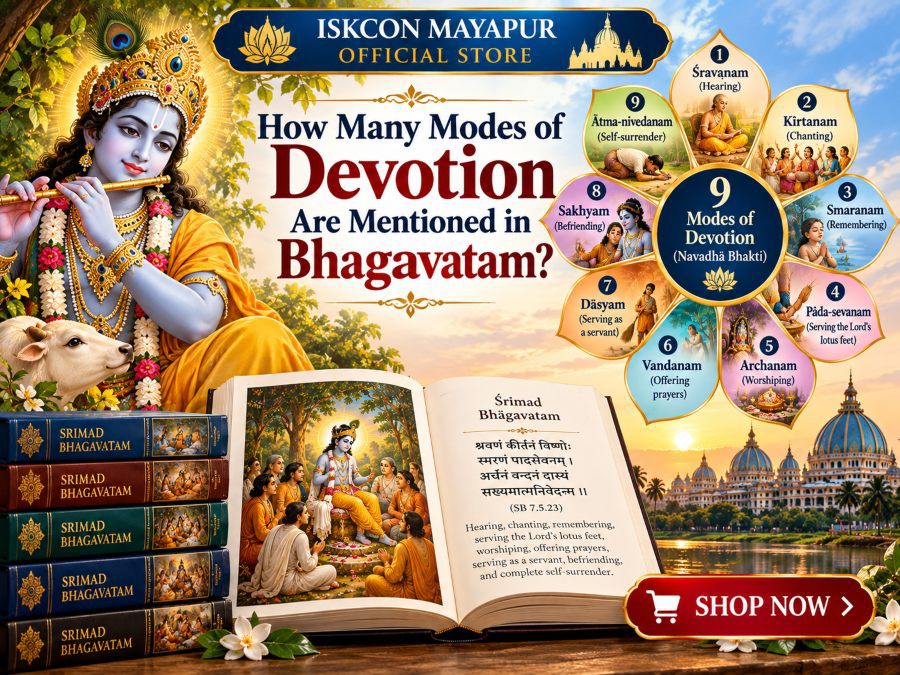 How Many Modes of Devotion Are Mentioned in Bhagavatam?Read more
A young boy named Prahlada listed nine ways to serve God, and the Bhagavatam keeps them as its answer. Learn what the...
-
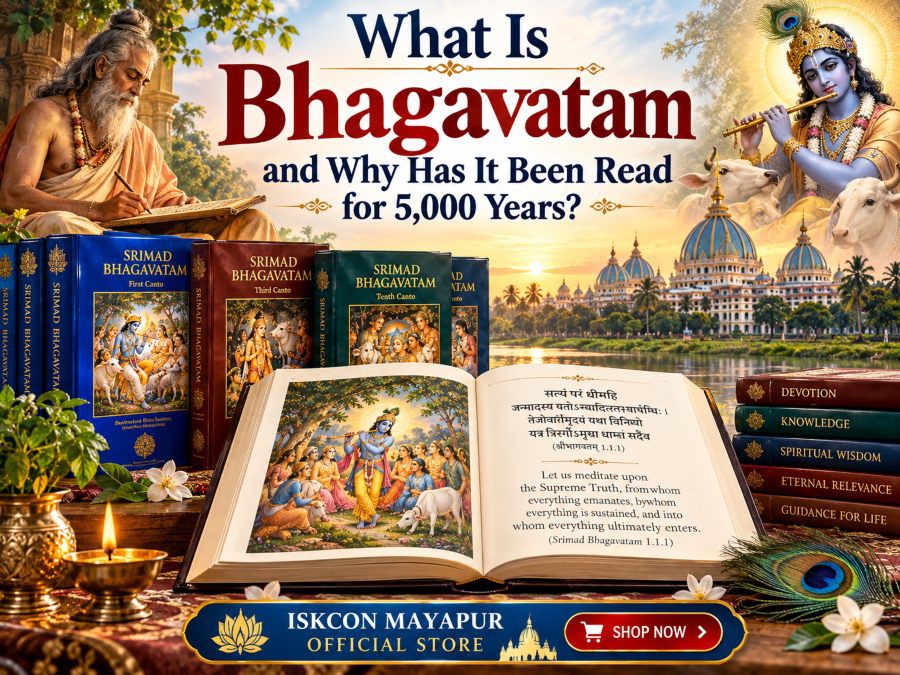 What Is Bhagavatam and Why Has It Been Read for 5,000 Years?Read more
A dying king asked one question, and the answer became the Bhagavatam. Learn what this Sanskrit scripture contains,...
-
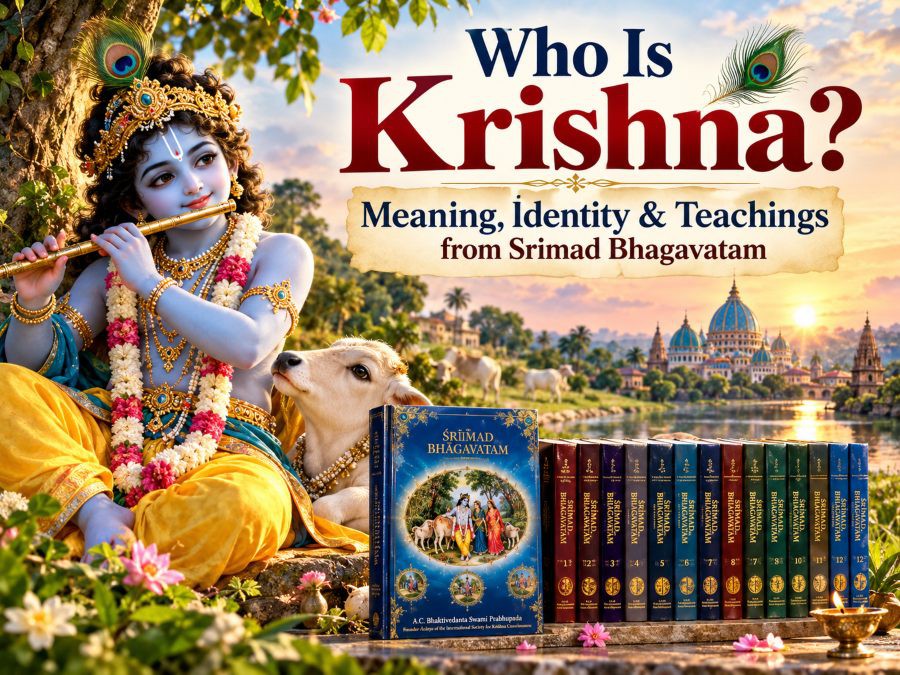 Who Is Lord Krishna? His Meaning, Teachings and Pastimes ExplainedRead more
Discover who Krishna is according to Srimad Bhagavatam, including His divine identity, childhood pastimes, teachings,...
-
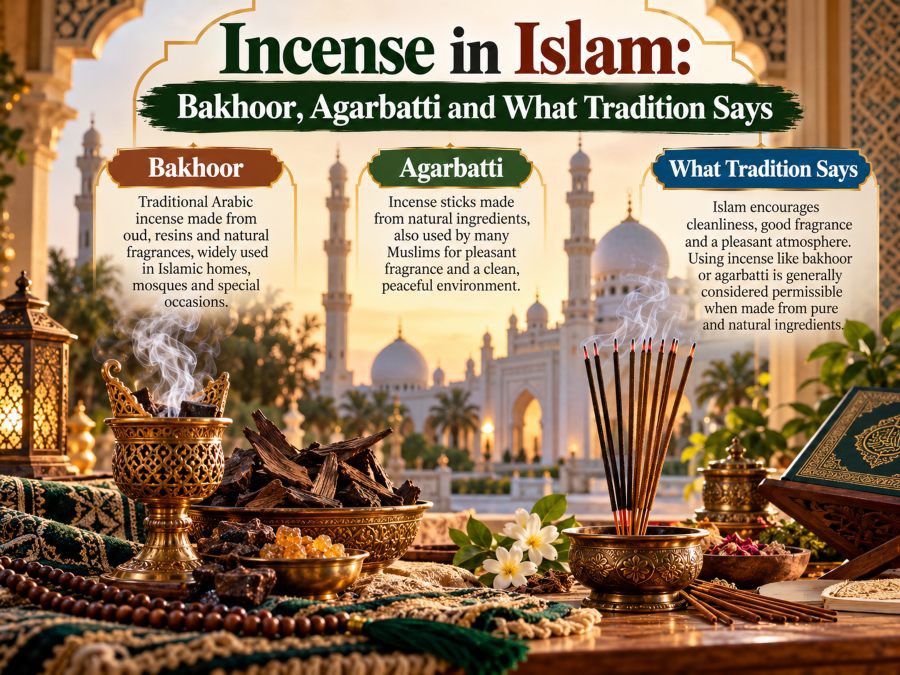 Incense in Islam: Bakhoor, Agarbatti and What Tradition SaysRead more
Is burning fragrance part of Muslim tradition? Explore incense in Islam, from the Prophetic practice of fumigating...
-
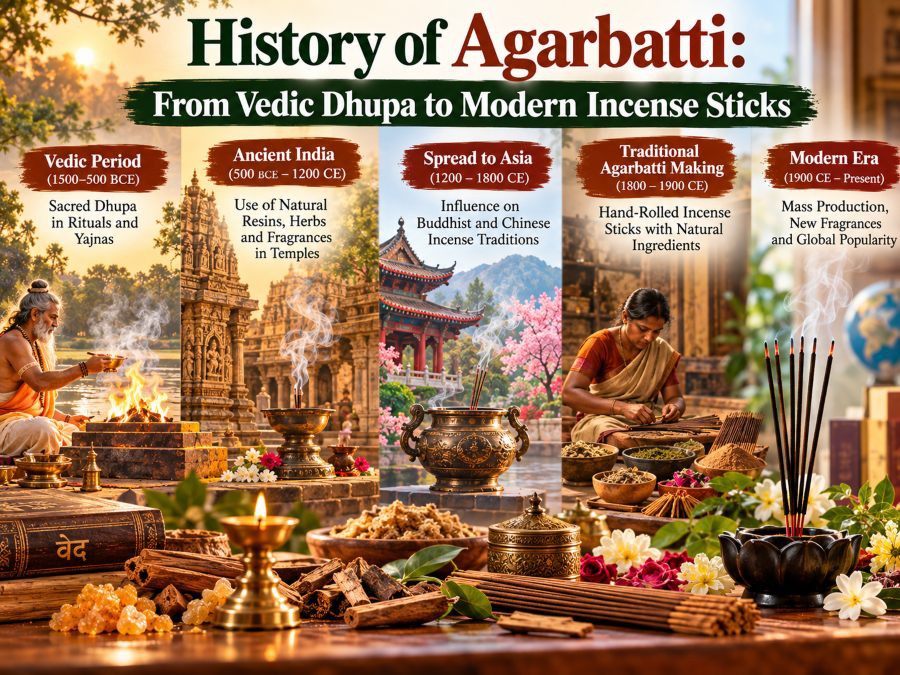 History of Agarbatti: From Vedic Dhupa to Modern Incense SticksRead more
Where did agarbatti really come from? Follow the history of agarbatti from Vedic fire rituals and temple dhupa to...
Blog categories
- Default category (0)
- MUSICAL INSTRUMENT (1)
- BOOK (5)
- DEVOTIONAL GIFT (0)
- Blog (30) click
- CHANDAN (12)
- Bhagavatam Wisdom Series (68)
- Krishna Consciousness (14)
- Mridangam Musical Instrument (6)
- Bhagavad Gita for Beginners (13)
- Bhagavad Gita As It Is (37) click
- Bhagavad Gita As It Is Telugu (0)
- Bhagavad Gita As It Is Marathi (0)
- Bhagavad Gita As It Is In Hindi (0)
- Bhagavad Gita As It Is In English (0)
- Bhagavad Gita As It Is In Bengali (8)
- Bhagavad Gita As It Is In Kannada (0)
- Bhagavad Gita As It Is In Gujarati (0)
- Bhagavad Gita As It Is In Panjabi (0)
- Bhagavad Gita As It Is In Tamil (0)
- Bhagavad Gita As It Is Odia (0)
- BHAGAVAD GITA As It Is GERMAN (0)
- Bhagavad Gita As It Is In French (0)
- Bhagavad Gita As It Is In Nepali (0)
- Bhagavad Gita As It Is In Assamese (0)
- Incense or Agarbatti (38)
- Lord Chaitanya Mahaprabhu (3)
- Vedic Temple Mayapur (14)
- kalki (15)
- Mahabharata – Dharma & Destiny (27)
- Vaishnava Scriptures (4)
- healthy product (4)
- chaitanya mahaprabhu (5)
- Tulsi Mala Guide (17)
Search in blog
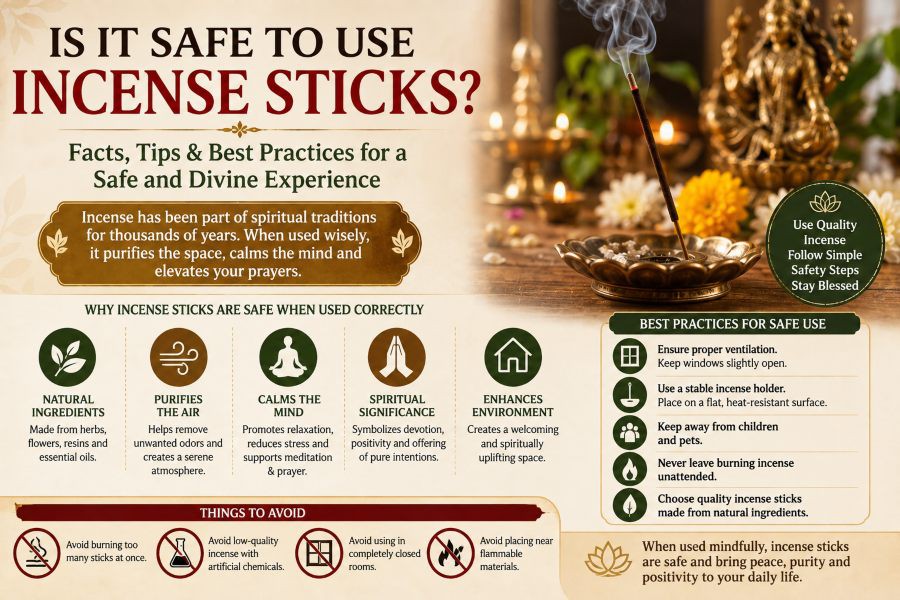
Is It Safe to Use Incense Sticks?
Is It Safe to Use Incense Sticks? What Every Devotee Should Know
Have you ever paused while lighting Incense Sticks and wondered whether the fragrant smoke filling your prayer room is completely safe? It's a fair question, especially as more people use incense not only during puja but also for meditation, yoga, and creating a peaceful atmosphere at home. If you choose quality products from ISKCON Mayapur Store Incense Sticks/Agarbatti, use them correctly, and maintain good ventilation, incense can remain a meaningful part of your daily spiritual practice. The real issue isn't whether incense itself is safe—it's how it's made, how it's burned, and how often it's used.
For centuries, incense has been offered in temples, homes, monasteries, and sacred spaces around the world. Its fragrance has long symbolized purification, devotion, and respect. Yet modern conversations often focus on health concerns, leaving many devotees wondering whether they should continue using incense or avoid it altogether.
The truth is more balanced than many headlines suggest. Like candles, cooking smoke, or even a wood-burning fireplace, incense should be used thoughtfully. Understanding what affects its safety helps you make informed choices without giving up a tradition that has brought peace and devotion to countless generations.
Why the Safety of Incense Depends on More Than the Smoke
People often assume that all incense sticks are identical.
They're not.
Two incense sticks may look almost the same, yet the ingredients inside can be very different. One may contain natural herbs, wood powders, flowers, and essential oils, while another may rely heavily on synthetic fragrances, artificial binders, and chemical additives.
Those differences influence:
- The quality of the fragrance
- The amount of smoke produced
- The way the incense burns
- The overall experience during worship
When people say, "Incense is unsafe," they usually overlook this important distinction.
The better question is:
What kind of incense are you burning?
Choosing well-made incense from trusted sources is one of the easiest ways to improve both your devotional experience and overall comfort.
Natural Ingredients Make a Noticeable Difference
Traditional incense has always been crafted from aromatic materials found in nature.
Common ingredients include:
- Sandalwood
- Cedarwood
- Herbs
- Flowers
- Plant resins
- Natural gums
- Essential oils
- Wood powders
These ingredients have been valued for generations because they create a pleasant fragrance while supporting traditional devotional practices.
By contrast, some inexpensive products depend largely on synthetic perfumes designed to imitate natural scents.
Although these products may smell strong when first lit, the fragrance can quickly become overpowering or harsh.
Reading the product description before buying is a simple habit that helps you understand what you're bringing into your home.
Ventilation Is Often More Important Than People Realize
One of the most common mistakes has nothing to do with the incense itself.
It has everything to do with the room.
Imagine lighting several incense sticks inside a small room with every window tightly closed.
Over time, the smoke naturally builds up.
That doesn't mean the incense is unsafe—it simply means the room lacks fresh airflow.
A better approach is to maintain gentle ventilation.
You don't need strong winds or an open fan blowing directly onto the incense.
Instead:
- Open a nearby window slightly.
- Allow fresh air to circulate naturally.
- Avoid trapping smoke indoors for long periods.
This creates a far more comfortable environment while allowing the fragrance to spread evenly throughout the room.
Does Burning Incense Every Day Create Problems?
This is probably the question devotees ask most often.
For most healthy adults, using one or two quality Incense Sticks during daily worship in a well-ventilated room is generally part of a normal devotional routine.
Problems are more likely to arise when people:
- Burn many incense sticks continuously.
- Use low-quality products.
- Keep rooms completely closed.
- Ignore excessive smoke.
Moderation makes a difference.
Think about tea or coffee.
A cup enjoyed each day is very different from drinking several litres.
The same principle applies to incense.
Used thoughtfully, it supports the atmosphere of worship rather than overwhelming it.
Some People Should Take Extra Care
Although many people enjoy incense without difficulty, not everyone responds to fragrance in the same way.
Individuals with certain conditions may be more sensitive, including:
- Asthma
- Severe allergies
- Chronic respiratory conditions
- Fragrance sensitivity
If someone in your household experiences discomfort while incense is burning, consider simple adjustments rather than abandoning the practice entirely.
For example:
- Burn fewer sticks.
- Choose naturally scented products.
- Increase ventilation.
- Shorten the burning time.
- Burn incense before others enter the room.
These small changes often improve comfort without affecting the spiritual purpose of the offering.
Safety Is About More Than Health
When people discuss incense safety, they often focus only on smoke.
Fire safety deserves equal attention.
Never place burning incense:
- Near curtains.
- Beside paper.
- On unstable surfaces.
- Close to children's toys.
- Near pets that may knock it over.
Always use a sturdy incense holder that catches falling ash.
If you leave home or expect to be away from the room for an extended period, allow the incense to finish naturally before leaving or extinguish it safely.
Simple habits like these prevent accidents while protecting your prayer space.
Quality Over Quantity Always Wins
Many people believe that burning several incense sticks creates a more spiritual atmosphere.
That isn't necessarily true.
One carefully crafted incense stick often produces a smoother, more balanced fragrance than four or five inexpensive ones burning together.
Rather than filling the room with smoke, focus on creating an atmosphere that encourages prayer, chanting, meditation, and quiet reflection.
In devotional practice, intention carries far more value than excess.
Clearing Up the Biggest Myths About Incense Sticks
The internet is full of bold claims about Incense Sticks. Some articles describe them as completely harmless, while others suggest they should never be used indoors. The truth lies somewhere between those two extremes.
Let's separate fact from fiction.
Myth 1: All Incense Sticks Are Unsafe
This is one of the biggest misunderstandings.
Not all incense sticks are made the same way. Products made from natural woods, herbs, flowers, and essential oils differ significantly from those that rely heavily on artificial fragrances and low-quality fillers.
The ingredients matter just as much as the way the incense is used.
Myth 2: More Smoke Means Better Quality
Many people believe thick smoke indicates premium incense.
In reality, excessive smoke can simply mean the incense contains ingredients that burn less efficiently.
A well-crafted incense stick should produce a pleasant fragrance while burning steadily. The goal is a peaceful atmosphere—not filling every corner of the room with smoke.
Myth 3: Burning More Incense Creates More Blessings
Devotion has never been measured by quantity.
Lighting several sticks at once doesn't make a prayer more meaningful.
One carefully offered incense stick, accompanied by sincere devotion, often carries greater spiritual value than excessive offerings made without attention.
How to Choose Safer Incense Sticks
Walking into a shop or browsing online can feel overwhelming because hundreds of fragrances are available.
Instead of choosing based only on scent, consider the overall quality.
Look for incense that offers:
- Natural aromatic ingredients
- Consistent craftsmanship
- Smooth, even coating
- Pleasant fragrance before lighting
- Reliable burn time
- Trusted manufacturing
Avoid products with an unusually strong chemical smell before they are even lit.
Quality incense should smell inviting, not artificial.
Simple Habits That Make Incense Safer Every Day
Good habits matter more than complicated rules.
Here are a few practical steps you can easily include in your daily worship routine.
Before Lighting
- Keep the prayer area clean.
- Place the holder on a stable, heat-resistant surface.
- Move flammable objects away.
- Open a nearby window slightly if possible.
While Burning
- Burn only the number of incense sticks you actually need.
- Allow the fragrance to spread naturally.
- Avoid placing incense directly beneath a ceiling fan.
- Keep children and pets away from burning incense.
After Worship
- Wait until the ash has cooled completely.
- Empty the holder regularly.
- Store unused incense in a cool, dry place.
- Keep the package sealed to preserve the fragrance.
These simple habits improve both safety and the overall experience.
The Spiritual Purpose Should Never Be Forgotten
It is easy to become focused on fragrance, ingredients, or burn time.
Yet incense has always represented something deeper.
During worship, the rising fragrance symbolizes offering one's devotion with humility and gratitude.
Many devotees find that lighting incense naturally helps them slow down.
The aroma creates a gentle transition from everyday concerns into a quieter state of mind.
When used with sincerity, incense becomes more than a pleasant fragrance.
It becomes part of a daily practice that encourages mindfulness, prayer, and spiritual reflection.
Frequently Asked Questions
Can children be around burning incense?
Children should always be supervised around any open flame. Place incense holders where they cannot be easily reached or accidentally knocked over.
Is natural incense always smoke-free?
No.
All burning incense produces some smoke.
The difference is usually in the ingredients and the quality of the burn rather than the complete absence of smoke.
Should windows remain open while burning incense?
Gentle ventilation is usually the best approach.
A slightly open window allows fresh air to circulate without creating a strong draft that interferes with the burning incense.
How many Incense Sticks should I use during daily puja?
For most home prayer spaces, one or two incense sticks are usually sufficient.
This creates a balanced fragrance without making the room uncomfortable.
Can I burn incense every day?
Many devotees include incense as part of their daily worship for years.
Choosing quality products, maintaining proper ventilation, and following safe burning practices help make daily use a comfortable part of spiritual life.
Final Thoughts
So, is it safe to use Incense Sticks?
For most people, the answer is yes—when they are used responsibly.
The safety of incense depends less on the practice itself and more on the choices surrounding it. Selecting well-made incense, using a stable holder, allowing fresh air to circulate, and avoiding excessive smoke all contribute to a pleasant and safe devotional environment.
Rather than being influenced by extreme opinions, take a balanced approach. Learn about the products you purchase, read ingredient information whenever available, and choose trusted manufacturers that value quality over shortcuts.
Incense has been part of spiritual traditions for centuries because it offers more than fragrance. It helps create a peaceful atmosphere that encourages prayer, meditation, chanting, and quiet reflection. When used with care and mindfulness, it continues to serve that purpose beautifully.
Whether your daily worship lasts five minutes or an hour, one thoughtfully chosen incense stick can transform the mood of your sacred space. Respect the tradition, follow sensible safety practices, and allow its gentle fragrance to become a meaningful part of your spiritual routine.
Posted in: Incense or Agarbatti
Related posts
-
 How to Light Incense SticksDiscover the right way to light incense sticks (agarbatti) for worship, meditation, and peace. Learn step-by-step...Read more
 -
 Where to Buy Incense SticksDiscover where to buy the best natural incense sticks for your daily puja, meditation, and relaxation. Explore pure,...Read more
 -
 Is Incense Sticks Bad for Pregnancy? Wondering if incense sticks are safe during pregnancy? Discover the truth about incense smoke, its effects on...Read more
 -
 Do Incense Sticks Trigger Fire Alarms? Wondering if incense sticks can trigger fire alarms? Learn how smoke affects detectors, safe burning tips, and...Read more
 -
 How Many Incense Sticks to Burn for Good LuckDiscover how many incense sticks to burn for good luck and prosperity. Learn the ideal numbers, rituals, and natural...Read more
Leave a comment