
Why did Krishna run to embrace a poor brahmin in rags? Read the Sudama story from the Bhagavatam and learn how a...
Latest posts
-
 Krishna and Sudama: The Poor Brahmin Who Became Wealthy in LoveRead more
 -
 Vamana Avatar: How Three Steps Humbled Bali MaharajaRead more
Why did a powerful king give away three worlds to a boy asking for three steps? Learn the Vamana avatar story from...
-
 The Bhagavatam on Marriage: Duty, Love and Spiritual PartnershipRead more
What does the Bhagavatam say about marriage? Through the stories of Kardama and Devahuti, Rukmini's secret letter and...
-
 What Is Prema? The Bhagavatam's Highest Stage of Love for GodRead more
Prema is love for God with no "because" attached. Learn how the Bhagavatam describes it, the nine steps from faith to...
-
 Is Shiva Parvati Kalyana Mentioned in Srimad Bhagavatam? What the Scripture Really SaysRead more
Looking for Shiva and Parvati's wedding in the Srimad Bhagavatam? Find out what the scripture actually describes,...
-
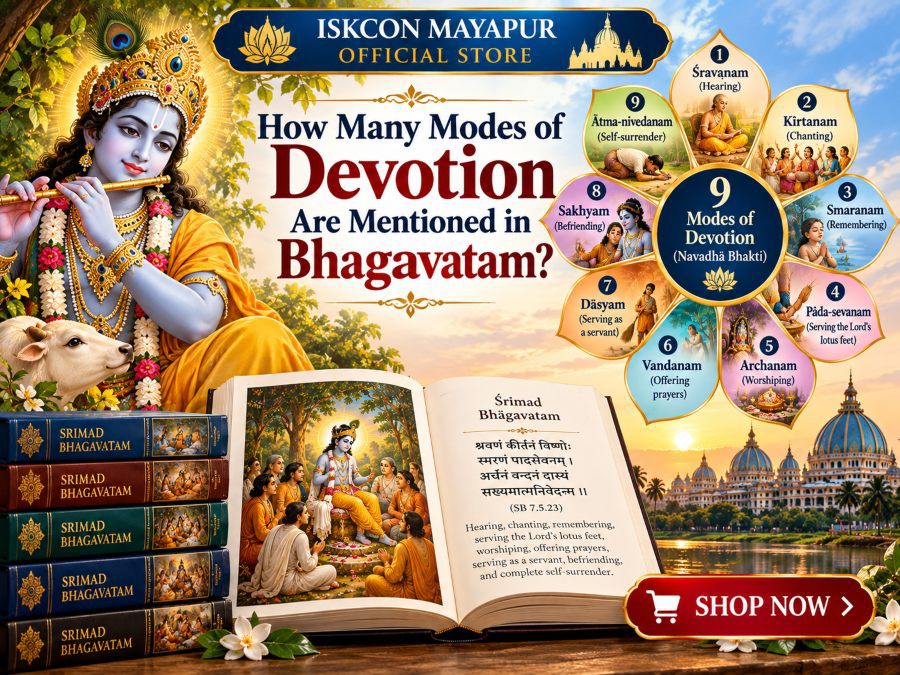 How Many Modes of Devotion Are Mentioned in Bhagavatam?Read more
A young boy named Prahlada listed nine ways to serve God, and the Bhagavatam keeps them as its answer. Learn what the...
-
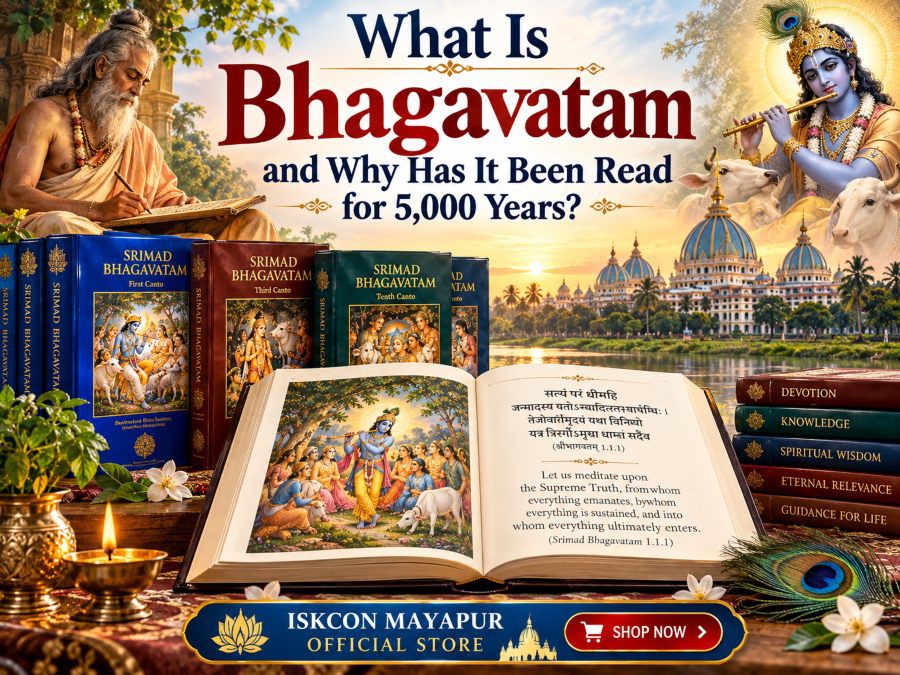 What Is Bhagavatam and Why Has It Been Read for 5,000 Years?Read more
A dying king asked one question, and the answer became the Bhagavatam. Learn what this Sanskrit scripture contains,...
-
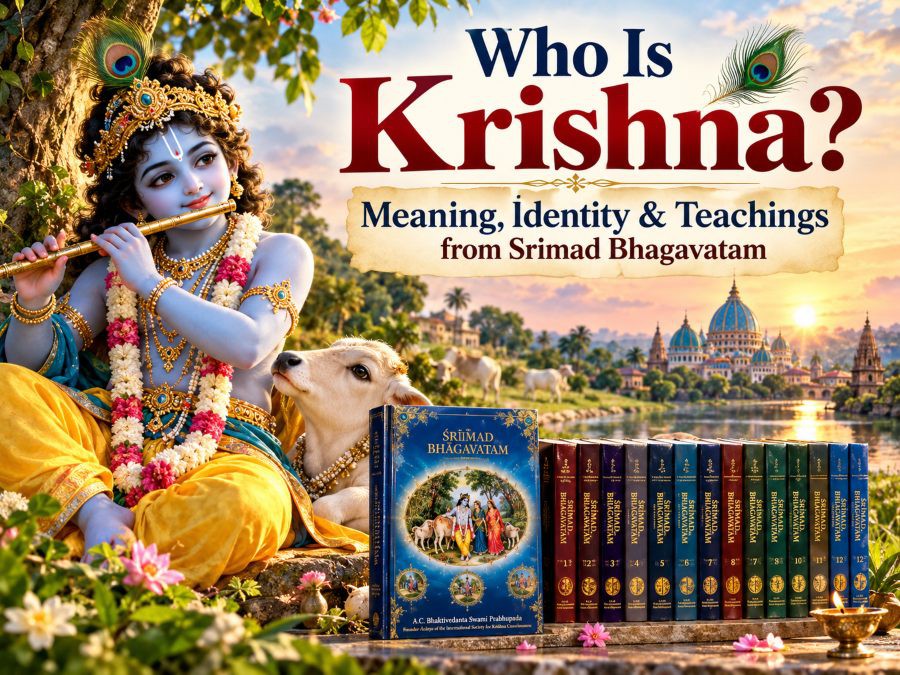 Who Is Lord Krishna? His Meaning, Teachings and Pastimes ExplainedRead more
Discover who Krishna is according to Srimad Bhagavatam, including His divine identity, childhood pastimes, teachings,...
-
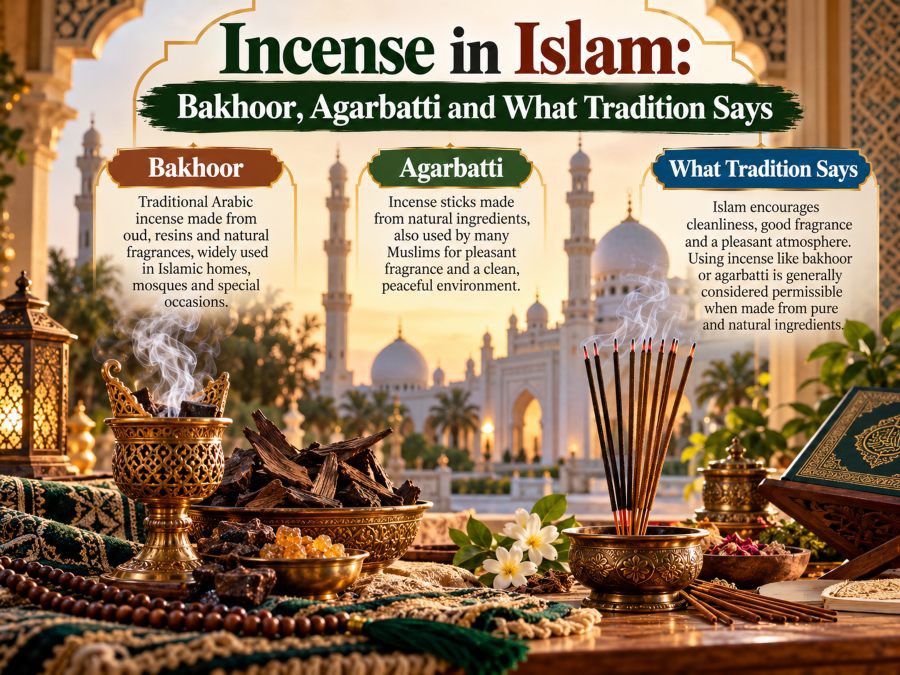 Incense in Islam: Bakhoor, Agarbatti and What Tradition SaysRead more
Is burning fragrance part of Muslim tradition? Explore incense in Islam, from the Prophetic practice of fumigating...
-
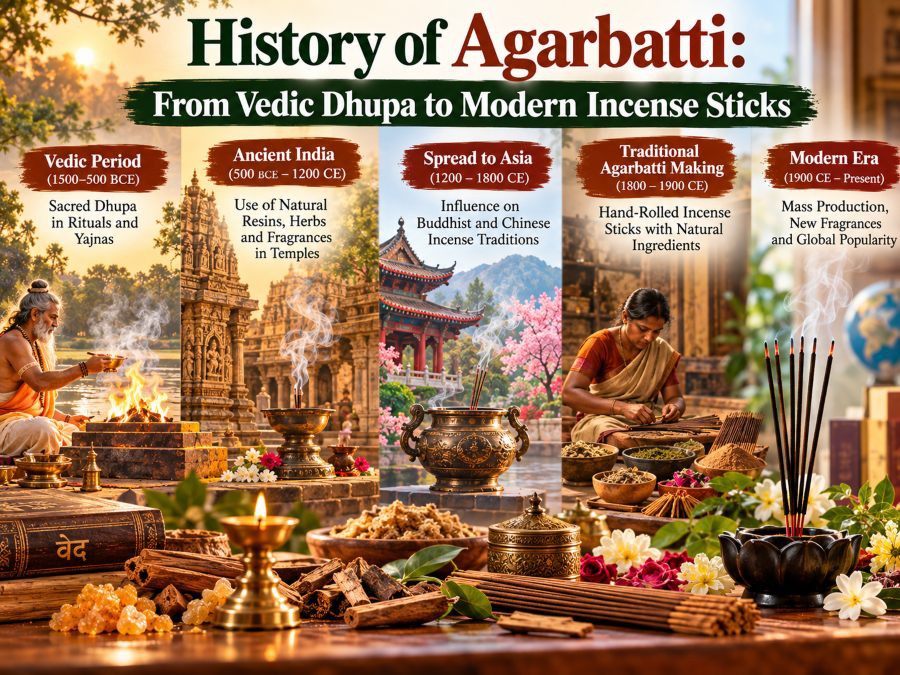 History of Agarbatti: From Vedic Dhupa to Modern Incense SticksRead more
Where did agarbatti really come from? Follow the history of agarbatti from Vedic fire rituals and temple dhupa to...
Blog categories
- Default category (0)
- MUSICAL INSTRUMENT (1)
- BOOK (5)
- DEVOTIONAL GIFT (0)
- Blog (30) click
- CHANDAN (12)
- Bhagavatam Wisdom Series (68)
- Krishna Consciousness (14)
- Mridangam Musical Instrument (6)
- Bhagavad Gita for Beginners (13)
- Bhagavad Gita As It Is (37) click
- Bhagavad Gita As It Is Telugu (0)
- Bhagavad Gita As It Is Marathi (0)
- Bhagavad Gita As It Is In Hindi (0)
- Bhagavad Gita As It Is In English (0)
- Bhagavad Gita As It Is In Bengali (8)
- Bhagavad Gita As It Is In Kannada (0)
- Bhagavad Gita As It Is In Gujarati (0)
- Bhagavad Gita As It Is In Panjabi (0)
- Bhagavad Gita As It Is In Tamil (0)
- Bhagavad Gita As It Is Odia (0)
- BHAGAVAD GITA As It Is GERMAN (0)
- Bhagavad Gita As It Is In French (0)
- Bhagavad Gita As It Is In Nepali (0)
- Bhagavad Gita As It Is In Assamese (0)
- Incense or Agarbatti (38)
- Lord Chaitanya Mahaprabhu (3)
- Vedic Temple Mayapur (14)
- kalki (15)
- Mahabharata – Dharma & Destiny (27)
- Vaishnava Scriptures (4)
- healthy product (4)
- chaitanya mahaprabhu (5)
- Tulsi Mala Guide (17)
Search in blog
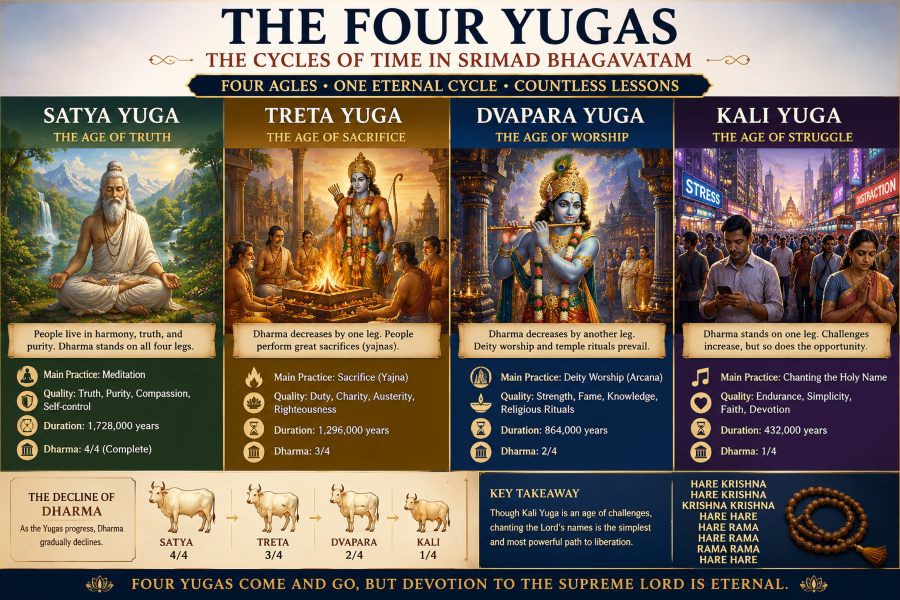
What Are the Four Yugas? Satya, Treta, Dvapara and Kali Explained
What Are the Four Yugas? Satya, Treta, Dvapara and Kali Explained
What if human civilization did not move through time in a straight line, but through enormous cycles of rise, decline, renewal, and spiritual change? The Srimad Bhagavatam presents time on a scale far larger than an ordinary human lifetime, describing four recurring ages known as the yugas: Satya Yuga, Treta Yuga, Dvapara Yuga, and Kali Yuga. If you have ever wondered “When was Srimad Bhagavatam written?”, that question becomes especially interesting because the text describes events and cycles of time that extend far beyond conventional historical timelines.
The four yugas are not simply four historical periods. They represent different levels of human consciousness, morality, spiritual practice, and social conditions. According to the Vedic tradition, each age has its own character, duration, strengths, and challenges.
The cycle begins with Satya Yuga, the age associated with truth and spiritual purity. It gradually moves through Treta Yuga and Dvapara Yuga before reaching Kali Yuga, the present age described as spiritually challenging but also uniquely accessible for devotional practice.
Understanding these four ages gives us a fascinating way to understand how the Srimad Bhagavatam views time, human nature, spiritual life, and the repeated cycles of creation.
The Four Yugas at a Glance
Before looking closely at each age, it helps to see the complete cycle.
Yuga | Traditional Duration | Main Characteristic |
Satya Yuga | 1,728,000 years | Truth, purity, meditation |
Treta Yuga | 1,296,000 years | Sacrifice and religious duty |
Dvapara Yuga | 864,000 years | Temple worship and ritual |
Kali Yuga | 432,000 years | Spiritual decline and chanting |
Together, these four ages form one maha-yuga, lasting 4.32 million years according to the traditional Vedic calculation.
The durations may sound almost impossible to imagine. That is partly the point.
The Vedic conception of time is enormous. Human history represents only a tiny portion of a much larger cosmic process.
Why Do the Yugas Become Shorter?
The four ages follow a descending pattern.
Satya Yuga is the longest.
Treta Yuga is shorter.
Dvapara Yuga is shorter still.
Kali Yuga is the shortest.
This decline is connected with the gradual reduction of dharma, or righteous and spiritually aligned living.
The Srimad Bhagavatam uses the image of dharma standing on four legs in Satya Yuga. As the ages progress, those foundations become weaker.
The idea is not that every individual in an earlier age was automatically perfect or that every person in Kali Yuga is bad.
Rather, each age has a general spiritual atmosphere.
That distinction matters.
Satya Yuga: When Truth Stood at the Center
Satya Yuga is often called the Golden Age because it represents the highest level of spiritual purity among the four yugas.
The word Satya is connected with truth.
People in this age are traditionally described as possessing qualities such as:
- Truthfulness
- Self-control
- Compassion
- Purity
- Spiritual discipline
- Long life
- Strong memory
- Deep meditation
The defining spiritual practice of Satya Yuga is generally associated with meditation.
Imagine trying to meditate continuously for extremely long periods while maintaining extraordinary concentration.
That kind of practice is presented as suitable for the people of Satya Yuga.
For modern readers, this creates an interesting question.
Could the same spiritual method be realistically practiced today?
The Bhagavatam's answer points toward the importance of understanding the character of the age in which we live.
A practice suitable for one era may be difficult to perform effectively in another.
Dharma on Four Strong Legs
In Satya Yuga, dharma is traditionally described as standing firmly on four principles.
These are commonly associated with:
Truthfulness, cleanliness, mercy, and austerity.
People are naturally inclined toward spiritual life, so religious principles do not require the same degree of external enforcement.
The age is therefore presented as one in which spiritual realization is comparatively accessible through disciplined meditation.
But Satya Yuga does not last forever.
The cycle moves forward.
Treta Yuga: Spiritual Life Through Great Sacrifices
Treta Yuga follows Satya Yuga.
The spiritual condition of humanity changes.
Dharma becomes somewhat weaker, and the recommended spiritual practices change accordingly.
Treta Yuga is particularly associated with yajna, or elaborate Vedic sacrifices.
These sacrifices required great resources, precise procedures, qualified priests, and substantial organization.
For a society with abundant resources and highly disciplined religious culture, such practices could be performed on a remarkable scale.
One of the most famous divine personalities associated with Treta Yuga is Lord Rama.
His life is celebrated throughout the Ramayana tradition and is also recognized within the wider Vedic understanding of divine incarnations.
Rama's story illustrates themes that remain important across ages:
- Duty
- Honor
- Courage
- Sacrifice
- Loyalty
- Righteous leadership
- Devotion
The story of Rama also demonstrates that spiritual life is not simply about private meditation.
Dharma can shape how a person behaves as a child, spouse, leader, citizen, friend, and servant.
Dvapara Yuga: When Divine Worship Took Center Stage
Dvapara Yuga follows Treta Yuga.
The spiritual environment becomes more complicated, and the recommended religious practice changes again.
Dvapara Yuga is associated strongly with arcana, or formal worship of the Deity.
People are described as possessing greater resources and abilities than those of Kali Yuga, yet they are no longer as spiritually disciplined as people in Satya Yuga.
This is the age in which Lord Krishna appears.
His appearance becomes especially significant because the teachings He gives to Arjuna are later preserved in the Bhagavad Gita, while the Srimad Bhagavatam provides extensive descriptions of Krishna's activities, devotees, and divine relationships.
The Dvapara period therefore occupies an important place in Vaishnava literature.
It connects cosmic time with one of the most celebrated manifestations of the Supreme Lord.
Krishna's Appearance and the End of Dvapara Yuga
According to traditional Vedic chronology, the present Kali Yuga begins after Krishna's departure from the world.
The traditional date given for the beginning of Kali Yuga is 3102 BCE.
From the Vedic perspective, we are therefore living in the early portion of Kali Yuga, which is described as lasting 432,000 years.
That enormous duration is difficult to visualize.
But it provides an important backdrop for understanding why the Bhagavatam describes Kali Yuga in such strong terms.
Kali Yuga: The Most Difficult Age—and an Unexpected Opportunity
Kali Yuga is the fourth and present age in the traditional cycle.
It is associated with increasing conflict, material attachment, dishonesty, weakened memory, shorter lifespans, and declining spiritual discipline.
The name Kali in this context does not refer to the goddess Kali. It refers to the age characterized by quarrel and spiritual degradation.
The Srimad Bhagavatam describes many troubling conditions associated with Kali Yuga.
People become increasingly distracted.
Material concerns dominate attention.
Traditional spiritual disciplines become difficult to maintain.
Social relationships can become unstable.
And people often struggle to distinguish lasting values from temporary desires.
Yet there is a remarkable twist.
Kali Yuga is also described as an age in which spiritual advancement can be achieved through a comparatively simple practice: chanting the holy names of the Lord.
That changes the entire way we look at the age.
Kali Yuga is difficult.
But the spiritual method recommended for it is accessible.
Why Chanting Becomes So Important in Kali Yuga
The Srimad Bhagavatam places special emphasis on remembering and glorifying the Supreme Lord during Kali Yuga.
In Vaishnava traditions, this is strongly associated with sankirtana, the congregational chanting of the holy names.
The reasoning is straightforward.
If people have short attention spans, limited resources, complicated lives, and little ability to perform massive Vedic sacrifices or prolonged meditation, spiritual practice needs to be accessible.
Chanting does not require a palace.
It does not require enormous wealth.
It does not require advanced academic qualifications.
A person can begin with the holy name.
That accessibility is one of the most striking features of the Bhagavatam's presentation of Kali Yuga.
How many books in srimad bhagavatam?
At roughly the 40% point of our discussion, it is worth clearing up a common terminology question.
When someone asks, “How many books in srimad bhagavatam?”, they may be referring to the Bhagavatam's physical volumes or to its internal divisions.
The Srimad Bhagavatam is divided into 12 cantos, traditionally called Skandhas.
These twelve cantos make up the complete work.
Depending on the particular English edition and publishing format, those twelve cantos may be distributed across multiple physical books or volumes.
So there is an important difference between:
12 cantos = the traditional internal structure
and
multiple physical volumes = the publishing format of a particular edition.
This distinction prevents a lot of confusion when people search online for the number of Bhagavatam books.
The twelve cantos progressively explore creation, cosmology, spiritual philosophy, incarnations of the Supreme Lord, kings and sages, devotional service, and the life and teachings of Krishna.
The Yugas Are About More Than Dates
It is tempting to treat the four yugas as nothing more than a giant calendar.
But that misses the deeper idea.
The yuga system is also a model of changing human consciousness.
Each age asks a different question about spiritual practice.
Satya Yuga asks:
Can humanity meditate deeply enough to realize the Supreme?
Treta Yuga asks:
Can humanity perform great sacrifices with precision and devotion?
Dvapara Yuga asks:
Can humanity engage in elaborate worship and temple-centered religious practice?
Kali Yuga asks:
Can humanity remember the Supreme through the simplest accessible spiritual practice?
This progression is important.
The tradition is not merely saying, “People become worse.”
It is also explaining why spiritual methods are adapted to the conditions of each age.
How Old is the Srimad Bhagavatam?
The question “How Old is the Srimad Bhagavatam” has more than one dimension because traditional religious chronology and modern historical scholarship approach the subject differently.
Within the Vaishnava tradition, the Bhagavatam is understood as an ancient sacred text spoken by Sri Sukadeva Goswami to Maharaja Parikshit, and its teachings are connected with the broader Vedic tradition.
The traditional account also associates the compilation of the Bhagavatam with Srila Vyasadeva.
Modern academic discussions of the text's composition generally place its written formation much later than the immense time periods described within its narratives and cosmology.
This creates an important distinction:
The age of a text's written form is not necessarily the same as the age of the traditions, teachings, or stories preserved within it.
For devotees, the Bhagavatam is not simply a historical artifact.
It is sacred literature intended to cultivate devotion and spiritual understanding.
That perspective is essential when reading its descriptions of cosmic time.
The Four Yugas Form One Giant Cycle
The four ages do not continue indefinitely in a straight line.
They form a repeating cycle.
The traditional calculation is:
Satya Yuga: 1,728,000 years
Treta Yuga: 1,296,000 years
Dvapara Yuga: 864,000 years
Kali Yuga: 432,000 years
Together:
4,320,000 years = one maha-yuga
After the four ages complete their cycle, the sequence begins again.
The Vedic conception of time therefore resembles a vast wheel rather than a straight road.
Human beings appear, civilizations rise, ages change, and the cycle continues.
That perspective can make our own problems look different.
A career may last decades.
A civilization may last centuries.
A yuga lasts hundreds of thousands or more than a million years.
The scale is enormous.
What Changes From One Yuga to Another?
The most important change is the condition of dharma.
The Bhagavatam's vision suggests that spiritual qualities become progressively harder to maintain.
The four principles associated with dharma are traditionally represented as:
1. Truthfulness
2. Cleanliness
3. Mercy
4. Austerity
In Satya Yuga, all four stand firmly.
As the ages progress, they become increasingly compromised.
By Kali Yuga, spiritual life becomes difficult and social disorder becomes more common.
But this does not mean every person is doomed.
Quite the opposite.
The Bhagavatam's message contains hope.
Even in a spiritually difficult age, a sincere person can cultivate devotion.
How many chapters are there in srimad bhagavatam?
Another frequently searched question is “How many chapters are there in srimad bhagavatam?”
The traditional Srimad Bhagavatam contains 335 chapters across its 12 cantos.
It is also traditionally known for containing approximately 18,000 verses.
The chapter count helps explain the scale of the work.
This is not a short philosophical manual.
It is a huge body of devotional literature containing narratives, philosophical discussions, prayers, genealogies, descriptions of creation, teachings on spiritual practice, and accounts of the Supreme Lord and His devotees.
The twelve-canto structure also gives readers a sense of progression.
The earlier sections establish foundational ideas and histories, while later cantos move increasingly toward the glories of Krishna and the essence of devotional service.
Why the Yuga System Still Matters Today
You might reasonably ask:
What difference does any of this make to someone living in the twenty-first century?
Quite a lot, actually.
The yuga concept encourages humility.
We tend to think our generation is the center of history. The Vedic view challenges that assumption.
It also encourages realistic spiritual practice.
If Kali Yuga is an age in which distraction and conflict are widespread, perhaps spiritual life should not depend on conditions that are extremely difficult to create.
That is why chanting, hearing, remembering, and associating with devotees receive such attention in Vaishnava practice.
The message is practical:
Do not wait for perfect circumstances before beginning spiritual life.
Begin where you are.
Kali Yuga Is Not an Excuse for Giving Up
There is another lesson worth emphasizing.
If the age is spiritually difficult, that does not mean we should simply surrender to its negative tendencies.
Knowing the nature of Kali Yuga can actually make us more intentional.
We can ask:
- What influences are shaping my mind?
- What am I spending most of my attention on?
- Which habits make me more peaceful?
- Which habits increase greed, anger, or envy?
- Am I making time for spiritual practice?
- What am I repeatedly hearing and remembering?
These are practical questions.
The four yugas may describe enormous cosmic periods, but their lessons can still influence an ordinary Tuesday morning.
The Srimad Bhagavatam's View of Time Changes the Question
Most people ask:
“How much time do I have?”
The yuga system invites another question:
“What am I doing with the consciousness I have right now?”
That is perhaps the most useful way to approach these ancient teachings.
We may not be able to verify every traditional measurement through modern historical methods, and different traditions may interpret the chronology differently. But the spiritual framework remains fascinating because it connects time with human character and spiritual practice.
The four yugas are not simply dates on a timeline.
They describe a changing relationship between humanity and dharma.
From Satya Yuga to Kali Yuga: One Cycle, Four Spiritual Moods
The progression becomes easier to remember this way:
Satya Yuga — Meditation
A spiritually refined age where deep contemplation is possible.
Treta Yuga — Sacrifice
An age where elaborate yajnas become the principal religious practice.
Dvapara Yuga — Deity Worship
An age characterized by formal worship and temple-centered devotion.
Kali Yuga — Chanting
A difficult age in which remembrance and chanting of the Lord's holy names become especially accessible.
Each age has its own conditions.
Each has its own spiritual emphasis.
And each eventually gives way to the next.
Final Thoughts
The four yugas—Satya, Treta, Dvapara, and Kali—give the Srimad Bhagavatam a remarkable vision of time. They describe a repeating cycle in which dharma gradually declines before the cycle begins again.
Satya Yuga represents truth and deep meditation. Treta Yuga emphasizes great sacrifices. Dvapara Yuga is associated with elaborate worship. Kali Yuga, despite its many problems, offers a comparatively accessible path through chanting and remembrance of the Supreme Lord.
The numbers are enormous: 1.728 million years for Satya Yuga, 1.296 million for Treta, 864,000 for Dvapara, and 432,000 for Kali. Together they form a 4.32-million-year maha-yuga.
Yet the most interesting lesson may not be the numbers at all.
The yugas remind us that circumstances change, human abilities change, and spiritual practices can be adapted to those changing conditions. We happen to live in Kali Yuga, an age described as difficult in many ways. But the Bhagavatam does not leave us without hope.
It points toward devotion.
It points toward remembrance.
It points toward the holy name.
And it reminds us that even within an enormous cosmic cycle, one person's sincere effort to turn toward the Supreme Lord still matters.
Posted in: Bhagavatam Wisdom Series
Related posts
-
 Why to read srimad bhagavatamReading the Srimad Bhagavatam fosters deep spiritual growth by narrating the life and teachings of Lord Krishna,...Read more
 -
 When was srimad bhagavatam written?The Srimad Bhagavatam is believed to have been written around 9th-10th century CE, though its oral traditions date...Read more
 -
 How many chapters are there in srimad bhagavatam?The Srimad Bhagavatam consists of 12 cantos (books) containing 335 chapters in total. Each canto covers various...Read more
 -
 How many skandhas are there in srimad bhagavatamThe Srimad Bhagavatam is divided into 12 skandhas (cantos or books). Each skandha explores different themes,...Read more
 -
 How many slokas in srimad bhagavatamThe Srimad Bhagavatam contains approximately 18,000 shlokas (verses). These verses are spread across its 12 skandhas...Read more
Leave a comment