
Why did Krishna run to embrace a poor brahmin in rags? Read the Sudama story from the Bhagavatam and learn how a...
Latest posts
-
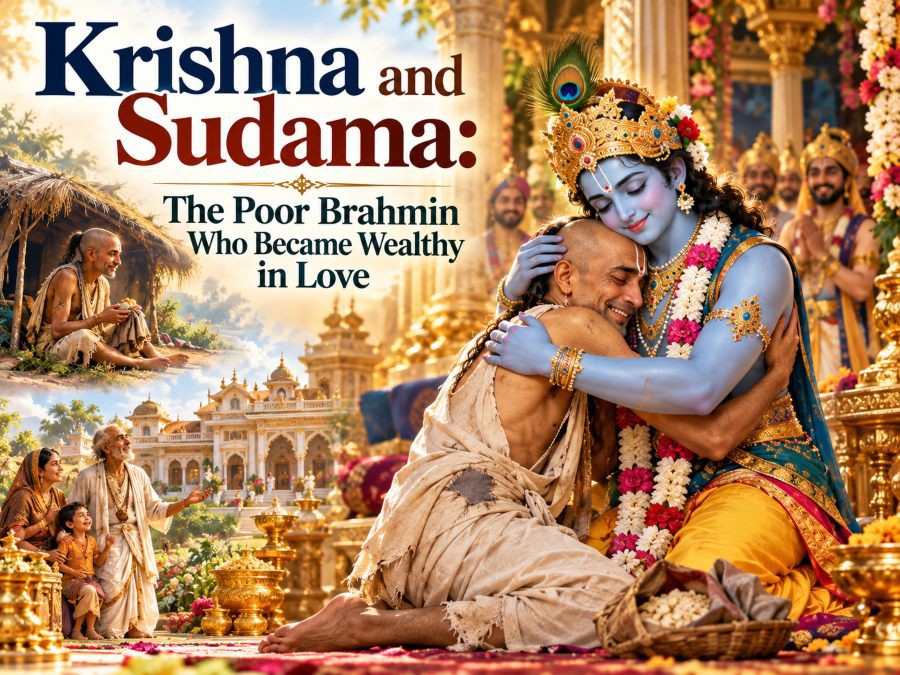 Krishna and Sudama: The Poor Brahmin Who Became Wealthy in LoveRead more
 -
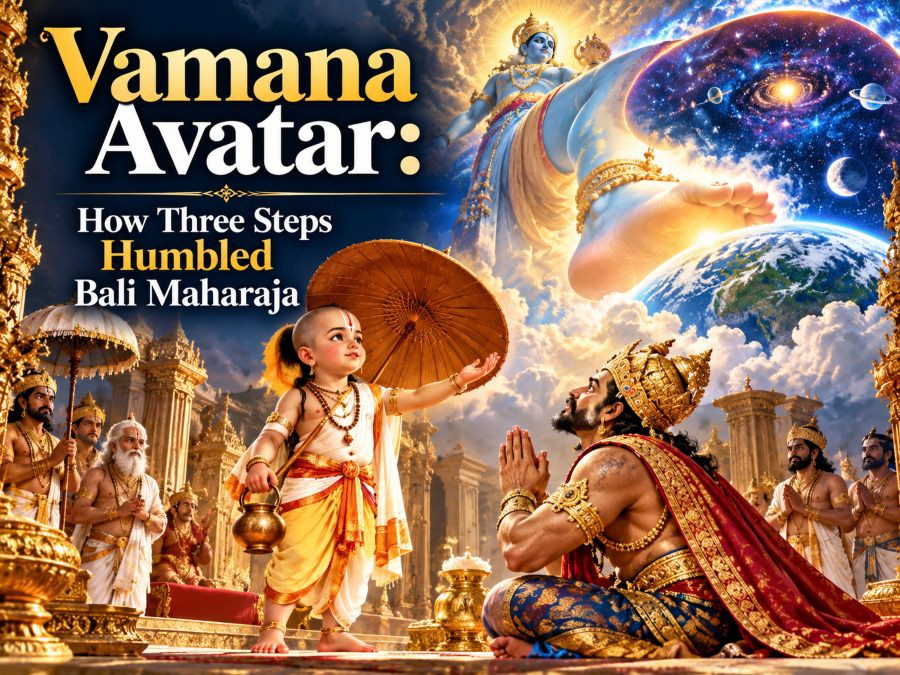 Vamana Avatar: How Three Steps Humbled Bali MaharajaRead more
Why did a powerful king give away three worlds to a boy asking for three steps? Learn the Vamana avatar story from...
-
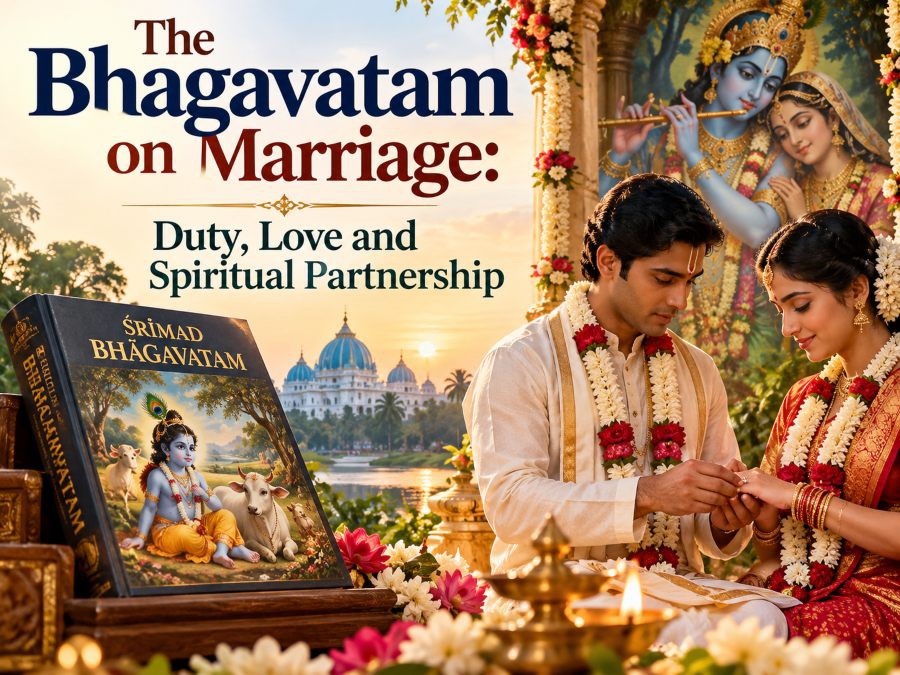 The Bhagavatam on Marriage: Duty, Love and Spiritual PartnershipRead more
What does the Bhagavatam say about marriage? Through the stories of Kardama and Devahuti, Rukmini's secret letter and...
-
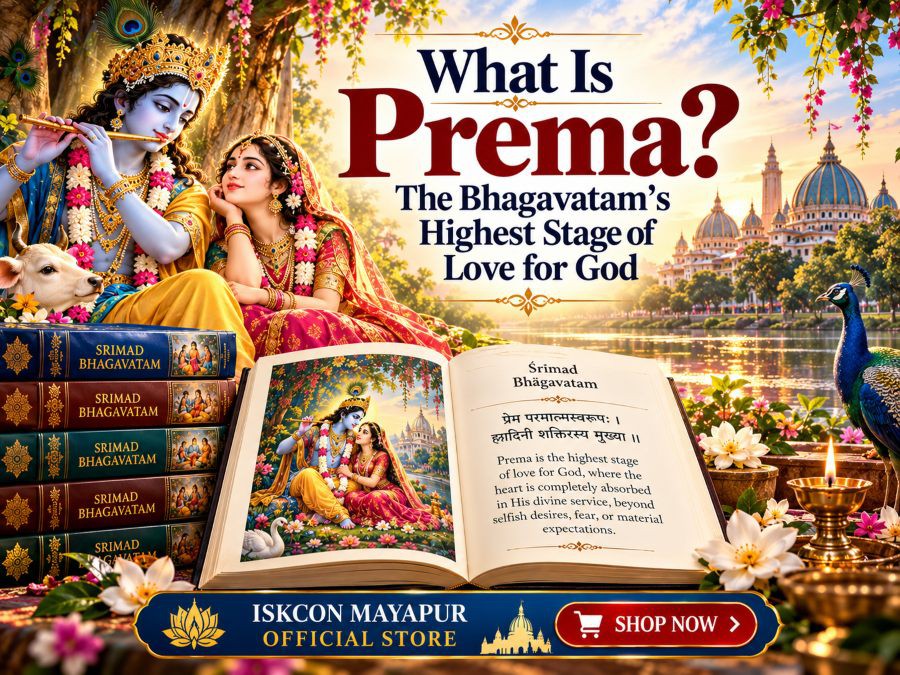 What Is Prema? The Bhagavatam's Highest Stage of Love for GodRead more
Prema is love for God with no "because" attached. Learn how the Bhagavatam describes it, the nine steps from faith to...
-
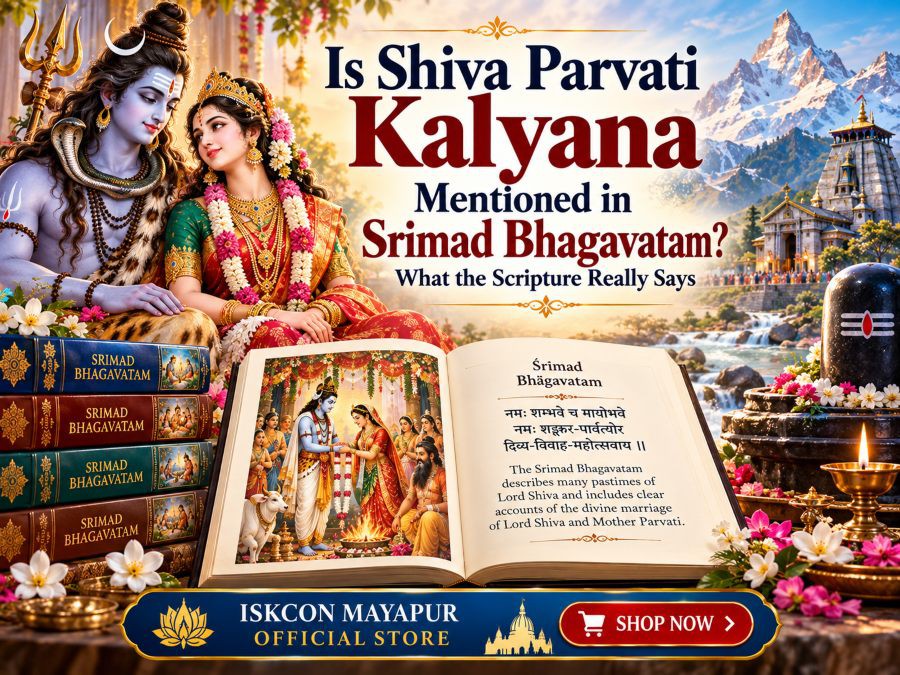 Is Shiva Parvati Kalyana Mentioned in Srimad Bhagavatam? What the Scripture Really SaysRead more
Looking for Shiva and Parvati's wedding in the Srimad Bhagavatam? Find out what the scripture actually describes,...
-
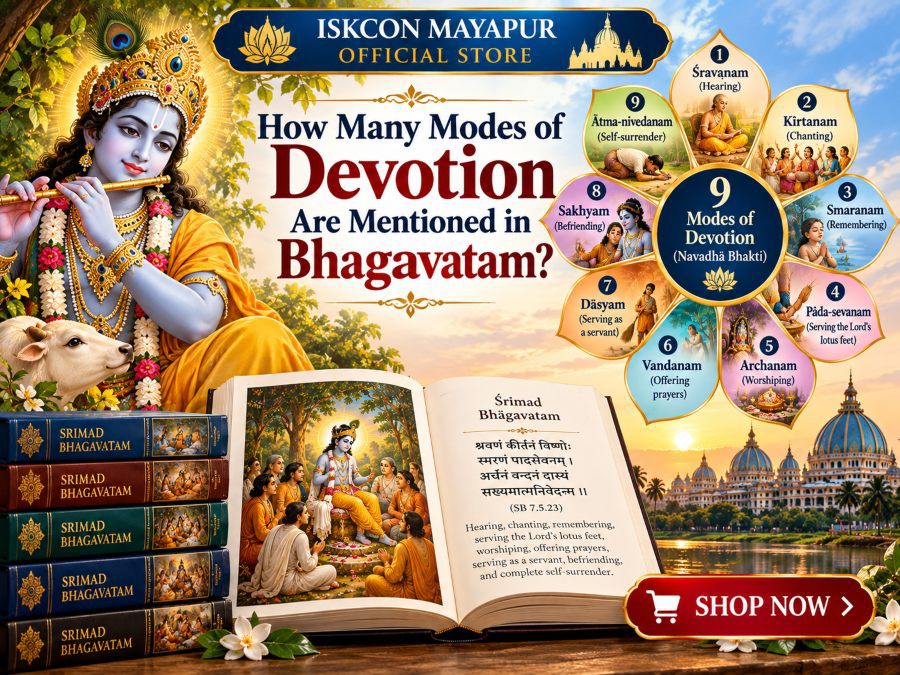 How Many Modes of Devotion Are Mentioned in Bhagavatam?Read more
A young boy named Prahlada listed nine ways to serve God, and the Bhagavatam keeps them as its answer. Learn what the...
-
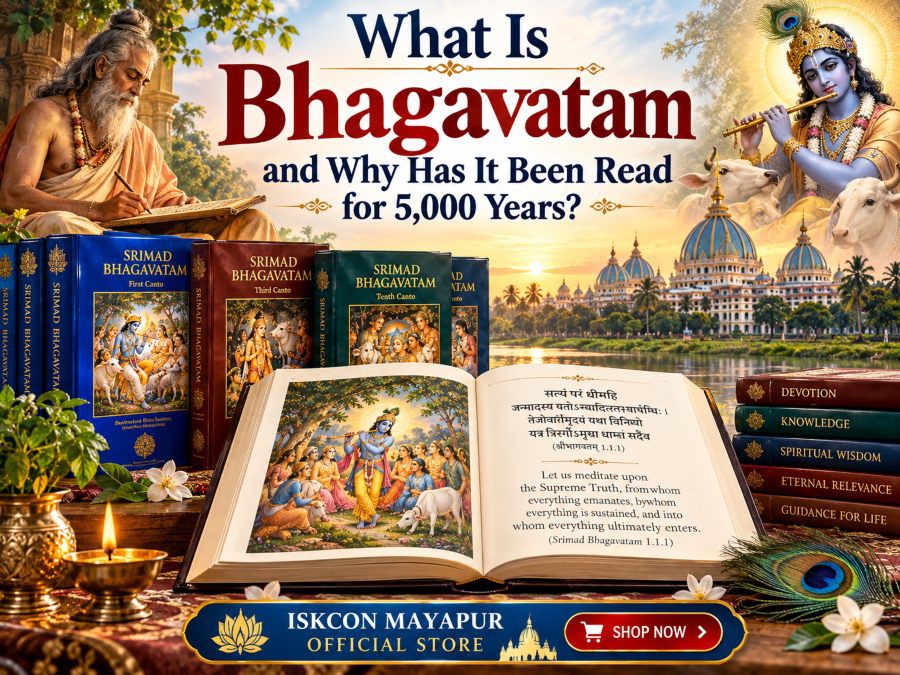 What Is Bhagavatam and Why Has It Been Read for 5,000 Years?Read more
A dying king asked one question, and the answer became the Bhagavatam. Learn what this Sanskrit scripture contains,...
-
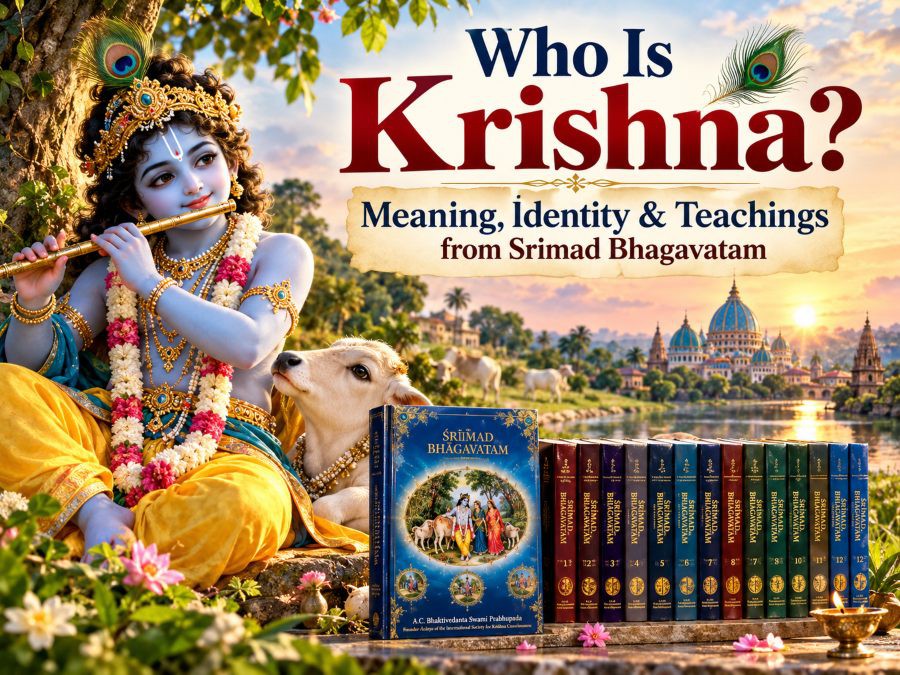 Who Is Lord Krishna? His Meaning, Teachings and Pastimes ExplainedRead more
Discover who Krishna is according to Srimad Bhagavatam, including His divine identity, childhood pastimes, teachings,...
-
 Incense in Islam: Bakhoor, Agarbatti and What Tradition SaysRead more
Is burning fragrance part of Muslim tradition? Explore incense in Islam, from the Prophetic practice of fumigating...
-
 History of Agarbatti: From Vedic Dhupa to Modern Incense SticksRead more
Where did agarbatti really come from? Follow the history of agarbatti from Vedic fire rituals and temple dhupa to...
Blog categories
- Default category (0)
- MUSICAL INSTRUMENT (1)
- BOOK (5)
- DEVOTIONAL GIFT (0)
- Blog (30) click
- CHANDAN (12)
- Bhagavatam Wisdom Series (68)
- Krishna Consciousness (14)
- Mridangam Musical Instrument (6)
- Bhagavad Gita for Beginners (13)
- Bhagavad Gita As It Is (37) click
- Bhagavad Gita As It Is Telugu (0)
- Bhagavad Gita As It Is Marathi (0)
- Bhagavad Gita As It Is In Hindi (0)
- Bhagavad Gita As It Is In English (0)
- Bhagavad Gita As It Is In Bengali (8)
- Bhagavad Gita As It Is In Kannada (0)
- Bhagavad Gita As It Is In Gujarati (0)
- Bhagavad Gita As It Is In Panjabi (0)
- Bhagavad Gita As It Is In Tamil (0)
- Bhagavad Gita As It Is Odia (0)
- BHAGAVAD GITA As It Is GERMAN (0)
- Bhagavad Gita As It Is In French (0)
- Bhagavad Gita As It Is In Nepali (0)
- Bhagavad Gita As It Is In Assamese (0)
- Incense or Agarbatti (38)
- Lord Chaitanya Mahaprabhu (3)
- Vedic Temple Mayapur (14)
- kalki (15)
- Mahabharata – Dharma & Destiny (27)
- Vaishnava Scriptures (4)
- healthy product (4)
- chaitanya mahaprabhu (5)
- Tulsi Mala Guide (17)
Search in blog
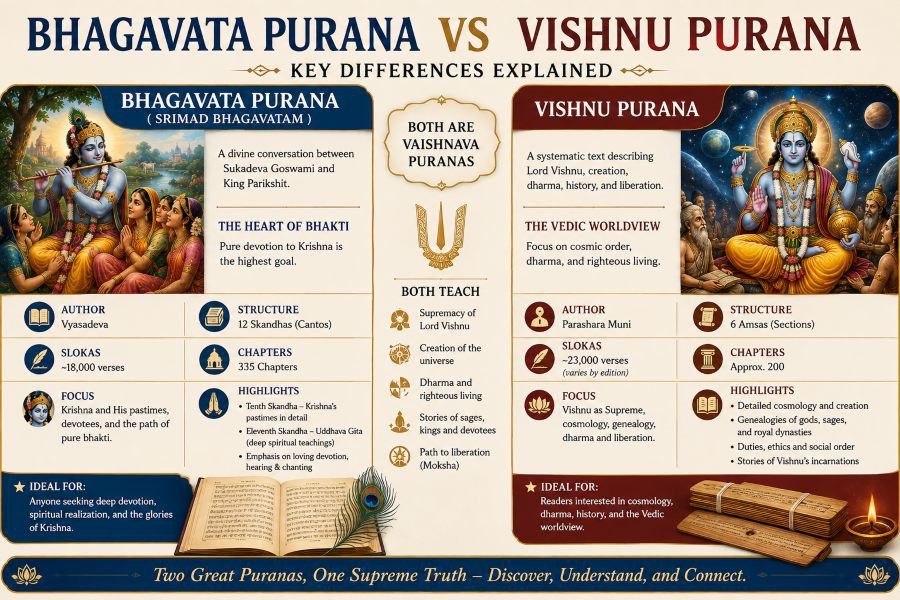
Bhagavata Purana vs Vishnu Purana: Key Differences Explained
Bhagavata Purana vs Vishnu Purana: Key Differences Explained
What happens when two ancient Sanskrit Puranas tell stories about the same Supreme Lord, yet leave the reader with noticeably different impressions? That is exactly what makes comparing the Bhagavata Purana vs Vishnu Purana so interesting. The Srimad Bhagavatam is traditionally attributed to Vyasadeva, often described in Vaishnava tradition as the Author of Srimad Bhagavatam, while the Vishnu Purana is also traditionally associated with the same broader Vedic literary tradition. Yet the two works differ significantly in emphasis, structure, storytelling, theology, and their presentation of devotional life.
Both texts belong to the eighteen Mahapuranas and share many subjects: creation, cosmology, dynasties, incarnations of Vishnu, religious principles, kings, sages, and the ultimate purpose of human life.
So why are they treated as distinct works?
Because they are not simply two versions of the same book.
The Vishnu Purana offers a comparatively compact and systematic presentation of Vaishnava theology, cosmology, history, and dharma. The Srimad Bhagavatam, by contrast, places extraordinary emphasis on bhakti, especially loving devotion to Krishna and the intimate relationships between Krishna and His devotees.
One can think of the Vishnu Purana as a broad theological and cosmological account, while the Bhagavatam repeatedly brings the reader back to a deeply personal question:
What does it mean to love and serve the Supreme Lord?
That difference becomes much clearer when we examine both texts side by side.
What Are the Bhagavata Purana and Vishnu Purana?
The Bhagavata Purana, commonly known as the Srimad Bhagavatam, is one of the eighteen Mahapuranas. It is traditionally understood as a sacred text spoken by Sukadeva Goswami to King Parikshit during the final seven days of the king's life.
Its traditional structure contains 12 cantos, or Skandhas, and approximately 18,000 verses.
The Vishnu Purana is another major Purana with a strong Vaishnava orientation. It is traditionally attributed to Parashara Muni, who is presented as the father of Vyasadeva.
Both texts therefore belong to a connected world of Vedic storytelling and philosophy.
But their purposes and literary personalities are different.
The Vishnu Purana focuses heavily on:
- Creation and cosmic structure
- Vishnu as the Supreme Lord
- Genealogies of gods and kings
- Dynastic history
- Duties and religious principles
- Stories of Vishnu's incarnations
- Cosmological cycles
- The path toward liberation
The Srimad Bhagavatam places special emphasis on:
- Pure devotional service
- Krishna's identity and activities
- The lives of great devotees
- The relationship between God and His devotees
- Hearing and chanting about the Lord
- Detachment from material desires
- The ultimate goal of bhakti
- Spiritual realization through loving devotion
The overlap is substantial.
The emphasis is not.
And that is the key to understanding the difference.
Why Do Both Texts Talk About Vishnu and Krishna?
A reader encountering both Puranas may quickly notice repeated stories.
Vishnu's incarnations appear in both.
Creation appears in both.
Kings and sages appear in both.
Krishna appears in both.
This does not mean one text copied the other in a simple modern sense.
Puranic literature developed within a long oral and textual tradition in which stories, genealogies, theological ideas, and cosmological concepts were transmitted and presented in different forms.
The same divine personality can therefore appear in several texts while the narrative emphasis changes.
It is similar to hearing the story of an important historical figure from two different biographies.
One author may focus on political events.
Another may focus on family relationships.
Another may focus on the person's philosophy.
The subject is the same, but the reader's experience is different.
The Srimad Bhagavatam does this especially strongly with Krishna.
The Biggest Difference: Bhakti Is the Heart of the Bhagavatam
If there is one idea that helps explain the entire Bhagavata Purana, it is bhakti.
Bhakti means loving devotional service to the Supreme Lord.
The Bhagavatam does not treat devotion as merely one religious option among many.
It repeatedly presents devotion as the highest spiritual goal.
Knowledge matters.
Renunciation matters.
Religious duties matter.
Meditation matters.
But these attain their fullest meaning when they lead toward genuine devotion.
This gives the Bhagavatam a distinctive emotional and theological character.
A reader is not simply being told what the universe looks like.
The reader is being invited to develop a relationship with the Supreme.
That relationship can take different forms.
A devotee may approach the Lord with reverence.
Another may relate to Him as a friend.
Another may serve Him with the mood of a servant.
The Bhagavatam's stories repeatedly show that spiritual realization is not merely about understanding God intellectually.
It is about transforming the heart.
The Vishnu Purana Has a Different Kind of Strength
It would be unfair to describe the Vishnu Purana as simply a shorter or less devotional version of the Bhagavatam.
It has its own identity.
The Vishnu Purana presents Vishnu as the Supreme Reality and provides a broad account of creation, cosmology, social duties, genealogies, royal history, and liberation.
Its six amsas, or major sections, cover an impressive range of subjects.
The work also contains important narratives about Vishnu's incarnations, including Krishna.
But its presentation is generally more compact and systematic than the expansive devotional storytelling found in the Bhagavatam.
The Vishnu Purana often feels like a structured explanation of the Vedic worldview.
The Bhagavatam often feels like a sustained conversation about the highest purpose of existence.
Both are valuable.
They simply guide the reader differently.
Structure: 12 Skandhas vs 6 Amsas
One of the easiest ways to compare the two works is through their organization.
The Srimad Bhagavatam contains 12 Skandhas, commonly translated as cantos.
The Vishnu Purana is divided into six amsas, or sections.
The difference is more than numbering.
The Bhagavatam's twelve-canto structure creates a broad narrative progression.
Early cantos establish foundational teachings about creation, cosmology, devotion, and the Supreme Lord.
The middle portions introduce important devotees, kings, incarnations, and philosophical discussions.
The Tenth Canto becomes especially prominent because it presents the extensive pastimes of Krishna.
The Eleventh Canto contains major philosophical teachings, including the Uddhava Gita.
The Twelfth Canto describes later developments and reflects on Kali Yuga and the nature of the Purana itself.
The Vishnu Purana's six-part organization is more compact.
Its presentation moves through creation, cosmology, genealogies, social and religious duties, dynastic history, Krishna's activities, and liberation.
The Role of Krishna Is Much More Extensive in the Bhagavatam
This is perhaps the most visible difference for many readers.
Krishna appears in both works.
But the Srimad Bhagavatam gives Krishna's life an extraordinary amount of attention.
The Tenth Canto is devoted largely to Krishna's appearance and activities, from His birth and childhood in Vrindavana to His later activities in Mathura and Dvaraka.
The narrative becomes increasingly intimate.
We encounter:
- Yashoda's affection for Krishna
- Nanda Maharaja's parental love
- The friendship of Krishna and the cowherd boys
- The devotion of the residents of Vrindavana
- The gopis' extraordinary love
- Krishna's interactions with His devotees
- His defeat of powerful demons
- His relationships with the people of Vraja
The purpose is not simply to tell entertaining stories.
These narratives illustrate different forms of devotional relationship.
The reader is being shown what bhakti looks like when it becomes completely absorbed in the Supreme Lord.
Why the Tenth Canto Is So Important
The Tenth Canto is often the part of the Bhagavatam that attracts readers most strongly.
But it is worth understanding that the Bhagavatam does not begin with Krishna's childhood pastimes.
There is a reason for the gradual progression.
The text first establishes theological and philosophical foundations.
By the time the reader reaches Krishna's most intimate activities, the nature of the Supreme Lord and the purpose of devotion have already been extensively discussed.
This helps distinguish the Bhagavatam's presentation of Krishna from an ordinary mythology collection.
The stories are connected to a philosophical framework.
Krishna's childhood activities are not presented merely as charming tales.
They are presented as divine activities involving the Supreme Lord and His devotees.
Where the Vishnu Purana Places Its Emphasis
The Vishnu Purana also describes Krishna's life, but its treatment is considerably more compact.
The narrative includes major events such as Krishna's birth, His childhood activities, His conflict with Kamsa, and His later role in the Yadava dynasty.
However, the text spends much more space across its whole structure on the wider Vedic worldview.
Creation.
Cosmic geography.
Manvantaras.
Dynasties.
Kings.
Dharma.
Social responsibilities.
Liberation.
This makes the Vishnu Purana particularly useful for readers interested in understanding how Vaishnava theology connects with the broader Puranic conception of the universe and human society.
The Role of Devotees: A Major Difference in the Bhagavatam
The Bhagavatam is filled with devotees.
And they are not merely background characters.
Their spiritual experiences often become the teaching itself.
Consider Prahlada Maharaja.
He is a child devoted to Vishnu despite being born into the family of Hiranyakashipu, a powerful opponent of the Lord.
Or consider Dhruva Maharaja, who begins his spiritual journey with a material desire but undergoes a profound transformation through devotion.
Then there is Ambarisha Maharaja, whose entire life is dedicated to serving the Supreme Lord.
There is Ajamila, whose story explores the extraordinary power of the Lord's holy name.
There is Gajendra, whose desperate prayer becomes an expression of surrender.
And there is Maharaja Parikshit, whose final days become the setting for the entire Bhagavatam's narration.
The text repeatedly asks us to look at spiritual life through the experiences of devotees.
That is one reason the Bhagavatam feels so personal.
Skandhas in Srimad Bhagavatam: Understanding the 12-Canto Structure
At around the 40% point of our comparison, it is useful to examine the skandhas in Srimad Bhagavatam because the structure itself reveals how the text develops its message.
First Canto — The Questions That Start Everything
The First Canto introduces the circumstances surrounding the Bhagavatam's narration.
King Parikshit is cursed to die within seven days.
Instead of spending his remaining time on political affairs or material concerns, he seeks spiritual knowledge.
Sukadeva Goswami arrives and begins speaking.
This establishes the central setting:
What should a person hear, remember, and do when death is approaching?
That question drives the entire work.
Second Canto — Seeing the Supreme Through the Cosmos
The Second Canto explores creation, the cosmic manifestation, meditation, and the Supreme Lord.
It begins moving the reader from temporary material concerns toward spiritual realization.
Third Canto — Creation, Kapila, and Devotional Philosophy
The Third Canto contains major discussions involving creation and the teachings of Kapila, especially the philosophy of devotional service and spiritual analysis.
The relationship between consciousness, matter, and the Supreme becomes more explicit.
Fourth Canto — Kings, Devotees, and Transformation
The Fourth Canto contains the famous story of Dhruva Maharaja along with the story of King Prithu and other important figures.
It demonstrates how personal ambition can eventually be transformed through spiritual realization.
Fifth Canto — Cosmic Order and King Rishabha
The Fifth Canto explores cosmology and the life and teachings of Lord Rishabha.
It also contains descriptions of planetary systems and the structure of the universe according to the Puranic worldview.
Sixth Canto — The Power of the Holy Name
The story of Ajamila is one of the best-known sections here.
It raises profound questions about karma, death, repentance, and the power of remembering the Supreme Lord.
Seventh Canto — Prahlada's Unshakable Devotion
Prahlada Maharaja's story is the centerpiece.
The contrast between Prahlada's devotion and Hiranyakashipu's pride makes the spiritual message unforgettable.
Eighth Canto — Cosmic Battles and Divine Protection
The Eighth Canto includes stories such as the churning of the ocean and the appearance of Lord Vamana.
The theme of divine intervention becomes prominent.
Ninth Canto — Dynasties and Lord Rama
The Ninth Canto describes royal dynasties and includes the celebrated account of Lord Rama.
It also prepares the reader for the appearance of Krishna.
Tenth Canto — Krishna's Divine Pastimes
This is the largest and most famous section of the Bhagavatam.
Krishna's childhood, youth, relationships, battles, and activities dominate the narrative.
Eleventh Canto — Deep Philosophical Teachings
The Eleventh Canto contains Krishna's teachings to Uddhava.
It discusses devotion, detachment, spiritual realization, and the nature of material existence.
Twelfth Canto — Kali Yuga and the Bhagavatam's Legacy
The final Canto discusses Kali Yuga, future dynasties, cosmic dissolution, and the spiritual significance of the Bhagavatam itself.
The twelve-canto structure therefore takes the reader on a long journey from questions about creation and human existence toward the deepest expressions of devotion.
Slokas in Srimad Bhagavatam: Why the Verse Count Matters
Another common question concerns the slokas in Srimad Bhagavatam.
The traditional figure is approximately 18,000 verses.
Different editions can vary slightly in how verses are counted or presented, but 18,000 is the standard traditional figure associated with the work.
That number helps communicate the enormous scope of the text.
The Bhagavatam is not a single narrative.
It is a vast collection of:
- Philosophical teachings
- Historical and dynastic accounts
- Prayers
- Conversations
- Cosmological descriptions
- Stories of devotees
- Descriptions of divine incarnations
- Teachings about bhakti
- Accounts of Krishna's activities
Its verses move between intimate personal conversations and enormous descriptions of cosmic time.
One moment we are hearing a mother speak to her child.
The next, we are considering creation itself.
That range is part of the Bhagavatam's distinctive character.
Vishnu Purana: A More Compact Presentation
The Vishnu Purana is also substantial, but its structure is considerably more compact.
Its six sections cover the principal areas expected of a major Purana.
The text discusses creation and destruction, cosmology, genealogies, dynasties, religious duties, and liberation.
Its approach often feels more concise.
This makes the Vishnu Purana interesting for readers who want a broad view of Vaishnava cosmology without entering the enormous narrative depth of the Bhagavatam.
That does not make one “better” in every situation.
It depends on what you want from the reading experience.
If your main interest is Krishna's devotional relationships, the Bhagavatam will probably feel richer.
If your interest is Vishnu-centered cosmology, genealogy, dharma, and a compact Puranic framework, the Vishnu Purana offers a valuable perspective.
Theology: Are Vishnu and Krishna the Same?
This question becomes especially interesting in a comparison of the two texts.
Both are strongly Vaishnava.
Both glorify Vishnu.
Both recognize the Supreme Lord's manifestations.
But the Bhagavatam places a particularly strong theological emphasis on Krishna.
A famous statement in the Bhagavatam's First Canto describes Krishna as “Bhagavan Svayam,” traditionally understood in Gaudiya Vaishnava theology as meaning that Krishna is the original Supreme Personality of Godhead, while other divine forms are His expansions or incarnations.
The Vishnu Purana also presents Vishnu as the Supreme Lord.
So the texts share a fundamental Vaishnava orientation while expressing theological ideas through somewhat different narrative frameworks.
This is one reason the two texts should be read carefully rather than reduced to simple “Vishnu versus Krishna” categories.
The relationship among Vishnu, Krishna, and the various incarnations is itself an important part of Vaishnava theology.
Chapters in Srimad Bhagavatam: How the Text Is Built
At roughly the 80% point, another structural question deserves attention: the number of chapters in Srimad Bhagavatam.
The traditional Bhagavatam is generally counted as having 335 chapters across its 12 cantos.
This number helps explain why reading the complete Bhagavatam is such a significant undertaking.
The chapters are not uniform.
Some are short philosophical discussions.
Others contain lengthy narratives.
Some focus on prayers.
Others describe cosmic structures, dynasties, or the activities of divine incarnations.
The chapter structure also makes the work approachable.
A reader does not have to consume the entire Bhagavatam in one sitting.
One can read a chapter each day.
Study a particular canto.
Follow a specific devotee.
Explore Krishna's pastimes.
Or focus on a philosophical theme.
The size of the text can actually become an advantage because it offers multiple ways to study.
Bhagavata Purana vs Vishnu Purana: A Direct Comparison
Feature | Srimad Bhagavatam | Vishnu Purana |
Common identity | Bhagavata Purana | Vishnu Purana |
Traditional affiliation | Vaishnava | Vaishnava |
Traditional author/compiler | Vyasadeva | Parashara Muni |
Main structure | 12 Skandhas | 6 Amsas |
Traditional verse count | About 18,000 | Considerably shorter |
Central emphasis | Bhakti and Krishna | Vishnu, cosmology, dharma and liberation |
Krishna narrative | Extensive | More concise |
Devotee narratives | Extremely prominent | Present but generally less extensive |
Cosmology | Extensive | Extensive |
Philosophical teachings | Extensive | Extensive |
Tone | Highly devotional and narrative | More compact and systematic |
Famous focus | Krishna's pastimes and pure bhakti | Vishnu theology and Puranic worldview |
The table makes the distinction easier to see.
But the real difference becomes apparent only through reading.
Which One Should You Read First?
There is no universal answer.
If you are primarily interested in Krishna bhakti, the Srimad Bhagavatam is an obvious choice.
Its stories of Prahlada, Dhruva, Ambarisha, Gajendra, and Krishna's devotees offer a rich introduction to devotional consciousness.
If you are interested in Vishnu-centered theology, cosmology, genealogies, and the broader Puranic framework, the Vishnu Purana can be an excellent starting point.
For a serious student of Vedic literature, reading both is even more rewarding.
Why?
Because similarities become meaningful when differences are understood.
You begin to notice which themes remain consistent across the Puranas and which themes receive special attention in a particular text.
Does the Vishnu Purana Mention Krishna's Childhood?
Yes.
The Vishnu Purana contains accounts of Krishna's birth and activities, including His childhood and His conflict with Kamsa.
But the scale differs dramatically from the Bhagavatam.
The Bhagavatam spends an enormous amount of narrative space on Krishna's life in Vrindavana.
The focus moves beyond the external events.
It explores affection.
Friendship.
Parental love.
Romantic devotion.
Separation.
Longing.
Joy.
Service.
These emotional dimensions are central to the Bhagavatam's p
Posted in: Bhagavatam Wisdom Series
Related posts
-
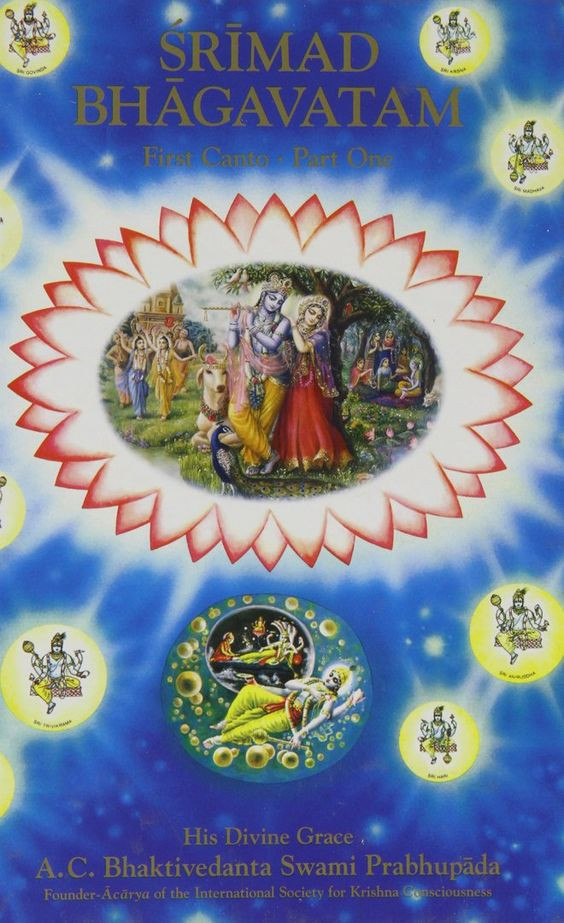 Why to read srimad bhagavatamReading the Srimad Bhagavatam fosters deep spiritual growth by narrating the life and teachings of Lord Krishna,...Read more
 -
 When was srimad bhagavatam written?The Srimad Bhagavatam is believed to have been written around 9th-10th century CE, though its oral traditions date...Read more
 -
 How many chapters are there in srimad bhagavatam?The Srimad Bhagavatam consists of 12 cantos (books) containing 335 chapters in total. Each canto covers various...Read more
 -
 How many skandhas are there in srimad bhagavatamThe Srimad Bhagavatam is divided into 12 skandhas (cantos or books). Each skandha explores different themes,...Read more
 -
 How many slokas in srimad bhagavatamThe Srimad Bhagavatam contains approximately 18,000 shlokas (verses). These verses are spread across its 12 skandhas...Read more
Leave a comment