
Why did Krishna run to embrace a poor brahmin in rags? Read the Sudama story from the Bhagavatam and learn how a...
Latest posts
-
 Krishna and Sudama: The Poor Brahmin Who Became Wealthy in LoveRead more
 -
 Vamana Avatar: How Three Steps Humbled Bali MaharajaRead more
Why did a powerful king give away three worlds to a boy asking for three steps? Learn the Vamana avatar story from...
-
 The Bhagavatam on Marriage: Duty, Love and Spiritual PartnershipRead more
What does the Bhagavatam say about marriage? Through the stories of Kardama and Devahuti, Rukmini's secret letter and...
-
 What Is Prema? The Bhagavatam's Highest Stage of Love for GodRead more
Prema is love for God with no "because" attached. Learn how the Bhagavatam describes it, the nine steps from faith to...
-
 Is Shiva Parvati Kalyana Mentioned in Srimad Bhagavatam? What the Scripture Really SaysRead more
Looking for Shiva and Parvati's wedding in the Srimad Bhagavatam? Find out what the scripture actually describes,...
-
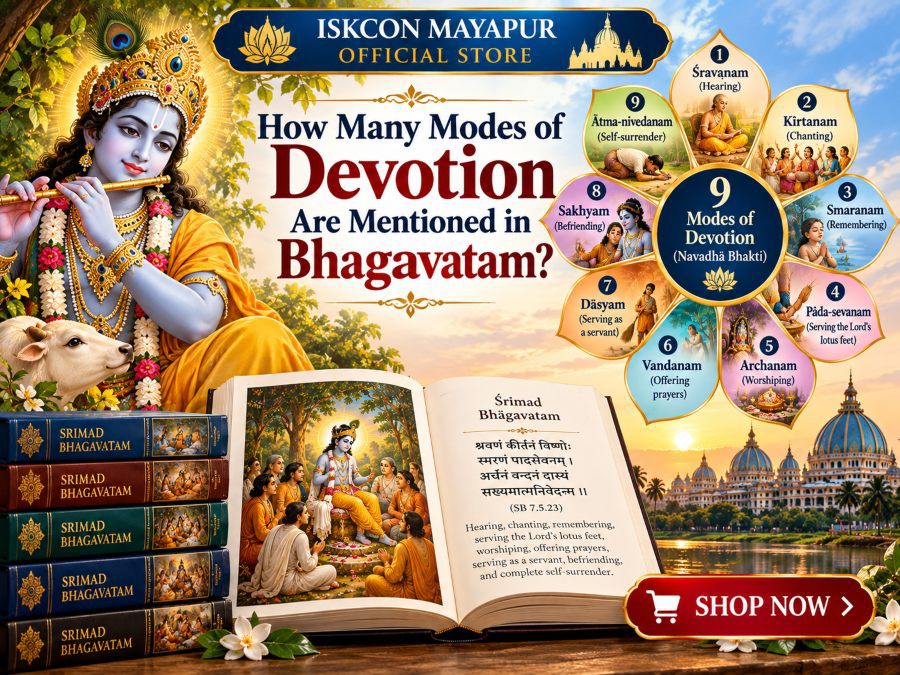 How Many Modes of Devotion Are Mentioned in Bhagavatam?Read more
A young boy named Prahlada listed nine ways to serve God, and the Bhagavatam keeps them as its answer. Learn what the...
-
 What Is Bhagavatam and Why Has It Been Read for 5,000 Years?Read more
A dying king asked one question, and the answer became the Bhagavatam. Learn what this Sanskrit scripture contains,...
-
 Who Is Lord Krishna? His Meaning, Teachings and Pastimes ExplainedRead more
Discover who Krishna is according to Srimad Bhagavatam, including His divine identity, childhood pastimes, teachings,...
-
 Incense in Islam: Bakhoor, Agarbatti and What Tradition SaysRead more
Is burning fragrance part of Muslim tradition? Explore incense in Islam, from the Prophetic practice of fumigating...
-
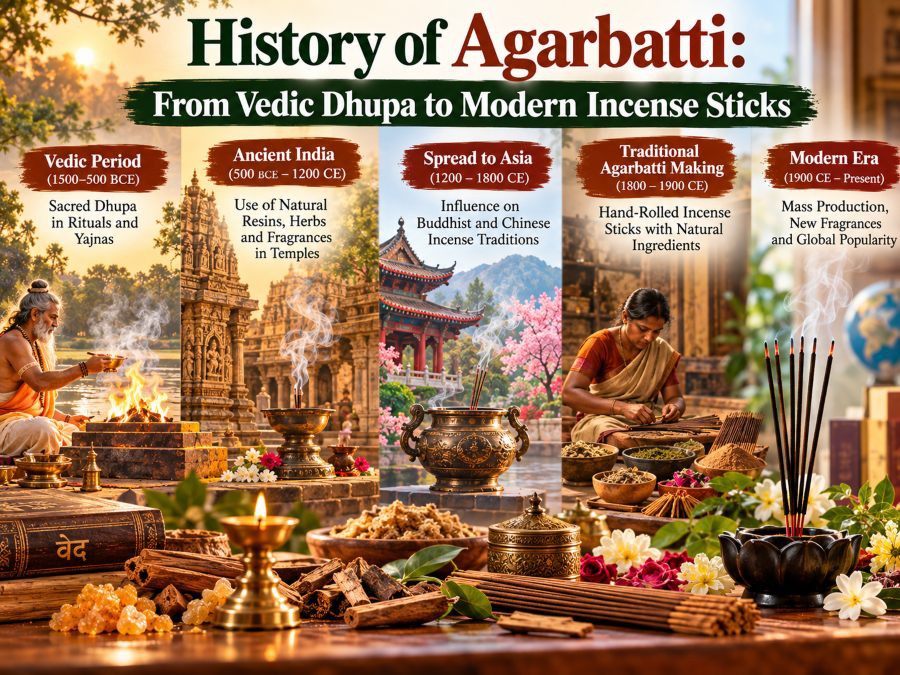 History of Agarbatti: From Vedic Dhupa to Modern Incense SticksRead more
Where did agarbatti really come from? Follow the history of agarbatti from Vedic fire rituals and temple dhupa to...
Blog categories
- Default category (0)
- MUSICAL INSTRUMENT (1)
- BOOK (5)
- DEVOTIONAL GIFT (0)
- Blog (30) click
- CHANDAN (12)
- Bhagavatam Wisdom Series (68)
- Krishna Consciousness (14)
- Mridangam Musical Instrument (6)
- Bhagavad Gita for Beginners (13)
- Bhagavad Gita As It Is (37) click
- Bhagavad Gita As It Is Telugu (0)
- Bhagavad Gita As It Is Marathi (0)
- Bhagavad Gita As It Is In Hindi (0)
- Bhagavad Gita As It Is In English (0)
- Bhagavad Gita As It Is In Bengali (8)
- Bhagavad Gita As It Is In Kannada (0)
- Bhagavad Gita As It Is In Gujarati (0)
- Bhagavad Gita As It Is In Panjabi (0)
- Bhagavad Gita As It Is In Tamil (0)
- Bhagavad Gita As It Is Odia (0)
- BHAGAVAD GITA As It Is GERMAN (0)
- Bhagavad Gita As It Is In French (0)
- Bhagavad Gita As It Is In Nepali (0)
- Bhagavad Gita As It Is In Assamese (0)
- Incense or Agarbatti (38)
- Lord Chaitanya Mahaprabhu (3)
- Vedic Temple Mayapur (14)
- kalki (15)
- Mahabharata – Dharma & Destiny (27)
- Vaishnava Scriptures (4)
- healthy product (4)
- chaitanya mahaprabhu (5)
- Tulsi Mala Guide (17)
Search in blog
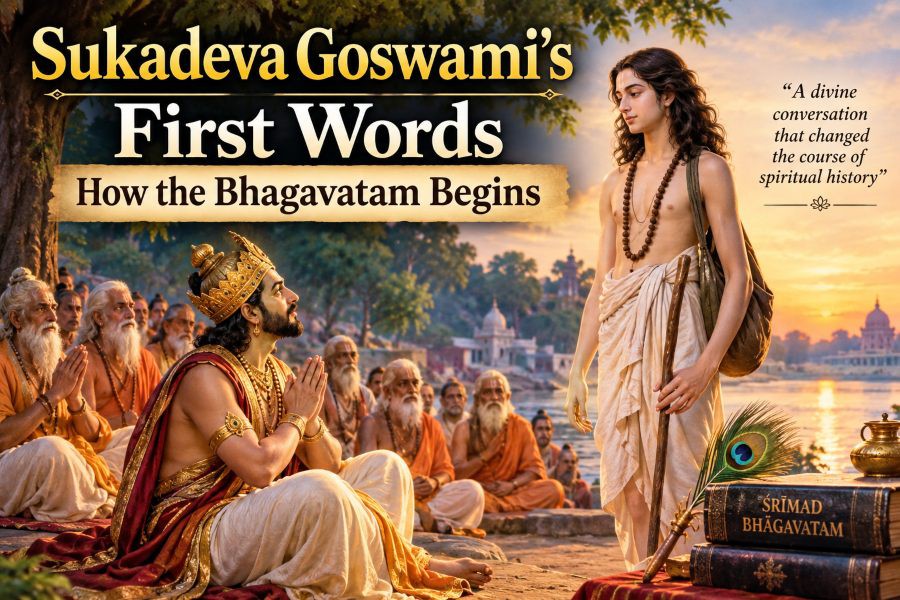
Sukadeva Goswami's First Words: How the Bhagavatam Begins
Sukadeva Goswami's First Words: How the Bhagavatam Begins
What if the opening words of a sacred text could tell us, before the story even begins, exactly what kind of spiritual journey lies ahead? That is the feeling created by Sukadeva Goswami's appearance in the Srimad Bhagavatam. His first words are not simply an introduction to another religious narrative. They establish a mood of spiritual urgency, detachment, and fearless inquiry that continues throughout the entire work. To understand these opening moments is also to understand why the Bhagavatam speaks so deeply about the concept of maya and the struggle to see reality beyond temporary appearances.
The setting is dramatic. King Parikshit has been cursed to die within seven days. Instead of spending those final days protecting his kingdom, gathering wealth, or searching for a way to escape death, he sits on the bank of the Ganges and asks a far greater question: What should a person do when death is approaching?
That question brings Sukadeva Goswami before him.
And from this meeting begins one of the most celebrated spiritual conversations in the Srimad Bhagavatam.
A King With Only Seven Days Left
King Parikshit was not an ordinary man facing death. He was a powerful ruler, surrounded by everything worldly life could offer. Yet the curse changed his priorities completely.
Seven days.
That was all the time he had.
Instead of reacting with fear, Parikshit accepted his situation and turned toward spiritual understanding. He wanted to know what a human being should hear, remember, and practice when life is coming to an end.
His questions are surprisingly relevant even today. People may have different circumstances, but the underlying problem remains the same: How should we live when we know that everything temporary will eventually disappear?
The sages gathered around Parikshit, but the person who finally emerged as the ideal teacher was Sukadeva Goswami.
Who Was Sukadeva Goswami?
Sukadeva Goswami was the son of Srila Vyasadeva, the great compiler of Vedic literature. His reputation was unusual even before he arrived at the assembly of King Parikshit.
Sukadeva was known for his deep realization and complete detachment from material possessions. He did not enter spiritual life because he was disappointed with ordinary success. His renunciation was described as natural, arising from genuine understanding.
This matters because the Bhagavatam does not present Sukadeva merely as a scholar.
He represents someone who has seen beyond the temporary world.
That gives his teaching a different weight. He is not speaking about spiritual life as an interesting philosophy. He speaks as someone who has personally understood the distinction between temporary existence and eternal spiritual reality.
The Extraordinary Arrival of Sukadeva
The description of Sukadeva's arrival is one of the most memorable scenes in the opening of the Bhagavatam.
He appears as a young, wandering sage. The assembled people recognize something extraordinary about him. Although many learned sages are already present, Sukadeva's presence immediately attracts attention.
There is an important lesson here.
Spiritual authority in the Bhagavatam is not presented as a matter of appearance, social position, or political influence.
Parikshit is a king. Sukadeva appears as a wandering ascetic. Yet when the moment comes to discuss the deepest questions of life, the king respectfully accepts the sage as his teacher.
That reversal of worldly status is deliberate.
The Bhagavatam is reminding the reader that material position cannot answer spiritual questions.
A throne cannot explain death.
Wealth cannot reveal the eternal self.
Political power cannot remove ignorance.
For those questions, another kind of knowledge is required.
What Were Sukadeva Goswami's First Words?
Sukadeva's opening response focuses on the extraordinary fortune of King Parikshit.
The king has accepted death without resentment and has used his remaining time to hear about the Supreme Lord. Sukadeva recognizes this as a rare opportunity.
His response establishes the central principle of the Bhagavatam: the final purpose of human life is not merely to prolong physical existence but to awaken our relationship with the Supreme.
This changes the meaning of the seven-day deadline.
For an ordinary person, seven days might sound impossibly short. For Parikshit, those seven days become spiritually priceless.
He no longer needs to ask, "How can I live longer?"
His question becomes:
"How should I live now?"
That is a much deeper question.
Why the Bhagavatam Begins With Death
At first, beginning a spiritual text with a dying king may seem strange. Why not start with creation, cosmology, or the greatness of God?
Because death removes distraction.
When people believe they have unlimited time, spiritual questions can always be postponed.
"I'll think about that later."
"I'll become serious when I'm older."
"I have too many responsibilities right now."
Parikshit's situation destroys that illusion.
His seven days force him to confront something everyone eventually faces.
The body is temporary.
Time is moving.
Material achievements have an ending.
And therefore, the question of life's ultimate purpose cannot be postponed forever.
The opening of the Srimad Bhagavatam uses this reality to capture the reader's attention. The story is not merely about what happens to one king. It quietly asks every reader to imagine the same question:
If you had only seven days remaining, what would suddenly become important?
Sukadeva's Teaching Begins With Hearing
One of the most striking features of the Bhagavatam is the importance it gives to hearing.
Parikshit does not spend his final days trying to accumulate new possessions. He listens.
He hears about Krishna, the Supreme Personality of Godhead, His devotees, His activities, His creation, and the path of devotion.
This is not passive entertainment.
In the Bhagavatam's spiritual framework, hearing can transform consciousness when it is received with sincerity and attention.
The idea is simple but profound.
What we repeatedly hear shapes what we repeatedly think about. What occupies our thoughts influences our desires. Our desires influence our actions.
So spiritual hearing becomes a way of redirecting consciousness.
Why Sukadeva Did Not Give Parikshit a Material Solution
Imagine asking a powerful physician to help you when you have only seven days to live. You would expect treatment.
But Parikshit's situation was beyond ordinary medical treatment.
Sukadeva does not teach him how to preserve the body indefinitely. Instead, he teaches him how to use the remaining time for spiritual realization.
This distinction is one of the Bhagavatam's strongest messages.
Human intelligence is often used to solve immediate problems. We work to earn money, develop technology, protect possessions, improve comfort, and extend life.
Those efforts have value.
But the Bhagavatam asks another question:
What happens when the problem cannot be solved materially?
Death eventually brings every temporary solution to its limit.
At that point, spiritual knowledge becomes more than an intellectual subject. It becomes a question of ultimate identity.
The Real Meaning Behind Parikshit's Question
Parikshit's question is powerful because it is universal.
He essentially asks what a person should do, hear, remember, and understand at the end of life.
The question contains several layers.
- What should we do? — Our actions matter.
- What should we hear? — Our consciousness is shaped by what we absorb.
- What should we remember? — The direction of the mind matters at the final moment.
- What should we avoid? — Not everything deserves our limited attention.
- What is life's ultimate goal? — Temporary success cannot be the complete answer.
Sukadeva's response gradually unfolds these questions through the vast narrative of the Bhagavatam.
The Opening Establishes the Heart of the Srimad Bhagavatam
The first encounter between Parikshit and Sukadeva gives readers a map for understanding everything that follows.
The Bhagavatam is not simply a collection of stories about Krishna and other personalities. Its stories are designed to move the listener toward bhakti, loving devotion to the Supreme Lord.
Sukadeva repeatedly brings the discussion back to hearing and remembering Krishna.
That is why the opening scene is so important.
Before the Bhagavatam describes the spiritual worlds, Krishna's pastimes, the creation of the universe, or the lives of great devotees, it first places a dying human being in front of us.
The message is almost impossible to miss:
Do not waste human life without asking what it is ultimately for.
What Sukadeva's First Words Teach Us Today
The world around us has changed dramatically since the time of King Parikshit. Yet his problem has not disappeared.
We still worry about money.
We still chase recognition.
We still become absorbed in temporary achievements.
We still postpone spiritual reflection.
And we still face death.
That makes Sukadeva's opening teachings surprisingly modern.
His message encourages us to examine our priorities before circumstances force us to do so.
We do not need to wait for a crisis to ask meaningful questions.
We can begin now.
Even a few minutes spent hearing about Krishna, reading the Srimad Bhagavatam, remembering spiritual teachings, or reflecting on the purpose of life can gradually change the direction of consciousness.
A Conversation That Begins With One Simple Reality
The Bhagavatam begins its great conversation with a king who has almost no time left.
Yet paradoxically, those seven days become enough.
Enough to listen.
Enough to question.
Enough to remember.
Enough to turn completely toward spiritual realization.
Sukadeva Goswami's first words therefore do more than begin a story. They establish the atmosphere of the entire Srimad Bhagavatam: human life is temporary, time should not be wasted, and the deepest answer to the problem of mortality lies in awakening our relationship with the Supreme Lord.
The opening scene leaves us with a question that is easy to understand but difficult to ignore:
If you knew exactly how much time you had left, what would you choose to hear, remember, and live for?
That is where the Bhagavatam begins.
And, in many ways, that is where genuine spiritual inquiry begins too.
Posted in: Bhagavatam Wisdom Series
Related posts
-
 Why to read srimad bhagavatamReading the Srimad Bhagavatam fosters deep spiritual growth by narrating the life and teachings of Lord Krishna,...Read more
 -
 When was srimad bhagavatam written?The Srimad Bhagavatam is believed to have been written around 9th-10th century CE, though its oral traditions date...Read more
 -
 How many chapters are there in srimad bhagavatam?The Srimad Bhagavatam consists of 12 cantos (books) containing 335 chapters in total. Each canto covers various...Read more
 -
 How many skandhas are there in srimad bhagavatamThe Srimad Bhagavatam is divided into 12 skandhas (cantos or books). Each skandha explores different themes,...Read more
 -
 How many slokas in srimad bhagavatamThe Srimad Bhagavatam contains approximately 18,000 shlokas (verses). These verses are spread across its 12 skandhas...Read more
Leave a comment