
Why did Krishna run to embrace a poor brahmin in rags? Read the Sudama story from the Bhagavatam and learn how a...
Latest posts
-
 Krishna and Sudama: The Poor Brahmin Who Became Wealthy in LoveRead more
 -
 Vamana Avatar: How Three Steps Humbled Bali MaharajaRead more
Why did a powerful king give away three worlds to a boy asking for three steps? Learn the Vamana avatar story from...
-
 The Bhagavatam on Marriage: Duty, Love and Spiritual PartnershipRead more
What does the Bhagavatam say about marriage? Through the stories of Kardama and Devahuti, Rukmini's secret letter and...
-
 What Is Prema? The Bhagavatam's Highest Stage of Love for GodRead more
Prema is love for God with no "because" attached. Learn how the Bhagavatam describes it, the nine steps from faith to...
-
 Is Shiva Parvati Kalyana Mentioned in Srimad Bhagavatam? What the Scripture Really SaysRead more
Looking for Shiva and Parvati's wedding in the Srimad Bhagavatam? Find out what the scripture actually describes,...
-
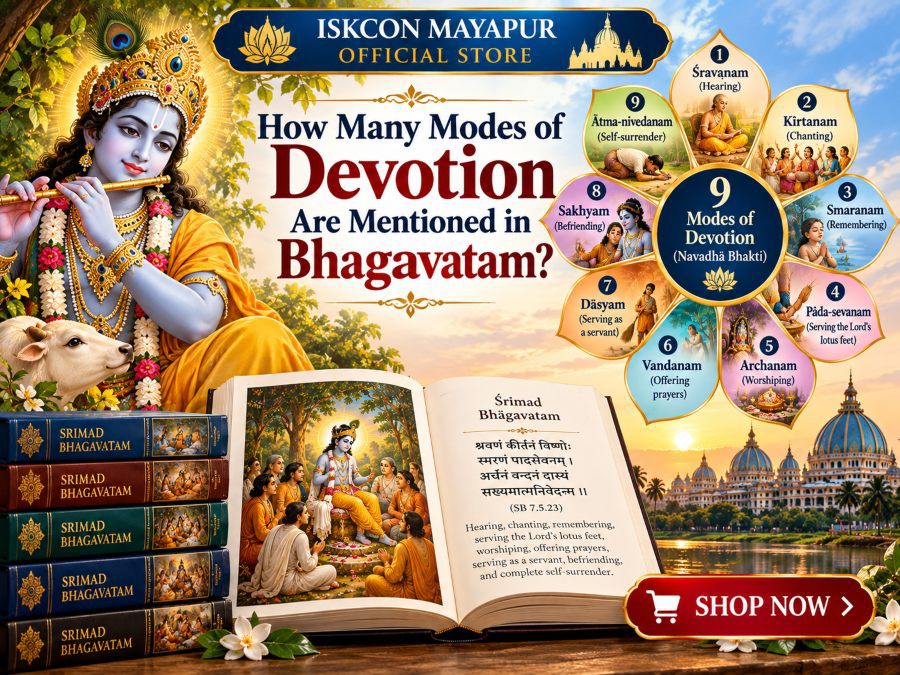 How Many Modes of Devotion Are Mentioned in Bhagavatam?Read more
A young boy named Prahlada listed nine ways to serve God, and the Bhagavatam keeps them as its answer. Learn what the...
-
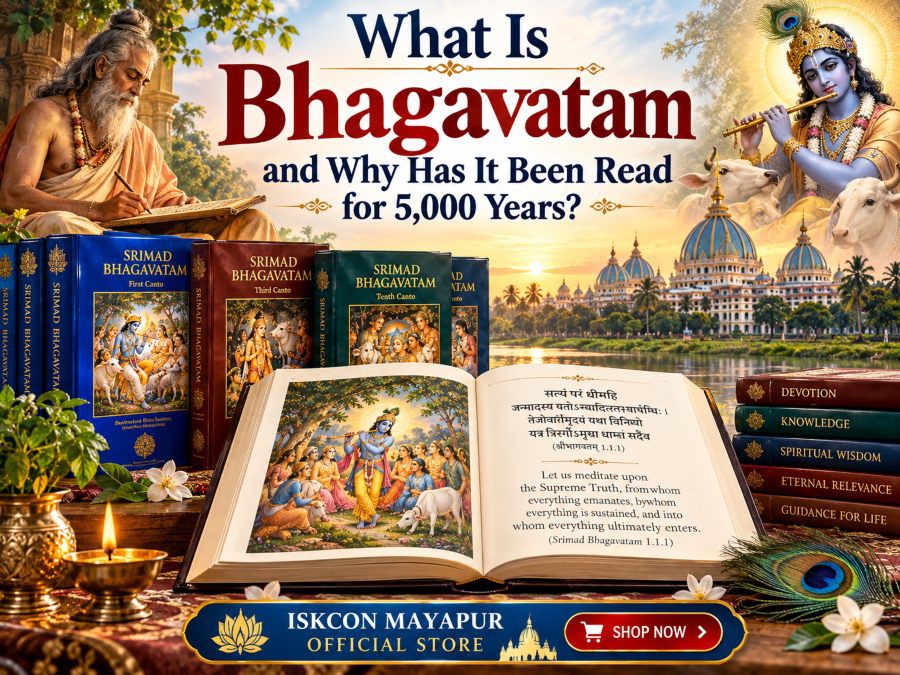 What Is Bhagavatam and Why Has It Been Read for 5,000 Years?Read more
A dying king asked one question, and the answer became the Bhagavatam. Learn what this Sanskrit scripture contains,...
-
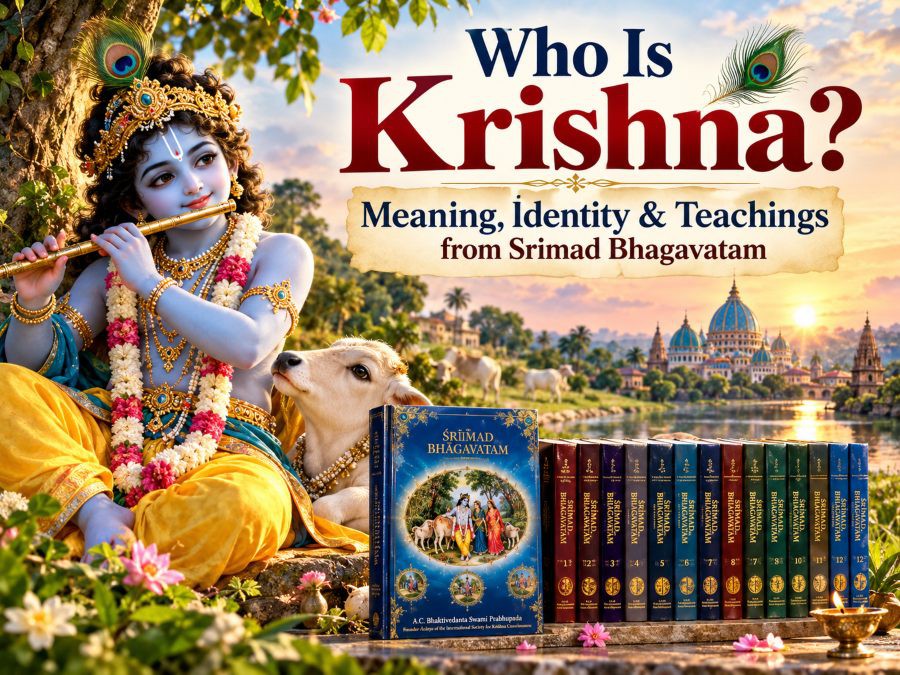 Who Is Lord Krishna? His Meaning, Teachings and Pastimes ExplainedRead more
Discover who Krishna is according to Srimad Bhagavatam, including His divine identity, childhood pastimes, teachings,...
-
 Incense in Islam: Bakhoor, Agarbatti and What Tradition SaysRead more
Is burning fragrance part of Muslim tradition? Explore incense in Islam, from the Prophetic practice of fumigating...
-
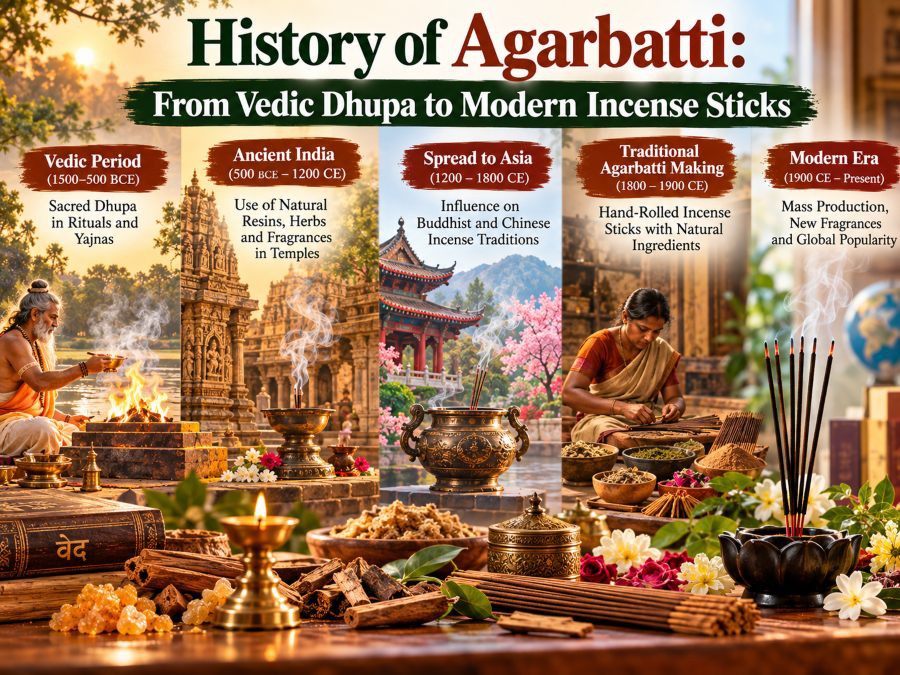 History of Agarbatti: From Vedic Dhupa to Modern Incense SticksRead more
Where did agarbatti really come from? Follow the history of agarbatti from Vedic fire rituals and temple dhupa to...
Blog categories
- Default category (0)
- MUSICAL INSTRUMENT (1)
- BOOK (5)
- DEVOTIONAL GIFT (0)
- Blog (30) click
- CHANDAN (12)
- Bhagavatam Wisdom Series (68)
- Krishna Consciousness (14)
- Mridangam Musical Instrument (6)
- Bhagavad Gita for Beginners (13)
- Bhagavad Gita As It Is (37) click
- Bhagavad Gita As It Is Telugu (0)
- Bhagavad Gita As It Is Marathi (0)
- Bhagavad Gita As It Is In Hindi (0)
- Bhagavad Gita As It Is In English (0)
- Bhagavad Gita As It Is In Bengali (8)
- Bhagavad Gita As It Is In Kannada (0)
- Bhagavad Gita As It Is In Gujarati (0)
- Bhagavad Gita As It Is In Panjabi (0)
- Bhagavad Gita As It Is In Tamil (0)
- Bhagavad Gita As It Is Odia (0)
- BHAGAVAD GITA As It Is GERMAN (0)
- Bhagavad Gita As It Is In French (0)
- Bhagavad Gita As It Is In Nepali (0)
- Bhagavad Gita As It Is In Assamese (0)
- Incense or Agarbatti (38)
- Lord Chaitanya Mahaprabhu (3)
- Vedic Temple Mayapur (14)
- kalki (15)
- Mahabharata – Dharma & Destiny (27)
- Vaishnava Scriptures (4)
- healthy product (4)
- chaitanya mahaprabhu (5)
- Tulsi Mala Guide (17)
Search in blog
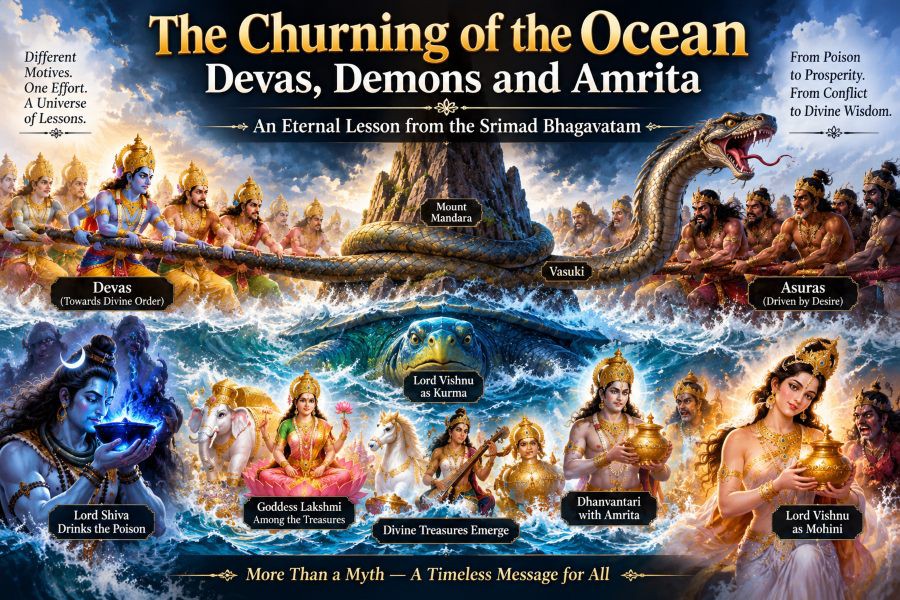
The Churning of the Ocean: Devas, Demons and Amrita
The Churning of the Ocean: Devas, Demons and Amrita
Imagine an ocean so vast that its waters hide the possibility of immortality—and the only way to uncover that treasure is for sworn enemies to work together. That is the extraordinary premise behind The Churning of the Ocean, one of the most memorable stories connected with the Bhagavata Purana. In the Srimad Bhagavatam, the story of Samudra Manthana is far more than a spectacular contest between devas and demons. It explores ambition, cooperation, deception, sacrifice, divine intervention, and the difference between possessing power and actually deserving it.
At the center of the story is amrita, the nectar associated with immortality. The devas want it. The asuras want it. Neither side can obtain it alone.
So they make an agreement.
For a while, enemies become partners.
And then the real trouble begins.
When the Devas Lost Their Strength
The story begins with the devas facing a serious problem. Their strength and influence had declined, leaving them vulnerable to the asuras.
One important version of the story connects this decline with an incident involving Indra and the sage Durvasa. A garland given by the sage was not treated with the respect expected of such a gift. The resulting curse contributed to the devas losing their power.
Whether we read the episode literally, symbolically, or both, the message is sharp:
Power without humility is unstable.
The devas had authority, but authority alone could not protect them forever.
They approached Lord Vishnu for guidance.
Vishnu proposed a remarkable solution: the Ocean of Milk should be churned, because valuable substances—including amrita—were hidden within it.
There was only one problem.
The devas were not strong enough to do the job themselves.
They needed the asuras.
An Alliance Between Enemies
The devas approached the asuras and offered them a deal.
Both groups would work together to churn the ocean and obtain the nectar. Once the amrita appeared, the question of who would ultimately receive it could be dealt with later.
It was an alliance built on necessity rather than trust.
That makes the story surprisingly realistic.
Sometimes opposing groups cooperate because their interests temporarily overlap. Each side may believe it can gain more from cooperation than from fighting.
The devas and asuras had exactly this kind of relationship.
They were willing to pull the same rope.
But they were not willing to forget why they wanted the nectar.
Both sides wanted immortality.
Mount Mandara Becomes the Churning Rod
The plan required an enormous churning rod, and Mount Mandara was selected.
But moving such a massive mountain into the ocean was itself a tremendous challenge.
Once the mountain was placed in the water, another problem appeared.
It began sinking.
The entire plan was about to collapse before the actual churning had even begun.
Lord Vishnu then assumed the form of Kurma, the divine tortoise, and supported Mount Mandara on His back.
This detail is easy to overlook because the story soon becomes filled with larger-than-life events. Yet it contains a beautiful spiritual idea.
Human beings can make ambitious plans, gather resources, and organize tremendous effort. But there are limits to what individual strength can accomplish.
The devas and asuras could pull the mountain.
They could churn the ocean.
But they could not provide the foundation.
Vishnu became the foundation beneath their effort.
Vasuki: The Serpent That Became a Rope
The next challenge was finding something strong enough to serve as the churning rope.
The serpent king Vasuki was chosen.
The devas and asuras took hold of opposite ends.
At first, the arrangement appeared simple. But the asuras wanted the head of the serpent, believing that the front position was more prestigious.
The devas took the other end.
When Vasuki was pulled back and forth, enormous energy was released. The process became increasingly difficult.
The ocean began producing extraordinary substances and beings.
But the first major result was not the nectar everyone wanted.
It was something terrifying.
The Poison That Could Destroy Everything
Before the amrita appeared, the churning released halahala, a deadly poison.
Its power was so destructive that it threatened all forms of existence.
The devas and asuras were suddenly confronted with a problem far greater than their original rivalry.
They needed someone capable of containing the poison.
They turned to Lord Shiva.
Shiva accepted the responsibility and drank the poison to protect the universe. According to the traditional account, the poison remained in his throat, giving rise to his name Nilakantha, “the blue-throated one.”
This moment changes the emotional center of the story.
Everyone wanted the nectar.
Nobody wanted the poison.
Yet someone had to deal with it.
Shiva did.
That is a powerful lesson about leadership and responsibility. The person who protects others is not always the one who receives the most desirable reward. Sometimes leadership means accepting the danger that everyone else hopes to avoid.
The Treasures Hidden Within the Ocean
The churning continued.
As the ocean was churned, extraordinary treasures emerged. Different traditional accounts enumerate them somewhat differently, but the story includes remarkable beings and objects associated with prosperity, beauty, power, and divine abundance.
Among them was Lakshmi, the goddess of fortune.
Her appearance was especially significant.
The devas and asuras had begun the churning because they wanted one particular treasure: immortality. Instead, the ocean produced many forms of wealth and beauty along the way.
This suggests something deeper.
When we intensely pursue one goal, the journey often reveals other things we never expected.
But those discoveries also create new temptations.
The more treasures emerged, the more difficult it became to remain focused on the original purpose.
Then Came Dhanvantari With the Amrita
Eventually, Dhanvantari appeared carrying the pot of amrita.
This was the moment both groups had been waiting for.
The alliance immediately began to fall apart.
The asuras seized the nectar.
Their temporary cooperation had reached its natural limit.
Everyone wanted immortality for themselves.
The story now moves from cooperation to competition, and Lord Vishnu once again enters the scene.
Mohini and the Battle for the Nectar
Lord Vishnu appeared in the enchanting form of Mohini.
The asuras became captivated by her beauty and agreed to let her distribute the nectar.
They trusted her.
That trust turned out to be their mistake.
Mohini arranged the devas and asuras separately and distributed the nectar to the devas.
The asuras eventually realized what had happened, and conflict followed.
There is an important point here that can easily be missed.
The nectar was not simply a reward for whoever happened to grab the pot first. The story frames immortality within a larger moral and cosmic order.
Having access to power does not automatically make someone fit to use it.
The asuras wanted the result without accepting the deeper principles surrounding it.
Rahu Tries to Outsmart the Devas
One asura, later known as Rahu, realized that something was wrong.
He disguised himself and sat among the devas.
He managed to receive a portion of the nectar, but before it could fully take effect, Lord Vishnu recognized the deception.
Rahu's head was separated from his body.
Because the nectar had already touched him, the head became immortal and was associated with the celestial body Rahu.
The episode later became connected with traditional explanations of eclipses involving Rahu and the sun and moon.
Once again, the story brings together ambition and consequence.
Rahu's intelligence was impressive.
His deception was clever.
But cleverness without integrity could not give him what he truly wanted.
What the Churning of the Ocean Really Means
The Srimad Bhagavatam is filled with stories that operate on several levels at once, and the Churning of the Ocean is a perfect example.
At the surface, it is an epic story of gods, demons, mountains, serpents, poison, divine forms, and immortal nectar.
At a deeper level, it raises questions about human desire.
Why do people want immortality?
Why do enemies cooperate when they need something?
Why does great opportunity often bring great temptation?
Why does the first result of spiritual effort sometimes appear unpleasant?
The story gives us a fascinating sequence:
Effort → difficulty → poison → purification → treasures → temptation → nectar → conflict.
The order matters.
The desired reward comes only after the participants confront what they did not expect.
The Ocean Can Also Be Read as the Human Mind
There is another way to approach the story.
Think of the ocean as the enormous depth of consciousness.
The churning represents disciplined effort.
The devas represent constructive qualities, while the asuras represent selfish and destructive tendencies.
When the mind is seriously churned through spiritual practice, what comes out first may not be pleasant.
Old desires surface.
Fear appears.
Attachment becomes visible.
Pride reveals itself.
It can feel like poison.
But if one continues with guidance and sincerity, deeper treasures can emerge.
This interpretation does not replace the traditional narrative. It gives modern readers another way to think about why the story remains spiritually relevant.
Why Amrita Is More Than Physical Immortality
The desire for amrita reflects one of humanity's oldest wishes: to escape death.
People spend enormous energy trying to preserve youth, health, wealth, reputation, and influence. Yet none of these can provide permanent security.
The Srimad Bhagavatam repeatedly redirects attention toward the eternal spiritual identity of the living being.
From that perspective, the deepest problem is not simply that the body dies.
The deeper problem is forgetfulness of our relationship with the Supreme.
Amrita therefore becomes part of a larger spiritual question:
What kind of immortality are we really seeking?
If immortality means merely keeping the temporary body forever, the desire remains trapped within material thinking.
If it means awakening to eternal spiritual existence, the question becomes completely different.
What the Devas and Asuras Teach Us
The churning story offers several practical lessons:
· Cooperation can emerge even between rivals when a shared objective demands it.
· Ambition can unite people temporarily, but it can also expose selfish motives.
· The first thing uncovered by serious inner work may be uncomfortable.
· Someone must sometimes accept the poison while others pursue the reward.
· Intelligence without integrity can become another form of self-destruction.
· Divine guidance changes the meaning of human effort.
The story also warns against becoming fascinated by the rewards that appear along the way.
The ocean produced many beautiful things.
But the ultimate goal remained spiritual.
Why This Story Still Matters
The Churning of the Ocean remains unforgettable because it feels larger than mythology.
It is a story about what happens when enormous desire meets enormous power.
The devas want security. The asuras want immortality. Both groups work harder and harder. Yet the process forces them to confront poison, temptation, deception, and conflict before the nectar can even become part of the story.
That makes the Srimad Bhagavatam's presentation of Samudra Manthana much richer than a simple tale of gods defeating demons.
The ocean is churned from both sides.
The poison must be faced.
The treasures must be handled wisely.
And the nectar ultimately comes through divine arrangement.
Perhaps that is the most useful way to remember the story: great transformation does not simply produce what we desire. It first reveals what is hidden within us.
The real question is not whether we can obtain the nectar.
It is whether, when the ocean of life is churned, we have the wisdom to recognize the poison, the humility to accept help, and the spiritual vision to understand what is truly worth seeking.
Posted in: Bhagavatam Wisdom Series
Related posts
-
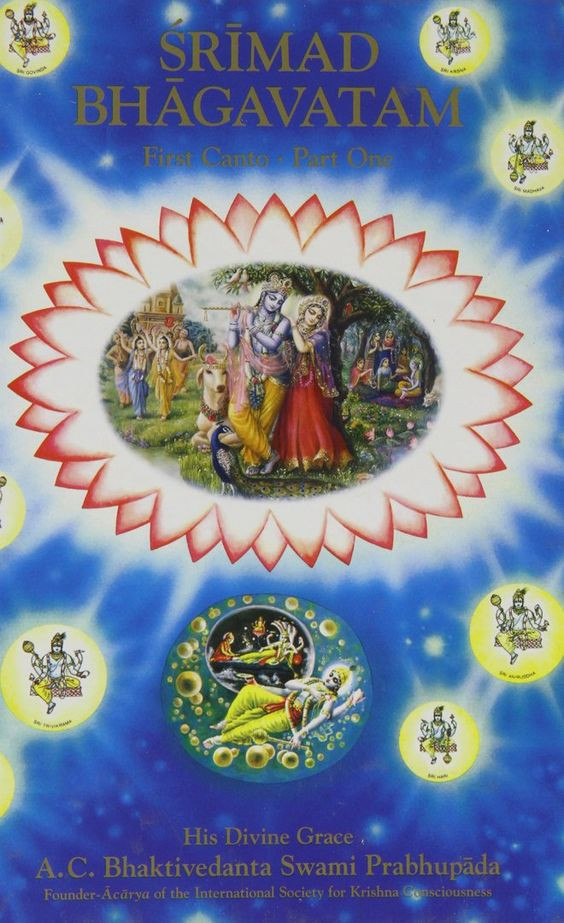 Why to read srimad bhagavatamReading the Srimad Bhagavatam fosters deep spiritual growth by narrating the life and teachings of Lord Krishna,...Read more
 -
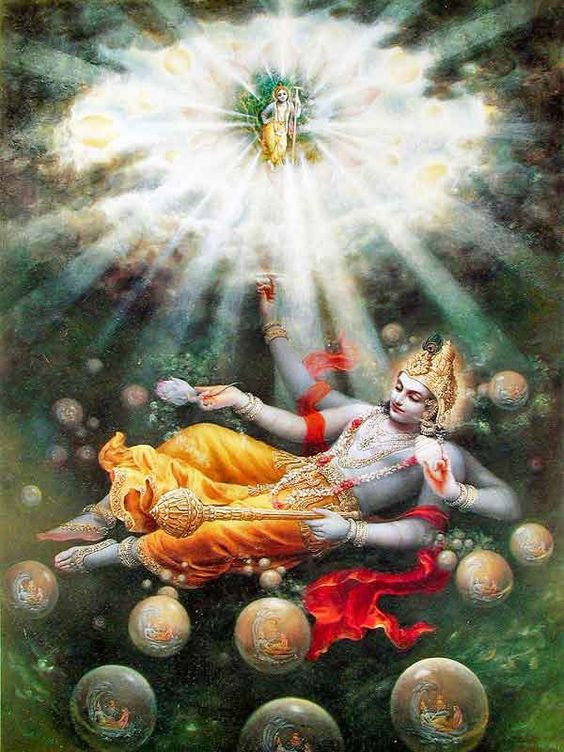 When was srimad bhagavatam written?The Srimad Bhagavatam is believed to have been written around 9th-10th century CE, though its oral traditions date...Read more
 -
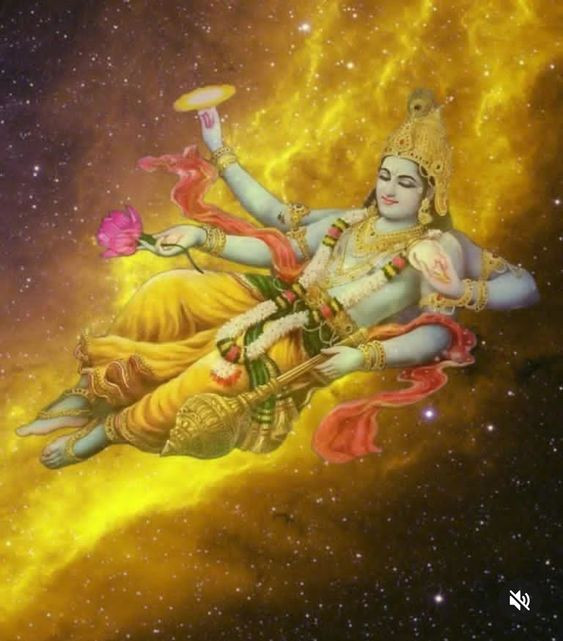 How many chapters are there in srimad bhagavatam?The Srimad Bhagavatam consists of 12 cantos (books) containing 335 chapters in total. Each canto covers various...Read more
 -
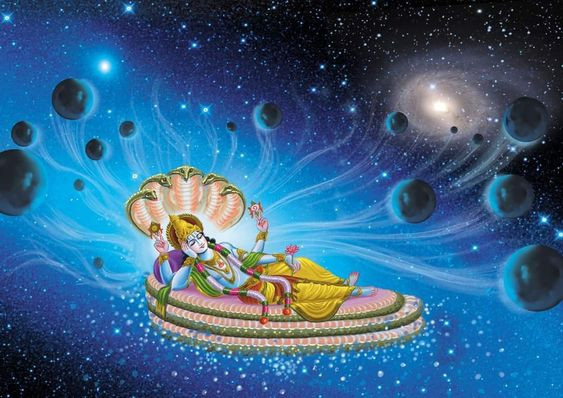 How many skandhas are there in srimad bhagavatamThe Srimad Bhagavatam is divided into 12 skandhas (cantos or books). Each skandha explores different themes,...Read more
 -
 How many slokas in srimad bhagavatamThe Srimad Bhagavatam contains approximately 18,000 shlokas (verses). These verses are spread across its 12 skandhas...Read more
Leave a comment