
Why did Krishna run to embrace a poor brahmin in rags? Read the Sudama story from the Bhagavatam and learn how a...
Latest posts
-
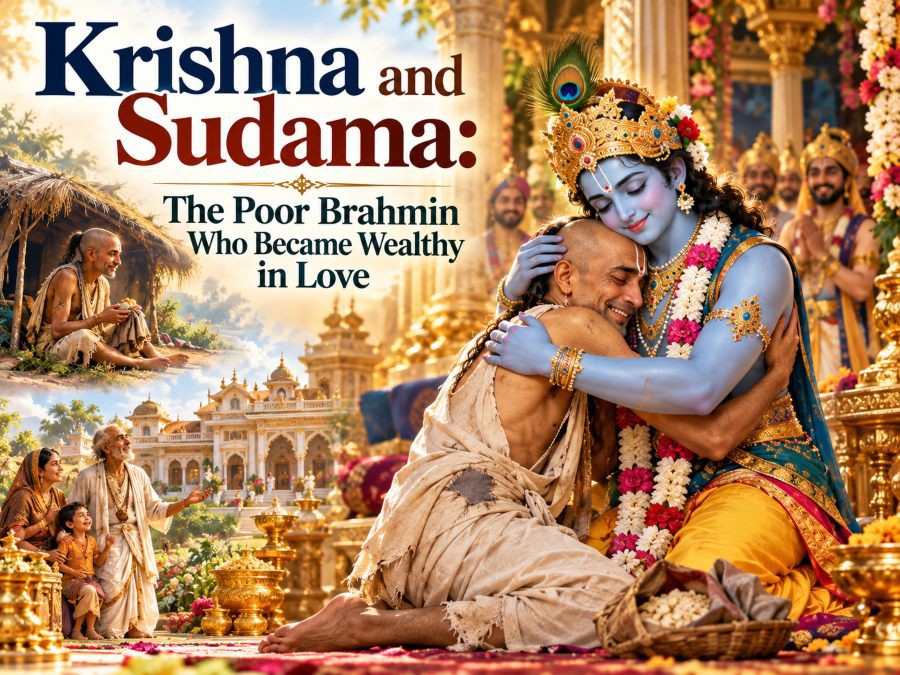 Krishna and Sudama: The Poor Brahmin Who Became Wealthy in LoveRead more
 -
 Vamana Avatar: How Three Steps Humbled Bali MaharajaRead more
Why did a powerful king give away three worlds to a boy asking for three steps? Learn the Vamana avatar story from...
-
 The Bhagavatam on Marriage: Duty, Love and Spiritual PartnershipRead more
What does the Bhagavatam say about marriage? Through the stories of Kardama and Devahuti, Rukmini's secret letter and...
-
 What Is Prema? The Bhagavatam's Highest Stage of Love for GodRead more
Prema is love for God with no "because" attached. Learn how the Bhagavatam describes it, the nine steps from faith to...
-
 Is Shiva Parvati Kalyana Mentioned in Srimad Bhagavatam? What the Scripture Really SaysRead more
Looking for Shiva and Parvati's wedding in the Srimad Bhagavatam? Find out what the scripture actually describes,...
-
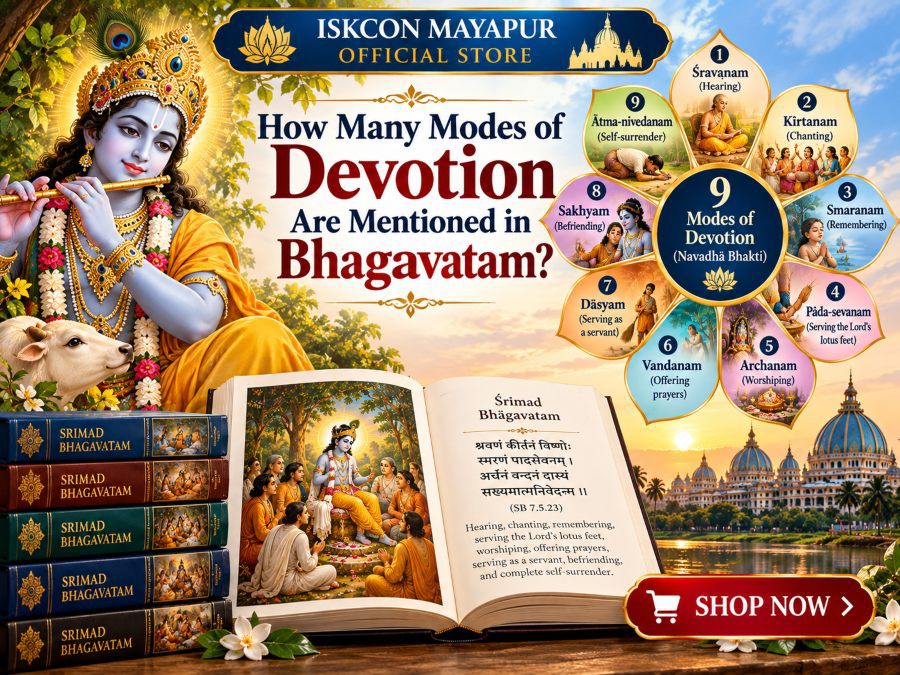 How Many Modes of Devotion Are Mentioned in Bhagavatam?Read more
A young boy named Prahlada listed nine ways to serve God, and the Bhagavatam keeps them as its answer. Learn what the...
-
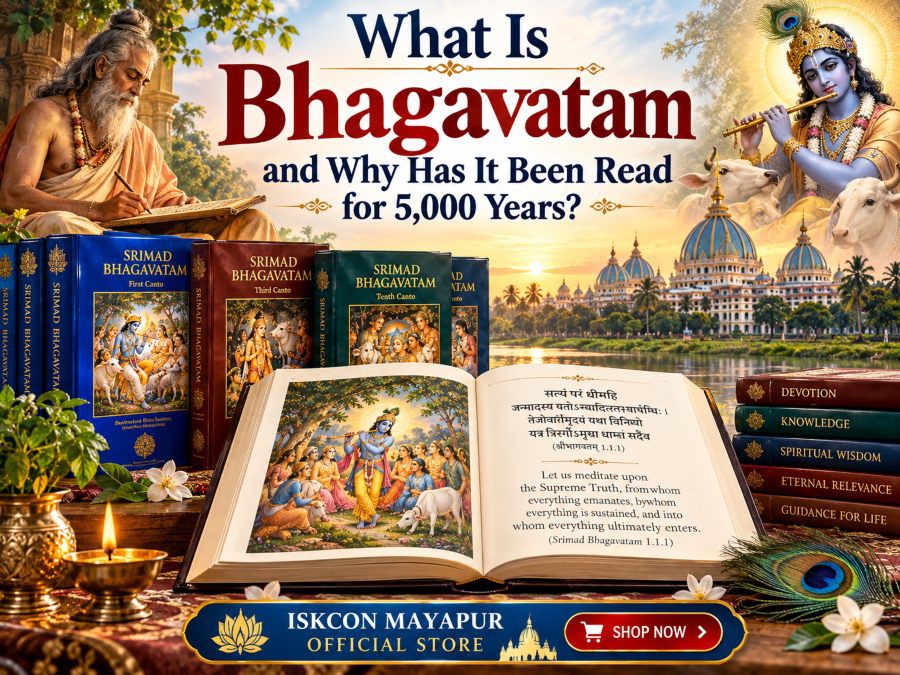 What Is Bhagavatam and Why Has It Been Read for 5,000 Years?Read more
A dying king asked one question, and the answer became the Bhagavatam. Learn what this Sanskrit scripture contains,...
-
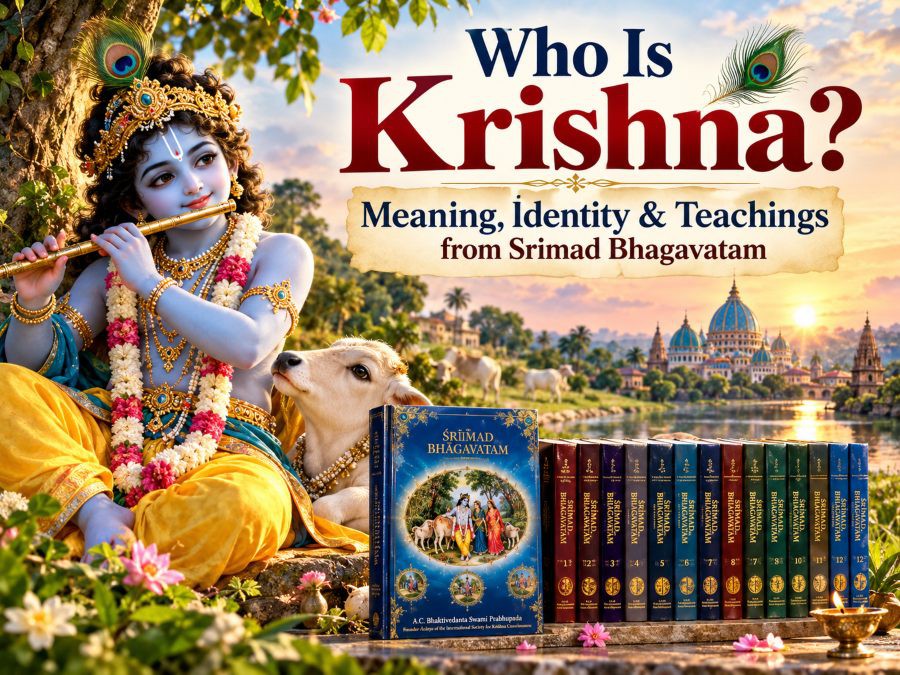 Who Is Lord Krishna? His Meaning, Teachings and Pastimes ExplainedRead more
Discover who Krishna is according to Srimad Bhagavatam, including His divine identity, childhood pastimes, teachings,...
-
 Incense in Islam: Bakhoor, Agarbatti and What Tradition SaysRead more
Is burning fragrance part of Muslim tradition? Explore incense in Islam, from the Prophetic practice of fumigating...
-
 History of Agarbatti: From Vedic Dhupa to Modern Incense SticksRead more
Where did agarbatti really come from? Follow the history of agarbatti from Vedic fire rituals and temple dhupa to...
Blog categories
- Default category (0)
- MUSICAL INSTRUMENT (1)
- BOOK (5)
- DEVOTIONAL GIFT (0)
- Blog (30) click
- CHANDAN (12)
- Bhagavatam Wisdom Series (68)
- Krishna Consciousness (14)
- Mridangam Musical Instrument (6)
- Bhagavad Gita for Beginners (13)
- Bhagavad Gita As It Is (37) click
- Bhagavad Gita As It Is Telugu (0)
- Bhagavad Gita As It Is Marathi (0)
- Bhagavad Gita As It Is In Hindi (0)
- Bhagavad Gita As It Is In English (0)
- Bhagavad Gita As It Is In Bengali (8)
- Bhagavad Gita As It Is In Kannada (0)
- Bhagavad Gita As It Is In Gujarati (0)
- Bhagavad Gita As It Is In Panjabi (0)
- Bhagavad Gita As It Is In Tamil (0)
- Bhagavad Gita As It Is Odia (0)
- BHAGAVAD GITA As It Is GERMAN (0)
- Bhagavad Gita As It Is In French (0)
- Bhagavad Gita As It Is In Nepali (0)
- Bhagavad Gita As It Is In Assamese (0)
- Incense or Agarbatti (38)
- Lord Chaitanya Mahaprabhu (3)
- Vedic Temple Mayapur (14)
- kalki (15)
- Mahabharata – Dharma & Destiny (27)
- Vaishnava Scriptures (4)
- healthy product (4)
- chaitanya mahaprabhu (5)
- Tulsi Mala Guide (17)
Search in blog
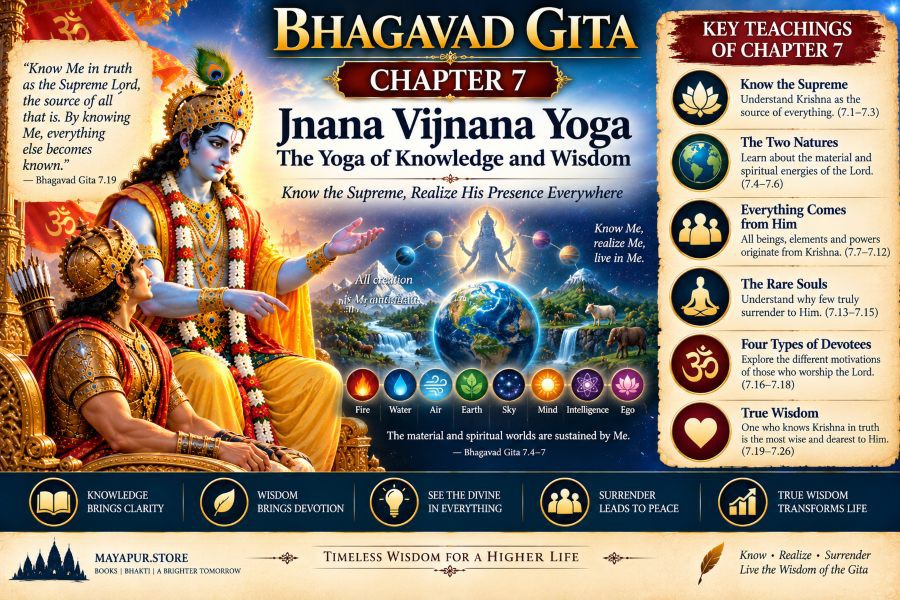
Bhagavad Gita Chapter 7: Jnana Vijnana Yoga – The Yoga of Knowledge and Wisdom
Out of Thousands, Maybe One Actually Gets It
Here's a genuinely uncomfortable claim to open a chapter with: out of thousands of people who strive for perfection in this life, Krishna says, perhaps one actually succeeds — and out of those rare few who succeed, hardly anyone actually comes to know him as he truly is. That's not a motivational opener. It's closer to a warning label. Chapter 7 of the Bhagavad Gita starts with Krishna essentially telling Arjuna: what I'm about to explain is rare knowledge, understood by almost no one, so pay attention. If you've picked up a copy after deciding to Visit Mayapur Store, for an authentic edition, this is the chapter where the philosophy shifts from ethics and technique into something closer to theology — Krishna explaining, in his own words, what he actually is underneath all the roles he's played so far in this conversation.
Jnana Vijnana Yoga translates to "the yoga of knowledge and realized wisdom," and the distinction between those two words matters more than it might seem. Jnana is theoretical knowledge — facts, concepts, information you can learn from a book. Vijnana is realized knowledge — direct, experiential understanding that goes beyond just knowing facts about something. Krishna promises to give Arjuna both, complete and without omission, which is a fairly bold claim for any teacher to make.
Everything You See Is Made of Two Things
Krishna opens his explanation by describing his own nature as split into two categories: a lower, material energy, and a higher, spiritual energy.
The lower energy, he explains, is made up of eight components — earth, water, fire, air, ether (or space), mind, intelligence, and false ego. This is essentially Krishna's breakdown of the entire observable universe, from the physical elements up through the subtler layers of mental and psychological experience. Everything you can perceive, measure, or think with, according to this framework, falls into this lower category.
But there's a second energy, higher than this, which Krishna identifies as the living beings themselves — the conscious element that animates and sustains the entire material world. Without this higher energy, the lower one would just be inert matter, arranged elements with nothing to experience or direct them.
This distinction matters because it reframes something people often get backwards. The material world — bodies, minds, even intelligence itself — isn't the deepest layer of reality in this framework. It's the instrument. The deeper layer is the conscious being using that instrument, and beneath even that, according to Krishna, is his own presence sustaining both layers simultaneously.
Krishna Claims to Be the Essence Behind Everything
This is where the chapter gets genuinely striking. Krishna doesn't just claim to have created the world and stepped back. He claims to be the essential quality within specific things — not the thing itself, but the particular quality that makes it what it is.
A few examples he gives directly:
- The taste in water, not the water itself
- The light in the sun and moon, not the celestial bodies themselves
- The sound in ether, the fragrance in earth, the ability in humans
- The strength of the strong, free from desire and attachment
- Desire itself, when it doesn't conflict with higher principles
This is a strikingly specific way of describing divine presence. Krishna isn't just saying "I am everywhere" in some vague, diffuse sense. He's pointing to the defining characteristic of things — the quality that makes water recognizably water, or sunlight recognizably light — and saying that quality itself is where his presence can be directly perceived, if you know how to look for it.
Why This Energy Is So Hard to See Through
If Krishna's presence is genuinely woven into the essential quality of everything, why doesn't everyone recognize it constantly? Krishna answers this directly: his divine energy, made up of the three fundamental qualities of nature — goodness, passion, and ignorance — is extremely difficult to overcome. Only those who surrender specifically to him, he says, are able to cross beyond it.
This introduces something that becomes a recurring theme through the rest of the Gita: the three gunas, or modes of material nature. Without getting too deep into the mechanics here, the basic idea is that everyone's perception is filtered through some combination of these three qualities, and that filter is exactly what keeps most people from perceiving anything beyond the material world's surface-level appearances.
Krishna is essentially explaining why his earlier claim — that only one in thousands actually achieves real understanding — isn't an exaggeration. The filtering mechanism itself is described as genuinely difficult to see past, not because the truth is hidden deliberately, but because ordinary perception simply isn't built to register it without deliberate, sustained effort.
Four Types of People Who Approach Krishna — And a Fifth Who Doesn't
Krishna categorizes the kinds of people who turn toward him, and the list is worth breaking down because it's more nuanced than a simple believer-versus-nonbeliever split:
- The distressed, who turn to him out of suffering and crisis
- The seekers of knowledge, who approach out of genuine philosophical curiosity
- Those seeking material gain, who want something specific and see divine connection as a means to that end
- The wise, who approach purely out of love and understanding, without any additional motive attached
Notably, Krishna doesn't dismiss the first three categories as invalid or inferior forms of connection. He describes all four as pious and sincere in their own way. But he singles out the wise as being especially dear to him, precisely because their connection isn't transactional — they're not approaching for relief, curiosity, or gain, but purely out of recognition and love.
Visit Store:- https://mayapur.store/126-bhagavad-gita-book
Then there's a fifth group Krishna describes separately: those whose understanding has been carried away by material desires, who worship other lesser powers instead, following their own nature. He doesn't condemn this either, exactly — he simply notes that whatever is worshipped with faith, results follow according to that faith, but the results themselves remain limited to whatever was actually being pursued.
Illusion Isn't a Trick — It's a Filter
One phrase Krishna uses here deserves special attention: he says the deluded do not recognize him because they're carried away by this material energy, similar to how ordinary people don't perceive him as the one source underlying everything, unborn and unchanging, even though he pervades the whole existence.
This reframes the concept of illusion, or maya, in a specific way. It's not that Krishna is deliberately hiding, playing some cosmic hide-and-seek. It's that ordinary perception, filtered through the material qualities described earlier, simply isn't built to register the source underlying the surface. It's less like a locked door and more like a frequency that most people's attention isn't tuned to receive.
Why Krishna Specifically Values the Wise
Krishna returns near the end of the chapter to praising the wise devotee, describing this person as effectively identical to himself in outlook, because their mind is completely absorbed in this understanding rather than scattered across competing desires.
This is worth sitting with because it clarifies something about the whole trajectory of this chapter. Krishna isn't asking for blind belief or ritual compliance. He's describing a specific kind of clarity — one where a person's attention isn't fragmented across dozens of competing goals, but consolidated around a single, coherent understanding of what actually underlies everything else. That kind of focus, according to Krishna, is rare precisely because most people's attention is constantly divided by the very material energy he described earlier in the chapter.
The Uncomfortable Part: Not Everyone Gets There
There's a temptation to read spiritual texts as universally encouraging, promising that everyone eventually arrives at the same understanding given enough time. Krishna doesn't quite say that here. He's fairly direct about the fact that some people, described as the lowest among men, don't surrender to him at all — their knowledge carried away by illusion, following instead what he calls a demoniac nature.
This is a harder edge than most of the chapter's earlier content, and it's worth not smoothing it over. Krishna isn't describing a universal, automatic unfolding where everyone eventually gets there regardless of effort or orientation. He's describing real divergence — some people move toward this understanding, and some people, by disposition and choice, move away from it entirely. The text doesn't pretend this asymmetry doesn't exist, even though it also doesn't dwell on it for long before returning to what actually draws people closer.
A Test Worth Running on Your Own Attention
Krishna's description of the four types of sincere seekers offers a genuinely useful diagnostic, even outside any explicitly religious framing. Ask yourself honestly: when you turn toward something larger than your immediate circumstances — whether that's prayer, meditation, philosophy, or just quiet reflection — which of those four categories does your motivation usually fall into?
Most people move between all four at different points, and that's not a failure. Turning toward something deeper out of genuine distress isn't lesser than turning toward it out of pure philosophical love — Krishna explicitly calls all four sincere. But noticing the pattern in your own motivation is useful, because it clarifies what you're actually seeking. Someone perpetually in the "material gain" category, always approaching from a transactional stance, is likely to feel like something's missing even when circumstances improve, because the underlying orientation hasn't shifted, only the specific request has changed.
Why "Knowing About" and "Knowing" Aren't the Same Thing
This brings the discussion back to that opening distinction between jnana and vijnana — theoretical knowledge versus realized understanding. It's entirely possible to read this entire chapter, nod along with every point, and still not have moved an inch closer to the direct recognition Krishna is actually describing.
That gap between intellectual agreement and lived recognition is exactly why Krishna opens the chapter warning that so few people actually arrive at real understanding, despite how many people study, discuss, and even teach these ideas. Information alone doesn't close that gap. What closes it, according to Krishna's framing throughout this chapter, is the kind of sustained, undivided attention he attributes specifically to the wise devotee — not more facts, but a different quality of engagement with the facts already available.
Bringing the Threads Together
By the end of Jnana Vijnana Yoga, the conversation has moved considerably beyond where it started. Arjuna's original crisis was personal and immediate — grief over people he loved, confusion about duty. Chapter 7 has expanded that question into something cosmic: what actually underlies all of material existence, and why is that underlying reality so difficult for most people to perceive clearly?
Krishna's answer doesn't resolve into a simple formula. It's layered — material energy and spiritual energy, four types of sincere seekers plus a fifth group pursuing something else entirely, an illusion that functions less like deception and more like an unrefined filter. What ties it together is Krishna's insistence that all of this, difficult as it is to fully grasp, becomes accessible specifically through sustained, sincere focus rather than casual curiosity.
This sets up naturally into what follows in the Bhagavad Gita, where Krishna continues unpacking exactly what this deeper reality actually consists of — moving from why it's hard to perceive in this chapter, toward what it actually looks like once perceived, in the chapters that follow.
Posted in: Bhagavad Gita As It Is
Related posts
-
 Why the Bhagavad Gita Feels Like a Personal Conversation with KrishnaThe Bhagavad Gita feels like a personal conversation with Krishna because its timeless wisdom directly addresses our...Read more
 -
 Shrimad Bhagwat Geeta: The Forgotten Life Manual for Modern StressShrimad Bhagwat Geeta is more than a sacred scripture—it’s a forgotten life manual that offers timeless solutions for...Read more
 -
 Who Wrote the Bhagavad Gita? Discover the true authorship of the Bhagavad Gita—exploring Ved Vyasa’s role as the compiler, Lord Krishna’s divine...Read more
 -
 How Many Shlokas in Bhagavad Gita? Complete Chapter-Wise Breakdown & MeaningDiscover how many shlokas are in the Bhagavad Gita, with a complete chapter-wise breakdown, variations in verse...Read more
 -
 How to Read Bhagavad Gita: A Complete Step-by-Step Guide for BeginnersDiscover how to read the Bhagavad Gita step by step—learn the right mindset, chapter order, and tips to understand...Read more
Leave a comment