
Why did Krishna run to embrace a poor brahmin in rags? Read the Sudama story from the Bhagavatam and learn how a...
Latest posts
-
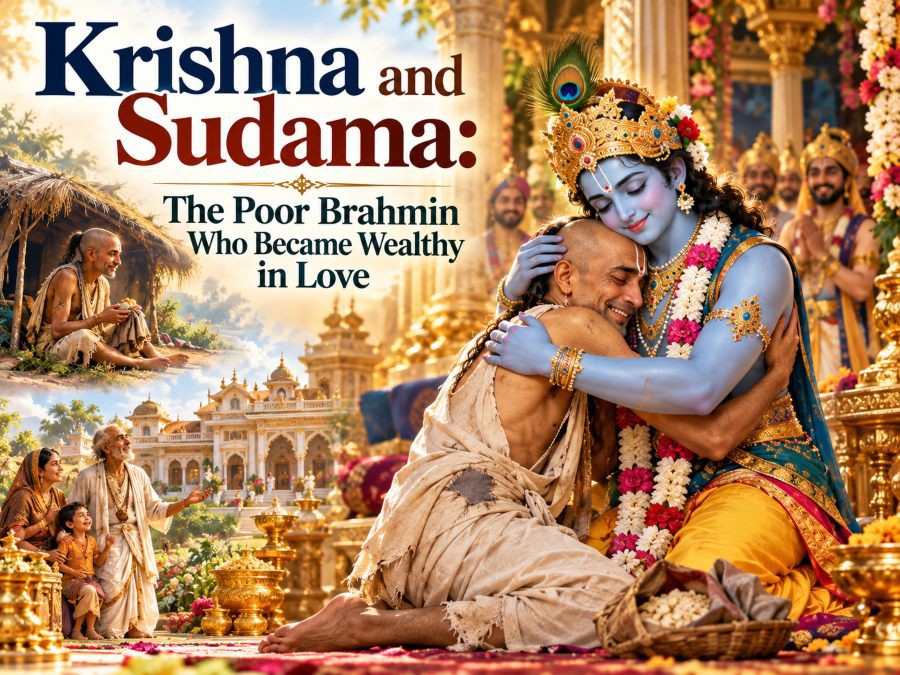 Krishna and Sudama: The Poor Brahmin Who Became Wealthy in LoveRead more
 -
 Vamana Avatar: How Three Steps Humbled Bali MaharajaRead more
Why did a powerful king give away three worlds to a boy asking for three steps? Learn the Vamana avatar story from...
-
 The Bhagavatam on Marriage: Duty, Love and Spiritual PartnershipRead more
What does the Bhagavatam say about marriage? Through the stories of Kardama and Devahuti, Rukmini's secret letter and...
-
 What Is Prema? The Bhagavatam's Highest Stage of Love for GodRead more
Prema is love for God with no "because" attached. Learn how the Bhagavatam describes it, the nine steps from faith to...
-
 Is Shiva Parvati Kalyana Mentioned in Srimad Bhagavatam? What the Scripture Really SaysRead more
Looking for Shiva and Parvati's wedding in the Srimad Bhagavatam? Find out what the scripture actually describes,...
-
 How Many Modes of Devotion Are Mentioned in Bhagavatam?Read more
A young boy named Prahlada listed nine ways to serve God, and the Bhagavatam keeps them as its answer. Learn what the...
-
 What Is Bhagavatam and Why Has It Been Read for 5,000 Years?Read more
A dying king asked one question, and the answer became the Bhagavatam. Learn what this Sanskrit scripture contains,...
-
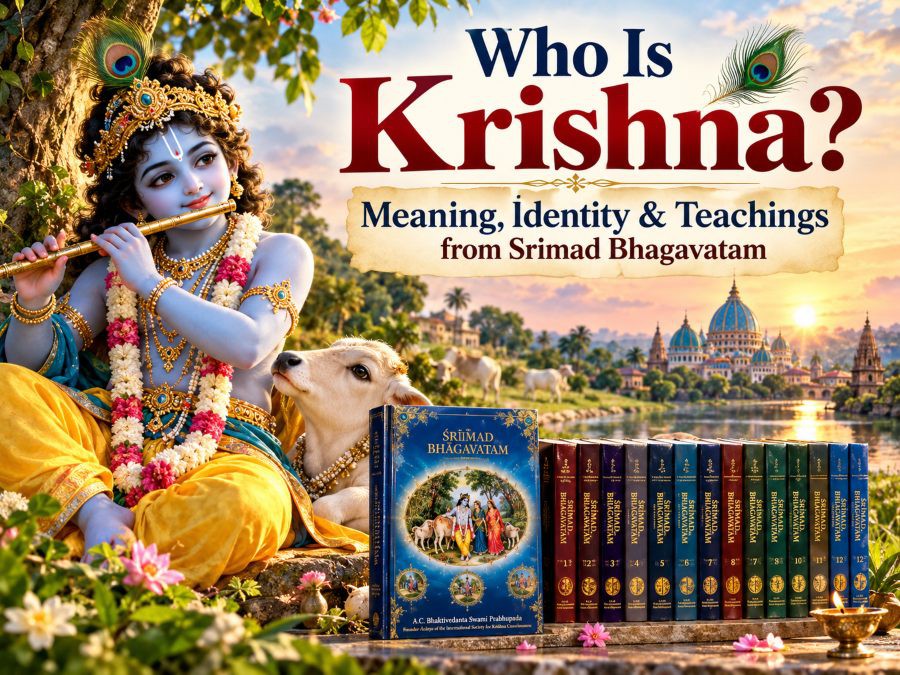 Who Is Lord Krishna? His Meaning, Teachings and Pastimes ExplainedRead more
Discover who Krishna is according to Srimad Bhagavatam, including His divine identity, childhood pastimes, teachings,...
-
 Incense in Islam: Bakhoor, Agarbatti and What Tradition SaysRead more
Is burning fragrance part of Muslim tradition? Explore incense in Islam, from the Prophetic practice of fumigating...
-
 History of Agarbatti: From Vedic Dhupa to Modern Incense SticksRead more
Where did agarbatti really come from? Follow the history of agarbatti from Vedic fire rituals and temple dhupa to...
Blog categories
- Default category (0)
- MUSICAL INSTRUMENT (1)
- BOOK (5)
- DEVOTIONAL GIFT (0)
- Blog (30) click
- CHANDAN (12)
- Bhagavatam Wisdom Series (68)
- Krishna Consciousness (14)
- Mridangam Musical Instrument (6)
- Bhagavad Gita for Beginners (13)
- Bhagavad Gita As It Is (37) click
- Bhagavad Gita As It Is Telugu (0)
- Bhagavad Gita As It Is Marathi (0)
- Bhagavad Gita As It Is In Hindi (0)
- Bhagavad Gita As It Is In English (0)
- Bhagavad Gita As It Is In Bengali (8)
- Bhagavad Gita As It Is In Kannada (0)
- Bhagavad Gita As It Is In Gujarati (0)
- Bhagavad Gita As It Is In Panjabi (0)
- Bhagavad Gita As It Is In Tamil (0)
- Bhagavad Gita As It Is Odia (0)
- BHAGAVAD GITA As It Is GERMAN (0)
- Bhagavad Gita As It Is In French (0)
- Bhagavad Gita As It Is In Nepali (0)
- Bhagavad Gita As It Is In Assamese (0)
- Incense or Agarbatti (38)
- Lord Chaitanya Mahaprabhu (3)
- Vedic Temple Mayapur (14)
- kalki (15)
- Mahabharata – Dharma & Destiny (27)
- Vaishnava Scriptures (4)
- healthy product (4)
- chaitanya mahaprabhu (5)
- Tulsi Mala Guide (17)
Search in blog

Why Arjuna Broke Down on the Battlefield: Bhagavad Gita Chapter 1 Explained
Why Arjuna Broke Down on the Battlefield: Bhagavad Gita Chapter 1 Explained
What would happen if you finally reached the moment you had prepared for your entire life—and suddenly found yourself unable to act?
That is exactly what happens to Arjuna in Bhagavad Gita Chapter 1. Standing on the battlefield of Kurukshetra, the great warrior looks across at the people he is expected to fight and realizes that many of them are his teachers, relatives, friends, and elders. His confidence disappears. His body trembles, his mouth becomes dry, and his famous bow, Gandiva, slips from his hand.
Arjuna's breakdown is not simply fear of war. It is a much deeper crisis involving love, duty, morality, grief, and uncertainty. The opening chapter of the Bhagavad Gita shows what can happen when a person's emotions and sense of responsibility collide so strongly that ordinary reasoning no longer provides an answer.
And that is precisely why Arjuna's crisis still feels so human.
Arjuna Was a Warrior—So Why Did He Become Afraid?
Arjuna was not an inexperienced soldier.
He was one of the greatest warriors of his time. He had spent years learning warfare and had faced serious dangers before. He knew what battle meant.
Yet when Krishna drives his chariot between the two armies and Arjuna asks to see those gathered for battle, everything changes.
He sees Bhishma, the respected elder of his family.
He sees Dronacharya, the teacher who trained him.
He sees cousins, relatives, friends, and other people connected to his life.
The enemy suddenly stops looking like an enemy.
Arjuna sees human beings.
That emotional shift is the beginning of his collapse.
His problem is not simply, “I am afraid of dying.”
His deeper concern is:
“What kind of victory is worth having if the people I love must die for me to achieve it?”
That question shakes his entire understanding of duty.
The Moment the Battlefield Became Personal
Before looking at the armies, Arjuna appears ready to fulfill his responsibility.
But once he recognizes the people standing against him, his mind begins moving rapidly from one concern to another.
He thinks about death.
Then family.
Then social order.
Then the consequences of killing respected elders.
Then the suffering that could follow the destruction of families.
His thoughts become increasingly focused on what might happen after the battle.
This is a familiar pattern of human anxiety.
One difficult thought leads to another:
“If I do this, what happens next?”
Then:
“What if that creates another problem?”
Soon, the mind has constructed an entire chain of consequences.
Arjuna is no longer standing calmly in the present moment. He is mentally living through countless possible futures.
The battlefield has become a psychological battlefield.
His Physical Symptoms Reveal the Depth of His Crisis
Chapter 1 does something interesting. It does not describe Arjuna's fear only through his words.
His body reacts too.
He experiences physical signs of distress. His limbs weaken, his mouth becomes dry, his body trembles, and his hair stands on end. His famous bow falls from his hand.
These details matter because they show that his crisis is not intellectual alone.
He is experiencing fear at every level—physically, emotionally, and mentally.
This is one reason Arjuna feels so relatable.
Most people have experienced moments when the mind says one thing while the body reacts differently. You may know that a conversation is necessary, yet your heart races before you begin. You may understand that a decision must be made, yet anxiety makes you want to postpone it.
Arjuna's experience reminds us that knowing what is right and being emotionally prepared to do it are two different things.
Arjuna's Real Fear Was the Cost of Victory
It would be easy to describe Arjuna as someone who simply became afraid of fighting.
But that interpretation misses the heart of Chapter 1.
Arjuna is not afraid of battle in the ordinary sense.
He is afraid of what victory might require.
Imagine spending years working toward a goal and finally discovering that achieving it will involve a painful sacrifice.
Suddenly, success itself becomes frightening.
That is what happens to Arjuna.
He begins questioning whether a kingdom is worth the price he may have to pay.
If his relatives, teachers, and loved ones are killed, who will enjoy the victory?
His argument is emotionally powerful because it forces us to examine an uncomfortable question:
Can an outcome still be desirable if the path toward it destroys everything we value?
Arjuna does not have an easy answer.
When Love and Duty Pull in Opposite Directions
One of the strongest themes in Bhagavad Gita Chapter 1 is the conflict between personal attachment and responsibility.
Arjuna loves the people standing before him.
At the same time, he believes he has a responsibility as a warrior.
Both feelings are real.
That is what makes his dilemma so difficult.
Life often becomes complicated when two legitimate values point in different directions.
For example:
- A leader may care about an employee but still need to make a difficult business decision.
- A parent may want to protect a child while knowing that the child must learn independence.
- A person may love their family while needing to make an unpopular personal choice.
- A professional may value friendship but still have to enforce an important rule.
The hardest decisions are often not between something obviously good and something obviously bad.
They are between two things we care about.
Arjuna is trapped in exactly that kind of conflict.
Why Arjuna's Breakdown Is Important to the Bhagavad Gita
The entire teaching of the Bhagavad Gita begins because Arjuna admits that he cannot see clearly.
This is easy to overlook.
Krishna's teachings do not begin with Arjuna confidently asking for spiritual philosophy.
They begin with a crisis.
Arjuna has reached the limits of his own understanding.
And that creates an opening for wisdom.
There is a lesson here that goes far beyond the battlefield.
Sometimes we do not seek deeper understanding until our usual way of thinking stops working.
A person can live comfortably with certain assumptions for years. Then one difficult experience challenges those assumptions, and suddenly the old answers are no longer enough.
That uncomfortable period can become the beginning of growth.
Arjuna's confusion becomes the doorway through which Krishna's teachings enter.
Arjuna Mistakes Emotional Pain for Moral Certainty
This is one of the most interesting aspects of his argument.
Arjuna feels terrible about fighting.
Because the feeling is so strong, he begins treating that emotional reaction as evidence that fighting must be wrong.
But strong emotion does not automatically prove that a decision is correct or incorrect.
We do this in ordinary life too.
We sometimes think:
“This feels uncomfortable, so it must be wrong.”
But discomfort can have many causes.
It may come from fear.
It may come from attachment.
It may come from uncertainty.
Or it may genuinely indicate that something is morally wrong.
The challenge is learning to distinguish between them.
Arjuna needs a clearer framework for making that distinction.
That is where Krishna's guidance becomes significant.
Krishna Does Not Solve the Problem With Simple Motivation
If the Bhagavad Gita were merely a motivational conversation, Krishna could have said:
“Arjuna, stop worrying and be brave.”
But that is not what happens.
Krishna begins addressing the deeper assumptions behind Arjuna's fear.
The discussion moves toward the nature of the self, death, duty, action, attachment, knowledge, and the consequences of acting without selfish attachment.
The problem therefore requires more than emotional encouragement.
Arjuna needs a new way of understanding his situation.
This is a powerful lesson for anyone facing a serious decision.
Sometimes you do not need more motivation.
You need better understanding.
A motivational speech may give you energy for a day. Clear understanding can change the way you approach an entire category of problems.
What Bhagavad Gita Chapter 1 Teaches Us About Fear
Arjuna's breakdown contains several practical lessons.
1. Fear Can Appear Even When You Are Highly Prepared
Preparation does not make a person immune to fear.
Arjuna has training, experience, ability, and courage. Still, he becomes overwhelmed.
That tells us something important.
Feeling afraid does not erase the strengths you already possess.
A capable person can still have a moment of doubt.
A successful person can still freeze.
A knowledgeable person can still become confused.
Fear is not proof that everything you have learned has disappeared.
2. Stop and Examine What Your Fear Is Actually Saying
Fear often speaks in vague terms.
“I can't do this.”
“Everything will go wrong.”
“This will destroy everything.”
Arjuna's example encourages us to examine those thoughts rather than accepting them automatically.
Ask yourself:
- What exactly am I afraid of?
- What consequence am I imagining?
- Is that consequence certain or only possible?
- Am I reacting to facts or assumptions?
- Is attachment influencing my judgment?
- What responsibility do I actually have?
These questions can transform a vague fear into a problem that can be understood.
3. You Do Not Have to Pretend Everything Is Fine
Arjuna does not hide his emotional state.
He openly tells Krishna about his confusion.
That honesty matters.
There is no benefit in pretending to be confident when you are not.
Acknowledging confusion can actually make clear thinking possible.
You cannot examine a fear that you refuse to admit exists.
The Battlefield as a Mirror of Modern Life
Most people will never stand on a battlefield like Arjuna.
But almost everyone faces moments when competing responsibilities create intense inner conflict.
The battlefield can therefore be viewed as a powerful metaphor for difficult choices.
Your battlefield might be:
A workplace.
You know a decision needs to be made, but you are worried about how colleagues will react.
A family situation.
You love someone deeply, yet you know that avoiding a difficult conversation may create greater problems.
A personal ambition.
You want to move forward, but fear of failure keeps pulling you backward.
A moral decision.
You know what responsibility requires, but the emotionally easier choice seems more attractive.
In each case, the central challenge is similar:
How do you act when fear and responsibility pull you in opposite directions?
That is why Arjuna's story remains relevant.
The Bow Falls Before the Wisdom Begins
The image of Arjuna lowering his bow is more than a dramatic moment in an ancient story.
It represents the point at which his existing understanding can no longer carry him forward.
He has reached the edge of what he knows.
And that is where the deeper teaching begins.
There is something almost comforting about this structure.
The Bhagavad Gita does not begin with an enlightened person who has everything figured out.
It begins with someone who is overwhelmed.
Someone who doubts.
Someone who wants to walk away.
Someone who needs guidance.
Arjuna's vulnerability is what makes the conversation with Krishna possible.
What We Can Take From Arjuna's Crisis
The lesson is not that we should ignore emotions.
Arjuna's feelings matter.
His compassion matters.
His concerns matter.
But feelings alone cannot always provide the complete answer.
The Bhagavad Gita gradually teaches Arjuna to look beyond immediate emotional reactions and understand his deeper responsibility.
That movement—from emotional confusion toward clear understanding—is at the heart of his journey.
For us, the lesson can be simple:
Pause when fear takes over. Examine it. Seek wisdom. Then act with clarity rather than panic.
You do not need to eliminate every uncomfortable emotion before making a responsible decision.
Sometimes clarity comes only after you are willing to face the fear directly.
Final Thoughts: Arjuna's Breakdown Was the Beginning, Not the End
Arjuna's collapse on the battlefield is one of the most memorable openings in spiritual literature because it begins with a problem every human being can recognize.
He is caught between love and duty.
He fears the consequences of action.
His mind races through possible futures.
His body reacts to the pressure.
His confidence disappears.
And finally, he admits that he does not know what to do.
That moment is not the end of Arjuna's story.
It is the beginning of his transformation.
The Bhagavad Gita shows that fear can cloud judgment, especially when attachment and uncertainty become overwhelming. But fear can also force us to question our assumptions and search for deeper wisdom.
Arjuna's battlefield is ancient, but his dilemma is not.
Whenever we face a decision that challenges our identity, relationships, values, or sense of responsibility, we stand in our own version of Kurukshetra.
The question is not whether fear will appear.
The real question is:
Will fear make the decision for us, or will we seek enough clarity to act wisely?
That is the question Arjuna faces.
And it is where the great conversation of the Bhagavad Gita truly begins.
Posted in: Bhagavad Gita As It Is
Related posts
-
 Why the Bhagavad Gita Feels Like a Personal Conversation with KrishnaThe Bhagavad Gita feels like a personal conversation with Krishna because its timeless wisdom directly addresses our...Read more
 -
 Shrimad Bhagwat Geeta: The Forgotten Life Manual for Modern StressShrimad Bhagwat Geeta is more than a sacred scripture—it’s a forgotten life manual that offers timeless solutions for...Read more
 -
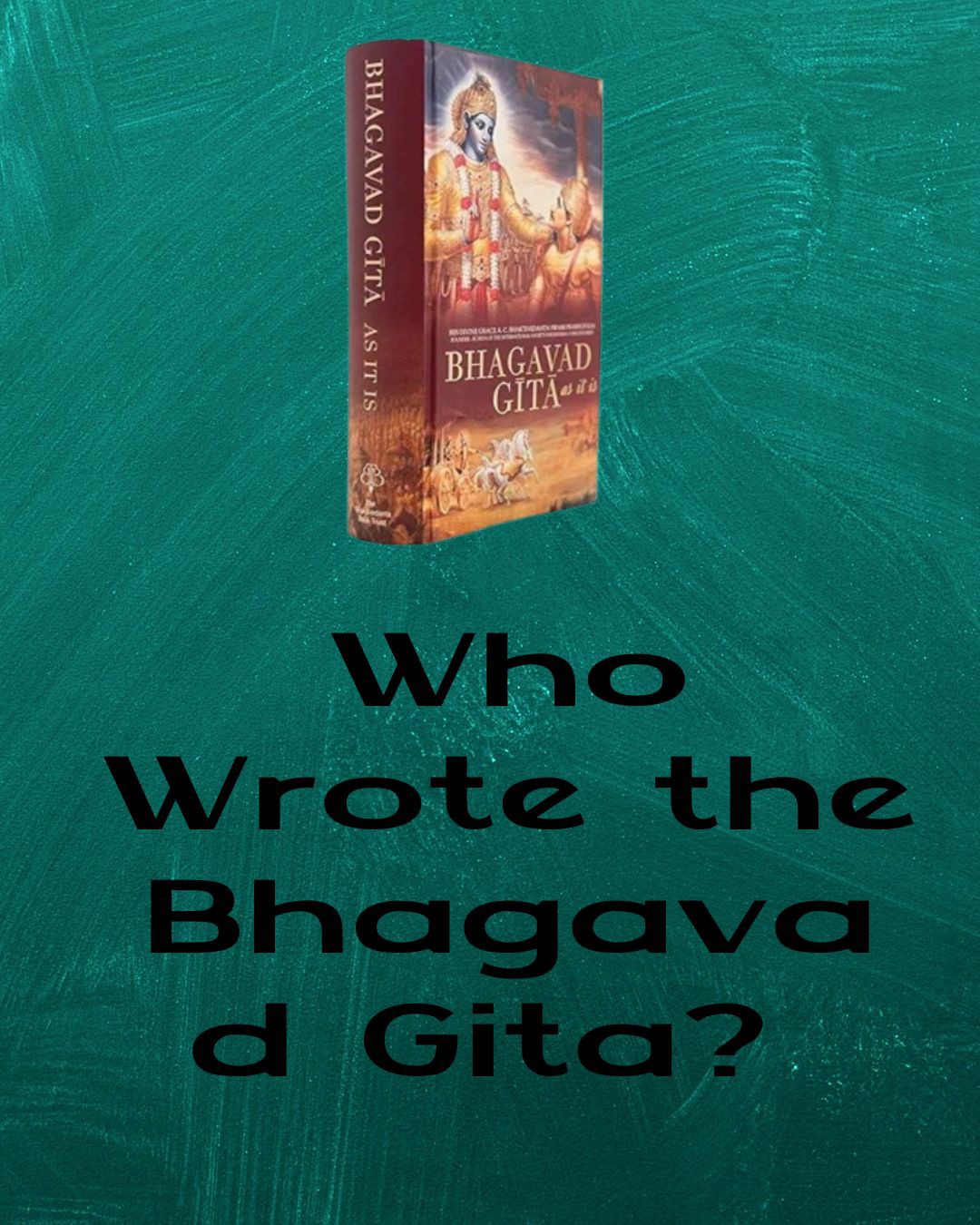 Who Wrote the Bhagavad Gita? Discover the true authorship of the Bhagavad Gita—exploring Ved Vyasa’s role as the compiler, Lord Krishna’s divine...Read more
 -
 How Many Shlokas in Bhagavad Gita? Complete Chapter-Wise Breakdown & MeaningDiscover how many shlokas are in the Bhagavad Gita, with a complete chapter-wise breakdown, variations in verse...Read more
 -
 How to Read Bhagavad Gita: A Complete Step-by-Step Guide for BeginnersDiscover how to read the Bhagavad Gita step by step—learn the right mindset, chapter order, and tips to understand...Read more
Leave a comment