
Why did Krishna run to embrace a poor brahmin in rags? Read the Sudama story from the Bhagavatam and learn how a...
Latest posts
-
 Krishna and Sudama: The Poor Brahmin Who Became Wealthy in LoveRead more
 -
 Vamana Avatar: How Three Steps Humbled Bali MaharajaRead more
Why did a powerful king give away three worlds to a boy asking for three steps? Learn the Vamana avatar story from...
-
 The Bhagavatam on Marriage: Duty, Love and Spiritual PartnershipRead more
What does the Bhagavatam say about marriage? Through the stories of Kardama and Devahuti, Rukmini's secret letter and...
-
 What Is Prema? The Bhagavatam's Highest Stage of Love for GodRead more
Prema is love for God with no "because" attached. Learn how the Bhagavatam describes it, the nine steps from faith to...
-
 Is Shiva Parvati Kalyana Mentioned in Srimad Bhagavatam? What the Scripture Really SaysRead more
Looking for Shiva and Parvati's wedding in the Srimad Bhagavatam? Find out what the scripture actually describes,...
-
 How Many Modes of Devotion Are Mentioned in Bhagavatam?Read more
A young boy named Prahlada listed nine ways to serve God, and the Bhagavatam keeps them as its answer. Learn what the...
-
 What Is Bhagavatam and Why Has It Been Read for 5,000 Years?Read more
A dying king asked one question, and the answer became the Bhagavatam. Learn what this Sanskrit scripture contains,...
-
 Who Is Lord Krishna? His Meaning, Teachings and Pastimes ExplainedRead more
Discover who Krishna is according to Srimad Bhagavatam, including His divine identity, childhood pastimes, teachings,...
-
 Incense in Islam: Bakhoor, Agarbatti and What Tradition SaysRead more
Is burning fragrance part of Muslim tradition? Explore incense in Islam, from the Prophetic practice of fumigating...
-
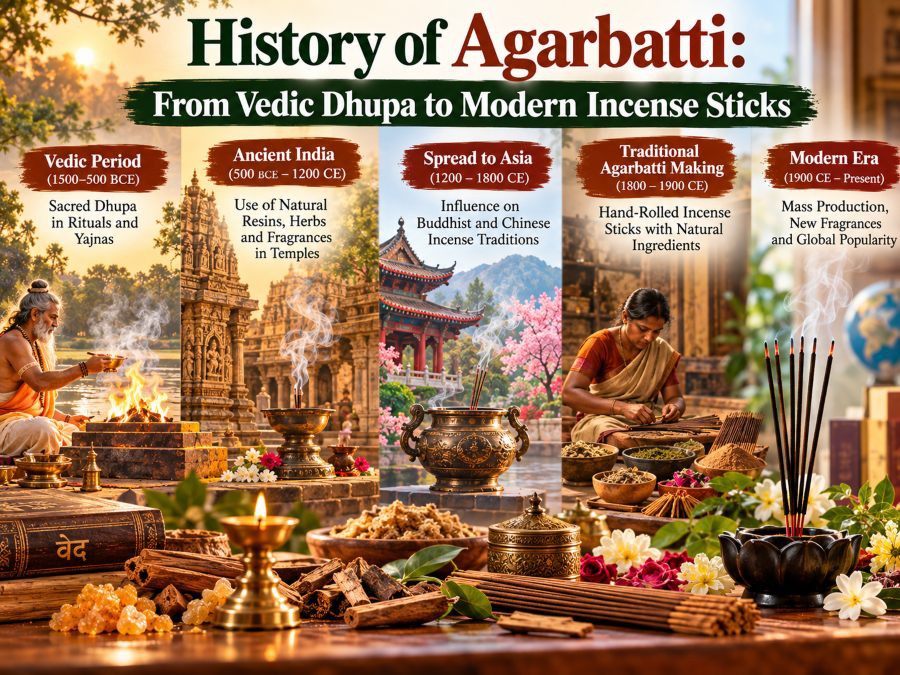 History of Agarbatti: From Vedic Dhupa to Modern Incense SticksRead more
Where did agarbatti really come from? Follow the history of agarbatti from Vedic fire rituals and temple dhupa to...
Blog categories
- Default category (0)
- MUSICAL INSTRUMENT (1)
- BOOK (5)
- DEVOTIONAL GIFT (0)
- Blog (30) click
- CHANDAN (12)
- Bhagavatam Wisdom Series (68)
- Krishna Consciousness (14)
- Mridangam Musical Instrument (6)
- Bhagavad Gita for Beginners (13)
- Bhagavad Gita As It Is (37) click
- Bhagavad Gita As It Is Telugu (0)
- Bhagavad Gita As It Is Marathi (0)
- Bhagavad Gita As It Is In Hindi (0)
- Bhagavad Gita As It Is In English (0)
- Bhagavad Gita As It Is In Bengali (8)
- Bhagavad Gita As It Is In Kannada (0)
- Bhagavad Gita As It Is In Gujarati (0)
- Bhagavad Gita As It Is In Panjabi (0)
- Bhagavad Gita As It Is In Tamil (0)
- Bhagavad Gita As It Is Odia (0)
- BHAGAVAD GITA As It Is GERMAN (0)
- Bhagavad Gita As It Is In French (0)
- Bhagavad Gita As It Is In Nepali (0)
- Bhagavad Gita As It Is In Assamese (0)
- Incense or Agarbatti (38)
- Lord Chaitanya Mahaprabhu (3)
- Vedic Temple Mayapur (14)
- kalki (15)
- Mahabharata – Dharma & Destiny (27)
- Vaishnava Scriptures (4)
- healthy product (4)
- chaitanya mahaprabhu (5)
- Tulsi Mala Guide (17)
Search in blog

The Moment Before War: Lessons From Arjuna Vishada Yoga
The Moment Before War: Lessons From Arjuna Vishada Yoga
What would you do if you stood moments before a battle and suddenly realized that the people you were expected to fight were the very people you loved?
That is the emotional shock at the heart of Bhagavad Gita Chapter 1. Arjuna, one of the greatest warriors of his age, arrives at Kurukshetra prepared to fight. But when Krishna places his chariot between the two armies, Arjuna looks across the battlefield and sees teachers, relatives, friends, elders, and loved ones. His confidence disappears, and he is overwhelmed by grief and confusion.
This chapter is known as Arjuna Vishada Yoga, often translated as “The Yoga of Arjuna's Despair.” At first, the name may seem strange. How can despair be a form of yoga?
The answer lies in what happens next. Arjuna's emotional breakdown does not end his spiritual journey. It begins it.
Kurukshetra: The Battlefield Before the Battle
The first chapter of the Bhagavad Gita opens with the armies of the Pandavas and Kauravas assembled at Kurukshetra.
The tension is already enormous.
Both sides know that a major conflict is about to begin. Warriors have gathered, conches are being blown, commanders are preparing their forces, and the atmosphere is filled with anticipation.
Arjuna asks Krishna to place their chariot between the armies so that he can see those gathered for battle.
This request changes everything.
From a distance, war can look like strategy.
Up close, it becomes personal.
Arjuna recognizes Bhishma, Dronacharya, cousins, relatives, friends, and other familiar faces. The people he is supposed to defeat are no longer simply members of an opposing army.
They are part of his own life.
That realization breaks through his warrior identity.
When Strength Meets Emotional Shock
Arjuna's reaction is surprisingly physical.
He describes his limbs becoming weak. His mouth becomes dry. His body trembles. His hair stands on end. His bow, Gandiva, slips from his hand.
This is not ordinary hesitation.
He is experiencing a complete emotional crisis.
The detail is important because Arjuna is not portrayed as a weak or cowardly person. He is a trained warrior with enormous skill and courage.
Yet courage in one situation does not guarantee emotional stability in another.
Arjuna can face an enemy without hesitation.
What he cannot easily face is the thought of fighting people he loves.
That distinction gives Chapter 1 its human depth.
Sometimes the hardest battles are not against people who threaten us. They are against conflicting emotions inside ourselves.
Arjuna's Problem Was Bigger Than Fear
It is tempting to summarize Arjuna's reaction as fear.
But fear is only one part of it.
He is also experiencing:
- Grief over the people who may die.
- Attachment to family members and teachers.
- Moral confusion about whether fighting is right.
- Fear of consequences beyond the battlefield.
- Doubt about duty and his responsibilities.
- Disgust toward the idea of winning at such a terrible cost.
Arjuna begins asking whether a kingdom is worth obtaining if it requires the death of people he loves.
This is what makes his dilemma so powerful.
He is not asking, “Can I win?”
He is asking:
“If I win, what will I have left?”
That is a very different question.
The Cost of Victory Becomes More Frightening Than Defeat
Arjuna's thoughts move far beyond the immediate battle.
He begins considering what will happen to families after the warriors die. He worries about the breakdown of social and family responsibilities. He fears that the destruction caused by the war could create suffering long after the fighting ends.
His mind is no longer focused only on the present moment.
It is racing into the future.
This is something people still experience today.
A difficult decision can trigger a chain of imagined consequences:
“What if I make the wrong choice?”
“What if someone gets hurt?”
“What if everything changes?”
“What if I regret this later?”
One possibility creates another until the mind becomes overwhelmed.
Arjuna's experience shows how quickly fear of consequences can become paralysis.
Arjuna Vishada Yoga: Why Is Despair Called Yoga?
The title of Chapter 1 contains a fascinating idea.
The word yoga is commonly associated with spiritual discipline or union. Yet Arjuna Vishada Yoga begins with despair.
Why?
Because Arjuna's despair forces him to confront the limits of his current understanding.
Before this moment, Arjuna knows how to act as a warrior.
Now his usual framework has collapsed.
He cannot simply rely on physical strength.
He cannot solve the problem through military skill.
He needs wisdom.
That is the turning point.
His despair becomes the condition that makes deeper spiritual inquiry possible.
In this sense, Arjuna's crisis becomes a kind of spiritual doorway.
Sometimes a person begins searching for truth only after their old answers stop working.
The Problem With Making Decisions While Overwhelmed
Arjuna's emotional reaction also teaches something practical about decision-making.
When emotions become extremely intense, our ability to evaluate a situation can become distorted.
This does not mean emotions are useless. Quite the opposite.
Emotions often reveal what we value.
Arjuna's grief tells us that family, loyalty, and human life matter deeply to him.
But emotion alone cannot always determine the right action.
Imagine making an important business decision while furious.
Or ending a relationship during a moment of intense anger.
Or rejecting an opportunity because you are temporarily afraid of failure.
The feeling is real.
But the conclusion may not be.
Arjuna needs to separate what he feels from what he should ultimately do.
That distinction becomes central to Krishna's teaching in the chapters that follow.
Krishna's Silence Is Part of the Story
Before Krishna begins his philosophical instruction, he allows Arjuna to express his entire crisis.
This matters.
Arjuna is not immediately interrupted with a simple command.
He speaks.
He explains his fears.
He presents his arguments.
He reveals his emotional state.
Only after Arjuna reaches the point where he can no longer decide does the deeper teaching begin.
There is a useful lesson here for modern life.
When someone is overwhelmed, immediately telling them what to do may not solve the real problem.
Sometimes a person needs enough space to articulate the conflict first.
Once the confusion is visible, it becomes possible to examine it.
What Arjuna Teaches Us About Attachment
Arjuna's love for his relatives is genuine.
But his attachment also affects how he sees the situation.
He focuses intensely on the personal relationships in front of him.
That is understandable.
When we care deeply about someone, our judgment can become emotionally weighted.
We may avoid necessary conversations because we do not want to hurt someone.
We may stay silent because we fear conflict.
We may refuse to make a responsible decision because someone we love will be disappointed.
The lesson is not that love should disappear.
The deeper lesson is that love needs clarity.
Caring for someone does not always mean doing what makes them happy in the immediate moment.
Sometimes responsibility requires a difficult action.
The Moment Arjuna's Bow Falls
Few images in the Bhagavad Gita are as memorable as Arjuna lowering his bow.
The Gandiva represents his identity as a warrior.
For someone like Arjuna, putting it down means more than stopping a physical action.
It symbolizes a collapse of certainty.
He no longer knows how to reconcile the different parts of himself.
He is a warrior.
He is a family member.
He is a student.
He is a friend.
He is a person who does not want to cause suffering.
All these identities collide at once.
That is why his crisis feels so intense.
He is not simply deciding whether to fight.
He is trying to understand who he is and what his responsibility truly means.
Three Powerful Lessons From Arjuna Vishada Yoga
1. Confusion Can Be the Beginning of Wisdom
We often think we should have answers immediately.
Arjuna shows another possibility.
Admitting “I do not know what to do” can be an intelligent response when the situation is genuinely difficult.
Pretending to have certainty does not create wisdom.
Honest confusion can.
2. Fear Should Be Examined, Not Worshipped
Fear can provide useful information.
It may tell us that something matters.
But fear can also exaggerate consequences and narrow our perspective.
Before allowing fear to control a decision, ask:
- What exactly am I afraid of?
- What facts support that fear?
- What am I assuming?
- Am I thinking about the present or only imagining the future?
- Is attachment influencing my judgment?
- What responsibility do I actually have?
These questions do not make fear disappear.
They make it easier to understand.
3. A Difficult Choice Is Not Automatically a Wrong Choice
Arjuna initially struggles because the action before him feels terrible.
But something feeling painful does not automatically mean it is wrong.
Sometimes the responsible choice is uncomfortable.
A leader may have to make an unpopular decision.
A parent may have to establish a difficult boundary.
A person may have to leave something familiar to grow.
The ability to tolerate discomfort without immediately running away is part of maturity.
The Battlefield Is Still With Us
Most of us will never experience a battlefield like Kurukshetra.
Yet the emotional situation Arjuna faces is remarkably familiar.
Our battlefields may look different.
They may be found in:
- Career decisions
- Family responsibilities
- Business challenges
- Personal relationships
- Moral choices
- Financial uncertainty
- Fear of failure
- Major life changes
The circumstances change, but the internal question often remains the same:
“What should I do when every choice seems to carry a cost?”
That is where the Bhagavad Gita becomes more than an ancient account of a battlefield.
It becomes a conversation about human decision-making.
Why Chapter 1 Matters Before Reading the Rest of the Gita
Some readers may be tempted to move quickly through Chapter 1 because the famous philosophical teachings appear later.
But Chapter 1 deserves attention.
It establishes the emotional problem that Krishna's teachings will address.
Without Arjuna's despair, the later discussion about duty, the self, karma, detachment, devotion, and spiritual knowledge would lack its immediate human context.
The Gita is not presented as philosophy floating above ordinary life.
Its teachings emerge from a crisis.
That is one reason the conversation between Krishna and Arjuna remains so compelling.
It begins with a person who does not know what to do.
From Vishada to Wisdom
Arjuna's despair is not the destination.
It is the starting point.
His breakdown forces him to recognize that skill alone cannot solve every problem. Physical courage cannot automatically resolve moral confusion. Emotional sincerity does not always produce clear judgment.
He needs guidance.
And that willingness to seek guidance changes the direction of his story.
The most important shift is not that Arjuna suddenly stops caring.
He learns to understand his emotions within a larger framework of knowledge and responsibility.
That is a far deeper form of courage.
Final Thoughts: The Most Important Moment May Be Before the Battle
The battle has not yet begun when Arjuna's transformation starts.
That is significant.
The most important moment may be the pause before action—the moment when a person looks at the situation honestly and realizes that instinct alone is not enough.
Arjuna's despair shows us that even strong, talented, disciplined people can become overwhelmed when their values collide.
But his story does not end with his fear.
His fear creates a question.
His question creates a search for wisdom.
And that search becomes the conversation we know as the Bhagavad Gita.
Arjuna Vishada Yoga therefore offers a lesson that reaches far beyond Kurukshetra:
When fear, attachment, grief, and responsibility pull you in different directions, do not rush blindly into action or run blindly away from it. Pause. Examine what is happening within you. Seek wisdom. Then move forward with a clearer understanding of your responsibility.
The moment before war is, in many ways, the moment before transformation.
And that is why Chapter 1 remains such a powerful place to begin understanding the Bhagavad Gita.
Posted in: Bhagavad Gita As It Is
Related posts
-
 Why the Bhagavad Gita Feels Like a Personal Conversation with KrishnaThe Bhagavad Gita feels like a personal conversation with Krishna because its timeless wisdom directly addresses our...Read more
 -
 Shrimad Bhagwat Geeta: The Forgotten Life Manual for Modern StressShrimad Bhagwat Geeta is more than a sacred scripture—it’s a forgotten life manual that offers timeless solutions for...Read more
 -
 Who Wrote the Bhagavad Gita? Discover the true authorship of the Bhagavad Gita—exploring Ved Vyasa’s role as the compiler, Lord Krishna’s divine...Read more
 -
 How Many Shlokas in Bhagavad Gita? Complete Chapter-Wise Breakdown & MeaningDiscover how many shlokas are in the Bhagavad Gita, with a complete chapter-wise breakdown, variations in verse...Read more
 -
 How to Read Bhagavad Gita: A Complete Step-by-Step Guide for BeginnersDiscover how to read the Bhagavad Gita step by step—learn the right mindset, chapter order, and tips to understand...Read more
Leave a comment