
Why did Krishna run to embrace a poor brahmin in rags? Read the Sudama story from the Bhagavatam and learn how a...
Latest posts
-
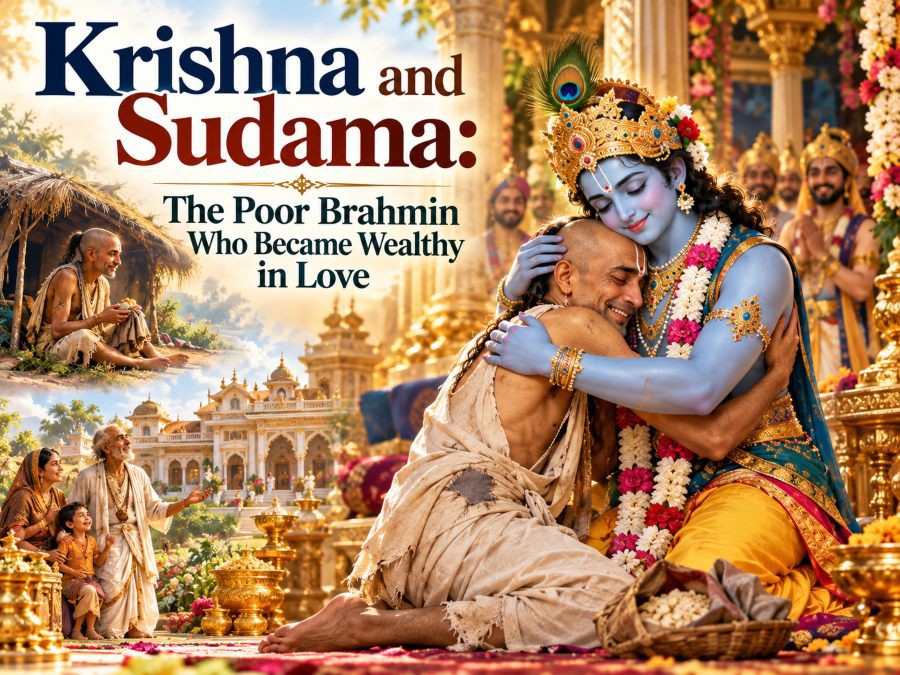 Krishna and Sudama: The Poor Brahmin Who Became Wealthy in LoveRead more
 -
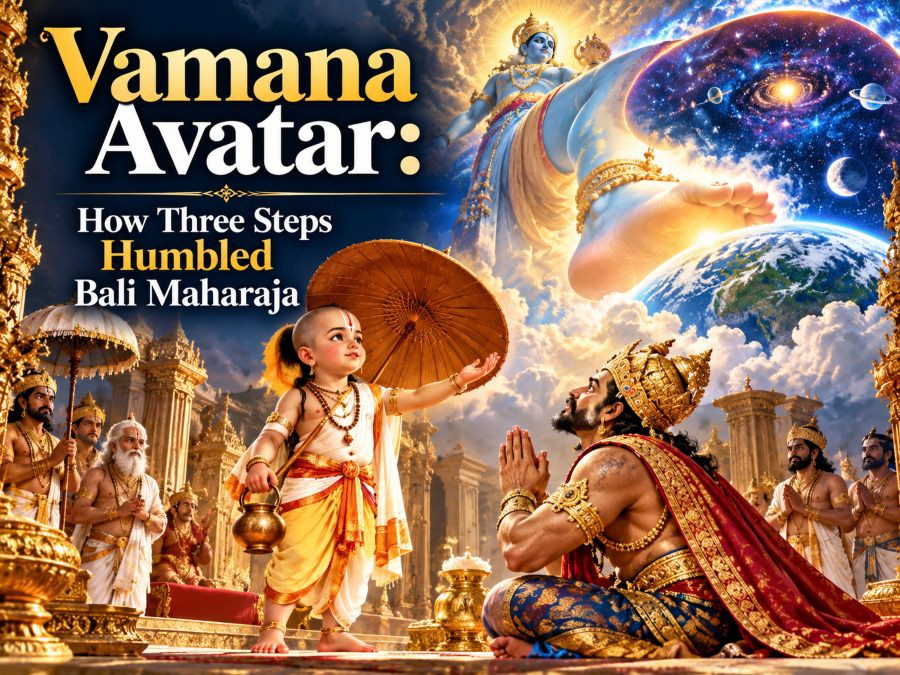 Vamana Avatar: How Three Steps Humbled Bali MaharajaRead more
Why did a powerful king give away three worlds to a boy asking for three steps? Learn the Vamana avatar story from...
-
 The Bhagavatam on Marriage: Duty, Love and Spiritual PartnershipRead more
What does the Bhagavatam say about marriage? Through the stories of Kardama and Devahuti, Rukmini's secret letter and...
-
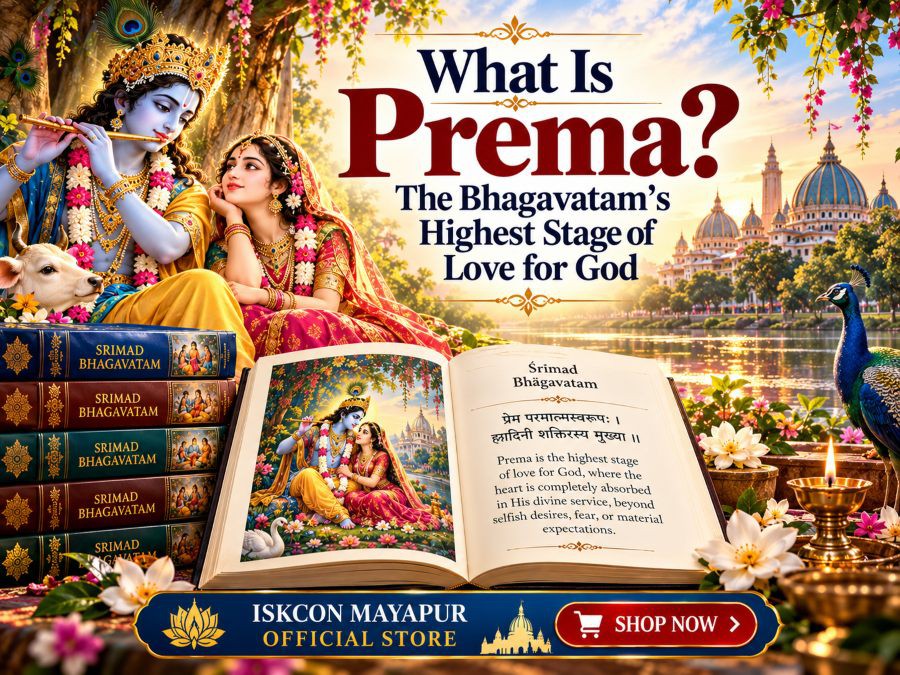 What Is Prema? The Bhagavatam's Highest Stage of Love for GodRead more
Prema is love for God with no "because" attached. Learn how the Bhagavatam describes it, the nine steps from faith to...
-
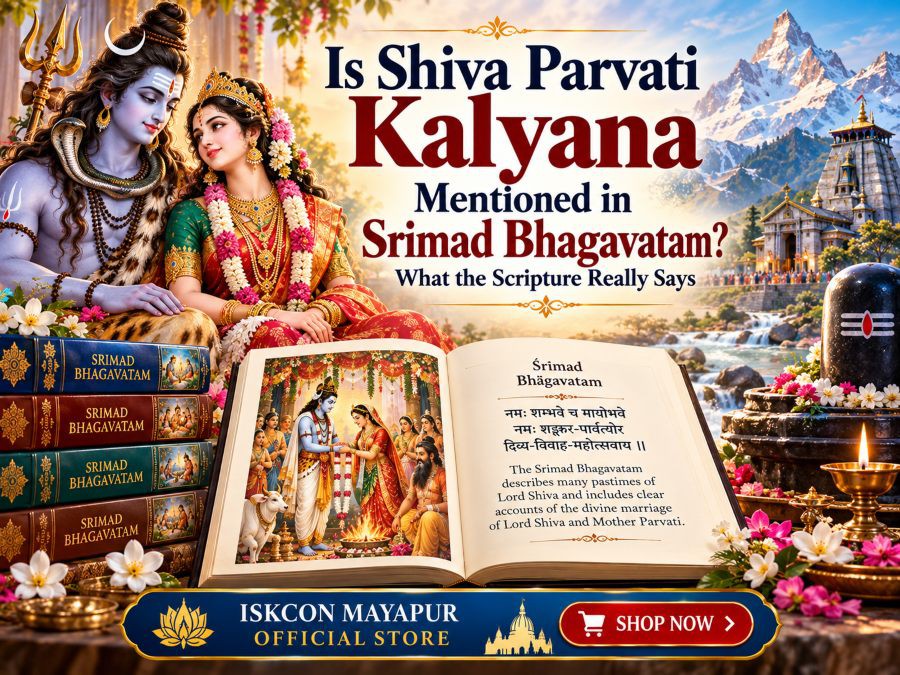 Is Shiva Parvati Kalyana Mentioned in Srimad Bhagavatam? What the Scripture Really SaysRead more
Looking for Shiva and Parvati's wedding in the Srimad Bhagavatam? Find out what the scripture actually describes,...
-
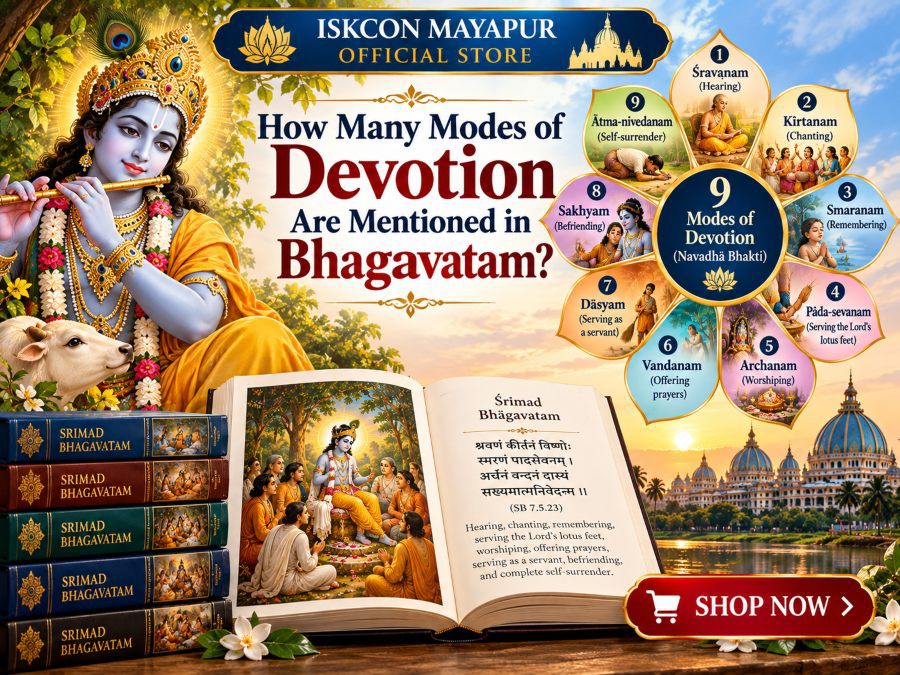 How Many Modes of Devotion Are Mentioned in Bhagavatam?Read more
A young boy named Prahlada listed nine ways to serve God, and the Bhagavatam keeps them as its answer. Learn what the...
-
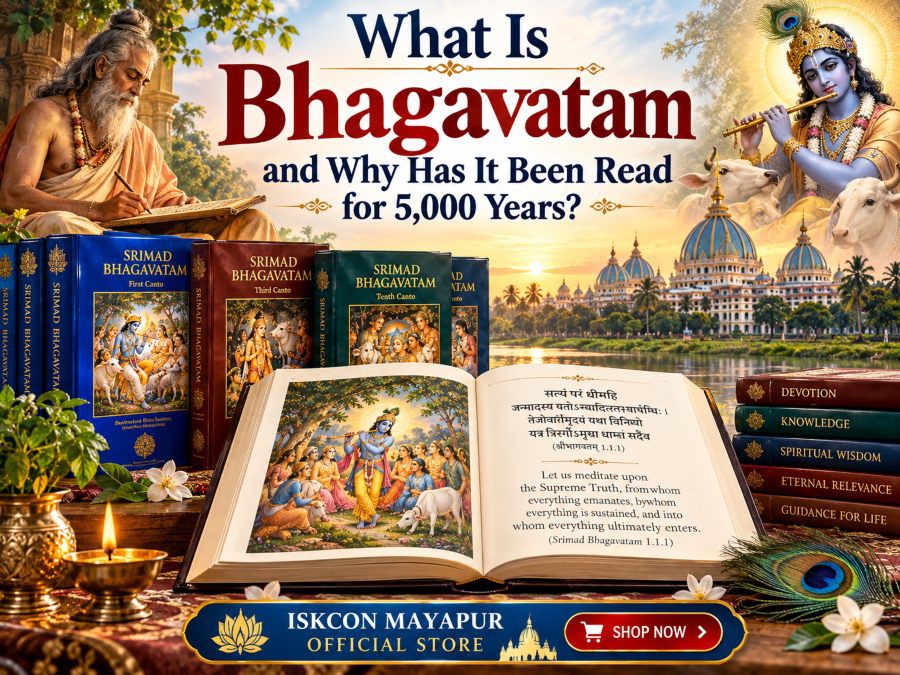 What Is Bhagavatam and Why Has It Been Read for 5,000 Years?Read more
A dying king asked one question, and the answer became the Bhagavatam. Learn what this Sanskrit scripture contains,...
-
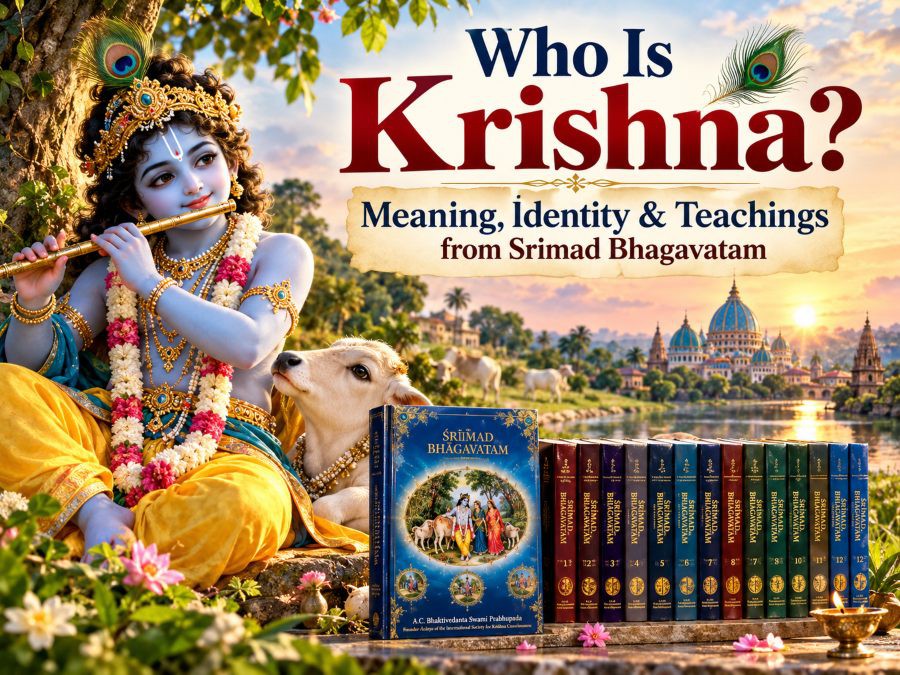 Who Is Lord Krishna? His Meaning, Teachings and Pastimes ExplainedRead more
Discover who Krishna is according to Srimad Bhagavatam, including His divine identity, childhood pastimes, teachings,...
-
 Incense in Islam: Bakhoor, Agarbatti and What Tradition SaysRead more
Is burning fragrance part of Muslim tradition? Explore incense in Islam, from the Prophetic practice of fumigating...
-
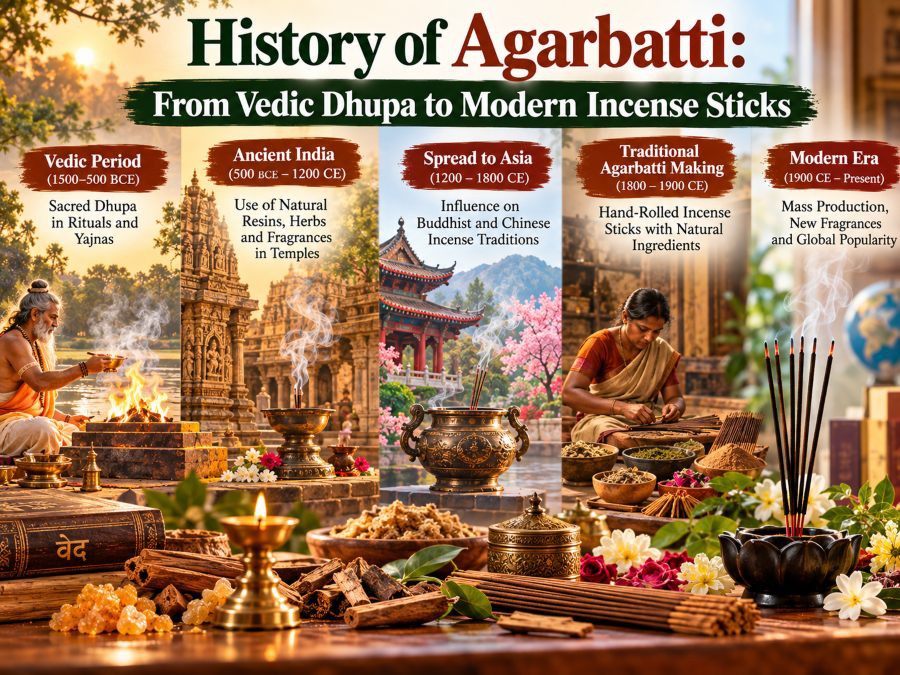 History of Agarbatti: From Vedic Dhupa to Modern Incense SticksRead more
Where did agarbatti really come from? Follow the history of agarbatti from Vedic fire rituals and temple dhupa to...
Blog categories
- Default category (0)
- MUSICAL INSTRUMENT (1)
- BOOK (5)
- DEVOTIONAL GIFT (0)
- Blog (30) click
- CHANDAN (12)
- Bhagavatam Wisdom Series (68)
- Krishna Consciousness (14)
- Mridangam Musical Instrument (6)
- Bhagavad Gita for Beginners (13)
- Bhagavad Gita As It Is (37) click
- Bhagavad Gita As It Is Telugu (0)
- Bhagavad Gita As It Is Marathi (0)
- Bhagavad Gita As It Is In Hindi (0)
- Bhagavad Gita As It Is In English (0)
- Bhagavad Gita As It Is In Bengali (8)
- Bhagavad Gita As It Is In Kannada (0)
- Bhagavad Gita As It Is In Gujarati (0)
- Bhagavad Gita As It Is In Panjabi (0)
- Bhagavad Gita As It Is In Tamil (0)
- Bhagavad Gita As It Is Odia (0)
- BHAGAVAD GITA As It Is GERMAN (0)
- Bhagavad Gita As It Is In French (0)
- Bhagavad Gita As It Is In Nepali (0)
- Bhagavad Gita As It Is In Assamese (0)
- Incense or Agarbatti (38)
- Lord Chaitanya Mahaprabhu (3)
- Vedic Temple Mayapur (14)
- kalki (15)
- Mahabharata – Dharma & Destiny (27)
- Vaishnava Scriptures (4)
- healthy product (4)
- chaitanya mahaprabhu (5)
- Tulsi Mala Guide (17)
Search in blog
Who is God According to Srimad Bhagavatam? | The Supreme Personality Revealed
The Eternal Question – Who is God?
From the beginning of time, humanity has sought to understand the greatest mystery of all — Who is God?
Different traditions and philosophies have described God in various ways — as energy, as creator, or as a formless truth.
But the Srimad Bhagavatam, one of the most respected scriptures of ancient India, goes beyond mere definition. It describes who God truly is, what His nature is like, how He interacts with His devotees, and how one can personally know Him.
Composed by the sage Vyāsadeva, the Srimad Bhagavatam is considered the essence of all Vedic knowledge. It reveals that the Supreme Truth is not impersonal or void but a living, eternal, and supremely loving person — Lord Krishna.
What is the Srimad Bhagavatam?
The Srimad Bhagavatam, also known as the Bhagavata Purana, is a spiritual text consisting of 12 books (Cantos), over 300 chapters, and around 18,000 verses.
It begins where all material philosophies end. It teaches the path of pure devotion and selfless love for God.
Vyāsadeva wrote it after compiling all other Vedic texts, yet he still felt incomplete. His spiritual master, Nārada Muni, advised him to write about the pastimes and qualities of the Supreme Lord.
READ ALSO:- Why to read srimad bhagavatam
That advice gave birth to the Srimad Bhagavatam — a scripture meant to awaken divine love and devotion in every heart.
The Absolute Truth in the Bhagavatam
Right from the beginning, the Bhagavatam defines the Supreme Truth as the source of all creation, the maintainer of everything, and the ultimate destination of all beings.
It explains that this Supreme Truth is one and yet manifests in three features — as Brahman, the impersonal spiritual energy; as Paramatma, the Lord within the heart; and as Bhagavan, the Supreme Personality of Godhead.
The Bhagavatam establishes that all three are the same Absolute Truth but understood at different levels of realization. The highest and most complete understanding is Bhagavan — the Supreme Person, Krishna.
God Is a Person, Not Just Energy
According to the Bhagavatam, the final realization of God is personal.
The divine energy (Brahman) is His effulgence, the Supersoul (Paramatma) is His partial manifestation within every living being, and Bhagavan is His complete form.
God is not just a power or light but a person with an eternal, blissful, and all-conscious form. This personal form of God is not material — it is fully spiritual, beyond time and matter.
Krishna – The Supreme Personality of Godhead
The Srimad Bhagavatam clearly declares that Lord Krishna is the Supreme Personality of Godhead.
All other incarnations and forms of God are His expansions or partial manifestations. Krishna is the original source of all divine forms.
In the Bhagavatam’s third chapter, after listing the various incarnations of the Lord such as Rama, Narasimha, and Vamana, it concludes that Krishna is the original Supreme Being from whom all others expand.
This means Krishna is not just another divine figure; He is the root of all existence.
He eternally resides in the spiritual world, Goloka Vrindavan, surrounded by His devotees, enjoying loving relationships with them.
READ ALSO:- Why to read srimad bhagavatam
The Qualities of God in the Bhagavatam
The Srimad Bhagavatam describes God as possessing infinite, perfect qualities. Some of these are:
a) Eternity and Spiritual Nature
God’s form is eternal and spiritual. He never takes birth or dies. He is full of knowledge and bliss.
Unlike human beings who change bodies, God’s form never changes. He is always youthful, radiant, and beyond the influence of material nature.
b) All-Attractiveness
The very name Krishna means “All-attractive.”
He attracts everyone — humans, gods, sages, animals, and even nature itself. His beauty, compassion, and love are unmatched.
b) Infinite Power and Mercy
God is the creator and sustainer of countless universes, yet He personally cares for even the smallest living beings.
He is both supremely powerful and infinitely merciful.
d) Source of All Joy
Krishna is described as the ultimate enjoyer and the reservoir of all pleasure.
Every living being seeks happiness because we are parts of Him — the source of happiness itself.
The Relationship Between God and Living Beings
The Bhagavatam teaches that all living beings are eternal parts and parcels of the Supreme Lord.
Just as sparks come from fire and share its nature, we too are spiritual in essence but currently trapped in material bodies.
God is the supreme father, and all living beings are His children.
Our natural duty is to serve Him with love. This service is not forced; it is the expression of our original spiritual nature.
When we serve and love Krishna, we feel deep inner peace and joy.
True religion, according to the Bhagavatam, is not about external rituals but about reestablishing our loving relationship with the Supreme Lord through bhakti, or devotional service.
The Supreme Abode of God
The Srimad Bhagavatam describes that beyond the material universe lies the spiritual world, where God eternally resides.
The highest planet there is called Goloka Vrindavan, where Krishna lives surrounded by His devotees, cows, forests, and rivers.
Everything in that realm is conscious and filled with love.
In that world, there is no suffering, no birth or death — only eternal loving relationships between the Lord and His devotees.
The Purpose of God’s Incarnations
The Bhagavatam narrates many divine incarnations of God appearing in different ages and forms — fish, tortoise, boar, half-man, half-lion, Rama, and others.
The purpose of these incarnations is threefold:
- To protect the devotees
- To destroy evil forces
- To reestablish the principles of righteousness and spiritual life
However, beyond these external purposes, the Lord appears to exchange loving pastimes with His devotees.
Through His divine activities, He teaches humanity how to love and serve God in different moods — as a child, friend, servant, or lover.
READ ALSO:- How many skandhas are there in srimad bhagavatam
How to Know God – The Path of Bhakti
The Bhagavatam teaches that God cannot be known by intellectual speculation, austerities, or wealth.
He can only be understood through sincere devotion, love, and service.
When one hears about Krishna’s pastimes, chants His holy names, and serves Him with a pure heart, God reveals Himself from within.
This process is called bhakti-yoga — the yoga of love and devotion.
Bhakti purifies the heart, removes material desires, and awakens divine love.
Through bhakti, one realizes that God is not far away but always present — in our hearts and everywhere around us.
Krishna – The Complete Form of God
While many divine forms are mentioned in the scriptures, the Srimad Bhagavatam concludes that Krishna is the complete form of the Supreme Lord.
Other incarnations display specific powers or qualities, but Krishna manifests all of them simultaneously.
He possesses all six opulences in full — unlimited beauty, strength, wealth, fame, knowledge, and renunciation.
This makes Him the most complete and perfect manifestation of God.
The Nature of God’s Love
In the Bhagavatam, God is not portrayed as a distant ruler but as a deeply loving person.
He personally interacts with His devotees, protects them, and accepts their love, no matter how small.
Even the simplest offering — a flower, a leaf, or a few words of love — pleases Him when given with sincerity.
This loving relationship is the foundation of spiritual life. When one loves Krishna selflessly, the soul experiences real freedom and happiness.
The Message of the Bhagavatam
The central message of the Srimad Bhagavatam is that life’s highest goal is to develop pure love for God.
This love transcends religion, caste, nationality, or material qualifications.
It is the eternal connection of the soul with its divine source.
By regularly reading or hearing the Bhagavatam, one’s heart becomes purified.
Gradually, anger, greed, and illusion fade away, and the natural qualities of compassion, humility, and joy awaken.
Such a person begins to see God in every living being and experiences true peace.
The God of the Bhagavatam
According to the Srimad Bhagavatam, the Supreme Lord is not formless or impersonal.
He is the ultimate truth, the cause of all causes, and the eternal friend of every living being.
He is the one who maintains the universe, yet He personally cares for His devotees.
This Lord is Sri Krishna — the all-attractive, ever-blissful, and most merciful Supreme Personality of Godhead.
He is the source of all incarnations, all energies, and all living beings.
Knowing Him means knowing the ultimate truth of existence.
Conclusion: God Revealed as the Supreme Person
The Srimad Bhagavatam answers the question “Who is God?” with divine clarity and depth.
God is not an idea, not an energy, and not just a cosmic power.
He is a living, eternal person — full of love, beauty, and joy — known as Lord Krishna.
He is the cause of all creation and the goal of all souls.
By developing devotion to Him through love and service, one can experience true happiness, beyond material life.
The Bhagavatam invites everyone to know this Supreme Person, love Him, and return to His eternal abode of peace and bliss.
Posted in: Bhagavatam Wisdom Series
Related posts
-
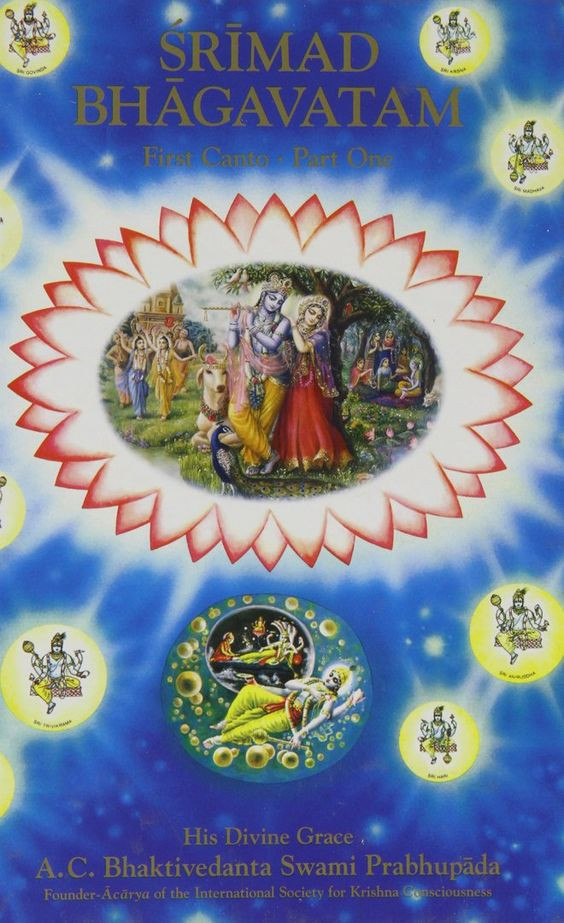 Why to read srimad bhagavatamReading the Srimad Bhagavatam fosters deep spiritual growth by narrating the life and teachings of Lord Krishna,...Read more
 -
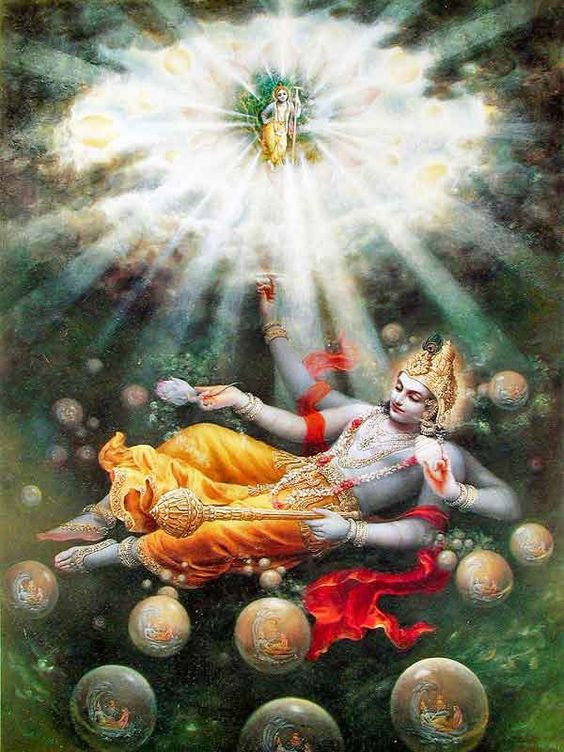 When was srimad bhagavatam written?The Srimad Bhagavatam is believed to have been written around 9th-10th century CE, though its oral traditions date...Read more
 -
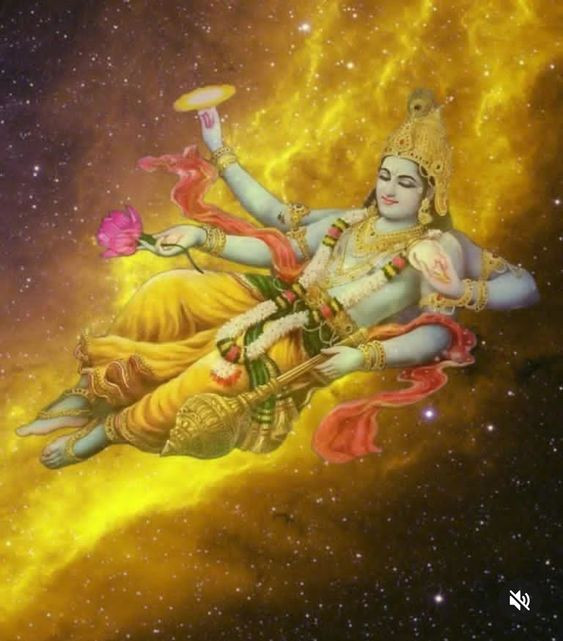 How many chapters are there in srimad bhagavatam?The Srimad Bhagavatam consists of 12 cantos (books) containing 335 chapters in total. Each canto covers various...Read more
 -
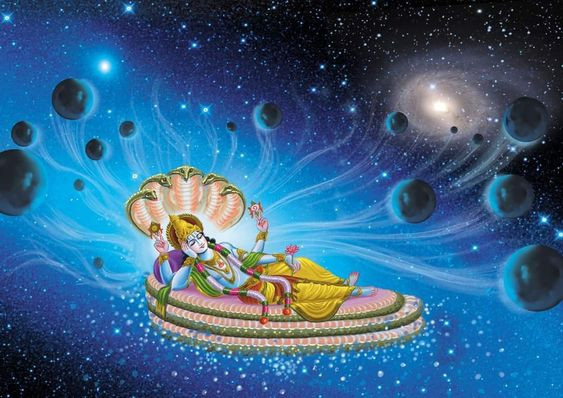 How many skandhas are there in srimad bhagavatamThe Srimad Bhagavatam is divided into 12 skandhas (cantos or books). Each skandha explores different themes,...Read more
 -
 How many slokas in srimad bhagavatamThe Srimad Bhagavatam contains approximately 18,000 shlokas (verses). These verses are spread across its 12 skandhas...Read more
Leave a comment