
Why did Krishna run to embrace a poor brahmin in rags? Read the Sudama story from the Bhagavatam and learn how a...
Latest posts
-
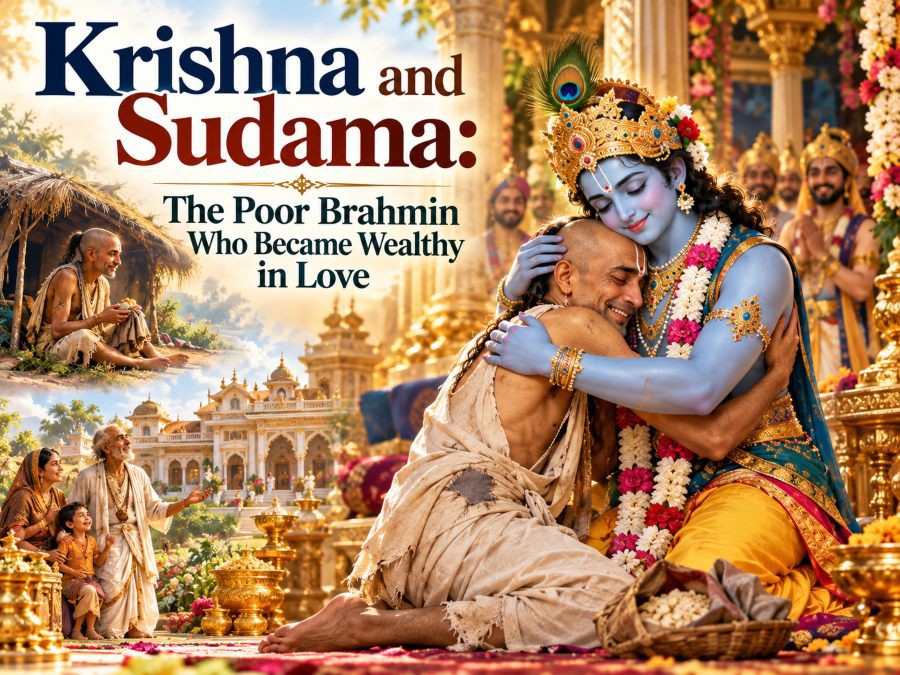 Krishna and Sudama: The Poor Brahmin Who Became Wealthy in LoveRead more
 -
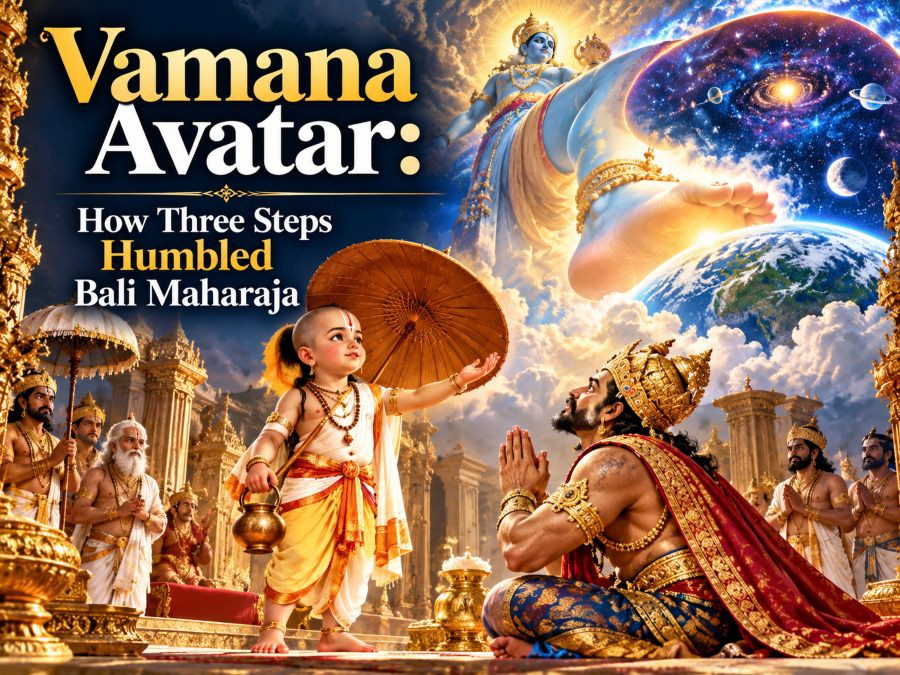 Vamana Avatar: How Three Steps Humbled Bali MaharajaRead more
Why did a powerful king give away three worlds to a boy asking for three steps? Learn the Vamana avatar story from...
-
 The Bhagavatam on Marriage: Duty, Love and Spiritual PartnershipRead more
What does the Bhagavatam say about marriage? Through the stories of Kardama and Devahuti, Rukmini's secret letter and...
-
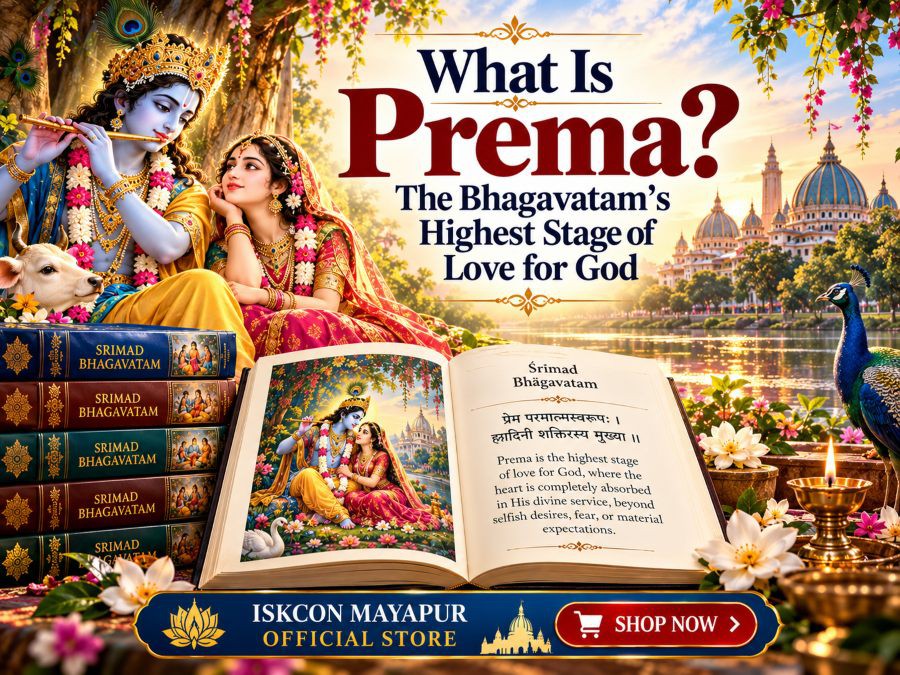 What Is Prema? The Bhagavatam's Highest Stage of Love for GodRead more
Prema is love for God with no "because" attached. Learn how the Bhagavatam describes it, the nine steps from faith to...
-
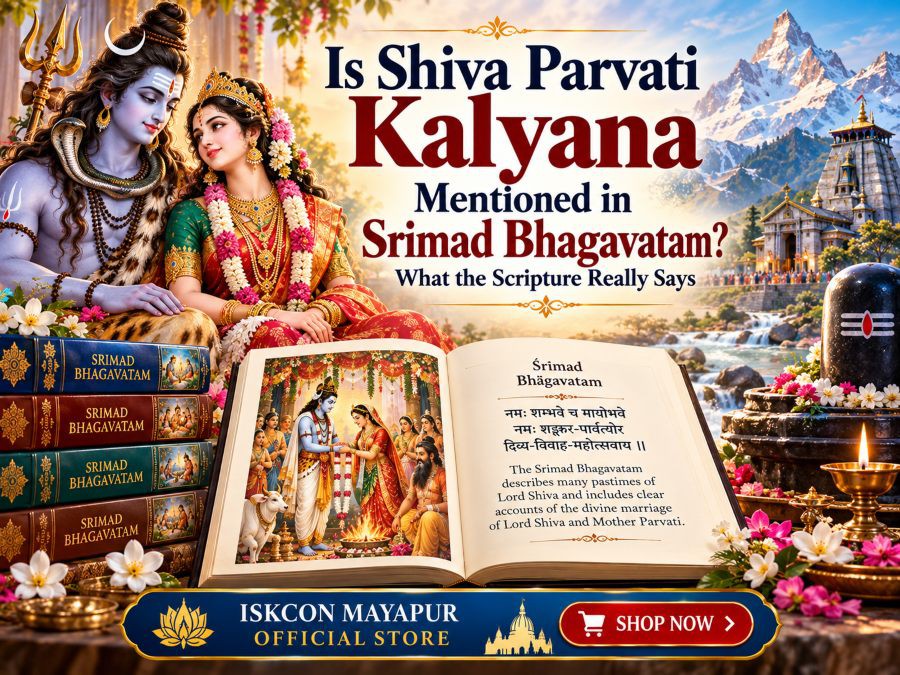 Is Shiva Parvati Kalyana Mentioned in Srimad Bhagavatam? What the Scripture Really SaysRead more
Looking for Shiva and Parvati's wedding in the Srimad Bhagavatam? Find out what the scripture actually describes,...
-
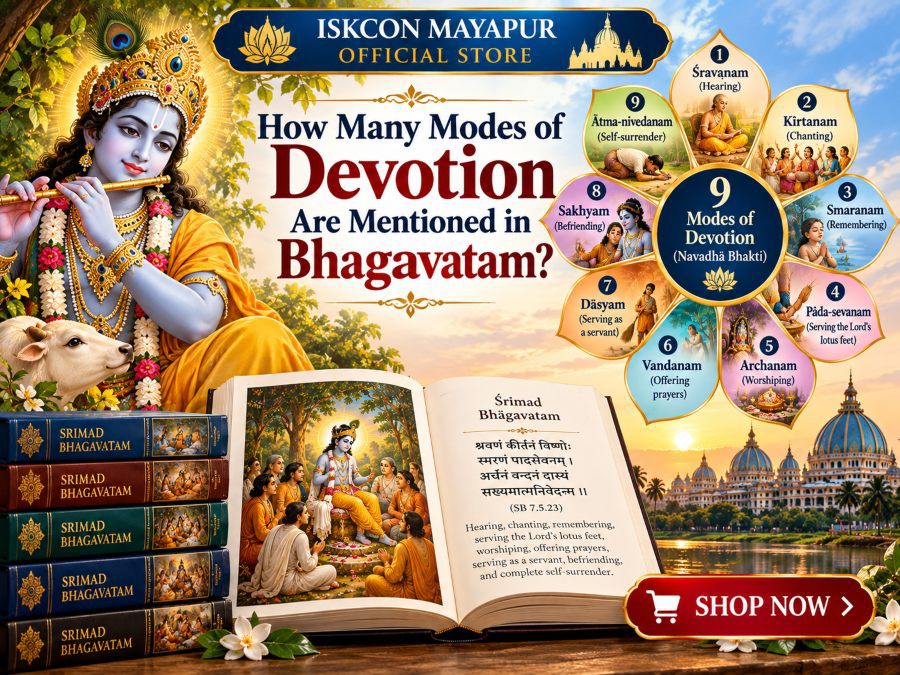 How Many Modes of Devotion Are Mentioned in Bhagavatam?Read more
A young boy named Prahlada listed nine ways to serve God, and the Bhagavatam keeps them as its answer. Learn what the...
-
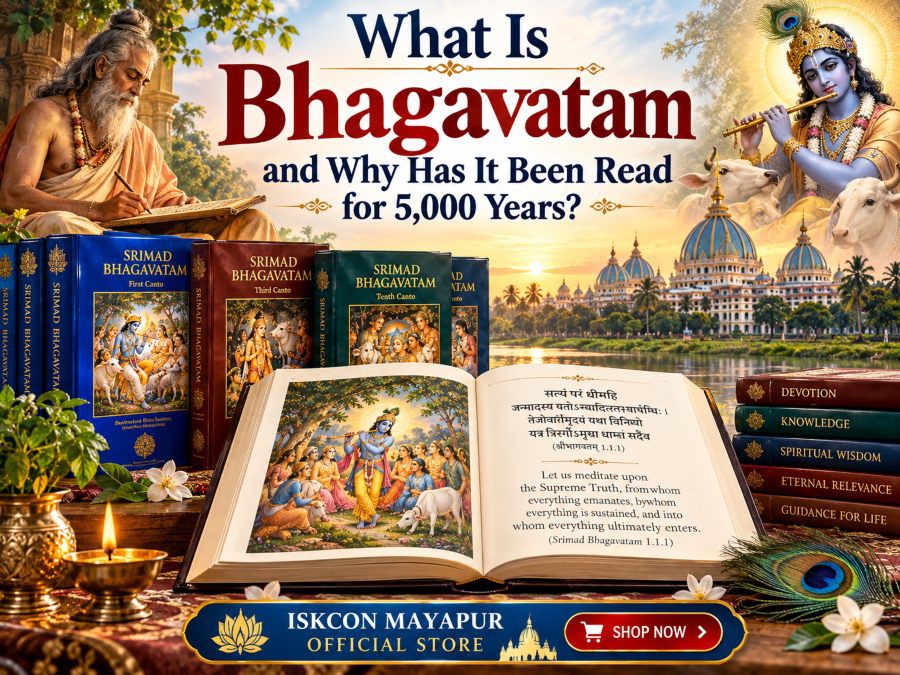 What Is Bhagavatam and Why Has It Been Read for 5,000 Years?Read more
A dying king asked one question, and the answer became the Bhagavatam. Learn what this Sanskrit scripture contains,...
-
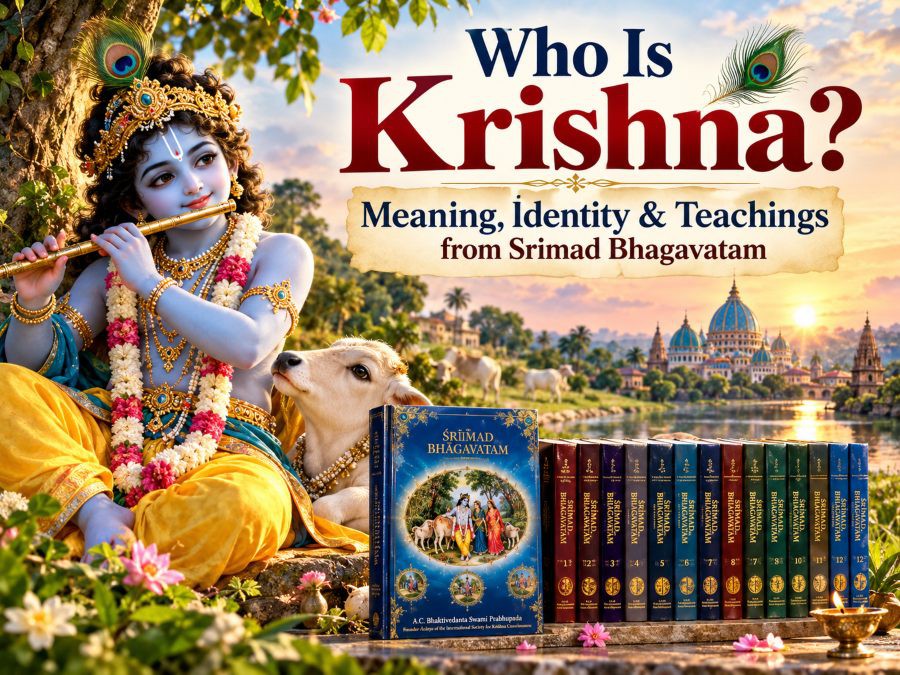 Who Is Lord Krishna? His Meaning, Teachings and Pastimes ExplainedRead more
Discover who Krishna is according to Srimad Bhagavatam, including His divine identity, childhood pastimes, teachings,...
-
 Incense in Islam: Bakhoor, Agarbatti and What Tradition SaysRead more
Is burning fragrance part of Muslim tradition? Explore incense in Islam, from the Prophetic practice of fumigating...
-
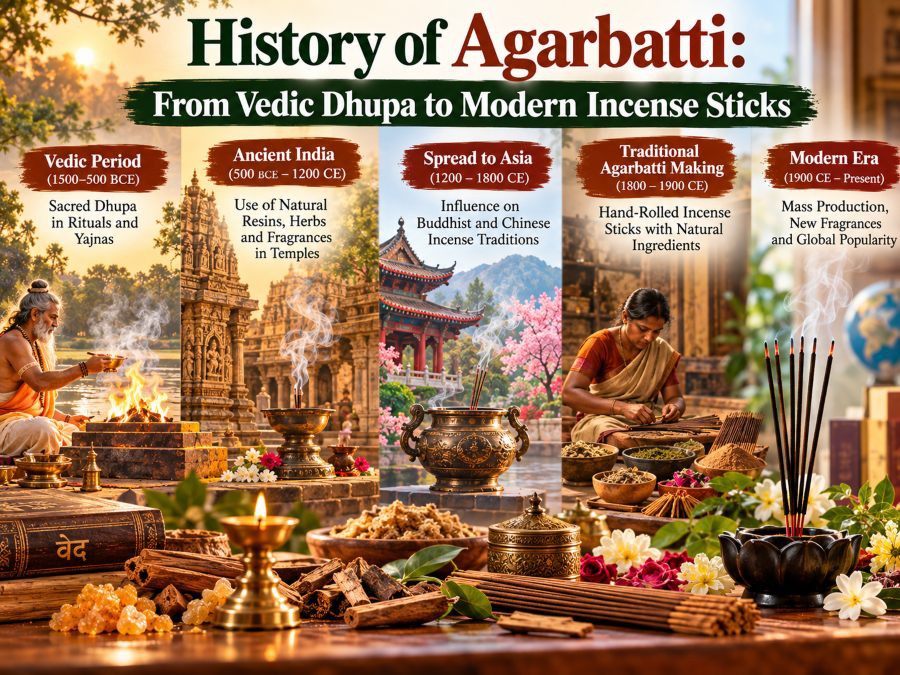 History of Agarbatti: From Vedic Dhupa to Modern Incense SticksRead more
Where did agarbatti really come from? Follow the history of agarbatti from Vedic fire rituals and temple dhupa to...
Blog categories
- Default category (0)
- MUSICAL INSTRUMENT (1)
- BOOK (5)
- DEVOTIONAL GIFT (0)
- Blog (30) click
- CHANDAN (12)
- Bhagavatam Wisdom Series (68)
- Krishna Consciousness (14)
- Mridangam Musical Instrument (6)
- Bhagavad Gita for Beginners (13)
- Bhagavad Gita As It Is (37) click
- Bhagavad Gita As It Is Telugu (0)
- Bhagavad Gita As It Is Marathi (0)
- Bhagavad Gita As It Is In Hindi (0)
- Bhagavad Gita As It Is In English (0)
- Bhagavad Gita As It Is In Bengali (8)
- Bhagavad Gita As It Is In Kannada (0)
- Bhagavad Gita As It Is In Gujarati (0)
- Bhagavad Gita As It Is In Panjabi (0)
- Bhagavad Gita As It Is In Tamil (0)
- Bhagavad Gita As It Is Odia (0)
- BHAGAVAD GITA As It Is GERMAN (0)
- Bhagavad Gita As It Is In French (0)
- Bhagavad Gita As It Is In Nepali (0)
- Bhagavad Gita As It Is In Assamese (0)
- Incense or Agarbatti (38)
- Lord Chaitanya Mahaprabhu (3)
- Vedic Temple Mayapur (14)
- kalki (15)
- Mahabharata – Dharma & Destiny (27)
- Vaishnava Scriptures (4)
- healthy product (4)
- chaitanya mahaprabhu (5)
- Tulsi Mala Guide (17)
Search in blog
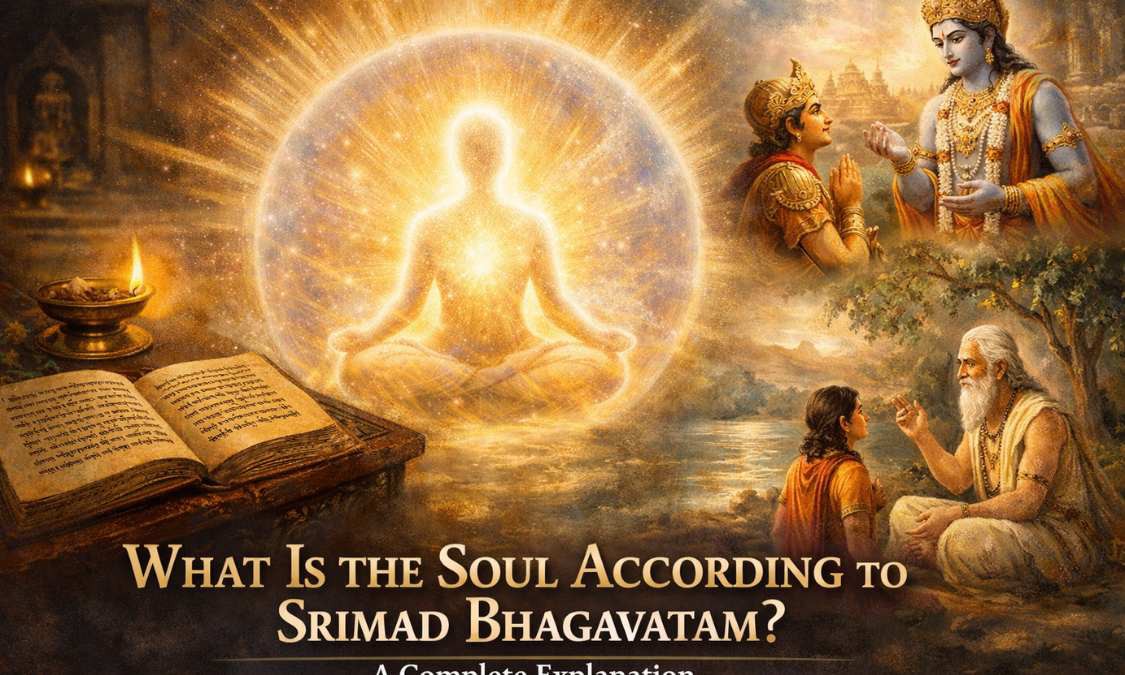
Karma Explained in Srimad Bhagavatam
Karma Explained in Srimad Bhagavatam
Introduction: Why Karma Is Central in the Srimad Bhagavatam
The concept of karma is often misunderstood as blind fate or unavoidable destiny. The Srimad Bhagavatam, however, presents karma as a precise, intelligent, and moral law of the universe, deeply connected to the soul, consciousness, and God.
Rather than promoting fear, the Bhagavatam explains karma to empower the soul—showing how suffering arises, how freedom is possible, and how devotion transcends all reactions.
READ ALSO:- Teachings of Srimad Bhagavatam Explained: Soul, Karma, God & Bhakti
What Is Karma According to the Srimad Bhagavatam?
In the Srimad Bhagavatam, karma literally means action, but its deeper meaning is action combined with inevitable reaction.
Every action performed with intention creates:
- A subtle impression
- A stored reaction
- A future experience
The Bhagavatam teaches that karma operates:
- Automatically
- Impartially
- Without error
There is no randomness in life. Every joy and suffering has a cause rooted in past actions—either in this life or previous ones.
Karma Is Not Fate
Free Will and Responsibility
A powerful teaching of the Srimad Bhagavatam is that karma is not destiny. While past actions shape present conditions, free will exists in every moment.
The Bhagavatam explains:
- Past karma creates situations
- Present choices create future karma
This means:
- You cannot change the past
- But you can change the direction of your life
Understanding karma restores personal responsibility rather than helplessness.
The Relationship Between Soul and Karma
Karma Binds the Soul, Not the Body
According to the Srimad Bhagavatam, karma does not bind the physical body—it binds the soul to repeated birth and death.
The soul:
- Is eternal
- Is conscious
- Is free by nature
But when the soul desires enjoyment separate from God, karma becomes the mechanism of correction and learning.
Thus, karma is not cruel—it is educational.
Types of Karma Explained
The Srimad Bhagavatam explains karma in three main categories:
Sanchita Karma (Accumulated Karma)
All karma collected from countless past lives that has not yet manifested.
Prārabdha Karma (Manifest Karma)
The portion of karma currently being experienced as:
- Birth
- Body
- Family
- Major life events
Kriyamāṇa Karma (Current Actions)
New karma created by present actions, which will bear fruit in the future.
Most people suffer because they:
- Experience old karma
- While creating new karma unconsciously
Good Karma and Bad Karma
Both Bind the Soul
The Srimad Bhagavatam offers a revolutionary insight:
Good karma and bad karma both bind the soul.
- Good karma → pleasure, higher births
- Bad karma → suffering, lower births
But both keep the soul within the cycle of rebirth (saṁsāra).
Thus, moral life alone is not liberation—it is only better imprisonment.
Karma and Rebirth
Why the Soul Takes Repeated Births
According to the Bhagavatam:
- Karma determines the next body
- Desire determines the direction
The soul may take birth as:
- Human
- Animal
- Higher celestial being
Human life is rare because it offers:
- Moral choice
- Self-inquiry
- Liberation
Misusing human life results in continued bondage.
Karma and Suffering
Why Bad Things Happen to Good People
The Srimad Bhagavatam explains that suffering often arises from:
- Past-life karma
- Actions forgotten by the conscious mind
Thus:
- Present goodness does not erase past reactions immediately
- Suffering is not punishment, but consequence
Understanding this removes:
- Blame
- Hatred
- Victim mentality
And replaces them with wisdom and acceptance.
Karma and God’s Role
Is God Responsible for Karma?
The Bhagavatam clarifies that:
- God does not create karma
- God does not desire suffering
- God simply sanctions the law
God is compared to:
- A judge enforcing law
- A neutral witness
- A compassionate guide
The soul chooses; karma responds.
Karma vs Bhakti
Why Bhakti Is Superior
The Srimad Bhagavatam repeatedly declares that bhakti (devotional service) is beyond karma.
- Karma is based on desire
- Bhakti is based on love
Actions performed in devotion:
- Do not create reactions
- Destroy accumulated karma
- Purify consciousness
This is why bhakti is called akarma—action without bondage.
How Bhakti Destroys Karma
Burning the Root
The Bhagavatam teaches that karma is stored as subtle desire. Bhakti works at the root by:
- Changing desire
- Purifying intention
- Awakening love for God
Just as fire burns seeds so they cannot sprout, bhakti burns karma so it cannot produce future suffering.
Karma Yoga vs Bhakti Yoga
Karma Yoga:
- Action with detachment
- Leads to purification
- Still slow and gradual
Bhakti Yoga:
- Action with devotion
- Direct connection with God
- Fastest path to freedom
The Bhagavatam ultimately recommends pure bhakti.
Karma and Material Nature
Three Modes of Nature
The Bhagavatam explains that karma operates under three modes:
- Goodness – clarity, morality
- Passion – desire, ambition
- Ignorance – laziness, violence
Actions performed under different modes create different karmic results.
Bhakti, however, is beyond all three modes.
Karma in Daily Life
Living Wisely With Karma Knowledge
Understanding karma changes daily behavior:
- Less blame
- More responsibility
- Greater patience
- Compassion for others
The Bhagavatam teaches practical living:
- Accept results humbly
- Act righteously
- Offer actions to God
This neutralizes karma gradually.
Can Karma Be Changed?
The Bhagavatam’s Clear Answer
Yes—but not by denial or escape.
Karma changes by:
- Right knowledge
- Conscious action
- Devotional service
Trying to avoid karma without inner change only postpones reactions.
Liberation Beyond Karma
The Ultimate Goal
The Srimad Bhagavatam defines liberation as:
- Freedom from karma
- Freedom from rebirth
- Restoration of the soul’s original nature
The liberated soul:
- Acts without bondage
- Loves without fear
- Serves without expectation
Conclusion: Karma According to the Srimad Bhagavatam
According to the Srimad Bhagavatam, karma is:
- A perfect moral law
- A tool for soul-education
- Neither cruel nor random
But karma is not the final truth.
Beyond karma lies:
- Devotion
- Love
- Eternal freedom
Understanding karma brings responsibility. Practicing bhakti brings liberation.
When the soul rises above selfish action and reconnects with God, karma ends, and real life begins.
Posted in: Bhagavatam Wisdom Series
Related posts
-
 Why to read srimad bhagavatamReading the Srimad Bhagavatam fosters deep spiritual growth by narrating the life and teachings of Lord Krishna,...Read more
 -
 When was srimad bhagavatam written?The Srimad Bhagavatam is believed to have been written around 9th-10th century CE, though its oral traditions date...Read more
 -
 How many chapters are there in srimad bhagavatam?The Srimad Bhagavatam consists of 12 cantos (books) containing 335 chapters in total. Each canto covers various...Read more
 -
 How many skandhas are there in srimad bhagavatamThe Srimad Bhagavatam is divided into 12 skandhas (cantos or books). Each skandha explores different themes,...Read more
 -
 How many slokas in srimad bhagavatamThe Srimad Bhagavatam contains approximately 18,000 shlokas (verses). These verses are spread across its 12 skandhas...Read more
Leave a comment