
Why did Krishna run to embrace a poor brahmin in rags? Read the Sudama story from the Bhagavatam and learn how a...
Latest posts
-
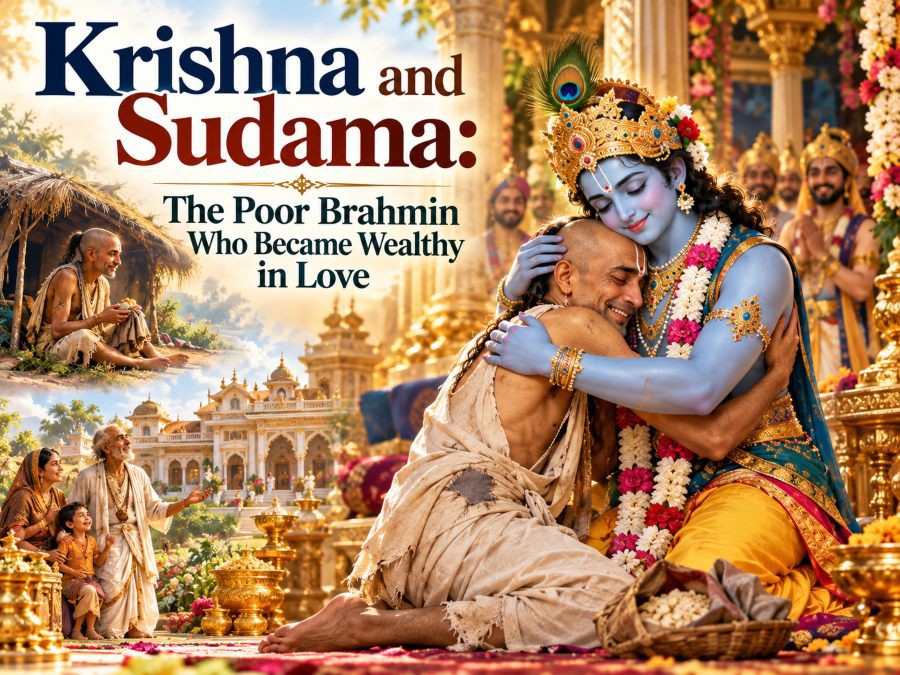 Krishna and Sudama: The Poor Brahmin Who Became Wealthy in LoveRead more
 -
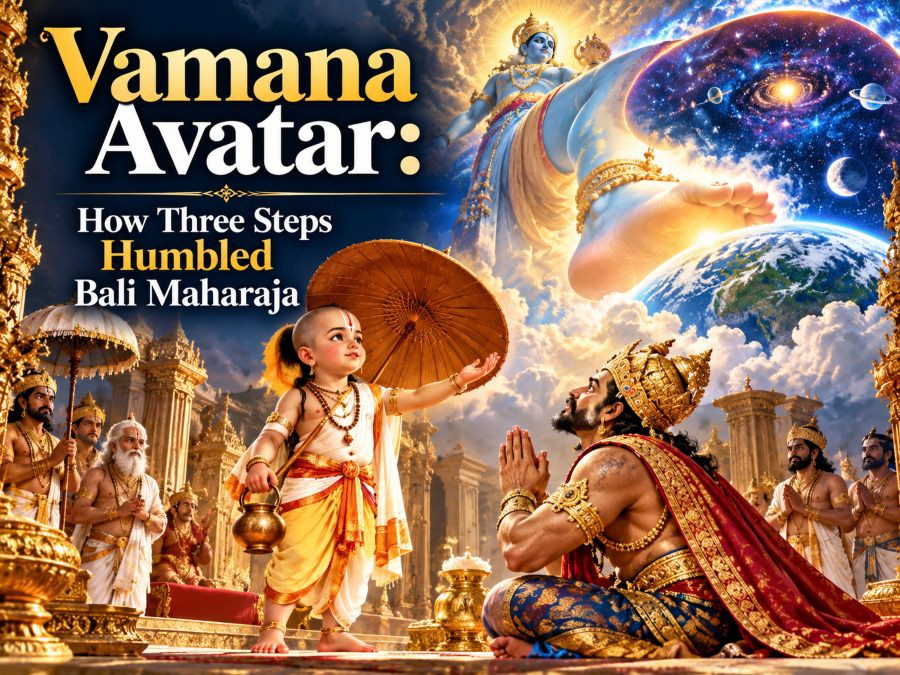 Vamana Avatar: How Three Steps Humbled Bali MaharajaRead more
Why did a powerful king give away three worlds to a boy asking for three steps? Learn the Vamana avatar story from...
-
 The Bhagavatam on Marriage: Duty, Love and Spiritual PartnershipRead more
What does the Bhagavatam say about marriage? Through the stories of Kardama and Devahuti, Rukmini's secret letter and...
-
 What Is Prema? The Bhagavatam's Highest Stage of Love for GodRead more
Prema is love for God with no "because" attached. Learn how the Bhagavatam describes it, the nine steps from faith to...
-
 Is Shiva Parvati Kalyana Mentioned in Srimad Bhagavatam? What the Scripture Really SaysRead more
Looking for Shiva and Parvati's wedding in the Srimad Bhagavatam? Find out what the scripture actually describes,...
-
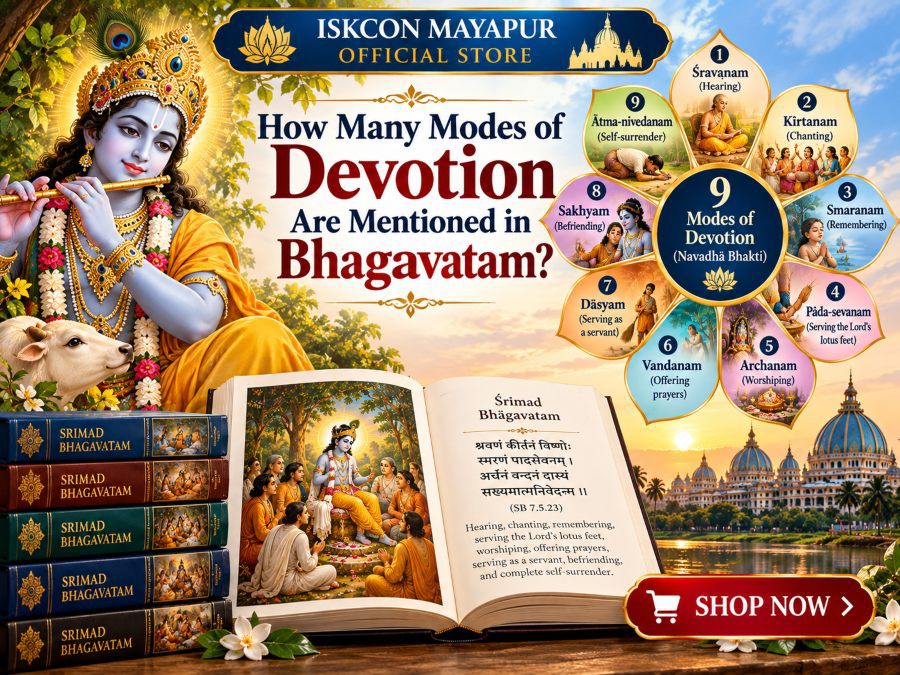 How Many Modes of Devotion Are Mentioned in Bhagavatam?Read more
A young boy named Prahlada listed nine ways to serve God, and the Bhagavatam keeps them as its answer. Learn what the...
-
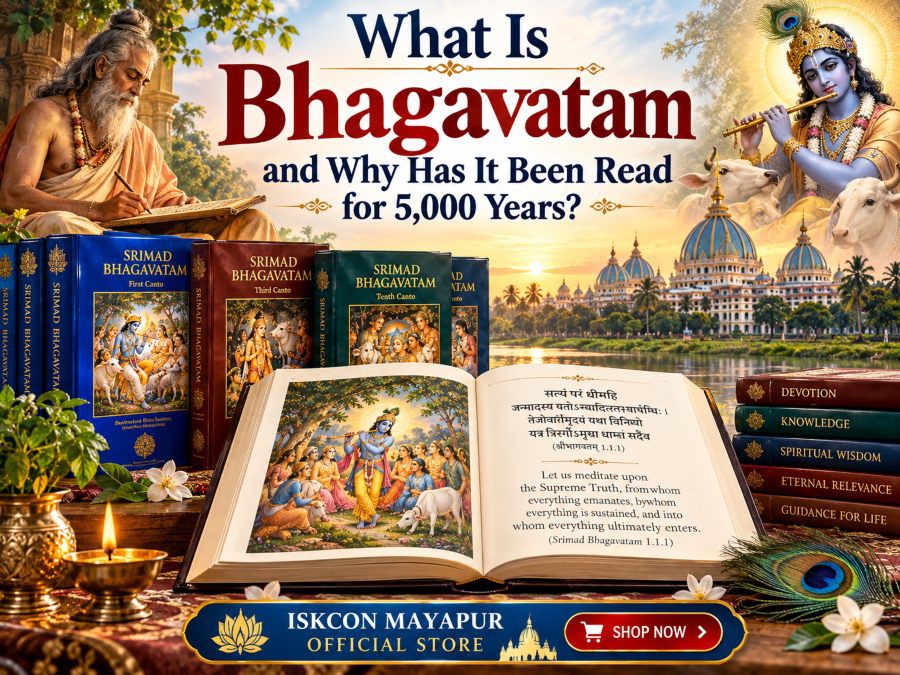 What Is Bhagavatam and Why Has It Been Read for 5,000 Years?Read more
A dying king asked one question, and the answer became the Bhagavatam. Learn what this Sanskrit scripture contains,...
-
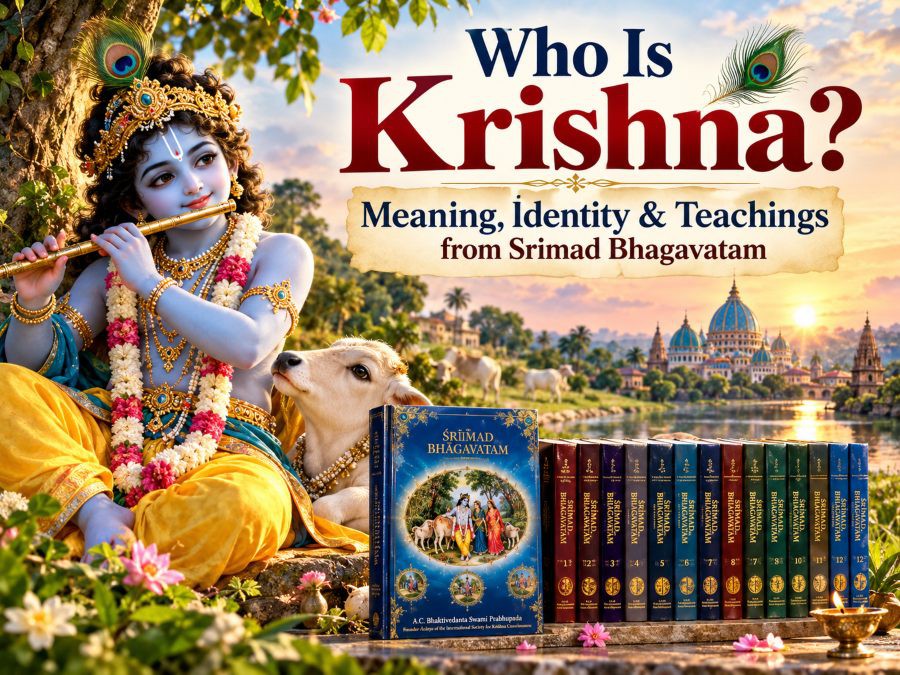 Who Is Lord Krishna? His Meaning, Teachings and Pastimes ExplainedRead more
Discover who Krishna is according to Srimad Bhagavatam, including His divine identity, childhood pastimes, teachings,...
-
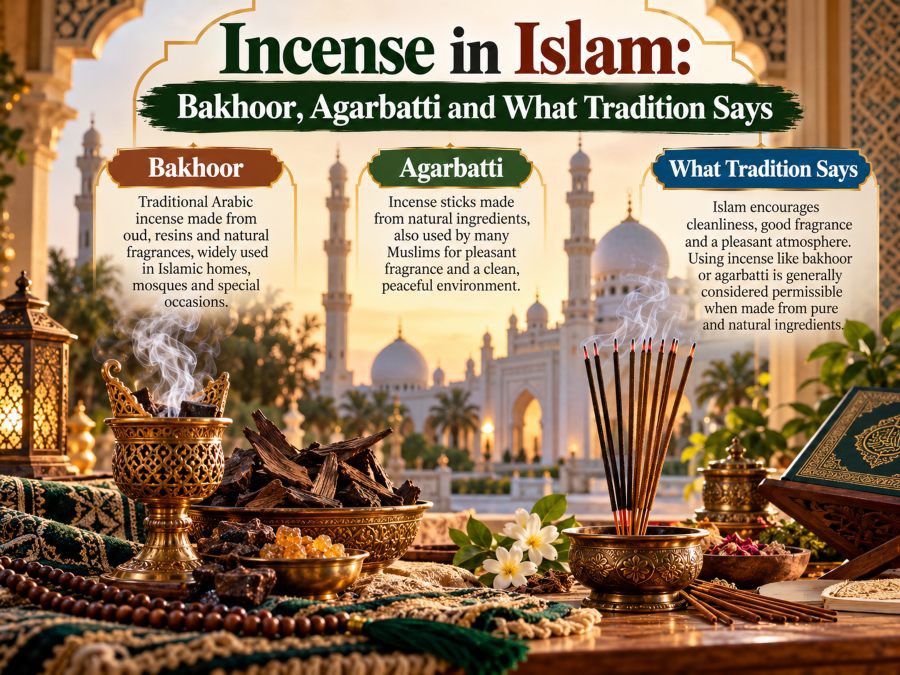 Incense in Islam: Bakhoor, Agarbatti and What Tradition SaysRead more
Is burning fragrance part of Muslim tradition? Explore incense in Islam, from the Prophetic practice of fumigating...
-
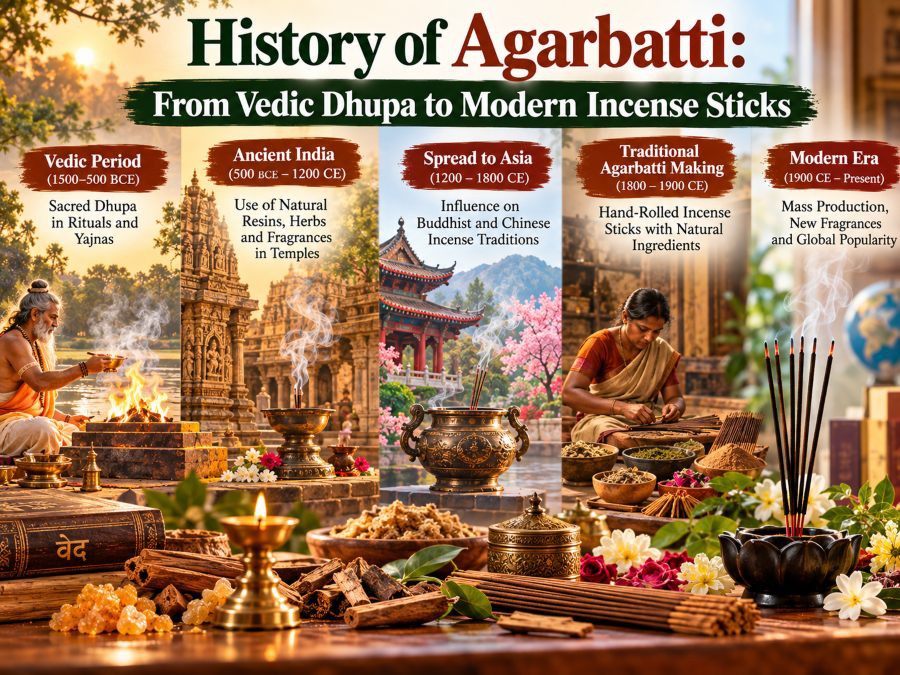 History of Agarbatti: From Vedic Dhupa to Modern Incense SticksRead more
Where did agarbatti really come from? Follow the history of agarbatti from Vedic fire rituals and temple dhupa to...
Blog categories
- Default category (0)
- MUSICAL INSTRUMENT (1)
- BOOK (5)
- DEVOTIONAL GIFT (0)
- Blog (30) click
- CHANDAN (12)
- Bhagavatam Wisdom Series (68)
- Krishna Consciousness (14)
- Mridangam Musical Instrument (6)
- Bhagavad Gita for Beginners (13)
- Bhagavad Gita As It Is (37) click
- Bhagavad Gita As It Is Telugu (0)
- Bhagavad Gita As It Is Marathi (0)
- Bhagavad Gita As It Is In Hindi (0)
- Bhagavad Gita As It Is In English (0)
- Bhagavad Gita As It Is In Bengali (8)
- Bhagavad Gita As It Is In Kannada (0)
- Bhagavad Gita As It Is In Gujarati (0)
- Bhagavad Gita As It Is In Panjabi (0)
- Bhagavad Gita As It Is In Tamil (0)
- Bhagavad Gita As It Is Odia (0)
- BHAGAVAD GITA As It Is GERMAN (0)
- Bhagavad Gita As It Is In French (0)
- Bhagavad Gita As It Is In Nepali (0)
- Bhagavad Gita As It Is In Assamese (0)
- Incense or Agarbatti (38)
- Lord Chaitanya Mahaprabhu (3)
- Vedic Temple Mayapur (14)
- kalki (15)
- Mahabharata – Dharma & Destiny (27)
- Vaishnava Scriptures (4)
- healthy product (4)
- chaitanya mahaprabhu (5)
- Tulsi Mala Guide (17)
Search in blog
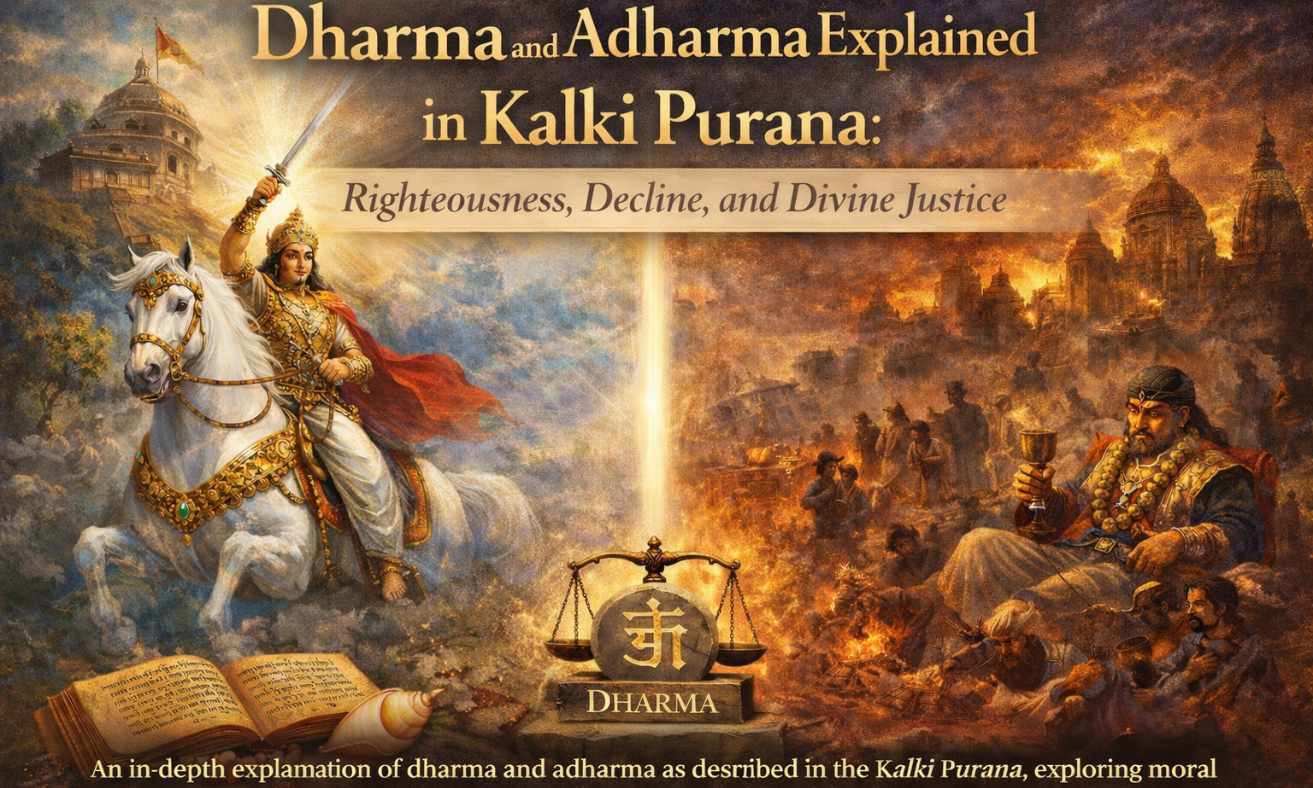
Dharma and Adharma Explained in Kalki Purana: Righteousness, Decline, and Divine Justice
Dharma and Adharma Explained in Sri Kalki Purana
Introduction: Why Dharma and Adharma Are Central in the Kalki Purana
Among Hindu scriptures that describe the moral structure of the universe, the Sri Kalki Purana occupies a unique place. While many texts speak broadly about good and evil, the Kalki Purana focuses sharply on dharma (righteous order) and adharma (moral disorder) in the specific context of Kali Yuga, the age of decline.
The text explains why societies collapse, how injustice becomes normalized, and when divine correction becomes unavoidable. At its core, the Sri Kalki Purana teaches that the battle between dharma and adharma is not merely external—it unfolds within individuals, institutions, and civilizations.
This article provides a of dharma and adharma as explained in the Sri Kalki Purana, revealing their meanings, characteristics, consequences, and relevance for the modern world.
READ ALSO:- Teachings of Sri Kalki Purana: Dharma, Justice, and Divine Restoration
Understanding Dharma in the Sri Kalki Purana
Dharma as Cosmic Order
In the Sri Kalki Purana, dharma is not limited to religion or ritual. It is described as the cosmic principle that sustains existence.
Dharma includes:
- Truthfulness
- Justice
- Compassion
- Moral responsibility
- Alignment with divine will
When dharma is upheld, harmony naturally arises—within individuals and across society.
.jpg)
Dharma Is Dynamic, Not Static
A key teaching of the Kalki Purana is that dharma is contextual, not rigid. While its core values remain eternal, its application adapts to time, place, and circumstance.
For example:
- Dharma for a ruler differs from dharma for a householder
- Dharma in peaceful times differs from dharma in crisis
This flexibility prevents dharma from becoming dogma.
Dharma in Kali Yuga: A Fragile Foundation
The Sri Kalki Purana describes Kali Yuga as an age where dharma:
- Exists in weakened form
- Is easily compromised
- Is often misunderstood
People begin to justify adharma by redefining dharma, which accelerates moral decay.
What Is Adharma According to the Kalki Purana?
Adharma as Rejection of Truth
Adharma is not simply wrongdoing. In the Kalki Purana, adharma is defined as living in opposition to truth and moral responsibility.
Adharma manifests as:
- Exploitation
- Deception
- Abuse of power
- Hypocrisy
- Self-interest over justice
Adharma thrives when accountability disappears.
Adharma Is Often Subtle
One of the most powerful insights of the Sri Kalki Purana is that adharma rarely appears openly at first. It grows subtly through:
- Small compromises
- Rationalized dishonesty
- Silence in the face of injustice
By the time adharma becomes visible, it is often deeply rooted.
The Psychological Roots of Adharma
The Kalki Purana identifies ego and greed as the primary psychological drivers of adharma.
When individuals believe:
- “I am above consequence”
- “My benefit matters more than truth”
- “Power defines right and wrong”
Adharma becomes normalized.
Dharma vs Adharma: A Structural Comparison
Aspect
| Dharma
| Adharma
|
Foundation | Truth and justice | Self-interest and deception |
Impact | Harmony and stability | Chaos and suffering |
Motivation | Responsibility | Greed and ego |
Outcome | Growth and balance | Collapse and correction |
This contrast is central to the Sri Kalki Purana’s moral framework.
Social Consequences of Dharma
According to the Sri Kalki Purana, societies grounded in dharma experience:
- Trust in institutions
- Ethical leadership
- Stable families
- Sustainable prosperity
Dharma acts as social glue, binding individuals through shared values.
Social Consequences of Adharma
Where adharma dominates, the Purana describes inevitable outcomes:
- Corruption in governance
- Breakdown of justice
- Exploitation of the weak
- Loss of faith in truth
Eventually, such societies become self-destructive.
Leadership and the Spread of Adharma
The Sri Kalki Purana places special emphasis on leadership.
It teaches:
- Leaders practicing adharma multiply its effects
- Moral failure at the top accelerates collapse
- Authority without virtue is dangerous
Leadership is portrayed as a sacred trust, not a privilege.
Dharma, Adharma, and Karma
A fundamental teaching of the Kalki Purana is that karma is the mechanism through which dharma and adharma bear results.
- Dharma produces harmony and protection
- Adharma produces suffering and correction
- Time ensures accurate delivery of results
Justice may be delayed, but it is never denied.
Why Divine Intervention Becomes Necessary
The Kalki Purana explains that divine intervention occurs only when:
- Adharma overwhelms social systems
- Human justice becomes ineffective
- Self-correction is no longer possible
This intervention is not punishment—it is cosmic restoration.
Lord Kalki as the Restorer of Dharma
Beyond Destruction
Lord Kalki is often misunderstood as a destroyer. The Sri Kalki Purana clarifies that:
- Destruction is secondary
- Restoration of dharma is primary
Adharma is removed only to allow dharma to flourish again.
Moral Absolutism
Unlike human judges, Lord Kalki:
- Is free from bias
- Is untouched by ego
- Acts with perfect clarity
This makes divine justice fundamentally different from human judgment.
READ ALSO:- Message of Sri Kalki Purana for Kali Yuga Society
Adharma in the Guise of Dharma
One of the most dangerous forms of adharma highlighted in the Kalki Purana is false dharma.
This includes:
- Using religion for power
- Justifying injustice through ideology
- Masking greed as duty
Such distortion is considered more harmful than open immorality.
Individual Responsibility in the Battle of Dharma and Adharma
The Sri Kalki Purana strongly teaches that:
Every individual contributes to the balance of dharma and adharma.
Daily choices matter:
- Truth over convenience
- Fairness over gain
- Integrity over popularity
Even small acts of dharma weaken the grip of adharma.
Dharma as Inner Discipline
The Purana emphasizes that dharma begins internally:
- Control of speech
- Control of desire
- Control of ego
Without inner discipline, external morality collapses into hypocrisy.
Adharma and Fear
A subtle teaching of the Sri Kalki Purana is that adharma thrives on fear:
- Fear of loss
- Fear of exclusion
- Fear of power
Dharma, by contrast, arises from clarity and courage.
Relevance of These Teachings in the Modern World
Modern society reflects many Kali Yuga traits described in the Kalki Purana:
- Ethical relativism
- Power without accountability
- Spiritual confusion
The text offers principles, not rigid rules, making it deeply applicable even today.
Dharma Is Not Weakness
A common misconception addressed by the Sri Kalki Purana is that dharma equals passivity.
The text teaches:
- Dharma requires courage
- Dharma may demand resistance
- Dharma sometimes involves confrontation
True dharma is active responsibility, not silent compliance.
The Ultimate Teaching: Dharma Always Prevails
The Sri Kalki Purana concludes with an unshakable truth:
- Dharma may decline
- Dharma may weaken
- Dharma may be obscured
But dharma can never be destroyed.
When imbalance reaches its peak, restoration becomes inevitable.
Conclusion: Choosing Dharma in the Age of Kali
The Sri Kalki Purana explains dharma and adharma not as abstract ideas, but as living forces shaping human destiny.
It teaches that:
- Adharma leads to collapse
- Dharma leads to renewal
- Divine justice restores balance
In Kali Yuga, the choice between dharma and adharma is more subtle—but more important—than ever.
By choosing truth, responsibility, and integrity, individuals align themselves with the very force that sustains the universe.
Posted in: Kalki
Related posts
-
 When Kalki Will Be Born: The Final Avatar of Lord VishnuLord Kalki, Vishnu’s final avatar, is prophesied to appear at the end of Kali Yuga to destroy evil and restore...Read more
 -
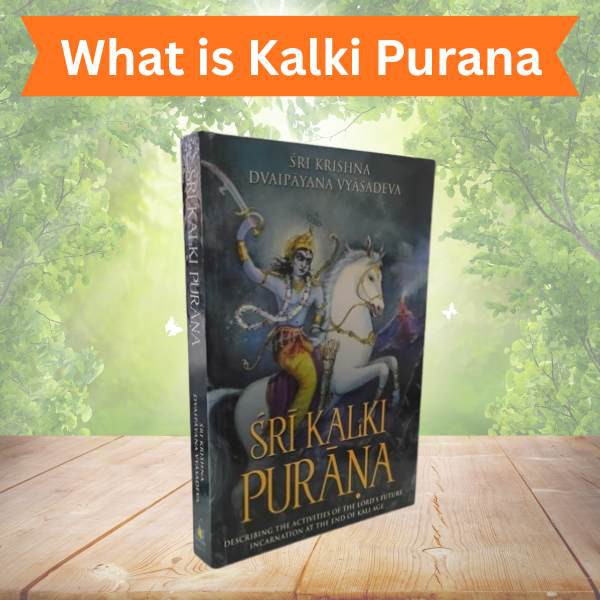 What Is the Kalki Purana? The Kalki Purana describes the prophecy of Lord Kalki, His appearance, mission, battles, and role in ending Kali...Read more
 -
 How Old Is Kalki Purana? Explore the true age of the Kalki Purana—its origins, history, and prophecy. Learn traditional beliefs, scholarly...Read more
 -
 When Will Kalki Come? This article explains when Kalki Avatar will appear, what the scriptures say about His arrival, signs of Kali Yuga,...Read more
 -
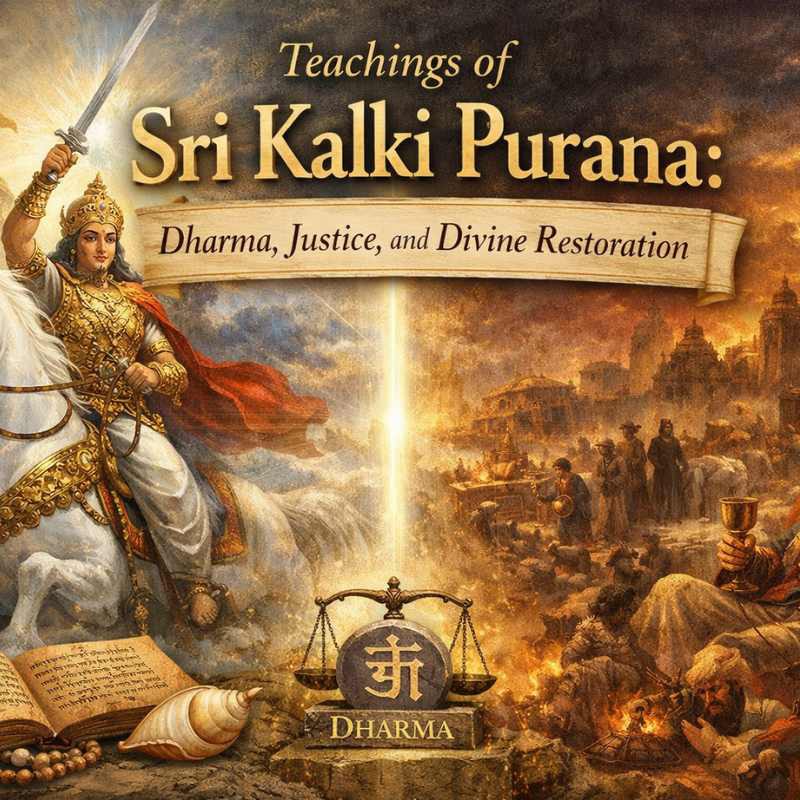 Teachings of Sri Kalki Purana: Dharma, Justice, and Divine RestorationAn in-depth article explaining the teachings of the Sri Kalki Purana, highlighting dharma, divine justice, and the...Read more
Leave a comment