
Explore Srimad Bhagavatam Canto 11, where Lord Krishna shares His final and most profound teachings with Uddhava on...
Latest posts
-
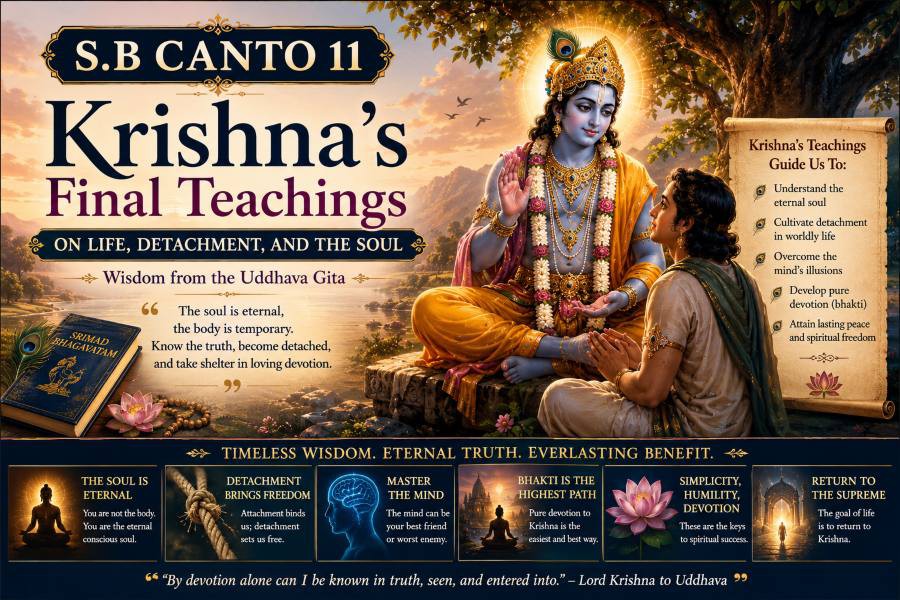 S.B Canto 11 — Krishna’s Final Teachings on Life, Detachment, and the SoulRead more
 -
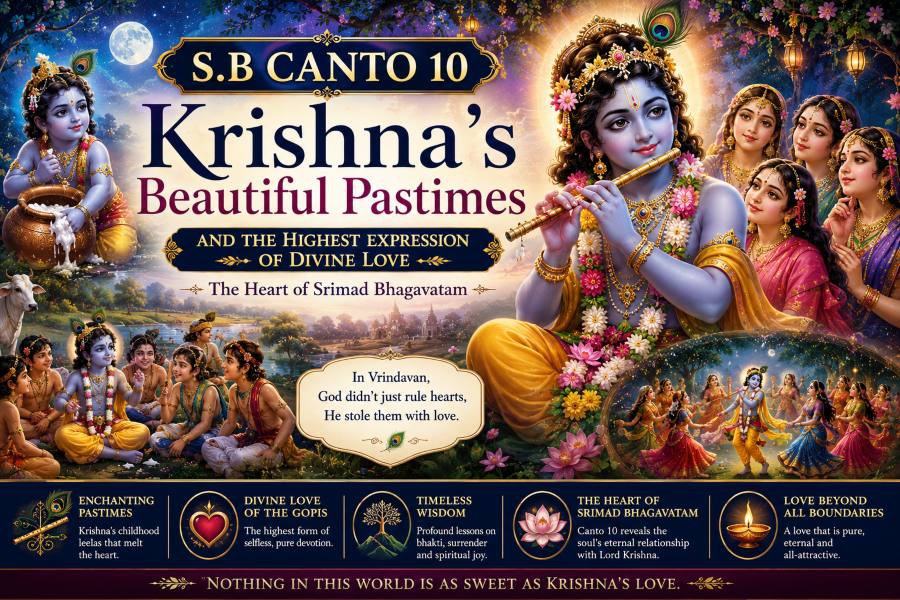 S.B Canto 10 — Krishna’s Beautiful Pastimes and the Highest Expression of Divine LoveRead more
Explore Srimad Bhagavatam Canto 10, the heart of the Bhagavatam, where Lord Krishna's enchanting childhood pastimes,...
-
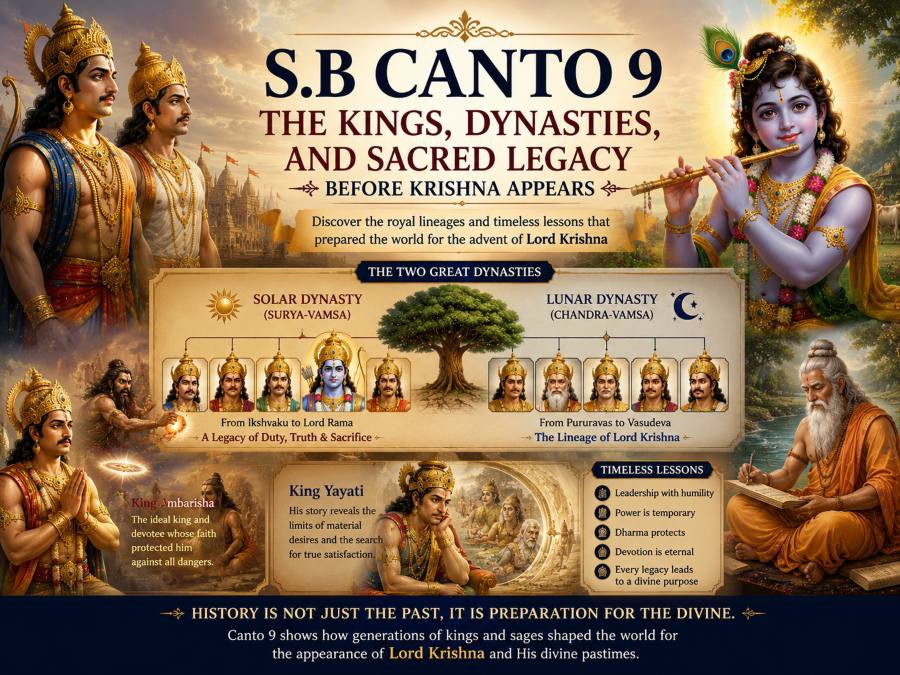 S.B Canto 9: The Kings, Dynasties, and Sacred Legacy Before Krishna AppearsRead more
Explore Srimad Bhagavatam Canto 9 and uncover the remarkable stories of ancient kings, royal dynasties, and sacred...
-
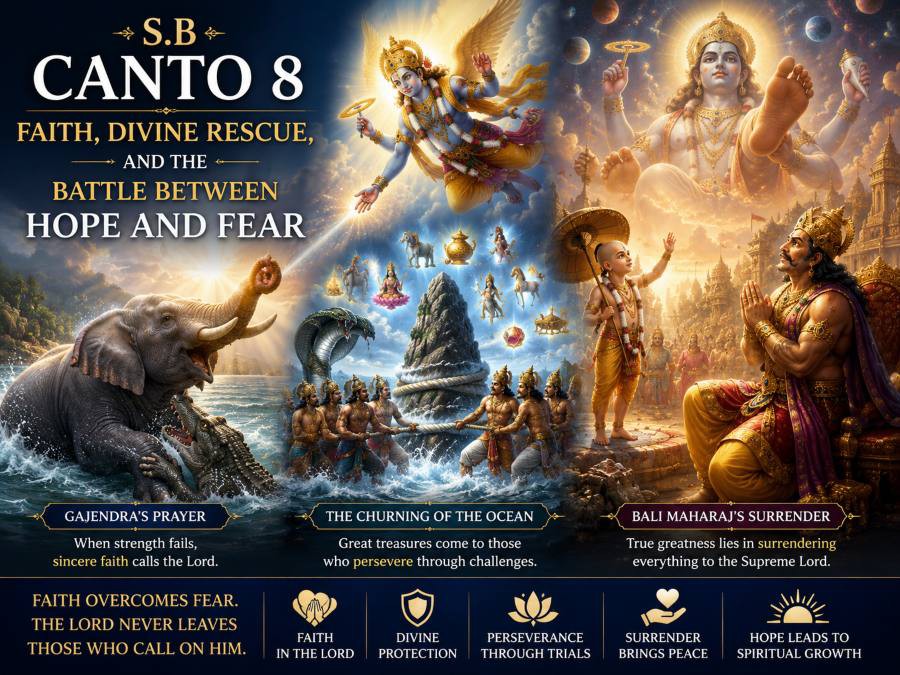 Srimad Bhagavatam Canto 8: How Faith Triumphs Over FearRead more
Explore Srimad Bhagavatam Canto 8, where the inspiring stories of Gajendra, the churning of the Milk Ocean, and Bali...
-
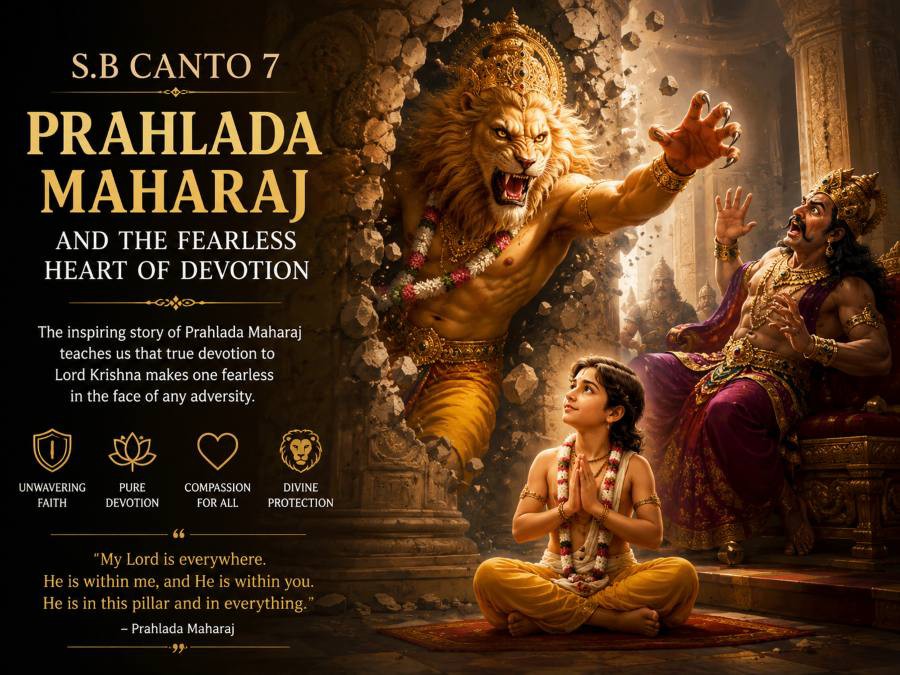 S.B Canto 7: Prahlada Maharaj and the Fearless Heart of DevotionRead more
Explore Srimad Bhagavatam Canto 7 and discover the inspiring story of Prahlada Maharaj, whose unwavering devotion to...
-
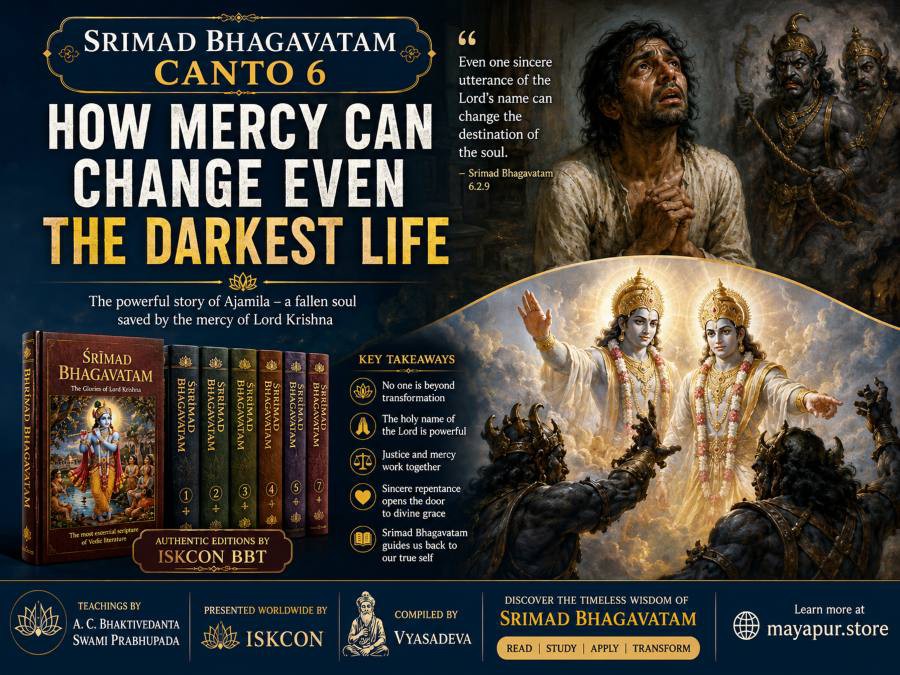 S.B Canto 6: How Mercy Can Change Even the Darkest LifeRead more
Discover the inspiring lessons of Srimad Bhagavatam Canto 6, where the story of Ajamila reveals how divine mercy,...
-
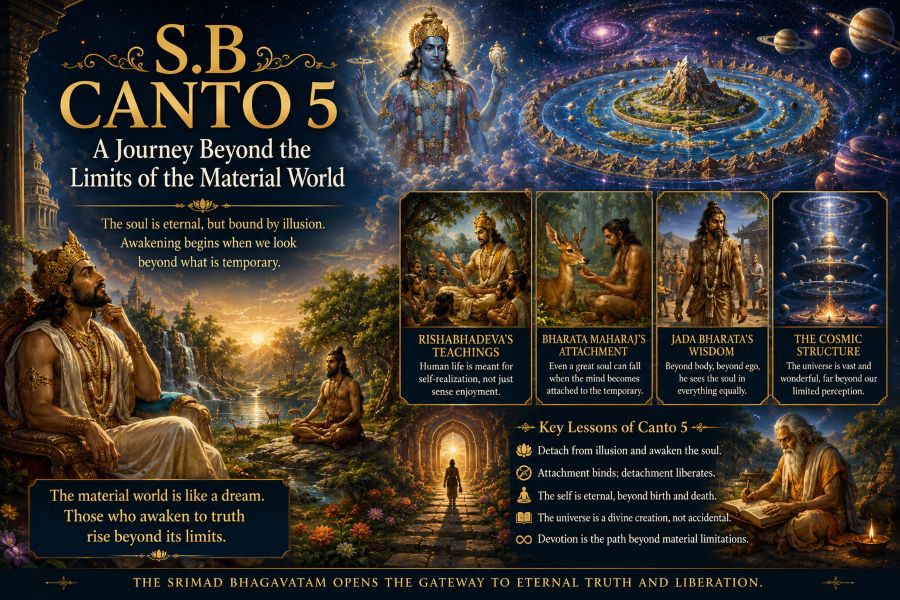 Srimad Bhagavatam Canto 5: A Journey Beyond the Limits of the Material WorldRead more
Discover how Srimad Bhagavatam Canto 5 explores cosmic creation, spiritual awakening, material illusion, and the...
-
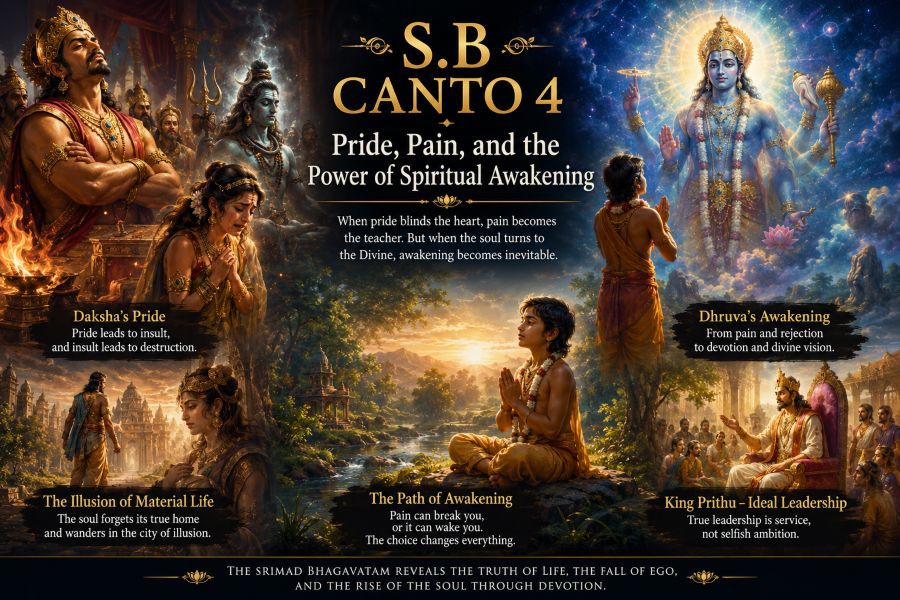 Srimad Bhagavatam Canto 4: The Pain of Pride and the Journey Back to the SoulRead more
Discover how Srimad Bhagavatam Canto 4 explores pride, rejection, devotion, spiritual awakening, and the emotional...
-
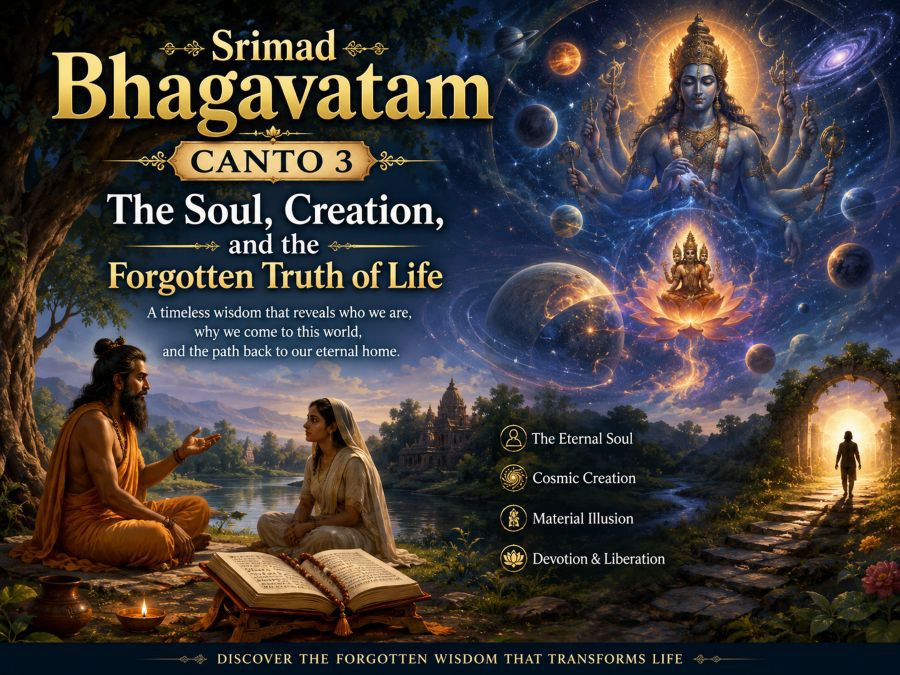 Srimad Bhagavatam Canto 3: The Soul, Creation, and the Forgotten Truth of LifeRead more
Discover how Srimad Bhagavatam Canto 3 explains the soul, creation, consciousness, and the forgotten spiritual truth...
-
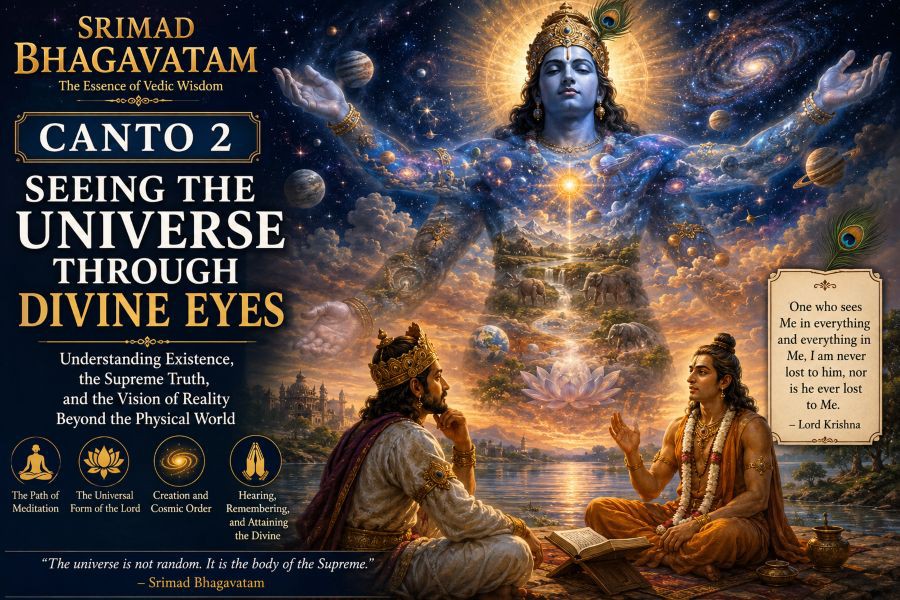 Srimad Bhagavatam Canto 2: Seeing the Universe Through Divine EyesRead more
Discover how Srimad Bhagavatam Canto 2 explains the cosmic form of the Lord, spiritual vision, meditation, creation,...
Blog categories
- Default category (0)
- MUSICAL INSTRUMENT (1)
- BOOK (5)
- DEVOTIONAL GIFT (0)
- Blog (30) click
- CHANDAN (12)
- Bhagavatam Wisdom Series (43)
- Krishna Consciousness (5)
- Mridangam Musical Instrument (6)
- Bhagavad Gita for Beginners (13)
- Bhagavad Gita As It Is (13) click
- Bhagavad Gita As It Is Telugu (0)
- Bhagavad Gita As It Is Marathi (0)
- Bhagavad Gita As It Is In Hindi (0)
- Bhagavad Gita As It Is In English (0)
- Bhagavad Gita As It Is In Bengali (8)
- Bhagavad Gita As It Is In Kannada (0)
- Bhagavad Gita As It Is In Gujarati (0)
- Bhagavad Gita As It Is In Panjabi (0)
- Bhagavad Gita As It Is In Tamil (0)
- Bhagavad Gita As It Is Odia (0)
- BHAGAVAD GITA As It Is GERMAN (0)
- Bhagavad Gita As It Is In French (0)
- Bhagavad Gita As It Is In Nepali (0)
- Bhagavad Gita As It Is In Assamese (0)
- Incense or Agarbatti (6)
- Lord Chaitanya Mahaprabhu (3)
- Vedic Temple Mayapur (16)
- kalki (15)
- Mahabharata – Dharma & Destiny (27)
- Vaishnava Scriptures (4)
- healthy product (4)
- chaitanya mahaprabhu (5)
Search in blog
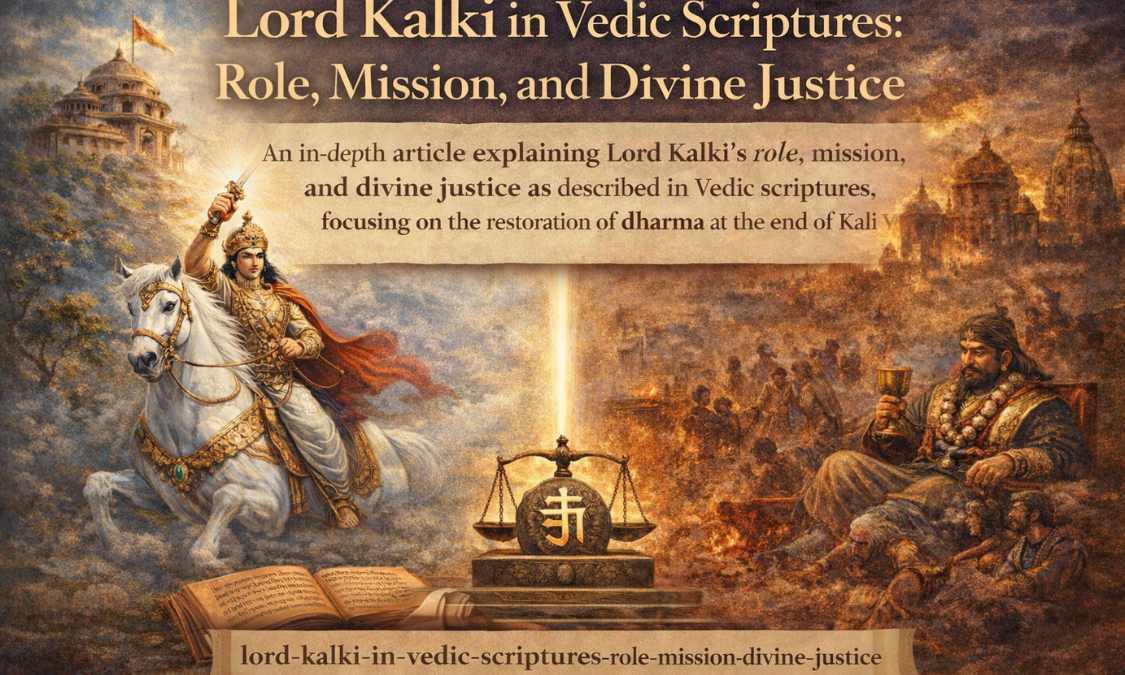
Lord Kalki in Vedic Scriptures: Role, Mission, and Divine Justice Explained
Lord Kalki in Vedic Scriptures: Role, Mission, and Divine Justice
Introduction: Why Lord Kalki Matters in Vedic Thought
Among the many divine manifestations described in Vedic literature, Lord Kalki occupies a unique and powerful position. Unlike other incarnations associated with past ages, Lord Kalki is directly connected to the future of humanity and the moral destiny of the world. His appearance is not symbolic mythology but a scriptural assurance of divine justice when injustice reaches its peak.
Vedic scriptures do not present Lord Kalki as a figure of fear alone. Instead, they portray Him as the final restorer of dharma, the embodiment of absolute justice, and the divine response to irreversible moral collapse. His role is corrective, His mission restorative, and His justice perfect.
This article offers a explanation of Lord Kalki’s role, mission, and divine justice as described in Vedic scriptures, with special emphasis on the Sri Kalki Purana and related Vedic understanding.
Lord Kalki in the Framework of Vedic Scriptures
Kalki as the Final Avatar
Vedic tradition describes a cycle of ages (Yugas), each witnessing the gradual decline of righteousness. Lord Kalki is described as the tenth and final avatar of Lord Vishnu, appearing at the end of Kali Yuga, the age of moral darkness.
Unlike earlier incarnations who appeared to solve specific crises, Kalki’s mission is global and decisive—to reset the moral balance of the entire world.
.jpg)
Scriptural Sources That Describe Lord Kalki
Lord Kalki is described across multiple Vedic and post-Vedic texts, with the most detailed accounts found in:
- Sri Kalki Purana
- Vishnu-related Puranic literature
- Eschatological sections of Vedic cosmology
Among these, the Sri Kalki Purana Book provides the most focused narrative on His role, mission, and actions.
Understanding the Role of Lord Kalki
Restorer of Dharma
The primary role of Lord Kalki is dharma-sthapanā—the re-establishment of righteousness. According to Vedic scriptures, dharma is not destroyed suddenly; it erodes slowly through compromise, corruption, and silence.
When:
- Truth is rejected
- Justice is manipulated
- Power replaces morality
Divine correction becomes necessary. Lord Kalki fulfills this role.
Moral Reset, Not Random Destruction
A crucial teaching of Vedic scriptures is that Lord Kalki does not destroy indiscriminately. His role is surgical, not chaotic.
- Adharma is removed
- Dharma is protected
- The righteous are safeguarded
This makes His role judicial, not violent.
The Mission of Lord Kalki Explained
Why the Mission Becomes Necessary
According to Vedic understanding, divine intervention occurs only when human systems fail completely.
Lord Kalki’s mission begins when:
- Justice systems collapse
- Moral authority disappears
- Society loses the ability to self-correct
His mission represents the last stage of correction, not the first response.
Three Core Objectives of His Mission
Vedic scriptures outline three clear objectives:
1. Elimination of entrenched adharma
2. Protection of dharmic individuals
3. Preparation for the next Satya Yuga
Thus, His mission is not an end—but a transition.
Divine Justice According to Vedic Scriptures
Justice Beyond Human Bias
Human justice is limited by:
- Emotion
- Power structures
- Corruption
Divine justice, as represented by Lord Kalki, is:
- Impartial
- Timely
- Absolute
The Vedic view emphasizes that no action escapes consequence, even if delayed.
Karma as the Instrument of Justice
Lord Kalki does not act arbitrarily. His justice aligns perfectly with karma:
- Accumulated collective karma triggers intervention
- Individual karma determines outcome
- Time delivers justice precisely
Thus, divine justice is mathematically exact, not emotional.
Lord Kalki as a Warrior of Truth
Symbolism of the White Horse
Vedic scriptures describe Lord Kalki riding a white horse, symbolizing:
- Purity
- Speed of justice
- Moral clarity
The sword He carries represents truth cutting through illusion, not aggression.
Warrior With Moral Authority
Unlike human warriors driven by ambition, Lord Kalki:
- Is untouched by ego
- Acts without hatred
- Operates with divine detachment
This distinguishes divine justice from human violence.
Lord Kalki and the Concept of Fear
A key teaching in Vedic scriptures is that:
- The righteous need not fear Lord Kalki
- Only persistent adharma faces destruction
Fear is not His tool—truth is.
Relationship Between Lord Kalki and Kali Yuga Society
A Mirror to Human Choices
Lord Kalki does not arrive suddenly without warning. Kali Yuga society creates the conditions for His arrival.
Every act of:
- Corruption tolerated
- Injustice ignored
- Truth compromised
Contributes to collective karma.
Accountability, Not Fatalism
Vedic scriptures strongly reject fatalism. The coming of Lord Kalki is not destiny imposed—it is consequence accumulated.
Protection of the Righteous
One of the most reassuring aspects of Lord Kalki’s mission is divine protection.
The Vedic texts emphasize:
- Righteous individuals are preserved
- Devotion acts as spiritual shelter
- Dharma is never abandoned completely
This reinforces hope rather than fear.
Lord Kalki Compared to Other Avatars
While all avatars restore balance, Lord Kalki’s uniqueness lies in:
- Scale of mission (global)
- Timing (end of a cosmic cycle)
- Finality (transition to new age)
His role completes a cycle rather than correcting a phase.
Divine Justice vs Revenge
A critical distinction made in Vedic scriptures:
- Divine justice is corrective
- Revenge is emotional
Lord Kalki embodies law, not anger.
Ethical Message for Modern Humanity
The Vedic description of Lord Kalki carries a strong ethical warning:
- No civilization escapes moral law
- Power without ethics collapses
- Justice delayed is not justice denied
This message is deeply relevant today.
Individual Responsibility in the Age of Kali
Even though Lord Kalki’s mission is cosmic, Vedic scriptures stress individual responsibility.
Each person can:
- Choose truth
- Resist corruption
- Practice integrity
Such actions delay moral collapse and strengthen dharma.
Why Lord Kalki Represents Hope, Not Despair
Despite dramatic imagery, Lord Kalki symbolizes:
- Renewal
- Restoration
- Moral clarity
His arrival ensures that darkness is temporary.
The Transition to a New Age
According to Vedic cosmology, Lord Kalki’s mission culminates in:
- End of Kali Yuga
- Beginning of Satya Yuga
- Restoration of truth as natural law
This transition marks spiritual rebirth, not annihilation.
Relevance of Lord Kalki in the Modern World
Modern society reflects many Kali Yuga traits:
- Ethical relativism
- Institutional corruption
- Spiritual confusion
The teachings surrounding Lord Kalki act as a moral compass, not a doomsday narrative.
The Ultimate Vedic Message
Vedic scriptures present Lord Kalki as:
- Inevitable justice
- Moral correction
- Divine responsibility
He reminds humanity that truth governs existence, not power.
Conclusion: Lord Kalki as the Guardian of Cosmic Order
The Vedic portrayal of Lord Kalki is profound and balanced. He is neither a myth nor a threat—but a cosmic necessity when moral systems collapse entirely.
His role restores balance.
His mission renews hope.
His justice completes the moral cycle.
In the Vedic worldview, Lord Kalki stands as the final assurance that dharma, though weakened, is never defeated.
Posted in: Kalki
Related posts
-
 When Kalki Will Be Born: The Final Avatar of Lord VishnuLord Kalki, Vishnu’s final avatar, is prophesied to appear at the end of Kali Yuga to destroy evil and restore...Read more
 -
 What Is the Kalki Purana? The Kalki Purana describes the prophecy of Lord Kalki, His appearance, mission, battles, and role in ending Kali...Read more
 -
 How Old Is Kalki Purana? Explore the true age of the Kalki Purana—its origins, history, and prophecy. Learn traditional beliefs, scholarly...Read more
 -
 When Will Kalki Come? This article explains when Kalki Avatar will appear, what the scriptures say about His arrival, signs of Kali Yuga,...Read more
 -
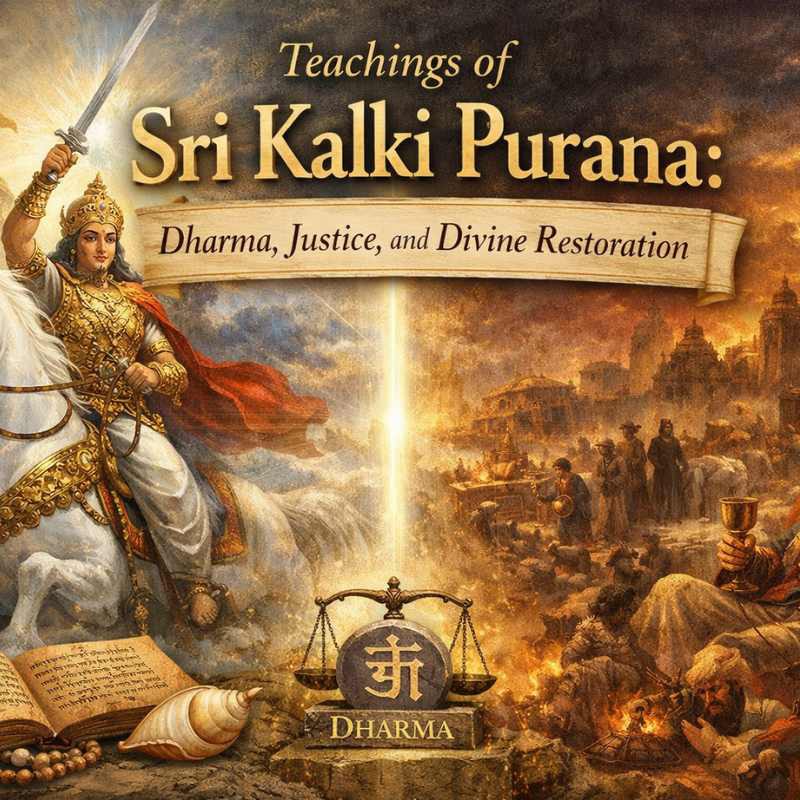 Teachings of Sri Kalki Purana: Dharma, Justice, and Divine RestorationAn in-depth article explaining the teachings of the Sri Kalki Purana, highlighting dharma, divine justice, and the...Read more
Leave a comment