
Why did Krishna run to embrace a poor brahmin in rags? Read the Sudama story from the Bhagavatam and learn how a...
Latest posts
-
 Krishna and Sudama: The Poor Brahmin Who Became Wealthy in LoveRead more
 -
 Vamana Avatar: How Three Steps Humbled Bali MaharajaRead more
Why did a powerful king give away three worlds to a boy asking for three steps? Learn the Vamana avatar story from...
-
 The Bhagavatam on Marriage: Duty, Love and Spiritual PartnershipRead more
What does the Bhagavatam say about marriage? Through the stories of Kardama and Devahuti, Rukmini's secret letter and...
-
 What Is Prema? The Bhagavatam's Highest Stage of Love for GodRead more
Prema is love for God with no "because" attached. Learn how the Bhagavatam describes it, the nine steps from faith to...
-
 Is Shiva Parvati Kalyana Mentioned in Srimad Bhagavatam? What the Scripture Really SaysRead more
Looking for Shiva and Parvati's wedding in the Srimad Bhagavatam? Find out what the scripture actually describes,...
-
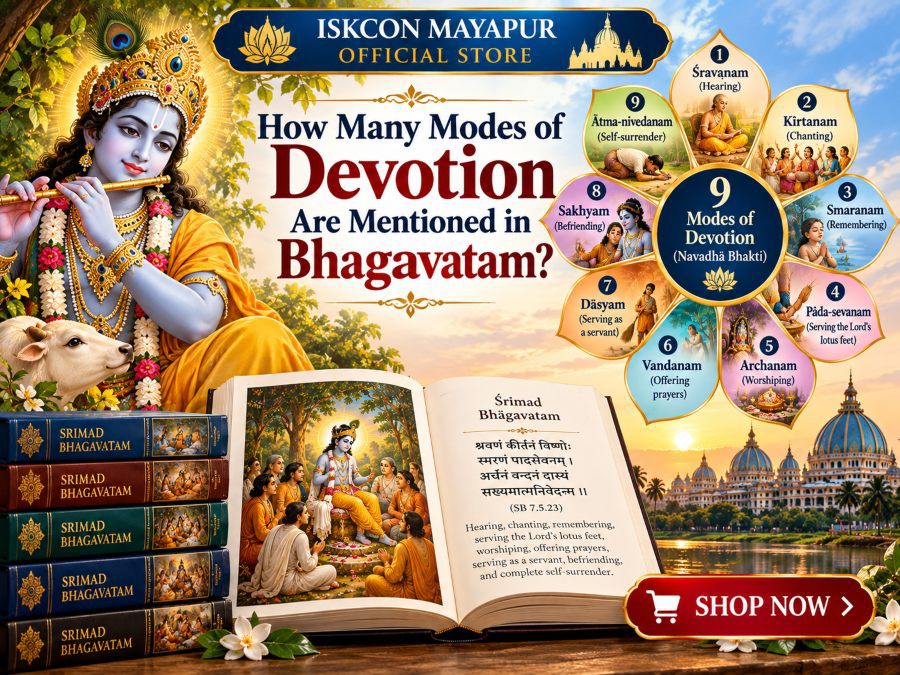 How Many Modes of Devotion Are Mentioned in Bhagavatam?Read more
A young boy named Prahlada listed nine ways to serve God, and the Bhagavatam keeps them as its answer. Learn what the...
-
 What Is Bhagavatam and Why Has It Been Read for 5,000 Years?Read more
A dying king asked one question, and the answer became the Bhagavatam. Learn what this Sanskrit scripture contains,...
-
 Who Is Lord Krishna? His Meaning, Teachings and Pastimes ExplainedRead more
Discover who Krishna is according to Srimad Bhagavatam, including His divine identity, childhood pastimes, teachings,...
-
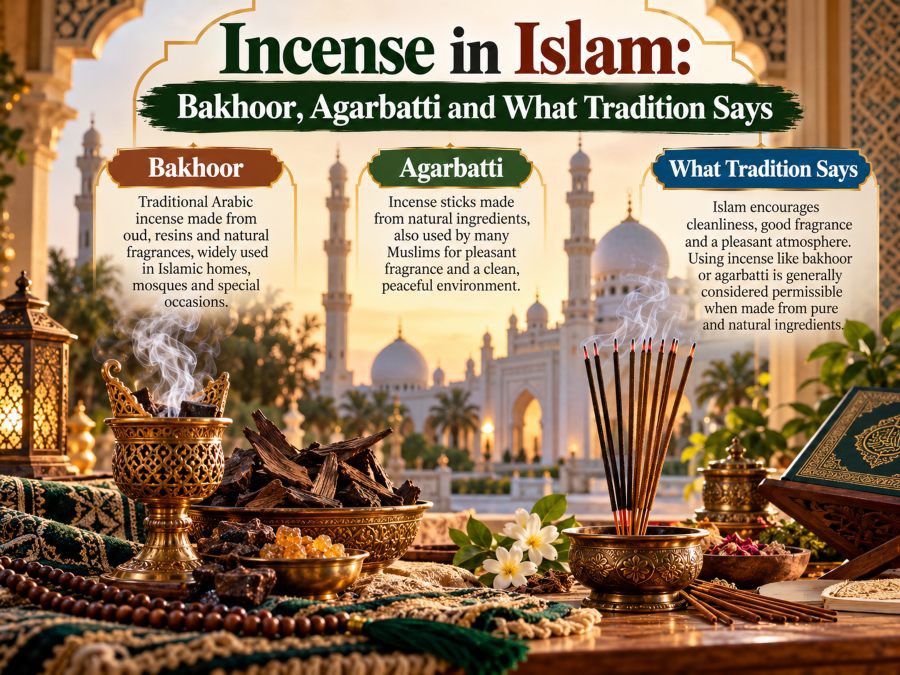 Incense in Islam: Bakhoor, Agarbatti and What Tradition SaysRead more
Is burning fragrance part of Muslim tradition? Explore incense in Islam, from the Prophetic practice of fumigating...
-
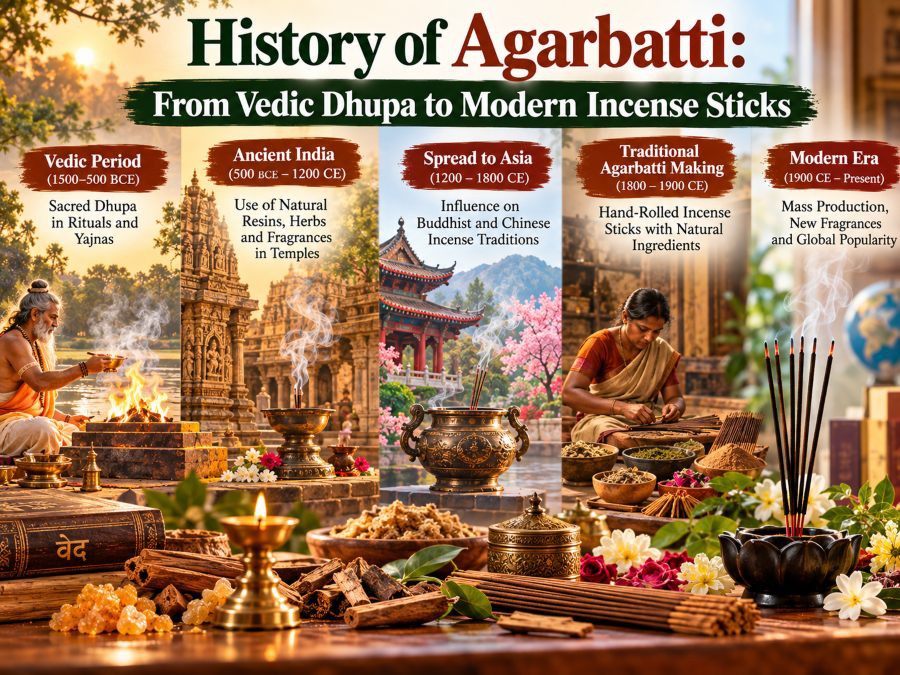 History of Agarbatti: From Vedic Dhupa to Modern Incense SticksRead more
Where did agarbatti really come from? Follow the history of agarbatti from Vedic fire rituals and temple dhupa to...
Blog categories
- Default category (0)
- MUSICAL INSTRUMENT (1)
- BOOK (5)
- DEVOTIONAL GIFT (0)
- Blog (30) click
- CHANDAN (12)
- Bhagavatam Wisdom Series (68)
- Krishna Consciousness (14)
- Mridangam Musical Instrument (6)
- Bhagavad Gita for Beginners (13)
- Bhagavad Gita As It Is (37) click
- Bhagavad Gita As It Is Telugu (0)
- Bhagavad Gita As It Is Marathi (0)
- Bhagavad Gita As It Is In Hindi (0)
- Bhagavad Gita As It Is In English (0)
- Bhagavad Gita As It Is In Bengali (8)
- Bhagavad Gita As It Is In Kannada (0)
- Bhagavad Gita As It Is In Gujarati (0)
- Bhagavad Gita As It Is In Panjabi (0)
- Bhagavad Gita As It Is In Tamil (0)
- Bhagavad Gita As It Is Odia (0)
- BHAGAVAD GITA As It Is GERMAN (0)
- Bhagavad Gita As It Is In French (0)
- Bhagavad Gita As It Is In Nepali (0)
- Bhagavad Gita As It Is In Assamese (0)
- Incense or Agarbatti (38)
- Lord Chaitanya Mahaprabhu (3)
- Vedic Temple Mayapur (14)
- kalki (15)
- Mahabharata – Dharma & Destiny (27)
- Vaishnava Scriptures (4)
- healthy product (4)
- chaitanya mahaprabhu (5)
- Tulsi Mala Guide (17)
Search in blog
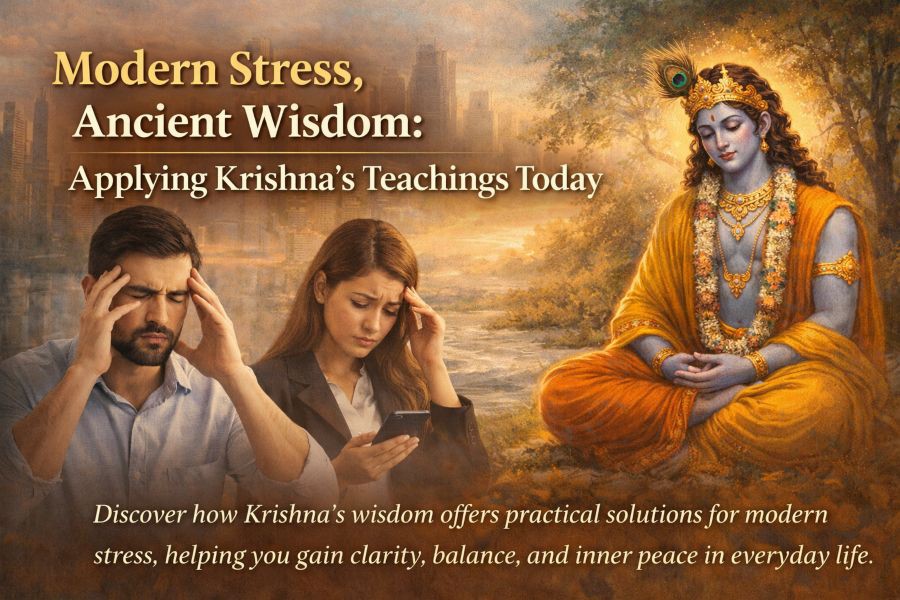
Modern Stress, Ancient Wisdom: Applying Krishna’s Teachings Today
Modern Struggles, Ancient Solutions: Applying Krishna’s Wisdom to 21st-Century Stress
In today’s fast-moving world, stress has become almost unavoidable. Deadlines, financial pressures, relationship challenges, and constant digital distractions create a mental environment where peace feels distant. While modern solutions often focus on temporary relief, ancient wisdom offers something deeper—clarity, balance, and inner strength. For those seeking a more meaningful approach to life, it is helpful to Dive into the Divine Leelas of Krsna, where timeless teachings reveal practical ways to navigate modern stress.
The teachings of Bhagavad Gita are especially relevant in this context. Spoken by Krishna on the battlefield of Kurukshetra, they address a situation filled with confusion, fear, and emotional conflict—much like the challenges people face today. The Gita does not remove life’s difficulties; instead, it provides the mindset needed to face them with clarity and strength.
Modern Stress: Why It Feels Overwhelming
Stress in the 21st century is not just about physical workload—it is deeply psychological. People are constantly comparing themselves to others, worrying about the future, and feeling pressure to meet expectations.
Technology, while beneficial, has intensified this experience. Social media creates unrealistic standards, and constant connectivity prevents the mind from resting. As a result, individuals often feel:
- Mentally exhausted
- Emotionally unstable
- Disconnected from purpose
- Overwhelmed by choices
Krishna’s teachings begin by addressing the root cause of this stress: misidentification with temporary situations. When individuals define themselves by external success or failure, their peace becomes dependent on unstable factors.
The solution, therefore, is not just external change but internal understanding.
Krishna’s First Lesson: Clarity in the Midst of Confusion
Arjuna’s dilemma on the battlefield mirrors modern anxiety. Faced with a difficult decision, he becomes overwhelmed, unable to act. Krishna’s response is not to dismiss his feelings but to guide him toward clarity.
Krishna teaches that confusion arises when emotions overpower understanding. The first step toward overcoming stress is to see situations clearly, without distortion.
In practical terms, this means:
- Separating facts from assumptions
- Avoiding impulsive reactions
- Taking time to reflect before acting
By cultivating clarity, individuals can reduce unnecessary stress and make better decisions.
Detachment: The Key to Emotional Balance
One of the most powerful teachings of Krishna is the principle of detachment. This does not mean avoiding responsibilities or suppressing emotions; it means not becoming controlled by outcomes.
Krishna explains that while we have control over our actions, we do not control the results. Stress often arises when individuals become overly attached to specific outcomes.
For example:
- Fear of failure creates anxiety
- Desire for approval leads to insecurity
- Attachment to success creates pressure
Detachment allows individuals to focus on effort rather than results. This shift reduces stress and increases efficiency.
In modern life, this principle can be applied in work, relationships, and personal goals. By doing one’s best without obsessing over outcomes, it becomes possible to remain calm even in challenging situations.
Karma Yoga: Turning Work into Peaceful Action
Work is one of the biggest sources of stress today. Deadlines, competition, and expectations create constant pressure. Krishna’s teaching of Karma Yoga offers a practical solution.
Karma Yoga is the practice of performing actions with dedication but without selfish attachment. It transforms work from a source of stress into a path of growth.
This approach involves:
- Focusing on quality rather than recognition
- Viewing work as a form of contribution
- Letting go of constant comparison
When work is performed with this mindset, it becomes less burdensome and more meaningful.
This teaching is especially relevant for professionals and students, who often experience stress due to performance pressure.
Managing the Mind: The Real Battlefield
Krishna emphasizes that the mind is both a friend and an enemy. When controlled, it supports growth; when uncontrolled, it creates chaos.
Modern stress is largely a result of an uncontrolled mind—constantly shifting between past regrets and future worries.
Krishna’s solution is discipline and awareness. By training the mind through practices such as meditation, reflection, and focus, individuals can regain control over their thoughts.
Simple steps include:
- Setting aside time for silence and reflection
- Reducing unnecessary distractions
- Practicing mindful breathing
Over time, these practices strengthen mental stability and reduce stress.
The Power of Purpose: Finding Meaning in Life
A major source of modern stress is the lack of clear purpose. Without a sense of direction, individuals feel lost and unfulfilled.
Krishna addresses this by emphasizing dharma, or one’s duty. Understanding one’s role and responsibilities provides a sense of meaning and direction.
Purpose does not have to be grand or complicated. It can be as simple as:
- Performing one’s responsibilities sincerely
- Contributing positively to others
- Living with integrity and awareness
When life is guided by purpose, stress decreases because actions become aligned with values.
Letting Go of Fear: Trusting the Process
Fear is one of the strongest contributors to stress. Fear of failure, rejection, or uncertainty can paralyze individuals.
Krishna teaches that fear arises from attachment and lack of understanding. By recognizing the temporary nature of situations, individuals can reduce fear.
He also emphasizes trust—trust in the process of life and in a higher order of existence. This does not mean passive acceptance but active engagement with confidence.
When individuals trust that their efforts have value, regardless of immediate results, they can act with greater courage and less anxiety.
Relationships and Emotional Stability
Modern relationships often become sources of stress due to expectations, misunderstandings, and emotional dependency.
Krishna’s teachings encourage a balanced approach to relationships—one based on respect, understanding, and detachment.
This means:
- Avoiding unrealistic expectations
- Communicating clearly
- Maintaining emotional independence
By applying these principles, individuals can build healthier and more stable relationships.
Spiritual Connection: The Ultimate Source of Peace
While practical techniques are helpful, Krishna ultimately points toward a deeper solution: spiritual connection.
By remembering and connecting with the Divine, individuals experience a sense of stability that goes beyond external circumstances.
This connection can be developed through:
- Reading spiritual texts
- Chanting or prayer
- Reflecting on divine qualities
Spiritual connection provides a foundation that supports all other aspects of life.
Applying Krishna’s Wisdom in Daily Life
The true value of Krishna’s teachings lies in their application. Even small changes can create significant impact.
Start the Day with Clarity
Spend a few minutes in reflection before beginning daily activities.
Focus on Effort
Concentrate on actions rather than outcomes.
Practice Detachment
Let go of unnecessary worries about results.
Cultivate Awareness
Observe thoughts and emotions without becoming overwhelmed.
Stay Connected
Maintain a sense of spiritual awareness throughout the day.
By integrating these practices, individuals can gradually transform their approach to stress.
Why Ancient Wisdom Still Works Today
Despite technological and social changes, human nature remains the same. People still seek happiness, meaning, and peace.
Krishna’s teachings address these fundamental needs, making them timeless. They do not depend on external conditions but on internal understanding.
This is why ancient wisdom continues to be relevant—it speaks to the core of human experience.
Final Thoughts
Modern stress may appear complex, but its roots are simple—attachment, confusion, and lack of clarity. Krishna’s teachings provide a comprehensive solution that addresses these causes at their source.
By applying principles such as detachment, disciplined action, and spiritual connection, individuals can navigate life with greater ease and confidence.
In a world filled with noise and pressure, Krishna’s wisdom offers something rare: a path to inner peace that is both practical and profound.
The journey begins not with drastic change, but with a shift in perspective—one that transforms challenges into opportunities for growth and realization.
Posted in: Krishna Leela
Related posts
-
 Why the Krishna Book Is a Must-Read for Every Spiritual SeekerThe Krishna Book is the perfect starting point for anyone seeking spiritual clarity. It blends storytelling,...Read more
 -
 How Daily Krishna Book Reading Brings Peace to Your HomeDaily Krishna Book reading can transform your home into a peaceful and spiritually uplifting space. It helps remove...Read more
 -
 How to Teach Kids Spiritual Values with the Krishna BookIntroduce your children to Krishna’s divine leelas through the Krishna Book. An engaging and simple way to build...Read more
 -
 5 Life-Changing Lessons from the Krishna Book That Apply to Modern LifeExplore five powerful lessons from the Krishna Book that offer practical guidance for modern life, helping readers...Read more
 -
 Why the Krishna Book Presents Krishna as the Supreme Personality of GodheadExplore how the Krishna Book explains Lord Krishna as the Supreme Personality of Godhead through divine pastimes,...Read more
Leave a comment