
Why did Krishna run to embrace a poor brahmin in rags? Read the Sudama story from the Bhagavatam and learn how a...
Latest posts
-
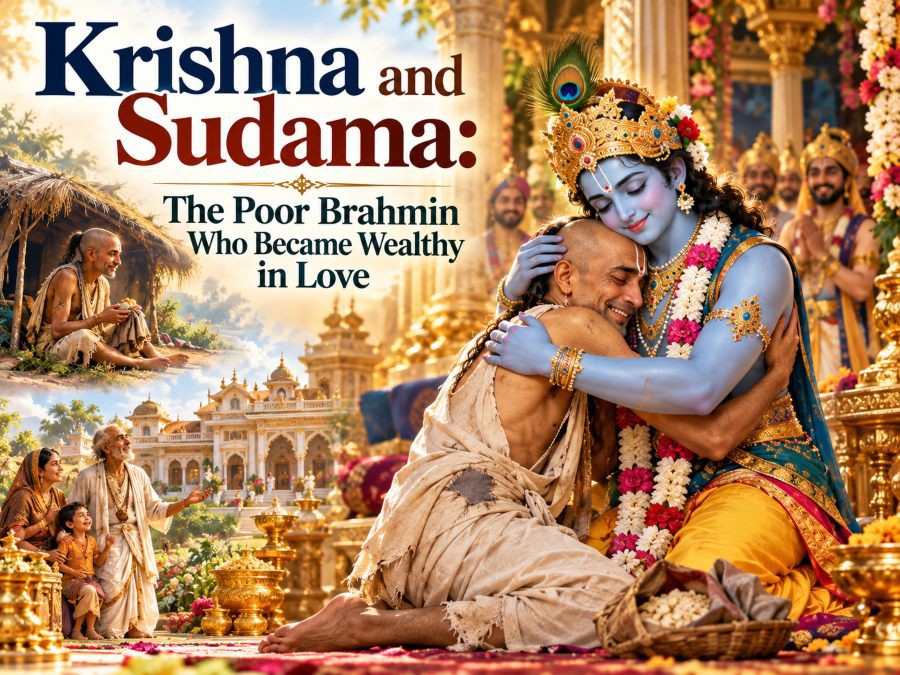 Krishna and Sudama: The Poor Brahmin Who Became Wealthy in LoveRead more
 -
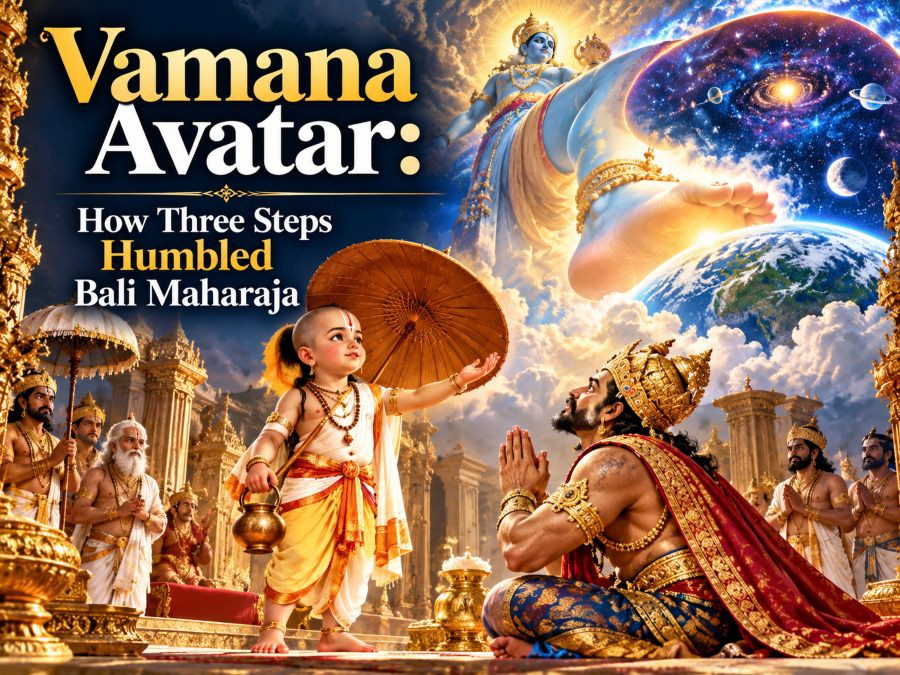 Vamana Avatar: How Three Steps Humbled Bali MaharajaRead more
Why did a powerful king give away three worlds to a boy asking for three steps? Learn the Vamana avatar story from...
-
 The Bhagavatam on Marriage: Duty, Love and Spiritual PartnershipRead more
What does the Bhagavatam say about marriage? Through the stories of Kardama and Devahuti, Rukmini's secret letter and...
-
 What Is Prema? The Bhagavatam's Highest Stage of Love for GodRead more
Prema is love for God with no "because" attached. Learn how the Bhagavatam describes it, the nine steps from faith to...
-
 Is Shiva Parvati Kalyana Mentioned in Srimad Bhagavatam? What the Scripture Really SaysRead more
Looking for Shiva and Parvati's wedding in the Srimad Bhagavatam? Find out what the scripture actually describes,...
-
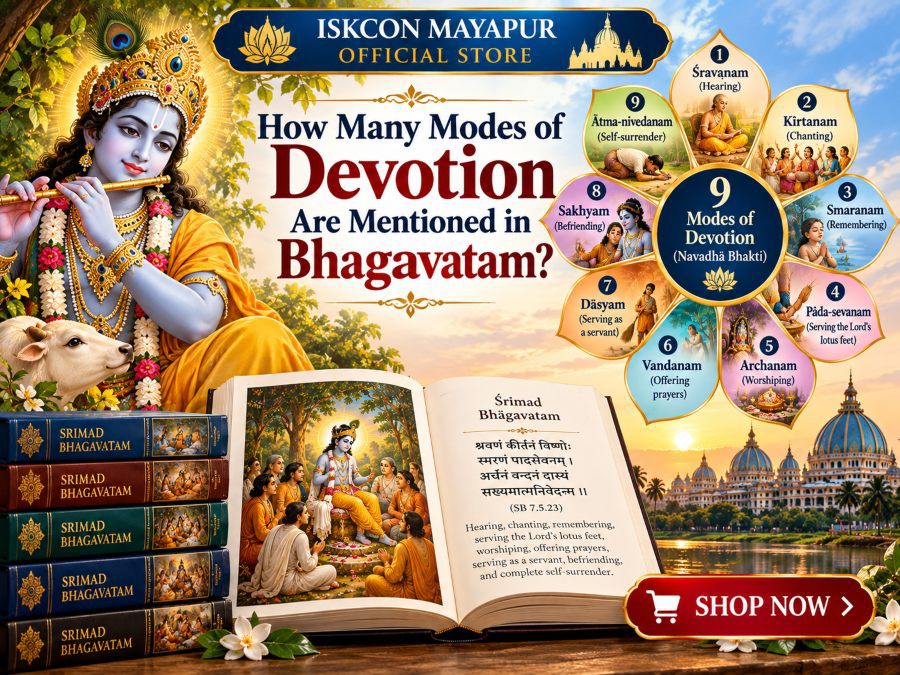 How Many Modes of Devotion Are Mentioned in Bhagavatam?Read more
A young boy named Prahlada listed nine ways to serve God, and the Bhagavatam keeps them as its answer. Learn what the...
-
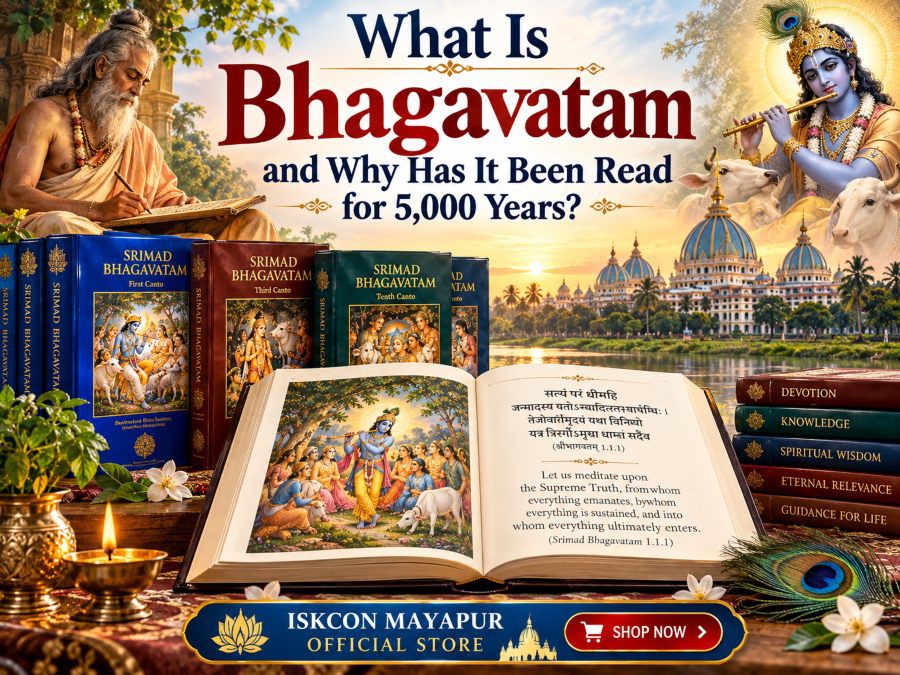 What Is Bhagavatam and Why Has It Been Read for 5,000 Years?Read more
A dying king asked one question, and the answer became the Bhagavatam. Learn what this Sanskrit scripture contains,...
-
 Who Is Lord Krishna? His Meaning, Teachings and Pastimes ExplainedRead more
Discover who Krishna is according to Srimad Bhagavatam, including His divine identity, childhood pastimes, teachings,...
-
 Incense in Islam: Bakhoor, Agarbatti and What Tradition SaysRead more
Is burning fragrance part of Muslim tradition? Explore incense in Islam, from the Prophetic practice of fumigating...
-
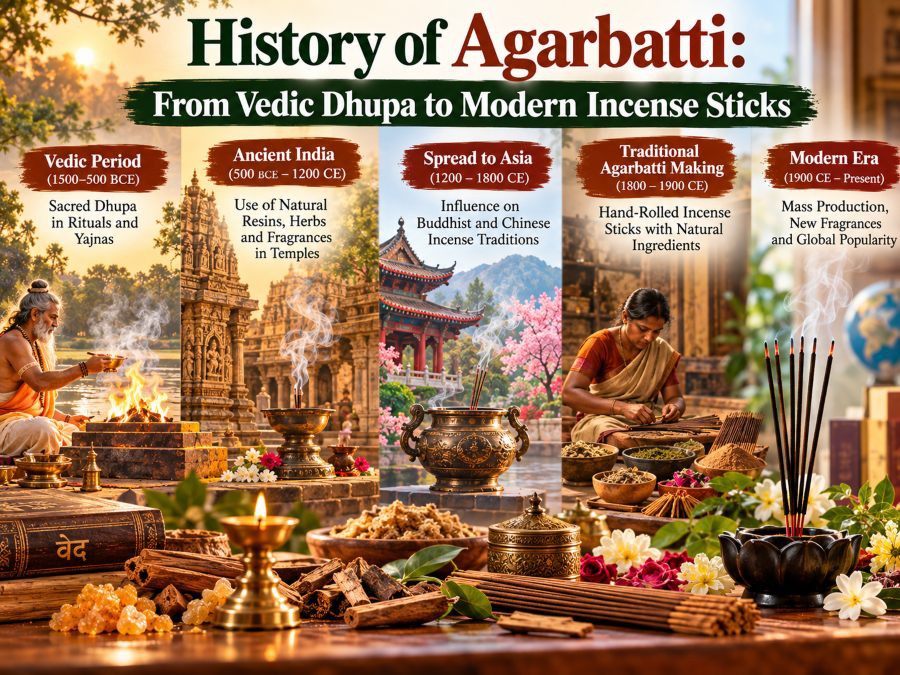 History of Agarbatti: From Vedic Dhupa to Modern Incense SticksRead more
Where did agarbatti really come from? Follow the history of agarbatti from Vedic fire rituals and temple dhupa to...
Blog categories
- Default category (0)
- MUSICAL INSTRUMENT (1)
- BOOK (5)
- DEVOTIONAL GIFT (0)
- Blog (30) click
- CHANDAN (12)
- Bhagavatam Wisdom Series (68)
- Krishna Consciousness (14)
- Mridangam Musical Instrument (6)
- Bhagavad Gita for Beginners (13)
- Bhagavad Gita As It Is (37) click
- Bhagavad Gita As It Is Telugu (0)
- Bhagavad Gita As It Is Marathi (0)
- Bhagavad Gita As It Is In Hindi (0)
- Bhagavad Gita As It Is In English (0)
- Bhagavad Gita As It Is In Bengali (8)
- Bhagavad Gita As It Is In Kannada (0)
- Bhagavad Gita As It Is In Gujarati (0)
- Bhagavad Gita As It Is In Panjabi (0)
- Bhagavad Gita As It Is In Tamil (0)
- Bhagavad Gita As It Is Odia (0)
- BHAGAVAD GITA As It Is GERMAN (0)
- Bhagavad Gita As It Is In French (0)
- Bhagavad Gita As It Is In Nepali (0)
- Bhagavad Gita As It Is In Assamese (0)
- Incense or Agarbatti (38)
- Lord Chaitanya Mahaprabhu (3)
- Vedic Temple Mayapur (14)
- kalki (15)
- Mahabharata – Dharma & Destiny (27)
- Vaishnava Scriptures (4)
- healthy product (4)
- chaitanya mahaprabhu (5)
- Tulsi Mala Guide (17)
Search in blog
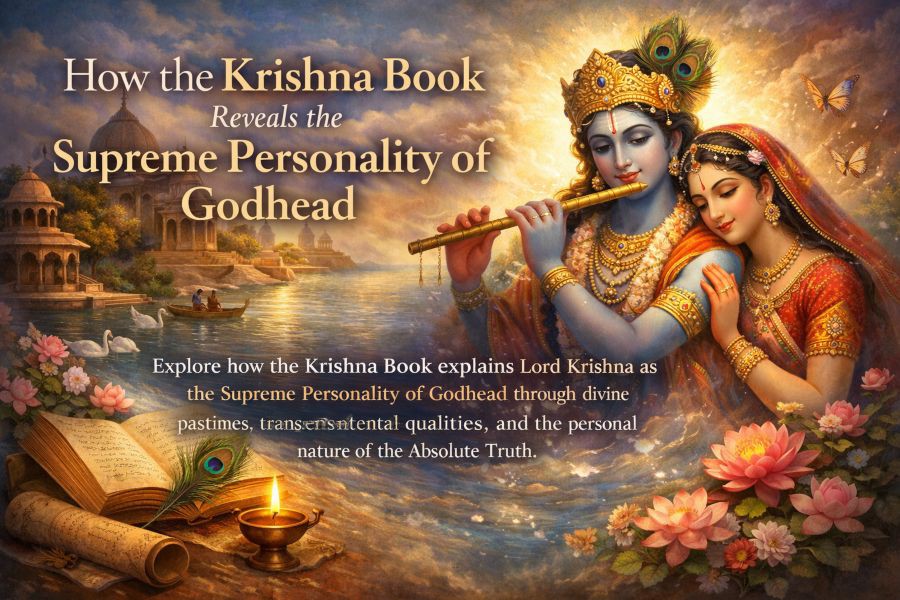
Why the Krishna Book Presents Krishna as the Supreme Personality of Godhead
How the Krishna Book Explains the Supreme Personality of Godhead
To understand the identity of Lord Krishna in a clear and personal way, many sincere readers turn to the Supreme Personality of Godhead book as a foundational spiritual resource. The Krishna Book does much more than narrate divine pastimes. It reveals why Krishna is worshiped not as a symbolic figure, not as a mythic hero, and not merely as an avatar among many, but as the original Supreme Personality of Godhead. Through its rich descriptions, theological depth, and devotional vision, the book presents Krishna as the ultimate source of all energies, all incarnations, and all spiritual relationships.
This subject is central to Vaishnava theology and especially important for readers who want more than surface-level spirituality. In many modern discussions, God is described impersonally, abstractly, or philosophically. But the Krishna Book offers a strikingly different understanding. It presents the Absolute Truth as fully personal, infinitely attractive, eternally conscious, and overflowing with qualities, beauty, power, compassion, and love. In this way, the book does not reduce divinity to concept. It reveals divinity as personhood in its highest and purest form.
For readers of bhakti literature, this is one of the most important theological teachings of all. If Krishna is the Supreme Personality of Godhead, then devotion to Him is not one spiritual option among many equal paths. It becomes the soul’s direct relationship with the original source of all existence. That understanding changes the meaning of worship, prayer, remembrance, scripture study, and daily spiritual life.
What the Title “Supreme Personality of Godhead” Really Means
The phrase “Supreme Personality of Godhead” carries tremendous philosophical and devotional significance. At first glance, some readers may find it unusual because many are more familiar with vague terms like “higher power,” “universal consciousness,” or “divine energy.” But the Krishna Book makes a clear distinction. God is not ultimately impersonal. The Absolute Truth possesses personality in the fullest and most perfect sense.
The word “Supreme” indicates that Krishna is not limited, conditioned, or dependent. He is the highest reality, beyond all material imperfection and beyond every subordinate manifestation of divinity. The word “Personality” means that Krishna has identity, will, qualities, relationships, activities, emotions, and beauty. However, His personhood is not material or temporary like human personhood. It is absolute, eternal, spiritual, and unlimited. The word “Godhead” points to His position as the source of all that exists, including all energies, all living beings, and all divine expansions.
This understanding is essential because it protects spiritual life from two extremes. On one side, some reduce God to a distant force without form or personality. On the other side, some imagine God in overly material or human terms. The Krishna Book avoids both mistakes by presenting Krishna as fully personal yet completely transcendental. He is near and intimate, but never ordinary. He is approachable through devotion, yet always the supreme source of all worlds.
Krishna as the Original Source of All Incarnations
One of the strongest theological themes in the Krishna Book is that Krishna is not merely one divine figure among many. He is presented as the original source from whom all incarnations and expansions emanate. This is a defining feature of Gaudiya Vaishnava theology and a major reason the book is so spiritually significant.
In many traditions, Krishna is sometimes viewed simply as an avatar of Vishnu. But the theology presented in bhakti literature goes deeper. The Krishna Book explains that Krishna is the original Personality of Godhead, and that Vishnu expansions and other incarnations appear from Him for cosmic functions, protection of dharma, and deliverance of souls. This does not diminish Vishnu or other forms of the Lord. Rather, it establishes Krishna’s unique position as the complete source of all divine manifestations.
This teaching matters because it changes how readers interpret Krishna’s life and pastimes. If Krishna were only a secondary manifestation, His activities might be viewed as symbolic or partial. But when understood as the original Supreme Person, every pastime takes on deeper meaning. His childhood, friendships, playful dealings, protection of devotees, and intimate exchanges are not ordinary acts. They are revelations of the highest absolute reality in its most complete and attractive form.
The Krishna Book therefore does not merely ask readers to admire Krishna. It invites them to understand His ontological position. He is the origin, not a fragment. He is the source, not a product. This theological clarity gives the entire book its extraordinary power.
Why Krishna’s Human-Like Pastimes Are Spiritually Unique
One of the most beautiful and transformative teachings of the Krishna Book is that Krishna’s apparently human-like activities do not make Him less divine. In fact, they reveal the fullness of His divinity. He appears in forms and relationships that are intimate, natural, and emotionally rich, yet He remains the Supreme Personality of Godhead in every moment.
This point is crucial because many readers misunderstand divine personality. They assume that if God performs intimate or playful acts, then He must be reduced to a mythological figure or exceptional human being. But the Krishna Book turns that assumption upside down. Krishna’s sweetness, accessibility, and relational beauty are not signs of limitation. They are signs of supreme perfection.
Unlike impersonal concepts of the divine, Krishna can be loved as a child, friend, master, beloved, or protector. These relationships are possible precisely because He is personal. And unlike ordinary human beings, Krishna’s actions are never bound by ignorance, karma, or material need. His appearance in the world is fully transcendental. Even when He acts like a cowherd boy, speaks with friends, or delights His devotees, He remains the source of everything.
This is one of the deepest theological insights offered by the Krishna Book. God is not less supreme because He is beautiful, loving, and relational. He is more complete because all those qualities exist in Him perfectly. Krishna is the Absolute Truth with personality, charm, reciprocity, and infinite sweetness.
The Six Opulences That Establish Krishna’s Supremacy
A classic way to understand the Supreme Personality of Godhead is through the six divine opulences: complete wealth, strength, fame, beauty, knowledge, and renunciation. The Krishna Book demonstrates these qualities repeatedly, not through abstract doctrine alone, but through vivid narrative.
Krishna’s beauty is beyond comparison. His form attracts not only human beings but liberated souls, demigods, sages, animals, and the residents of the spiritual world. His strength is displayed in countless pastimes where He effortlessly defeats powerful demons and protects His devotees. His fame extends across all realms. His knowledge is perfect and unlimited. His wealth includes not merely material abundance but sovereignty over all existence. His renunciation is equally astonishing because although everything belongs to Him, He remains fully detached and acts only for divine purpose and loving exchange.
These six opulences matter because they show that Krishna is not worshiped sentimentally. His supremacy is not based on emotion alone. It is rooted in theological completeness. Wherever these opulences are found in fullness, there the Supreme Person is present. The Krishna Book reveals that all of them exist in Krishna absolutely and harmoniously.
This makes the book especially compelling for readers who want both devotion and philosophical rigor. Krishna is not presented as supreme because of blind faith. He is shown to be supreme through scriptural revelation, divine qualities, transcendental acts, and the testimony of realized devotees.
The Role of Devotees in Revealing Krishna’s Identity
Another remarkable feature of the Krishna Book is that Krishna’s identity is often best understood through the eyes of His devotees. This is not accidental. In bhakti theology, the heart purified by devotion can perceive divine truth more deeply than dry speculation alone.
The residents of Vrindavan do not love Krishna because they have completed a philosophical syllabus. They love Him because their hearts are completely surrendered and absorbed in Him. Yet through that love, the highest truth becomes visible. Sometimes they relate to Him with simple intimacy, forgetting His majesty. At other times, the extraordinary nature of His actions reveals His supremacy unmistakably. This dynamic shows that divine truth is not merely analyzed. It is also realized through loving relationship.
This has important implications for spiritual seekers today. Many try to understand God only through intellect, comparison, or debate. While reason has value, the Krishna Book shows that devotion opens a deeper mode of knowing. The more the heart becomes softened through hearing, chanting, and service, the more one can appreciate Krishna not as a distant theological category but as the living Supreme Person.
The devotees in the book therefore serve as both participants and teachers. Their love demonstrates what it means to know God personally. Their relationship with Krishna reveals that supreme truth is ultimately relational, not merely conceptual.
Krishna and the Personal Nature of the Absolute Truth
A major contribution of the Krishna Book is its powerful affirmation that the Absolute Truth is personal. This sets it apart from many forms of spiritual thought that emphasize formlessness as the final realization. The book does not deny that divine energy is all-pervading or that Brahman realization has significance. But it clearly presents personal realization of Krishna as the highest and most complete understanding of God.
Why is this so important? Because a personal Absolute allows for love, exchange, reciprocity, and devotion in their fullest form. If the ultimate truth were only impersonal energy, then love of God would ultimately dissolve into abstraction. But the Krishna Book reveals a richer reality. The source of everything is not less than personal. The source of everything is supremely personal.
This means that eternity is not emptiness. Liberation is not loss of identity. Spiritual perfection is not the end of relationship. Instead, the highest state is loving engagement with Krishna in a fully awakened spiritual relationship. That is why the book gives so much attention to Krishna’s qualities, form, names, pastimes, and associates. All of these reveal that ultimate reality is living, relational, and beautiful.
For modern readers, this teaching can be deeply transformative. Many people feel disconnected not just from religion, but from the very idea of a knowable and lovable God. The Krishna Book restores that possibility. It says, in effect, that the highest truth is not cold, silent, or inaccessible. The highest truth has a face, a name, a voice, a flute, and a heart full of love.
Why This Teaching Matters in Modern Spiritual Life
The message that Krishna is the Supreme Personality of Godhead is not just a theological statement for scholars. It has profound practical meaning for everyday spiritual life. If Krishna is the original source of all existence, then devotion to Him becomes the center of a complete life philosophy. Prayer changes. Worship changes. Purpose changes. Even daily choices gain a new orientation.
Modern spirituality often encourages vague belief without deep surrender. People may speak of energy, mindfulness, or universal connection, yet still remain spiritually rootless. The Krishna Book offers something much more grounded and personal. It gives the seeker a clear object of devotion, a clear understanding of the divine, and a path based on loving service rather than abstract self-improvement.
This clarity is deeply nourishing. It helps readers move from uncertainty to relationship. Instead of asking endlessly what truth might be, they begin to hear about Krishna, remember Him, serve Him, and live in relation to Him. The result is not fanaticism, but intimacy with divine reality.
It also addresses a common modern struggle: fragmentation. People often feel pulled in many directions by work, technology, anxiety, and social pressure. A personal understanding of God helps unify life. When Krishna is understood as the Supreme Person, spiritual practice becomes relational and coherent. It is no longer a side activity. It becomes the organizing center of consciousness.
The Krishna Book as a Gateway to Bhakti Realization
For many readers, the Krishna Book serves as a gateway into the world of bhakti. It is accessible, narrative-rich, emotionally compelling, and theologically profound. It does not present doctrine in a dry way. Instead, it allows the reader to encounter Krishna through His pastimes and gradually understand His supreme position through devotional hearing.
This method is powerful because the human heart learns deeply through story and relationship. The more one hears about Krishna’s beauty, compassion, playfulness, strength, and love for His devotees, the more one begins to understand why He is called the Supreme Personality of Godhead. The title stops feeling merely formal or doctrinal. It becomes realized through attraction and reverence.
That is one of the hidden strengths of the book. It teaches theology through rasa, through story, through emotional and spiritual encounter. It awakens knowledge, but it also awakens devotion. In this way, it functions not just as literature but as sacred invitation.
For readers beginning their journey in Krishna consciousness, this makes the Krishna Book uniquely valuable. It does not merely explain who God is. It introduces the reader to the possibility of loving Him personally.
Conclusion
The Krishna Book explains the Supreme Personality of Godhead with extraordinary depth, beauty, and clarity. It reveals Krishna as the original source of all incarnations, the possessor of all divine opulences, the ultimate object of devotion, and the fullest personal manifestation of the Absolute Truth. Far from reducing God to mythology or sentiment, it presents a theologically rich and spiritually intimate vision of divinity.
Its central teaching is both profound and life-changing: the highest truth is not impersonal emptiness, but Krishna—the all-attractive, all-powerful, all-loving Supreme Person. His form is eternal, His qualities are unlimited, His relationships are real, and His pastimes are fully transcendental.
For readers seeking a deeper understanding of who Krishna is and why He is worshiped as the Supreme Personality of Godhead, the Krishna Book remains one of the most important devotional texts available. It does not merely inform the mind. It draws the heart into relationship. And in that movement from knowledge to devotion, its deepest power is revealed.
Posted in: Krishna Leela
Related posts
-
 Why the Krishna Book Is a Must-Read for Every Spiritual SeekerThe Krishna Book is the perfect starting point for anyone seeking spiritual clarity. It blends storytelling,...Read more
 -
 How Daily Krishna Book Reading Brings Peace to Your HomeDaily Krishna Book reading can transform your home into a peaceful and spiritually uplifting space. It helps remove...Read more
 -
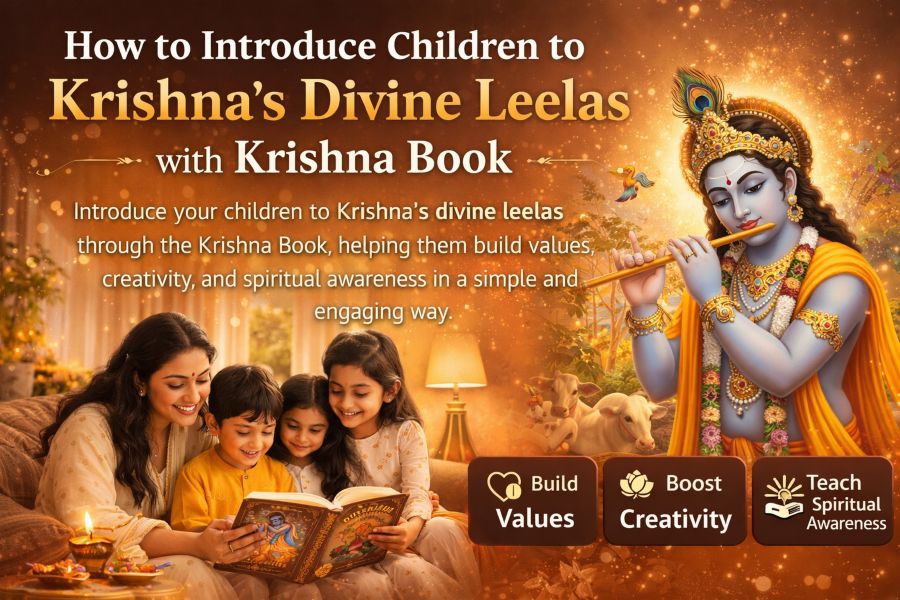 How to Teach Kids Spiritual Values with the Krishna BookIntroduce your children to Krishna’s divine leelas through the Krishna Book. An engaging and simple way to build...Read more
 -
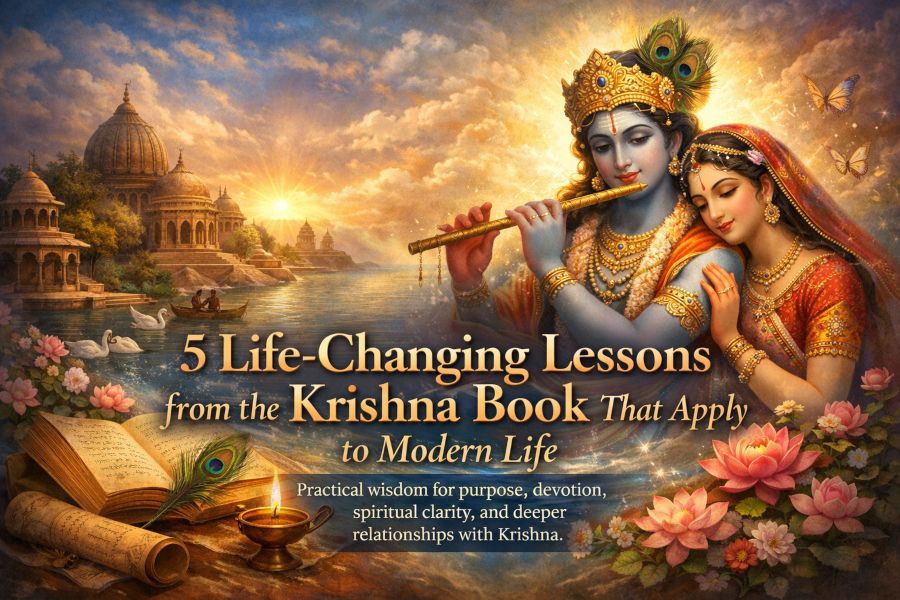 5 Life-Changing Lessons from the Krishna Book That Apply to Modern LifeExplore five powerful lessons from the Krishna Book that offer practical guidance for modern life, helping readers...Read more
 -
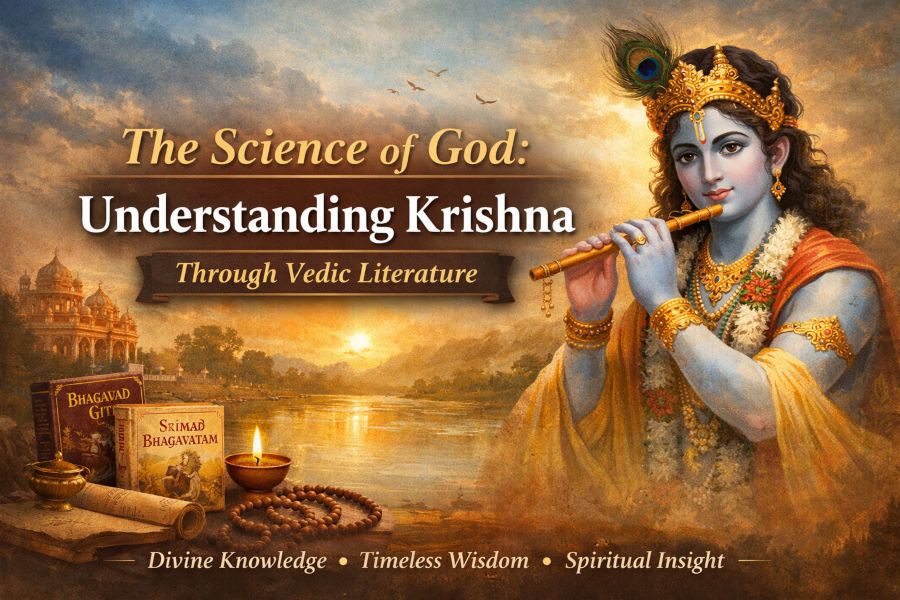 The Science of God: Understanding Krishna Through Vedic KnowledgeA deep exploration of the science of God through Vedic literature, explaining Krishna’s true nature, teachings, and...Read more
Leave a comment