
Why did Krishna run to embrace a poor brahmin in rags? Read the Sudama story from the Bhagavatam and learn how a...
Latest posts
-
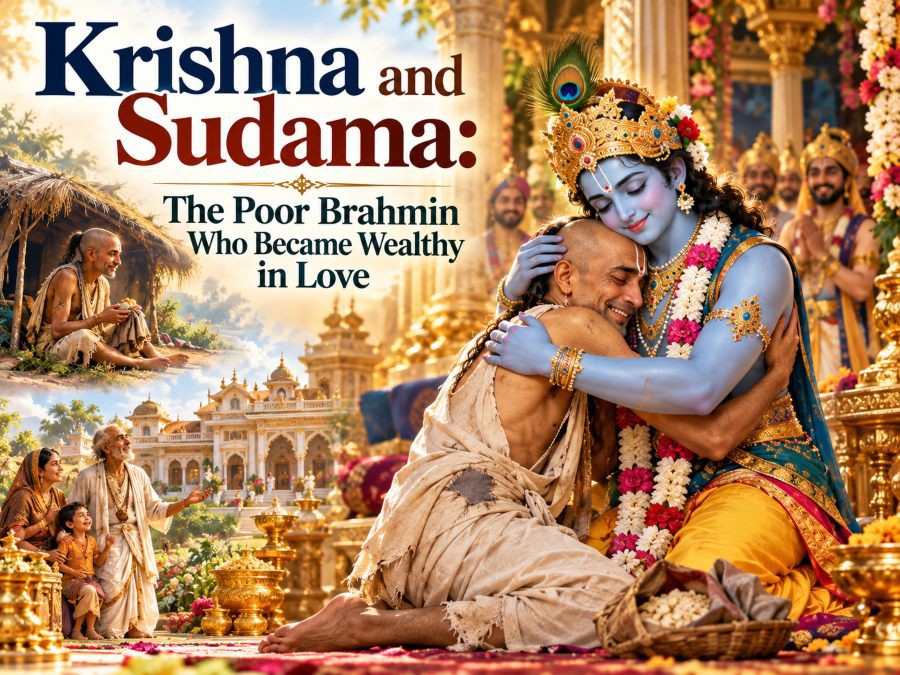 Krishna and Sudama: The Poor Brahmin Who Became Wealthy in LoveRead more
 -
 Vamana Avatar: How Three Steps Humbled Bali MaharajaRead more
Why did a powerful king give away three worlds to a boy asking for three steps? Learn the Vamana avatar story from...
-
 The Bhagavatam on Marriage: Duty, Love and Spiritual PartnershipRead more
What does the Bhagavatam say about marriage? Through the stories of Kardama and Devahuti, Rukmini's secret letter and...
-
 What Is Prema? The Bhagavatam's Highest Stage of Love for GodRead more
Prema is love for God with no "because" attached. Learn how the Bhagavatam describes it, the nine steps from faith to...
-
 Is Shiva Parvati Kalyana Mentioned in Srimad Bhagavatam? What the Scripture Really SaysRead more
Looking for Shiva and Parvati's wedding in the Srimad Bhagavatam? Find out what the scripture actually describes,...
-
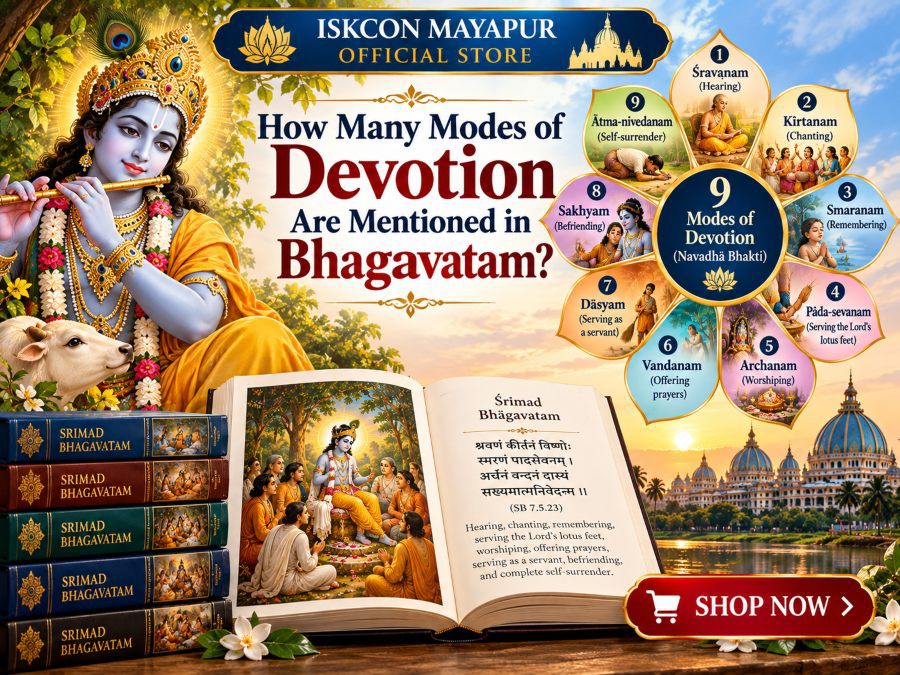 How Many Modes of Devotion Are Mentioned in Bhagavatam?Read more
A young boy named Prahlada listed nine ways to serve God, and the Bhagavatam keeps them as its answer. Learn what the...
-
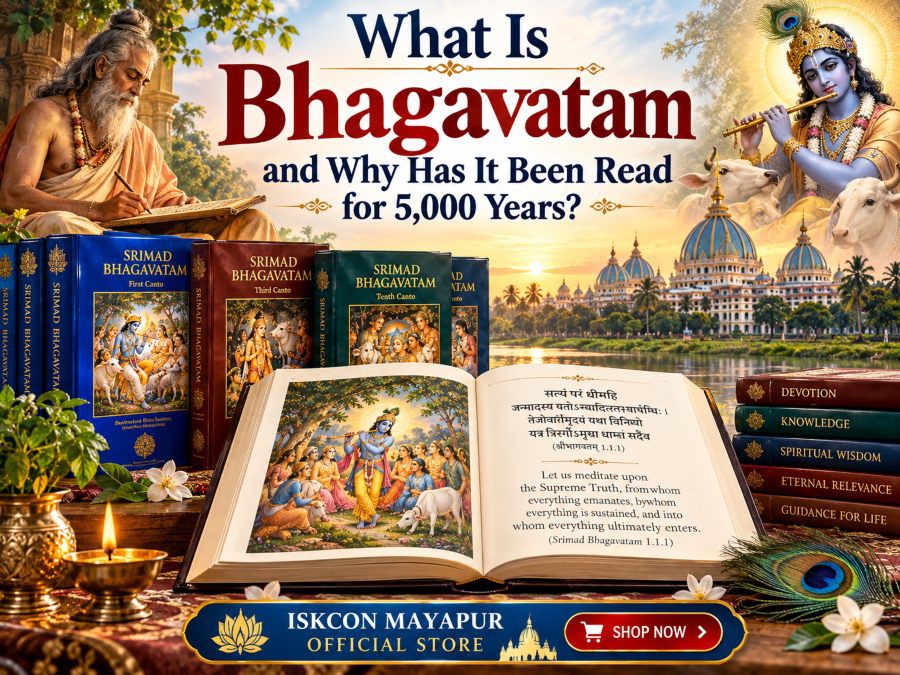 What Is Bhagavatam and Why Has It Been Read for 5,000 Years?Read more
A dying king asked one question, and the answer became the Bhagavatam. Learn what this Sanskrit scripture contains,...
-
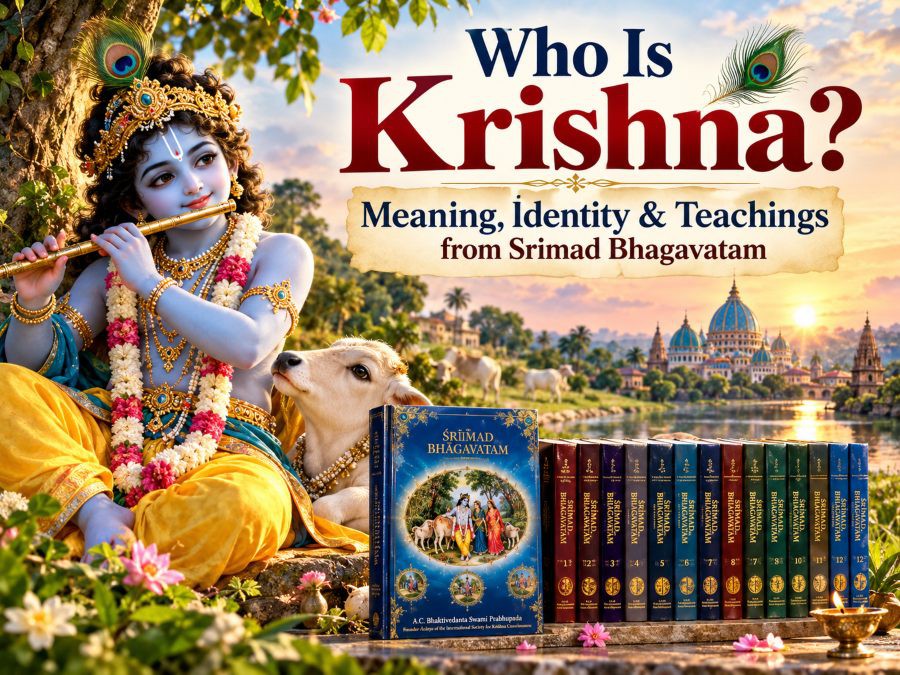 Who Is Lord Krishna? His Meaning, Teachings and Pastimes ExplainedRead more
Discover who Krishna is according to Srimad Bhagavatam, including His divine identity, childhood pastimes, teachings,...
-
 Incense in Islam: Bakhoor, Agarbatti and What Tradition SaysRead more
Is burning fragrance part of Muslim tradition? Explore incense in Islam, from the Prophetic practice of fumigating...
-
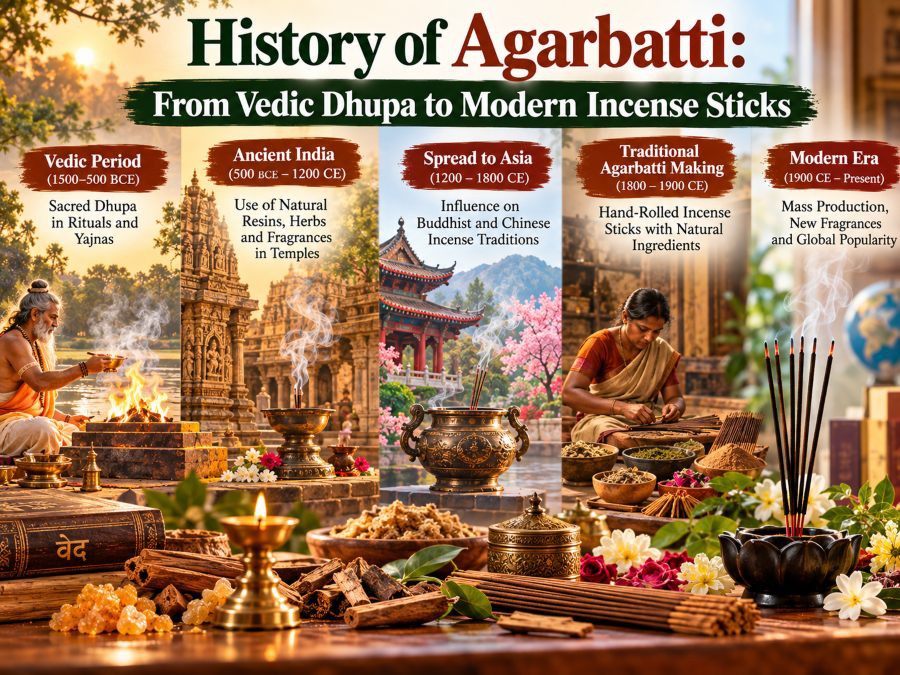 History of Agarbatti: From Vedic Dhupa to Modern Incense SticksRead more
Where did agarbatti really come from? Follow the history of agarbatti from Vedic fire rituals and temple dhupa to...
Blog categories
- Default category (0)
- MUSICAL INSTRUMENT (1)
- BOOK (5)
- DEVOTIONAL GIFT (0)
- Blog (30) click
- CHANDAN (12)
- Bhagavatam Wisdom Series (68)
- Krishna Consciousness (14)
- Mridangam Musical Instrument (6)
- Bhagavad Gita for Beginners (13)
- Bhagavad Gita As It Is (37) click
- Bhagavad Gita As It Is Telugu (0)
- Bhagavad Gita As It Is Marathi (0)
- Bhagavad Gita As It Is In Hindi (0)
- Bhagavad Gita As It Is In English (0)
- Bhagavad Gita As It Is In Bengali (8)
- Bhagavad Gita As It Is In Kannada (0)
- Bhagavad Gita As It Is In Gujarati (0)
- Bhagavad Gita As It Is In Panjabi (0)
- Bhagavad Gita As It Is In Tamil (0)
- Bhagavad Gita As It Is Odia (0)
- BHAGAVAD GITA As It Is GERMAN (0)
- Bhagavad Gita As It Is In French (0)
- Bhagavad Gita As It Is In Nepali (0)
- Bhagavad Gita As It Is In Assamese (0)
- Incense or Agarbatti (38)
- Lord Chaitanya Mahaprabhu (3)
- Vedic Temple Mayapur (14)
- kalki (15)
- Mahabharata – Dharma & Destiny (27)
- Vaishnava Scriptures (4)
- healthy product (4)
- chaitanya mahaprabhu (5)
- Tulsi Mala Guide (17)
Search in blog
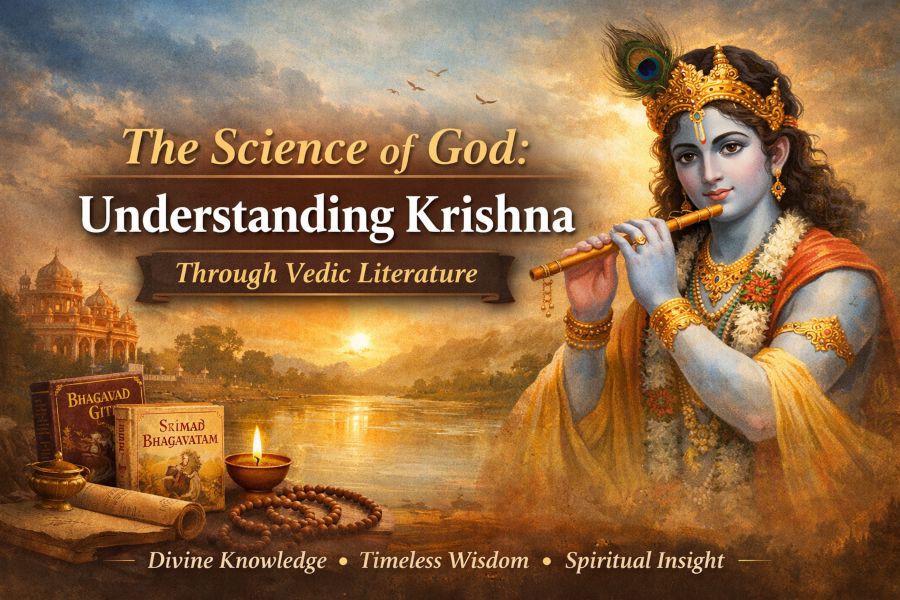
The Science of God: Understanding Krishna Through Vedic Knowledge
The Science of God: Understanding Krishna through the Eyes of Vedic Literature
Humanity has always searched for answers to life’s most profound questions: Who am I? What is the purpose of existence? What is the nature of God? While many philosophies attempt to address these inquiries, Vedic literature presents a uniquely systematic and experiential approach—often described as the science of God. Within this tradition, Lord Krishna is understood not merely as a symbolic figure, but as the complete manifestation of the Absolute Truth. For those who wish to Explore the Full Pastimes of Lord Krishna, Vedic texts provide a structured and deeply insightful pathway to understanding His identity, nature, and relationship with the soul.
At the heart of this exploration lies a combination of logic, revelation, and experience. Unlike blind belief systems, Vedic wisdom invites inquiry, reflection, and realization. It offers a framework where spirituality is not opposed to reason but enhanced by it.
What Does “The Science of God” Really Mean?
The phrase “science of God” may seem unusual at first, but in the Vedic context, it carries a precise meaning. Science implies a systematic study based on observation, hypothesis, and verification. Similarly, Vedic literature presents knowledge about God in a structured and verifiable manner.
This approach is based on three key principles:
- Śāstra (scripture): Authoritative texts that preserve spiritual knowledge
- Guru (teacher): A realized guide who explains and embodies the teachings
- Sādhu (practitioner): Those who live according to spiritual principles
Together, these elements create a reliable system for understanding reality. Rather than relying on speculation, the Vedic tradition emphasizes direct realization through disciplined practice.
In this framework, Krishna is not a theoretical concept but a subject of study, realization, and relationship.
Krishna as the Supreme Reality in Vedic Literature
In Vedic texts, Krishna is described as the ultimate source of all existence. This is not presented as a belief but as a conclusion supported by philosophical reasoning and scriptural evidence.
The Bhagavad Gita describes Krishna as the origin of everything—material and spiritual. He explains that all beings, energies, and universes emanate from Him.
Similarly, the Śrīmad Bhāgavatam elaborates on this concept by presenting detailed narratives that reveal Krishna’s divine nature. These stories are not merely symbolic; they illustrate philosophical truths in a relatable way.
Krishna is understood in three aspects:
- As the all-pervading spiritual energy (Brahman)
- As the localized guide within the heart (Paramatma)
- As the personal form of God (Bhagavan)
Among these, Bhagavan is considered the highest realization, as it includes both knowledge and relationship.
The Role of Logic and Philosophy in Understanding God
One of the distinguishing features of Vedic literature is its use of logic to support spiritual conclusions. Rather than asking for blind faith, it encourages thoughtful inquiry.
For example, the concept of cause and effect is used to explain the existence of a supreme cause. Just as every effect has a cause, the universe must have an ultimate source. Vedic texts identify this source as Krishna.
Philosophical discussions also address the nature of consciousness. The distinction between the body and the soul is explained through reasoning and observation. The body changes over time, but the sense of self remains constant—indicating the presence of an eternal soul.
These logical foundations make the study of Krishna not only spiritual but also intellectually satisfying. They provide a framework where faith is supported by understanding.
Krishna’s Pastimes as a Form of Divine Revelation
One of the most unique aspects of Vedic literature is its emphasis on Krishna’s pastimes, or divine activities. These narratives serve as a bridge between abstract philosophy and personal experience.
Through these pastimes, readers gain insight into:
- Krishna’s qualities and personality
- His relationships with devotees
- The nature of divine love
For example, Krishna’s childhood activities in Vrindavan reveal His playful and affectionate nature, while His teachings in the Bhagavad Gita demonstrate His role as a guide and protector.
These stories are not ordinary—they are considered transcendental, meaning they exist beyond material limitations. By hearing and reflecting on them, readers gradually develop a deeper understanding of Krishna.
Bhakti: The Experimental Process of Spiritual Science
In the Vedic framework, understanding God is not limited to intellectual study—it requires practice. This practice is known as bhakti, or devotion.
Bhakti is often compared to an experiment. Just as a scientific experiment requires specific steps, bhakti involves practices such as:
- Chanting sacred names
- Reading and reflecting on scriptures
- Associating with spiritually minded individuals
- Living a disciplined and ethical life
Through consistent practice, individuals begin to experience changes in consciousness. These experiences serve as evidence, confirming the teachings of the scriptures.
This experiential aspect is what makes Vedic spirituality a true science—it allows individuals to verify the knowledge through personal realization.
The Nature of the Soul and Its Relationship with Krishna
A central teaching of Vedic literature is the distinction between the body and the soul. The soul is described as eternal, conscious, and full of potential for happiness.
Krishna explains that the soul is part of Him, sharing the same spiritual nature. However, due to ignorance, the soul becomes entangled in material existence.
The purpose of spiritual practice is to reawaken the soul’s original relationship with Krishna. This relationship is characterized by love, service, and connection.
Understanding this concept brings clarity to many aspects of life:
- Why we experience dissatisfaction in material pursuits
- Why relationships and achievements do not fully satisfy
- Why there is a natural longing for something higher
By reconnecting with Krishna, the soul experiences true fulfillment.
Relevance of Vedic Knowledge in the Modern World
In today’s world, scientific advancement has brought convenience but not necessarily fulfillment. Many people struggle with stress, anxiety, and a lack of purpose.
Vedic literature addresses these issues by offering a deeper understanding of life. It teaches that true happiness comes not from external achievements but from inner realization.
Krishna’s teachings provide practical guidance for modern challenges:
- Managing stress through detachment
- Finding purpose through duty
- Building resilience through spiritual understanding
- Cultivating peace through devotion
These principles are timeless, making Vedic knowledge highly relevant even in contemporary society.
The Importance of Authentic Sources
With the abundance of information available today, it is essential to rely on authentic sources when studying spiritual topics. Vedic literature has been preserved through a tradition of careful transmission, ensuring its accuracy and integrity.
Reading from reliable editions helps maintain the original meaning and prevents misinterpretation. It also provides access to commentary that explains complex concepts in a clear and structured way.
This authenticity is crucial for anyone seeking genuine understanding rather than superficial knowledge.
How to Approach the Study of Krishna
Studying Krishna through Vedic literature requires a balanced approach that includes both knowledge and practice.
Start with Foundational Texts
Begin with texts like the Bhagavad Gita, which provide a clear introduction to key concepts.
Reflect and Question
Engage with the material actively, asking questions and seeking deeper understanding.
Practice Regularly
Incorporate spiritual practices into daily life to experience the teachings directly.
Stay Consistent
Spiritual growth is gradual and requires patience and dedication.
By following this approach, readers can move beyond theoretical knowledge to genuine realization.
Final Thoughts
The science of God, as presented in Vedic literature, offers a comprehensive and systematic approach to understanding Krishna. It combines philosophy, logic, and experience, creating a path that is both intellectually satisfying and spiritually transformative.
Through this approach, Krishna is revealed not as a distant or abstract concept, but as the Supreme Reality—a personal and loving presence who is the source of all existence.
For those willing to explore this path with sincerity and openness, the journey leads to a deeper understanding of life, a stronger sense of purpose, and a lasting connection with the Divine.
Ultimately, the science of God is not just about knowing Krishna—it is about realizing Him and living in harmony with that realization.
Posted in: Krishna Leela
Related posts
-
 Why the Krishna Book Is a Must-Read for Every Spiritual SeekerThe Krishna Book is the perfect starting point for anyone seeking spiritual clarity. It blends storytelling,...Read more
 -
 How Daily Krishna Book Reading Brings Peace to Your HomeDaily Krishna Book reading can transform your home into a peaceful and spiritually uplifting space. It helps remove...Read more
 -
 How to Teach Kids Spiritual Values with the Krishna BookIntroduce your children to Krishna’s divine leelas through the Krishna Book. An engaging and simple way to build...Read more
 -
 5 Life-Changing Lessons from the Krishna Book That Apply to Modern LifeExplore five powerful lessons from the Krishna Book that offer practical guidance for modern life, helping readers...Read more
 -
 Why the Krishna Book Presents Krishna as the Supreme Personality of GodheadExplore how the Krishna Book explains Lord Krishna as the Supreme Personality of Godhead through divine pastimes,...Read more
Leave a comment