
Why did Krishna run to embrace a poor brahmin in rags? Read the Sudama story from the Bhagavatam and learn how a...
Latest posts
-
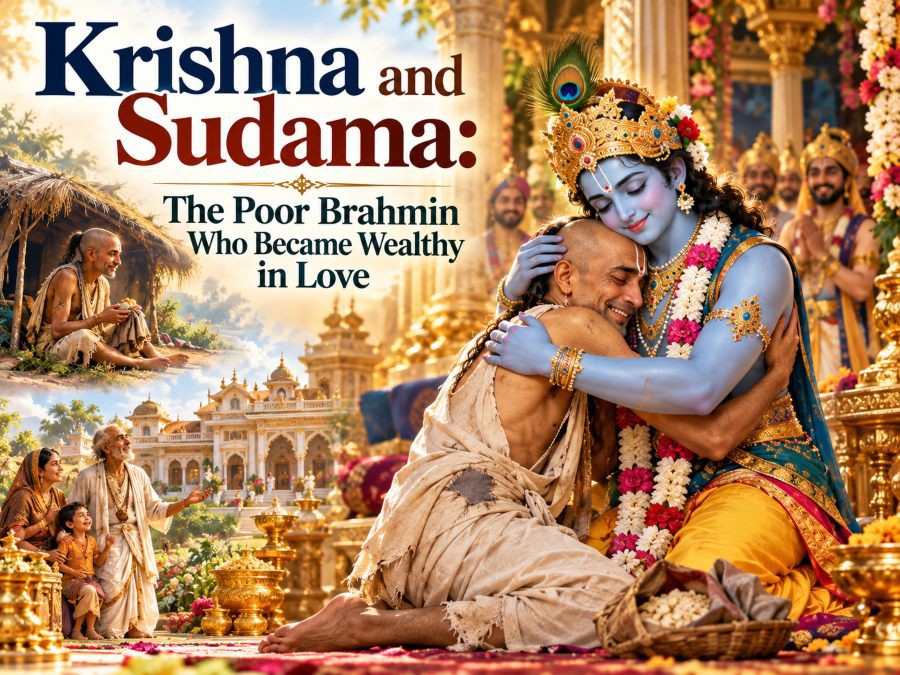 Krishna and Sudama: The Poor Brahmin Who Became Wealthy in LoveRead more
 -
 Vamana Avatar: How Three Steps Humbled Bali MaharajaRead more
Why did a powerful king give away three worlds to a boy asking for three steps? Learn the Vamana avatar story from...
-
 The Bhagavatam on Marriage: Duty, Love and Spiritual PartnershipRead more
What does the Bhagavatam say about marriage? Through the stories of Kardama and Devahuti, Rukmini's secret letter and...
-
 What Is Prema? The Bhagavatam's Highest Stage of Love for GodRead more
Prema is love for God with no "because" attached. Learn how the Bhagavatam describes it, the nine steps from faith to...
-
 Is Shiva Parvati Kalyana Mentioned in Srimad Bhagavatam? What the Scripture Really SaysRead more
Looking for Shiva and Parvati's wedding in the Srimad Bhagavatam? Find out what the scripture actually describes,...
-
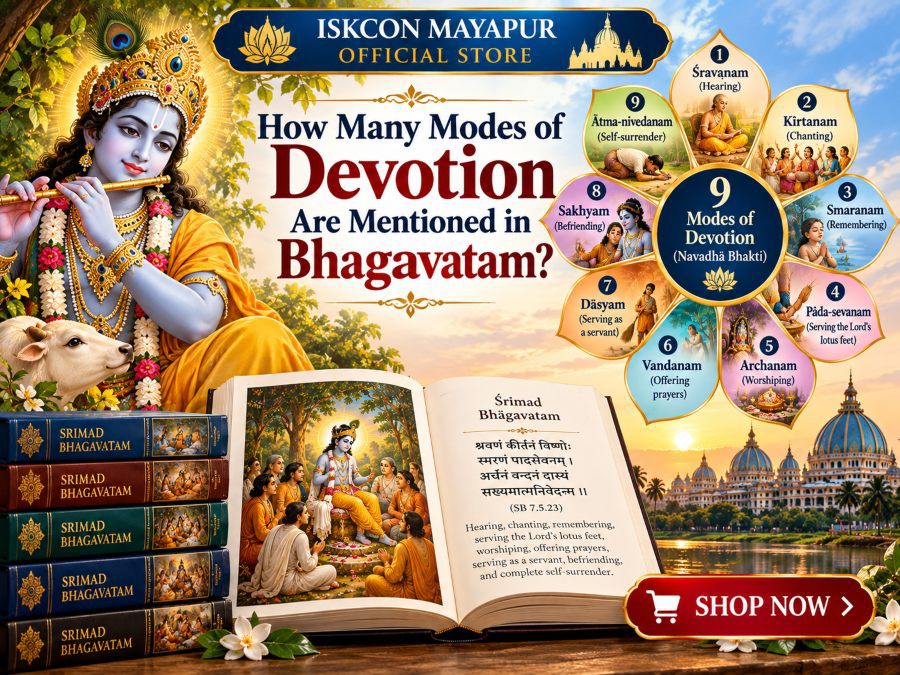 How Many Modes of Devotion Are Mentioned in Bhagavatam?Read more
A young boy named Prahlada listed nine ways to serve God, and the Bhagavatam keeps them as its answer. Learn what the...
-
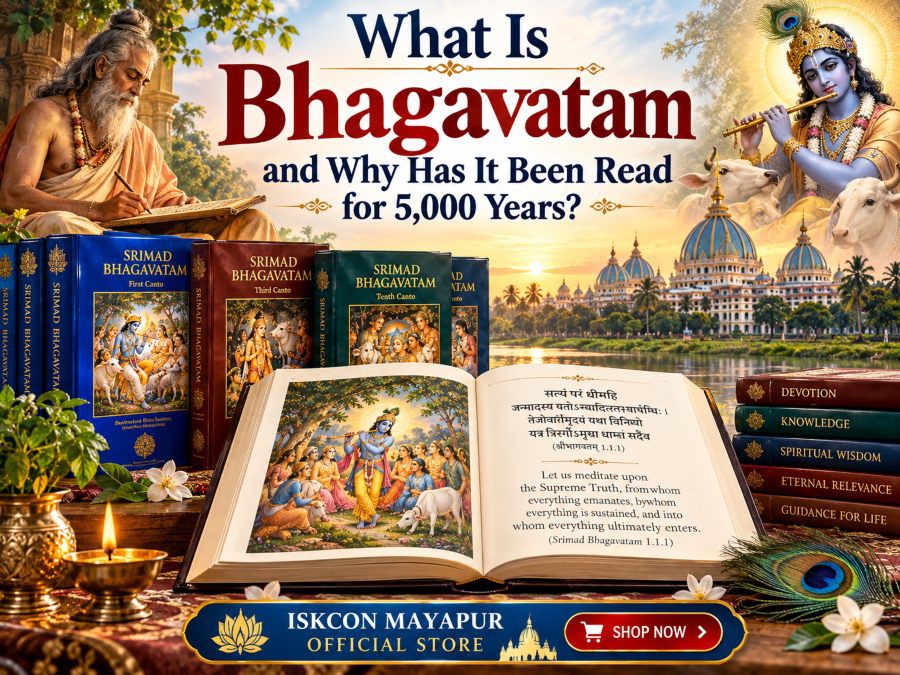 What Is Bhagavatam and Why Has It Been Read for 5,000 Years?Read more
A dying king asked one question, and the answer became the Bhagavatam. Learn what this Sanskrit scripture contains,...
-
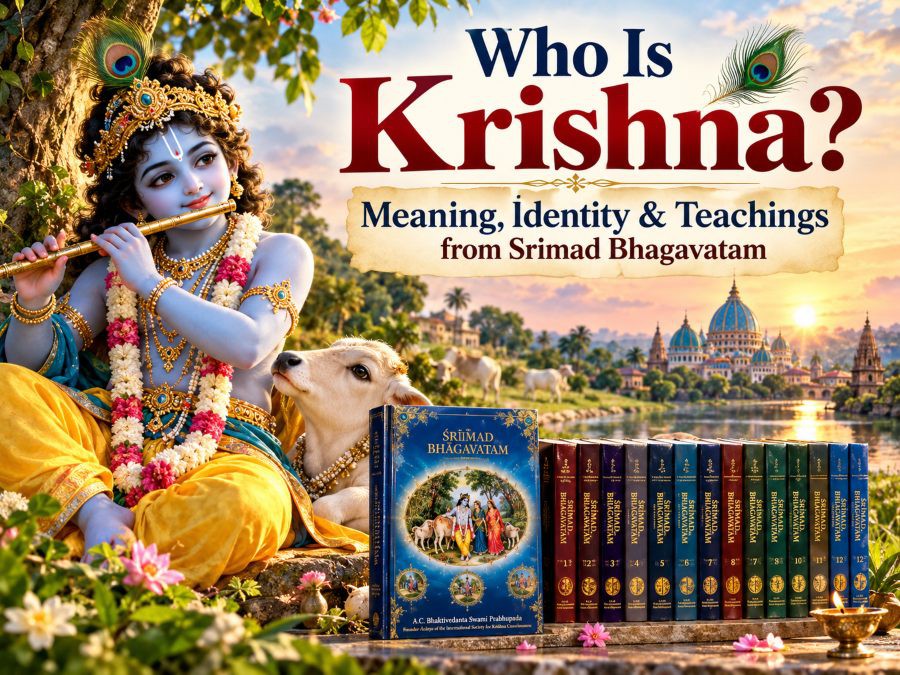 Who Is Lord Krishna? His Meaning, Teachings and Pastimes ExplainedRead more
Discover who Krishna is according to Srimad Bhagavatam, including His divine identity, childhood pastimes, teachings,...
-
 Incense in Islam: Bakhoor, Agarbatti and What Tradition SaysRead more
Is burning fragrance part of Muslim tradition? Explore incense in Islam, from the Prophetic practice of fumigating...
-
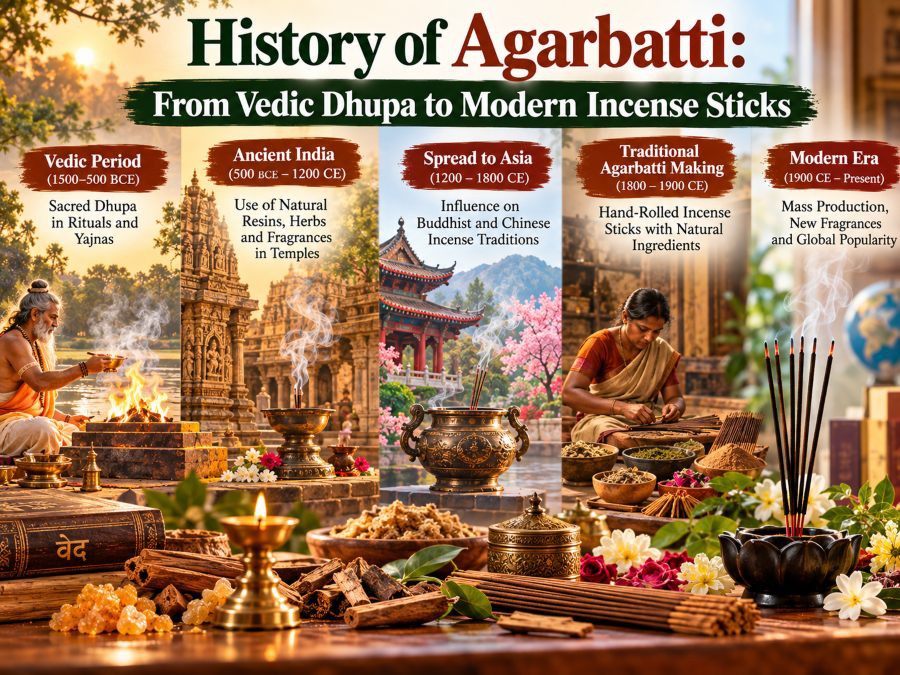 History of Agarbatti: From Vedic Dhupa to Modern Incense SticksRead more
Where did agarbatti really come from? Follow the history of agarbatti from Vedic fire rituals and temple dhupa to...
Blog categories
- Default category (0)
- MUSICAL INSTRUMENT (1)
- BOOK (5)
- DEVOTIONAL GIFT (0)
- Blog (30) click
- CHANDAN (12)
- Bhagavatam Wisdom Series (68)
- Krishna Consciousness (14)
- Mridangam Musical Instrument (6)
- Bhagavad Gita for Beginners (13)
- Bhagavad Gita As It Is (37) click
- Bhagavad Gita As It Is Telugu (0)
- Bhagavad Gita As It Is Marathi (0)
- Bhagavad Gita As It Is In Hindi (0)
- Bhagavad Gita As It Is In English (0)
- Bhagavad Gita As It Is In Bengali (8)
- Bhagavad Gita As It Is In Kannada (0)
- Bhagavad Gita As It Is In Gujarati (0)
- Bhagavad Gita As It Is In Panjabi (0)
- Bhagavad Gita As It Is In Tamil (0)
- Bhagavad Gita As It Is Odia (0)
- BHAGAVAD GITA As It Is GERMAN (0)
- Bhagavad Gita As It Is In French (0)
- Bhagavad Gita As It Is In Nepali (0)
- Bhagavad Gita As It Is In Assamese (0)
- Incense or Agarbatti (38)
- Lord Chaitanya Mahaprabhu (3)
- Vedic Temple Mayapur (14)
- kalki (15)
- Mahabharata – Dharma & Destiny (27)
- Vaishnava Scriptures (4)
- healthy product (4)
- chaitanya mahaprabhu (5)
- Tulsi Mala Guide (17)
Search in blog
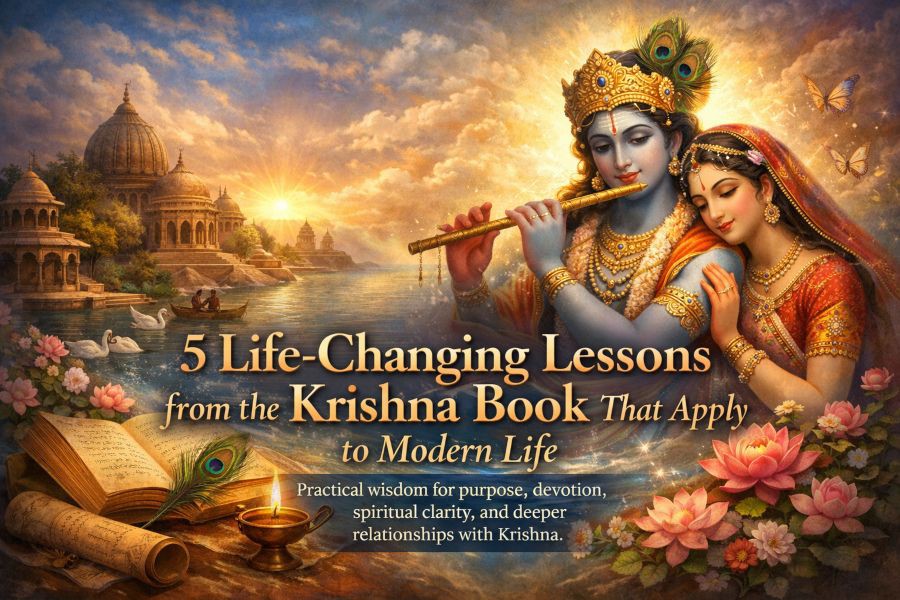
5 Life-Changing Lessons from the Krishna Book That Apply to Modern Life
5 Life-Changing Lessons from the Krishna Book That Apply to Modern Life
In a time when people are overwhelmed by stress, distraction, and constant pressure to achieve more, timeless spiritual wisdom often feels more relevant than ever. Among the most meaningful devotional texts available today, the Krsna Book stands out as a powerful guide for understanding not only the divine pastimes of Lord Krishna but also the deeper truths of human life, responsibility, relationships, inner peace, and spiritual purpose. Though rooted in sacred tradition, its teachings are not locked in the past. They speak directly to modern people who are trying to live with more clarity, integrity, and devotion in a fast-moving world.
What makes the Krishna Book so remarkable is that it does not teach spirituality in an abstract or lifeless way. Instead, it presents living examples through Krishna’s actions, His relationships, His guidance, and His divine pastimes. These narratives are full of beauty and devotion, but they also carry practical lessons that can reshape the way we think and live. Whether someone is struggling with anxiety, ego, ambition, material attachment, broken priorities, or lack of meaning, the teachings found in Krishna’s life remain deeply relevant.
Below are five life-changing lessons from the Krishna Book that apply powerfully to modern life and can help readers create a more grounded, meaningful, and spiritually aligned way of living.
1. Real Strength Is Guided by Purpose, Not Ego
One of the most striking features of Lord Krishna’s life is that His strength is never random, selfish, or ego-driven. Whether He is protecting devotees, defeating dangerous forces, guiding His friends, or establishing dharma, His power is always connected to a higher purpose. This is a lesson modern life desperately needs.
Today, strength is often confused with dominance, image, aggression, or social influence. People are encouraged to prove themselves constantly, win every argument, display success publicly, and build identities around achievement. But this kind of strength often leads to burnout, insecurity, pride, and conflict. External power without inner purpose becomes unstable. It may impress others temporarily, but it rarely brings peace.
The Krishna Book offers a radically different view. Krishna shows that true strength is protective, compassionate, and purposeful. He uses His power not to glorify Himself in a material sense, but to uplift others, remove fear, and restore balance. This teaches a modern reader that real leadership is not about being louder or more controlling. It is about acting with clarity, responsibility, and spiritual intelligence.
In practical life, this lesson can transform the way people handle work, family, and personal ambition. A strong person is not necessarily the one who dominates the room. A strong person may be the one who stays composed under pressure, protects what is sacred, and acts from principle rather than ego. In workplaces, relationships, and social life, people often suffer because they are trying to appear powerful instead of becoming purposeful.
This lesson also matters emotionally. Many people feel weak because they are exhausted by comparison, criticism, or inner conflict. Krishna’s example reminds us that strength does not begin outside. It begins when life becomes aligned with truth. When a person knows what they stand for, whom they serve, and what truly matters, their actions become more stable and fearless. That is the kind of strength modern life needs most.
2. Love Becomes Pure When It Is Rooted in Service
Another life-changing lesson from the Krishna Book is that the highest form of love is inseparable from service. Krishna’s relationships with His devotees reveal that love is not merely emotion, attraction, or possession. Real love expresses itself through devotion, sacrifice, remembrance, and the sincere desire to please the beloved.
This teaching is deeply important in today’s world because modern relationships are often burdened by expectation. People want emotional validation, constant attention, control, convenience, or self-fulfillment from others. As a result, many relationships become transactional. Even when affection is present, it can easily become mixed with insecurity, attachment, and fear of loss.
The Krishna Book presents a higher model. The love shown by Krishna’s devotees is not based on exploitation or selfish gain. It is based on surrender, affection, and service. This does not mean losing individuality. Rather, it means that love reaches its purest form when the heart moves beyond selfish demand. In spiritual love, the question is not “What can I get?” but “How can I lovingly serve?”
This lesson has powerful relevance for family life, friendship, marriage, and community. A relationship becomes stronger when people learn to serve one another with sincerity instead of constantly measuring what they are receiving in return. Service does not weaken love; it deepens it. It creates trust, gratitude, and emotional maturity.
This principle also applies to one’s relationship with God. The Krishna Book teaches that spiritual life is not based only on ritual or intellectual understanding. It is based on loving service. When people begin to offer their time, energy, thoughts, and actions in devotion, spirituality stops being theoretical. It becomes relational. That shift changes the heart.
In a modern world full of loneliness and emotional confusion, this lesson is especially healing. It reminds people that love is not sustained by intensity alone. It is sustained by devotion, consistency, and willingness to serve with humility.
3. Material Success Cannot Replace Spiritual Fulfillment
One of the clearest themes running through Krishna’s pastimes is that material achievement, comfort, and status can never satisfy the soul completely. This is one of the most urgent lessons for modern life. People today are surrounded by messages telling them that success equals happiness. Work harder, earn more, buy more, upgrade more, and then peace will come. Yet even after achieving outward goals, many still feel restless, empty, or disconnected.
The Krishna Book helps readers understand why. The human being is not merely a body with temporary desires. The soul longs for something deeper than material accumulation. It longs for spiritual connection, eternal meaning, and loving relationship with the Divine. When that need is neglected, no amount of external success can fully satisfy the heart.
This does not mean material life should be rejected irresponsibly. Krishna’s teachings do not encourage laziness or neglect of duty. Rather, they reveal the proper place of material life. Wealth, talent, family, work, and influence can all be meaningful when connected to a higher purpose. But when they become the final goal, they eventually disappoint.
This lesson is especially useful for people caught in stress, career pressure, and identity-based achievement. Many define themselves entirely by productivity or public success. They feel valuable only when they are performing, earning, or being praised. That mindset creates anxiety and fragility because the self becomes dependent on unstable external conditions.
The Krishna Book offers a deeper foundation. It teaches that a person’s worth comes from their spiritual identity, not their temporary position. This realization creates freedom. One can still work, build, and contribute, but without the illusion that material success alone will complete the heart.
In practical terms, this lesson can help modern readers reorder their priorities. Instead of giving the best energy only to money and status, they can begin making room for prayer, scripture, reflection, seva, and inner cultivation. Life becomes more balanced, and success becomes less toxic when spirituality is restored to the center.
4. Challenges Often Carry Hidden Spiritual Purpose
Krishna’s pastimes repeatedly show that difficulties are not always meaningless obstacles. Very often, they become moments of protection, purification, redirection, or deeper revelation. This lesson can completely change how a person interprets hardship in modern life.
Most people naturally resist difficulty. They see setbacks, delays, betrayal, uncertainty, illness, or loss as proof that life is going wrong. Sometimes pain does come from human error, injustice, or the natural struggles of the world. But the Krishna Book adds another dimension: not every challenge is empty suffering. Some trials are spiritually significant. They expose illusion, reveal dependence on God, deepen humility, or bring the devotee closer to Krishna.
This perspective is not meant to make suffering feel small or unreal. Pain is real. Grief is real. Confusion is real. But spiritual wisdom helps prevent despair by showing that difficulty is not always the end of the story. What appears destructive on the surface may become transformative in the long run.
This lesson is especially important today because modern culture often promises control. People are taught to plan everything, optimize everything, and expect constant improvement. So when life becomes uncertain, many feel shattered. The Krishna Book teaches a more mature response. Instead of asking only, “Why is this happening to me?” one can also ask, “What is this teaching me? How can this bring me closer to truth?”
That shift creates resilience. A person facing failure may discover humility. A person facing emotional pain may discover prayer. A person facing instability may discover dependence on Krishna rather than dependence on illusion. This does not remove the difficulty instantly, but it gives suffering spiritual context.
In a world where mental and emotional strain are increasingly common, this lesson offers rare strength. It teaches that challenges do not always mean abandonment. Sometimes they are the very means through which divine care becomes visible.
5. A Meaningful Life Is Built Around Divine Remembrance
Perhaps the most life-changing lesson of all is that life becomes truly meaningful when it is centered on remembrance of Krishna. The Krishna Book is not simply a collection of stories meant to entertain or inspire temporarily. It is meant to awaken remembrance—remembrance of who Krishna is, who we are in relation to Him, and what life is ultimately meant for.
Modern life is filled with forgetfulness. People forget their purpose, forget their spiritual identity, forget what actually matters, and become consumed by endless distraction. Attention is constantly pulled outward. Because of this, many live in survival mode, reacting to demands and noise without ever feeling inwardly rooted.
The pastimes of Krishna offer a sacred antidote. By hearing about Him, remembering His qualities, reflecting on His actions, and keeping His presence in one’s consciousness, a person gradually becomes spiritually anchored. Remembrance changes the texture of daily life. Ordinary actions begin to feel more connected, more intentional, and more peaceful.
This lesson is not limited to monks or renunciants. It applies to householders, workers, parents, students, and business owners. Divine remembrance can be cultivated through chanting, reading, prayer, deity worship, kirtan, service, and conscious offering of daily activities. What matters is not withdrawal from life, but reorientation within life.
When remembrance grows, fear reduces. Priorities become clearer. Temptations lose some of their force. Emotional turbulence becomes easier to observe. Most importantly, the heart no longer feels spiritually homeless. It begins to live in relationship with Krishna, even while moving through the responsibilities of the world.
This is the hidden crisis of modern life: people are busy, connected, informed, and productive, but spiritually forgetful. The Krishna Book answers that crisis by restoring sacred memory. It teaches that real success is not merely to survive, achieve, or impress. Real success is to remember Krishna and live in a way that strengthens that remembrance every day.
Why These Lessons Matter More Than Ever Today
The brilliance of the Krishna Book is that it speaks across centuries without losing relevance. The external details of life may change—technology, work culture, social structure, communication—but the inner struggles of human life remain remarkably similar. People still wrestle with ego, attachment, fear, ambition, confusion, and longing. They still seek love, purpose, protection, and peace.
That is why the lessons of Krishna’s life continue to matter. They are not limited to religious identity or historical curiosity. They address the deepest patterns of the human condition. They show how strength can become sacred, how love can become pure, how success can be redefined, how suffering can become meaningful, and how daily life can be transformed through divine remembrance.
For spiritual readers, these teachings do more than educate. They reorient the heart. They help people move from reaction to reflection, from ego to service, from anxiety to trust, and from material obsession to spiritual clarity. That kind of shift is not minor. It is life-changing.
Conclusion
The Krishna Book remains one of the most relevant spiritual works for anyone seeking wisdom that applies both to devotion and to daily living. Its teachings are timeless because they address not just religious practice, but the fundamental questions of how to live, love, endure, and grow.
The five lessons explored here—purpose over ego, service as the heart of love, the limits of material success, the hidden purpose in challenges, and the power of divine remembrance—offer a practical roadmap for modern life. They are not abstract ideals. They are living principles that can shape the way a person works, relates, chooses, struggles, and ultimately understands the purpose of existence.
For anyone who wants spiritual wisdom that is both profound and usable, the Krishna Book offers exactly that. It invites readers not only to admire Krishna’s life, but to let His teachings reshape their own.
Posted in: Krishna Leela
Related posts
-
 Why the Krishna Book Is a Must-Read for Every Spiritual SeekerThe Krishna Book is the perfect starting point for anyone seeking spiritual clarity. It blends storytelling,...Read more
 -
 How Daily Krishna Book Reading Brings Peace to Your HomeDaily Krishna Book reading can transform your home into a peaceful and spiritually uplifting space. It helps remove...Read more
 -
 How to Teach Kids Spiritual Values with the Krishna BookIntroduce your children to Krishna’s divine leelas through the Krishna Book. An engaging and simple way to build...Read more
 -
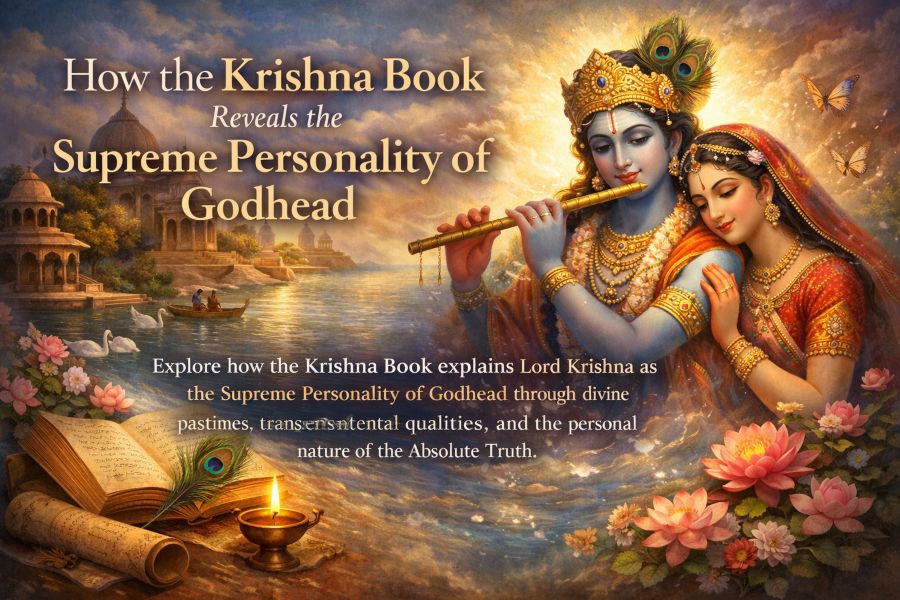 Why the Krishna Book Presents Krishna as the Supreme Personality of GodheadExplore how the Krishna Book explains Lord Krishna as the Supreme Personality of Godhead through divine pastimes,...Read more
 -
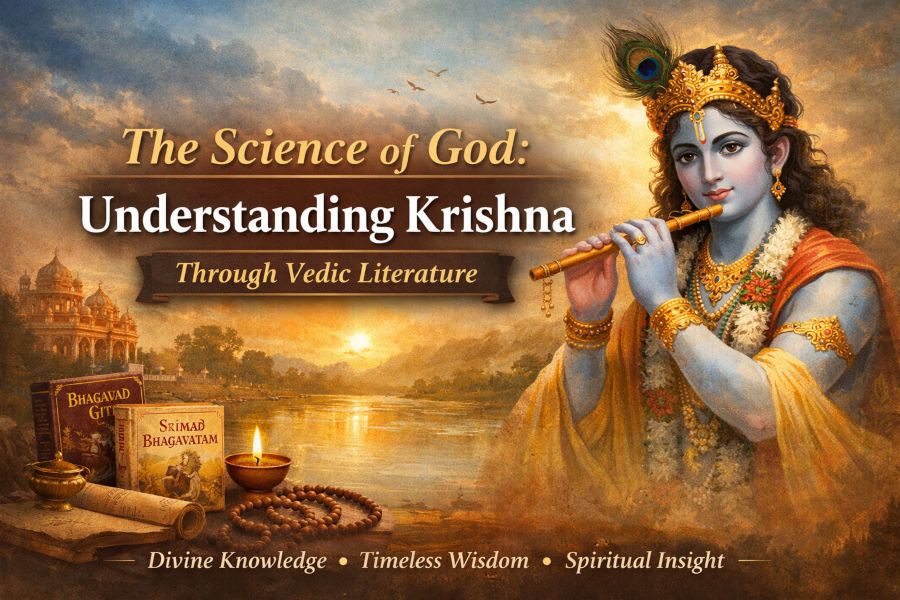 The Science of God: Understanding Krishna Through Vedic KnowledgeA deep exploration of the science of God through Vedic literature, explaining Krishna’s true nature, teachings, and...Read more
Leave a comment