
Why did Krishna run to embrace a poor brahmin in rags? Read the Sudama story from the Bhagavatam and learn how a...
Latest posts
-
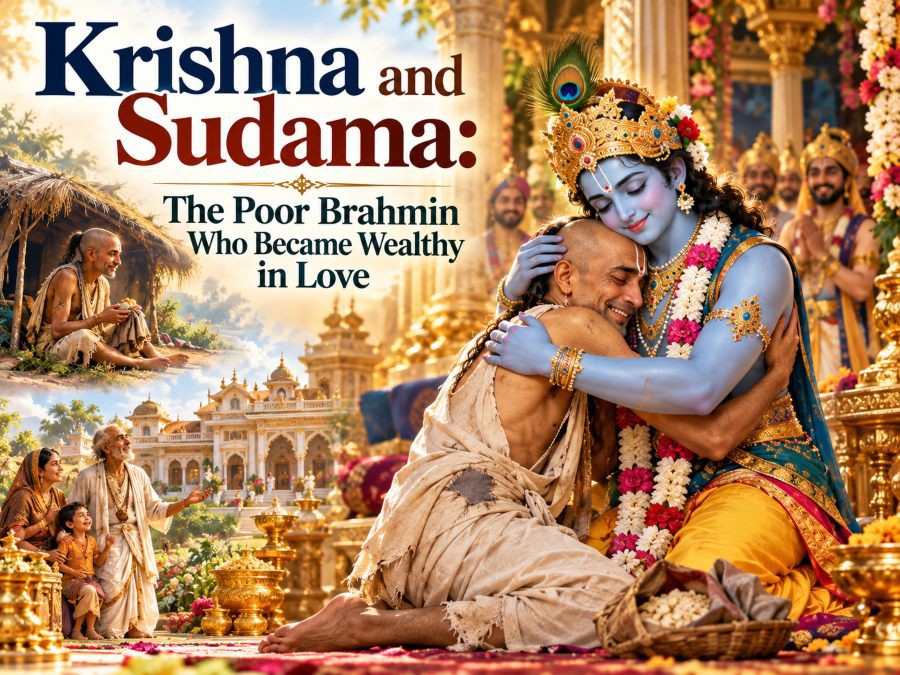 Krishna and Sudama: The Poor Brahmin Who Became Wealthy in LoveRead more
 -
 Vamana Avatar: How Three Steps Humbled Bali MaharajaRead more
Why did a powerful king give away three worlds to a boy asking for three steps? Learn the Vamana avatar story from...
-
 The Bhagavatam on Marriage: Duty, Love and Spiritual PartnershipRead more
What does the Bhagavatam say about marriage? Through the stories of Kardama and Devahuti, Rukmini's secret letter and...
-
 What Is Prema? The Bhagavatam's Highest Stage of Love for GodRead more
Prema is love for God with no "because" attached. Learn how the Bhagavatam describes it, the nine steps from faith to...
-
 Is Shiva Parvati Kalyana Mentioned in Srimad Bhagavatam? What the Scripture Really SaysRead more
Looking for Shiva and Parvati's wedding in the Srimad Bhagavatam? Find out what the scripture actually describes,...
-
 How Many Modes of Devotion Are Mentioned in Bhagavatam?Read more
A young boy named Prahlada listed nine ways to serve God, and the Bhagavatam keeps them as its answer. Learn what the...
-
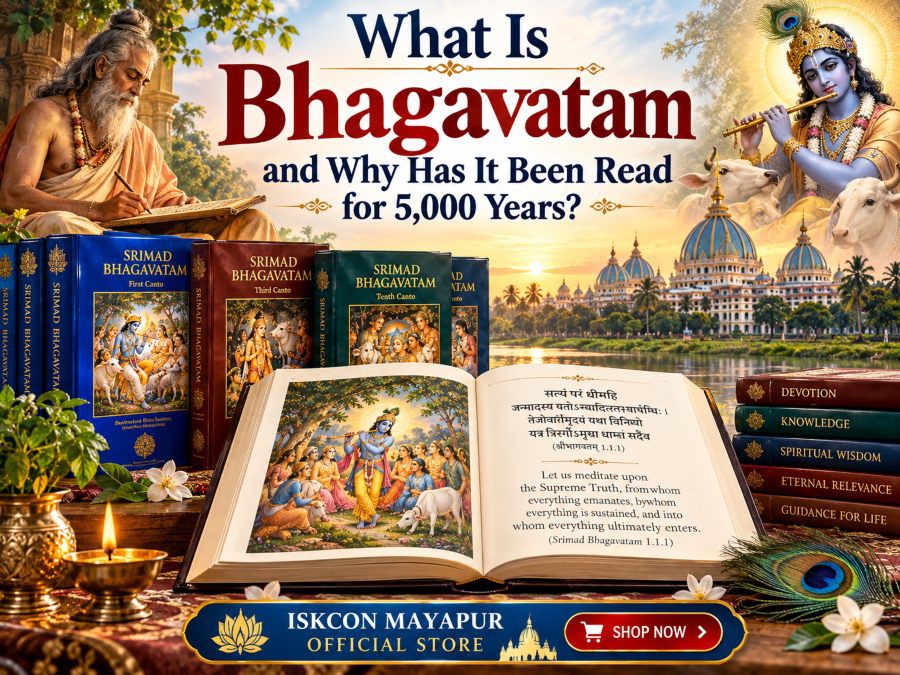 What Is Bhagavatam and Why Has It Been Read for 5,000 Years?Read more
A dying king asked one question, and the answer became the Bhagavatam. Learn what this Sanskrit scripture contains,...
-
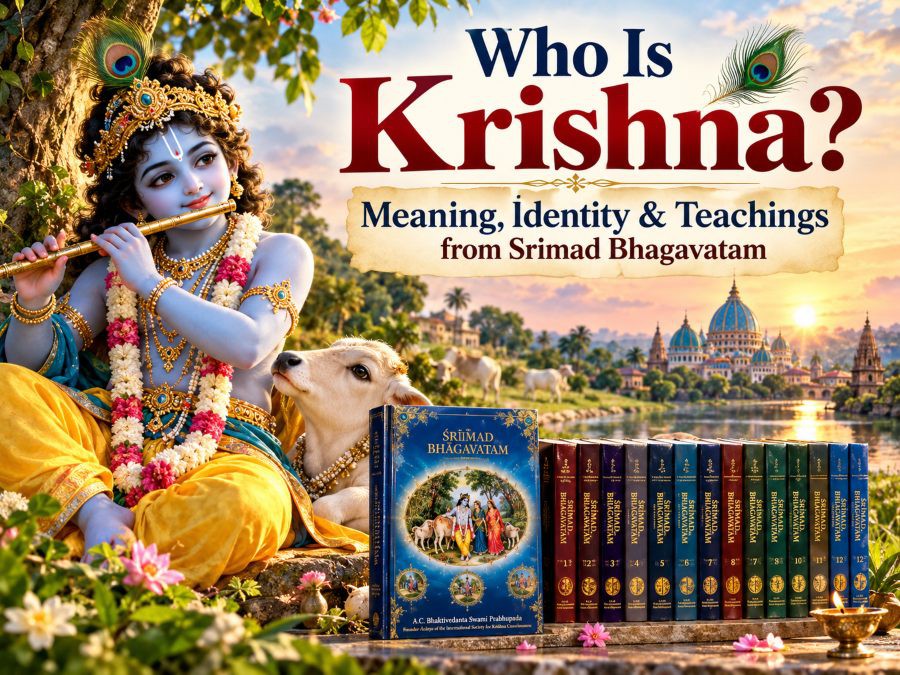 Who Is Lord Krishna? His Meaning, Teachings and Pastimes ExplainedRead more
Discover who Krishna is according to Srimad Bhagavatam, including His divine identity, childhood pastimes, teachings,...
-
 Incense in Islam: Bakhoor, Agarbatti and What Tradition SaysRead more
Is burning fragrance part of Muslim tradition? Explore incense in Islam, from the Prophetic practice of fumigating...
-
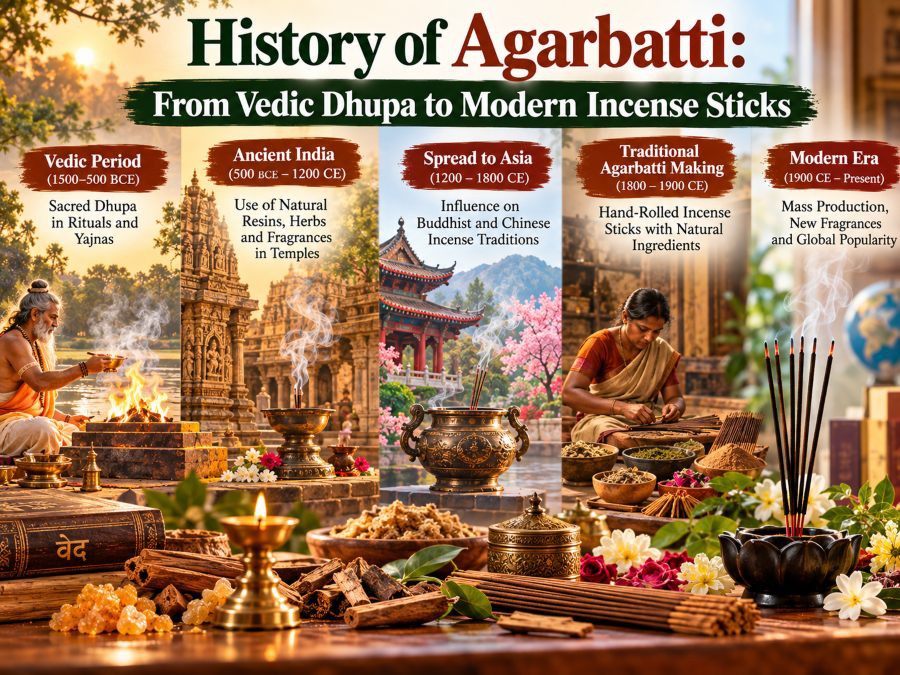 History of Agarbatti: From Vedic Dhupa to Modern Incense SticksRead more
Where did agarbatti really come from? Follow the history of agarbatti from Vedic fire rituals and temple dhupa to...
Blog categories
- Default category (0)
- MUSICAL INSTRUMENT (1)
- BOOK (5)
- DEVOTIONAL GIFT (0)
- Blog (30) click
- CHANDAN (12)
- Bhagavatam Wisdom Series (68)
- Krishna Consciousness (14)
- Mridangam Musical Instrument (6)
- Bhagavad Gita for Beginners (13)
- Bhagavad Gita As It Is (37) click
- Bhagavad Gita As It Is Telugu (0)
- Bhagavad Gita As It Is Marathi (0)
- Bhagavad Gita As It Is In Hindi (0)
- Bhagavad Gita As It Is In English (0)
- Bhagavad Gita As It Is In Bengali (8)
- Bhagavad Gita As It Is In Kannada (0)
- Bhagavad Gita As It Is In Gujarati (0)
- Bhagavad Gita As It Is In Panjabi (0)
- Bhagavad Gita As It Is In Tamil (0)
- Bhagavad Gita As It Is Odia (0)
- BHAGAVAD GITA As It Is GERMAN (0)
- Bhagavad Gita As It Is In French (0)
- Bhagavad Gita As It Is In Nepali (0)
- Bhagavad Gita As It Is In Assamese (0)
- Incense or Agarbatti (38)
- Lord Chaitanya Mahaprabhu (3)
- Vedic Temple Mayapur (14)
- kalki (15)
- Mahabharata – Dharma & Destiny (27)
- Vaishnava Scriptures (4)
- healthy product (4)
- chaitanya mahaprabhu (5)
- Tulsi Mala Guide (17)
Search in blog
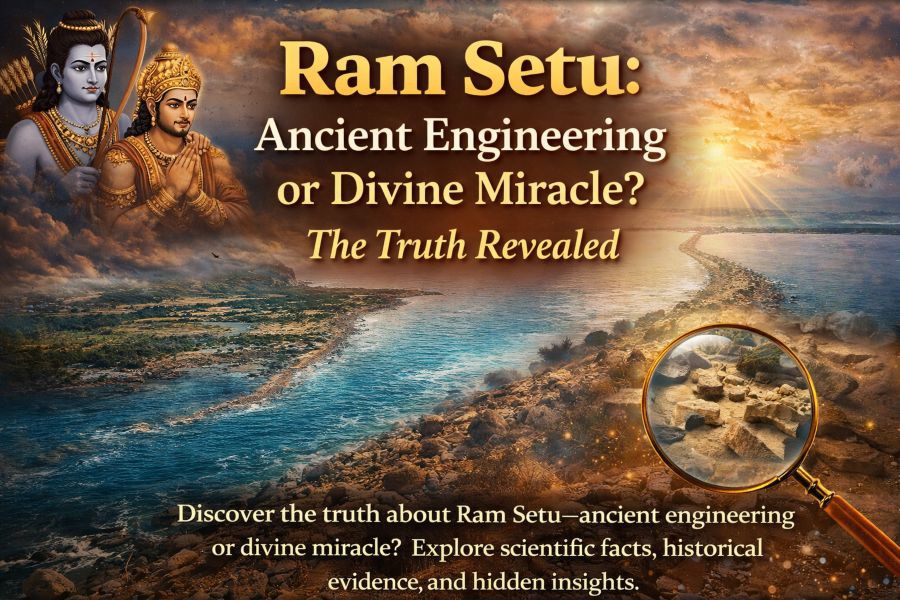
Ram Setu: Ancient Engineering or Divine Miracle? The Truth Revealed
The Science Factor: Ram Setu – Ancient Engineering or Divine Miracle? The Truth Revealed
Across the shallow waters between India and Sri Lanka lies one of the most debated structures in history—Ram Setu, also known as Adam’s Bridge. For centuries, it has lived at the intersection of faith, history, and science. Is it merely a natural formation shaped by geological forces, or does it reflect an extraordinary feat described in the Ramayana? To understand this question with clarity, it is essential to go beyond surface-level discussions and engage deeply with the original narrative. Those who truly wish to explore the detailed account often turn to the Complete Valmiki Ramayan Set, where the construction of Ram Setu is described with remarkable precision and spiritual context.
The fascination around Ram Setu is not just about belief—it is about evidence, interpretation, and the possibility that ancient knowledge systems may have been far more advanced than we assume today. Let us explore this mystery step by step.
What is Ram Setu?
Ram Setu is a chain of limestone shoals stretching approximately 30 kilometers between Rameswaram (India) and Mannar Island (Sri Lanka). From aerial views, it appears as a broken bridge-like structure connecting the two landmasses.
In the Ramayana, this bridge is described as being constructed by Lord Rama’s army of vanaras (monkey warriors) under the guidance of Nala, an engineer believed to be the son of Vishwakarma—the divine architect.
The Ramayana’s Description of the Bridge
According to the epic, the bridge was built in a remarkably short time to allow Rama’s army to cross the ocean and reach Lanka. The narrative describes:
- Stones being placed into the ocean
- Materials that could float on water
- A coordinated effort led by skilled planners
What is striking is the level of organization implied in the text. This is not portrayed as random construction but as a systematic engineering effort.
Scientific Perspective: Natural Formation or Man-Made?
Modern science has approached Ram Setu from a geological standpoint. Many researchers argue that:
- The structure is composed of natural sandbanks and coral formations
- It was formed due to sedimentation over thousands of years
- Ocean currents and tidal movements played a major role
Satellite imagery, including those released by space agencies, clearly shows the bridge-like formation. However, interpretation remains divided.
The Floating Stones Mystery
One of the most intriguing aspects associated with Ram Setu is the idea of floating stones. In the Ramayana, it is said that stones inscribed with Lord Rama’s name floated on water.
From a scientific angle, some stones found in the region are pumice-like, which can float due to their porous nature. However, pumice is typically formed through volcanic activity, which raises questions about its presence in this specific area.
This overlap between scriptural description and physical observation keeps the mystery alive.
Ancient Engineering Possibilities
If we consider the possibility that Ram Setu was engineered, it opens up fascinating questions:
- Did ancient civilizations possess advanced construction techniques?
- Could knowledge of buoyancy and material science have been understood differently?
- Was there a coordinated workforce capable of executing large-scale projects?
Historical evidence from other ancient structures—like pyramids and temples—suggests that early civilizations were capable of remarkable feats without modern technology.
The Role of Nala – The Forgotten Engineer
The Ramayana attributes the construction of the bridge to Nala, who is said to have inherited architectural knowledge from Vishwakarma.
This detail is significant because it introduces the concept of specialized expertise within the narrative. It suggests that even in ancient storytelling, there was recognition of engineering skill and planning.
Satellite Evidence and Modern Curiosity
In recent decades, satellite images have brought Ram Setu back into global discussion. The visible chain-like formation has led many to reconsider the possibility that the structure might not be entirely natural.
While science has yet to provide a definitive answer, the existence of the formation itself is undeniable.
Faith vs Science – A False Divide?
The debate around Ram Setu is often framed as faith versus science. However, this binary perspective may be limiting.
Faith provides meaning and continuity, while science seeks explanation and evidence. In the case of Ram Setu, both perspectives can coexist:
- Faith sees it as a divine miracle guided by Lord Rama
- Science explores it as a geological or possibly engineered structure
The truth may lie in a space where both interpretations enrich our understanding.
Cultural and Spiritual Significance
Regardless of its origin, Ram Setu holds immense cultural value. It represents:
- Determination in the face of impossible odds
- Unity and collective effort
- The triumph of righteousness
For millions, it is not just a physical structure but a symbol of devotion and perseverance.
Why the Mystery Still Matters
In an age of advanced technology, the mystery of Ram Setu reminds us that not everything from the past is fully understood. It challenges us to:
- Re-examine ancient texts with fresh perspectives
- Respect traditional knowledge systems
- Remain open to possibilities beyond current explanations
Lessons from Ram Setu
Beyond the debate, Ram Setu offers timeless lessons:
- Collaboration leads to success – The bridge was built through collective effort
- Faith can inspire action – Belief drove the impossible to become possible
- Knowledge evolves – What seems mythical today may have roots in reality
Final Thoughts
Ram Setu continues to stand as one of the most compelling intersections of mythology, history, and science. Whether viewed as an ancient engineering marvel or a divine creation, its significance goes far beyond its physical form.
The real question may not be whether it is purely scientific or purely spiritual—but whether we are willing to explore both dimensions with curiosity and respect.
In doing so, Ram Setu becomes more than a bridge between two lands—it becomes a bridge between belief and understanding, past and present, and mystery and discovery.
Posted in: Ramayana Chronicles
Related posts
-
 The Untold Secrets of Ramayana: 10 Hidden Facts You Didn’t KnowDiscover 10 lesser-known facts from the Ramayana that reveal hidden secrets, deeper meanings, and surprising truths...Read more
 -
 What Happened After Ravana’s Death? The Untold Story of Lanka’s New EraDiscover what happened after Ravana’s death and how Lanka transformed under Vibhishana’s rule in this untold Ramayana...Read more
 -
 Beyond Strength: Why Hanuman is the Ultimate Symbol of Selfless Seva and Divine DevotionExplore how Hanuman embodies the true spirit of seva (selfless service) through his devotion, humility, and...Read more
 -
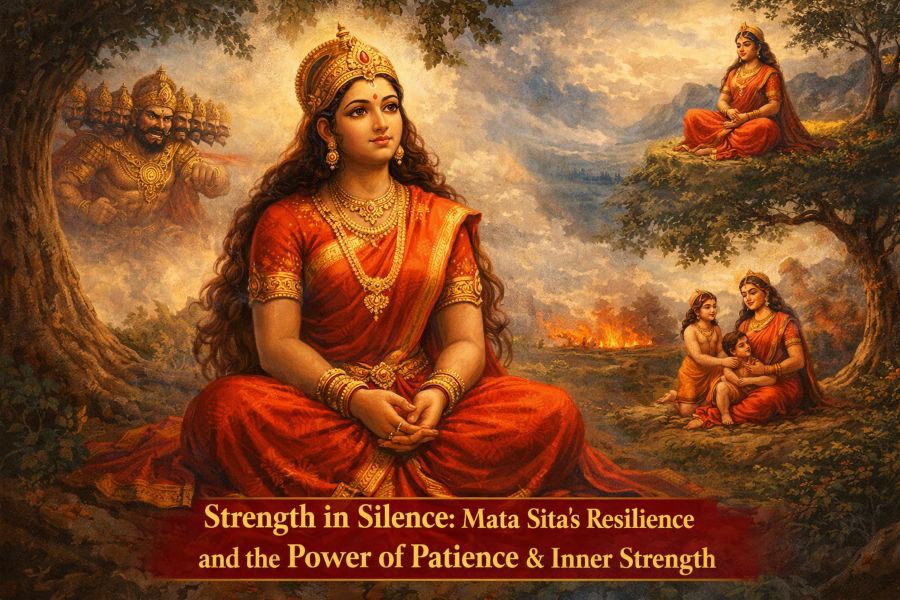 Strength in Silence: Mata Sita’s Resilience and the Power of Patience & Inner StrengthExplore how Mata Sita’s journey in the Ramayana reveals the true meaning of patience, resilience,...Read more
 -
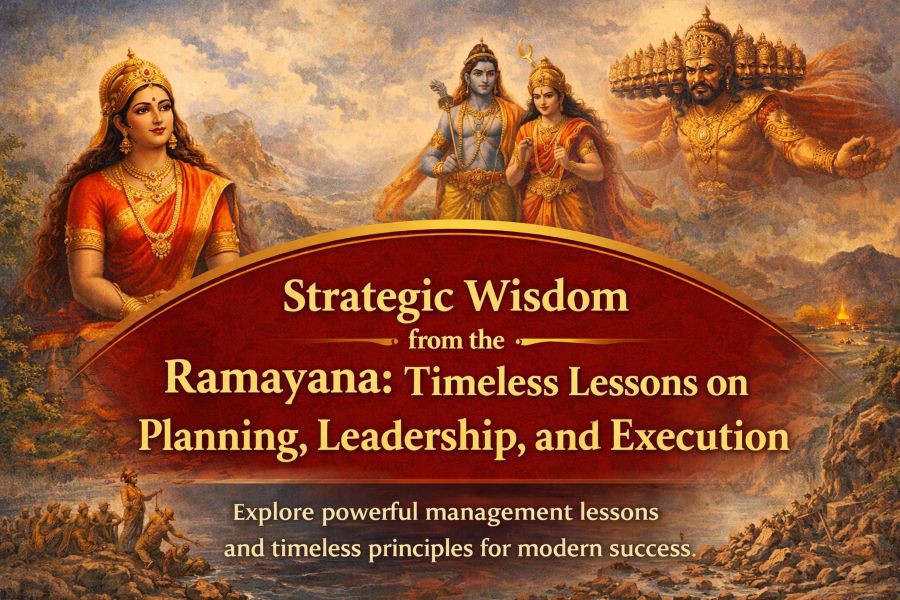 Strategic Wisdom from the Ramayana: Timeless Lessons on Planning, Leadership, and ExecutionExplore how the Ramayana reveals timeless management principles—offering powerful insights into strategic planning,...Read more
Leave a comment