
Why did Krishna run to embrace a poor brahmin in rags? Read the Sudama story from the Bhagavatam and learn how a...
Latest posts
-
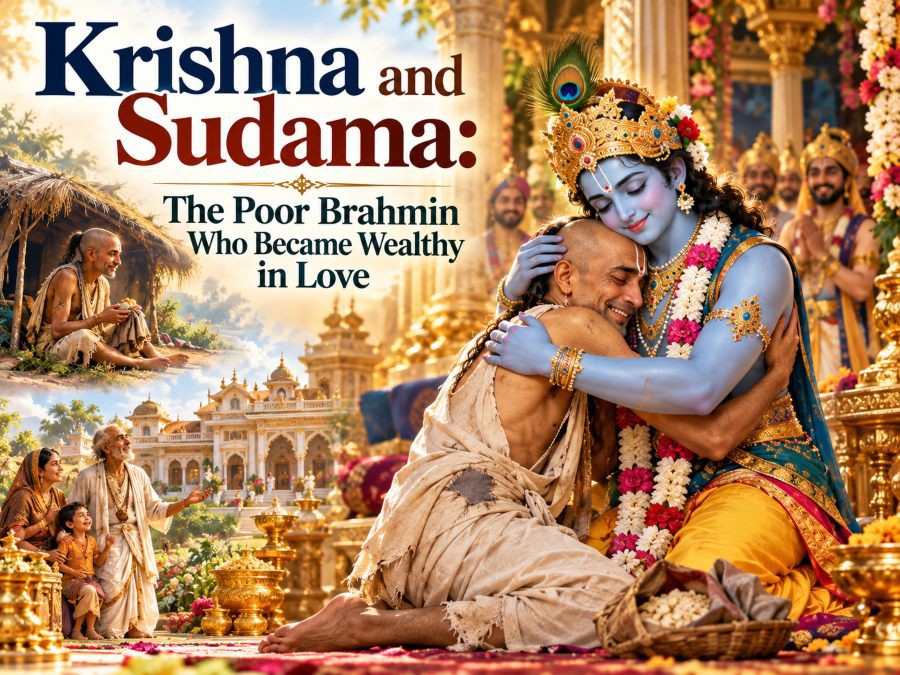 Krishna and Sudama: The Poor Brahmin Who Became Wealthy in LoveRead more
 -
 Vamana Avatar: How Three Steps Humbled Bali MaharajaRead more
Why did a powerful king give away three worlds to a boy asking for three steps? Learn the Vamana avatar story from...
-
 The Bhagavatam on Marriage: Duty, Love and Spiritual PartnershipRead more
What does the Bhagavatam say about marriage? Through the stories of Kardama and Devahuti, Rukmini's secret letter and...
-
 What Is Prema? The Bhagavatam's Highest Stage of Love for GodRead more
Prema is love for God with no "because" attached. Learn how the Bhagavatam describes it, the nine steps from faith to...
-
 Is Shiva Parvati Kalyana Mentioned in Srimad Bhagavatam? What the Scripture Really SaysRead more
Looking for Shiva and Parvati's wedding in the Srimad Bhagavatam? Find out what the scripture actually describes,...
-
 How Many Modes of Devotion Are Mentioned in Bhagavatam?Read more
A young boy named Prahlada listed nine ways to serve God, and the Bhagavatam keeps them as its answer. Learn what the...
-
 What Is Bhagavatam and Why Has It Been Read for 5,000 Years?Read more
A dying king asked one question, and the answer became the Bhagavatam. Learn what this Sanskrit scripture contains,...
-
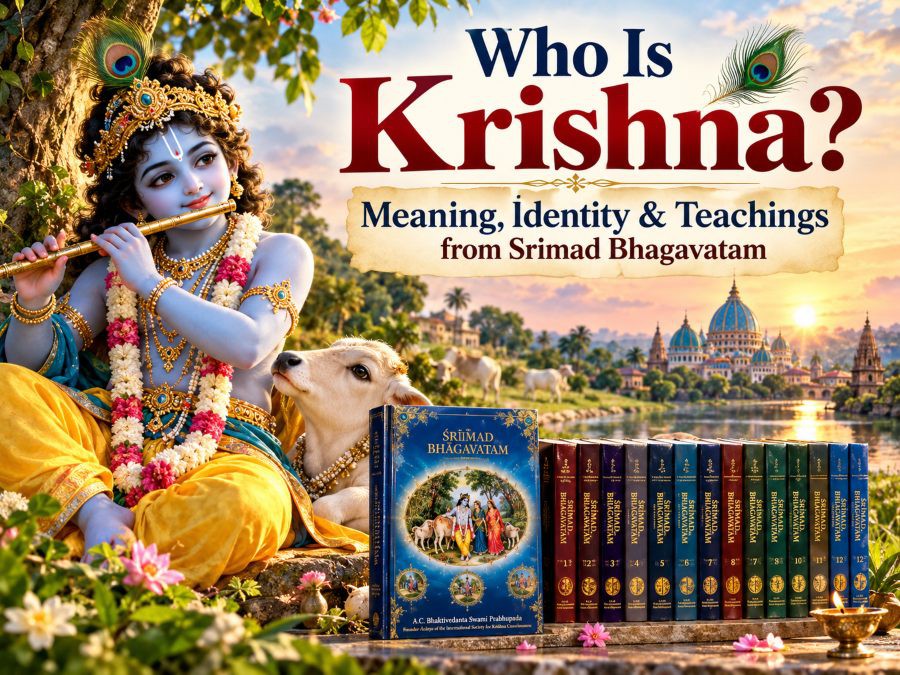 Who Is Lord Krishna? His Meaning, Teachings and Pastimes ExplainedRead more
Discover who Krishna is according to Srimad Bhagavatam, including His divine identity, childhood pastimes, teachings,...
-
 Incense in Islam: Bakhoor, Agarbatti and What Tradition SaysRead more
Is burning fragrance part of Muslim tradition? Explore incense in Islam, from the Prophetic practice of fumigating...
-
 History of Agarbatti: From Vedic Dhupa to Modern Incense SticksRead more
Where did agarbatti really come from? Follow the history of agarbatti from Vedic fire rituals and temple dhupa to...
Blog categories
- Default category (0)
- MUSICAL INSTRUMENT (1)
- BOOK (5)
- DEVOTIONAL GIFT (0)
- Blog (30) click
- CHANDAN (12)
- Bhagavatam Wisdom Series (68)
- Krishna Consciousness (14)
- Mridangam Musical Instrument (6)
- Bhagavad Gita for Beginners (13)
- Bhagavad Gita As It Is (37) click
- Bhagavad Gita As It Is Telugu (0)
- Bhagavad Gita As It Is Marathi (0)
- Bhagavad Gita As It Is In Hindi (0)
- Bhagavad Gita As It Is In English (0)
- Bhagavad Gita As It Is In Bengali (8)
- Bhagavad Gita As It Is In Kannada (0)
- Bhagavad Gita As It Is In Gujarati (0)
- Bhagavad Gita As It Is In Panjabi (0)
- Bhagavad Gita As It Is In Tamil (0)
- Bhagavad Gita As It Is Odia (0)
- BHAGAVAD GITA As It Is GERMAN (0)
- Bhagavad Gita As It Is In French (0)
- Bhagavad Gita As It Is In Nepali (0)
- Bhagavad Gita As It Is In Assamese (0)
- Incense or Agarbatti (38)
- Lord Chaitanya Mahaprabhu (3)
- Vedic Temple Mayapur (14)
- kalki (15)
- Mahabharata – Dharma & Destiny (27)
- Vaishnava Scriptures (4)
- healthy product (4)
- chaitanya mahaprabhu (5)
- Tulsi Mala Guide (17)
Search in blog

Hiranyaksha's Challenge: The Demon Who Fought Varaha
Hiranyaksha's Challenge: The Demon Who Fought Varaha
What kind of person would look at the entire cosmic order and decide that he could challenge anyone—even the Supreme Lord Himself? The story of Hiranyaksha is not simply a tale about a powerful demon and a divine boar. In the Srimad Bhagavatam, his challenge becomes a study of pride, uncontrolled ambition, spiritual blindness, and the extraordinary appearance of Lord Vishnu as Varaha. Set within the larger Vedic understanding of the four yugas, the episode shows what happens when immense strength is separated from humility and devotion.
Hiranyaksha was extraordinarily powerful. He had conquered regions of the universe, intimidated celestial beings, and developed such confidence in his own strength that he began searching for an opponent worthy of him. Yet his greatest mistake was not his desire for battle. It was his inability to recognize the difference between power and ultimate authority.
His confrontation with Varaha is therefore much more than an ancient cosmic battle.
It is a collision between arrogance and divine purpose.
Who Was Hiranyaksha?
Hiranyaksha was one of the two famous demon brothers born to Diti and the sage Kashyapa. His brother was Hiranyakashipu, who would later become the central antagonist in the story of Prahlada and Lord Narasimha.
The two brothers were powerful from the beginning, but Hiranyaksha developed a particularly intense attachment to physical strength and domination.
His name itself is revealing.
“Hiranyaksha” is commonly explained in connection with hiranya, meaning gold, and aksha, meaning eye. The name can be understood as one whose eyes are fixed upon gold or material wealth.
Whether we treat that meaning as symbolic or simply as part of the traditional naming system, it fits his character remarkably well.
His attention was directed outward.
He valued strength.
He valued conquest.
He wanted superiority.
And the more power he acquired, the less satisfied he became.
That pattern is familiar even outside mythology. A person who gains authority does not necessarily become peaceful. Sometimes success simply creates a larger appetite for recognition.
Hiranyaksha represents that appetite taken to a cosmic scale.
The Birth of a Dangerous Ambition
The Srimad Bhagavatam does not present Hiranyaksha as an ordinary villain who suddenly becomes evil for no reason.
His character develops within a larger story about the nature of the living being and the consequences of material consciousness.
Hiranyaksha possesses extraordinary physical strength, but his understanding of reality is distorted.
He sees power as the highest form of security.
If he can defeat others, he believes he cannot be threatened.
If he can dominate the universe, he believes nothing can stand above him.
This is the psychology of unchecked pride.
The more powerful the ego becomes, the harder it becomes to recognize one's own limits.
Hiranyaksha's challenge eventually grows beyond ordinary warfare. He wants to find someone who can match him.
That search will take him directly toward Vishnu.
Why Hiranyaksha Wanted to Fight
There is something almost strange about Hiranyaksha's behavior.
He has already achieved tremendous power.
He has frightened the devas.
He has become a formidable force throughout the universe.
Yet he is not satisfied.
He wants combat.
He wants proof.
He wants an opponent worthy of his strength.
This is one of the subtle ideas in the Srimad Bhagavatam: material power often creates its own hunger.
A person who wants wealth may eventually want more wealth.
A person who wants recognition may eventually need greater recognition.
A person who wants dominance may eventually search for stronger opponents simply to prove that he is dominant.
Hiranyaksha is caught in this cycle.
His strength has not liberated him from insecurity.
It has made the insecurity larger.
The Devas Become His Targets
As Hiranyaksha moves through the universe, the devas become cautious around him.
He is not merely physically strong. He has developed the confidence to challenge beings who possess positions of great cosmic authority.
But the devas understand something Hiranyaksha does not.
There is always a higher authority.
Power within the material universe is never absolute.
A deva may control a particular function of cosmic administration, yet that does not make the deva the Supreme Being.
Hiranyaksha, however, wants the satisfaction of finding someone he can defeat.
He begins searching for a worthy opponent.
That search becomes almost comical at times because powerful beings avoid confronting him directly.
Eventually, Hiranyaksha encounters Varuna, the lord associated with the waters.
Varuna Refuses the Challenge
Hiranyaksha approaches Varuna and demands a fight.
He wants to test his strength.
Varuna, however, does not accept the challenge.
Instead, he directs Hiranyaksha toward Lord Vishnu, whom he identifies as the true opponent capable of satisfying his desire for combat.
This moment is significant.
Varuna does not simply run away.
He recognizes the limits of his own position.
He knows that Hiranyaksha's challenge is beyond what he should engage in.
Hiranyaksha interprets the situation differently.
He sees the search for Vishnu as an opportunity.
He does not understand that he is moving toward the person who will end his reign of arrogance.
The Earth Beneath the Cosmic Waters
Around this time, another major crisis is unfolding.
The Earth has become submerged beneath the cosmic waters.
The situation requires divine intervention.
Lord Vishnu prepares to appear in His Varaha form.
This is one of the most memorable incarnations described in the Srimad Bhagavatam.
The Supreme Lord appears as a gigantic divine boar and enters the cosmic waters to recover the Earth.
The image is extraordinary.
A boar may seem like an unlikely form for the Supreme Lord, but that is precisely part of the teaching.
The Lord is not restricted by human expectations.
He can appear in any form suitable for His purpose.
As Varaha, He combines immense strength with a specific mission: to rescue the Earth and restore cosmic order.
Hiranyaksha, meanwhile, is searching for an opponent.
The two paths are about to meet.
When Hiranyaksha Sees Varaha
Hiranyaksha eventually sees Varaha carrying the Earth.
Instead of recognizing the divine mission taking place before him, he sees an opportunity for confrontation.
This is the defining feature of his character.
He sees God and thinks, “Here is someone I can fight.”
That is spiritual blindness in its most dramatic form.
The Lord is restoring the Earth.
Hiranyaksha is interested only in proving himself.
The contrast could hardly be sharper.
One is acting for the welfare of creation.
The other is acting for his own glory.
Hiranyaksha Tries to Humiliate the Lord
Hiranyaksha begins insulting Varaha.
His words are designed to provoke.
He mocks the divine form and questions the Lord's actions.
He wants Varaha to abandon His mission and fight him immediately.
But Varaha remains focused.
This is an important detail.
The Lord does not become distracted by the demon's insults.
His purpose is clear.
The Earth must be rescued.
The demon's pride can be dealt with afterward.
There is a practical lesson here.
When someone understands their purpose clearly, provocation loses much of its power.
Hiranyaksha wants an emotional reaction.
Varaha remains centered on the task.
Why the Demon Could Not Understand the Divine Form
The appearance of Varaha also raises a deeper philosophical question.
Why would someone fail to recognize the Supreme Lord even when standing directly before Him?
The Srimad Bhagavatam repeatedly explores this problem.
The living being can become so absorbed in material identification that spiritual reality becomes almost invisible.
A person may see the same event as another person but interpret it completely differently.
To a devotee, Varaha is Vishnu.
To Hiranyaksha, Varaha is merely an unusual opponent.
The difference is not in the object being seen.
It is in the consciousness of the observer.
That idea remains powerful today.
Our desires influence our perception.
If someone is obsessed with competition, they may interpret every situation as a contest.
If someone is obsessed with money, they may see every opportunity through financial gain.
If someone is absorbed in service, the same world can look completely different.
Hiranyaksha sees a battlefield.
Varaha sees a responsibility.
The Battle Begins
Eventually, the confrontation becomes unavoidable.
Varaha and Hiranyaksha engage in combat.
The battle is described on a tremendous scale. Weapons are used, blows are exchanged, and the conflict becomes a spectacular demonstration of strength.
Hiranyaksha is not weak.
That point matters.
The Bhagavatam does not make him powerful merely so that Varaha can defeat an insignificant enemy.
Hiranyaksha is a genuine cosmic threat.
His strength is immense.
His determination is relentless.
His confidence is extreme.
And precisely because he possesses these qualities, his defeat carries meaning.
The Lord does not simply overpower an ordinary opponent.
He defeats a being who represents material strength pushed beyond all restraint.
The Meaning Behind the Weapons
The battle contains detailed descriptions of weapons and fighting techniques, but the deeper significance lies in what those weapons represent.
Hiranyaksha's strength is directed outward.
Everything he possesses becomes a tool for domination.
Varaha's strength is directed toward protection.
The same concept of power therefore has two completely different expressions.
One asks:
“How much can I control?”
The other asks:
“What can I protect?”
That difference separates tyranny from responsible strength.
It is one of the most useful ways to read the battle without reducing it to a simple good-versus-evil story.
Varaha: Strength With a Purpose
At the heart of the narrative stands Varaha.
The Lord's appearance is not merely about physical power. It is about power aligned with divine purpose.
Varaha enters the cosmic waters.
He finds the Earth.
He lifts her safely.
And when Hiranyaksha challenges Him, He does not abandon His responsibility.
The demon wants recognition.
Varaha wants restoration.
The demon fights for himself.
Varaha fights for the world.
This contrast explains why the story feels so much larger than a battle scene.
Power becomes meaningful only when we ask what it is being used for.
A person may be physically strong, intellectually gifted, wealthy, politically influential, or socially respected. None of these qualities automatically make the person wise.
Hiranyaksha had strength.
What he lacked was surrender to a higher truth.
The Battle Intensifies
As the battle continues, Hiranyaksha becomes increasingly furious.
He is accustomed to overwhelming others.
Now he has found an opponent who cannot be intimidated.
That creates a psychological crisis.
The demon's identity has been built around superiority.
If Varaha cannot be defeated, what happens to that identity?
Instead of reconsidering his assumptions, Hiranyaksha becomes more aggressive.
This is a common pattern in human behavior.
When evidence challenges a person's ego, the person does not always become humble.
Sometimes the reaction is anger.
The stronger the attachment to being right, powerful, or superior, the more threatening contradiction becomes.
Hiranyaksha embodies this tendency on a cosmic scale.
Why Varaha Does Not Hate Hiranyaksha
Another interesting feature of the story is the difference between defeating an enemy and hating an enemy.
Hiranyaksha attacks the Lord with hatred.
Varaha does not need hatred to defeat him.
The Lord acts because restoring order requires the removal of the threat.
That distinction matters.
A person can oppose destructive behavior without allowing hatred to become the center of consciousness.
The Bhagavatam's divine characters often demonstrate this difference between personal revenge and righteous action.
Varaha is not driven by wounded pride.
He is fulfilling His role.
The Final Moment of Hiranyaksha
After a fierce battle, Lord Varaha ultimately defeats Hiranyaksha.
The demon's extraordinary strength reaches its limit.
The one who had searched the universe for a worthy opponent finally discovers the opponent he could not overcome.
The ending is not simply the destruction of a villain.
It is the collapse of an illusion.
Hiranyaksha believed that strength could make him independent of every higher authority.
His death reveals the opposite.
No material power makes the living being independent of the Supreme.
His physical strength was real.
His courage was real.
His determination was real.
But those qualities existed within a reality governed by something greater than himself.
What Hiranyaksha's Defeat Teaches About Ego
The story becomes especially interesting when viewed through the psychology of ego.
Ego is not simply confidence.
Healthy confidence allows a person to act effectively while recognizing limitations.
Hiranyaksha's problem is different.
His identity depends upon superiority.
He needs others to be weaker so that he can feel powerful.
That creates an endless cycle.
He must conquer.
Then conquer someone stronger.
Then find another challenge.
There is never enough.
The Bhagavatam's portrayal of Hiranyaksha therefore exposes a paradox:
The person obsessed with proving his power may actually be controlled by the need to prove it.
He appears free.
But he is driven by insecurity and desire.
That is another reason his story remains relevant.
Hiranyaksha and Modern Ambition
It would be easy to place Hiranyaksha safely in the category of ancient demons and assume the story has nothing to do with ordinary life.
But his psychological pattern is familiar.
Think about ambition.
Ambition itself is not necessarily bad. Without ambition, people might never create, learn, lead, or accomplish difficult things.
The problem begins when achievement becomes an identity.
Then success is no longer enough.
The person must be better than someone else.
More admired.
More influential.
More powerful.
More successful.
The mind keeps moving the finish line.
Hiranyaksha represents the extreme end of this process.
His question is always:
“Who is stronger than me?”
A healthier question is:
“What should I use my strength for?”
That small change in perspective can transform ambition into service.
The Earth Rescue Is the Real Mission
There is another reason Hiranyaksha's challenge matters.
The battle does not happen in isolation.
Varaha has a mission.
The Earth has been submerged.
Creation needs restoration.
The demon's challenge is an interruption.
This changes how we understand the Lord's response.
Varaha does not appear because He needs to prove His strength.
He already possesses unlimited power.
He appears because the Earth needs protection.
That distinction is essential.
The Supreme Lord does not need validation.
Hiranyaksha does.
This is why their confrontation feels psychologically uneven even though the physical battle is intense.
One fighter is trying to establish his identity.
The other is simply fulfilling His purpose.
What the Srimad Bhagavatam Says About Divine Intervention
The Srimad Bhagavatam presents divine intervention as something that appears when cosmic balance is seriously disturbed.
The Supreme Lord does not remain distant from creation.
He enters it.
He responds to the needs of the world.
The Varaha incarnation demonstrates this principle vividly.
The Lord takes a form appropriate to the situation, enters the cosmic waters, rescues the Earth, and defeats the force threatening the restoration of order.
This is one of the central ideas behind the doctrine of avatara.
The Supreme appears according to purpose.
The form may change.
The divine source does not.
Why Hiranyaksha Could Not Win
Hiranyaksha possessed many qualities that can look impressive at first glance:
· enormous physical strength,
· fearlessness,
· determination,
· courage in battle,
· confidence,
· extraordinary endurance.
So why did he lose?
Because those qualities were directed by false understanding.
Strength without wisdom becomes dangerous.
Courage without discrimination becomes recklessness.
Confidence without humility becomes arrogance.
Determination without spiritual direction becomes obsession.
Hiranyaksha did not lack energy.
He lacked the right destination for that energy.
That is one of the Bhagavatam's most subtle lessons.
The problem is not always how much power we possess.
Sometimes the real problem is where we are taking it.
The Spiritual Meaning of the Cosmic Battle
The battle between Hiranyaksha and Varaha can also be understood as a spiritual picture of opposing tendencies within consciousness.
On one side is the urge to dominate.
On the other is the impulse to protect.
On one side is ego.
On the other is service.
On one side is the belief, “I am independent.”
On the other is the recognition, “I am part of a greater reality.”
This reading does not require us to abandon the traditional story.
Instead, it allows the story to speak on two levels.
There is a cosmic event involving Vishnu and Hiranyaksha.
And there is an inner struggle that human beings can recognize in their own lives.
Why the Demon Is Called Hiranyaksha
The traditional meaning associated with Hiranyaksha's name adds another layer to this interpretation.
Gold has always represented material attraction.
Gold itself is not inherently evil. Wealth can be used for good purposes.
The problem begins when wealth becomes the object around which the entire identity revolves.
The “eye fixed on gold” becomes a powerful metaphor.
What do we constantly look at?
What captures our attention?
What do we believe will finally make us secure?
What do we refuse to look away from?
Those questions are more uncomfortable than they first appear.
Our attention reveals our priorities.
Hiranyaksha's attention is fixed on material power.
That fixation ultimately blinds him to the presence of the Supreme Lord.
A Lesson in Recognizing Limits
One of the healthiest lessons from Hiranyaksha's story is the importance of recognizing limits.
Human beings naturally want to become stronger.
We want greater knowledge.
Better skills.
More resources.
More influence.
There is nothing inherently wrong with growth.
But growth becomes dangerous when it creates the belief that there is no authority higher than ourselves.
The Srimad Bhagavatam does not ask us to become weak.
It asks us to understand the source and purpose of our strength.
That is very different.
A spiritually mature person can be powerful without becoming arrogant.
They can lead without needing worship.
They can succeed without believing success makes them invulnerable.
They can fight injustice without becoming consumed by hatred.
Hiranyaksha shows the opposite path.
The Relationship Between Power and Devotion
The contrast between Hiranyaksha and Varaha also reveals something about devotion.
Devotion is sometimes misunderstood as weakness or passivity.
The Varaha story completely rejects that idea.
Varaha is immensely powerful.
He enters danger.
He fights a formidable enemy.
He restores the Earth.
Devotion, in this context, does not mean refusing to act.
It means acting in relationship with the Supreme rather than treating oneself as the supreme authority.
That is the difference.
Hiranyaksha wants power for himself.
Varaha uses power in divine service.
What We Can Learn From the Demon
Even a negative character can teach something valuable.
Hiranyaksha warns us about several tendencies:
1. Never confuse strength with independence.
Being capable does not mean being self-sufficient.
2. Do not let achievement become identity.
If your worth depends entirely on winning, every opponent becomes a threat.
3. Question what constantly attracts your attention.
What we stare at repeatedly begins to shape our desires.
4. Learn to recognize higher authority.
Wisdom begins when we understand that our perspective is not the whole of reality.
5. Give your strength a purpose.
Power becomes meaningful when it protects, serves, creates, and uplifts.
Why Varaha's Victory Is More Than a Victory
When Varaha defeats Hiranyaksha, the universe is not simply celebrating the end of a powerful demon.
The Earth can now be restored.
The cosmic order can continue.
The Lord's purpose has been fulfilled.
This is why the victory feels complete.
The demon's defeat is not the ultimate goal.
Restoration is.
That is a useful distinction for ordinary life as well.
Sometimes we become so focused on defeating an obstacle, proving someone wrong, or winning an argument that we forget the larger purpose.
Winning is not always the same as accomplishing what truly matters.
Varaha's mission provides a different model.
Remove the obstruction.
Restore what was damaged.
Continue the work.
The Story's Place in the Larger Bhagavatam
The episode of Hiranyaksha and Varaha appears within a much larger spiritual narrative.
The Srimad Bhagavatam repeatedly returns to themes of creation, preservation, devotion, divine incarnation, karma, and the relationship between the Supreme Lord and living beings.
The Varaha episode fits naturally into this structure.
A threat emerges.
The Earth is endangered.
The Supreme Lord appears.
The destructive force is confronted.
Order is restored.
But the story also prepares the reader for later events involving Hiranyaksha's brother, Hiranyakashipu.
The family connection is significant.
Hiranyaksha's death does not end the broader conflict between divine order and demonic ambition.
His brother will continue that struggle in another form.
And eventually, another extraordinary incarnation—Narasimha—will appear.
The Bhagavatam thus connects individual stories into a much larger spiritual history.
Hiranyaksha's Challenge and the Question of Real Victory
What does it mean to win?
Hiranyaksha would probably have answered:
To defeat everyone else.
The Bhagavatam gives another answer.
Real victory is not domination.
It is alignment with truth.
Hiranyaksha conquers others but cannot conquer his own pride.
Varaha does not need to prove anything, yet He accomplishes the task no one else can complete.
That contrast is the heart of the story.
The strongest person is not necessarily the one who makes everyone else submit.
Sometimes the greater strength belongs to the person who knows why they are acting.
The Demon Who Could Not See What Was Before Him
Perhaps the most haunting part of Hiranyaksha's story is that the Supreme Lord is standing directly before him.
The opportunity for recognition is right there.
Yet he sees only an enemy.
That is the tragedy of spiritual blindness.
Reality can be present, and we can still fail to recognize it because our desires determine what we are willing to see.
Hiranyaksha is so committed to proving his superiority that he cannot appreciate the divine purpose unfolding in front of him.
He challenges Varaha.
Varaha answers.
And the demon's entire worldview eventually collapses.
The Lasting Message of Hiranyaksha and Varaha
The story of Hiranyaksha remains powerful because it combines cosmic drama with a very human psychological truth.
Power can become an addiction.
Ambition can become insecurity.
Pride can make a person blind.
And the desire to prove oneself can become more controlling than any external enemy.
Against this stands Varaha.
The Lord does not appear to satisfy His ego.
He appears because the Earth needs protection.
He does not seek applause.
He completes His purpose.
He does not need to become Supreme.
He already is.
That is why the confrontation between Hiranyaksha and Varaha is so much more than a battle between a demon and a divine incarnation. It is a contrast between self-centered power and purposeful power, arrogance and humility, domination and service.
The Srimad Bhagavatam leaves us with a question that reaches far beyond the ancient cosmic battlefield:
If we were given great strength, influence, wealth, or intelligence, would we use it to prove that we are greater than others—or to protect something greater than ourselves?
Hiranyaksha chose domination.
Varaha chose restoration.
One sought to become the center of the universe.
The other appeared to put the universe back in its proper place.
And that is why the demon's challenge ends not with the triumph of the strongest ego, but with the victory of divine purpose.
Posted in: Bhagavatam Wisdom Series
Related posts
-
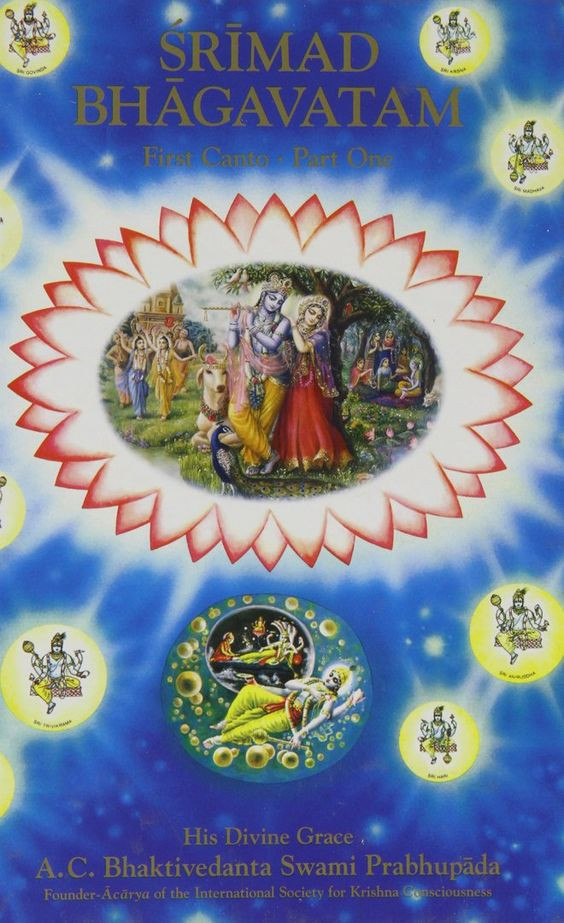 Why to read srimad bhagavatamReading the Srimad Bhagavatam fosters deep spiritual growth by narrating the life and teachings of Lord Krishna,...Read more
 -
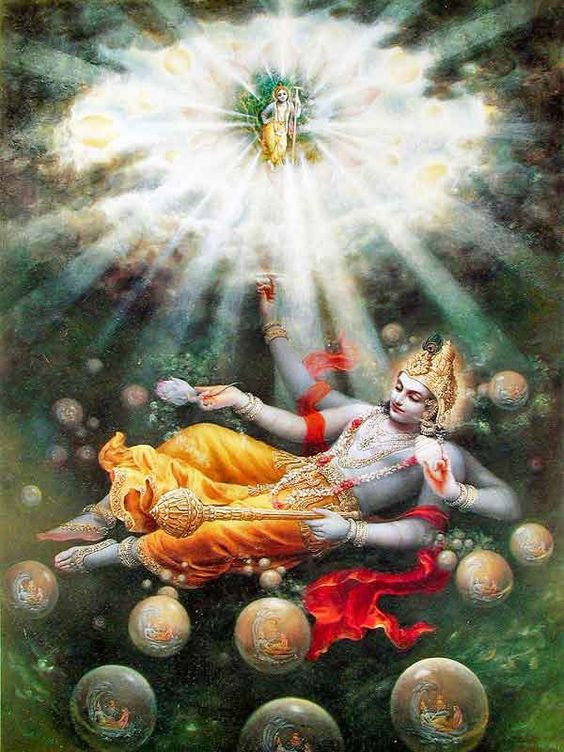 When was srimad bhagavatam written?The Srimad Bhagavatam is believed to have been written around 9th-10th century CE, though its oral traditions date...Read more
 -
 How many chapters are there in srimad bhagavatam?The Srimad Bhagavatam consists of 12 cantos (books) containing 335 chapters in total. Each canto covers various...Read more
 -
 How many skandhas are there in srimad bhagavatamThe Srimad Bhagavatam is divided into 12 skandhas (cantos or books). Each skandha explores different themes,...Read more
 -
 How many slokas in srimad bhagavatamThe Srimad Bhagavatam contains approximately 18,000 shlokas (verses). These verses are spread across its 12 skandhas...Read more
Leave a comment