
Why did Krishna run to embrace a poor brahmin in rags? Read the Sudama story from the Bhagavatam and learn how a...
Latest posts
-
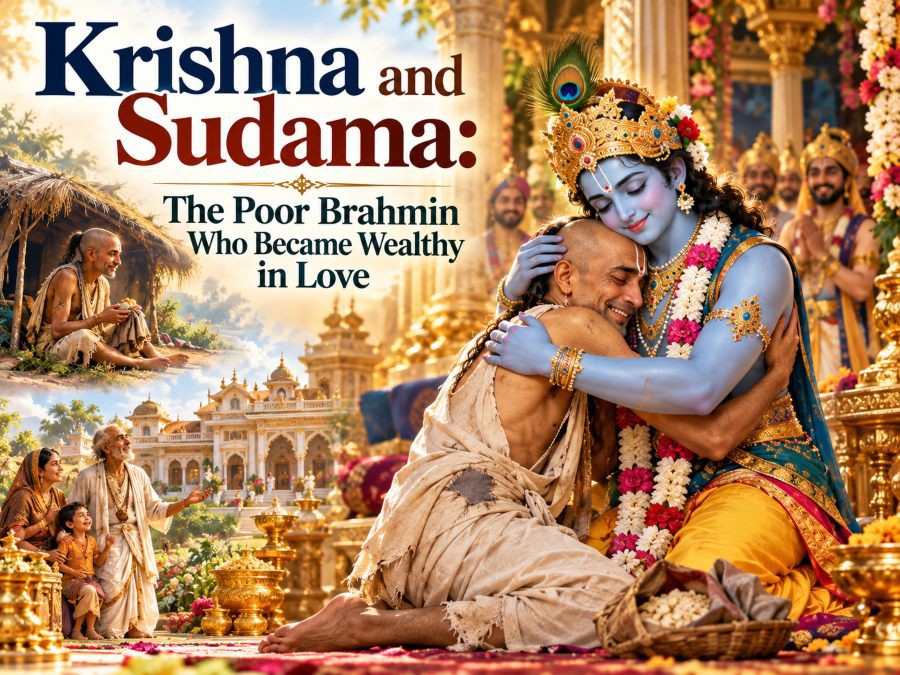 Krishna and Sudama: The Poor Brahmin Who Became Wealthy in LoveRead more
 -
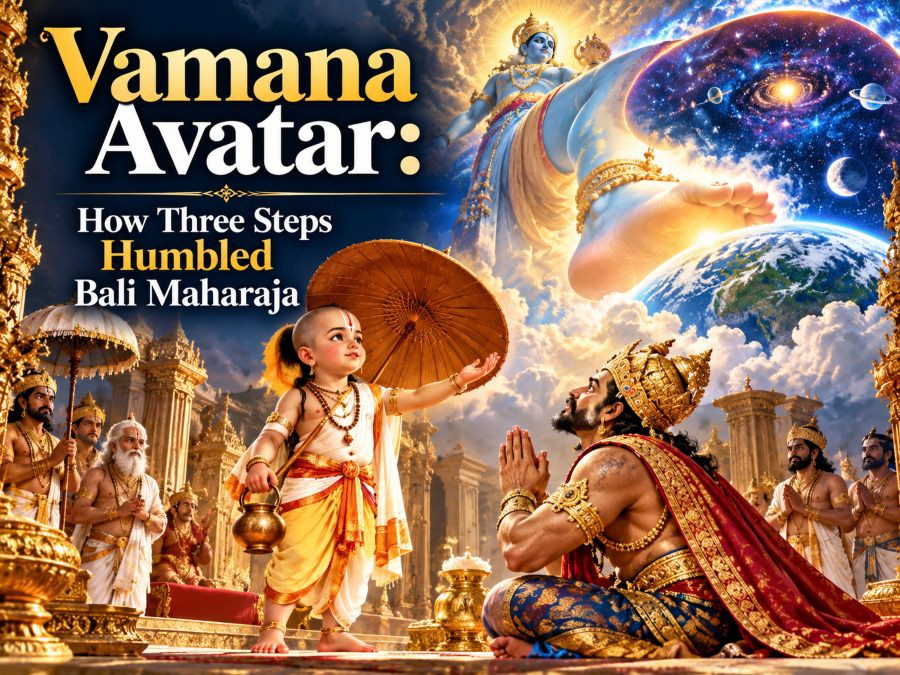 Vamana Avatar: How Three Steps Humbled Bali MaharajaRead more
Why did a powerful king give away three worlds to a boy asking for three steps? Learn the Vamana avatar story from...
-
 The Bhagavatam on Marriage: Duty, Love and Spiritual PartnershipRead more
What does the Bhagavatam say about marriage? Through the stories of Kardama and Devahuti, Rukmini's secret letter and...
-
 What Is Prema? The Bhagavatam's Highest Stage of Love for GodRead more
Prema is love for God with no "because" attached. Learn how the Bhagavatam describes it, the nine steps from faith to...
-
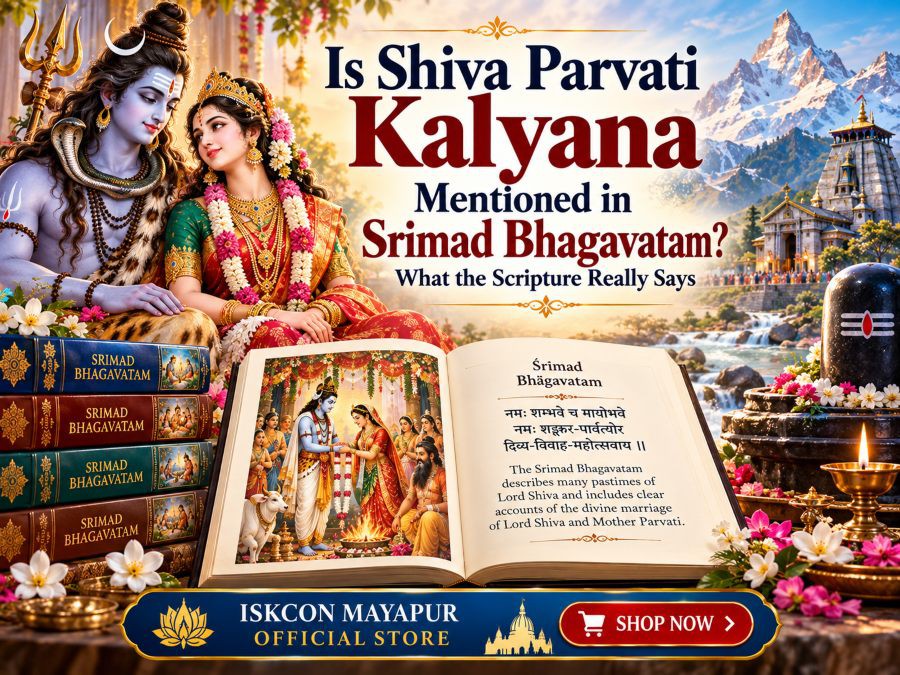 Is Shiva Parvati Kalyana Mentioned in Srimad Bhagavatam? What the Scripture Really SaysRead more
Looking for Shiva and Parvati's wedding in the Srimad Bhagavatam? Find out what the scripture actually describes,...
-
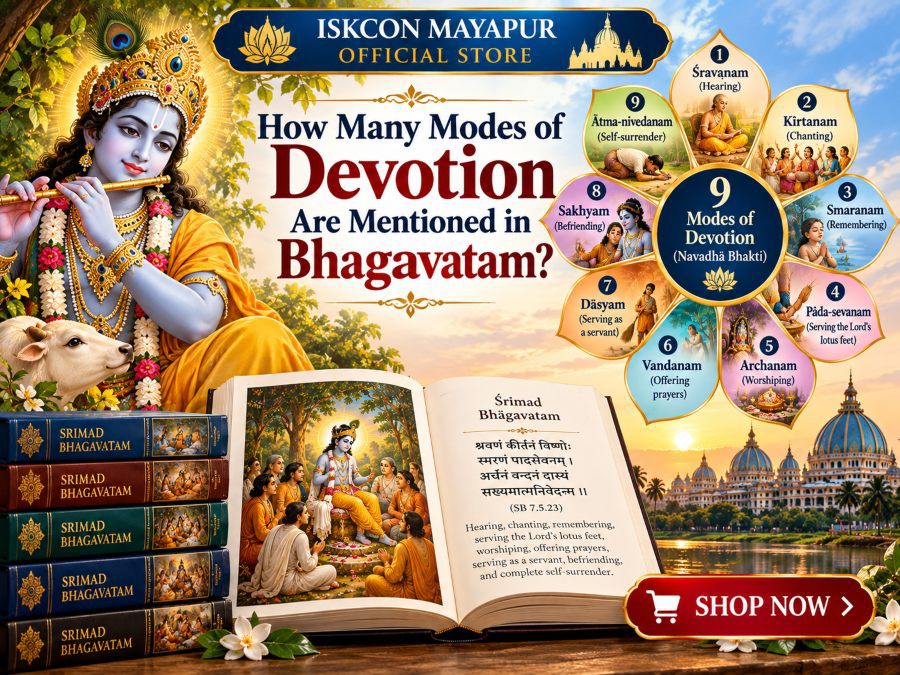 How Many Modes of Devotion Are Mentioned in Bhagavatam?Read more
A young boy named Prahlada listed nine ways to serve God, and the Bhagavatam keeps them as its answer. Learn what the...
-
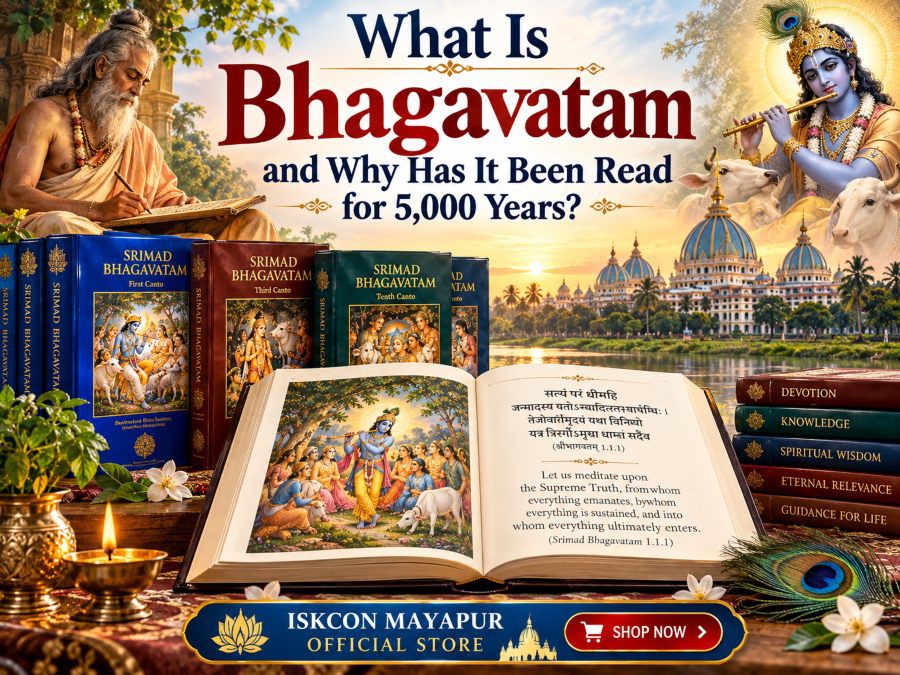 What Is Bhagavatam and Why Has It Been Read for 5,000 Years?Read more
A dying king asked one question, and the answer became the Bhagavatam. Learn what this Sanskrit scripture contains,...
-
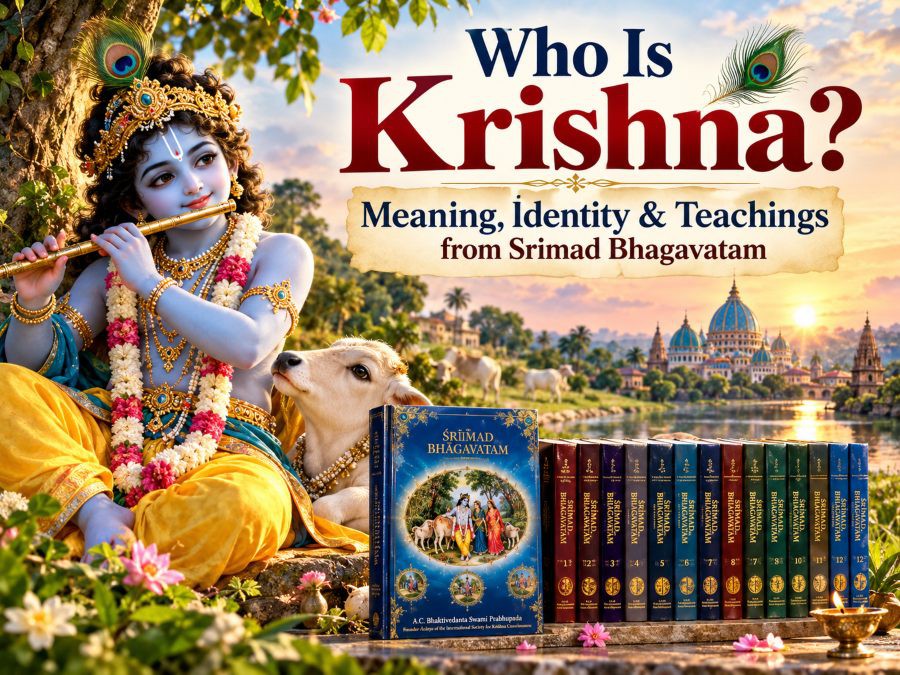 Who Is Lord Krishna? His Meaning, Teachings and Pastimes ExplainedRead more
Discover who Krishna is according to Srimad Bhagavatam, including His divine identity, childhood pastimes, teachings,...
-
 Incense in Islam: Bakhoor, Agarbatti and What Tradition SaysRead more
Is burning fragrance part of Muslim tradition? Explore incense in Islam, from the Prophetic practice of fumigating...
-
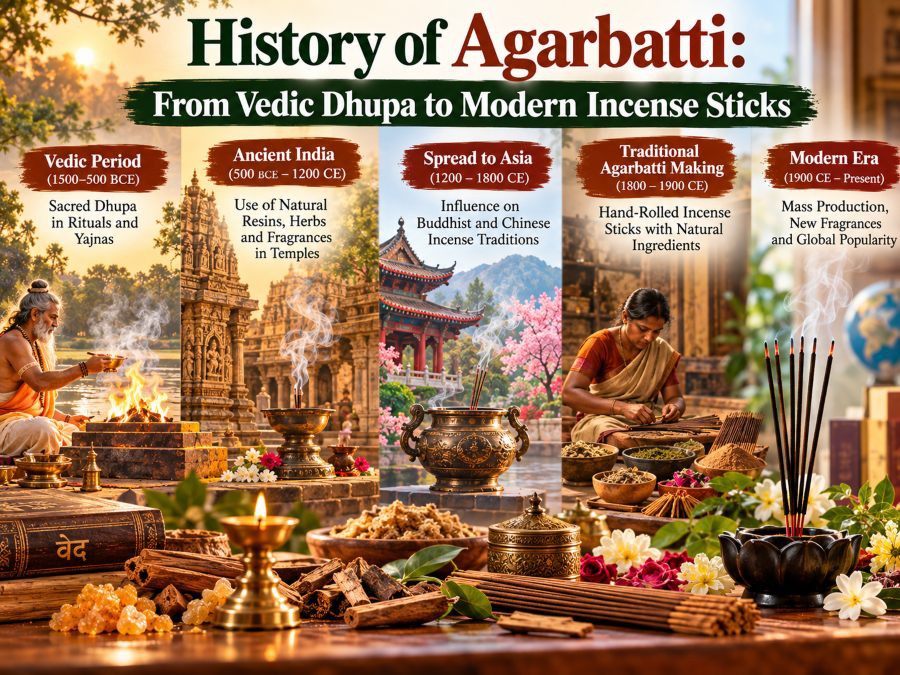 History of Agarbatti: From Vedic Dhupa to Modern Incense SticksRead more
Where did agarbatti really come from? Follow the history of agarbatti from Vedic fire rituals and temple dhupa to...
Blog categories
- Default category (0)
- MUSICAL INSTRUMENT (1)
- BOOK (5)
- DEVOTIONAL GIFT (0)
- Blog (30) click
- CHANDAN (12)
- Bhagavatam Wisdom Series (68)
- Krishna Consciousness (14)
- Mridangam Musical Instrument (6)
- Bhagavad Gita for Beginners (13)
- Bhagavad Gita As It Is (37) click
- Bhagavad Gita As It Is Telugu (0)
- Bhagavad Gita As It Is Marathi (0)
- Bhagavad Gita As It Is In Hindi (0)
- Bhagavad Gita As It Is In English (0)
- Bhagavad Gita As It Is In Bengali (8)
- Bhagavad Gita As It Is In Kannada (0)
- Bhagavad Gita As It Is In Gujarati (0)
- Bhagavad Gita As It Is In Panjabi (0)
- Bhagavad Gita As It Is In Tamil (0)
- Bhagavad Gita As It Is Odia (0)
- BHAGAVAD GITA As It Is GERMAN (0)
- Bhagavad Gita As It Is In French (0)
- Bhagavad Gita As It Is In Nepali (0)
- Bhagavad Gita As It Is In Assamese (0)
- Incense or Agarbatti (38)
- Lord Chaitanya Mahaprabhu (3)
- Vedic Temple Mayapur (14)
- kalki (15)
- Mahabharata – Dharma & Destiny (27)
- Vaishnava Scriptures (4)
- healthy product (4)
- chaitanya mahaprabhu (5)
- Tulsi Mala Guide (17)
Search in blog
Is Bhagavad Gita Real?
Is Bhagavad Gita Real?
Introduction: Why People Question the Reality of the Bhagavad Gita
The Bhagavad Gita is one of the most revered scriptures in the world, yet many people still ask whether it is historically real or just a mythological story.
This question arises because the Gita is spoken in the middle of the Kurukshetra battlefield, a setting that feels both divine and dramatic. With Lord Krishna guiding Arjuna through deep philosophical teachings, some people wonder if such an event truly happened, or whether the scripture was written later as symbolic wisdom.
Understanding the authenticity of the Bhagavad Gita requires exploring its historical background, archaeological evidence, scriptural references, and scholarly viewpoints. When all these elements are studied together, a detailed and compelling picture emerges that supports the reality of the Gita and its message.

The Historical Context: The Mahabharata as the Foundation
The Bhagavad Gita appears as a part of the Mahabharata, specifically within the Bhishma Parva.
The Mahabharata itself is considered one of the oldest and longest epics in the world. Indian tradition holds that the Mahabharata war occurred over 5,000 years ago, marking the transition to Kali Yuga.
Great sages, such as Ved Vyasa, are believed to have recorded the epic as it happened. The Gita is therefore presented not as a standalone text but as a conversation that took place at a crucial moment during the war.
Many scholars argue that even if one debates the exact dates, the geographical locations, descriptions of kingdoms, and details of the war reflect real historical settings consistent with ancient India.
READ ALSO:- who wrote bhagavad gita
Archaeological Evidence Supporting the Reality of the Gita
Modern archaeological studies have revealed multiple findings that align with the narrative of the Mahabharata.
Excavations in places like Hastinapur, Kurukshetra, Indraprastha, and Dwarka show urban planning, pottery styles, river patterns, and settlement layers that date back to periods consistent with the epic.
The discovery of submerged ancient structures in Dwarka strongly supports the existence of Krishna’s city. While archaeology alone cannot pinpoint a dialogue like the Gita, it proves that the cultural and historical world described in the Mahabharata was real. These findings validate the larger context in which the Bhagavad Gita is placed.
Scriptural Evidence and Cross-References
The Bhagavad Gita is not just mentioned in the Mahabharata; it is also referenced by multiple Vedic scriptures, Upanishads, and later commentaries by saints.
The teachings of the Gita align perfectly with earlier Vedic philosophies, such as the concepts of atma (soul), brahman (ultimate truth), karma (action), and dharma (duty).
This consistency shows that the Gita was not created randomly or separately. Instead, it fits harmoniously within the vast spiritual framework of Sanatana Dharma. Saints like Shankaracharya, Ramanujacharya, Madhvacharya, and Rupa Goswami have written extensive commentaries on the Gita, treating it as an authoritative and historical scripture.
The Role of Ved Vyasa as the Author
A key reason scholars consider the Bhagavad Gita to be real is the role of Ved Vyasa. He is regarded as one of the greatest literary figures in ancient history and is the compiler of the Vedas, the author of the Mahabharata, and the creator of the Puranas.
The consistency, depth, and precision of the Gita reflect Vyasa’s mastery and indicate that it was not an accidental or later-added text.
The Mahabharata itself states that Vyasa was present during the events and recorded them directly. If the author of the Gita was indeed witnessing the events of the Kurukshetra war, this strongly supports the scripture’s authenticity.
The Philosophical Strength of the Bhagavad Gita
Another way to understand the reality of the Gita is to study its message. The teachings of the Gita are so profound, structured, and interconnected that they are unlikely to be fabricated.
The Gita presents eighteen chapters of spiritual knowledge, covering karma yoga, jnana yoga, bhakti yoga, meditation, renunciation, self-realization, and the nature of the soul.
The clarity and depth of these teachings make the Gita stand out as a practical guide rather than a mythological poem. Philosophers around the world, from Einstein to Oppenheimer and Thoreau, have studied and praised the Gita.
Such universal acceptance across cultures and centuries indicates that the text contains genuine wisdom rooted in a real tradition.
The Battlefield Conversation: Symbolic or Literal?
A common question is whether Krishna actually spoke the Gita on the battlefield or whether the dialogue is metaphorical. The traditional understanding is that the Gita is a literal conversation that took place moments before the war began.
Arjuna, overwhelmed by seeing his family members on the opposite side, refused to fight. Krishna’s response was the Gita—eternal knowledge delivered at a critical moment of decision.
Some modern scholars interpret the Gita symbolically, suggesting that the battlefield represents the inner struggles of life.
While symbolic interpretations have their own insights, they do not invalidate the literal event. In fact, many symbolic explanations exist precisely because the original event was so powerful and detailed that it inspired deeper philosophical analysis.
READ ALSO:- how many slokas in bhagavad gita
Manuscript Evidence: How Old Are the Copies?
Many ancient manuscripts of the Bhagavad Gita have been discovered across India and Southeast Asia.
These manuscripts, some thousands of years old, show remarkable consistency. The uniformity among manuscripts found in Kashmir, Nepal, Bengal, Tamil Nadu, and Indonesia indicates that the Gita was not heavily altered or rewritten.
The stability of the Gita’s text over centuries suggests that it has been preserved with great care since ancient times.
Scriptural preservation traditions, such as memorization, chanting, and teaching through parampara (disciplic succession), ensured that the Gita remained authentic.

Cultural Continuity: Living Proof of the Gita’s Reality
The Bhagavad Gita is not just a scripture stored in libraries; it is a living tradition. Millions of people recite it daily, teach it in schools, discuss it in temples, and apply its guidance in their lives.
Such widespread cultural continuity cannot exist unless the scripture has deep historical roots. The consistent worship of Krishna, the lineage of gurus, the rituals of the Gita Mahotsav in Kurukshetra, and the global celebrations of Gita Jayanti all demonstrate that the world treats the Gita as a real, historical scripture.
Global Influence: Why the World Accepts the Gita as Real
The Bhagavad Gita is one of the most translated books in history, available in over 100 languages.
Deep thinkers such as Mahatma Gandhi, Aldous Huxley, Ralph Waldo Emerson, and Leo Tolstoy have admired the Gita. Gandhi called it his “spiritual dictionary,” while Oppenheimer recited verses from the Gita after witnessing the first nuclear explosion.
Such global recognition further strengthens its status as an authentic, serious text—not a fictional story. No other ancient scripture has maintained such relevance across cultures, time periods, and disciplines.
Scientific and Psychological Relevance
Modern researchers view the Bhagavad Gita as a powerful psychological and philosophical guide. Studies on stress management, decision-making, and leadership often reference Krishna’s teachings.
The concepts of detached action, devotion, meditation, and resilience are universal ideas supported by modern psychology.
Scientific relevance does not prove historical accuracy by itself, but it does demonstrate that the Gita expresses real and practical principles consistent with human nature. A text with this level of psychological truth is unlikely to be fictional.
The Krishna-Arjuna Relationship: Real Personalities or Myth?
Arjuna, as a historical warrior prince, is mentioned in multiple scriptures. Krishna is referenced in the Harivamsa, Bhagavatam,
Vishnu Purana, and numerous stone inscriptions. The existence of two real personalities strengthens the likelihood that their dialogue was also real.
Their friendship, struggles, ethical dilemmas, and philosophical discussions feel authentic, reflecting the emotional depth of real human experiences.
Was the Gita Added Later? Addressing Scholarly Doubts
Some modern historians suggest that the Gita might have been added to the Mahabharata later. This view is based on linguistic and stylistic differences.
However, many scholars disagree and argue that the Gita fits perfectly within the epic’s structure.
Even those who debate the date do not deny the philosophical authenticity or cultural acceptance of the text. Ultimately, whether the Gita was spoken exactly in 3102 BCE or written slightly later does not reduce its spiritual authority or historical significance.
Why the Gita Feels Real Even Today
One reason people accept the Gita as real is that its teachings remain timeless. Every generation finds new meaning in Krishna’s words.
The struggles Arjuna faced—confusion, fear, responsibility, moral dilemmas—are universal human experiences.
When people read the Gita, they often feel that Krishna is speaking directly to them. This emotional and spiritual impact supports the idea that the Gita comes from a genuine, divine source.
Conclusion: Yes, the Bhagavad Gita Is Historically and Spiritually Real
After examining historical evidence, archaeological discoveries, manuscript consistency, scriptural references, the authority of Ved Vyasa, and the global influence of the Gita, the answer becomes clear: the Bhagavad Gita is real.
It reflects true ancient history, conveys timeless spiritual wisdom, and continues to guide millions. Whether one approaches the Gita through faith, philosophy, archaeology, or cultural study, the conclusion remains the same—the Gita is an authentic and eternal scripture that continues to illuminate the lives of people around the world.
Related posts
-
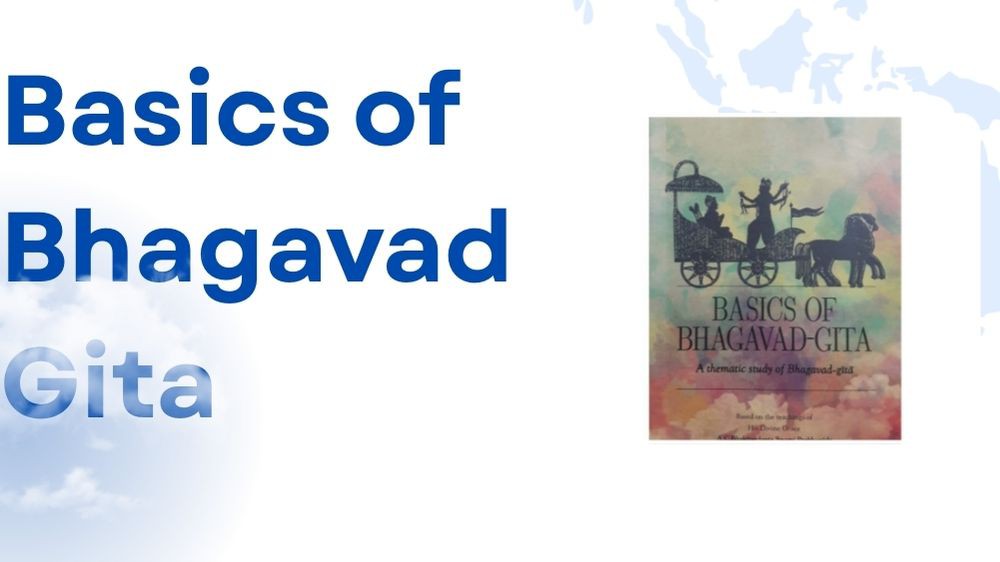 Basics of Bhagavad Gita: A Thematic Study for Beginners | MAYAPUR STOREBasics of Bhagavad Gita: A Thematic Study is a beginner-friendly guide that simplifies the timeless wisdom of the...Read more
 -
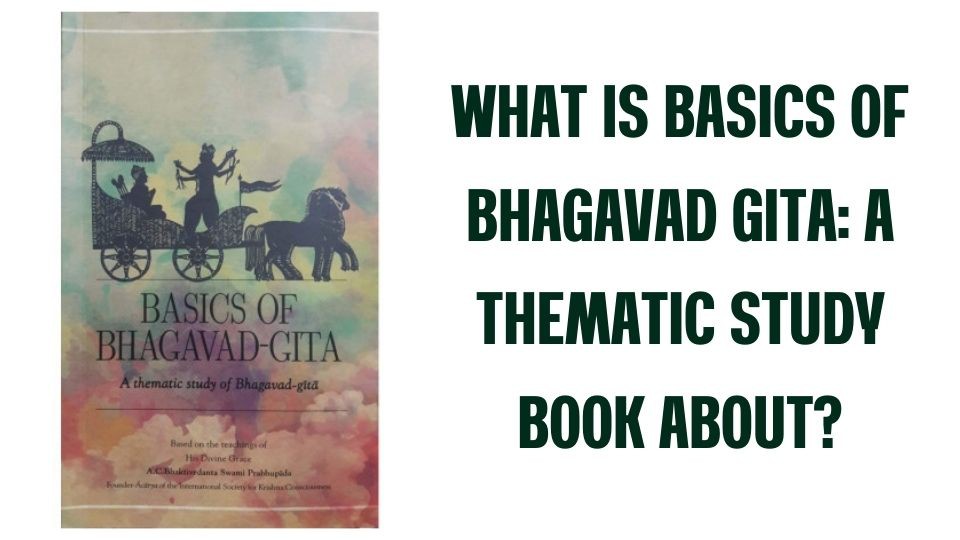 What is Basics of Bhagavad Gita: A Thematic Study Book About?Basics of Bhagavad Gita: A Thematic Study is a beginner-friendly guide that simplifies the timeless wisdom of the...Read more
 -
 Who Should Read Basics of Bhagavad Gita – Is It Good for Beginners?Basics of Bhagavad Gita is a beginner-friendly guide that simplifies Lord Krishna’s teachings for students, seekers,...Read more
 -
 Difference Between Basics of Bhagavad Gita and Bhagavad Gita As It Is – A Beginner’s GuideLearn how Basics of Bhagavad Gita differs from Bhagavad Gita As It Is. This guide explains their purpose, depth, and...Read more
 -
 Main Themes of Basics of Bhagavad Gita – A Beginner’s Guide to Krishna’s TeachingsBasics of Bhagavad Gita explains Krishna’s timeless teachings in simple language. Discover the main themes—dharma,...Read more
Leave a comment