
Why did Krishna run to embrace a poor brahmin in rags? Read the Sudama story from the Bhagavatam and learn how a...
Latest posts
-
 Krishna and Sudama: The Poor Brahmin Who Became Wealthy in LoveRead more
 -
 Vamana Avatar: How Three Steps Humbled Bali MaharajaRead more
Why did a powerful king give away three worlds to a boy asking for three steps? Learn the Vamana avatar story from...
-
 The Bhagavatam on Marriage: Duty, Love and Spiritual PartnershipRead more
What does the Bhagavatam say about marriage? Through the stories of Kardama and Devahuti, Rukmini's secret letter and...
-
 What Is Prema? The Bhagavatam's Highest Stage of Love for GodRead more
Prema is love for God with no "because" attached. Learn how the Bhagavatam describes it, the nine steps from faith to...
-
 Is Shiva Parvati Kalyana Mentioned in Srimad Bhagavatam? What the Scripture Really SaysRead more
Looking for Shiva and Parvati's wedding in the Srimad Bhagavatam? Find out what the scripture actually describes,...
-
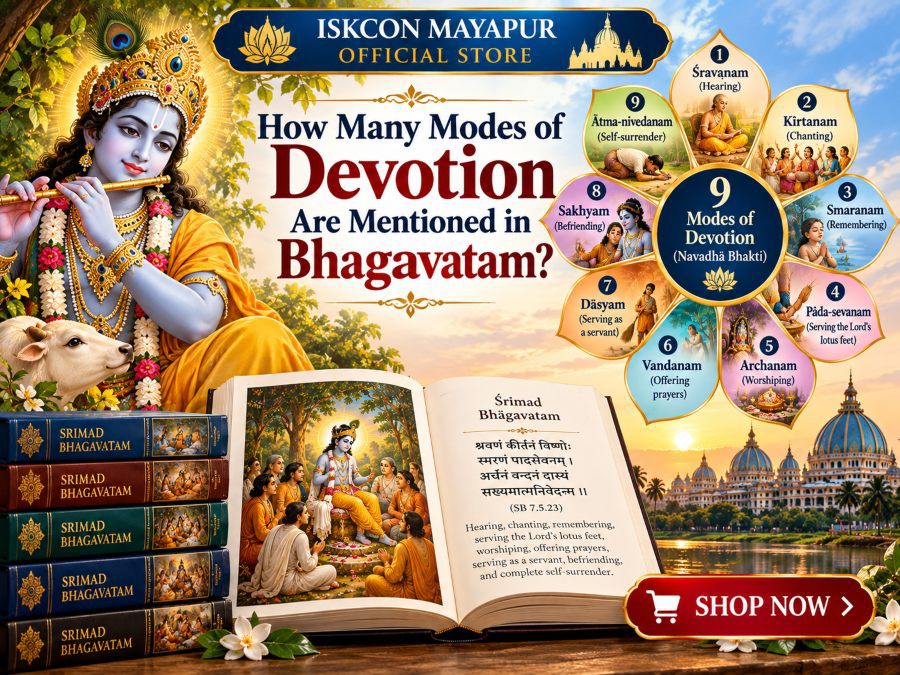 How Many Modes of Devotion Are Mentioned in Bhagavatam?Read more
A young boy named Prahlada listed nine ways to serve God, and the Bhagavatam keeps them as its answer. Learn what the...
-
 What Is Bhagavatam and Why Has It Been Read for 5,000 Years?Read more
A dying king asked one question, and the answer became the Bhagavatam. Learn what this Sanskrit scripture contains,...
-
 Who Is Lord Krishna? His Meaning, Teachings and Pastimes ExplainedRead more
Discover who Krishna is according to Srimad Bhagavatam, including His divine identity, childhood pastimes, teachings,...
-
 Incense in Islam: Bakhoor, Agarbatti and What Tradition SaysRead more
Is burning fragrance part of Muslim tradition? Explore incense in Islam, from the Prophetic practice of fumigating...
-
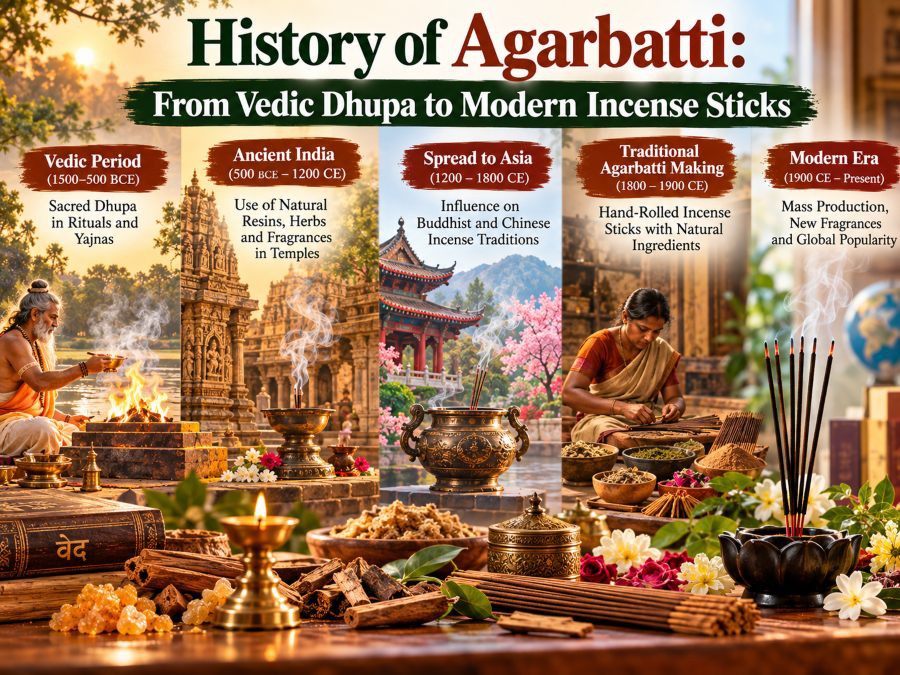 History of Agarbatti: From Vedic Dhupa to Modern Incense SticksRead more
Where did agarbatti really come from? Follow the history of agarbatti from Vedic fire rituals and temple dhupa to...
Blog categories
- Default category (0)
- MUSICAL INSTRUMENT (1)
- BOOK (5)
- DEVOTIONAL GIFT (0)
- Blog (30) click
- CHANDAN (12)
- Bhagavatam Wisdom Series (68)
- Krishna Consciousness (14)
- Mridangam Musical Instrument (6)
- Bhagavad Gita for Beginners (13)
- Bhagavad Gita As It Is (37) click
- Bhagavad Gita As It Is Telugu (0)
- Bhagavad Gita As It Is Marathi (0)
- Bhagavad Gita As It Is In Hindi (0)
- Bhagavad Gita As It Is In English (0)
- Bhagavad Gita As It Is In Bengali (8)
- Bhagavad Gita As It Is In Kannada (0)
- Bhagavad Gita As It Is In Gujarati (0)
- Bhagavad Gita As It Is In Panjabi (0)
- Bhagavad Gita As It Is In Tamil (0)
- Bhagavad Gita As It Is Odia (0)
- BHAGAVAD GITA As It Is GERMAN (0)
- Bhagavad Gita As It Is In French (0)
- Bhagavad Gita As It Is In Nepali (0)
- Bhagavad Gita As It Is In Assamese (0)
- Incense or Agarbatti (38)
- Lord Chaitanya Mahaprabhu (3)
- Vedic Temple Mayapur (14)
- kalki (15)
- Mahabharata – Dharma & Destiny (27)
- Vaishnava Scriptures (4)
- healthy product (4)
- chaitanya mahaprabhu (5)
- Tulsi Mala Guide (17)
Search in blog
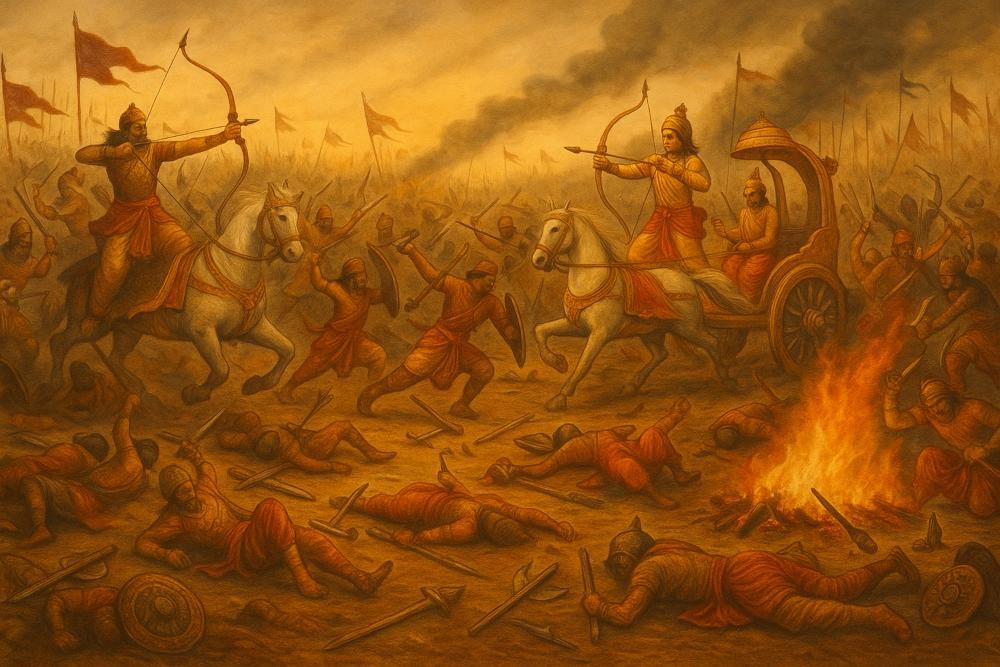
How Many People Died in the Mahabharata? Complete Death Count Explained
How Many People Died in the Mahabharata? A Complete Analysis of the Death Toll, War Impact & Legacy
Introduction
The Mahabharata is one of the greatest war epics ever written—an extraordinary blend of philosophy, politics, family conflict, and dharma. But at the heart of the Mahabharata lies the Kurukshetra War, a catastrophic battle that reshaped the destiny of ancient India. One of the most mutual questions people ask today is:
How many people actually died in the Mahabharata?
Was the death toll in the thousands?
Millions?
Or is the number symbolic?
This article offers a thoroughly researched and fully explanation of the total deaths in the Mahabharata, breaking down:
· Total warriors killed
· Death count by army
· Deaths of kings, generals, princes
· Civilian loss
· Mythological vs. historical estimates
· Reasons the numbers are so large
· Aftermath of the war
Let us explore the most devastating war of ancient India.
Buy the Mahabharata Book from Mayapur Store
The Scale of the Kurukshetra War: Why the Numbers Shock Us
The Mahabharata war was not a small tribal conflict — it was a pan-Indian war involving:
· More than 30 kingdoms
· Thousands of commanders
· Millions of soldiers
· Hundreds of noble families
Ancient texts describe the war as so vast that only 12 people remained alive on the final day.
This gives us a chilling picture:
The Mahabharata war was a complete annihilation.
Kingdoms collapsed. Dynasties ended. Millions died.
Let us look at the exact numbers.
The Official Scriptural Number: 1.66 Billion People Died
The Mahabharata states very clearly:
1.66 billion warriors (1,660,020,000) were killed in the Kurukshetra war.
This number includes:
· Soldiers
· Charioteers
· Elephant riders
· Cavalry forces
· Infantry
· Tribal militias
· Auxiliary armies
If taken literally, this is one of the deadliest wars in human history.
Why such a huge number?
Because the Mahabharata describes:
· India had a much larger population during the Dvapara Yuga
· Many kingdoms joined either the Kaurava or Pandava side
· Warfare involved colossal armies
· The destruction was meant to represent the ending of an age (Yuga)
So, scripturally, 1.66 billion is the official count.
Total Number of Soldiers in Each Army
To understand the death toll, we must analyze the size of both armies.
Kaurava Army (Duryodhana's side)
· Led by: Bhishma, Drona, Karna, Shalya
· Size: 11 Akshauhinis
· Total Soldiers: 2,405,700 (traditional count per akshauhini)
· Extended interpretation (including auxiliary support): Hundreds of millions
Pandava Army (Yudhishthira’s side)
· Led by: Arjuna, Bhima, Yudhishthira, Satyaki, Drupada, Virata
· Size: 7 Akshauhinis
· Total Soldiers: 1,532,100
Combined total based on structure: 3.9 million core soldiers
However:
The Mahabharata never limits the numbers to akshauhinis alone.
It repeatedly mentions “millions of foot soldiers”, “endless reinforcements”, and “warriors from all directions”.
Thus, the final number of 1.66 billion deaths includes:
· Supporting armies
· Civilians who were swept into the conflict
· Reinforcements from smaller tribes
· Mercenary armies
READ ALSO:-who wrote Mahabharata
Breakdown of Major Warrior Deaths
Besides soldiers, a massive number of kings, princes, and commanders were killed.
On the Kaurava side:
· Bhishma
· Drona
· Karna
· Shalya
· Duryodhana
· Dushasana (and 99 Kaurava brothers)
· Ashwatthama’s father
· Jayadratha
· Bhagadatta
· Shakuni
· Many princes of the Kalinga, Sindhu, Madra, and Gandhara dynasties
On the Pandava side:
· Abhimanyu
· Ghatotkacha
· Drupada
· Virata
· Shikhandi
· Kshatradharma
· Many Panchala princes
Only 12 survivors remained.
We will discuss this in detail later.
The Death of Abhimanyu: Symbol of the War’s Cruelty
Abhimanyu, the 16-year-old son of Arjuna, was brutally killed in the Chakravyuha formation by:
· Dronacharya
· Karna
· Dushasana’s son
· Kripacharya
· Ashwatthama
· Shalya
· Jayadratha
His death alone triggered a chain of destruction:
· Arjuna vowed revenge
· Jayadratha was killed
· Karna’s fate was sealed
· The war became unstoppable
Abhimanyu's death symbolizes the tragic loss of youth in the war.
Civilian Death Toll: The Forgotten Part of the Epic
The Mahabharata does not give an exact number of civilian deaths, but historians estimate:
Millions of civilians died due to:
· Starvation
· Disease
· Looting
· Destroyed agriculture
· Collapsed kingdoms
· Refugee displacement
Entire cities like:
· Hastinapura
· Indraprastha
· Kalinga
· Gandhara
· Panchala
suffered enormous population losses.
Order Mahabharata Directly from ISKCON Mayapur Store
Why Was the Death Toll So High?
Reason 1: Multiple Kingdoms Joined the War
Every major kingdom from Afghanistan to Bengal participated.
Reason 2: The Purpose Was the End of a Yuga
The battle signified the closing of the Dvapara Yuga and cleansing for Kali Yuga.
Reason 3: Celestial Weapons (Astras)
Warriors used:
· Brahmastra
· Narayanastra
· Agneyastra
· Indrastra
These weapons caused mass destruction.
Reason 4: No Surrender Policy
Both sides fought until death. No one left the battlefield alive unless forced by fate.
Deaths Caused by Divine Weapons
Some weapons could wipe out thousands in seconds.
Examples:
· Ashwatthama's Narayanastra killed thousands instantly
· Arjuna’s Gandiva bow killed many warriors per second
· Bhima alone killed all 100 Kaurava brothers
· Karna’s Shakti weapon killed Ghatotkacha
Thus, supernatural warfare drastically increased the death toll.
The 18 Days of War: Death Count by Day
Each day of the Kurukshetra war saw intense bloodshed.
Day 1–10:
Bhishma kills thousands daily.
Day 11–15:
Drona becomes commander; death count peaks.
Day 16–17:
Karna kills many Pandava warriors.
Day 18:
Shalya, Shakuni, Shalya’s army, Duryodhana, and others die.
On the final day, Ashwatthama kills the sleeping sons of Pandavas, increasing the death toll further.
Only 12 People Survived the Mahabharata War
Here is the most astonishing fact:
Only 12 people walked away alive.
Pandava Survivors:
1. Yudhishthira
2. Bhima
3. Arjuna
4. Nakula
5. Sahadeva
6. Krishna (non-participant but present)
7. Satyaki
8. Yuyutsu
Kaurava / Neutral Survivors:
9. Kripacharya
10. Kritavarma
11. Ashwatthama
12. Vrishaketu (Karna’s son)
This small number highlights the total devastation of the war.
Historical vs. Mythological Interpretation of Death Numbers
Mythological Interpretation:
The number 1.66 billion is symbolic of:
· Universal destruction
· End of an era
· Cleansing of adharma
Historical Interpretation:
Historians believe:
· The actual number was likely tens of thousands or a few million
· Ancient texts used symbolic exaggeration
· Akshauhini structure suggests approx. 4 million core warriors
Both interpretations coexist and depend on one's perspective.
Shop Authentic Mahabharata Editions at Mayapur.store
The Psychological Aftermath: The Pandavas Did Not Celebrate
Even though they “won,” the Pandavas were filled with:
· Guilt
· Trauma
· Regret
· Pain of losing sons, friends, teachers
Yudhishthira even wanted to renounce the throne.
Krishna helped him understand that dharma sometimes requires unbearable sacrifice.
The War’s Long-Term Impact on India
Collapse of Kuru dynasty
Hastinapura was never the same.
Rise of new kingdoms
Magadha became the future political center.
Cultural shift
The war inspired:
· Upanishads
· Bhagavad Gita
· New philosophical debates
Population decline
Massive depopulation reshaped demographic patterns.
Why the Death Toll Matters Today
Understanding the scale of death in the Mahabharata helps us appreciate:
· The seriousness of war
· The consequences of ego and greed
· The message of dharma in the Bhagavad Gita
· The fragility of peace
The Mahabharata is not just a story of war — it is a spiritual warning for humanity.
Final Answer: How Many People Died in the Mahabharata?
Scriptural Total:
1.66 billion people
Structural Army Estimates:
~4 million core soldiers
Historical Estimate:
Hundreds of thousands to a few million
Symbolic Meaning:
Represents destruction of the Dvapara Yuga
Outcome:
Only 12 humans survived
Conclusion
The Mahabharata war was not merely a battle — it was a cosmic turning point. Whether we interpret the numbers literally or symbolically, the message remains:
War brings only destruction, loss, and suffering.
The death toll of the Mahabharata is a permanent reminder that humanity must choose dharma, peace, and wisdom over ego and conflict.

Posted in: Mahabharata – Dharma & Destiny
Related posts
-
 Who Wrote the Mahabharata? The Complete Story of Sage VyasaA clear explanation of who wrote the Mahabharata, exploring Sage Vyasa’s authorship, the Ganesha narrative, and the...Read more
 -
 Why the Mahabharata Happened: The True Causes Behind the Great WarDiscover the real causes of the Mahabharata war, from jealousy and power struggles to deep karmic destiny. This...Read more
 -
 How Many Days Mahabharata War Happened?The Mahabharata war lasted for 18 intense days, each filled with major battles, turning points, and historic events....Read more
 -
 Who Is Vidura in the Mahabharata? Complete Story, Role & TeachingsDiscover who Vidura is in the Mahabharata—his origin, character, wisdom, loyalty, and unmatched adherence to dharma....Read more
 -
 Who Is Subhadra in the Mahabharata? Complete Story, Role & ImportanceThis article explains who Subhadra is in the Mahabharata—her lineage, virtues, role as Krishna’s sister, her...Read more
Leave a comment
Comments
Deaths in Mahabharat war.
By: M.S.Sohoni On 01/03/2026Mahabharat war took place between Kaurav and Pandav groups, essentially belonging to the Aryan race. The huge death toll in this war is a pointer to the nature of that race at that time.But after the war the war mongering nature of Aryans cooled down, mainly due the pacifying influence of the non-Aryan people in the Indian sub-cotinent. Adolf Hitler who also claimed to be Aryan had done the Holocaust of jew people.