
Why did Krishna run to embrace a poor brahmin in rags? Read the Sudama story from the Bhagavatam and learn how a...
Latest posts
-
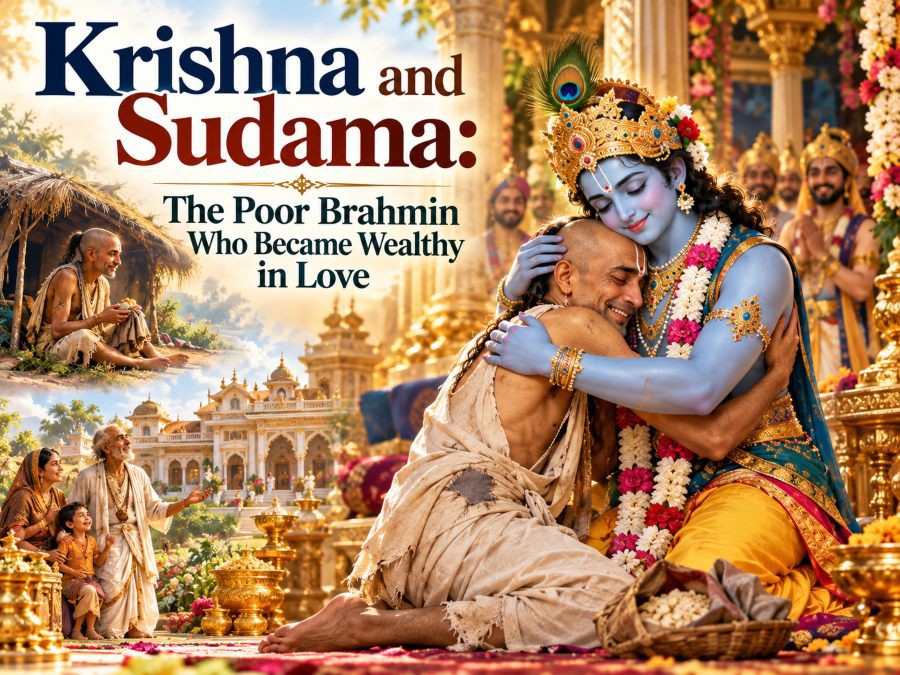 Krishna and Sudama: The Poor Brahmin Who Became Wealthy in LoveRead more
 -
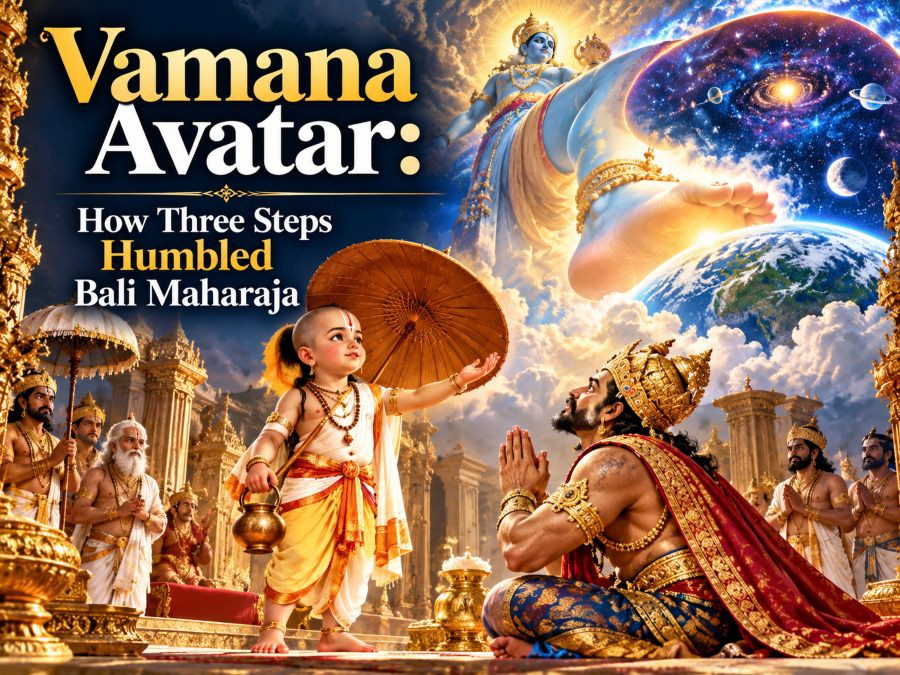 Vamana Avatar: How Three Steps Humbled Bali MaharajaRead more
Why did a powerful king give away three worlds to a boy asking for three steps? Learn the Vamana avatar story from...
-
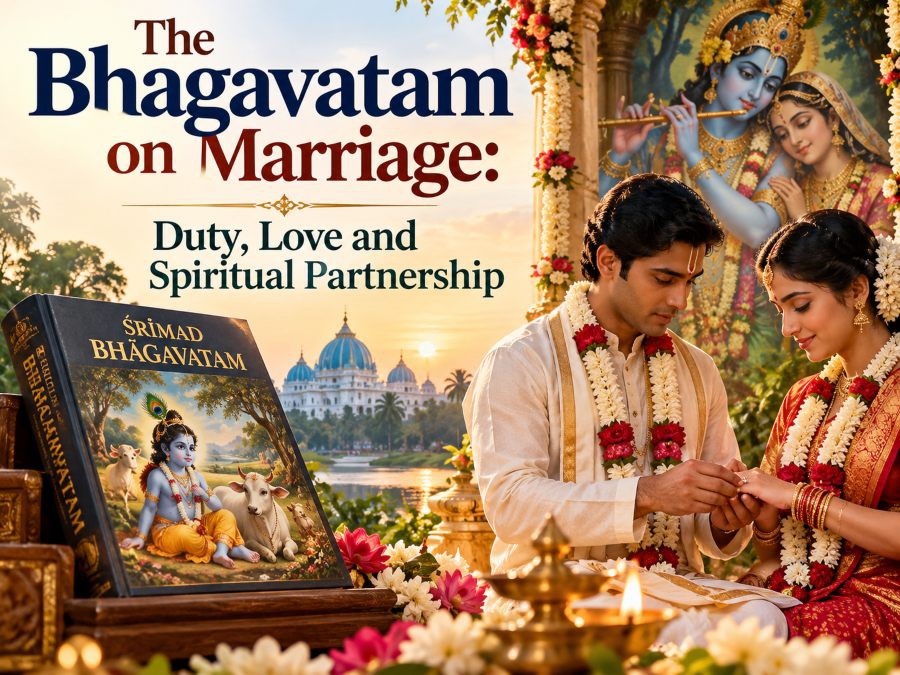 The Bhagavatam on Marriage: Duty, Love and Spiritual PartnershipRead more
What does the Bhagavatam say about marriage? Through the stories of Kardama and Devahuti, Rukmini's secret letter and...
-
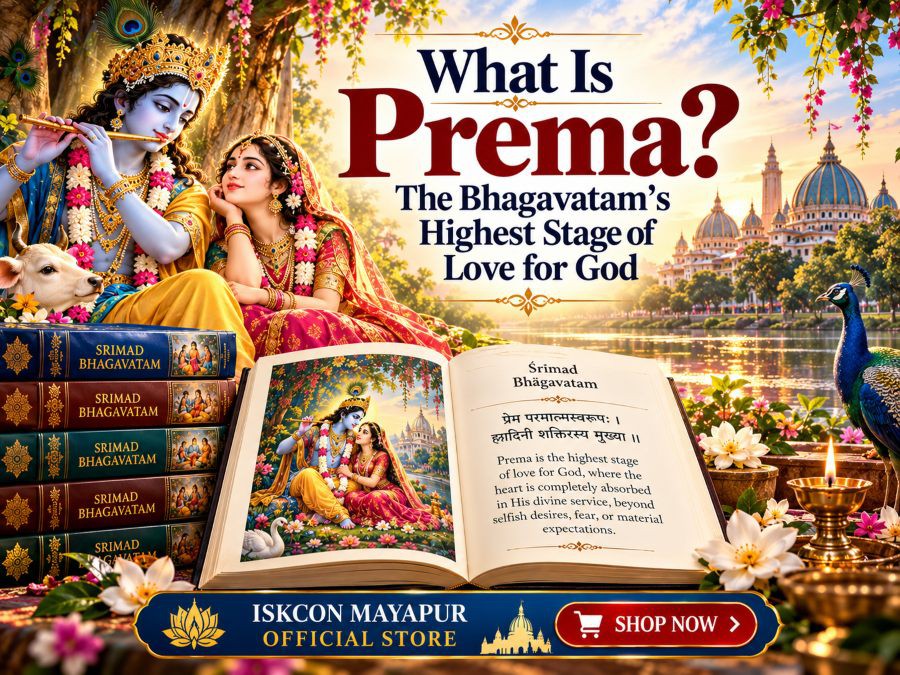 What Is Prema? The Bhagavatam's Highest Stage of Love for GodRead more
Prema is love for God with no "because" attached. Learn how the Bhagavatam describes it, the nine steps from faith to...
-
 Is Shiva Parvati Kalyana Mentioned in Srimad Bhagavatam? What the Scripture Really SaysRead more
Looking for Shiva and Parvati's wedding in the Srimad Bhagavatam? Find out what the scripture actually describes,...
-
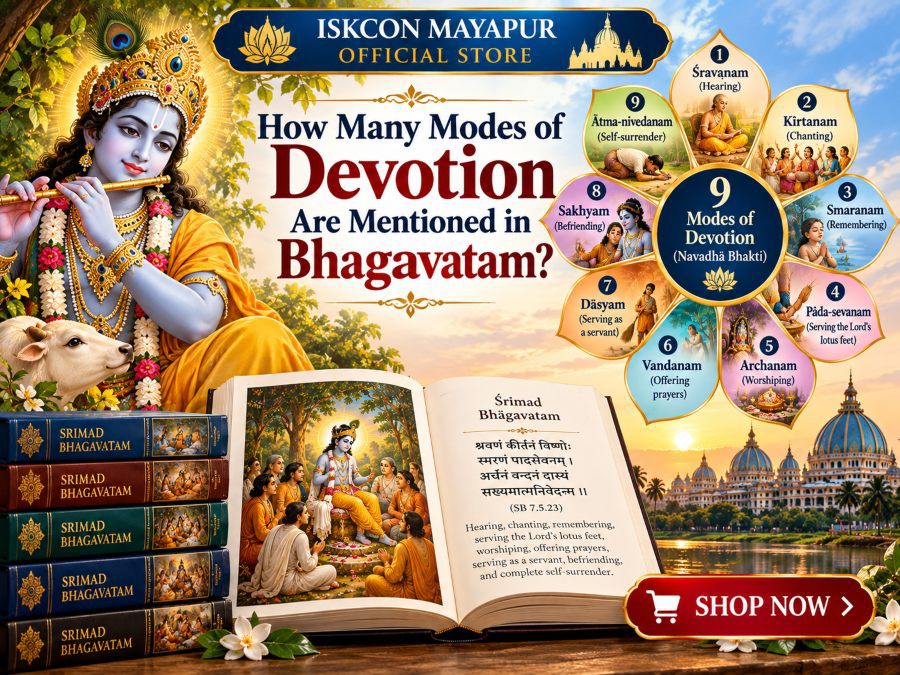 How Many Modes of Devotion Are Mentioned in Bhagavatam?Read more
A young boy named Prahlada listed nine ways to serve God, and the Bhagavatam keeps them as its answer. Learn what the...
-
 What Is Bhagavatam and Why Has It Been Read for 5,000 Years?Read more
A dying king asked one question, and the answer became the Bhagavatam. Learn what this Sanskrit scripture contains,...
-
 Who Is Lord Krishna? His Meaning, Teachings and Pastimes ExplainedRead more
Discover who Krishna is according to Srimad Bhagavatam, including His divine identity, childhood pastimes, teachings,...
-
 Incense in Islam: Bakhoor, Agarbatti and What Tradition SaysRead more
Is burning fragrance part of Muslim tradition? Explore incense in Islam, from the Prophetic practice of fumigating...
-
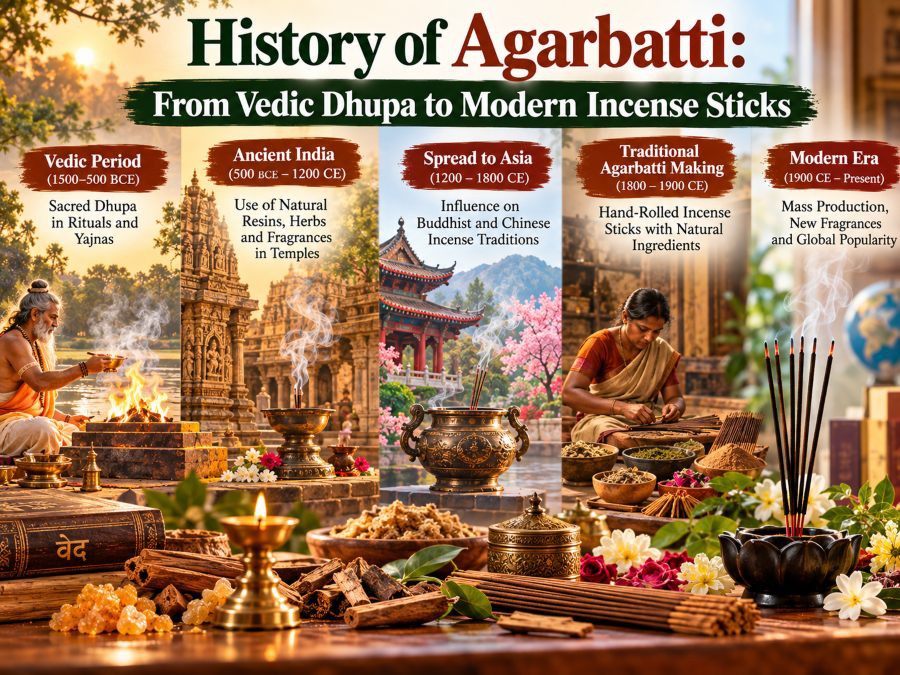 History of Agarbatti: From Vedic Dhupa to Modern Incense SticksRead more
Where did agarbatti really come from? Follow the history of agarbatti from Vedic fire rituals and temple dhupa to...
Blog categories
- Default category (0)
- MUSICAL INSTRUMENT (1)
- BOOK (5)
- DEVOTIONAL GIFT (0)
- Blog (30) click
- CHANDAN (12)
- Bhagavatam Wisdom Series (68)
- Krishna Consciousness (14)
- Mridangam Musical Instrument (6)
- Bhagavad Gita for Beginners (13)
- Bhagavad Gita As It Is (37) click
- Bhagavad Gita As It Is Telugu (0)
- Bhagavad Gita As It Is Marathi (0)
- Bhagavad Gita As It Is In Hindi (0)
- Bhagavad Gita As It Is In English (0)
- Bhagavad Gita As It Is In Bengali (8)
- Bhagavad Gita As It Is In Kannada (0)
- Bhagavad Gita As It Is In Gujarati (0)
- Bhagavad Gita As It Is In Panjabi (0)
- Bhagavad Gita As It Is In Tamil (0)
- Bhagavad Gita As It Is Odia (0)
- BHAGAVAD GITA As It Is GERMAN (0)
- Bhagavad Gita As It Is In French (0)
- Bhagavad Gita As It Is In Nepali (0)
- Bhagavad Gita As It Is In Assamese (0)
- Incense or Agarbatti (38)
- Lord Chaitanya Mahaprabhu (3)
- Vedic Temple Mayapur (14)
- kalki (15)
- Mahabharata – Dharma & Destiny (27)
- Vaishnava Scriptures (4)
- healthy product (4)
- chaitanya mahaprabhu (5)
- Tulsi Mala Guide (17)
Search in blog
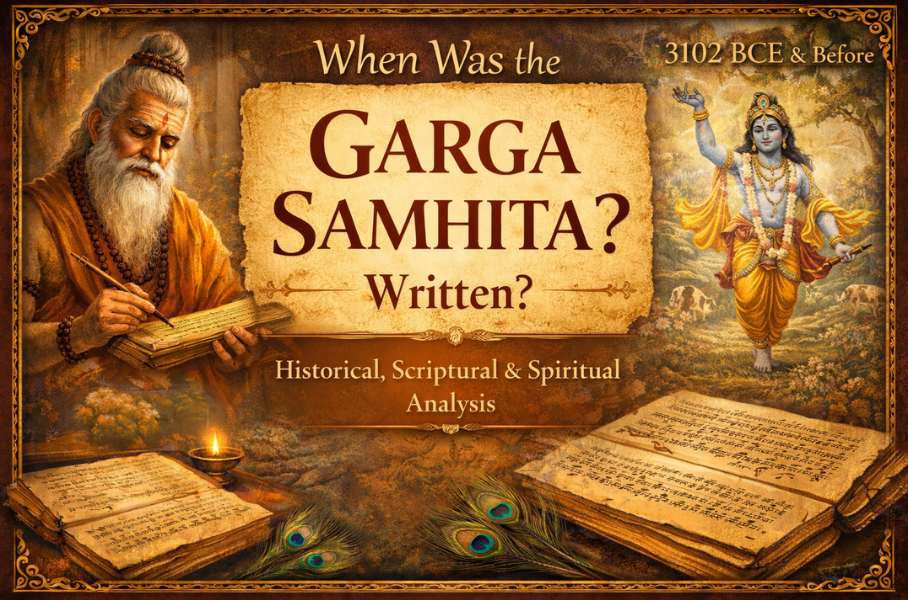
When Was the Garga Samhita Written? History, Timeline, and Scriptural Evidence Explained
When Was the Garga Samhita Written? A Complete Historical, Scriptural, and Spiritual Analysis
Introduction
One of the most frequently asked questions about the Garga Samhita is both simple and profound:
When was the Garga Samhita written?
Unlike modern books with clear publication dates, ancient Vedic scriptures follow a very different tradition of composition, preservation, and transmission. The Garga Samhita belongs to this sacred category—where spiritual realization precedes written form, and oral transmission carries equal authority.
This article explores when the Garga Samhita was written, examining historical timelines, scriptural references, oral tradition, yuga chronology, and scholarly perspectives. By the end, you will have a clear, well-supported understanding of the time period in which the Garga Samhita originated.
Understanding “When Was It Written?” in Vedic Context
Before answering the question directly, it is essential to understand how ancient Indian scriptures were created.
In Vedic tradition:
- Texts were revealed, not invented
- Knowledge was preserved through oral transmission (śruti–smṛti culture)
- Writing came much later, primarily for preservation
Therefore, when we ask “When was the Garga Samhita written?”, we must consider three timelines:
1. When the knowledge was first revealed
2. When it was orally transmitted
3. When it was finally written down
The Traditional Author and His Time Period
The Garga Samhita is traditionally attributed to Maharshi Garga, one of the most respected sages of ancient India.
Maharshi Garga’s Historical Placement
Maharshi Garga is well documented in:
- Srimad Bhagavatam
- Vishnu Purana
- Harivamsa
- Yadu dynasty genealogies
He was the family priest of the Yadu dynasty and personally performed the name-giving ceremony of Lord Krishna and Balarama.
This firmly places Maharshi Garga in the Dvapara Yuga, during the earthly pastimes of Lord Krishna.
READ ALSO:- Synopsis of Garga Samhita
Dvapara Yuga Timeline and the Garga Samhita
Dating the Dvapara Yuga
According to traditional Hindu chronology:
- Dvapara Yuga ended around 3102 BCE
- The Kali Yuga began immediately after
Lord Krishna’s departure from the world marks the end of Dvapara Yuga.
Since Maharshi Garga was contemporary with Krishna, the teachings that form the Garga Samhita must have originated before 3102 BCE.
? This means the Garga Samhita is more than 5,000 years old.
Was the Garga Samhita Written During Krishna’s Lifetime?
Oral Revelation First
It is highly unlikely that the Garga Samhita was physically written during Krishna’s lifetime. Instead:
- Maharshi Garga spoke and taught these revelations
- Disciples memorized and transmitted them orally
- The content existed as spoken śāstra, not manuscripts
This was standard practice in Vedic culture, where memory, rhythm, and meter ensured perfect preservation.
READ ALSO:- Who Wrote Garga Samhita
When Was the Garga Samhita Put into Written Form?
Transition from Oral to Written Tradition
Most scholars and traditional Vaishnava acharyas agree on this sequence:
1. Dvapara Yuga – Knowledge revealed by Maharshi Garga
2. Early Kali Yuga – Oral transmission continues
3. Later Kali Yuga – Text is compiled into manuscript form
The written compilation likely occurred between 500 BCE and 500 CE, when:
- Sanskrit manuscripts became more common
- Palm-leaf and birch-bark writing was standardized
- Many oral texts were preserved in writing
Manuscript Evidence and Regional Preservation
Existing manuscripts of the Garga Samhita are found primarily in:
- Northern India
- Vrindavan–Mathura region
- Eastern India (Gaudiya Vaishnava influence)
The variation in manuscripts indicates:
- Long oral transmission
- Regional copying over centuries
- Preservation through bhakti lineages
This strongly supports the idea that the text is ancient in origin but later written down.
Is the Garga Samhita a Mahapurana?
The Garga Samhita is not listed among the 18 Mahapuranas, but it shows all classical Puranic features:
- Dialogue format
- Genealogies and cosmology
- Divine pastimes
- Theological conclusions
Because of this, it is often classified as a Vaishnava Upa-Purana or Purana-style text.
Many Upa-Puranas were:
- Revealed in earlier yugas
- Written down in Kali Yuga
The Garga Samhita follows this same pattern.
READ ALSO:- Garga Samhita Contents
Internal Evidence Within the Text
Language and Style
The Sanskrit used in the Garga Samhita:
- Is classical, not medieval
- Shows Vedic–Puranic continuity
- Lacks Islamic or later cultural influence
This linguistic evidence supports a pre-medieval origin.
Philosophical Alignment
The text strongly aligns with:
- Srimad Bhagavatam theology
- Krishna as Svayam Bhagavan
- Radha as supreme devotional potency
These conclusions are not later innovations, but ancient bhakti siddhanta, further supporting early origin.
Relationship with Srimad Bhagavatam
Some scholars suggest:
- The Garga Samhita and Srimad Bhagavatam draw from the same ancient devotional current
- Both reflect Dvapara–early Kali Yuga theology
Rather than copying one another, they represent parallel devotional revelations.
Gaudiya Vaishnava Perspective on Dating
Gaudiya Vaishnavas accept that:
- The Garga Samhita originated in Dvapara Yuga
- Its writing occurred later in Kali Yuga
- Its authority comes from realized authorship, not date
Great acharyas often emphasize spiritual authenticity over historical timestamp.
Common Misconceptions About the Date
❌ “It was written in medieval times”
→ Incorrect. Manuscript copies are medieval, not the content.
❌ “It is a recent sectarian text”
→ Incorrect. Its theology aligns with ancient Vedic siddhanta.
❌ “No date means it’s unreliable”
→ Incorrect. Oral tradition was highly precise and sacred.
Why the Date of the Garga Samhita Matters
Knowing when the Garga Samhita was written helps us understand:
- Its authority
- Its connection to Krishna’s lifetime
- Its place among ancient bhakti texts
It confirms that the text is not speculative philosophy, but first-hand devotional revelation.
Summary Timeline
Here is a clear, simplified timeline:
- Before 3102 BCE – Teachings revealed by Maharshi Garga
- 3102 BCE onward – Oral transmission in early Kali Yuga
- 500 BCE – 500 CE – Written compilation and preservation
- Medieval period – Manuscript copying and regional spread
Relevance for Modern Readers
In today’s era of historical skepticism, the Garga Samhita stands as:
- A bridge between Krishna’s time and today
- A reminder of oral spiritual genius
- A timeless guide to bhakti
Its age does not make it outdated—it makes it foundational.
Conclusion: When Was the Garga Samhita Written?
To answer clearly and accurately:
- The Garga Samhita originated in the Dvapara Yuga, during Lord Krishna’s lifetime
- It was written down in early Kali Yuga, centuries later
- Its teachings are over 5,000 years old
- Its authority comes from Maharshi Garga’s realization, not a printing date
The Garga Samhita is ancient not only in years—but in wisdom, devotion, and spiritual depth.
Posted in: Vaishnava Scriptures
Related posts
-
 Synopsis of the Garga Samhita: A Complete Overview of Krishna’s Divine PastimesThe Garga Samhita is a revered Vaishnava scripture that reveals the divine pastimes of Lord Krishna and the supreme...Read more
 -
 Who Wrote the Garga Samhita? The Sage, History, and Spiritual Authority ExplainedWho wrote the Garga Samhita? This article explains why Maharshi Garga is credited as the author, explores his...Read more
 -
 Garga Samhita Contents Explained: Chapters, Themes, and Teachings of the Sacred VaishnavaThis article explains the contents of the Garga Samhita in detail, covering its major chapters, themes, and spiritual...Read more
Leave a comment