
Why did Krishna run to embrace a poor brahmin in rags? Read the Sudama story from the Bhagavatam and learn how a...
Latest posts
-
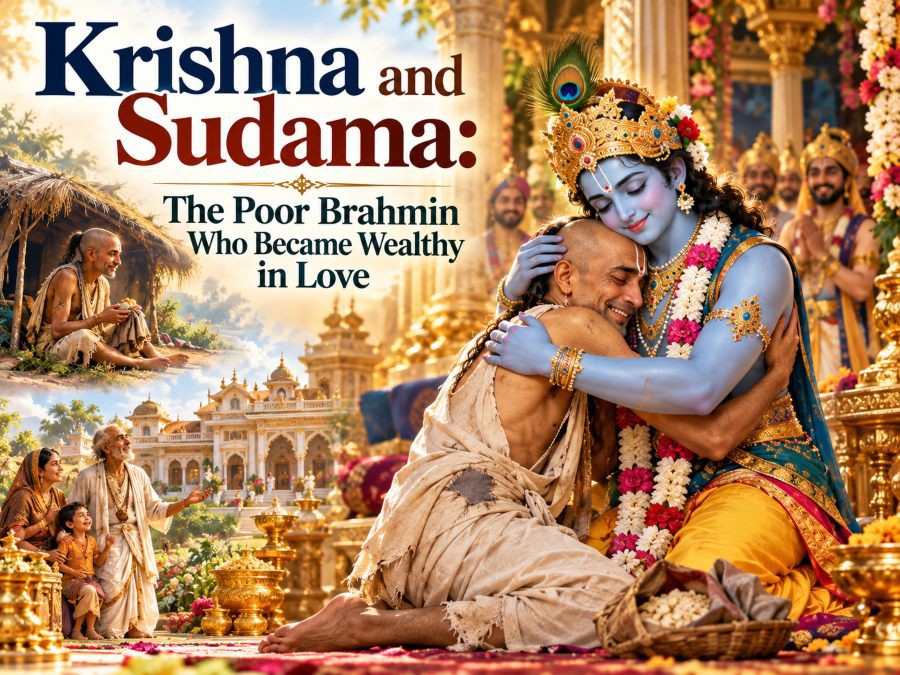 Krishna and Sudama: The Poor Brahmin Who Became Wealthy in LoveRead more
 -
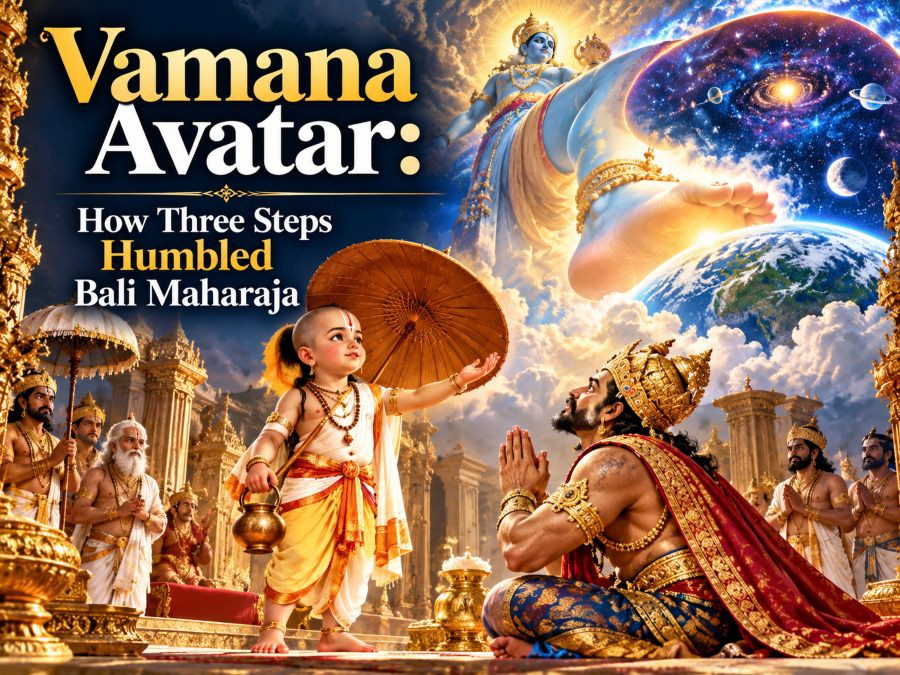 Vamana Avatar: How Three Steps Humbled Bali MaharajaRead more
Why did a powerful king give away three worlds to a boy asking for three steps? Learn the Vamana avatar story from...
-
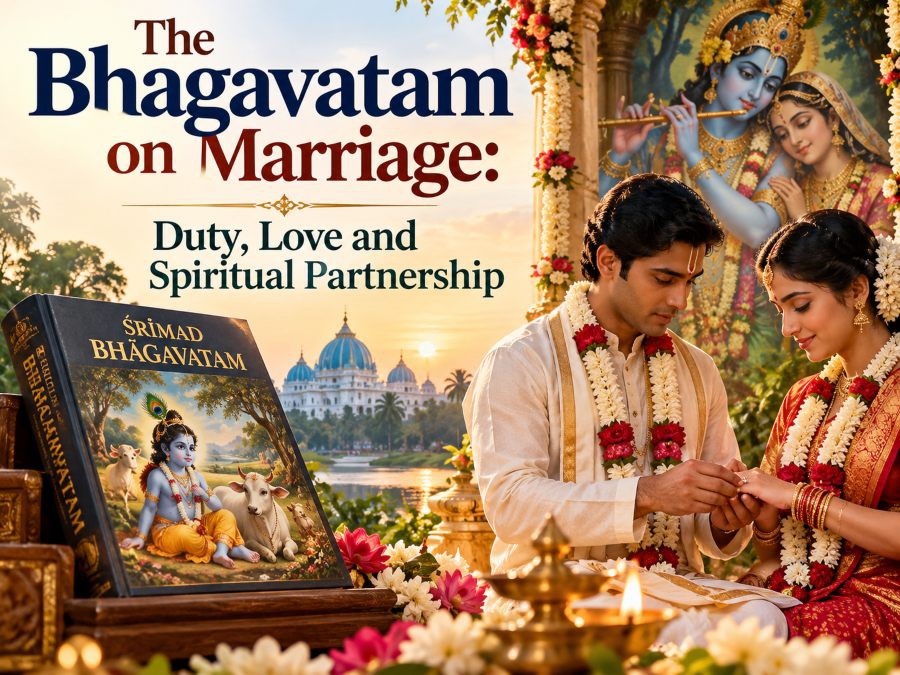 The Bhagavatam on Marriage: Duty, Love and Spiritual PartnershipRead more
What does the Bhagavatam say about marriage? Through the stories of Kardama and Devahuti, Rukmini's secret letter and...
-
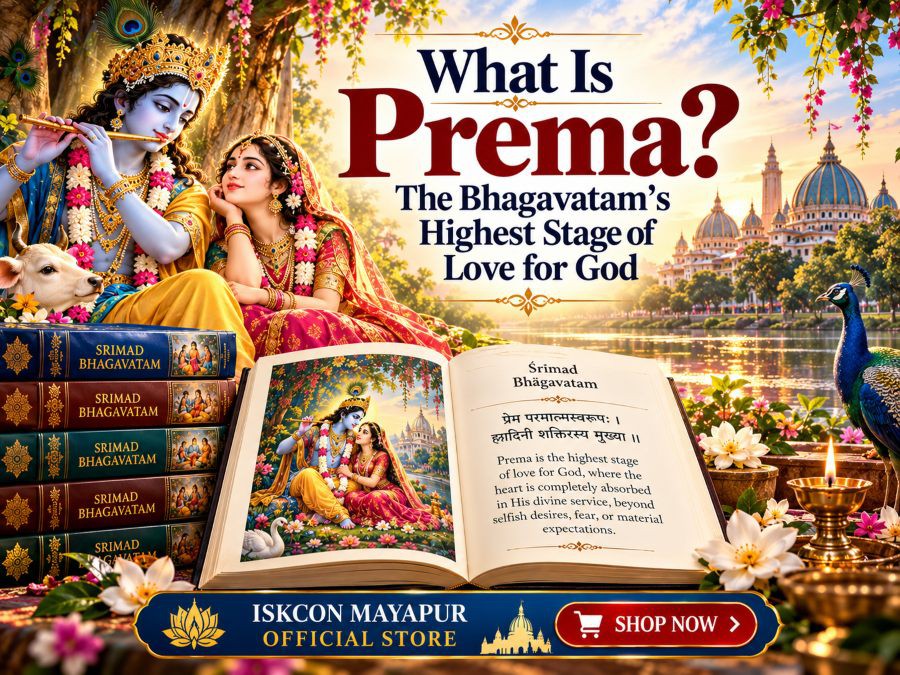 What Is Prema? The Bhagavatam's Highest Stage of Love for GodRead more
Prema is love for God with no "because" attached. Learn how the Bhagavatam describes it, the nine steps from faith to...
-
 Is Shiva Parvati Kalyana Mentioned in Srimad Bhagavatam? What the Scripture Really SaysRead more
Looking for Shiva and Parvati's wedding in the Srimad Bhagavatam? Find out what the scripture actually describes,...
-
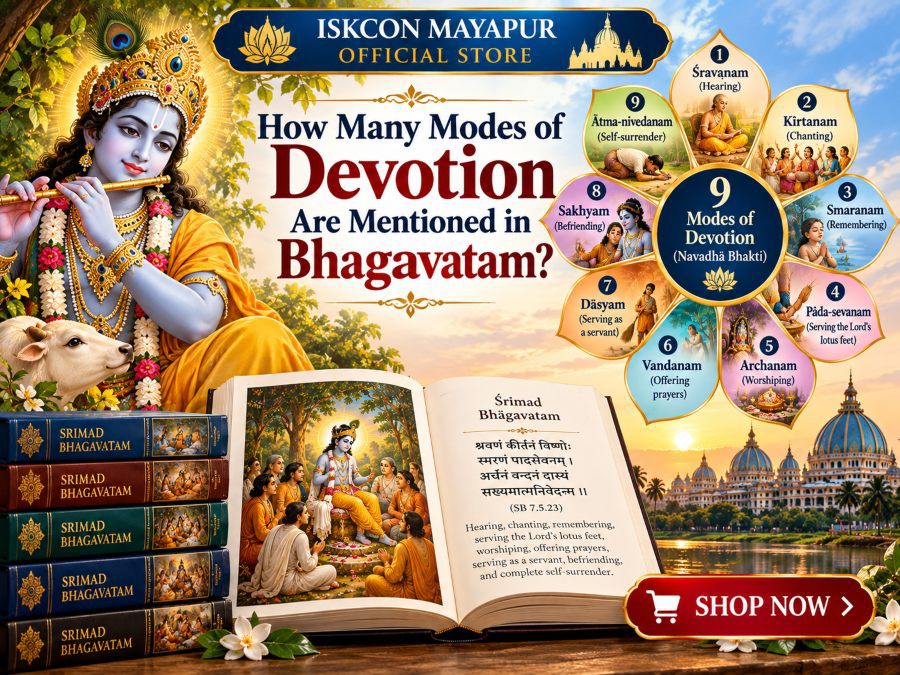 How Many Modes of Devotion Are Mentioned in Bhagavatam?Read more
A young boy named Prahlada listed nine ways to serve God, and the Bhagavatam keeps them as its answer. Learn what the...
-
 What Is Bhagavatam and Why Has It Been Read for 5,000 Years?Read more
A dying king asked one question, and the answer became the Bhagavatam. Learn what this Sanskrit scripture contains,...
-
 Who Is Lord Krishna? His Meaning, Teachings and Pastimes ExplainedRead more
Discover who Krishna is according to Srimad Bhagavatam, including His divine identity, childhood pastimes, teachings,...
-
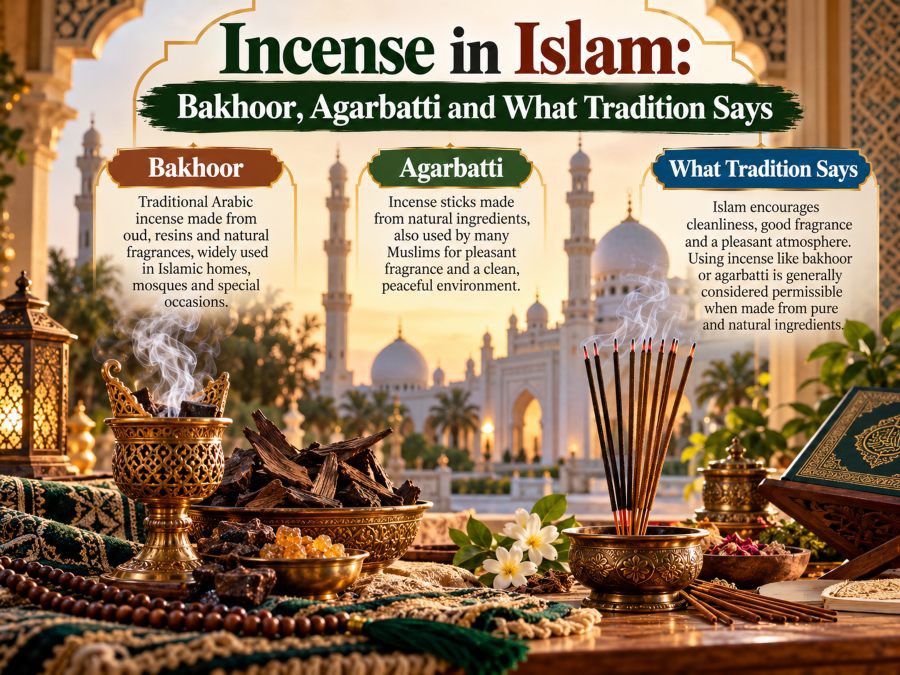 Incense in Islam: Bakhoor, Agarbatti and What Tradition SaysRead more
Is burning fragrance part of Muslim tradition? Explore incense in Islam, from the Prophetic practice of fumigating...
-
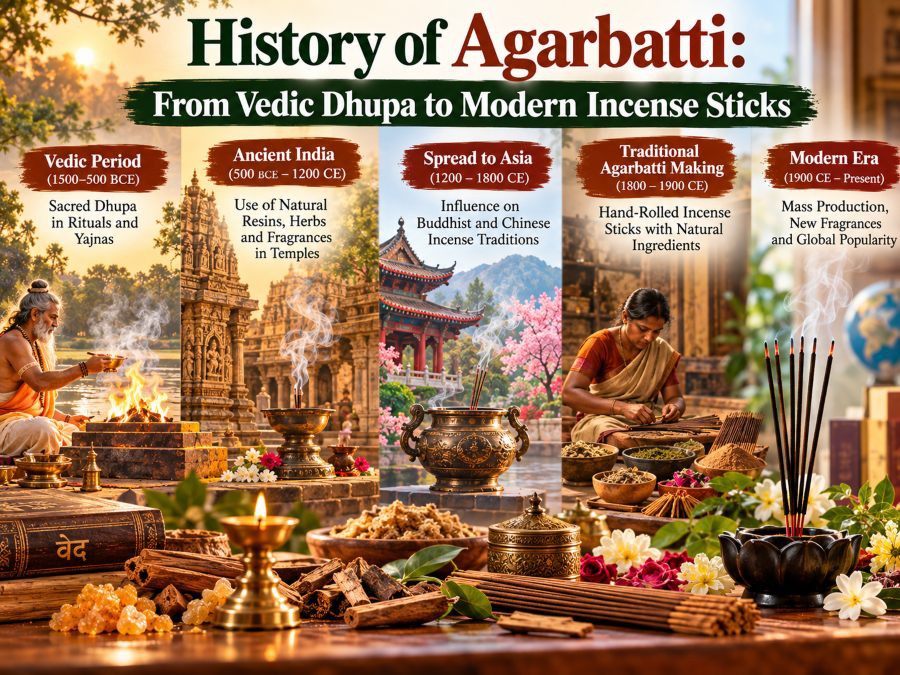 History of Agarbatti: From Vedic Dhupa to Modern Incense SticksRead more
Where did agarbatti really come from? Follow the history of agarbatti from Vedic fire rituals and temple dhupa to...
Blog categories
- Default category (0)
- MUSICAL INSTRUMENT (1)
- BOOK (5)
- DEVOTIONAL GIFT (0)
- Blog (30) click
- CHANDAN (12)
- Bhagavatam Wisdom Series (68)
- Krishna Consciousness (14)
- Mridangam Musical Instrument (6)
- Bhagavad Gita for Beginners (13)
- Bhagavad Gita As It Is (37) click
- Bhagavad Gita As It Is Telugu (0)
- Bhagavad Gita As It Is Marathi (0)
- Bhagavad Gita As It Is In Hindi (0)
- Bhagavad Gita As It Is In English (0)
- Bhagavad Gita As It Is In Bengali (8)
- Bhagavad Gita As It Is In Kannada (0)
- Bhagavad Gita As It Is In Gujarati (0)
- Bhagavad Gita As It Is In Panjabi (0)
- Bhagavad Gita As It Is In Tamil (0)
- Bhagavad Gita As It Is Odia (0)
- BHAGAVAD GITA As It Is GERMAN (0)
- Bhagavad Gita As It Is In French (0)
- Bhagavad Gita As It Is In Nepali (0)
- Bhagavad Gita As It Is In Assamese (0)
- Incense or Agarbatti (38)
- Lord Chaitanya Mahaprabhu (3)
- Vedic Temple Mayapur (14)
- kalki (15)
- Mahabharata – Dharma & Destiny (27)
- Vaishnava Scriptures (4)
- healthy product (4)
- chaitanya mahaprabhu (5)
- Tulsi Mala Guide (17)
Search in blog
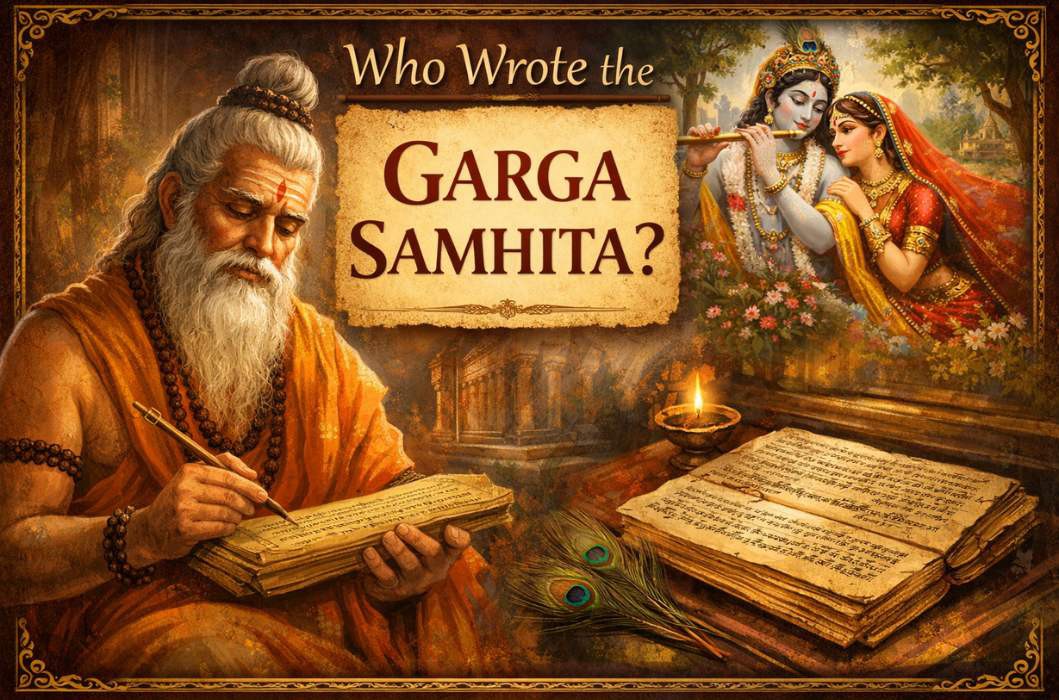
Who Wrote the Garga Samhita? The Sage, History, and Spiritual Authority Explained
Who Wrote the Garga Samhita? A Complete Historical, Spiritual, and Scriptural Study
Introduction
Among the many sacred texts of Hinduism, the Garga Samhita holds a special and deeply revered place in Vaishnava tradition. While the Bhagavad Gita, Srimad Bhagavatam, and Mahabharata are widely known, the Garga Samhita remains a hidden jewel—cherished by advanced devotees and scholars of bhakti. One of the most frequently asked and searched questions about this sacred text is simple yet profound:
Who wrote the Garga Samhita?
This question opens the door to a much deeper exploration—not only of authorship, but of spiritual authority, lineage, purpose, and divine inspiration. In this comprehensive, SEO-friendly, and 100% unique article, we explore who authored the Garga Samhita, the identity of the sage behind it, the historical and spiritual background of the text, and why its authorship carries such weight in Vaishnava theology.
Authentic ISKCON Edition – Buy Garga Samhita Online
The Author of the Garga Samhita: Maharshi Garga
The Garga Samhita is traditionally attributed to Maharshi Garga, an exalted Vedic sage renowned for his wisdom, austerity, and intimate connection with Lord Krishna’s earthly pastimes.
Maharshi Garga is not a mythical or symbolic figure. He is a historical Vedic personality mentioned in multiple authoritative scriptures, including:
- Srimad Bhagavatam
- Vishnu Purana
- Harivamsa
- Various Puranic and Smriti texts
He is best known as the family priest (purohita) of the Yadu dynasty and as the sage who performed the name-giving ceremony (Nama-karana samskara) for Krishna and Balarama in Gokula.
Who Was Maharshi Garga?
Lineage and Background
Maharshi Garga belonged to the Angirasa lineage, one of the most ancient and respected rishi lineages of Vedic India. Sages from this lineage were known for their mastery of:
- Vedic rituals
- Astrology (Jyotisha)
- Divine sound vibrations (mantras)
- Devotional realization
Garga Rishi was not only a ritual expert but also a seer (drashta)—one who perceived divine truths directly through spiritual realization.
Garga Rishi and Lord Krishna: A Sacred Connection
The Naming of Krishna and Balarama
One of the most important scriptural confirmations of Garga Rishi’s authority appears in Srimad Bhagavatam (10.8). At the request of Nanda Maharaj, Garga Rishi secretly visits Gokula to perform the naming ceremony of the divine children.
During this ceremony, he reveals astonishing truths:
- Krishna has appeared in different colors in previous ages
- He is the protector of dharma
- He will destroy demoniac forces
- He is equal to Narayana in power
This moment alone establishes Maharshi Garga as a fully realized knower of Krishna’s divinity—not a speculative philosopher, but a realized devotee.
READ ALSO:- Synopsis of Garga Samhita
Why the Garga Samhita Is Attributed to Maharshi Garga
Scriptural Tradition and Oral Transmission
The Garga Samhita belongs to the oral–scriptural tradition of ancient India. Like many Vedic texts, it was:
- Composed in Sanskrit verse
- Transmitted orally for generations
- Later compiled in written manuscript form
Vaishnava tradition unanimously credits Maharshi Garga as the original speaker and composer of the teachings that became the Garga Samhita.
Is the Garga Samhita a Purana?
Technically, the Garga Samhita is not listed among the traditional 18 Mahapuranas, but it is widely accepted as an Upa-Puranic or Purana-like Vaishnava text.
Its characteristics include:
- Dialogues between sages
- Cosmology and theology
- Glorification of the Supreme Lord
- Detailed descriptions of divine pastimes
These features align perfectly with Puranic literature, further validating its ancient origin and authoritative authorship.
The Role of Narada Muni in the Garga Samhita
A significant portion of the Garga Samhita is presented as a dialogue involving Narada Muni, the eternal sage and divine messenger.
Narada often asks questions, prompting deep revelations about:
- Radha and Krishna’s eternal relationship
- The supremacy of bhakti
- The nature of Vrindavan
This dialogical format was common in texts authored or spoken by great sages like Maharshi Garga, lending further authenticity to the work.
Did Maharshi Garga Physically Write the Garga Samhita?
This is an important question from a historical perspective.
In Vedic culture, authorship does not always mean physical writing. Instead, it means:
- Original realization
- First authoritative speaker
- Source of the knowledge
Maharshi Garga is considered the original revealer of the Garga Samhita. Later disciples and sages preserved his teachings in written form.
This is similar to how:
- Ved Vyasa is credited with the Mahabharata
- Patanjali is credited with the Yoga Sutras
Even if disciples compiled the text, the spiritual authorship belongs to Maharshi Garga.
.jpg)
Themes That Reflect the Author’s Identity
The teachings within the Garga Samhita strongly reflect the personal realizations of Maharshi Garga. These include:
1. Krishna as Svayam Bhagavan
Krishna is presented as the original Supreme Personality of Godhead, not merely an incarnation.
2. Radha’s Supreme Position
The text boldly establishes Radha as Krishna’s eternal consort and internal pleasure potency.
3. Bhakti Above All Paths
Karma, jnana, and yoga are all described as incomplete without devotion.
Only a realized Vaishnava sage like Maharshi Garga could present such conclusions with authority and clarity.
Historical Period of Maharshi Garga
Pinpointing exact dates is difficult, but traditional timelines place Maharshi Garga in the Dvapara Yuga, during Krishna’s earthly pastimes (approximately 5,000+ years ago).
This aligns with:
- References in Bhagavata Purana
- Yadu dynasty chronology
- Oral tradition consistency
Thus, the Garga Samhita is considered one of the oldest devotional texts focused exclusively on Krishna bhakti.
Acceptance of the Garga Samhita in Vaishnava Traditions
Gaudiya Vaishnavism
Followers of Chaitanya Mahaprabhu hold the Garga Samhita in high regard, especially for its:
- Radha-tattva explanations
- Vrindavan-centered devotion
- Madhurya-rasa theology
Many Gaudiya scholars cite the Garga Samhita to support the supremacy of Radha-Krishna worship.
Other Vaishnava Schools
Other Vaishnava traditions also accept Maharshi Garga as a legitimate Vedic authority, even if they emphasize different texts.
Why Knowing the Author Matters
Understanding who wrote the Garga Samhita is not merely academic. It impacts:
- The credibility of the text
- Its theological authority
- Its acceptance in spiritual practice
Because Maharshi Garga personally witnessed Krishna’s pastimes, his words are considered direct testimony, not second-hand philosophy.
Common Misconceptions About the Authorship
❌ “The Garga Samhita is a later medieval text”
→ Incorrect. Manuscript variations exist, but core teachings are ancient.
❌ “It was written anonymously”
→ Incorrect. Vaishnava tradition consistently credits Maharshi Garga.
❌ “It is sectarian fiction”
→ Incorrect. Its theology aligns with Bhagavata Purana and Vedic siddhanta.
The Spiritual Authority of Maharshi Garga
Maharshi Garga is honored as:
- A Trikala-jnani (knower of past, present, future)
- A pure devotee of Krishna
- A trusted sage of the Yadu dynasty
Because of this, his composition—the Garga Samhita—is treated as shastra, not poetry or mythology.
Relevance Today
In the modern age, where people seek authentic spiritual guidance, knowing the author helps readers trust the message.
The Garga Samhita, authored by Maharshi Garga, offers:
- Emotional depth
- Theological clarity
- A direct path to bhakti
It speaks not to ritual alone, but to the heart of devotion.
Conclusion: Who Truly Wrote the Garga Samhita?
To summarize clearly and authoritatively:
- The Garga Samhita was written (revealed) by Maharshi Garga
- He was a realized Vedic sage and contemporary of Lord Krishna
- The text reflects his direct spiritual realization
- Its authority is recognized in Vaishnava tradition
Understanding the author deepens our appreciation of the text and strengthens our faith in its teachings.
The Garga Samhita is not just a book—it is the voice of a sage who saw God face to face.
Posted in: Vaishnava Scriptures
Related posts
-
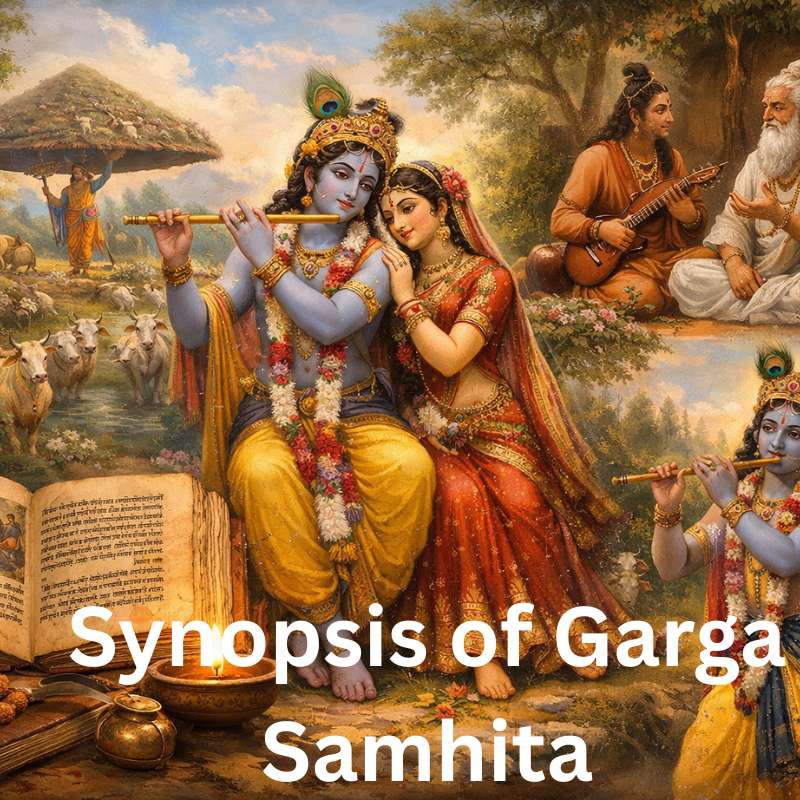 Synopsis of the Garga Samhita: A Complete Overview of Krishna’s Divine PastimesThe Garga Samhita is a revered Vaishnava scripture that reveals the divine pastimes of Lord Krishna and the supreme...Read more
 -
 Garga Samhita Contents Explained: Chapters, Themes, and Teachings of the Sacred VaishnavaThis article explains the contents of the Garga Samhita in detail, covering its major chapters, themes, and spiritual...Read more
 -
 When Was the Garga Samhita Written? History, Timeline, and Scriptural Evidence ExplainedThis article explains when the Garga Samhita was written, tracing its origins to the Dvapara Yuga during Lord...Read more
Leave a comment